
Latest News
New leader’s promises will be tricky to keep in crisis-hit Sri Lanka

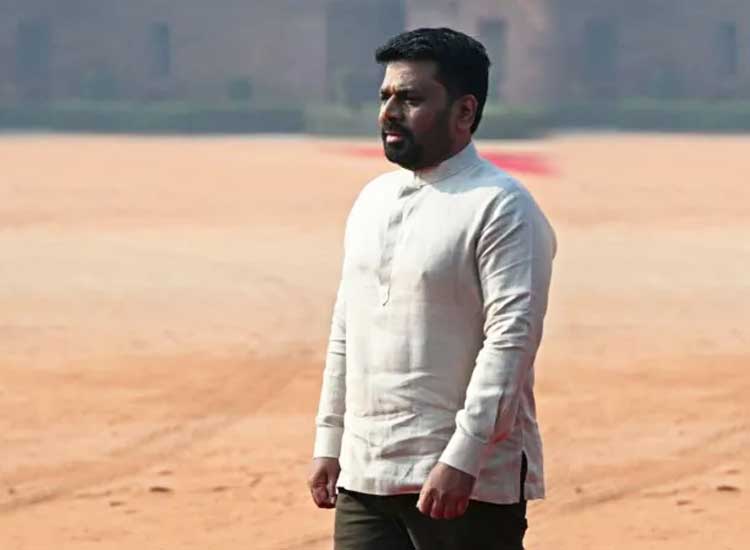
Stunning election wins by a new left-leaning president and his party have changed Sri Lanka’s political landscape – but the cash-strapped island’s new rulers are quickly realising that campaign promises are easier to make than to keep.
Anura Kumara Dissanayake’s remarkable victory in the presidential election in September was swiftly followed by a landslide for his National People’s Power (NPP) alliance in parliamentary elections.
As a new year starts, he and his supporters want this to be a turning point for the country, which is trying to recover from devastating economic crisis and years of misrule.
However, they have limited room for manoeuvre to make good on pledges to voters, whose expectations from the new government are high.
Since the financial meltdown of 2022, economic recovery has been fragile and Sri Lanka is far from out of the woods.
The NPP won 159 seats in the 225-member assembly in November – an unprecedented two-thirds majority – giving Dissanayake a sweeping mandate to push through major economic and constitutional reforms.
However, even as the results were coming in, the new president had to gear up for a meeting with a visiting delegation from the International Monetary Fund (IMF), with which the outgoing government had negotiated a $2.9bn (£2.31bn) bailout package. The IMF deal became controversial as it led to severe austerity measures, tax rises and cuts in energy subsidies – hitting common people hard.
During the campaign Dissanayake and his alliance promised that they would re-negotiate parts of the IMF agreement.
But in his address to the new parliament, he performed a U-turn. “The economy is in such a state that it cannot take the slightest shock… There’s no room to make mistakes,” Dissanayake said.
“This is not the time to discuss if the terms [of the IMF loan] are good or bad, if the agreement is favourable to us or not… The process had taken about two years, and we cannot start all over again.”
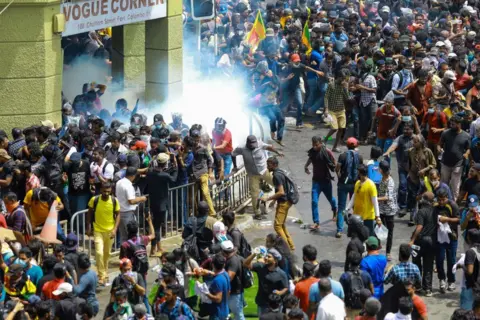
The voters’ overwhelming verdict for the NPP is seen as the culmination of a people’s uprising triggered by the economic crisis. The uprising toppled president Gotabaya Rajapaksa in the summer of 2022, when Sri Lanka ran out of foreign currency and struggled to import food and fuel.
The country had earlier declared bankruptcy after defaulting on its external debt of about $46bn. India, China and Japan are among those who have loaned billions of dollars.
The recent election results also reflected people’s anger towards established political parties – of former presidents Mahinda Rajapaksa and Ranil Wickremesinghe and others – for failing to handle the economic meltdown.
“One of the priorities for Dissanayake will be to give some economic relief to the people due to excessive taxation and the cost-of-living crisis. Debt management is another big challenge,” veteran political analyst Prof Jayadeva Uyangoda told the BBC.
So far the massive political changes don’t seem to have had any impact on people like Niluka Dilrukshi, a mother-of-four who lives in a suburb of the capital Colombo. Her husband is a daily-wage labourer and the family still find it hard to get by.
The BBC spoke to her about the soaring cost of living in January 2022, months before mass protests erupted. At that time, she said her family was eating only two meals a day, instead of three, and they were giving only vegetables and rice to their children due to the high cost of fish and meat.
“We are still struggling to make ends meet and nothing has changed. The price of rice, which is the staple food, has increased further. We are not getting any relief from the government,” Mrs Dilrukshi said.
People like her want the new government to take immediate steps to bring down the cost of essentials. Sri Lanka is an import-dependent nation, and it needs foreign currency to bring in items like food and medicine.
For now, Colombo is able to hold on to its currency reserves as it has suspended its debt repayments.
The real struggle, experts point out, will start probably in the next three or four years when it starts repaying its debt.
People’s perception of President Dissanayake and his new government could change if there’s no visible change in their standard of living in the next two or three years.
“People have given him a huge mandate. The IMF should respect that by allowing him to give some relief to the people through social welfare programmes,” says Prof Uyangoda.
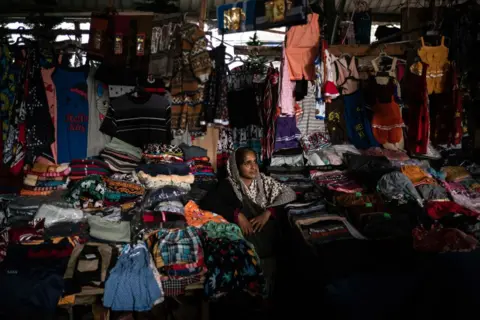
Dissanayake must also contend with India and China, which are jostling for influence in Sri Lanka, where both have invested heavily in recent years.
“Both India and China will try to bring Colombo under their sphere of influence. I think the new government’s foreign policy will be very pragmatic without aligning with anyone,” says Prof Uyangoda.
In a careful diplomatic manoeuvre, Dissanayake chose Delhi as his first official overseas destination in mid-December. During the visit, India promised to supply liquefied natural gas for Sri Lankan power plants and work on connecting the power grids of the two countries in the long run.
China’s increasing foothold in Sri Lanka, especially calls by Chinese “research” vessels to the island’s ports – so close to India’s southern tip – has triggered concern in Delhi.
“I have given an assurance to the prime minister of India that we will not allow our land to be used in any way in a manner that is detrimental to the interest of India,” Dissanayake said after talks with Narendra Modi. Delhi will no doubt be pleased with the assurance, but Dissanayake will find out what Beijing expects when he visits China in mid-January.
[BBC]

Latest News
Construction of Accident and Emergency unit at Mannar District General Hospital begins under President’s patronage
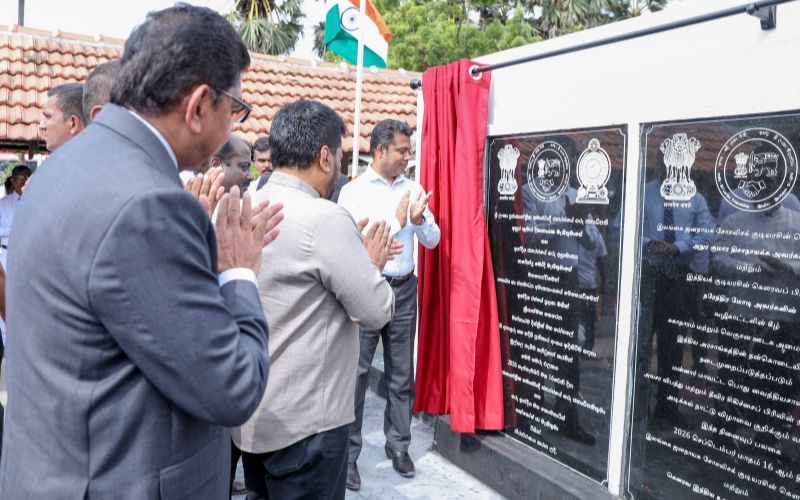
Construction work on the Accident and Emergency Unit at the Mannar District General Hospital commenced this morning (16) under the patronage of President Anura Kumara Dissanayake.
The Accident and Emergency Unit, which is being constructed at a cost of Rs. 600 million with a grant from the Government of India, will be equipped with all modern facilities and will further expand healthcare services for the people of Mannar. Construction is scheduled to be completed in the first quarter of 2028.
Upon completion of the project, the people of Mannar will be able to receive emergency trauma care and other specialised healthcare services without having to travel to Colombo or other major cities. At the same time, the Government has taken steps to provide the Mannar District General Hospital with the medical equipment and staff required to support these services.
President Anura Kumara Dissanayake, who attended the commencement of construction work on the Accident and Emergency Unit, also engaged in a cordial conversation with members of the hospital staff.
Addressing the ceremony held thereafter, Minister of Health and Mass Media Dr. Nalinda Jayatissa said that as the Mannar area, which is expected to make an important contribution to the national economy, develops, this project will help ensure quality healthcare services for its people. The Minister further emphasised that, in creating a “A Thriving Nation – A Beautiful Life”, the Government is committed to ensuring healthy and disease-free lives for all 21.7 million citizens of the country.
Further remarks by Minister of Health and Mass Media Dr. Nalinda Jayatissa
“The Mannar District is an area that is expected to make an important contribution to our national economy. A large number of local and foreign tourists will visit this area both now and in the future.
With the development of transport facilities, Mannar will experience further economic growth. In such a context, upgrading the services of the Mannar hospital will be important in ensuring quality healthcare services for the people of this area as well as those who visit the region.
Accordingly, construction of this Accident and Emergency Unit will be completed and the facility will be made available to the public in the first quarter of 2028. In addition, staff quarters for doctors at the Mannar District General Hospital are being constructed in a four-storey building at a cost of Rs. 243 million. These construction activities are also expected to be completed within one and a half years. Construction of the new Paediatric Unit, being built at a cost of Rs. 230 million, is also expected to commence within this year.
Similarly, the CT scanner that you have been continuously requesting will be provided to you by around February next year. It is worth approximately Rs. 250 million. While these building facilities are being developed, we will also provide the staff required by the hospital. You have also received intern medical officers for the first time in the history of this hospital. Several more intern medical officers will be assigned to you this October. At the same time, steps are currently being taken to address the shortage of specialist medical officers.
On 31 October, we will recruit 2,600 new nurses, and a portion of them will be assigned to this hospital. Personnel required for the allied health professions are also currently undergoing training. Once their training is completed, the services of several of them will be made available to this hospital. In addition, we will recruit 1,100 Public Health Midwives, a portion of whom will also be assigned to this area.
This Government is taking numerous measures to provide people with healthy lives. Through these initiatives, we hope to improve the health and quality of life of the people in this area.
More than Rs. 600 billion has been allocated to the Ministry of Health over the past two years, and the President continuously monitors all its projects. Going beyond that, I am deeply grateful to the President for joining us today.
We have received the support of the Government of India for this project. I extend my special appreciation to the Government of India, including the Prime Minister, and its people, as well as to the High Commissioner of India and his staff, who have been committed to coordinating these activities and ensuring the success of this project.
Among district hospitals, the Mannar hospital is one with very limited facilities. Despite these shortcomings, I appreciate the dedication of all members of the staff, including the doctors, who remain committed to providing the best possible service to the people. I also consider the President’s visit to be a recognition of your service.
Two years ago, on 21 September 2024, the people of this country gave a clear mandate to create a “A Thriving Nation – A Beautiful Life”. That mandate was further strengthened in November 2024. Under the mandate to create a “A Thriving Nation – A Beautiful Life”, we have been entrusted with the responsibility of ensuring healthy and disease-free lives for all citizens of this country.
Your area of residence, profession, wealth or ethnicity is of no relevance to us in this regard. The Government’s objective is to create a beautiful life through healthy and disease-free living for all 21.7 million citizens of Sri Lanka.”
High Commissioner of India Santosh Jha:
“The agreements for the emergency unit in Mannar and the medical ward complex in Mullaitivu were signed under President Dissanayake’s leadership. I am happy to see these commitments transitioning smoothly into swift implementation.
His Excellency the Prime Minister of India, Shri Narendra Modi, has said that the development assistance extended by India to Sri Lanka comes with a deep sense of responsibility, a duty that one naturally feels for one’s family member.
We remain firmly committed to working closely with the Government of Sri Lanka and the people of Sri Lanka for the well-being and prosperity of all communities across the island. As neighboring countries and close partners, we will continue to walk together this shared path toward lasting progress and development of our peoples.”
Secretary to the Ministry of Health and Mass Media Dr. Anil Jasinghe
“For several decades, injuries and accidents have been the leading cause of hospital admissions in Sri Lanka. As Mannar is geographically somewhat isolated, it is extremely important for the district to have access to quality, free healthcare services without delay.
The assignment of intern medical officers to this hospital commenced this year. Arrangements are also currently underway to purchase a CT scanner for the Mannar District General Hospital. The hospital is expected to receive improved radiology facilities by the end of this year or the beginning of next year.
I must say that, during my 36 years in public service, last year was the only period during which I did not face any financial difficulties in carrying out my duties. The prudent macroeconomic management of the current Government, including President Anura Kumara Dissanayake, has created the fiscal space required to develop the country’s health services.”
Mannar District Bishop Rt. Rev. Gnanapragasam Anthonipillai, Northern Province Governor Nagalingam Vethanayahan, Members of Parliament representing the Mannar District, Secretary to the Ministry of Defence, Air Vice Marshal Sampath Thuyacontha (Retd), Chiefs of the Defence Services, officials of the Ministry of Health, officials of the High Commission of India in Sri Lanka, Consul General of India in Jaffna Sai Murali S. and officials of the Indian Consulate in Jaffna, among others, attended the occasion.
[President’s Media Division]
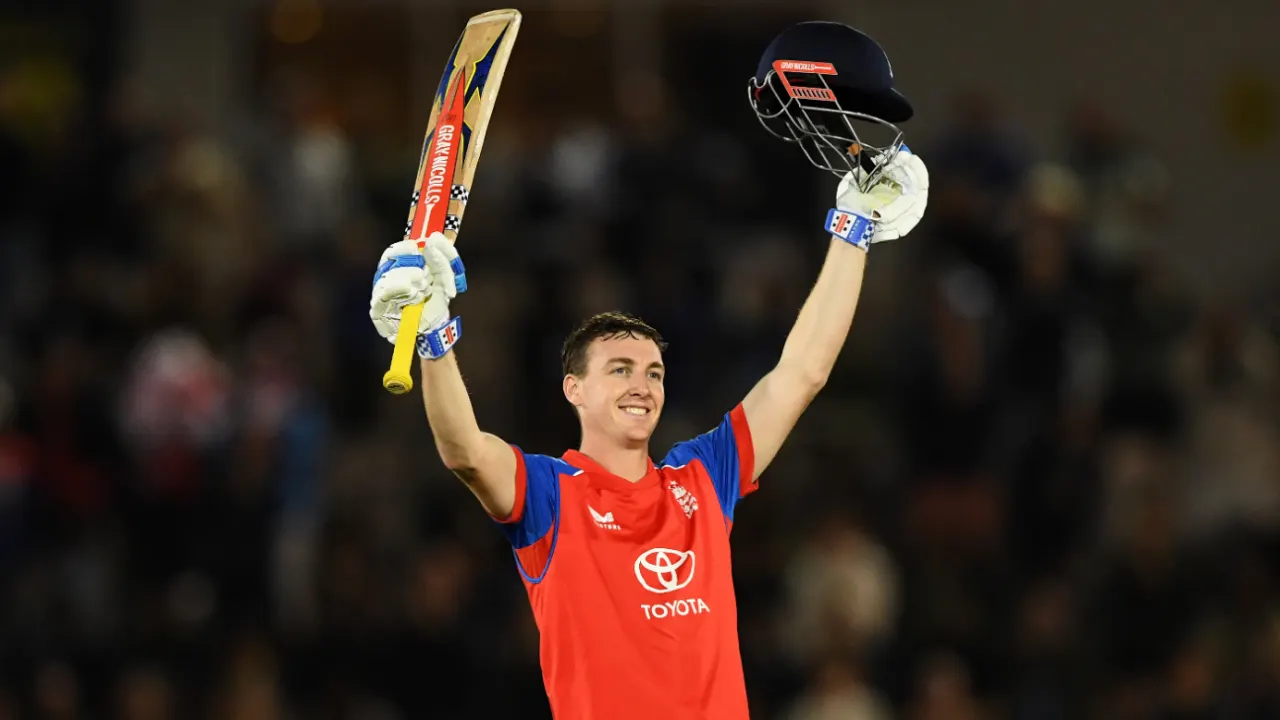
Harry Brook led from the front with his second and fastest T20I century as England sent Sri Lanka swirling down the Utilita Bowl with victory by 119 runs in the first T20I.
The limited-overs skipper’s 42-ball effort – quicker than every Englishman bar Phil Salt’s 39 baller almost a year ago to the day against South Africa – took England to 254 for 4, compelling former Test captain Ben Stokes to wax lyrical on social media.
Stokes’ post sounded as confused as Sri Lanka’s bowling plans. But the underlying sentiment was that Brook’s unbeaten 114 showed he possesses more genius than Kevin Pietersen.
It is a sketchy claim. But perhaps tonight, England’s new mentor will happily cede to the 27-year old after his third white-ball century of the year, and second in T20Is after his maiden effort against Pakistan at the T20 World Cup. In reply, Sri Lanka mustered just 21 more than Brook’s new career-best between them, bowled out for 135 with an over to spare.
England’s first innings fell three runs short of the total they made in their last T20I against India on this very ground. The similarities between this evening and that July afternoon included the opposition skipper – on this occasion, Charith Asalanka – inserting England after winning the toss.
Shreyas Iyer had made that mistake two months earlier, and likewise, he was also made to pay by Brook and Jos Buttler, who this time had to settle for 80 from 44 deliveries, rather than consecutive hundreds.
Captain and former captain combined in a stand of 128 from 60 deliveries, the first part of which included England’s second-highest powerplay of 90 for 1. That was kicked off by a breezy 12 from 5 for debutant Aneurin Donald, who became the first Glamorgan product to feature for England since Simon Jones in 2005.
Things were getting away from Sri Lanka as early as the fifth over when Dunith Wellalage was taken for 30 by Brook. And when Buttler was dropped on 45 three overs later, by Eshan Malinga – over-running a sliced heave down the ground at long off – it was clear, not even a quarter of the way through, that this match was only going one way.
England’s superior power and fitness was never going to be matched. More impressive than their total of 19 fours and 12 sixes were the number of twos. Brook did most of the running; nine of his own along with 12 for his three partners.
Sri Lanka’s chase began with a maiden, bowled by Sonny Baker who went on to take 3 for 12. After struggling on debut across all three formats – including a Test bow earlier this summer against New Zealand – the 23-year old polished his overall numbers with his first limited-overs dismissals at his home ground.
The Hampshire quick got off the mark with a 90mph rasper that beat opener Kamil Mishara, before adding Lahiru Udara four deliveries later when the right-hander’s attempted scoop found Adil Rashid at short backward square. A return from the Pavilion End then saw a 92mph delivery nip away and knock back Theekshana’s off stump.
All six of England’s bowlers registered in the wicket column, feasting on a line-up that – barring Wellalage’s 33 from 21 at No.8 – were all utterly woeful.
In Aneurin Donald, England may well have their answer to Vaibhav Sooryavanshi when it comes to monster strike-rates. Perhaps the quirkiest aspect about that is Donald, as the follower, is technically old enough to be Sooryavanshi’s father.
The 14-year age gap speaks to a difference of cultural attitudes towards the game, particularly in the T20 format: more venerated in India, reluctantly accepted over here. At the age of 29, Donald is England’s oldest T20I debutant in nine years, and was playing his first international match after 112 regular T20s.
With Phil Salt out injured, Donald had big boots to fill, but Brendon McCullum believed he had found the right understudy when watching Donald carve a remarkable 31 from eight deliveries for England Lions at Chelmsford in Sri Lanka’s first warm-up.
The man who capped his assault then – Wellalage – did so here for a more contained 12 off 5. Donald, though, had done his job in his first four balls, closing the the first over of the match by smashing Maheesh Theekshana’s offspin over the midwicket fence, then through cover, and setting England on course for a mammoth score.
The Utilita Bowl is the most criticised of England’s international venues, and it has come under greater scrutiny with the “hows” and “whys” of its allocation of an Ashes Test next year at the expense of Headingley (or anywhere else north of Nottingham).
It is not the easiest ground to get to. And visiting players note how quickly it has aged since opening in 2001. But if there is anyone who will espouse its virtues, it is Buttler.
Following his 131 against India, Buttler now has 211 runs across his last two T20I innings, both in Southampton. By comparison, he had managed a grand total of 212 runs across his first 14 innings in the format at the start of the year.
That run included a torturous T20 World Cup campaign, the kind that made many wonder if we were in the end days for one of English cricket’s most gifted batters.
This time, Buttler was closed to his devastating best. The four boundaries off Dushmantha Chameera to end the second over – the usual stride-and-thwacks over the bowlers’ heads and the trademark wristy, top-spin carve through cover off wide yorkers – were all very familiar.
Buttler turned 36 this time last week. But, as the team around him continues to push the envelope, the chance to focus on his own game, at his own pace – which today meant bringing up 50 from 29 deliveries as the anchor! – should ensure he and England get the most out of what time he has left.
Sri Lanka lacking Plan B
Everyone’s got a plan until they get Brook-ed and Buttler-ed in the face. And unfortunately for Sri Lanka, the plan thumped out of them was leaning on Theekshana to close out a chaotic innings
Few bowlers, let alone slow ones, take as much pride as Theekshana in their thankless tasks in the powerplay and at the death. But after Donald got hold of his first over, and then Buttler found 13 from his second, Asalanka seemingly forgot about the 26-year-old.
You could understand why the stand-in captain would look beyond someone conceding 13.5 an over. The problem, however, was his attempt to make up the difference proved more expensive. Wellalage’s last over (the 14th) went for 16, and Dasun Shanaka’s (17th) 19.
Wellalage looked particularly wayward, his slowness through the air – whether deliberate or not – left him exposed on an ugly surface that skidded rather than gripped. His economy rate of 17 from three overs was comfortably the worst of his career.
Scores:
England 254 for 4 in 20 overs (Jos Buttler 80, Aneurin Donald 12, Harry Brook 114*, Tom Banton 10, Will Jacks 21; Dushmantha Chameera 1-53, Dunith Wellalage 1-51, Eshan Malinga 1-41, Wanidu Hasaranga 1-34) beat Sri Lanka 135 in 19 overs (Pathum Nissanka 12, Kamil Mishara 10, Charith Asalanka 10, Dasun Shanaka 24, Dunith Wellalage 33, Eshan Malinga 13*; Sonny Baker 3-12, Josh Tongue 1-25, Will Jacks 1-21, Liam Dawson 2-23, Adil Rashid 1-31, Jamie Overton 2-20) by 119 runs
[Cricinfo]
Latest News
Cabinet approves aditional Rs. 2,500 million to the Paddy Marketing Board to purchase 2026 Yala harvest

The Cabinet of Ministers has approved the resolution furnished by the Minister of Agriculture, Livestock, Land and Irrigation to provide an additional Rs. 2,500 million to the Paddy Marketing Board on a reimbursable basis from the Rs. 7,500 million additional allocations granted to the Ministry to implement
the expedited paddy purchasing program for the 2026 Yala harvest.

Construction of Accident and Emergency unit at Mannar District General Hospital begins under President’s patronage

Special Cabinet Subcommittee and Officials’ Committee appointed to address El Niño Climate Impact meet

Showers about 75 mm are likely at some places in the Western, Sabaragamuwa, Central and Southern provinces

Brook, Buttler, Baker star as Sri Lanka slump to 119-run rout

Where is Gnanasara Thera?Police pass buck to court

Russian citizens in Lanka to vote in State Duma elections

‘Dates have the highest sugar content to fight Coronavirus’

Sunday Island 27 December – Headlines

#SundayIsland 17th December – Headlines

Sunday Island – 28th March

Sunday Island Headlines – 21 March

Sunday Island – 21st February – Headlines
-

 Sports6 days ago
DDS set to lose Test captaincy
-

 News6 days ago
Sri Lanka faces new grid challenge as rooftop solar surges: former CEB GM
-

 Latest News6 days ago
Shafali, Deepti power India into sixth T20 Asia Cup final
-

 News4 days ago
Gnanasara Thero absconding after SC ruling
-

 Latest News5 days ago
Sri Lanka thwart Fatima Sana challenge to secure Asia Cup final spot
-
 Features7 days ago
Lost for 90 years: Rare Goby resurfaces in Jaffna
-

 News5 days ago
Ammunition cache found in old Kandy bungalow
-

 Editorial6 days ago
A flight of fancy