
Business
Mesmeric beauty of dragonflies and damselflies in SLT’s 2025 calendar

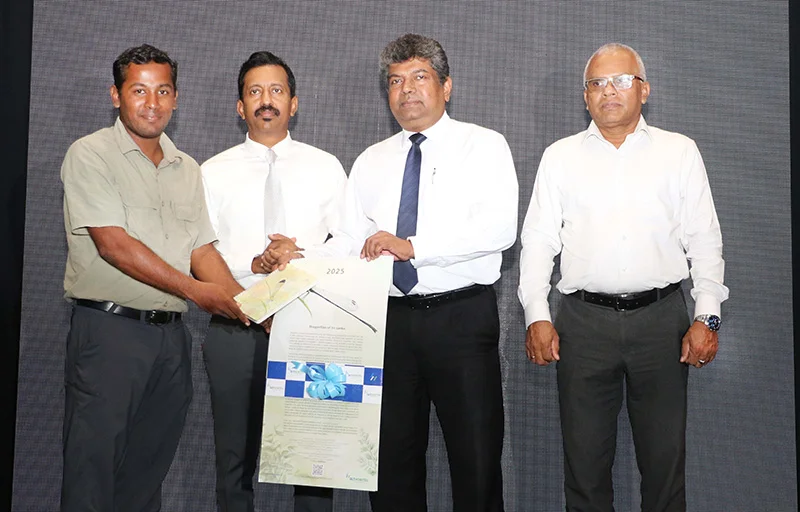
By Ifham Nizam
SLT-Mobitel has once again raised the bar with the launch of its highly anticipated 2025 calendar, this year dedicated to the mesmerizing world of Sri Lanka’s dragonflies and damselflies.
Themed “Dragonflies of Sri Lanka,” this calendar continues the 19-year tradition of highlighting the island’s natural and cultural heritage, making it one of the most sought-after annual publications in the country, SLT Chief Executive Officer Janaka Abeysinghe said, speaking at the launch on Thursday at the SrI Lanka Telecom Headquarters in Colombo,
This year’s calendar focuses on the vibrant and captivating world of dragonflies, showcasing their stunning beauty and highlighting their crucial role in maintaining the health of ecosystems countrywide.
Prabhath Dahanayake, the Chief Marketing Officer of SLT-Mobitel, explained the initiative’s purpose, stating, “As a purpose-driven national brand, SLT-Mobitel goes beyond connecting people digitally. We are committed to fostering a deeper appreciation for nature. With this calendar, we hope to inspire a conversation around conservation and sustainability, furthering our commitment to environmental stewardship.”
He said that `The Dragonflies of Sri Lanka’ calendar serves not only as a beautiful visual experience but also as an educational tool. Each month features detailed information about the life cycle of these remarkable creatures and their ecological role. It highlights the rich biodiversity that Sri Lanka offers and underscores the importance of protecting its natural heritage.
Amila Sumanapala, a renowned field researcher who has done extensive studies on dragonflies and damselflies at the Department of Zoology and Environmental Science at the University of Colombo, served as a resource person for the project, providing valuable scientific insights into the subject matter. His expertise has added depth and accuracy to the calendar’s portrayal of dragonflies.
The Chief Marketing Officer also said for nearly two decades, SLT-Mobitel’s annual calendars have become a tradition, serving as a platform for showcasing Sri Lanka’s environmental and cultural treasures. The 2025 Dragonflies of Sri Lanka calendar is no exception, furthering the company’s legacy of encouraging public engagement in environmental preservation.
The calendar features stunning artistic depictions of Sri Lanka’s dragonflies, brought to life by a talented panel of artists including Pulasthi Ediriweera, Parami Vidyarathna, and Udeshika Priyadarshani. These exquisite illustrations are complemented by the creative expertise of SLT-Mobitel’s Marketing Group, led by Anne Fernando, Vajira Hapuhinna and H.K. Sanjeevan Sathyajith.
The young scientists stressed the importance of raising awareness about these remarkable creatures, stating: “This calendar is not just an artistic endeavor but a celebration of the intricate connections between our natural world and its preservation.”
The creation of the calendar is a testament to the synergy between experts and artists. Months of research and collaboration ensured that every detail of the dragonflies—ranging from their unique anatomical features to their habitats—was captured with precision and artistry.
For the environmentally conscious and tech-savvy, the calendar is also available as an e-calendar, providing broader access and promoting sustainability. It can be accessed at SLT-Mobitel Calendar 2025.
Sumanapala also said dragonflies, often referred to as the ‘Guardians of the Watersheds,’ play a vital ecological role as apex predators in aquatic habitats. They are key indicators of water quality and overall ecosystem health, with their presence or absence offering valuable insights into the environmental conditions around them. As Sri Lanka boasts over 132 species of dragonflies, including 59 endemic species, these insects are not only a captivating sight but also a flagship group in conservation efforts.



Ceylinco Life’s Ambalantota branch agent AIP Manjula has been named one of three global finalists for the prestigious Insurance Agent of the Year award at the 11th Asia Trusted Life Agents & Advisers Awards (ATLAA) 2026.
The recognition places a Sri Lankan insurance professional among the finalists in a regional field spanning South Asia, Southeast Asia, East Asia and the wider Asia-Pacific region.
Ceylinco Life said the achievement reflected the calibre and customer-focused approach of its agency force, while recognising Manjula’s professionalism and commitment to policyholders.
The award evaluates insurance agents on criteria extending beyond sales performance, including ethical conduct, client service, policy persistency, digital adoption, innovative practices and contributions to the insurance industry and community.
The awards are organised by Asia Advisers Network and Asia Insurance Review, with LIMRA as co-organiser. An independent judging and balloting process is monitored by KPMG as the official scrutineer. The judging panel comprises senior insurance executives, association presidents and industry experts from across the Asia-Pacific region.

CEAT Kelani Holdings (CKH) has retained its National Long-Term Rating of ‘AA+(lka)’ with a Stable Outlook from Fitch Ratings for the sixth consecutive year, reflecting the company’s financial resilience and leading position in Sri Lanka’s pneumatic tyre market.
The ‘AA+(lka)’ rating, the second-highest on Fitch’s national scale, indicates a very strong capacity to meet financial commitments.
Fitch said CKH’s established market leadership and resilient financial profile remained key strengths, while noting its exposure to price-sensitive, cyclical and highly competitive markets.
The Stable Outlook reflects expectations that the company will maintain its market position despite rising input costs and increasing competition from imported tyres, while preserving adequate credit metrics during periods of weaker earnings and higher investment.
Fitch expects CKH’s established brand, extensive dealer network and adaptive pricing strategies to support its market position. Planned production facility upgrades are also expected to improve product quality, particularly in the radial tyre segment.
The rating agency expects near-term pressure on margins from higher raw material and energy costs but said the company’s low leverage and sound liquidity would provide a cushion.
CKH Chairman Chanaka De Silva said the rating reinforced the company’s focus on disciplined financial management, operational adaptability and long-term investment.
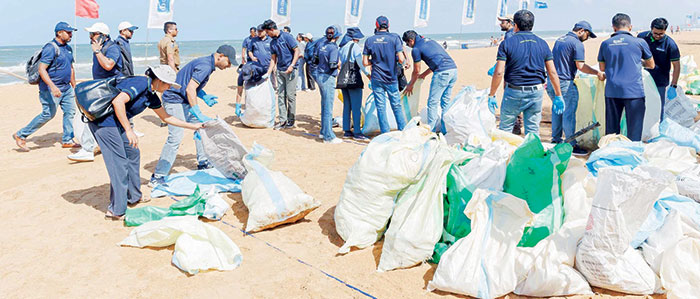
Commercial Bank of Ceylon mobilised employees, customers, volunteers and community members for a nationwide coastal and aquatic clean-up campaign across 20 locations on September 19 to mark International Coastal Cleanup Day 2026.
Conducted under the bank’s sustainability platform, themed ‘Forward Together for a Cleaner Future’, the initiative covered 16 coastal locations and four inland waterways, bringing together stakeholders for a coordinated environmental conservation effort.
The flagship programme was held at Mount Lavinia Beach, with additional activities at Wellawatte and Galle Face beaches. Similar initiatives were conducted by the bank’s regional offices at locations including Kalutara, Negombo, Trincomalee, Batticaloa, Puttalam, Jaffna, Galle, Dondra, Tangalle and along the Mahaweli River.
Employees, management, Future Force volunteers, customers and their families participated alongside the Marine Environment Protection Authority (MEPA), United Nations Global Compact Network Sri Lanka, government and local authorities, environmental organisations and community members.
The bank said the initiative reflected its commitment to water stewardship after adopting Sustainable Development Goal 6 — Clean Water and Sanitation — as a priority goal in 2025.

Buttler out of Oval decider as Lawrence earns ODI call-up

Showers will occur in the Western, Eastern, Uva and Sabaragamuwa provinces and in Galle, Matara, Kandy and Nuwara-Eliya districts.

Nor’easter brings flooding as New York and New Jersey declare emergency 2 hours ago

Trump rejects Iran deal to reopen Strait of Hormuz in seven days

Govt plans to hire 121,000 state workers, redistribute tax revenue

Parliament clears 22A amid protests

‘Dates have the highest sugar content to fight Coronavirus’

Sunday Island 27 December – Headlines

#SundayIsland 17th December – Headlines

Sunday Island – 28th March

Sunday Island Headlines – 21 March

Sunday Island – 21st February – Headlines
-

 News5 days ago
Mastermind Naufer Moulavi among 15 found guilty
-

 News7 days ago
Hatton youth protest against reported death sentence for Lankan in Saudi Arabia
-

 News7 days ago
Mahaweli rises as heavy rain triggers flood, landslide fears
-

 News6 days ago
Protest against setting up of cement factory in highly populated area near BIA
-

 Midweek Review5 days ago
Thileepan’s fast unto death: An authentic narrative that many missed
-
 Latest News4 days ago
Showers above 100 mm are likely at some places in the Western, Sabaragamuwa, Central and North-western provinces and in Galle and Matara Districts
-

 Editorial6 days ago
Trouble beginning in earnest
-
Editorial5 days ago
Big Bad Bills