
Features
Living in Paris, exploring London and an encounter with JRJ over a newspaper article

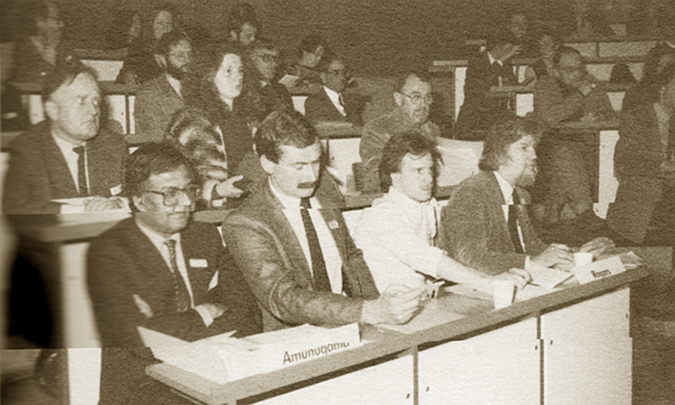
(Excerpted from volume ii of the Sarath Amunugama autobiography)
I found accommodation close to my office in Rue Miollis. It saved me hours of commuting time to my office and EHESS, my study place for my doctorate. My friend Dilip Padgoankar and his wife Lotika were going back to India and their flat fell vacant. Dilip, a ‘bon vivant’ who later became the Editor of the Times of India and advisor to the Indian Government on Kashmir, had chosen well. As M’Bow’s media spokesman he was on call all the time and had to live close to his boss’s office. Thanks to his recommendation I managed to secure that flat.
It was spacious enough to accommodate me, my wife and two children, and was close to good restaurants, cinemas and theatres. Many children of UNESCO staff lived in the vicinity and they all went to the same schools so that the neighborhood was congenial. For instance, Varuni had a friend who was the daughter of a sister of the Shah of Iran who was in exile, living in a mansion close by. Another friend, Mohammed Musa, was the son of M’Bow’s advisor from Nigeria.
Ramanika’s best friend was the daughter of a senior Indian professional in the science sector of UNESCO. All in all it was a stress free life wherein I could easily handle my official duties as well as academic pursuits with ease. From our Metro station Segur, it took me less than ten minutes to get to EHESS on the Boulevard Raspail.
Exploring London
One of the advantages of living in Paris was that I could travel often to the UK. The Paris-London flight took less than an hour and there were commercial flights on 12-seater planes which offered us cut rate tickets. These low cost flights took us to Stanstead airport and not Heathrow which meant that the entry formalities and waiting time was much less. The British government was promoting Stanstead in order to take the pressure off Heathrow. Since our elder daughter Ramanika was studying in England my wife and I took every opportunity to use these low cost flights to get to London.
Another factor was that our close friends, Namel and Malini Weeramuni were living in North London and their spacious house became a home away from home to us as it was to many visiting Sri Lankan friends. The Weeramunis were a generous and welcoming couple and we spent time together exploring the nooks and corners of London including Karl Marx’s grave in Highgate cemetery. At that time J B Dissanayake and his wife were also in London for his sabbatical and Gananath and Ranjini Obeyesekere were hosted by the Anthropology Department of London University. In addition there were a large number of our friends from Sri Lanka working in the UK in different capacities.
H.H. Bandara was employed as a researcher in the London museum library dealing with Sinhala palm leaf manuscripts with Somadasa who way the librarian of Peradeniya University in our time. Mark,Fernando who played the lions role in Sarachchandras “Sinhabahu” was a solicitor practicing in London. R.D. Perera, my Arunachalam hall mate, was a high school teacher who had authored a popular book on economics for “crammers” for public exams and had thereby become rich and famous.
RD generously lent us his new Mercedes Benz for our excursions. One such excursion of our group was to Cambridge University where we met several Srilankan students, particularly those who were attached w a hospital there. With the Obeyesekeres and Weeramunis I went to a West End theatre to see Pirandellos “Six characters in search of an author”. This may have been the beginning of Namel Weramunis fascination with the plays of Pirandello.
After relocating in Colombo many years later he won fame with his production of a translation of a Pirandello play. Here I must write of a memorable dinner meeting with Lindsay Anderson at the Weeramunis. Malini, ever the sacrificing wife, worked part time in a supermarket in North London. It so happened that Lindsay Anderson, the famous critic and filmmaker lived in Hendon and was a regular visitor to Malini’s supermarket for his provisions. Being an admirer of Lester and Sumitra Peries and a frequent guest at their home in Colombo, and a confirmed addict of rice and curry, he became a friend of the Weeramunis who frequently invited him to their home.
Once Lindsay came over to share a meal with me and talk about Asian cinema. It was a memorable meeting which went on till midnight and Lindsay’s insights on Lester and Satyajit Ray’s films have remained in my memory. He died not long after and our cinema, particular our radical young film makers, lost a kindred soul.
Being a senior official of UNESCO I interacted with the staff of the British delegation attached to our office. Occasionally they invited me for discussions in London in the Commonwealth office as several media projects in Commonwealth countries were funded by IPDC. I found that the British were less ideological than the US and were willing to work with multilateral organizations because they got much credit without investing large sums of money. As one such official described it, the UK got “more bounce for their ounce”.
Many of these meetings ended with a drink and dinner at London’s famous clubs like Travellers, Whites and Carlton with their distinctive atmosphere and superb food. Of these the Carlton was the most ‘political’ of the lot and we could see several well known politicians in their cups carrying on undisturbed. Privacy was the golden rule and often we had our conversations in hushed tones. Much later when I was a minister I was offered membership in the Carlton but I did not follow through as my visits to London had dwindled and I could not afford the high fees.
When not staying with the Weeramunis I patronized a regular hotel in the Strand which was close to the theatre district. Opposite it was the famous Savoy Hotel which had been the favourite of Winston Churchill during the Second World War. I was entertained there occasionally and I marveled at the efficiency of the staff and the crisp linen and table arrangement which could not be bettered in a hotel dining room anywhere. Fine dining is an art in the western world and without experience of it in London, New York, Paris, Zurich or Berlin one cannot really begin to understand the life of the “haute bourgeosie” in the capitalist world.
Class differences are clear in that society and within a few minutes of association it was possible to place an interlocutor within the social map in which he is embedded. The emerging “pop” culture of the time with its crossing of social boundaries was a working class reaction to the snobbish upper echelons which dominated English society till it was torn apart during the Second World War and the post war period.
The English stage which was invaded by “angry young men” featured characters who rebelled against the upper class due to their envy and sense of inadequacy. They “looked back in anger” but often took it out impotently on their upper class girlfriends and their parents. I will return to these personal experiences later on in this chapter.
Let me now return to my official duties as Director of IPDC. This time I face an editorial difficulty since my readers will not in all probability be interested in the minutiae of this assignment. On the other hand however, in my autobiography I am bound at least for authenticity, to describe the important and memorable experiences encountered in my varied career. I will therefore now turn to the highlights of my UNESCO career.
International meetings
One of my responsibilities as Director was to popularize the activities of IPDC and solicit funding for the media projects which were identified by us. For this purpose we called for proposals from developing countries and studied them with assistance of the staff of the communications division.Tis included the headquarters staff as well as our regional representatives who were in direct contact with the media authorities of the membe states. These projects were submitted by me to the annual meeting of the governing council which then allocated resources from the IPDC.
Fund from other donors were on a ‘Funds in Trust’ basis. At this meeting I introduced the projects to the members of the Council and made my recommendations regarding the proposals before us. On occasion this led to heated debates. Far instance African countries tended to band together on the basis of their regional affiliations and demand the biggest share of the pie. I had a difficult time to get approval for some projects submitted by Cuba because of objections by the US delegation.
But with the US boycotting UNESCO and a wave of sympathy from the developing countries I was able to get Cuban projects – mostly promoting education – approved, as well as get their representative elected to the Inter-Governmental Council. I could always depend on the Asian group and the African group which tended to follow the line dictated to them by the Director General M’Bow who was their hero and icon.
Once this provided a nasty shock to the Sri Lanka delegation led by our Ambassador in Paris, Balasubramaniam. Bala was considered to be an able negotiator and he was determined to show his diplomatic skills by getting Esmond Wickremesinghe elected to the Council of the IPDC. He began canvassing early and was confident when election day arrived. In the election Esmond and an African candidate got equal votes and it was decided to have a second vote.
While our Ambassador was nonplussed and rendered ineffective the African caucus was, we learnt later, instructed by M’Bow to support their fellow black candidate. Esmond was defeated in the second round. He took it calmly but I knew that he was very hurt by M’Bows uncalled for intervention which was criticized by whisperers in the corridors of the UNESCO building. After that Esmond lost interest in UNESCO and began to get involved with Ralph Buultjens, with disastrous results to him and the country.
Oslo [Norway]
I travelled to donor countries to firm up their offers of assistance to the IPDC Fund as well as to `sell’ large projects they could finance on a multilateral basis. This funding mechanism was called ‘Funds in Trust’. Going around with the begging bowl was an interesting task for which I had good experience in promoting projects like the introduction of TV to Sri Lanka with Japanese assistance. Norway was the biggest donor to the IPDC Fund pledging a million dollars every year. So Norway was one of our target countries.
At an international conference there was an inter-mixture of Norwegian media and government officials as well as a large number of internationally famous media personalities. Sri Lanka was represented by my friend Mervyn de Silva, and together with Kumar Rupasinghe who was then living in Norway, we spent time exploring Oslo and its restaurants in which venison dishes were a specialty. The forested hills of Norway were full of deer and a saddle of venison was on everybody’s table. But some killjoys created a scare that the deer had migrated from Chernobyl, with its radiation leaks, and the venison may be contaminated. However, these scare stories did not prevent our participants from tucking in.
Hohenheim [Germany]
Another important donor to IPDC was the Federal Republic of Germany. The German Government as well as their powerful NGOs were keen participants in the New Communication Order debate. The FRG delegate to IPDC was Bertolt Witte who was an important figure in the Free Democratic Party [FDP] which was the junior partner in a coalition Government with the Social Democrats. He later became a Minister in the FRG.
The FDP though small in numbers was quite influential and the Foreign Minister came from that party. Witte was a liberal and deeply concerned about questions like the freedom of the press and training for journalists. He arranged a meeting with media scholars at the ancient University of Hohenheim which is near Stuttgart. This University specializes in agrarian sciences with special emphasis on communication for promoting new agricultural practices and marketing.
During this time many German media scholars looked to the US for their theoretical orientations. In the Hohenheim seminar an important role was played by Everett Rogers who had written extensively on use of media in achieving developmental targets. Since he taught in a midwestern University much of his attention was on use of media for agricultural development. Everett was a genial person who was supportive of IPDC. We got on well.
The Hohenheim Conference did the IPDC a world of good because FRG became a contributor to our programme. Witte who was a well-known journalist and a senior in the FDP, continuously lobbied the German government on our behalf. He was a member of the IPDC Council and a great supporter of UNESCO.
After the Seminar I was the chief guest at a dinner offered by the Rector of this old University. Hohenheim was a beautiful agricultural area with its rolling green hills and vast swathes of arable land. Stuttgart was an industrial town which was the heartland of German motor car manufacturing, including the Volkswagen works, but Hohenheim with its old castle and large irrigated fields was a peaceful agricultural university town.
Helsinki [Finland]
Helsinki was a unique experience fir most of us since Finland is not on the conference circuit. But both in the conference room and out in the freezing winter amid. we were treated with extraordinary friendship and courtesy. Sharing a territorial boundary with the USSR, the Finns while cherishing their independence were extraordinarily careful not to offend the hibernating Russian bear. The organizers had made sure that a strong USSR delegation led by Professor Zassousky of Moscow University also participated in one of our conferences. The USSR team comprising their regular delegation to IPDC and Zassousky, weremost cooperative and supportive of my suggestion to have a similar meeting in the USSR. The Soviets, soon to drop that name and call themselves Russians, were strong advocates of the New Information Order as a way of embarrassing the West.
Finland was full of surprises. Just across the square facing our hotel was the beautiful ‘art decor’ railway station designed by Saarinen. He was a Finnish architect who later migrated to the US and made a name for himself with his path breaking designs. Helsinki is full of his buildings which give a modern look to the city. We were guests of a rich magazine publisher of the country. His country home was built on the shore of a small lake. He had installed a wave making machine on one side of the lake so that there were artificial waves for surfing in the summer.
That being a winter, he took us to his sauna by the lake. This was an authentic Finnish sauna and not the artificial one we usually come across in big hotels. We had to alternatively sit inside the sauna sweating profusely and then run naked to the lake for a dip in its ice-cold waters. This had to be done several times so that the skin is subjected to extreme heat followed by extreme cold. In addition we had to hit our bodies with branches of birch so that the skin is drawn tight by the time we dip into the water.
This was a once in a life time experience. Though fearful at first I found this invigorating and the body was made ready for large gulps of Finnish beer which was sucked up by my tormented body. Fortunately none of us came down with pneumonia.
Another interesting feature was that most of the buildings we saw were built by Scotsmen. It was the Scots who had introduced electricity to Finland. We were told us that Scottish businessmen had invested in infrastructure development in Finland prior to World War Two. Now however, Finland was too close to the USSR for the west to intervene in its economic development.
Parts of Helsinki looked very much like St Petersburg before the revolution. In fact Lenin had come to join the revolution in St Petersburg via the Finland railway station. Many films like David Lean’s ‘Dr Zhivago’ were shot in Helsinki where the streets and houses could be used to simulate the life and atmosphere of the Russian capital about the time of the Russian revolution.
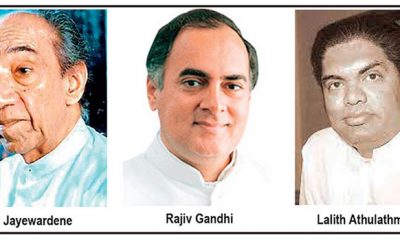
The participants at this seminar who were the world’s leading communications scholars of the day were bowled over by the life and customs in Helsinki and the goodwill of our Finnish colleagues. There is a ‘back story’ which involves Finland which I can narrate here. At the height of the shooting war with the LTTE, Gamini Dissanayake, who was being fast overtaken in popularity by Lalith Athulathmudali who had been put in charge of defence, presented to JRJ a memorandum which advocated a `detente’ with India. This was an alternative to the hostile approach of Lalith to India.
One of the references in this memorandum dealt with the ‘inter se’ position between the USSR and Finland. Here the two countries functioned without the smaller country challenging the interests of USSR. JRJ did not comment on this suggestion. However on the day after the signing of the Sri Lanka-India accord, the editor of the ‘Sun’ newspaper, Rex de Silva had an article which highlighted what he called the ‘Finlandisation of Sri Lanka vis-a-vis India.
It may be that Gamini had fed Rex a copy of his memorandum which was the usual practice at that time. JRJ called me in a fury after reading this article which appeared the day after signing the accord. He wanted me to get the Information Ministry to take over the Sun newspaper. This was a challenge to me as a newspaper take over was the worst thing that could be done at that juncture. Rex was my friend and after much thought, I got him to join me in a visit to ‘Braemar’ to meet the President.
That was a time when I could walk into ‘Braemar’ without notice, as Anandatissa, the Minister was in hospital and the President relied on me to handle the Department of Information, in which my lieutenant, Anura Goonesekere was Director. By this time JRJ’s fury had abated and he patiently explained to Rex that his analogy was the last thing he wanted the Indians to adopt. Rex replied in a conciliatory manner and the matter was dropped for the time being.








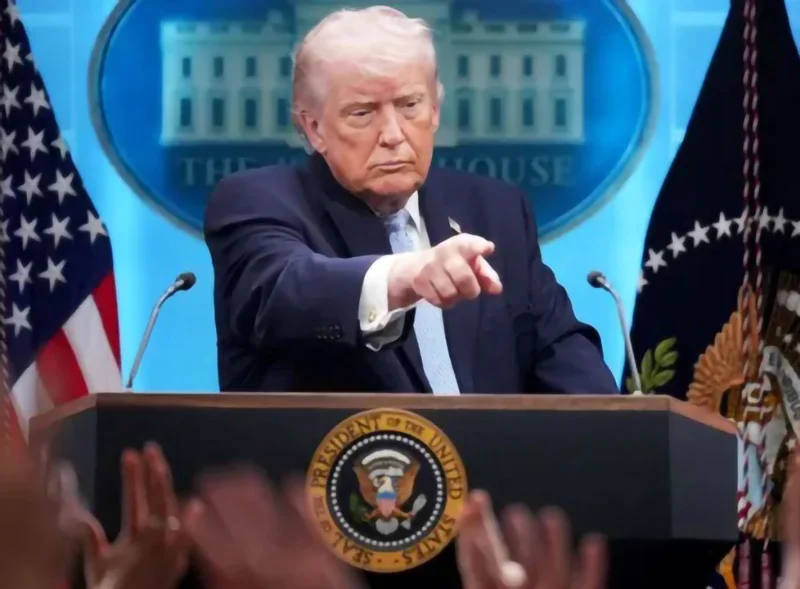
 Some fundamental freedoms seen to be at the heart of democracy in the US – religion, speech, the press, assembly and the right to petition the government – are at risk of being undermined at present by the country’s Executive President. However, the latter is being legally challenged on this score by some sections of the US media and the citizenry of the country could take heart from this notable defense of media freedom.
In fact this is good news for the world of democracy. The push back is coming from organizations such as CNN, ABC, CBS, Fox, NBC who constitute the nucleus as it were of the US media and their solidarity no less than their resourcefulness calls for commendation.
Following a recent White House decision to suspend CNN from what was referred to as ‘participation in presidential pool coverages’, the other media organizations mentioned refused to replace it in the pool. Their position was that the public had a right to receive ‘accurate and independent information about the government.’
Earlier, the White House decided to bar MS NOW and Politico from entering its premises following the restrictions imposed on CNN. The organizations were accused of publishing “FAKE NEWS’ , ‘Fiction’ and ‘lies’ in respect of the administration. These organizations lost no time in initiating a federal lawsuit accusing the central administration of violating their rights guaranteed by the First Amendment.
However, the latter litigating organizations could now consider themselves as having been vindicated because the federal court hearing their case has ordered the Trump administration to temporarily restore White House press access to journalists from the mentioned media institutions. Notably, the court has declared that the ban is ‘likely unconstitutional’. The case is proceeding.
The mass media of the most vibrant democracies of the West ought to be no strangers to such inspirational acts of solidarity and exemplifications of independence but there are lessons here for the democracies of the South that could stand them in good stead. Minus the right of a people to be informed, the rest of fundamental rights featuring in Southern Bills of Rights and legislation of the kind are bereft of substance and meaning.
It is informed decision-making on the part of a citizenry that makes for democratic vibrancy and on this score many a Southern democracy fails. While Southern publics generally demand of their governments continuous economic well being and substantive material benefits they are not equally desirous of being informed and knowledgeable.
This lacuna in the consciousness of many Southern publics enables their governments ‘to get off the hook’, so to speak and govern, or more often misgovern, their countries with impunity. Among other factors, this species of mass ignorance makes it possible for governments to dismantle democracy and rule in perpetuity.
Accordingly, an educated and constantly informed public is an essential precondition for the flourishing of democracy and independent media are integral to this process. Minus an independent mass media sector that meets the knowledge needs of the people responsibly, democracy is as good as dead.
Needless to say, those sections of the US media that are currently taking the Trump administration to task over its media curbs are acutely aware of the cruciality of these fundamental knowledge requirements.
The hope of democratic opinion worldwide and locally is likely to be that media independence would thrive in the manner in which it is flourishing in the most vibrant and accountable democracies of the West.
Southern countries such as Sri Lanka that lay claim to democratic credentials, but are democracy-deficient in many ways, need to be particularly cognizant of these requirements. The publics of these countries need to go the extra mile to ensure the thriving of an independent but responsible mass media sector.
In fact it is veritably a matter of life and death. It is only an independent media sector that could, while ensuring the existence of an informed public, impress on the latter the need to protect and perpetuate its fundamental rights. In the absence of these campaigns, such publics could be eventually having on their hands governments that boast of ruling in perpetuity.
Taking a leaf from the sections of the US media referred to independent media organizations in Southern states need to act in solidarity as well. They would need to act on the basis of the principle that acts of victimization suffered by members in their fold at the hands of governments, for instance, are in fact inimical acts directed at their collectivity and which call for united remedial action. In short, no independent mass media institution could see itself as ‘an island’.
Besides some general guidance on the importance of media independence and solidarity, the message coming from the US with regard to media praxis is that power must be stood-up to unblinkingly. The mentioned sections of the US media are primarily in a struggle to ward off encroachments on their independence in the areas of policy and practice by the political executive, that is the President.
The latter would ride rough-shod over the media in the absence of robust opposition by the media itself to inimical executive action of this kind.
While media independence needs to be seen as crucial to democratic development, an obligation is cast on the media to ensure that it uses such independence responsibly and constructively.
The worst that could afflict a media sector is for it to fall prey to the clichetic ‘freedom of the wild ass’. In fact recurring irresponsibility on the part of the media could lend credence to the perception that a tightly regulated media is best for a country. It is a short step from this misguided view to the position that political authoritarianism is best for a state. That turn of events would be of course catastrophic for a democracy.
The issues discussed thus far point to the need for a broad discourse among Southern democracies in particular on what is best for them in this connection. Given the risks underscored earlier for Southern countries in particular a broad discussion on the matters at hand, which includes the public, emerges as a must for Sri Lanka. Besides, media solidarity within democratic countries and internationally is a must.

by Prof. M. W. Amarasiri de Silva
Following public controversy over an inappropriate web link found in an English study module, the Sri Lankan government formally deferred the full rollout of the Grade 6 curriculum reforms to January 2027. In the interim, state schools will maintain the existing syllabus, reverting to standard eight-period daily timetables and previous textbooks to ensure uninterrupted instruction. Prime Minister and Minister of Education Dr. Harini Amarasuriya emphasized that this temporary pause allows the Education Ministry to thoroughly review all instructional materials, fix editorial flaws, and conduct scientific impact assessments across pilot schools prior to nation-wide implementation.
To address the oversight, an expert committee evaluated the flawed materials, completed necessary amendments, and finalised discussions to resubmit corrected modules for printing. Beyond revising written texts, the Ministry established a broader preparation roadmap—allocating funds for extensive teacher training programs set to begin mid-year, alongside scheduled informational briefings for parents, teachers, and students. Prime Minister Amarasuriya reaffirmed that none of the valid first-term modules were completely discarded or scrapped, preserving state resources while systematically rebuilding public trust and strengthening quality assurance protocols.
In this respect, this article reviews the current grade 6 syllabus comparing it with similar syllabi of India and the USA, with a view to make recommendations for the upcoming grade 6 syllabus revision.
Architecture of nation’s future
Education is the quiet architecture of a nation’s future. It is the unseen scaffolding upon which generations build their character, their intellect, and their capacity to contribute meaningfully to society. In Sri Lanka, the Grade 6 syllabus occupies a particularly important place in this architecture. It is the bridge between primary learning and the more demanding intellectual terrain of secondary education. It is the moment when children begin to move from learning basic facts to understanding concepts, from memorising information to applying knowledge, and from passive reception to active engagement. Yet, despite its importance, the Grade 6 curriculum in Sri Lanka has long struggled with issues of breadth, depth, relevance, and pedagogy. As global education systems evolve, Sri Lanka must examine what lessons can be learned from international models—particularly India and the United States—to strengthen its own curriculum and prepare students for a rapidly changing world.
The first lesson Sri Lanka can learn is the value of conceptual clarity. India’s NCERT curriculum, especially in Mathematics and Science, is globally respected for its logical progression and conceptual depth. Indian students are introduced early to the idea that mathematics is not merely a set of procedures but a language of reasoning. They learn why a ratio works, not just how to compute one. They understand the structure of an equation, not merely the steps to solve it. In Science, they explore the properties of materials, the structure of plants, and the principles of motion with a clarity that encourages curiosity rather than rote memorisation.
Sri Lanka’s Grade 6 syllabus, while competency-based, often leans heavily toward content coverage. Students are expected to learn many topics, but the time allocated for each is limited, and the teaching culture often emphasizes memorisation over understanding. If Sri Lanka wishes to improve the quality of its syllabus, it must embrace the idea that fewer topics taught well are better than many topics taught superficially. Conceptual mastery builds confidence, and confidence builds lifelong learners.
Lesson from the US
A second lesson comes from the United States, where the curriculum is built around skills rather than content. American students in Grade 6 are expected to read complex texts, analyse arguments, write essays supported by evidence, conduct experiments, and engage in collaborative projects. The emphasis is not on how much they know but on what they can do with what they know. This skills-based approach encourages critical thinking, creativity, and independence—qualities essential for success in the modern world.
Sri Lanka’s syllabus, by contrast, often rewards students for reproducing information rather than interpreting it. The exam culture reinforces this tendency, as students are assessed primarily through written tests that measure recall. To improve the syllabus, Sri Lanka must integrate more opportunities for students to think, question, debate, and create. The classroom should become a space where students learn to solve problems, not just memorize solutions.
Another important lesson comes from the breadth of Sri Lanka’s own curriculum. One of the strengths of the Sri Lankan system is its inclusion of cultural and religious education. Subjects such as Buddhism, Hinduism, Islam, and Christianity provide moral grounding and cultural identity. Art, Music, Drama, and Health contribute to holistic development. These subjects remind students that education is not merely about academic achievement but about becoming a balanced human being. However, breadth without depth can become burdensome. Grade 6 students in Sri Lanka often juggle more than ten subjects, each with its own textbook, competencies, and assessments. This creates pressure not only for students but also for teachers, who must rush through content to meet syllabus requirements. The lesson here is not to reduce cultural subjects but to integrate them more meaningfully. Religious education can be taught through ethical discussions, community projects, and reflective writing. Art and Music can be connected to history, literature, and social studies. Health can be linked to science and physical education. Integration reduces overload while enriching learning.
Another lesson from India
India offers another valuable lesson in the form of standardised textbooks. NCERT books are used across the country, ensuring consistency in quality and content. They are written by subject experts, reviewed rigorously, and updated periodically. Sri Lanka’s textbooks, while generally well-structured, vary in quality and often lag behind modern pedagogical standards. Some are dense, text-heavy, and lacking in visual aids or real-world examples. To improve the syllabus, Sri Lanka must invest in high-quality textbooks that are engaging, accessible, and aligned with contemporary educational research. Textbooks should not merely transmit information; they should inspire curiosity. They should include stories, diagrams, experiments, and activities that make learning enjoyable and meaningful.
The United States provides a lesson in inquiry-based science education. American students conduct experiments, build models, observe natural phenomena, and engage in engineering design challenges. They learn science not as a set of facts but as a process of discovery. Sri Lanka’s science curriculum includes experiments, but many schools lack the resources, laboratory facilities, or teacher training to implement them effectively. Improving the syllabus requires improving the ecosystem around it. Schools need laboratories, equipment, and teacher development programs that empower educators to teach science through inquiry. A syllabus is only as strong as the environment in which it is taught. ***
International models
Another area where Sri Lanka can learn from international models is language education. In India, students often learn three languages—English, Hindi, and Sanskrit or Urdu. This heavy language load has its challenges, but it also produces students with strong linguistic skills. In the United States, English Language Arts emphasises reading complex texts, writing arguments, and analysing literature. Sri Lanka’s English curriculum, while improving, still struggles with uneven implementation across schools. Many students reach secondary school without adequate proficiency in English, limiting their access to global knowledge. To improve the syllabus, Sri Lanka must strengthen English instruction through better teacher training, more reading opportunities, and a shift from grammar-heavy teaching to communication-focused learning. At the same time, Sinhala and Tamil instruction should be modernised to include creative writing, literature appreciation, and critical reading.
Social Studies is another area ripe for improvement. Sri Lanka’s curriculum includes History, Geography, and Civics, but the teaching often emphasises memorization of dates, definitions, and facts. India’s Social Science curriculum, while also content-heavy, provides clearer conceptual frameworks. The United States, however, excels in teaching civics and citizenship. American students learn how governments function, how laws are made, how communities solve problems, and how citizens participate in democracy. Sri Lanka can strengthen its Civics curriculum by incorporating more discussions on governance, rights, responsibilities, and community engagement. Students should learn not only the structure of government but also the values that sustain it—justice, equality, and participation.
One of the most important lessons Sri Lanka can learn is the value of reducing exam pressure. In both India and Sri Lanka, exams dominate the educational landscape. Students are judged primarily by their ability to perform on written tests. The United States, while not free from assessment challenges, uses a wider range of evaluation methods—projects, presentations, portfolios, and continuous assessment. These methods allow students to demonstrate learning in diverse ways. Sri Lanka should consider adopting a more balanced assessment system that values creativity, collaboration, and practical skills alongside academic knowledge.
Technology integration is another area where Sri Lanka can improve. The United States incorporates digital literacy, coding, online research, and digital citizenship into the curriculum. Sri Lanka’s ICT syllabus is well-structured, but implementation varies widely. Many schools lack computers, internet access, or trained ICT teachers. Improving the syllabus requires improving infrastructure. Students must learn to navigate the digital world safely and effectively. They must learn coding not as a luxury but as a basic skill. They must learn to evaluate online information critically, a skill essential in an era of misinformation.
Teacher training
Teacher training is perhaps the most critical lesson of all. A syllabus is only as effective as the teachers who deliver it. India invests heavily in teacher training through national programs, workshops, and online platforms. The United States emphasises professional development, peer collaboration, and instructional coaching. Sri Lanka must strengthen its teacher training programmes, ensuring that educators understand not only what to teach but how to teach it. Teachers should be trained in inquiry-based learning, differentiated instruction, formative assessment, and classroom management. They should be empowered to adapt the syllabus to the needs of their students rather than follow it mechanically.
Sri Lanka must learn the lesson of relevance. A syllabus must prepare students not only for exams but for life. It must teach them how to think, how to communicate, how to solve problems, and how to work with others. It must prepare them for a world where knowledge is abundant, but wisdom is scarce. It must help them navigate a future shaped by technology, globalisation, environmental challenges, and social change. To improve the syllabus, Sri Lanka must ask: What kind of citizens do we want to produce? What kind of thinkers? What kind of leaders? The answers to these questions should shape the curriculum.
Lastly, improving the quality of Sri Lanka’s Grade 6 syllabus requires learning from both international models and local strengths. From India, Sri Lanka can learn the value of conceptual clarity and standardised textbooks. From the United States, it can learn the importance of skills, inquiry, and creativity. From its own traditions, it can preserve cultural education, moral development, and holistic learning. The goal is not to copy another country’s system but to build a uniquely Sri Lankan curriculum that is modern, relevant, and empowering. A curriculum that honours the past while preparing students for the future. A curriculum that nurtures thinkers, creators, and compassionate citizens. A curriculum worthy of a nation with immense potential and a proud educational heritage. If Sri Lanka embraces these lessons, the Grade 6 syllabus can become not just a bridge to secondary education but a foundation for national progress.

 Melloney Dassanayaka is certainly a familiar name here, and abroad, as well, having represented Sri Lanka at the Miss Universe 2024 pageant, held in Mexico.
A former National Basketball player, she is also involved in several projects, beneficial to the community, including financial literacy for single women-headed families in the country.
A banker by profession, Melloney hold a Bachelor’s Degree in Business Administration.

Melloney with Asanka de Mel of Lovi Sri Lanka
This extremely talented old girl of Holy Family Convent, Bambalapitiya, was in the limelight, once more, when she was seen on the ramp at Colombo Fashion Week.
It was her very first experience, at this prestigious event, and she loved every minute of it, she said, and, what’s more, she was featured on three consecutive days.
 According to the itinerary, on day 01 she walked for Lovi Sri Lanka; day 02 Rizwan Beyg (Pakistan designer), Arsath Furkhan (Indian designer), Haoyi Yan (Chinese designer) and Samant Chauhan (Indian designer); and on day 03 Vaishali Shandangule (Indian designer).
In today’s edition of The Island SceneAround, we spotlight Melloney, on the ramp, at Colombo Fashion Week.
Melloney will also participate at Miss Grand All Stars to be held later in the year, in Thailand, as Miss Universe Sri Lanka 2024.

England call up Crane and rest Archer for Pakistan series

ICC introduces pink-ball daytime Test trial, new time-wasting penalties

Discussion on Anuradhapura Sacred City Development Plan

India enter Asian Games final after Kishan and Bumrah ride roughshod over Sri Lanka

I extend my heartfelt wishes to all the sons and daughters of our country for a Happy World Children’s Day – President

Sri Lanka bowl first in semi final clash against India

‘Dates have the highest sugar content to fight Coronavirus’

Sunday Island 27 December – Headlines

#SundayIsland 17th December – Headlines

Sunday Island – 28th March

Sunday Island Headlines – 21 March

Sunday Island – 21st February – Headlines
-

 Editorial6 days ago
Birth of a bad law
-

 Features7 days ago
Beyond traditional jobs: Why Sri Lanka needs to facilitate the gig economy
-

 News4 days ago
Police remove Thileepan statue in Jaffna
-

 News6 days ago
TIN mandatory for key transactions from Nov. 1
-
 Latest News7 days ago
Kusal, Wellalage star as Sri Lanka defend 322 in Headingley thriller
-

 Features4 days ago
The 22nd Amendment, constitutional recovery and illiberal slippage
-

 Features4 days ago
Of foreigners as CEOs of Lankan ventures
-

 News4 days ago
Sajith rejects Jt. Opp. protest sabotage claim; SJB TU chief demands remedial action