
Opinion
Labour Reforms in Time of Great Crisis

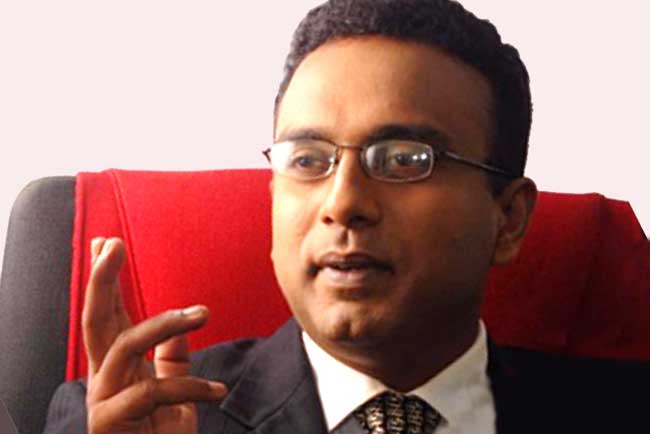
Sri Lanka is in the middle of a dire economic crisis. We are a witness to the new depths of misery that the people have been plunged into. Working people are the hardest hit, who have had to grapple with precarious wages, job insecurity and the devastation of an economic depression. Despite this perilous situation, the government is proposing labour reforms that threaten to render the situation of the working classes even more precarious. In his Budget 2023 speech in November 2022, the President called for reforms “for an export-oriented economy”. Soon thereafter, Secretary to the Ministry of Labour and Foreign Employment Shan Yahampath elaborated on the impending proposals, pointing to the introduction of “a unified labour code which will seek to move away from the current employee-friendly labour law system to a system that strikes a balance between the rights of the employee and the employer.” At the May Day rally of the UNP, Ministry of Labour and Foreign Employment Manusha Nanayakkara presented a 11-point reform agenda, outlining the principles of the reforms, which proposes to tilt the balance of power further in favour of employers. Nanayakkara’s proposals, the most elaborate so far, is at best sketchy, and at worst is a calculated move to weaken the collective strength of the working population in the formal sector. The message is loud and clear, when
Nanayakkara prefaces his presentation with, “We still have archaic labour laws, a labour law which turns away investors.”
On June 14th, at a consultative meeting, Nanayakkara, reiterated the need for reforms, necessary, in his view, in some 20-odd areas of existing labour-law. While saying that reforms are needed in the plantation sector and in the provisions of EPF and ETF, he stresses the importance of casual labour and the need to turn much of formal labour into casual labour. Herein lie the dangers of the current reforms.
The proposals are in part framed in the language of social protection, advancing the rights of the worker in the informal sector. Protection from violence in the workplace for women and incorporating people with disabilities in the labour force mean little when the overall climate is steeped in job insecurity and economic precarity. Further, the mantra of increasing women’s participation in the labour force is designed to be extractive of the labour of women in the face of diminishing worker-protection.
Sri Lanka’s labour laws, though nothing to marvel at, have historically afforded the worker some protection from the blatant disregard of their rights. Yet, through fragmentation of the labour force, outsourcing and casualizing of formal contractual labour, and other disempowering measures, industrial management has been able to get around these laws. The bulk of our work force in the formal sector is composed of women. Vulnerable at the best of times to the vicissitudes of management practices, they had been one of the first casualties of economic crises. During the COVID pandemic we saw how vulnerable our workers were to shifting trends of the economy, locally and internationally. Labour laws were flouted; workers were both left stranded and deemed outcast. At the same time, they were compelled through coercive consent, to work under trying conditions. This scenario will be formalized through the proposed reforms. The threat is imminent.
Weakening the contractual bonds between worker and management leads to casualisation, greater job insecurity and greater exploitation of the worker. Laws surrounding hiring and termination need to be clear and protect the worker from precarity. At the moment, we have termination laws that do protect the worker. Relaxing them would pose a dire threat to the worker’s well-being. There is also talk of flexible working hours. This is most detrimental to the worker, who under pressure, will be trapped in a complex cycle of coercive and extractive labour within the casualization of their work; there will be little protection from working hours. Legal provisions for sick leave, maternity leave and stipulated periods of rest and leisure that the worker is entitled to will be eroded into. We know that while more than 10 days’ night work for women is not allowed at garment factories, in practice women are engaged in long hours of night work, with few safety measures in place.
The proposed reforms are designed to formalise the progressive weakening of labour laws and further disempower the worker through taking away whatever protection that is in place now. It is telling that when a meeting of the National Labour Advisory Council, which is composed of representatives of the state, the employers and trade union representatives of the workers, was called last month, four unions representing workers in the private sector and not affiliated to any political parties were left out of the composition. This is a clear indication of how the government is setting the stage for weakening the representative bodies of the workers, and thereby render them totally powerless, when reforms are initiated.
The economy of the plantations is on the cusp of change and the Malaiyaha worker is staring into a future of fragmentation of community, job insecurity, and lack of land. They have been long fighting for a living wage, and basic citizenship, namely, decent living conditions, safety at work, the right to land, decent housing and accessible schooling. Nanayakkaras 11-point proposals say that the government proposes to create “a plantation worker fit for the modern world of work,” ignoring the current state of gross injustice meted out to the worker in the plantation sector.
By undermining labour-laws the government hopes to attract investment and boost the economy. It is a road show put on for the sake of potential investors. But the regime is sadly out of touch with economic realities. There is a global economic recession. Our economy shrunk by 12.4% and by 11.5%, in the last quarter of 2022 and first quarter of 2023 respectively. As they stand, labour laws are not the cause of the economic crisis, and reforming them is not the solution. Rather, the economy is in a state of continued collapse, because of austerity, lack of job creation policies, and inadequate social protection and relief to the working people. In the end, we will be left with an irrevocable undermining of the worker’s Rights.
As academics, we are obliged to adopt an informed position on something as fundamental as labour relations. It affects us all. An informed, worker-oriented and people-oriented labour policy, a policy that provides security to all, and a policy that ensures stability and democratic practice in production and in the workplace is the need of the hour. Else, we would be looking to a future of suffering and instability. The already authoritarian government can only become more authoritarian in the face of imminent social unrest. We must join the forces of democracy to build a better future for all.
SIGNED BY
1. A.M. Navaratna Bandara, formerly Univ. of Peradeniya
2. Ahilan Kadirgamar, Univ. of Jaffna
3. A.M.J.H. Amandakoon, Univ. of Peradeniya
4. Amalka Wijesuriya, Univ. of Ruhuna
5. Anuruddha Karunarathna, Univ. of Peradeniya
6. Anushka Kahandagama, formerly Univ. of Colombo
7. Arjuna Aluwihare, formerly Univ. of Peradeniya
8. Arjuna Parakrama, Univ. of Peradeniya
9. Aruni Samarakoon, Univ. of Ruhuna
10. Athulasiri Samarkoon, The Open University of Sri Lanka
11. Avanka Fernando, Univ. of Colombo
12. B.P.B.W. Rathnayake, Univ. of Peradeniya
13. Barana Jayawardana, Univ. of Peradeniya
14. Bahirathy J.R, Univ. of Jaffna
15. Buddhima Padmasiri, The Open University of Sri Lanka
16. Camena Guneratne, The Open University of Sri Lanka
17. Chirath Jeewantha, Univ. of Ruhuna
18. Chulani Kodikara formely Univ. of Colombo
19. Crystal Baines, Univ. of Peradeniya
20. Dayapala Thiranagma, formerly Univ. of Kelaniya
21. Dhammika Gamage, Univ. of Peradeniya
22. Dhammika Herath, Univ. of Peradeniya
23. Dhammika Jayawardena Univ. of Sri Jayawardenepura
24. Dhanuka Bandara formerly Univ. Of Peradeniya
25. Dilini Hemachandra, Univ. of Peradeniya
26. Dinesha Samararatne Univ. of Colombo
27. Erandika de Silva, Univ. of Jaffna
28. Farzana Haniffa, Univ. of Colombo
29. Fazeeha Azmi, Univ of Peradeniya
30. Ganganee Chamdima Samaraweera, Univ. of Ruhuna
31. H.H.M.T.V.K. Jayasooriya, Univ. of Peradeniya
32. Harshana Rambukwella, formerly The Open University of Sri Lanka
33. Hasini Lecamwasam, Univ. of Peradeniya
34. Hasitha Pathirana Univ. of Kelaniya
35. Hettigamage Sriyananda, The Open University of Sri Lanka (Professor Emeritus)
36. Hiniduma Sunil Senevi, Univ. of Sabaragamuwa
37. Imani Bakmeedeniya, Univ. of Peradeniya
38. Jayadeva Uyangoda, Univ. of Colombo (Professor Emeritus)
39. Janith Wickramasinghe, Univ. of Colombo
40. Jennifer Edama, Univ. of Peradeniya
41. Jithmi Athukorale, Univ. of Peradeniya
42. K.M.Vihangi Semini, Univ. of Peradeniya
43. Kamani Sylva, Univ. of Peradeniya
44. Kanchuka Dharmasiri, Univ. of Peradeniya
45. Kasun Gajasinghe, Univ. of Peradeniya
46. Kaushalya Perera, Univ. of Colombo
47. Kethakie Nagahawatte Univ. of Colombo
48. Krishan Siriwadhana, Univ. of Colombo
49. Krishantha Fedricks, Uni. of Colombo
50. Krishmi Apsara, Univ. of Peradeniya
51. Kumudu Kusum Kumara, formerly Univ. of Colombo
52. L.A.M.Jayasinghe,Univ. Of Peradeniya
53. Liyanage Amarakeerthi, Univ. Of Peradeniya
54. Madhara Karunarathna, Univ. of Peradeniya
55. Maduranga Kalugampitiya, Univ. of Peradeniya
56. Mahendran Thiruvarangan, Univ. of Jaffna
57. Malika Perera, Univ. of Peradeniya
58. M. A. Nuhman. Formerly Univ. of Peradeniya
59. Muditha Dharmasiri: Univ. of Peradeniya
60. Nadeesh de Silva, The Open University of Sri Lanka
61. Nalika Ranathunge, Univ. of Ruhuna
62. Neavis Morais, The Open University of Sri Lanka
63. Nicola Perera, Univ. of Colombo
64. Nilantha Liyanage, Univ. of Ruhuna
65. Nirmal Ranjith Dewasiri, Univ. of Colombo
66. N.Sivakaran, Univ. of Jaffna
67. N. W. Prins, Univ. of Ruhuna
68. Paba Suraweera, Univ. of Peradeniya
69. Pavithra Jayawardena, Univ. of Colombo
70. P. M. Jayaweera Univ. of Peradeniya
71. Prabha Manuratne, Univ. of Kelaniya
72. Prabhath Jayasinghe, University of Colombo
73. Pradeepa Korale Gedara, Univ. of Peradeniya
74. Pradeep Peiris, Univ. of Colombo
75. Priyantha Fonseka Univ. of Peradeniya
76. R.T.Gamalath, Univ. of Peradeniya
77. Ramesh Ramasamy, Univ. of Peradeniya
78. Ramila Usoof, Univ. of Peradeniya
79. Ramindu Perera, The Open University of Sri Lanka
80. Ramya Kumar, Univ. of Jaffna
81. Ranjini Obeyesekere; formerly , Univ. of Peradeniya
82. Ranjit Wijekoon, formerly Univ. of Peradeniya
83. Rupika Rajakaruna, Univ. of Peradeniya
84. Ruth Surenthiraraj, Univ. of Colombo
85. Sabreena Niles, Univ. of Kelaniya
86. Sachithra Edirisinghe, formerly Univ. of Peradeniya
87. Sahan Wanniarachchi,Univ. of Peradeniya
88. Sahani Situbandara, Univ. of Peradeniya
89. Saman Pushpakumara, Univ. of Peradeniya
90. Sasanka Perera, Formerly Univ. of Colombo
91. Sasinindu Patabendige, Univ. of Jaffna
92. Savitri Goonesekere, Univ. of Colombo (Professor Emeritus)
93. Selvaraj Vishvika, Univ. of Peradeniya
94. Shalini Wijerathna,Univ. of Peradeniya
95. Shamala Kumar, Univ. of Peradeniya
96. Sitralega Maunaguru formerly Eastern Univ. Sri Lanka
97. Sivamohan Sumathy, Univ. of Peradeniya
98. Sudesh Mantillake, Univ. of Peradeniya
99. Sumith Chaaminda, Univ. of Colombo
100. Supoorna Kulatunga, Univ. of Peradeniya
101. Suranjith Gunasekara, Univ. of Ruhuna
102. Susantha Rasnayake, Univ. of Peradeniya
103. Susith Siriwardhana, Rajarata Univ. of Sri Lanka
104. Shyamani Hettiarachchi, Univ. of Kelaniya
105. Thiru Kandiah, formerly Univ. of Peradeniya
106. Thushara Kamalrathne, Univ of Peradeniya
107. Udara Rajapaksha, Univ. of Peradeniya
108. Udari Abeysinghe, Univ. of Peradeniya
109. Unnathi Samaraweera,Univ. of Colombo
110. Upul Abeyrathne, Univ. of Peradeniya
111. Varangana Ratwatta, Univ. of Peradeniya
112. Vijaya Kumar, Univ. of Peradeniya (Professor Emeritus)
113. Visakesa Chandrasekaram, Univ. of Colombo
114. Vivimarie Vanderpoorten Medawattegedera, The Open University of Sri Lanka
115. W.M. Rohan Laksiri, Univ. of Ruhuna
116. Yasas Kulasekara, Univ. of Peradeniya






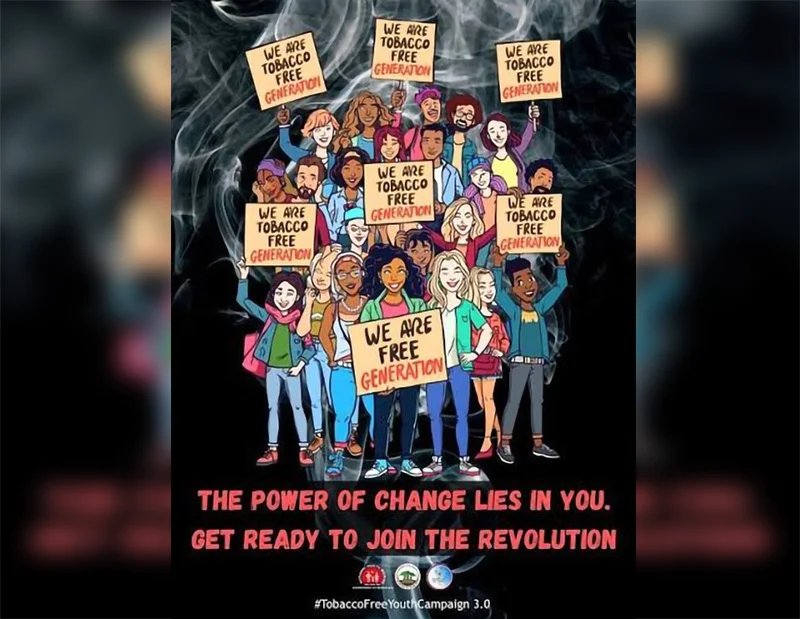
Open letter to President Anura Kumara Dissanayake
We respectfully call on Your Excellency and the Honourable Minister of Health to adopt a Tobacco-Free Generation policy, that prohibits the sale of all tobacco products to any person born on or after 01 January, 2010.
It is a futuristic, step-wise commitment to the children of our nation. Tobacco is the most destructive commercial product in the world, engineered deliberately by an industry that profits from it. Our children deserve to inherit freedom from this substance that kills one of two of its users. This appeal is based on the following grounds.
* In Sri Lanka it is estimated that tobacco kills 20,000 people annually, in addition to causing widespread economic losses which was estimated to Rs. 214 billion in 2019. This is in addition to the misery that tobacco causes to its users and families due to dependence, expenditure, economic loss and from diseases caused by tobacco. These diseases range from heart disease, strokes, and cancers to dementia and blindness. It is also a gateway drug to other substances including cannabis and heroin.
* It is well known that the tobacco industry deliberately and systematically targets young people through digital media, point of sale displays and product design. Children initiated into tobacco use during adolescence bear lifelong health consequences, contributing to reduced workforce productivity, increased healthcare costs and preventable premature death. Sri Lanka’s ageing population and declining birth rate make the health of younger generations a matter of direct national economic relevance. A Tobacco-Free Generation policy addresses these harms at source, with long-term benefits to public health, workforce capacity and health system sustainability.
* This is also a policy grounded on international commitments of Sri Lanka, as well as its own national laws. Sri Lanka is a State Party to the WHO Framework Convention on Tobacco Control (FCTC) – being the first country in Asia to ratify it – as well as the Convention on the Rights of the Child, the International Covenant on Economic, Social and Cultural Rights, and International Labour Organisation Conventions. Collectively, these instruments require states to protect children from preventable harm, uphold their right to the highest attainable standard of health, and shield them from commercial exploitation. Sustainable Development Goals further commits all signatory nations, which includes Sri Lanka, to strengthen FCTC implementation as a specific development obligation.
* The National Authority on Tobacco and Alcohol Act No. 27 of 2006 already mandates discouraging tobacco use among children and curtailing their access to tobacco products. The proposed policy is consistent with and is a direct extension of these existing obligations of this Act.
* This policy is by design a long-term measure. Its public health impact will be realised progressively as successive groups reach adulthood, free from tobacco initiation. Similarly, any effects on tobacco-related employment, revenues, retail and cultivation will unfold gradually over many years, providing ample time for affected industries and livelihoods to adapt other alternatives.
* The Tobacco-Free Generation model has gained significant momentum internationally. The Maldives became the first country in the world to enact such legislation, prohibiting tobacco sales to all persons born after 01 January, 2007. The United Kingdom followed, with the Tobacco and Vapes Act in 2026, permanently banning tobacco sales to anyone born on or after 01 January, 2009, Canada, Denmark, Singapore and the European Union are each at various stages of discussing, examining or adopting comparable measures. The policy is no longer at the margins of tobacco control debate.
Sri Lanka is no newcomer to this fight against this killer substance. In 2003, Sri Lanka ratified the WHO Framework Convention on Tobacco Control (FCTC) as the first country in Asia and the fourth in the world to do so. The Sri Lanka National Authority on Tobacco and Alcohol Act has been considered one of the best examples of comprehensive tobacco control laws during the last 20 years. As you are aware, this law was enacted, despite strong and sustained opposition from the tobacco industry.
Every day this policy is delayed, another group of Sri Lankan children are exposed to an industry whose profit depends on recruiting them. As around 50 people are killed by tobacco use each day in Sri Lanka, the industry needs to snare at least 50 new users daily to maintain its profits.
Sri Lanka has the legal framework, the international standing and consensus to act. Therefore, we earnestly urge Your Excellency and the Honourable Minister to take this step not only as a matter of sound public health policy, but also as a demonstration of your commitment to the wellbeing of the of children and young people who will define Sri Lanka’s future.
The Presidents of the following professional Colleges and Associations have strongly endorsed and signed this appeal to Your Excellency. This list is annexed for your perusal.
We assure that we stand ready to support Your Excellency in this effort in every way we can.
Dr. Manilka Sumanatilleke
President, Sri Lanka Medical Association
Dr. Anula Wijesundere
Chairperson, Expert Committee on Tobacco, Alcohol and illicit Drugs
President of Ceylon College of Physicians
Prof. Namal Wijesinghe
President of The College of Surgeons of Sri Lanka
Prof. Ajith Malalasekera,
President of Sri Lanka College of Obstetricians & Gynaecologists
Prof. Rukshan Fernandopulle,
President of College of Peadiatricians of Sri Lanka
Prof. Pujitha Wickramasinghe,
President of Sri Lanka College of Pulmonologists,
Dr Sumana Handagala,
President of Sri Lanka College of Cardiology
, Dr Asunga Dunuwille,
President of Sri Lanka College of Oncologists
, Dr Sanjeewa Gunasekera,
President of Ceylon College of Critical Care Specialists,
Dr A. D. Mudalige,
President of Association of Sri Lankan Neurologists,
Dr Dilum Palliyaguruge,
President of Sri Lanka College of Haematologists,
Dr T. Sooriyakumar,
President of the College of Ophthalmologists of Sri Lanka,
Dr K. R. Dayawansa
President of Sri Lanka College of Psychiatrists,
Dr Dasanthi Akmeemana
President of Sri Lanka College of Endocrinologists,
Dr Tharanga Samarakoon,
President of the College of General Practitioners of Sri Lanka,
Dr Pushpa Weerasinghe,
President of the College of Community Physicians of Sri Lanka,
Dr Vindya Kumarapeli,
President of Sri Lanka College of Radiologists,
Dr. Nayana Samarasinghe,
President of Sri Lanka College of Dermatology and Aesthetic Medicine,
Dr. Nayani Madarasingha,
President of the College of Dentistry and Stomatology,
Dr Pemith Liyanage
CC: Hon. Dr Nalinda Jayatissa, Minister of Health, Dr Anil Jasinghe, Secretary, Ministry of Health

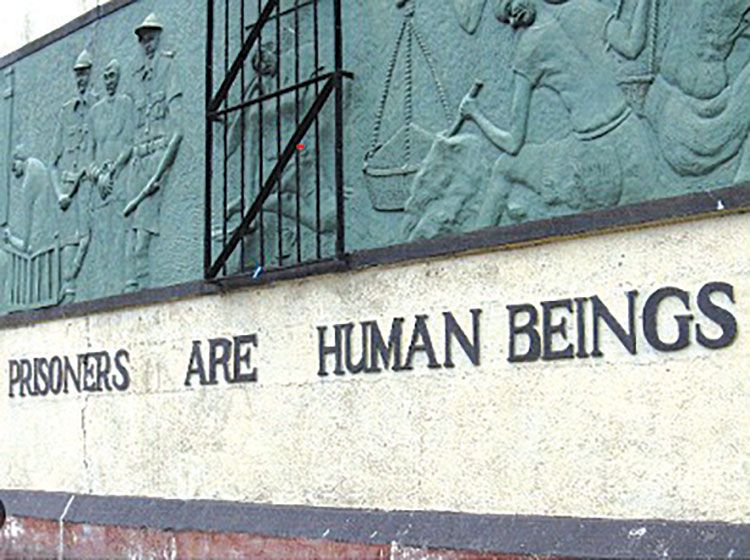
In developed countries such as US, prisons are normally built, far away from City Areas because of the risk of prison breaking as happened recently in Negombo. For an example, just imagine what would be the fate of people around Colombo, if an attempt to break the jail in Welikada become a success. Therefore, it is necessary to introduce strategies to discipline our prisoners to behave as humans rather than simply displaying above message to the people living outside of the prison, as happened in Sri Lanka. To materialised above idea. it is necessary discipline prisoners mentally before they are released. As a Buddhist country we could develop our own model based on Buddhist Stanza such as Wanaropa Sutta to mentally discipline the prisoners. According to that Stanza, people would naturally get self-disciplined themselves while growing trees
The World Health Organization (WHO) reports, that the food not only affects physical and mental health, but is also key to successful rehabilitation and resettlement after release of prisoners. Recognizing this, many organisations and correctional facilities are striving to create a stronger and more sustainable food system among prison populations, which totaled more than 10.35 million globally in 2016, according to the World Prison Brief.
Based on above observations, we could creatively plan to relocate our prisons outside cities. For an example, already ecologically damaged area adjacent to Wilpattu Sanctuary could be used to build an ecofriendly prison. It should be designed with qualified Landscape Architects specialized in designing ecofriendly prisons as adapted in other countries. Those projects should be a joint effort with prisoners because the prisoners themselves should also become the partners of the project while rejuvenating original forest cover after project completion. While creating the forest cover, in the case of Wipattu, we could also use our traditional Chena Cultivation approaches which are now treated in developed countries as most sustainable land use method, to produce healthy foods without damaging eco systems.
By that approach, we could also transform whole prison premises to Organic Food Production Farm, managed by the prisoners themselves. This is very common in developed countries. In my view, the prisoners serving long term jails are ideal for this effort. After their release, they would definitely duplicate their experience in their residence areas rather than repeating crimes as happening now days. They also could be entitled for any profits generated from the project which takes about 5 years for completion. Income generating from farms could be deposited into the bank accounts of prisoners in order to use it after their release.
Another potential area for this intervention is Kandakadu Prison, which was an Agriculture Farm before it was transformed to a rehabilitation camp. Being located adjacent to an area with elephant population and the Beach in Batticaloa, eco-tourism hotel might be the best option for this area. Income generation from tourism is the return on investment which could be used to duplicate same concept to similar locations. Another potential area is the Right Bank area of Maduru Oya located near an Army Camp. Animal Husbandry is ideal for this area. Another potential area is Manthieu island, Batticoloa.
Capital required to invest for this type intervention could be generated by selling the urban areas currently allocated to prisons. Sri Lanka Army could be the ideal implementation agency mainly because of possible reluctances of Prison Officers to work in remote areas such as Wilpattu.
Mahinda Panapitiya
For centuries, many travellers have waxed eloquent about Sri Lanka, the “Resplendent Isle.” They spoke of lush tea estates, golden shores, and a spirit of much-admired spontaneous hospitality that defined our Pearl of the Indian Ocean. But today, the residents of this isle know a different reality; one not of postcards, but of grease, grit, and the grinding misery of a transport system, virtually in terminal collapse. To move from Point A to Point B in modern Sri Lanka is no longer a simple errand; it is a “Herculean effort” of survival against a backdrop of state incompetence, private-sector thuggery, total disregard for human decency and a government that seems to have outsourced its conscience to the highest bidder.
For the millions who call this thrice-blessed island home, the daily reality of navigating it by any form of transport has become a “major catastrophe” of Dickensian proportions. To move from Point A to Point B in 2026 is no longer a simple logistical task; it is a distasteful test of human endurance, a drain on the spirit, and a gamble with one’s own safety. The current transport status of Sri Lanka is not merely “poor”, a terminology that defies even proper definition. It is a monumental systemic failure, a toxic cocktail of state negligence, private-sector extortion, and a total collapse of regulatory oversight.
The Iron Horse in Decay: A Rail Service in Tatters
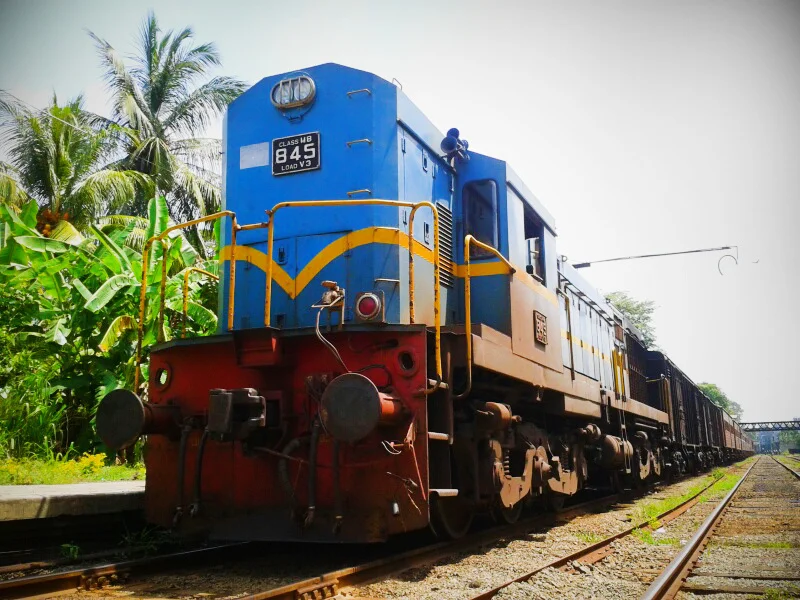
At the heart of our transit woes is the state-run surface rail service. As the only transport entity exclusively handled by the government, the railways should be the backbone of our economy. Instead, they have become a testament to nonchalant and omnipresent bureaucratic apathy. The carriages, many of which look as though they have not seen a lick of paint or a structural repair since the mid-20th century, are in a state of advanced decay.
The statistics tell a grim story. Derailments have become so frequent that they are no longer headline news but a daily footnote in the lives of commuters. These “accidents” are rarely the acts of God; they are the inevitable results of poor maintenance of tracks and rolling stock. Unacceptable delays are now the standard operating procedure. A journey that should take an hour often stretches into three, leaving students, office workers, and labourers stranded on sweltering platforms while the authorities offer nothing but silence or hollow excuses. While other nations race toward high-speed travel connectivity, our “Queen of Jaffna” and “Udarata Menike” crawl through a landscape of systemic neglect.
The symptoms are visible to any commuter: rusted carriages with leaking roofs, seat upholstery that has not seen a deep clean since the 1970s, and an electrical system prone to sparks and darkness. But the issues run deeper than aesthetics. We are witnessing a terrifying frequency of derailments, often blamed on “technical faults” that are actually the predictable results of poor track maintenance and a lack of spare parts. Accidents at unprotected crossings continue to claim lives, while “unacceptable delays” have become the only predictable feature of the timetable. For the office worker in Colombo Fort or the student in Peradeniya, the train is no longer a vessel of progress; it is a gamble with time and safety.
The Bus “Mafia” and the Ransom of the Commuter
If the rail service is a ghost of a bygone era, the fee-levying bus service is a modern-day war zone. The landscape is split between the state-run Sri Lanka Transport Board (SLTB), burdened by a very poorly maintained fleet of ageing buses and a massive and aggressive fleet of private buses, which outmatch and outperform the state-run flotilla, not by efficiency but by sheer intimidation. It is absolutely crucial to note that neither serves the public. The SLTB really operates a skeletal, poorly maintained fleet that barely scratches the surface of demand. The private buses are a law unto themselves.
At the heart of the private transport sector lies an association that critics have aptly dubbed a “Mafia.” Headed by the influential figure colloquially known as “Bus G”, this association holds the entire nation’s commuters to ransom. At the drop of a hat, they can paralyse the country with “trade union action” that are little more than unsophisticated blackmail. In a telling ransom note, whenever a policy change or a fuel hike threatens their bottom line, the buses disappear from the roads. The result? Thousands of citizens are stranded in the blistering heat, watching their productivity and dignity evaporate while the “association” negotiates with a government that appears to be absolutely terrified of their political muscle.
There is a dark irony in the politics of it all. The kingpins of this “bus mafia” openly boast that they were instrumental in bringing the current political powers into office. Consequently, the government appears not just toothless, but complicit. While the public suffers, the state turns a blind eye to overcrowding, reckless driving, and the use of nasty, addictive drugs by the staff, which turns our highways into graveyards. The powers-that-be do not have the gumption to call a spade, just that, a spade, and rein in the miscreants, using the finest employment of the laws that govern this country.
The Law of the Tuk-Tuk: A Free-for-All on Three Wheels
Descending further into the chaos, we find the omnipresent three-wheeler and taxi services. Once a convenient alternative, the “Tuk-Tuk” has become a law unto itself. In a country where the cost of living is already spiralling, these unscrupulous operators have created a “free-for-all” fare system. There is no central control over rates; instead, passengers are forced to haggle or succumb to whatever arbitrary figure the driver decides upon. For those who can afford to bypass the buses, the totally inconsiderate charges of three-wheelers and private taxis offer no sanctuary. What was once a convenient last-mile solution has devolved into a predatory racket. The tuk-tuk services have become stallions of self-importance, operating without any meaningful oversight of rates or conduct.
Commuters are met with the nonchalant refusal of short-distance hires. Drivers, seeking to “make a fast buck,” prioritise long-distance hauls where they can extort exorbitant, unmetered fares. In the absence of a standardised digital fare system enforced by the state, the passenger is always the loser. The arrogance is palpable, and respect for fellow humans has been thrown out the window. These operators behave as if they own the asphalt, often claiming that their collective vote base was the kingmaker for the current political establishment. This perceived “immunity” has bred a culture of impunity where the commuter is treated as a nuisance rather than a customer.
For the elderly trying to reach a hospital or a worker trying to get home during a rainstorm, the “refusal” has become a standard, insulting rejection. The fee-levying taxi services, though slightly more professional in appearance, operate with a similar mercenary mindset, exploiting the desperation of a public that has no other choice.
The RMV Mess, the Registration Trap and the Police Ambush
For those who have attempted to escape the public transport nightmare by purchasing their own vehicles, a different kind of trap awaits. The government has allowed the mass import of private vehicles, including two-wheelers, but the Registrar of Motor Vehicles (RMV) has become a black hole of inefficiency. Delays in vehicle registration now run into several months. Despite a surge in private vehicle imports, the bureaucracy has ground to a resounding halt. Vehicle owners face “blatant delays” in registration that extend for several months, leaving them in a bureaucratic and legal limbo.
The situation is worsened by the government’s decision to halt the private-sector issuance of number plates, centralising it into a system that is currently a “total mess.” Tens of thousands of vehicles are forced to ply the roads displaying only engine and chassis numbers, a temporary measure born of necessity. Yet for all that, and totally against even a minuscule iota of any consideration, the Police Department seems to have missed the memo and become a set of hungry predators. Officers wait in ambush, charging these owners with hefty fines for being on the road without official number plates; plates that the state itself has failed to provide. It is an avaricious cycle, where the state fails to register your car or motorcycle, and then the state’s law enforcement arm punishes you for that very failure. Rather than focusing on the blatantly reckless bus drivers or the lawless Tuk-Tuks, Police Officers wait in ensnarement to pounce on these “unregistered” vehicles. Even when owners produce documents proving the delay lies entirely with the RMV, they are charged and fined. The message is clear: the citizen must pay for the government’s failure.
The Prohibitive Cost of Mobility
Overseeing all of this is the crushing weight of fuel prices. The government continues to raise the cost of petrol and diesel with scant regard for the downstream consequences. These so-called “cost-reflective” adjustments may look good on a balance sheet in Washington or at the International Monetary Fund, but on the ground in Colombo and Kandy, they are prohibitive. Every hike in fuel prices triggers a “ripple effect” that raises the price of bread, vegetables, and, of course, the very transport that people use to get to work to pay for those goods.
Finally, a Nation at a Standstill
The transport crisis is not just a logistical problem; it is a moral one of utter social degradation. It reflects on a government that has abandoned its primary duty: to provide the infrastructure for a functioning society. We are living on a “glorious isle” where the beauty of the landscape is now obscured by the soot of a broken bus and the stress of an uncertain commute. Going from Point A to Point B has become a major travail of unbelievable misery.
Overseeing this chaos is a government that views the fuel pump as an Automated Teller Machine (ATM). The cost of all fuel types, from petrol to the diesel that powers the nation’s mobility has reached “absolutely prohibitive” levels. With scant regard for the domino effect on the cost of living, the authorities and the powers-that-be continue to raise prices, fuelling a major catastrophe of economic inflation.
For the average Sri Lankan, the “travail of unbelievable misery” is now constant. We are a nation on the move, but we are moving towards a cliff from which we are likely to fall into an abyss of no return. Until the transport sector is stripped of its political “protectors” and returned to the service of the people, this “Resplendent Isle” will remain a beautiful prison for those trying to get from Point A to Point B.
If the current administration continues to protect the infamous “mafias”, ignore the decay of the rails, and profit from the administrative chaos of the RMV, and totally fail to get their act together, they are not failing just the transport sector; they are in fact failing the very heart of the nation for sure. Our Motherland, Sri Lanka, deserves a whole lot better than a state of an ever-present and unending transit catastrophe. All the rhetoric about a rich country and a beautiful life that was promulgated in the not-too-distant past remains only as unbelievable wishful thinking.
By an Aficionado

Qatar’s Father Emir Sheikh Hamad bin Khalifa Al Thani laid to rest in Doha

Brendon McCullum removed from post as England Men’s Test coach

Yastika century, seamers put India on the brink of historic win at Lord’s

Showers will occur in the Sabaragamuwa, Western and North-western provinces and in Kandy, Nuwara-Eliya, Galle and Matara districts.

JSA opposes move to extend retirement ages of superior court judges

Next two weeks critical as dengue risk soars

‘Dates have the highest sugar content to fight Coronavirus’

Sunday Island 27 December – Headlines

#SundayIsland 17th December – Headlines

Sunday Island – 28th March

Sunday Island Headlines – 21 March

Sunday Island – 21st February – Headlines
-
 News3 days ago
Herath warns prospective migrant workers not to get fleeced by racketeers
-

 Midweek Review5 days ago
Unexpected focus on ‘pieces of tin’ worn by military men
-
 Features1 day ago
Prison riots and politics: NPP’s biggest challenge and Sri Lanka’s biggest opportunity
-

 Latest News6 days ago
Nyamhuri and Ngarava stun Bangladesh by defending 141
-

 Editorial2 days ago
What’s the world coming to?
-
 News4 days ago
Negombo Prison riot: Ensuring protection of prisoners fundamental responsibility of the state – UN
-
 Features3 days ago
Devanesan Annan – in Memoriam
-
 Foreign News3 days ago
Tensions erupt in Indian state after 11-year-old raped and murdered