
Business
Korea – Sri Lanka diplomatic relations mark 45th Anniversary today

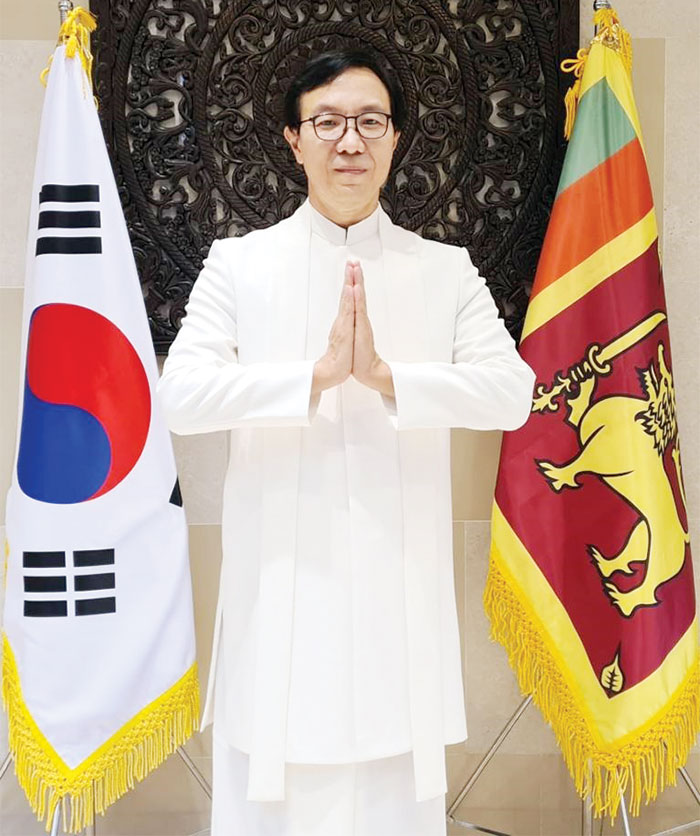
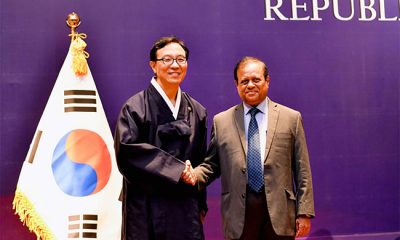
Korea has been a friend of Sri Lanka in its hour of need, says Ambassador Santhush Woonjin Jeong
This is an opportunity for our two Asian nations to redouble our efforts to attain regional peace and prosperity’
November 14th 2022 (today) marks the 45th anniversary of the establishment of the diplomatic ties between Korea and Sri Lanka. Issuing a press statement on the important occasion, Ambassador of the Republic of Korea to Sri Lanka, Santhush Woonjin Jeong says that he would like to celebrate the meaningful day together with Sri Lanka and Sri Lankan people.
“Since the establishment of diplomatic relations in 1977, our relationship has been robust. Korea and Sri Lanka have many common factors such as similar geographical location and historical experiences that have contributed to a deeper mutual understanding. As the Korean Ambassador, I have made numerous efforts to elevate our relations on in a whole spectrum of fields of mutual interest spanning political, economic, education, and cultural cooperation,” , he says.
The Ambassador further notes:
“When it comes to development projects, I proudly introduce the major achievements made by KOICA, EXIM bank Korea in collaboration with the Government of Sri Lanka. KOICA has conducted numerous projects with pivotal strategic goals such as education, transportation, water resources, food, and agricultural development, and successfully elevating the development of Sri Lanka. I truly believe that as a reliable friend, Korea is a trustworthy partner of Sri Lanka to meet the current needs of national development. With these as momentum, the bilateral ties are expected to widen and deepen further in the coming years.”
“Sri Lanka is a priority official development assistance cooperation partner country and also one of the top five nations to benefit from its Economic Development Cooperation Fund (EDCF). Sri Lanka is so precious to Korea. The investment in various ODA projects and grants benefitting Sri Lanka since 1987 exceeds US$ 900 million in a total of concessional loans through the Export-Import Bank of Korea (Korea Eximbank). For instance, the Framework Arrangement enabling the Sri Lankan Government to obtain soft loans of a value of up to $500 million (USD) from the Economic Development Cooperation Fund (EDCF) of the Korean Government was set up for the years 2020 to 2022. At the same time, the New Village Movement known as the Saemaul Foundation in Sri Lanka and KOPIA has achieved success in developing rural livelihood through meaningful initiatives implemented in Sri Lanka.”
“I believe that deepened economic engagement is important to harness synergetic opportunities in trade and investment. Sri Lanka is strategically valuable considering its geopolitically significant location, abundance of natural resources, and skilled human resources. Korea’s capital and state-of-the-art technology will be complementary to create the perfect synergies for our two countries to advance bilateral economic cooperation. The trade volume between Korea and Sri Lanka has increased by 30-fold since its establishment of diplomatic ties in 1977. Korea was one of the biggest investors in Sri Lanka in the 1990s. Like the Korean journey towards economic development, well known as the ‘the Miracle on the Han River’ of Korea, I would like to witness Sri Lanka work ‘a Miracle on the Kelani River’ in the near future. Challenge is another chance. It is now time to realize the untapped potential of this beautiful country and achieve our common economic goals together. KOTRA in Colombo, a specialized agency for commercial ties, is working very hard to consolidate our bilateral economic cooperation.”
“The ongoing labour cooperation is a very important aspect of our bilateral relations. Around 25,000 Sri Lankan workers are presently employed in Korea, contributing to economies of our two countries. Before the COVID-19 pandemic, they have transmitted around 520 million USD annually to Sri Lanka in 2019. The EPS centre in Colombo has contributed to the facilitation of migrant employment and promotes the bilateral labour relations. Sri Lankan employees in the Republic of Korea are a great asset to strengthen economic and commercial ties of both countries.”
“Cultural cooperation is also a key pillar of our bilateral cooperation. Korean dramas, movies, music and cuisine have attracted a global audience including Sri Lankans. I thank all Sri Lankans for your interest and enthusiasm shown for the Korean culture, cinema, dramas, and cuisine. In commemoration of the 45th anniversary of diplomatic relations between Korea and Sri Lanka, the Korean Embassy organized a series of special cultural events like the Korean Lantern Festival, Quiz on Korea, K-pop World Festival and Korean Ambassador’s Taekwondo Championship, Korean Film Festival and the Virtual Tour to Korea 2022. The love and support shown by Sri Lankans for these events is a source of great motivation and encouragement for the Korean Embassy. I hope that you will continue to stand with us and promote the Korean culture. Of course, I would like to make more efforts to promote cooperation between our two countries in the fields of movies, dramas and culture.”
“Reflecting on the growing interest in the K-wave among the Sri Lankan people, Korean language has been officially adopted as a foreign language in the advanced level curriculum from last year and students can sit for the Korean language examination in the university entrance examination by 2023.The Sri Lankan Education Ministry’s proactive initiatives to adopt the Korean language are well appreciated and commended by Korea.”
“I also mention that Korea has been a friend of Sri Lanka in its hour of need. International cooperation and solidarity were key factors to overcome global challenges that the world faced. Korea made utmost efforts to join the global efforts to respond to the COVID-19 pandemic as a responsible member of the international community. The Republic of Korea has stood in solidarity with Sri Lanka to help strengthen the government of Sri Lanka’s national response to the pandemic. Under the “stay strong” campaign, Korea has been a friend indeed in times of need, by donating around $3 million worth of equipment to combat the COVID-19 virus in Sri Lanka in the last two years.”
“I believe that the 45th Anniversary of the establishment of diplomatic relations will be a great opportunity for our two Asian nations to redouble our efforts to attain regional peace and prosperity. Korea is one of the most significant countries which can assist Sri Lanka in realising the vision for its future. I look forward to the next 45 years to make our bilateral relations more prosperous and productive.”
“As the Ambassador of the Republic of Korea like the meaning of my Sri Lankan name “Santhush,” I would like to carry happiness to Sri Lanka. I love Sri Lanka. I love Sri Lankan people. On this occasion of celebrating this important milestone, on behalf of the government and the people of the Republic of Korea, I take this opportunity to wish every success, peace, and prosperity to the government and the friendly people of Sri Lanka. I will closely work with all of you to achieve our common goals.”




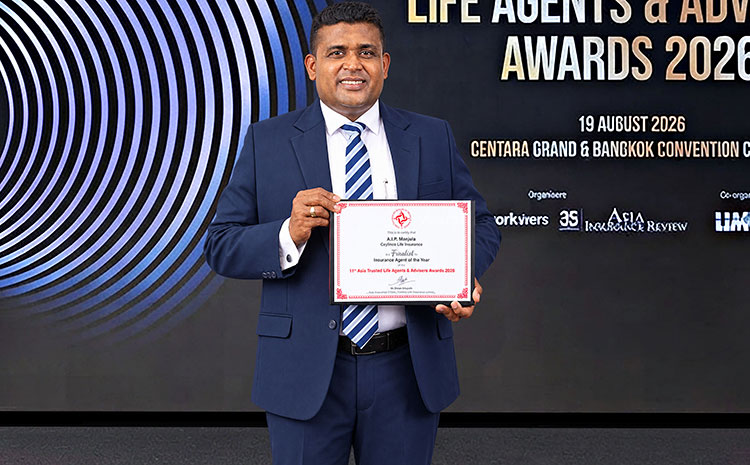
Ceylinco Life’s Ambalantota branch agent AIP Manjula has been named one of three global finalists for the prestigious Insurance Agent of the Year award at the 11th Asia Trusted Life Agents & Advisers Awards (ATLAA) 2026.
The recognition places a Sri Lankan insurance professional among the finalists in a regional field spanning South Asia, Southeast Asia, East Asia and the wider Asia-Pacific region.
Ceylinco Life said the achievement reflected the calibre and customer-focused approach of its agency force, while recognising Manjula’s professionalism and commitment to policyholders.
The award evaluates insurance agents on criteria extending beyond sales performance, including ethical conduct, client service, policy persistency, digital adoption, innovative practices and contributions to the insurance industry and community.
The awards are organised by Asia Advisers Network and Asia Insurance Review, with LIMRA as co-organiser. An independent judging and balloting process is monitored by KPMG as the official scrutineer. The judging panel comprises senior insurance executives, association presidents and industry experts from across the Asia-Pacific region.
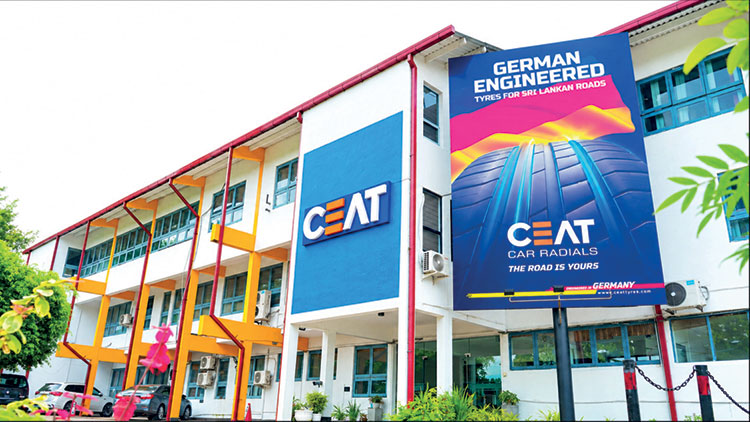
CEAT Kelani Holdings (CKH) has retained its National Long-Term Rating of ‘AA+(lka)’ with a Stable Outlook from Fitch Ratings for the sixth consecutive year, reflecting the company’s financial resilience and leading position in Sri Lanka’s pneumatic tyre market.
The ‘AA+(lka)’ rating, the second-highest on Fitch’s national scale, indicates a very strong capacity to meet financial commitments.
Fitch said CKH’s established market leadership and resilient financial profile remained key strengths, while noting its exposure to price-sensitive, cyclical and highly competitive markets.
The Stable Outlook reflects expectations that the company will maintain its market position despite rising input costs and increasing competition from imported tyres, while preserving adequate credit metrics during periods of weaker earnings and higher investment.
Fitch expects CKH’s established brand, extensive dealer network and adaptive pricing strategies to support its market position. Planned production facility upgrades are also expected to improve product quality, particularly in the radial tyre segment.
The rating agency expects near-term pressure on margins from higher raw material and energy costs but said the company’s low leverage and sound liquidity would provide a cushion.
CKH Chairman Chanaka De Silva said the rating reinforced the company’s focus on disciplined financial management, operational adaptability and long-term investment.
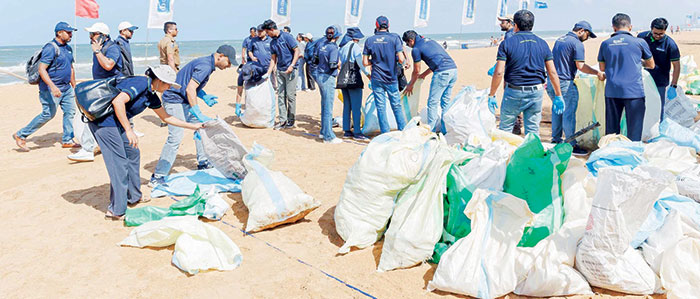
Commercial Bank of Ceylon mobilised employees, customers, volunteers and community members for a nationwide coastal and aquatic clean-up campaign across 20 locations on September 19 to mark International Coastal Cleanup Day 2026.
Conducted under the bank’s sustainability platform, themed ‘Forward Together for a Cleaner Future’, the initiative covered 16 coastal locations and four inland waterways, bringing together stakeholders for a coordinated environmental conservation effort.
The flagship programme was held at Mount Lavinia Beach, with additional activities at Wellawatte and Galle Face beaches. Similar initiatives were conducted by the bank’s regional offices at locations including Kalutara, Negombo, Trincomalee, Batticaloa, Puttalam, Jaffna, Galle, Dondra, Tangalle and along the Mahaweli River.
Employees, management, Future Force volunteers, customers and their families participated alongside the Marine Environment Protection Authority (MEPA), United Nations Global Compact Network Sri Lanka, government and local authorities, environmental organisations and community members.
The bank said the initiative reflected its commitment to water stewardship after adopting Sustainable Development Goal 6 — Clean Water and Sanitation — as a priority goal in 2025.

Buttler out of Oval decider as Lawrence earns ODI call-up

Showers will occur in the Western, Eastern, Uva and Sabaragamuwa provinces and in Galle, Matara, Kandy and Nuwara-Eliya districts.

Nor’easter brings flooding as New York and New Jersey declare emergency 2 hours ago

Trump rejects Iran deal to reopen Strait of Hormuz in seven days

Govt plans to hire 121,000 state workers, redistribute tax revenue

Parliament clears 22A amid protests

‘Dates have the highest sugar content to fight Coronavirus’

Sunday Island 27 December – Headlines

#SundayIsland 17th December – Headlines

Sunday Island – 28th March

Sunday Island Headlines – 21 March

Sunday Island – 21st February – Headlines
-

 News4 days ago
Mastermind Naufer Moulavi among 15 found guilty
-
 News6 days ago
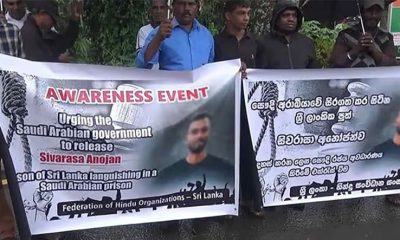
Hatton youth protest against reported death sentence for Lankan in Saudi Arabia
-
 News5 days ago
Protest against setting up of cement factory in highly populated area near BIA
-
 News6 days ago
Mahaweli rises as heavy rain triggers flood, landslide fears
-

 Latest News7 days ago
Landslide Red Alerts issued to the districts of Kandy, Kegalle and Nuwara Eliya
-
 Midweek Review4 days ago
Thileepan’s fast unto death: An authentic narrative that many missed
-

 Editorial4 days ago
Big Bad Bills
-
 Latest News3 days ago
Showers above 100 mm are likely at some places in the Western, Sabaragamuwa, Central and North-western provinces and in Galle and Matara Districts