
Features
King Donald and the executive presidency


“…Cicero’s tongue will have to be torn out, Copernicus’s eyes gouged out, and Shakespeare stoned. That is my system.” Dostoyevsky (The Possessed)
In 1787, Louis XVI summoned the Paris Parliament to approve a loan for his financially struggling government. The Parliament refused its consent on the grounds that only the nation, represented by the Estates General, could authorise new taxes or loans. Louis ordered the edict approving the loan be transcribed in the Parliament’s register. The Duke of Orleans objected saying this would be illegal. “The king replied that everything he did was legal” (The Revolutionary Temper: Paris, 1748-1789 – Robert Darnton).
In 2013, Mahinda Rajapaksa impeached a chief justice for refusing to give a pass to an anti-constitutional piece of legislation. In 2020, Gotabaya Rajapaksa said that his verbal orders should be considered as circulars. But even critics of presidentialism regarded monarchical presidents as a Rajapaksa, Lankan or a Third World malaise. That the United States, with its long established institutional, legal, and procedural guardrails, was an exception to this rule was regarded by one and all as an incontrovertible fact.
In 2025 those comforting delusions are crumbling as Donald Trump rides roughshod over vital American institutions from the Harvard University to the supreme court, insisting that his will overrides every other law, tradition, and consideration. Executive presidency’s vulnerability to authoritarianism can no longer be explained away as a Rajapaksa, Sri Lankan or third-world problem. It’s a weakness deeply embedded in the blood, bones, and sinews of the system itself which places a single individual (elected or not) at the apex and centre of power.
The first pushback against JR Jayewardene’s 1971 proposal for an executive presidential system came not from the SLFP or the left, but from within the UNP. Dudley Senanayake, a man less blinded by ambition and less wedded to power than most Lankan leaders before or since, pointed out, in remarkably prescient language, the unsuitability of an executive presidency for Ceylon in 1971: “The presidential system has worked in the United States where it was the result of a special historic situation. it worked in France for the same reasons. But for Ceylon, it would be disastrous. It would create a tradition of Caesarism. It would concentrate power in a leader and undermine the parliament and the structure of the political parties” (Daily Mirror – 8.10.1971 – quoted in JR Jayewardene of Sri Lanka – KM de Silva and Howard Wriggins).
Mr. Senanayake was dead right about Ceylon/Sri Lanka, but wrong in his sanguinity about the United States. In 2025, Donald Trump celebrated his administration decision to terminate federal approval for New York’s pricing programme by writing on his social platform Truth Social, “CONGESTION PRICING IS DEAD. Manhattan and all of New York is SAVED. LONG LIVE THE KING.” When a fallible individual is placed at the head of the state and government, the danger of that individual seeing himself/herself as an uncrowned monarch is innate to the system itself (not to mention human mentality). The potential may remain dormant for a long time, but non realisation doesn’t mean non-existence.
As the United States and the world are finding out with King Donald I.
Democratic Penguins Republic
A monarchy is as good, bad or mad as the monarch. This is true of the executive presidency as well. When Maithripala Sirisena unleashed confusion and mayhem on the country with his anti-constitutional coup of 26 October 2018, satirical website News Curry responded with a tweet – “Sales of Marijuana, Cocaine and Ecstasy stall as drug users demand something stronger. Please give us whatever…President Sirisena is smoking,’ said several druggies.” Gotabaya Rajapaksa was so non compos mentis, he turned governance into a theatre of absurdity to which nothing insane was alien.
Now Donald Trump is following suit, busting the myth of American exceptionalism with one insane measure after another.
In the course of his tariff rampage, President Trump slammed 10% taxes on some strange places. Like Jan Mayen island, a small volcanic landmass with no people and lots of polar bears; and the Heard Island and the McDonald Island, both volcanic and both inhabited only by penguins. A You Tube video which went viral captures the absurdity of Trump-economics. Nettled by the unfair tariffs, the hitherto peaceful and retiring penguins of the McDonald Island form an army to wage war on the US. “…an orange hand reached out in shame – and now the world shall learn our name… They taxed our fish they asked for more – we answer tariff with total war” (https://www.youtube.com/watch?v=HJ8qGOe2K0o).
It is relatively easier to remove a prime minister who crosses the line too often and/or too much. But impeaching a president is a near-impossibility. As Dr Colvin R de Silva warned, “The procedure provided for the removal of a President by Parliament is so cumbersome and prolix…we can be ruled by a mad President for quite a time” (https://www.cpalanka.org/wp-content/uploads/2023/09/Reforming-Presidentialism-27.pdf). Sri Lanka had to suffer under Gotabaya Rajapaksa until he pushed the country into bankruptcy. Donald Trump may do the same – or worse – to the US in the three and a half years remaining to him.
Executive presidency creates a network of patronage which, like monarchy, is centred around an individual. The president becomes the ultimate source of reward and punishment. The Rajapaksas, for instance, used presidential powers to heap largess on acolytes and persecute opponents, often breaking laws and violating norms. Donald Trump too is creating a “brazenly transactional ecosystem…which rewards flattery and lockstep loyalty,” Antonia Hitchens writes. “Recently, a group of prominent Republicans and members of the first Trump Administration signed an open letter comparing the President to a ‘royal despot.’ The insult, however, may not have landed with Trump, who, on February 19th, posted ‘LONG LIVE THE KING,’ referring to himself. But praise for a king often comes, at least in part, from a sense of fear over the power he wields. ‘We are all afraid,’ Lisa Murkowski, the Republican senator from Alaska, said last week… ‘I’ll tell you, I’m often-times very anxious myself about using my voice, because retaliation is real’ (https://www.newyorker.com/magazine/2025/04/28/how-trump-worship-took-hold-in-washington).
JR Jayewardene introduced the presidential system as part of an overall plan with three main objectives, wrote his biographers, KM de Silva and Howard Wriggins: “political reconstruction and democratic revival; economic regeneration; and a constructive accommodation of minority interest, especially those of the estranged Tamil community” (JR Jayewardene of Sri Lanka). These three objectives fell by the wayside early in the Jayewardene presidency. Democratic backsliding reached its nadir with the postponement of the general election through a manifestly unfree and unfair referendum in 1982. The economy fell victim to political upheavals; growth had plummeted by the end of the Jayewardene presidency. Instead of accommodating minority interests, the depredations against minorities reached a new high, and a small scale insurgency grew into a fully-fledged war. (Incidentally, the opening up of the economy took place before the presidential system was introduced while the Indo-Lanka Accord was the result of Indian pressure. Neither of these positive developments resulted from the presidential system.)
During its lifespan of nearly 47 years, Lankan presidency has undermined democracy, created instability, and institutionalised corruption and unforgivable inefficiency. Not to mention political chaos and institutional disintegration as presidents cling to the invisible crown and would-be-presidents jostle to wrest it.
The Forever Ring
In 2010, Sumanadasa Abeygunawardane, the man hailed as ‘royal astrologer’ predicted that the Rajapaksas would rule the country for the next 50 years: “President Mahinda Rajapaksa and the Rajapaksas will rule this country for a long time…. The Rajapaksas will become beloved leaders of this country…. The next chapter in Sri Lanka is reserved for the Rajapaksas” (Silumina – 7.6.2009). Three months later, Mahinda Rajapaksa brought in the 18th Amendment removing presidential term limits, paving the way for him to contest the presidency again and again.
In 2025, Donald Trump’s online store is selling merchandise emblazoned Trump 2028. These include T-shirts in navy and red priced at $38 reading Trump 2028 (Rewrite the Rules). The Rules mentioned here doubtless refer to the 22nd Amendment which limits American presidents to two (consecutive or non-consecutive terms). Changing this ‘Rule’ requires a two-thirds majority in the Senate and the Congress and three-fourth majorities in all state legislature – an impossibly tall order.
Yet, President Trump is considering a third term, as he stated in an interview with NBC; asked whether he was joking he said, “No, I’m not joking.” Questioned about the impossibility of amending the 22nd Amendment, Steve Bannon’s answer was, “There are methods of doing it” (https://www.reuters.com/world/us/trump-says-he-is-not-joking-about-third-presidential-term-2025-03-30/). Mr. Trump’s 2020 attempt to gain a second term unconstitutionally led to an armed insurgency against the Congress and the Senate. What chaos results from any attempt to bypass or ignore the 22nd Amendment remains to be seen.
In JRR Tolkien’s The Lord of the Rings, the main protagonist is the hobbit Frodo Baggins to whom the One Ring is entrusted. When he first looks carefully at the Ring, it “appeared plain and smooth, without mark or device he could see. The gold looked very fair and pure, and Frodo thought how rich and beautiful its colour, how perfect its roundness. It was an admirable thing and altogether precious. When he took it out he had intended to fling it from him into the very hottest part of the fire. But he found now that he could not do so…” The Ring had begun to possess his mind, addling it with desire.
Like Maithripala Sirisena. On 21 November 2014, having walked out of the Rajapaksa government and accepted the mantle of common presidential candidate, he addressed a media conference telling the nation what he would do if he elected. The first item on his agenda was the abolition of the executive presidency which he eviscerated as a political and moral calamity, and a crucible of injustice. “We came to a clear decision with the UNP to abolish the executive presidency,” he stated. “I ask the people to give me power to abolish the executive presidency in 100 days.”
There’s no reason to think he wasn’t sincere, at that moment. When the 19th Amendment was being discussed in 2015, he wanted to limit his presidential term to four years. The same man soon developed a taste for the presidential One Ring, tried to extend his first term from five to six years, and pushed the country into a mire of chaos simply to win Rajapaksa backing for a second term.
The JVP has opposed the executive presidency from the beginning. Anura Kumara Dissanayake and the NPP promised to abolish it, if elected. Yet, there’s not even a whiff of a coming constitutional transformation. What is indubitable is that Anura Kumara Dissanayake is enjoying being the president, acting the president. He doesn’t look as if he wants to destroy this One Ring by throwing it into the Crack of Doom.
During the presidential election campaign, the NPP/JVP carried out a superlative advertising blitz to market its candidate to a still undecided electorate. Presidential systems focus on individuals rather than parties, organisations or movements. This focus carries with it the danger of birthing personality cults. Signs of such a cult around President Dissanayake are already visible. He has become the government’s main attraction, its problem-solver-in-chief; a saviour in-the-making.
Until he became the president, Mr Dissanayake remained first among equals within the JVP. Now, thanks to the power and the glamour of the presidency, he is elevated way beyond that position of rough equality. He is the Ring-bearer and he seems to enjoying that primacy to the fullest.
The keeper of the One Ring never gives it up, Gandalf the mage warns Frodo; he only plays with that idea. So every previous promise to abolish the executive presidency was broken. Will Anura Kumara Dissanayake go where none of his predecessors did, and fulfil his pledge to end the presidency? Or will he do a Mahinda Rajapaksa, a Maithripala Sirisena, or a Ranil Wickremesinghe and stake the future of the country (and his own party) for another presidential term?
by Tisaranee Gunasekara


During a recent panel discussion titled “Security Environment in the Indo-Pacific and Sri Lankan Diplomacy”, organised by the Embassy of Japan in collaboration with Dr. George I. H. Cooke, Senior Lecturer and initiator of the Awarelogue Initiative, the keynote address was delivered by Prof Ken Jimbo of Kelo University, Japan (Ceylon Today, February 15, 2026).
The report on the above states: “Prof. Jimbo discussed the evolving role of the Indo-Pacific and the emergence of its latest strategic outlook among shifting dynamics. He highlighted how changing geopolitical realities are reshaping the region’s security architecture and influencing diplomatic priorities”.
“He also addressed Sri Lanka’s position within this evolving framework, emphasising that non-alignment today does not mean isolation, but rather, diversified engagement. Such an approach, he noted, requires the careful and strategic management of dependencies to preserve national autonomy while maintaining strategic international partnerships” (Ibid).
Despite the fact that Non-Alignment and Neutrality, which incidentally is Sri Lanka’s current Foreign Policy, are often used interchangeably, both do not mean isolation. Instead, as the report states, it means multi-engagement. Therefore, as Prof. Jimbo states, it is imperative that Sri Lanka manages its relationships strategically if it is to retain its strategic autonomy and preserve its security. In this regard the Policy of Neutrality offers Rule Based obligations for Sri Lanka to observe, and protection from the Community of Nations to respect the territorial integrity of Sri Lanka, unlike Non-Alignment. The Policy of Neutrality served Sri Lanka well, when it declared to stay Neutral on the recent security breakdown between India and Pakistan.
Also participating in the panel discussion was Prof. Terney Pradeep Kumara – Director General of Coast Conservation and Coastal Resources Management, Ministry of Environment and Professor of Oceanography in the University of Ruhuna.
He stated: “In Sri Lanka’s case before speaking of superpower dynamics in the Indo-Pacific, the country must first establish its own identity within the Indian Ocean region given its strategically significant location”.
“He underlined the importance of developing the ‘Sea of Lanka concept’ which extends from the country’s coastline to its 200nauticalmile Exclusive Economic Zone (EEZ). Without firmly establishing this concept, it would be difficult to meaningfully engage with the broader Indian Ocean region”.
“He further stated that the Indian Ocean should be regarded as a zone of peace. From a defence perspective, Sri Lanka must remain neutral. However, from a scientific and resource perspective, the country must remain active given its location and the resources available in its maritime domain” (Ibid).
Perhaps influenced by his academic background, he goes on to state:” In that context Sri Lanka can work with countries in the Indian Ocean region and globally, including India, China, Australia and South Africa. The country must remain open to such cooperation” (Ibid).
Such a recommendation reflects a poor assessment of reality relating to current major power rivalry. This rivalry was addressed by me in an article titled “US – CHINA Rivalry: Maintaining Sri Lanka’s autonomy” ( 12.19. 2025) which stated: “However, there is a strong possibility for the US–China Rivalry to manifest itself engulfing India as well regarding resources in Sri Lanka’s Exclusive Economic Zone. While China has already made attempts to conduct research activities in and around Sri Lanka, objections raised by India have caused Sri Lanka to adopt measures to curtail Chinese activities presumably for the present. The report that the US and India are interested in conducting hydrographic surveys is bound to revive Chinese interests. In the light of such developments it is best that Sri Lanka conveys well in advance that its Policy of Neutrality requires Sri Lanka to prevent Exploration or Exploitation within its Exclusive Economic Zone under the principle of the Inviolability of territory by any country” ( https://island.lk/us- china-rivalry-maintaining-sri-lankas-autonomy/). Unless such measures are adopted, Sri Lanka’s Exclusive Economic Zone would end up becoming the theater for major power rivalry, with negative consequences outweighing possible economic gains.
The most startling feature in the recommendation is the exclusion of the USA from the list of countries with which to cooperate, notwithstanding the Independence Day message by the US Secretary of State which stated: “… our countries have developed a strong and mutually beneficial partnership built on the cornerstone of our people-to-people ties and shared democratic values. In the year ahead, we look forward to increasing trade and investment between our countries and strengthening our security cooperation to advance stability and prosperity throughout the Indo-Pacific region (NEWS, U.S. & Sri Lanka)
Such exclusions would inevitably result in the US imposing drastic tariffs to cripple Sri Lanka’s economy. Furthermore, the inclusion of India and China in the list of countries with whom Sri Lanka is to cooperate, ignores the objections raised by India about the presence of Chinese research vessels in Sri Lankan waters to the point that Sri Lanka was compelled to impose a moratorium on all such vessels.
CONCLUSION
During a panel discussion titled “Security Environment in the Indo-Pacific and Sri Lankan Diplomacy” supported by the Embassy of Japan, Prof. Ken Jimbo of Keio University, Japan emphasized that “… non-alignment today does not mean isolation”. Such an approach, he noted, requires the careful and strategic management of dependencies to preserve national autonomy while maintaining strategic international partnerships”. Perhaps Prof. Jimbo was not aware or made aware that Sri Lanka’s Foreign Policy is Neutral; a fact declared by successive Governments since 2019 and practiced by the current Government in the position taken in respect of the recent hostilities between India and Pakistan.
Although both Non-Alignment and Neutrality are often mistakenly used interchangeably, they both do NOT mean isolation. The difference is that Non-Alignment is NOT a Policy but only a Strategy, similar to Balancing, adopted by decolonized countries in the context of a by-polar world, while Neutrality is an Internationally recognised Rule Based Policy, with obligations to be observed by Neutral States and by the Community of Nations. However, Neutrality in today’s context of geopolitical rivalries resulting from the fluidity of changing dynamics offers greater protection in respect of security because it is Rule Based and strengthened by “the UN adoption of the Indian Ocean as a Zone of peace”, with the freedom to exercise its autonomy and engage with States in pursuit of its National Interests.
Apart from the positive comments “that the Indian Ocean should be regarded as a Zone of Peace” and that “from a defence perspective, Sri Lanka must remain neutral”, the second panelist, Professor of Oceanography at the University of Ruhuna, Terney Pradeep Kumara, also advocated that “from a Scientific and resource perspective (in the Exclusive Economic Zone) the country must remain active, given its location and the resources available in its maritime domain”. He went further and identified that Sri Lanka can work with countries such as India, China, Australia and South Africa.
For Sri Lanka to work together with India and China who already are geopolitical rivals made evident by the fact that India has already objected to the presence of China in the “Sea of Lanka”, questions the practicality of the suggestion. Furthermore, the fact that Prof. Kumara has excluded the US, notwithstanding the US Secretary of State’s expectations cited above, reflects unawareness of the geopolitical landscape in which the US, India and China are all actively known to search for minerals. In such a context, Sri Lanka should accept its limitations in respect of its lack of Diplomatic sophistication to “work with” such superpower rivals who are known to adopt unprecedented measures such as tariffs, if Sri Lanka is to avoid the fate of Milos during the Peloponnesian Wars.
Under the circumstances, it is in Sri Lanka’s best interest to lay aside its economic gains for security, and live by its proclaimed principles and policies of Neutrality and the concept of the Indian Ocean as a Zone of Peace by not permitting its EEC to be Explored and/or Exploited by anyone in its “maritime domain”. Since Sri Lanka is already blessed with minerals on land that is awaiting exploitation, participating in the extraction of minerals at the expense of security is not only imprudent but also an environmental contribution given the fact that the Sea and its resources is the Planet’s Last Frontier.
by Neville Ladduwahetty

Far beneath the waters surrounding Sri Lanka lies a largely unseen frontier, a deep seabed that may contain cobalt, nickel and rare earth elements essential to modern technologies, from smartphones to electric vehicles. Around the world, governments and corporations are accelerating efforts to tap these minerals, presenting deep-sea mining as the next chapter of the global “blue economy.”
For an island nation whose ocean territory far exceeds its landmass, the question is no longer abstract. Sri Lanka has already demonstrated its commitment to ocean governance by ratifying the United Nations High Seas Treaty (BBNJ Agreement) in September 2025, becoming one of the early countries to help trigger its entry into force. The treaty strengthens biodiversity conservation beyond national jurisdiction and promotes fair access to marine genetic resources.
Yet as interest grows in seabed minerals, a critical debate is emerging: Can Sri Lanka pursue deep-sea mining ambitions without compromising marine ecosystems, fisheries and long-term sustainability?
Speaking to The Island, Prof. Lahiru Udayanga, Dr. Menuka Udugama and Ms. Nethini Ganepola of the Department of Agribusiness Management, Faculty of Agriculture & Plantation Management, together with Sudarsha De Silva, Co-founder of EarthLanka Youth Network and Sri Lanka Hub Leader for the Sustainable Ocean Alliance, shared findings from their newly published research examining how Sri Lankans perceive deep-sea mineral extraction.
The study, published in the journal Sustainability and presented at the International Symposium on Disaster Resilience and Sustainable Development in Thailand, offers rare empirical insight into public attitudes toward deep-sea mining in Sri Lanka.
Limited Public Inclusion
“Our study shows that public inclusion in decision-making around deep-sea mining remains quite limited,” Ms. Nethini Ganepola told The Island. “Nearly three-quarters of respondents said the issue is rarely covered in the media or discussed in public forums. Many feel that decisions about marine resources are made mainly at higher political or institutional levels without adequate consultation.”
The nationwide survey, conducted across ten districts, used structured questionnaires combined with a Discrete Choice Experiment — a method widely applied in environmental economics to measure how people value trade-offs between development and conservation.
Ganepola noted that awareness of seabed mining remains low. However, once respondents were informed about potential impacts — including habitat destruction, sediment plumes, declining fish stocks and biodiversity loss — concern rose sharply.
“This suggests the problem is not a lack of public interest,” she told The Island. “It is a lack of accessible information and meaningful opportunities for participation.”
Ecology Before Extraction
Dr. Menuka Udugama said the research was inspired by Sri Lanka’s growing attention to seabed resources within the wider blue economy discourse — and by concern that extraction could carry long-lasting ecological and livelihood risks if safeguards are weak.
“Deep-sea mining is often presented as an economic opportunity because of global demand for critical minerals,” Dr. Udugama told The Island. “But scientific evidence on cumulative impacts and ecosystem recovery remains limited, especially for deep habitats that regenerate very slowly. For an island nation, this uncertainty matters.”
She stressed that marine ecosystems underpin fisheries, tourism and coastal well-being, meaning decisions taken about the seabed can have far-reaching consequences beyond the mining site itself.
Prof. Lahiru Udayanga echoed this concern.
“People tended to view deep-sea mining primarily through an environmental-risk lens rather than as a neutral industrial activity,” Prof. Udayanga told The Island. “Biodiversity loss was the most frequently identified concern, followed by physical damage to the seabed and long-term resource depletion.”
About two-thirds of respondents identified biodiversity loss as their greatest fear — a striking finding for an issue that many had only recently learned about.
A Measurable Value for Conservation
Perhaps the most significant finding was the public’s willingness to pay for protection.
“On average, households indicated a willingness to pay around LKR 3,532 per year to protect seabed ecosystems,” Prof. Udayanga told The Island. “From an economic perspective, that represents the social value people attach to marine conservation.”
The study’s advanced statistical analysis — using Conditional Logit and Random Parameter Logit models — confirmed strong and consistent support for policy options that reduce mineral extraction, limit environmental damage and strengthen monitoring and regulation.
The research also revealed demographic variations. Younger and more educated respondents expressed stronger pro-conservation preferences, while higher-income households were willing to contribute more financially.
At the same time, many respondents expressed concern that government agencies and the media have not done enough to raise awareness or enforce safeguards — indicating a trust gap that policymakers must address.
“Regulations and monitoring systems require social acceptance to be workable over time,” Dr. Udugama told The Island. “Understanding public perception strengthens accountability and clarifies the conditions under which deep-sea mining proposals would be evaluated.”
Youth and Community Engagement
Ganepola emphasised that engagement must begin with transparency and early consultation.
“Decisions about deep-sea mining should not remain limited to technical experts,” she told The Island. “Coastal communities — especially fishers — must be consulted from the beginning, as they are directly affected. Youth engagement is equally important because young people will inherit the long-term consequences of today’s decisions.”
She called for stronger media communication, public hearings, stakeholder workshops and greater integration of marine conservation into school and university curricula.
“Inclusive and transparent engagement will build trust and reduce conflict,” she said.
A Regional Milestone
Sudarsha De Silva described the study as a milestone for Sri Lanka and the wider Asian region.
“When you consider research publications on this topic in Asia, they are extremely limited,” De Silva told The Island. “This is one of the first comprehensive studies in Sri Lanka examining public perception of deep-sea mining. Organizations like the Sustainable Ocean Alliance stepping forward to collaborate with Sri Lankan academics is a great achievement.”
He also acknowledged the contribution of youth research assistants from EarthLanka — Malsha Keshani, Fathima Shamla and Sachini Wijebandara — for their support in executing the study.
A Defining Choice
As Sri Lanka charts its blue economy future, the message from citizens appears unmistakable.
Development is not rejected. But it must not come at the cost of irreversible ecological damage.
The ocean’s true wealth, respondents suggest, lies not merely in minerals beneath the seabed, but in the living systems above it — systems that sustain fisheries, tourism and coastal communities.
For policymakers weighing the promise of mineral wealth against ecological risk, the findings shared with The Island offer a clear signal: sustainable governance and biodiversity protection align more closely with public expectations than unchecked extraction.
In the end, protecting the ocean may prove to be not only an environmental responsibility — but the most prudent long-term investment Sri Lanka can make.
By Ifham Nizam

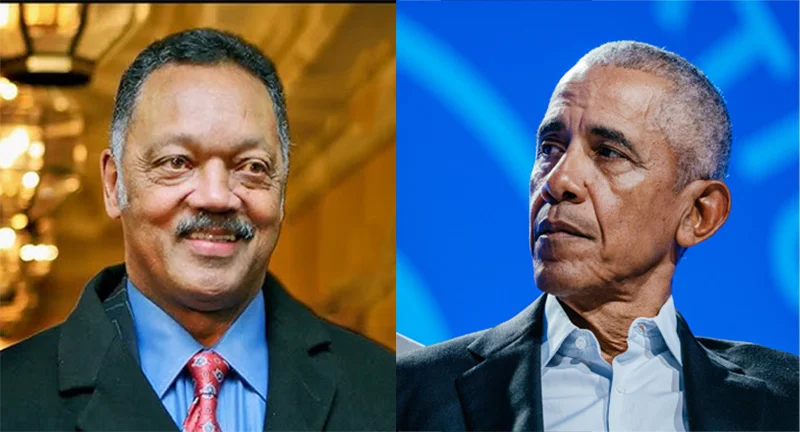
 On being elected US President in 2008, Barack Obama famously stated: ‘Change has come to America’. Considering the questions continuing to grow out of the status of minority rights in particular in the US, this declaration by the former US President could come to be seen as somewhat premature by some. However, there could be no doubt that the election of Barack Obama to the US presidency proved that democracy in the US is to a considerable degree inclusive and accommodating.
If this were not so, Barack Obama, an Afro-American politician, would never have been elected President of the US. Obama was exceptionally capable, charismatic and eloquent but these qualities alone could not have paved the way for his victory. On careful reflection it could be said that the solid groundwork laid by indefatigable Black Civil Rights activists in the US of the likes of Martin Luther King (Jnr) and Jesse Jackson, who passed away just recently, went a great distance to enable Obama to come to power and that too for two terms. Obama is on record as owning to the profound influence these Civil Rights leaders had on his career.
The fact is that these Civil Rights activists and Obama himself spoke to the hearts and minds of most Americans and convinced them of the need for democratic inclusion in the US. They, in other words, made a convincing case for Black rights. Above all, their struggles were largely peaceful.
Their reasoning resonated well with the thinking sections of the US who saw them as subscribers to the Universal Declaration of Human Rights, for instance, which made a lucid case for mankind’s equal dignity. That is, ‘all human beings are equal in dignity.’
It may be recalled that Martin Luther King (Jnr.) famously declared: ‘I have a dream that one day this nation will rise up, live out the true meaning of its creed….We hold these truths to be self-evident, that all men are created equal.’
Jesse Jackson vied unsuccessfully to be a Democratic Party presidential candidate twice but his energetic campaigns helped to raise public awareness about the injustices and material hardships suffered by the black community in particular. Obama, we now know, worked hard at grass roots level in the run-up to his election. This experience proved invaluable in his efforts to sensitize the public to the harsh realities of the depressed sections of US society.
Cynics are bound to retort on reading the foregoing that all the good work done by the political personalities in question has come to nought in the US; currently administered by Republican hard line President Donald Trump. Needless to say, minority communities are now no longer welcome in the US and migrants are coming to be seen as virtual outcasts who need to be ‘shown the door’ . All this seems to be happening in so short a while since the Democrats were voted out of office at the last presidential election.
However, the last US presidential election was not free of controversy and the lesson is far too easily forgotten that democratic development is a process that needs to be persisted with. In a vital sense it is ‘a journey’ that encounters huge ups and downs. More so why it must be judiciously steered and in the absence of such foresighted managing the democratic process could very well run aground and this misfortune is overtaking the US to a notable extent.
The onus is on the Democratic Party and other sections supportive of democracy to halt the US’ steady slide into authoritarianism and white supremacist rule. They would need to demonstrate the foresight, dexterity and resourcefulness of the Black leaders in focus. In the absence of such dynamic political activism, the steady decline of the US as a major democracy cannot be prevented.
From the foregoing some important foreign policy issues crop-up for the global South in particular. The US’ prowess as the ‘world’s mightiest democracy’ could be called in question at present but none could doubt the flexibility of its governance system. The system’s inclusivity and accommodative nature remains and the possibility could not be ruled out of the system throwing up another leader of the stature of Barack Obama who could to a great extent rally the US public behind him in the direction of democratic development. In the event of the latter happening, the US could come to experience a democratic rejuvenation.
The latter possibilities need to be borne in mind by politicians of the South in particular. The latter have come to inherit a legacy of Non-alignment and this will stand them in good stead; particularly if their countries are bankrupt and helpless, as is Sri Lanka’s lot currently. They cannot afford to take sides rigorously in the foreign relations sphere but Non-alignment should not come to mean for them an unreserved alliance with the major powers of the South, such as China. Nor could they come under the dictates of Russia. For, both these major powers that have been deferentially treated by the South over the decades are essentially authoritarian in nature and a blind tie-up with them would not be in the best interests of the South, going forward.
However, while the South should not ruffle its ties with the big powers of the South it would need to ensure that its ties with the democracies of the West in particular remain intact in a flourishing condition. This is what Non-alignment, correctly understood, advises.
Accordingly, considering the US’ democratic resilience and its intrinsic strengths, the South would do well to be on cordial terms with the US as well. A Black presidency in the US has after all proved that the US is not predestined, so to speak, to be a country for only the jingoistic whites. It could genuinely be an all-inclusive, accommodative democracy and by virtue of these characteristics could be an inspiration for the South.
However, political leaders of the South would need to consider their development options very judiciously. The ‘neo-liberal’ ideology of the West need not necessarily be adopted but central planning and equity could be brought to the forefront of their talks with Western financial institutions. Dexterity in diplomacy would prove vital.

Atmospheric conditions are favorable for thundershowers over most parts of the island

Trump brings in new 10% tariff as Supreme Court rejects his global import taxes

Ravi demands full disclosure on Lanka’s usable reserves, flags forex leakages

Sajith exposes highly questionable coal imports from South Africa in 25 vessels; calls for independent probe

Ex-TRCSL Chairman Palpita enlarged on bail

NWSDB GM, two others granted bail in corruption case

‘Dates have the highest sugar content to fight Coronavirus’

Sunday Island 27 December – Headlines

#SundayIsland 17th December – Headlines

Sunday Island – 28th March

Sunday Island Headlines – 21 March

Sunday Island – 21st February – Headlines
-
 Life style6 days ago
Marriot new GM Suranga
-

 Business5 days ago
Ministry of Brands to launch Sri Lanka’s first off-price retail destination
-
 Features6 days ago
Monks’ march, in America and Sri Lanka
-
 Features6 days ago
The Rise of Takaichi
-
 Features6 days ago
Wetlands of Sri Lanka:
-
 News6 days ago
Thailand to recruit 10,000 Lankans under new labour pact
-
 News6 days ago
Massive Sangha confab to address alleged injustices against monks
-

 Sports2 days ago
Old and new at the SSC, just like Pakistan