
Latest News
Trump brings in new 10% tariff as Supreme Court rejects his global import taxes

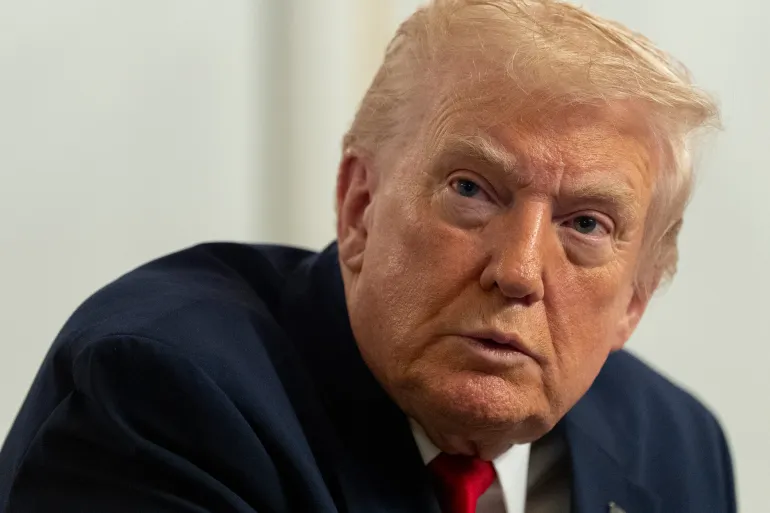
US President Donald Trump has imposed a new 10% global tariff to replace ones struck down by the Supreme Court, calling the ruling “terrible” and lambasting the justices who rejected his trade policy as “fools”.
The president unveiled the plan shortly after the justices outlawed most of the global tariffs the White House announced last year.
In a 6-3 decision, the court held that the president had overstepped his powers.
The decision was a major victory for businesses and US states that had challenged the duties, opening the door to potentially billions of dollars in tariff refunds, while also injecting new uncertainty into the global trade landscape.
Speaking from the White House on Friday, Trump indicated that refunds would not come without a legal battle, saying he expected the matter to be tied up in court for years.
He also said he would turn to other laws to press ahead with his tariffs, which he has argued encourage investment and manufacturing in the US.
“We have alternatives – great alternatives and we’ll be a lot stronger for it,” he said.
The court battle was focused on import taxes that Trump unveiled last year on goods from nearly every country in the world.
The tariffs initially targeted Mexico, Canada and China, before expanding dramatically to dozens of trade partners on what the president billed as “Liberation Day” last April.
The White House had cited a 1977 law, the International Emergency Economic Powers Act (IEEPA), which gives the president power to “regulate” trade in response to an emergency.
But the measures sparked outcry at home and abroad from firms facing an abrupt rise in taxes on shipments entering the US, and fuelled worries that the levies would lead to higher prices.
Arguing before the court last year, lawyers for the challenging states and small businesses said that the law used by the president to impose the levies made no mention of the word “tariffs”.
They said that Congress did not intend to hand off its power to tax or give the president an “open-ended power to junk” other existing trade deals and tariff rules.
In his opinion, Chief Justice John Roberts, a conservative, sided with that view.
“When Congress has delegated its tariff powers, it has done so in explicit terms and subject to strict limits,” he wrote.
“Had Congress intended to convey the distinct and extraordinary power to impose tariffs, it would have done so expressly, as it consistently has in other tariff statutes.”
The decision to strike down the tariffs was joined by the court’s three liberal justices, as well as two justices nominated by Trump: Amy Coney Barrett and Neil Gorsuch.
Three conservative justices, Clarence Thomas, Brett Kavanaugh and Samuel Alito, dissented.
At the White House, Trump said he was “absolutely ashamed” of the Republican appointees on the court who voted against his trade policy.
He said they were “just being fools and lap dogs” and were “very unpatriotic and disloyal to our Constitution”.
Shares on Wall Street rose after the announcement, with the S&P 500 closing up about 0.7%, as businesses across the US cautiously welcomed the ruling.
“I feel… like a thousand-pound weight has been lifted off my chest,” said Beth Benike, the owner of Busy Baby products in Minnesota, which manufactures products in China.
Nik Holm, chief executive of Terry Precision Cycling, one of the small businesses involved in the case, called the ruling a “relief”.
“Though it will be many months before our supply chain is back up and running as normal, we look forward to the government’s refund of these improperly-collected duties,” he said.
The anticipated refunds and relief from tariff costs may prove elusive, however.
On Friday, Trump imposed the new 10% tariff under a never-used law known as Section 122, which gives the power to put in place tariffs up to 15% for 150 days, at which point Congress must step in.
Analysts expect the White House to consider other tools, such as Section 232 and Section 301, which allow import taxes to address national security risks and unfair trade practices.
Trump has previously used those tools for tariffs, including some announced last year on sectors such as steel, aluminium and cars. Those were untouched by the court ruling.
A White House official said countries that struck trade deals with the US, including the UK, India and the EU, will now face the global 10% tariff under Section 122 rather than the tariff rate they had previously negotiated.
The Trump administration expects those countries to keep abiding by the concessions they had agreed to under the trade deals, the official added.
“Things have only gotten more complicated and more messy today,” said Geoffrey Gertz, senior fellow at the Center for a New American Security in Washington.
Reaction by major trade partners was relatively muted.
“We take note of the ruling by the U.S. Supreme Court and are analysing it carefully,” European Commission spokesman Olof Gill wrote on social media.
The US has already collected at least $130bn in tariffs using the IEEPA law, according to the most recent government data.
In recent weeks, hundreds of firms, including retailer Costco, aluminium giant Alcoa and food importers like tuna fish brand Bumble Bee, have filed lawsuits contesting the tariffs, in a bid to get in line for a refund.
But the decision by the majority does not directly mention refunds, likely handing back the question of how that process might work to the Court of International Trade.
In his dissent, Justice Brett Kavanaugh warned the situation would be a “mess”.
Diane Swonk, chief economist at KPMG US, warned that the cost of litigation could make recouping funds difficult for smaller firms.
“Unfortunately, I’d say curb your enthusiasm, although I understand the desire for relief,” she said.
Steve Becker, head of the law firm Pillsbury, said the “best thing” for businesses would be if the government created a procedure that did not require filing a lawsuit.
[BBC]
“I think companies can be fairly confident that they’ll get their money back eventually,” he added. “How long it will take really is up to the government.”

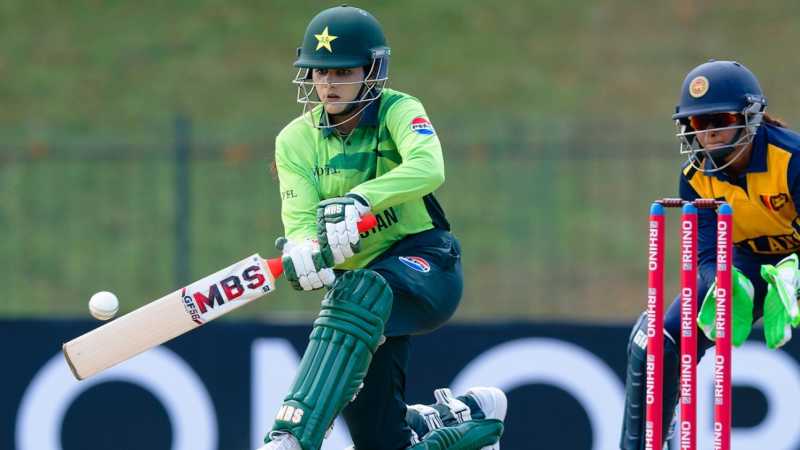
Half-centuries from Gull Feroza and Sidra Amin helped Pakistan start their tour of Sri Lanka on a winning note. After restricting Sri Lanka to 210 for 9, thanks to Nashra Sandhu’s 3 for 42, Pakistan got home with five wickets and seven overs to spare in the first woman’s ODI in Hambantota.
Vishmi Gunaratne, reunited with captain chamari Athapaththu at the top of the order, helped Sri Lanka lay a solid foundation after they opted to bat. The hosts raced to 31 without loss in the first five overs. Gunaratne and Athapaththu soon brought up their fifth fifty-run partnership in ODIs, the most by an opening pair for Sri Lanka.
Once spin came on, the scoring slowed down. Gunaratne was the first to depart when she became Sandhu’s first victim. Athapaththu and Hasini Perera then added 53 for the second wicket before the Sri Lanka captain was bowled by Sandhu. Pakistan applied the squeeze when Sri Lanka were 109 for 2 in the 24th over. The only notable stand for Sri Lanka thereon was between Nilakshika Silva and Kavisha Dilhari, who added 42 for the fifth wicket. But Sri Lanka’s final surge never came and they lost 5 for 32 in the last seven overs to be restricted to a below-par total.
Pakistan hardly broke a sweat in their chase. Feroza struck her fourth successive ODI half-century. She was rapid in the first powerplay, and was the aggressor in the 58-run opening partnership with Sadar Shamas. Feroza then added 90 for the second wicket with Amin, who batted steadily. Feroza eventually fell for a breezy 77-ball 78 while Amin scored 57 off 94 before being dismissed, with victory in sight.
The win was Pakistan’s fifth consecutive ODI win, which put them second on the ICC Women’s Championship points table.
Scores:
Pakistan Women 211 for 5 in 43 overs (Gull Feroza 78, Sidra Amin 57; Kavisha Dilhari 2-37) beat Sri Lanka Women 210 for 9 in 50 overs (Nilakshika Silva 46, Chamari Athapaththu 46; Nashra Sandhu 3-42, Tasmia Rubab 2-34) by five wickets
(CRICINFO)
[Cricbuzzz]


Child abuse crisis: 108,000 complaints reported in 10 years

CA dismisses writ petition seeking postponement of A/L exam

Bimal’s remarks on MP’s conduct spark heated exchange in Parliament

SC rules fundamental rights of Aragalaya activist were violated

TRINEX-26 naval exercise begins off Trincomalee coast

Court defers hearing of GR’s Easter Sunday petition

‘Dates have the highest sugar content to fight Coronavirus’

Sunday Island 27 December – Headlines

#SundayIsland 17th December – Headlines

Sunday Island – 28th March

Sunday Island Headlines – 21 March

Sunday Island – 21st February – Headlines
-
 Features5 days ago
Two memorable excerpts from a former SLAF commander’s memoir
-
 Business5 days ago
‘Giving up was never an option’: The fisherman who fought back after losing millions in SL
-

 Latest News6 days ago
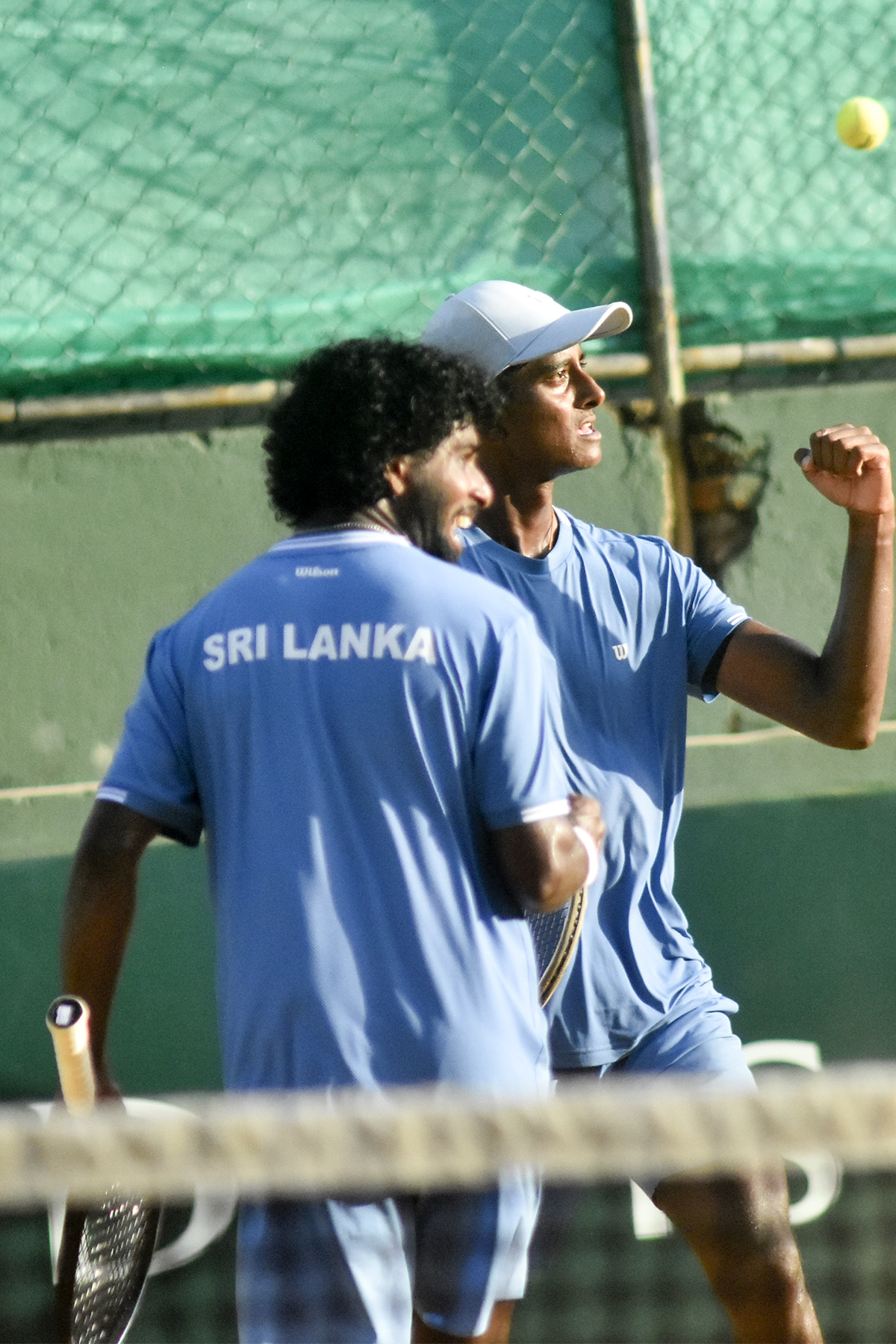
Davis cup Asia/Oceania Group IV 2026 to be held in Colombo from 20th to 25th July
-
 Features5 days ago
Erdoğan’s New Republic
-

 Life style5 days ago
Taste of the Swiss Alps comes to Colombo
-

 Midweek Review2 days ago
Three high-profile alleged suicides shaping key investigations
-

 News6 days ago
Evidence recorded in money laundering case against Yoshitha Rajapaksa
-
 News6 days ago
Dengue outbreak gallops ahead: Infections surpasses 73,455, leaving 50 dead