
Sports
Kane Williamson retires from New Zealand T20Is


Kane Williamson has announced his retirement from T20 internationals after months of speculation about his playing future, but has reaffirmed his focus on playing for New Zealand in Test cricket, starting with their three-match series against West Indies in December.
Williamson, 35, has featured in 93 T20Is for New Zealand since his debut in October 2011. However, he opted out of their three-match series against Australia at the start of the month, then missed the subsequent 1-0 loss to England with a groin injury.
He returned to action for this week’s 3-0 ODI series victory over the same opponents – his first appearances for New Zealand since the Champions Trophy final against India in March – but had flagged beforehand his shifting priorities, telling NZC of the delicate balance between time with his young family and committing to the team of which he has been a part for 15 years.
Now he has opted to call time on the shortest format, just months before the next T20 World Cup in India and Sri Lanka in February. He retires as New Zealand’s second-highest run-scorer in the format, with 2,575 runs at an average of 33.44, 18 fifties and a highest score of 95. He captained the team in 75 of his matches, including T20 World Cup semi-final appearances in 2016 and 2022, and one losing final in 2021.
“It’s something that I’ve loved being a part of for a long period of time and I’m so grateful for the memories and experiences,” Williamson said. “It’s the right time for myself and the team. It gives the team clarity for the series moving forward and ahead of their next major focus which is the T20 World Cup.
“There’s so much T20 talent there and the next period will be important to get cricket into these guys and get them ready for the World Cup. ”
Rob Walter, the New Zealand head coach, said: “You get to different life positions and the game does require a lot and demand a lot. So, understandably, Kane decided to step away from T20 internationals. And we’re now looking to the Test series at the end of the year and that will be our primary focus now.
“I don’t think you can underestimate his value in all aspects,” Walter added. “Obviously, performance is one thing, but I think it’s probably the lesser of all the things that he brings to the team. A magnificent team man.
“He’s a real sounding board for the guys in the team. He’s experienced a hell of a lot. He’s delivered incredible performances under pressure in World Cup finals. There’s a whole package there that obviously the team loses, but respectful of his decision.”
Williamson had already handed over the white-ball captaincy to Mitchell Santner, while his No. 3 berth in the T20I team had been taken over by Rachin Ravindra, with the likes of Tim Seifert, Tim Robinson and Mark Chapman challenging for regular berths.
“Mitch is a brilliant captain and leader – he’s really come into his own with this team,” Williamson said. “He really has such a great understanding of the game and this format having played for a long time and has done incredibly well. Now he has got the reins and he’s excited for the opportunity. I am looking forward to watching him. It’s now their time to push the Black Caps forward in this format and I’ll be supporting from afar.”
In a statement, NZC said that Williamson’s next competitive fixture was likely to be for Northern Districts against Auckland in the Plunket Shield, starting November 26, as preparation for the first Test against West Indies, which begins at Christchurch on December 2, which indicated he would miss the upcoming ODIs against West Indies.
“I’ve got such deep care for this team,” Williamson said. “The Black Caps is a special place and one you want to give yourself to, and get the most out of yourself for. It’s a journey and a pursuit, and that’s what I love about the international game and this environment.”
“I’ll continue to keep the lines of communication open with Rob [Walter] and NZC who have given me a huge amount of support throughout.”
Scott Weenink’s NZC’s chief executive, said he respected Williamson’s decision and saluted his contributions to the T20I team.
“Kane’s performances as a player and his service as captain of the T20 side have been nothing short of immense,” he said.
“His runs in all conditions around the world reflect the world class batsman that he is and are equally matched by the influence of his leadership on and off the field.
“His knock of 85 in the T20 World Cup final in 2021, was one of the more special T20I innings played by a New Zealander, albeit in a losing course. The T20 team experienced great consistency and success under Kane’s watch and he certainly leaves the team in good health.”
Speaking last week, Williamson had acknowledged that his continued involvement with New Zealand would require an ongoing dialogue with Walter and the board, but Weenink insisted that he had earned the right to decide how he finished his ODI and Test careers.
“We’ve made it clear to Kane he has our full support as he reaches the back end of his illustrious career,” he said. “We would, of course, love to see him play for as long as possible, but there’s no doubt whenever he does decide to finally call time – he will go down as a legend of New Zealand cricket.
“With Kane committed to play the West Indies Test series in December, I’d encourage all Kiwis to take the opportunity to get out and witness one of our greatest ever cricketers play.”
He will continue to play T20 franchise cricket, having spent much of the English summer just gone playing for London Spirit and Middlesex in an extended tie-up.
[Cricinfo]

[Cricbuzz]

Geopolitics have given cricketing neighbours, particularly in South Asia, a bad name in recent times. But not in Africa.
The continent’s two Full Members, South Africa and Zimbabwe, are enjoying successful T20 World Cups and will finally cross paths in Delhi on Sunday, which is expected to be a celebration of their journeys so far.
South Africa are already through to the semi-finals and more than likely to top their group. Though Zimbabwe are out of the running, they have achieved their best T20 World Cup finish and will avoid going through the qualifiers for the next edition. Neither have any worries – certainly not the kind that will take place in another part of the country, Kolkata, where India take on West Indies with qualification for the semi-finals still unresolved – and the mood is jovial.
There have been coffee and drinks dates, not least because Zimbabwe’s coach Justin Sammons used to be South Africa’s batting coach and there would have been some reminiscences about Zimbabwe’s role in helping South Africa prepare for the World Test Championship. Last June, Zimbabwe extended their time in England to play a tour match against the South Africans in Arundel. The most exciting thing to happen then was Kagiso Rabada breaking Ben Curran’s hand, but Curran is back on the circuit and there’s no bad blood.
Then South Africa, fresh off their Test mace win, had no time for a trophy tour at home because they had a series scheduled in Zimbabwe, which included Tests for the first time in 11 years. Hosting the champions, who happen to be the guys next door, was a treat in a bumper year for Zimbabwe and it barely mattered that Craig Ervine’s side was humbled. Wiaan Mulder retiring on 367* to avoid overtaking Brian Lara’s Test record was as much about his respect for a great of the game as it was for the game itself: South Africa had enough runs and there was no need to rub the neighbours’ noses in it.
South Africa went on to beat Zimbabwe in both fixtures in a T20I series but lost the final to New Zealand. Castle Corner, Zimbabwe’s life-of-the-party supporters, was cheering for South Africa, which tells you all you need to know about the feelings between these two sides.
The current relationship is cuddlier than ever, especially as they are two of the three co-hosts of the 2027 ODI World Cup (Namibia is the third) and there is no tension in the contest. Apart from Zimbabwe’s win over South Africa in the 1999 ODI World Cup – a result which had massive ramifications as it played its part in South Africa missing out on the final – South Africa’s path has run completely differently to Zimbabwe’s. For years, they didn’t play each other and as South Africa’s domestic game has creaked under its own financial pressures, Zimbabwe are no longer as involved as they were in the 1990s.
The recent thaw in relations comes as the Africa Cricket Association tries to resurrect itself – or just get going – and there are whispers of continental T20 tournaments. But only whispers. There’s also the rumour of an ODI tri-series in August, when South Africa and Namibia could travel to Zimbabwe to inaugurate the new stadium at Victoria Falls. South Africa did the same when they took a team to Windhoek to open the Namibia Cricket Ground, and were stunned by a plucky Namibia team that brat them. Considering the run South Africa are on now, maybe that was just another case of the guys next door being the firestarters.
But for all the goodwill, there are still some hostilities between South Africa and Zimbabwe, particularly at a social level. As a nation, South Africa struggles with a brand of xenophobia that is trained on migrants from elsewhere on the continent – it’s so acute it has been dubbed Afrophobia. As Zimbabweans make up the largest expat population in South Africa and run much of the country’s service industry by working in hospitality and homes, they often find themselves as targets of violent attacks. It’s a stain on a South Africa that owes Zimbabwe a great debt for the role it played in the anti-Apartheid struggle and the fight for freedom.
South Africa may argue it pays that in other ways and does its bit where it can for Zimbabwe. One example is in football. Because none of Zimbabwe’s football stadiums are FIFA sanctioned, they play their home games in South Africa, on world-class pitches. And that was also handy when South Africa and Zimbabwe were drawn in the same qualification group for this year’s football World Cup. South Africa beat Zimbabwe 3-1 in their first meeting and then needed to win the return match to secure qualification. In what was a Zimbabwe “home” fixture in Durban, Zimbabwe’s Warriors proved pesky and held South Africa to a goalless draw. Ultimately, it only delayed South Africa’s progression to the main tournament by three days so no major damage was done, so to speak.
Zimbabwe won’t be at the tournament, which will feature nine African sides (and possibly a tenth after playoffs are decided) but will be at next year’s rugby World Cup for the first time in 36 years. They are also now guaranteed a spot at the 2028 T20 World Cup, which creates the opportunity for two other African sides to qualify and removes some of the pressure that has sat on Zimbabwe for the last eight years. They have ridden all the emotions of nearly and not quite getting to the 2019 and 2023 ODI World Cups and 2024 T20 World Cup and suffered the financial consequences of missing out, sometimes tragically.
The late Heath Streak and his entire coaching staff was sacked after Zimbabwe missed out on qualification in 2019 and Streak was later banned for breaching the anti-corruption code. While serving his time, he was diagnosed with cancer and died in September 2023. How he would have loved to see the turnaround of a team he gave everything for, to know of the redemption of Brendan Taylor, who also fell foul of the ACSU, and see the rise of a new crop of Zimbabwe fast bowlers.
Streak’s story and particularly his death affected me deeply, mostly because he was always a presence in my coverage of Zimbabwe cricket, which ESPNcricinfo readers will know is quite personal. So do allow me a moment here:
I was first sent to Zimbabwe in 2011, to cover their Test comeback after six-and-a-half years out of the longest format, and fell in love with everything there. I was welcomed with open arms into a cricket community that felt familiar, almost like the clubs I used to keep score for as a teenager, but was also a fully-fledged international set-up. Reporting on their progress and setbacks was complicated and interesting. I went back more times than I need to count and Zimbabwe became a second home and a safe haven.
Between 2013 and 2016, Cricket South Africa cut two reporters off from what they called “special privileges”, which included basic things like receiving press releases or any game-related information. I was one of them. I was still fairly young in my career and was already fighting against the status quo as a woman in a male-dominated field and the extra challenge threatened to become too much. I considered walking away many times but one of the only things that kept me in it was the relationship I built with Zimbabwe and the stories I got to tell from there. I never got to thank them but I hope I can now.
For bringing joy, and reminding me – and everyone – of our resilience as people, thank you Zimbabwe.
At the same time, it has never been a better time to be a sports reporter in South Africa. The recent and regular excellence of all our sporting codes (have I mentioned yet that South Africa are four-time rugby world champions?) has been thrilling. I have seen sport unite our country across gender, race and class lines in a way I had never imagined possible. For showing that we are truly stronger together, thank you South Africa. This time for Africa.
[Firdose Monda for Cricinfo]
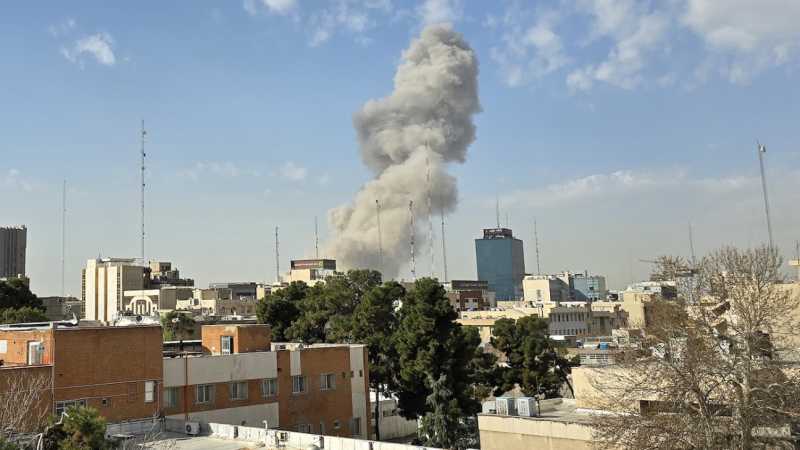
The ICC has said it is monitoring the “evolving situation” in the Middle East and has “activated comprehensive contingency plans to safeguard the travel, logistics and well-being of all stakeholders” at the 2026 T20 World Cup.
On Saturday morning, the US and Israel exchanged missile strikes with Iran, leading to the closure of airspace over several countries in the Middle East, disrupting air travel to the region and also internationally, with several airlines having to cancel flights or change routes.
“While the crisis in the Middle East has no direct bearing on the conduct of the tournament, the ICC acknowledges that a significant number of personnel – including players, team management, match officials, broadcast teams, and event staff – rely on Gulf hub airports, particularly Dubai (DXB), as key transit points for onward travel to their home countries upon concluding their commitments at the event,” the ICC said in a statement.
“The ICC Travel and Logistics team is actively working with major international carriers to identify and secure alternative routing options, including connections through European, South Asian and South-East Asian hubs. The ICC security consultants are liaising with relevant authorities and will provide real-time advisories as the situation develops. A dedicated ICC Travel Support Desk has also been activated.”
The 2026 T20 World Cup is approaching its final stages, with the last Super Eight games on Sunday followed by the semi-finals on March 4 and 5, and the final on March 8.
(Cricinfo)

In a virtual knockout, a fight of reputation and expectation

Iran launches attacks across Middle East after US and Israel strikes on leadership sites

A committee will be appointed to formulate a national policy on medical education – PM

South Africa vs Zimbabwe, this time for Africa

ICC monitoring Middle East conflict as airspace closure hits travel plans

Sri Lanka make two changes and bowl; Pakistan drop Babar and Ayub

‘Dates have the highest sugar content to fight Coronavirus’

Sunday Island 27 December – Headlines

#SundayIsland 17th December – Headlines

Sunday Island – 28th March

Sunday Island Headlines – 21 March

Sunday Island – 21st February – Headlines
-

 Features7 days ago
Why does the state threaten Its people with yet another anti-terror law?
-

 Features7 days ago
Reconciliation, Mood of the Nation and the NPP Government
-

 Features7 days ago
Victor Melder turns 90: Railwayman and bibliophile extraordinary
-

 Features6 days ago
LOVEABLE BUT LETHAL: When four-legged stars remind us of a silent killer
-
 Features7 days ago
Victor, the Friend of the Foreign Press
-

 Business6 days ago
Bathiya & Santhush make a strategic bet on Colombo
-
 Business6 days ago
Seeing is believing – the silent scale behind SriLankan’s ground operation
-

 Features7 days ago
Barking up the wrong tree