
News
India, Sri Lanka going ahead with Modi-Ranil ‘vision document’

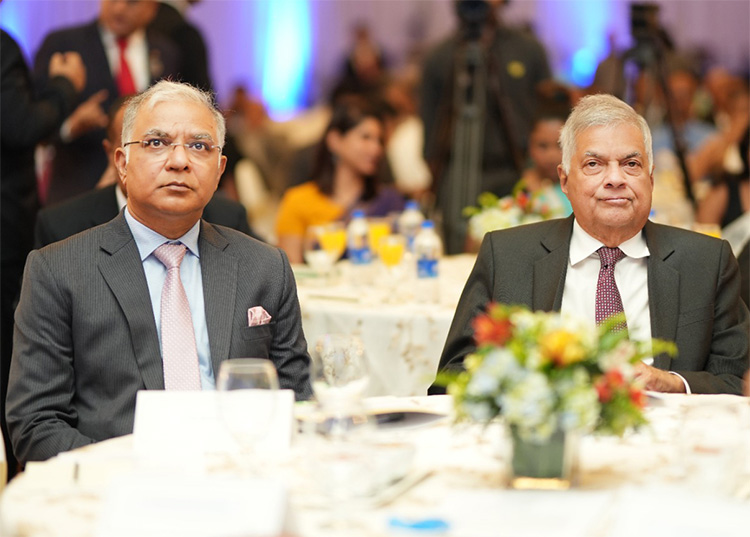
Santosh Jha stresses importance of Unique Digital Identity project
Indian High Commissioner Santosh Jha has said that India is working with Sri Lanka to roll out the Unique Digital Identity (UDI) Project based on modular micro service based architecture aka MOSIP architecture. He has said they strongly believe that as in the case of India this UDI will be the beginning of digital magic for Sri Lanka.
Jha made the announcement at the inauguration of a conference at the Taj where experts explored the immense potential for Digital Public Infrastructure (DPI) for Sri Lanka. Among the invitees were President Ranil Wickremesinghe and senior government officials.
Jha said that the high profile project was in line with the India-Sri Lanka Vision Document, adopted by Indian Premier Narendra Modi and President Ranil Wickremesinghe, in New Delhi, in July 2023, where they agreed to leverage India’s DPI in accordance with Sri Lanka’s requirements and priorities towards effective and efficient delivery of citizen-centric services to the people of Sri Lanka.
The Indian High Commission quoted Jha as having told the conference that the value proposition of DPI is the combination of three components—technology, governance and markets—to achieve sustainable and robust digital transformation. “It is not about one-off technology solutions but about incorporating a wider theory of change that brings about digitisation across domains.
This is the very premise of the Conference.”
The conference consisted of three sessions and what the IHC called breakout meetings which explored the transformative potential of DPI for enabling service delivery, empowering communities by fostering inclusivity and enriching the economy by driving innovation.
Having underlined DPI as a vital enabler for the digitisation of the Sri Lankan economy, President Wickremesinghe emphasised the need for collaboration with India in this domain, highlighting the potential of fast-tracking growth by adapting India’s successful strategies domestically. India’s digital transformation and the significance of DPI and India Stack was elaborated upon by Jha and Dr. Pramod Varma, Co-Chair, Centre for Digital Public Infrastructure (CDPI) in his presentation during the opening plenary.
The other two sessions saw discussions amongst experts from India, Sri Lanka and the region, on the themes of Accelerating Digital Sri Lanka and Unlocking the Digital Stack, respectively. The former focused on roadmap for adoption of DPI in Sri Lanka and the resultant acceleration towards e-governance across the board, with the opening remarks by Kanaka Herath, State Minister of Technology. The latter went beyond foundational DPI to discuss use cases marrying technology, markets and governance with a special focus on the positive externalities in the startups domain. This session was opened by MP Dr. Harsha de Silva.The conference was particularly enriched with several breakout meetings between visiting experts from India and their Sri Lankan counterparts as well as other stakeholders. A key highlight of these was an interaction of the visiting senior officials from Government of India’s Ministries handling Digital India and Startup India programmes with Senior Officials who are leading the six Working Groups of Government of Sri Lanka on digital economy.
Futuristic linkages were also initiated in the startup and IT industries domain on the side-lines of the conference. In the afternoon Startup India’s team held a capacity building workshop for startups in Sri Lanka, including sessions by Indian experts on the art of pitching and effective marketing. The Chief of IIT Chennai’s Incubator ‘Parvartak’ interacted with key startup incubators in Sri Lanka. Chairman NASSCOM called on President of Sri Lanka.
Jha explained how DPI project changed India. Jha said: “India’s own journey stands as testimony to the power of DPI. The digital transformation in India over the last decade or so has been driven by these interoperable and open protocols of DPI. India’s DPI journey started with the basic need to provide direct access to public services and Government benefits to our citizens. This is what gave birth to India’s Digital Identity Number AADHAAR- and the Unique Identification Authority of India in 2016. This became the foundational building block of DPI … and the magic began.
At the heart of this magic is what we call India Stack: government-backed APIs, or Application Programming Interfaces, upon which third parties can build software with access to government IDs, payment networks and data. This digital infrastructure is interoperable and “stacked” together – meaning that private companies can build apps integrated with state services to provide consumers with seamless access to everything from welfare payments to loan applications and making investments.
Probably even the architects of AADHAAR didn’t envisage that India was on path to finding a world-beating solution for building out and regulating the online commons that is more equitable than the laissez-faire approach, more transparent and more innovative than some of the regulation-heavy models. “



… reminds AKD led over 560 protests during Yahapalanaya
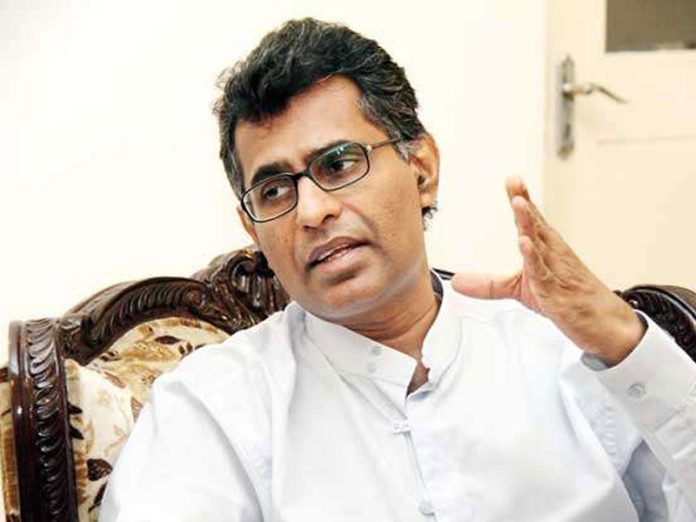
Former Yahapalana Minister and United Republican Front (URF) leader Patali Champika Ranawaka yesterday (19) alleged that the JVP, which carried out over 560 protests during the 2015-2019 period, was now bent on preventing the Opposition from exercising its democratic right to protest.
Recalling the declaration made by the JVP at the height of the violent protest campaign in July 2022 that it would set the Parliament ablaze, the former parliamentarian lashed out at the JVP-led administration for using the police excessively to curb political opposition. Ranawaka said this while addressing the media at the former President Ranil Wickremesinghe’s Flower Road Office .
Commenting on the protest campaign launched by the Maha Sangha, demanding presidential pardon for General Secretary of the Bodu Bala Sena (BBS) Ven. Galagotaatte Gnanasara, the ex-Colombo District lawmaker alleged that President Anura Kumara Dissanayake used a combination of police, investigative units and JVP cadres to break up the monks’ protest. The government went to the extent of compelling the JVP/NPP-run Colombo Municipal Council (CMC) to deprive the peaceful protesters of basic toilet facilities, he alleged.
The government’s actions proved that only those with prior approval from JVP Pelawatte headquarters could launch protests in Colombo, its suburbs or in the provinces. The police have become a political tool in the hands of the JVP, the ex-Minister said. (SF)

By SK Samaranayake
Six people were killed and seven others injured when a speeding bulker lorry carrying cement and concrete ploughed into several vehicles and a shop on the Kandy-Jaffna A9 road at Kurugoda, Akurana, yesterday (19).
Four of the victims, two women and two men, died on the spot in the accident which occurred around 10.30 am, according to Alawathugoda Police.
Police said the bulker, travelling at high speed from the Matale direction, collided with three three-wheelers, two motorcycles and two lorries before veering off the road and crashing into a commercial establishment.
Five of the injured were rushed to the National Hospital of Kandy, where hospital sources said two remained in critical condition.
The bodies of the four victims were placed at the Akurana Hospital, where two others, who suffered minor injuries, were also receiving treatment.
The driver of the bulker was arrested by the Alawathugoda Police Traffic Division and is to be produced before court.
Investigations are being conducted under the supervision of Central Province Senior DIG Lalith Pathinayake.

By Shamindra Ferdinando
owledging that there had been an administrative lapse on the part of the President’s Office in 2019 when Maithripala Sirisena granted presidential pardon to Ven. Gnanasara Thera, Convener of Janathawadi Joint Opposition Prof. G.L. Peiris yesterday (19) urged President Anura Kumara Dissanayake to rectify whatever those shortcomings and release the General Secretary of Bodu Bala Sena.
Addressing the media at the former President Ranil Wickrekmesinghe’s Flower Road Office, Prof. Peiris emphasized that it was not fair to hold Ven. Gnanasara accountable for lapse or technical fault of others at the Presidential Secretariat during President Sirisena’s tenure.
Prof. Peiris was flanked by UNP Chairman Wajira Abeywardena and United Republican Front (URF) leader Patali Champika Ranawaka.
The fresh appeal was made on behalf of Ven. Gnanasara in the wake of President Dissanayake and JVP heavyweight Anura Kumara Dissanayake ruling out fresh presidential pardon for the monk. Minister Lal Kantha declared that the government couldn’t under any circumstances meet the continuing monks’ protest demanding Ven. Gnanasara’s release. President Dissanayake dismissed repeated appeals for Ven. Gnanasara’s release when he addressed the NPP really in Badulla.
Sirisena granted presidential pardon in May 2019 even before he completed a year of his six-year term of rigorous imprisonment for contempt of court during proceedings of the media personality Prageeth Ekneligoda’s 2010 January disappearance in the Homagama Magistrate’s court.
At the onset of the regular weekly briefing, Prof. Peiris said that he would report to the Commission to Investigate Allegations of Bribery or Corruption (CIABOC) today (20) morning as requested by the commission. “The CIABOC wanted to record my statement regarding a meeting I chaired at the ministry after the conclusion of the war in 2009 pertaining to an ongoing investigation.”
Commenting further on the imprisonment of Ven. Gnanasara, the former parliamentarian said that President Sirisena intervened following a spate of requests made on behalf of BBS General Secretary by the Mahanayakes, Anunayakes and other Maha Sangha.
The Supreme Court on 10 September, 2026 rescinded the presidential pardon granted in late May 2019.

Heavy showers about 100 mm are likely at some places in the Northern, North-central, Central, Eastern, North-western and Uva provinces

Molineux, Dunkley enter WPL 2027 auction with top base price of INR 50 lakh

Ranawaka accuses govt. of using JVP cadres and police to suppress political opponents

Six killed as speeding bulker crashes into vehicles, shop in Akurana

Prof. Peiris, summoned by CIABOC, appeals for Ven. Gnanasara’s release

Tusker Agbo found safe and in good health

‘Dates have the highest sugar content to fight Coronavirus’

Sunday Island 27 December – Headlines

#SundayIsland 17th December – Headlines

Sunday Island – 28th March

Sunday Island Headlines – 21 March

Sunday Island – 21st February – Headlines
-

 Latest News7 days ago
Nissanka’s return headlines Sri Lanka’s Test squad against Pakistan
-

 News6 days ago
Sri Lanka, India caught in US-Iran ship crisis
-

 Features2 days ago
Kotahena:A Small Enclave, An Extraordinary Legacy
-
 Latest News7 days ago
Imran Khan’s PTI braces to fight federal takeover of Khyber Pakhtunkhwa
-
 News3 days ago
Asgiri Mahanayake calls for immediate release of Gnanasara Thera
-

 Latest News6 days ago
Missiles intercepted near Riyadh after Saudi coalition hits Yemen fuel depot
-
 Latest News6 days ago
Kusal Mendis’ unbeaten 87 hands Sri Lanka consolation win
-

 Latest News7 days ago
Former Zimbabwe player and umpire Sarah Dambanevana dies aged 36