
Business
ILO focusing on empowering SL’s next generation entrepreneurs

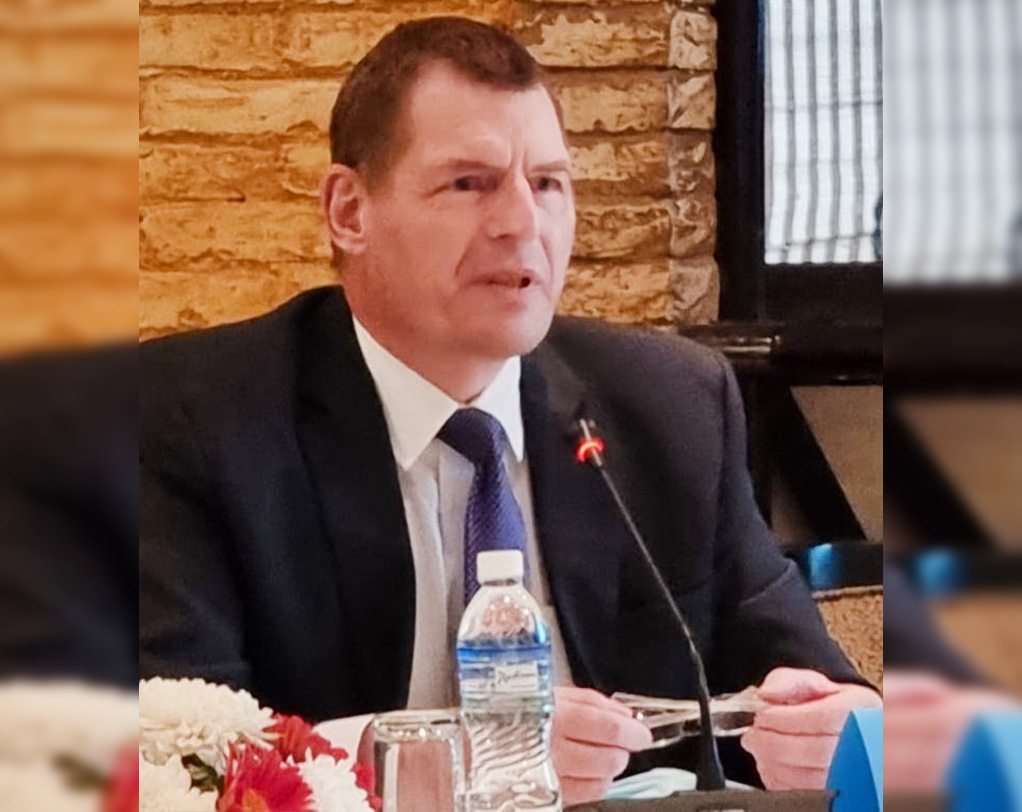
By Ifham Nizam
Through the South Asia Leadership in Entrepreneurship Programme (SALE) the ILO is empowering the next generation of entrepreneurs in Sri Lanka to stimulate economic growth and foster job creation. Leveraging the ILO’s unique model of tripartism, efforts are ongoing to enhance social dialogue aimed at shaping an inclusive economic recovery in Sri Lanka, the ILO’s Chief Technical Officer Dr. Thomas Kring said.
Speaking to The Island Financial Review in an interview Dr. Kring explained that Sri Lanka’s micro, small and medium enterprises are among the hardest hit sectors in the current economic crisis. Among the more serious consequences faced by these enterprises were considerable job-layoffs.
Kring added: ‘The ILO has provided technical support to the Ministry of Labour and Foreign Employment in launching Sri Lanka’s Labour Market Recovery and Transformation Strategy. This strategy serves as a roadmap towards a development path that prioritizes job creation and people-centered growth’.
Excerpts of the interview:
Q: What are the ILO’s current top priorities in promoting decent work and social justice globally?
The ILO’s work globally continues to build on our mandate of advancing decent work, promoting social justice for all. Decent work isn’t a buzzword but a linchpin of sustainable development; the importance of this is highlighted in Goal 8 of the 2030 agenda – Decent Work and Economic Growth.
Our world faces challenges to social justice, stemming from overlapping crises and long-term structural economic transformations. Towards addressing this, the ILO has launched and is leading the ‘Global Coalition for Social Justice’ to generate political commitments, investments, and concrete actions that accelerate progress towards the SDGs and support social justice in alignment with national priorities. Priority action programmes globally include transition from the informal to the formal economy, just transition towards environmentally sustainable economies and societies, decent work outcomes in supply chains, decent work in crisis and post-crisis situations, to name a few.
In Sri Lanka, our work is guided by the Decent Work Country Programme (DWCP), aligning with national policies and priorities of the government, while contributing to the United Nations Sustainable Development Cooperation Framework for Sri Lanka, and drawing from the ILO global agenda. With the current DWCP for Sri Lanka coming to an end, we are already in the process of developing the fifth generation DWCP for the country through tri-partite consultative process with government and employers’ and workers’ organizations.
Q: Can you highlight any recent initiatives or projects the ILO is focusing on?
The ILO Country Office for Sri Lanka and the Maldives has numerous initiatives and projects focusing on critical areas in the world of work.
SPARK: Skilled Youth Entrepreneurship Competition, the second iteration of which was launched on July 17, is part of the South Asia Leadership in Entrepreneurship Programme (SALE) which aims to boost young people’s transition into the entrepreneurial world and create a shift in the entrepreneurial ecosystem through several strategic interventions.
Earlier this week also saw the launch of a new joint UN project focused on strengthening social dialogue and promoting inclusive economic recovery in Sri Lanka. Implemented by ILO, UNFPA, and UNESCO, the project will strengthen the capacity to resolve disputes in the public sector, supporting workplace cooperation, collective bargaining, and grievance handling to foster safe and harmonious workplaces, and empowering local communities, to participate in policymaking processes.
We also have several ongoing projects, including on supporting aspiring and returnee migrants through skills enhancements; promoting decent work through good governance, protection and empowerment of migrant workers; improving the occupational safety and health of workers in the plantation sector; empowering vulnerable populations in the Northern Province and enhancing their economic well-being; improving the working conditions and competitiveness of Sri Lanka’s garment and footwear industry.
Q: What are the biggest challenges the ILO faces in achieving its mission and how is the organization addressing them, especially in Sri Lanka. In your view, what are some innovative approaches or solutions the ILO is implementing to tackle labour-related issues?
The challenge not just for ILO, but for country as whole, is that Sri Lanka has been hit by a series of shocks, with the Covid-19 pandemic and the economic crisis deeply impacting the economy and labour market. Micro, small, and medium enterprises are among those severely affected and layoffs have also been widespread.
Through the SALE project, the ILO is empowering the next generation of entrepreneurs who can stimulate economic growth and drive job creation.
In Sri Lanka, the ILO is continuing to intensify knowledge development, increased capacity-building efforts and technical assistance to the government, employers’ and workers’ organisations, especially in emerging areas in the world of work.
Beyond technical input, localized and innovative solutions on the ground are inbuilt into all our projects. For example: market-systems approach that links small scale farmers in the North to larger companies, introduced by the ILO, is creating win-win solutions that benefit both communities and the private sector. These solutions have proved to be effective even after the ILO is no longer in the equation.


Sri Lanka’s tourism industry is posting arrival numbers that many destinations would envy, yet it is increasingly troubled by a disconcerting trend: the country is welcoming record numbers of visitors, but tourism earnings are struggling to keep pace.
In May, Sri Lanka recorded its highest-ever monthly increase in tourist arrivals, welcoming 145,745 visitors, a 10% rise from a year earlier. However, tourism revenue fell 5.1% year-on-year to US$155.7 million, according to official data. For the first five months of 2026, earnings declined 12% to US$1.36 billion, despite continued growth in arrivals.
“These figures highlight a growing challenge for a country that depends heavily on tourism as a source of foreign exchange: attracting more tourists is no longer enough. The bigger question is how much they spend once they arrive,” a leading hotelier told The Island Financial Review.
“After being battered by the 2019 Easter Sunday attacks, the COVID-19 pandemic, and the 2022 economic crisis, Sri Lanka recorded a historic 2.36 million visitors in 2025. Authorities are now targeting 3 million arrivals in 2026. But beneath those anticipated numbers lies a more complicated story,” he said.
Elaborating further, he noted: “Tourism revenue reached roughly US$3.2 billion in 2025; only marginally higher than the previous year, despite a 15% jump in arrivals. More tellingly, earnings remain significantly below the levels achieved in 2018, when visitor numbers were comparable. So, the decline in average tourist spending has become impossible to ignore.”
According to official surveys, average daily tourist expenditure has been revised downward to approximately US$148 per day, compared with previous estimates exceeding US$170.
Referring to this trend, he added: “Destinations such as the Maldives attract substantially higher per-visitor spending through luxury tourism, premium experiences, and high-end accommodation. The debate should increasingly revolve around whether Sri Lanka is pursuing the right tourism model.”
For years, the country focused on boosting arrival numbers through aggressive marketing campaigns, Instagram influencer partnerships, and social media promotions. As a result, Sri Lanka may now be attracting too many budget-conscious travellers while failing to draw those seeking immersive, higher-value experiences rooted in the nation’s natural and cultural assets. “Are we grappling with the tension between ‘high-volume tourism’ and ‘high-value tourism’?” he asked. “Sri Lanka must encourage longer stays, diversify experiences beyond beaches and cultural sites, and develop premium offerings in wellness, eco-tourism, adventure, luxury rail, culinary, and wildlife sectors if it hopes to increase per-visitor spending.”
An inbound travel operator concurred, stating that the future should depend less on bringing in more people and more on attracting the right mix of travellers.
Against this backdrop, Sri Lanka appears to be intensifying efforts in key source markets. One of the most notable initiatives took place recently in Moscow, where Deputy Tourism Minister Prof. Ruwan Ranasinghe led a delegation to the sixth “Let’s Travel International Tourism Forum.” Discussions with Russian officials focused on direct flights, simplified visa procedures, destination promotion, and stronger bilateral tourism cooperation.
Russian travellers have become increasingly important to Sri Lanka’s tourism sector. Russia consistently ranks among the island’s top source markets, alongside India and the United Kingdom. In early 2026 alone, tens of thousands of Russian visitors arrived in Sri Lanka, underscoring the market’s growing significance. The Moscow forum also signalled a broader strategy: expanding beyond traditional hubs and reaching travellers across multiple Russian regions.
“The island’s beaches, wildlife reserves, ancient cities, tea-country landscapes, and wellness traditions already provide a strong foundation, and Sri Lanka has largely solved the problem of attracting visitors. Its next challenge is more difficult: transforming a popular destination into a high-value one. That will require investment in infrastructure, premium tourism products, transport connectivity, destination management, and visitor experiences that encourage travellers to spend more and stay longer,” the inbound operator said.
Tourism Minister Vijitha Herath recently told parliament that the current revenue figures reflect more accurate measurement methodologies rather than a collapse in spending. Referring to this, the hotelier said,” While that may be a technically valid assertion, it does little to mask a far more pressing reality: Sri Lanka is no longer attracting the high-spending travellers it once did. The data, when viewed alongside declining average daily expenditure and stagnant overall earnings, points to a structural shift in the country’s visitor profile, one that favours volume over value. Until Sri Lanka recalibrates its tourism strategy to prioritise quality over quantity, it risks becoming a destination that everyone visits but few truly invest in.”
By Sanath Nanayakkare

Climate resilience is no longer an environmental concern on the periphery of policymaking but a critical economic imperative that will determine Sri Lanka’s future competitiveness, export performance, investment attractiveness and long-term growth prospects, leading development agencies and private-sector leaders warned at a high-level forum titled Sri Lanka Climate Summit in Colombo recently.
With climate shocks becoming increasingly frequent and costly, experts said that Sri Lanka must urgently strengthen climate-resilient infrastructure, reform key utility sectors, modernise its data systems and improve access to global climate financing if it hopes to sustain economic recovery and attract investment.
The discussion brought together representatives from multilateral institutions, development agencies and the private sector, who argued that climate adaptation should be viewed not as a financial burden but as one of the largest economic opportunities available to emerging economies.
Addressing the forum, Asian Development Bank (ADB) Country Director for Sri Lanka, Shannon Cowlin, said countries with stronger economic fundamentals are better positioned to absorb climate shocks and recover faster.
“Climate resilience is not only about infrastructure. It is also about macroeconomic resilience. Countries that maintain sound economic management can respond more effectively when disasters occur,” she said.
Referring to Sri Lanka’s recent response to Cyclone Ditwa, Cowlin noted that the country’s economic reforms and recovery programme had significantly improved its ability to manage the disaster compared with previous years.
The ADB highlighted the importance of ongoing reforms in the energy and water sectors, particularly efforts to establish cost-reflective tariffs that would enable utilities to maintain and upgrade critical infrastructure.
“We cannot expect financially distressed utilities to invest adequately in resilience,” she cautioned.
The bank is currently preparing emergency assistance financing to support post-cyclone recovery efforts while embedding internationally recognised “Build Back Better” principles into reconstruction programmes.
Rather than merely restoring damaged assets, future investments will focus on strengthening roads, drainage systems and other public infrastructure to withstand increasingly severe weather events.
Dilmah chairman and Chief Executive Officer Dilhan Fernando warned that climate change represents a direct threat to Sri Lanka’s export competitiveness, especially for premium products such as Ceylon Tea and Ceylon Cinnamon.
“Adaptation is simply another word for survival,” Fernando said.
He observed that rising temperatures, changing rainfall patterns and increasingly unpredictable weather events are beginning to challenge the environmental conditions that have historically given Sri Lankan agricultural products their global reputation.
“The planet has already warmed by more than 1.3 degrees Celsius. Scientists project warming levels approaching three degrees, which would create environmental conditions not experienced for millions of years, he said.
Fernando warned that climate pressures could significantly affect both production volumes and product quality in the tea sector.
“We speak about achieving 400 million kilograms of tea production. Given the climate extremes we are witnessing today, we need to question whether such targets remain realistic in the long term,” he said.
He also highlighted a growing commercial challenge emerging from international markets.
The European Union’s new sustainability and supply-chain regulations are expected to impose stricter environmental compliance requirements on exporters, potentially affecting market access for companies unable to demonstrate sustainable production practices.
“These developments are not simply regulatory requirements. They represent a structural transformation in global trade and consumer expectations,” Fernando said.
However, he argued that businesses should approach climate adaptation as a strategic growth opportunity rather than a compliance exercise.
By Ifham Nizam

Sri Lanka Insurance Corporation General Limited (SLICGL), the nation’s trusted leader in general insurance, has been recognised as Sri Lanka’s No. 1 Most Loved General Insurance Brand in 2026.
The prestigious honour, awarded by LMD – The Voice of Business, demonstrates the deep trust, confidence, and lasting relationships customers continue to place in SLICGL. It is clear evidence of the company’s continued commitment to service excellence, innovation, and reliability in protecting lives and businesses throughout the country.
As SLICGL continues to command the industry, it remains dedicated to protecting lives, supporting communities, and delivering trusted insurance solutions nationwide. The achievement also celebrates the dedication of employees, sales teams, business partners, and stakeholders whose collective efforts have strengthened the brand and nurtured long‑term customer relationships.
The recognition reinforces SLICGL’s position as the country’s leading force in the insurance sector, motivating the organisation to enhance products, services, and customer experiences, maintaining the highest standards for all touchpoints.
Today, the bond thrives on consistent delivery. SLICGL remains the undisputed market leader in Sri Lanka’s general insurance industry, with a 20.2% market share and a Gross Written Premium of Rs. 30.3 billion in 2025. During the year, the company settled Rs. 12.3 billion in insurance claims and benefits, including in the aftermath of Cyclone Ditwah, standing by policyholders when it mattered most. Its motor solutions arm, Motor Plus, retained its place as the country’s number one motor insurer.

Animal Welfare Draft Bill to be Gazetted
Legal provisions on marking voters using indelible ink during elections removed

Showers will occur in the Western, Sabaragamuwa and North-western provinces and in Galle, Matara, Kandy and Nuwara-Eliya districts

Court vacancy row throws Parliament into turmoil; sittings disrupted

Climate, pollution, forest loss now hitting economy: BASL chief

GSP+ in jeopardy: GL

‘Dates have the highest sugar content to fight Coronavirus’

Sunday Island 27 December – Headlines

#SundayIsland 17th December – Headlines

Sunday Island – 28th March

Sunday Island Headlines – 21 March

Sunday Island – 21st February – Headlines
-

 News5 days ago
Creditor receives USD 2.5 mn as Lankan public bears loss from theft of Treasury funds
-

 News4 days ago
Creditor not yet paid
-
 News4 days ago
Consumers bearing 22% tax burden despite 18% VAT claim: Dr. Harsha de Silva
-

 Opinion6 days ago
Beyond diagnosis: A strategic design for 7% growth by 2029 (Part I)
-

 Opinion5 days ago
SriLankan Airbus struck by lightning
-

 Latest News2 days ago
Sooryavanshi thumps fastest List A fifty as India A win tri-series
-

 Features3 days ago
Nanda Pethiyagoda Wanasundara as three generations of family saw her
-

 Editorial3 days ago
Fuel crisis: Beyond price debate