
Features
IGP stakes: why’s and wherefores of old values of succession being scuttled

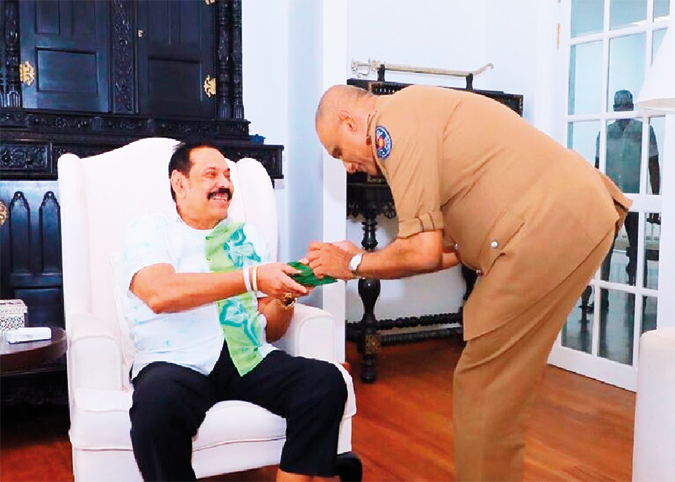
BY Kingsley Wickremasuriya, Senior DIG (Retd.)
The post of Inspector-General of Police is ‘vacant’ and the government is dilly-dallying with the appointment of a successor to take over, apparently for reasons of political expediency. This is the first time in the known history of the Department that the Police had to face such a situation.
In all these years the succession to the post of the Inspector-General of Police was almost automatic being based, by and large, on the line of Seniority and Merit. The post usually went to the Senior-most Deputy Inspector-General of Police, the most experienced and respected leader in the department. To name a few, Inspectors-General of Police Aleric Abeygunawardena, John Attygalle, and Cyril Herath were officers par excellence known for their integrity and impartiality and for doing their duty according to the Rule of Law.
The road to succession was known to be either through the post of Director of Headquarters Administration (DHA) or Director of Criminal Investigation (D/CID). This was the norm accepted by the rank and file. The succession was, therefore, smooth and easy and widely accepted by the rank and file and the country at large. This time-tested process gave legitimacy to the post of Inspector-General of Police in the eyes of all the stakeholders including the Police themselves.
In a disciplined service, rank is sacrosanct. An officer has necessarily to aspire to a higher rank through performance. If his work had been of exceptional merit and distinction, he may even be considered for a special promotion. A promotion can also be posthumous where the deceased officer had been exemplary in performance and achievement. An officer will therefore naturally like to safeguard his position in the line of seniority. He will be unhappy if a junior officer is placed over him merely because the latter wields influence. It is natural for an officer in a disciplined service to jealously protect his place in the line of seniority against encroachment (Merril Gunaratna, ‘Perils of a Profession).
This paper will try to find an explanation as to why the police have failed to ‘Serve and Protect’ the citizen, which is the main purpose of a Democracy.
Police & Politics
Police have in recent times come in for sharp criticism from various quarters ostensibly for their failure to contain the lawlessness prevailing in the country and to maintain the Rule of Law, particularly in the face of mass protests that took the country by storm. Critics allege the partiality of the police as the reason for their inability to enforce the Rule of Law. It has led to a near riotous situation being created in many parts of the country by police inaction against lawbreakers.
It is commonly known that this situation has been brought about by the politicization of the Police. A review of the constitutional history will show how undue political interference in police affairs has affected the legitimacy of the Police (and the legitimacy of the government itself, whose agents the police are) contributing to the current lawlessness in the country and the resulting failure of the police to enforce the Rule of Law.
Looking at the root cause, it has been found that the beginnings of political interference in the affairs of the Public Service were a problem even before the country gained Independence from the British. It had its origins in the early 1920s. The reports on the Colebrook – Cameron Reforms, the Donoughmore and Soulbury Reforms are a testimony to the measures they proposed to protect the Public Service from the undue interference of unscrupulous politicians.
Whilst these Commissioners made continuous efforts to ensure an efficient and effective Public Service by protecting it from undue political interference, the working of the Constitution in the aftermath of the Soulbury Commission showed how the highest in the political hierarchy of the country, no less a person than the Prime Minster himself (of the time) attempted to scuttle the legally adopted constitutional provisions by his attempts to circumvent the Constitution.
The legend has it that a Prime Minster (at the time) is alleged to have said once, ‘Public Service Commission or no Commission, I get whom I want’. We also have the story going around in police circles about how the same Prime Minster exhorted the then Inspector-General of Police, Osmund de Silva that the Police should have that ’extra bit of loyalty to the Government’, and how the Inspector-General responded in return by exhorting his officers that what they should uphold is the Rule of Law although he knew that he would be falling out of favour with the premier and that it would affect his tenure.
With all these attempts behind the scenes the Public Service Commission at that time worked reasonably well without a major hiccup until the introduction of the first Republican Constitution in 1972 that vested the responsibility of appointments, transfer, dismissal, and disciplinary control of all State Officers with the Cabinet of Ministers by Article 106 and other provisions in Chapter XII of that Constitution giving a blank cheque for political interference. The best illustrations of these efforts are the Chapter XII of the Republican Constitution of 1972 and Chapter IX of the Republican Constitution of 1978. This was the start of the process of politicization of the public service in general and the Police in particular.
In the meanwhile, the effects of these constitutional provisions brought about by Article 106 and the other provisions in Chapter XII of the first Republican Constitution (1972) on the Police have had far-reaching effects on its morale, and discipline. Consequently, delivery of services to the people has suffered severely resulting in the lowering of quality and professional standards that used to be maintained in the Police previously. With the proclamation of the Second Republican Constitution, the provisions of Chapter XII were given effect to more or less completely concerning the control of the Public Service in Chapter IX (The Executive) of the 1978 Republican Constitution. The effects of that on the Police have far exceeded those referred to by the Basnayake Police Commission (1970) or the Subasinghe Committee (1979) in their reports. This is confirmed by the report produced by the Jayasinghe Committee in 1995.
Police Reforms
As far as the Police are concerned several Police Commissions/Committees were appointed by successive governments to go into Police matters and report on reforms. The Soertz Commission Report (1946), the Basnayake Police Commission Report (1970), The Subasinghe Committee Report (1979), and Jayasinghe Committee Report (1995) on Police Reforms spoke eloquently of the impact these constitutional provisions had on the Police. They all spoke of how undue political interference undermined the moral of the Service, led to a poor public image, and loss of public respect or cooperation.
Jayasinghe Committee
In 1995 once again a three-man Committee was appointed by the President headed by Mr. W. T. Jayasinghe, a former Secretary to the Ministry of Defence ‘to inquire into and report on the reorganization of the Police Service’. The Jayasinghe Committee in particular in their report said that all the officers who appeared before them agreed that undue pressure was brought to bear in the matter of appointments, promotions, postings, and even transfers. These undue pressures were mostly from politicians and those close to politicians. They also agreed that this was one of the main reasons for the breakdown of discipline, loss of morale, and high incidence of corruption in the police. The interference did not stop with personnel matters like transfers, promotions, etc. It extended even to operational matters like criminal investigations.
As a result of the increasing incidence of interference by MPs in investigations, the Committee said that some of the officers who were fair and acted impartially were removed and transferred from their stations overnight at the instance of an MP because the offender happened to be a supporter of the MP, and yet others who had a well-known track record of corruption or inefficiency were promoted over the heads of those conscientious and dedicated officers. They also pointed out how in recent years junior officers have been promoted over their seniors, ostensibly on the ground of outstanding merit. This affected the morale of the entire Service.
While tracing back the history of the police to British times in an attempt to explain this phenomenon, the Committee said that the sole function of the police during that time was to safeguard the interests of the rulers. Even after Independence, the stance of the police did not change. The prime duty of the police now became the safety of the State instead. In the process, the police saw their immediate role to be safeguarding the interests of the government in power which eventually took the form of safeguarding the interests of the Members of Parliament (MP) of the ruling party.
They then went on to show how this relationship between the Police Officer and the MP became a particularly sensitive one, much more than that with other Government Officials because of the special demands of those constituents close to him to help them escape the rigorous application of the law by the police. Since every Government is faced with this dilemma resulting from this sensitive relationship between the MP and his constituents and consequently the MP and the police, the Committee thought that in the circumstance it would help the Government and the MPs themselves if a Police Service Commission is established as recommended by the Basnayake Police Commission in 1970 by easing the constituents’ pressure on MPs on police matters on the one hand, and that it will also go a long way to restore the morale and confidence in the police themselves on the other.
Almost all the officers who appeared before the Commission were “vehemently in support of the establishing of such a Commission.” They were further of the view that the Commission should play an active role, unlike the previous PSC in laying down policies and ensuring that they are scrupulously followed. Therefore, while recommending the establishment of a Police Service Commission they were of the view that the Commission should be appointed by the Constitutional Council of the Parliament and the members of that Commission should consist of senior serving or retired administrators, judicial officers, police administrators, and academics in sociology. They also suggested that the Constitution should be suitably amended to give effect to the establishment of a Police Service Commission. The recommendations were of no avail. Once again, the government did nothing to implement these recommendations.
17th Amendment
These recommendations however lay ignored for more than three decades when suddenly came the 17th Amendment, after a long period of inaction. The 17th Amendment was not the result of any of these recommendations. It was the result of some politicians in the opposition waking up from their slumber about police reforms and thinking of acting only after they had been themselves victims of delayed reforms and at the receiving end of a series of events affecting their political interests.
The 17th Amendment was the result of a political initiative launched by Members of Parliament in the Opposition led by the United National Party in 2001. The move was prompted by the violence and alleged election malpractices that was present during the Waymaba Provincial Council Elections in 1998, where it was alleged that “massive thuggery and vote rigging took place on an unprecedented scale”. It was not surprising that the UNP should take the lead because it was, they who suffered most during the election campaign being the victims of their constitutional device introduced during the UNP regime in 1978 placing unlimited power in the hands of the President. The Amendment naturally sought to neutralize or curb those powers vested in the President by Chapter IX of the Constitution of 1978.
The Amendment had its origins in the Report of the Citizens’ Consultation on Free and Fair Elections and De-politicisation of Key Institutions, which was set up by the Leader of the Opposition. That year a Drafting Committee was set up under the chairmanship of Mr. Karu Jayasuriya, MP where the OPA was represented by its General Secretary. A report was drawn up by the Citizens’ Consultation but it lay dormant till 2000 when a first draft of the 17th amendment was made.
After further consultation with an Expert Committee where three Senior Deputy Inspectors-General assisted in Police matters, a preliminary draft was presented by the OPA to the political parties. But what ultimately came out in Parliament on October 3, 2001 was something entirely different from the OPA draft. Even then, out of all the Institutions set up under the 17th Amendment, the National Police Commission was the most criticized by the politicians in the ruling party. If not for the JVP who put pressure on the PA Government, the 17th Amendment would not have seen the light of day even in this form.
Nevertheless, the Amendment wittingly or unwittingly introduced some of the measures contained in the recommendations made by the Basnayake Police Commission and the Jayasighe Committee. One of the major recommendations of the Basnayake Commission was the establishment of a separate Police Service Commission outside the jurisdiction of the PSC with an amendment to the Constitution. The 17th Amendment has already taken this step. It has also met the condition set by Jayasinghe Committee that the Police Service Commission be appointed by a Constitutional Council.
One of the other major conditions set by the Basnayake Police Commission was the Security of Tenure of the Inspector-General. It said that “An Inspector-General who has reached the age of optional retirement or has only a few years to reach that age is haunted by the fear that if he does not please those in power he may be retired either at once or the moment he reaches the age of optional retirement.” They pointed out that the head of so important a department being haunted by such fear in the performance of his very responsible duties is not in the public interest. The Basnayake Commission, therefore, recommended that the Inspector-General should be protected against the irresponsible exercise of the power of removal.
This safeguard is now provided by the Amendment under Article 41C by way of subsequent legislation in the form of Act No. 5 of 2002 which stipulates that the Inspector-General (amongst others) shall not be removed from office except following the procedure laid down in the Act. But, the power of grating extension of service is still in the hands of the President. That has not changed and the Amendment is silent on the matter. So, he will continue to be haunted by the fear of the threat of retirement and that fear will continue to hang over the incumbent like the ‘Sword of Damocles’ in the future as well if steps are not taken to rectify this situation sooner than later.
Therefore, it will not be a matter of surprise if he continues to secure his position by pleasing those in power to stay in office despite the many safeguards provided to bring the status quo back to square one. The amendment had several other deficiencies as well (for a detailed discussion on the subject, refer to the original article written by the same author, titled ‘Police. Politics and the 17th Amendment’ published in OPA Journal Vol.22 – May 2007).
Even if this fear is effectively removed through Constitutional Amendment, recent experience has shown that this argument is somewhat flawed in the present context of things considering the tendency some incumbents have shown to overreach their term to secure their position so that they could continue to remain in office even after reaching the age of retirement. The temptation not only to prolong his stay in office as long as possible but also to try and secure high office even thereafter has been reinforced by the recent practice of the governments offering prestigious postings abroad to the retiring Inspectors- General.
This encourages a ‘you scratch my back and I scratch yours’ kind of attitude. It also vitiates all the good intentions contained in the legislation designed to ensure the impartiality of the police by securing the tenure of the Head of the Department. The remedy may, therefore, lie in the appointment of the IGP for a fixed period of the contract, say for 3-4 years (as was the practice previously but discontinued later) with a ‘Retirement Package’ that will enable him to live comfortably without the lure of extensions beyond retirement age, ambassadorial postings or another high office so that he could do his duty by the people.
These, however, are safeguards against an IGP in office. What are the safeguards against the chances of an unscrupulous aspirant getting into office through political lobbying? This has often remained an open question probably until the next IGP stakes. So, safeguards have to be built not only against undue political pressure on the incumbent IGP but also against aspirants from getting to the top post through political lobbying. All other safeguards that have been proposed would be set at naught for having secured the post through lobbying it will be natural for the incumbent to feel obliged to his political Godfathers to ensure he continues in office.
So, when we are discussing ways and means of building public confidence in the police, what should be uppermost in our minds is not only an ‘Independent Police Commission’, but also an independent Head of the Police who by the circumstances of his appointment alone can infuse confidence in the public. Selection procedures (similar to the appointment to the post of Vice Chancellor) that are transparent enough to infuse public confidence in the appointment of the Inspector General have to be put in place in the future towards this end, without delay. Therefore, the need of the hour is not to rush with deadlines for reasons of expediency but to study the problem in-depth and bring meaningful reforms that will restore public confidence in the police, in due process, and in democracy.
Conclusions
The various Commissions on Constitutional Reforms from Colebrook-Cameron to Soulbury and several Police Commissions/Committees on Police Reforms such as Basnayake Police Commission, Subasinghe Committee, and Jayasinghe Committee on Police Reforms have all repeated the ill effects of political interference in the functioning of Police (one of the watchdogs of Democracy) ad nauseam and at great length.
But the provisions in the 1972 Republican Constitution concerning transfers, promotions, etc. of the public officers and its repetition in the next constitution in 1978 demonstrated the determination that has taken the better of politicians of all hues in this country against saner counsel opposing undue political interference in government affairs. Then came the 18th Amendment putting the clock back on all that has been achieved by the 17th Amendment. It simply demonstrated the obstinacy of those in power wanting to politicize everything under the sun.
The outcome of this undue political interference is a Police that is servile, inefficient, corrupt, and pliable that has lost Public Respect. Having lost their Legitimacy in the eyes of the Public they have forfeited their right to Public Support and their Respect for the Law (and the Police themselves). What is therefore at stake is not only the legitimacy of the Police but the very legitimacy of the government itself putting Public Security in jeopardy. That is why people have taken the Law into their own hands and resorted to mass action.
This is an ominous trend that needs to be remedied without delay. What is at stake is the legitimacy of all governments as could be seen from the peoples’ ‘uprisings’ in the form of protests, demonstrations, violence, etc. which are only symptoms of the deep malaise. Police are the bulwark of a democracy. If the Police fail all else will fail in a democracy. Playing with police is playing with fire. Therefore, it is time that civil society woke up from its slumber and take timely steps without waiting to shut the stables after the horses have bolted











Features
Combining local resources,traditional knowledge and science to build a food-secure Sri Lanka

World Food Day 2026: Innovating today for a better food future
by Dr. Kaushalya Wijayasekara
What will be on the Sri Lankan dinner table ten years from now? Will our children be able to get nutritious food at a price their families can afford? Will farmers be able to grow enough despite changing weather and rising costs? And how much of the food we produce will actually reach the consumer, instead of being lost or wasted along the way?
These questions can’t wait. A farmer faces unpredictable weather. A family faces rising food costs. Fruit goes unsold after a good harvest. Some children do not get enough nutrition. The future of food is tied to the future of Sri Lanka itself.
World Food Day 2026 is a chance to look beyond the immediate problems and ask whether we can build a food system that feeds our people well, gives farmers better opportunities, protects the environment and makes better use of what we already have. The answer can be yes, but we will have to think differently.
We are not starting from zero. Sri Lanka has diverse crops, fisheries, traditional food knowledge, indigenous varieties, research institutions, universities and a young generation able to create new solutions. What we need is to bring these together and act. Producing more will not secure our food future on its own. It will depend on how intelligently we produce, process, preserve, distribute and consume food.
Making more of what we already have
Innovation does not always mean inventing something new. Often it means finding better uses for the resources we have.
Sri Lanka grows traditional rice varieties, kurakkan, green gram, cowpea, jackfruit, breadfruit, cassava, sweet potato, coconut and palmyrah. All of them have great potential for modern, nutritious, value-added foods. Jackfruit and breadfruit can be made into flour and other convenient products. Traditional rice varieties can go into new foods that suit changing consumer needs. Palmyrah, with its strong cultural heritage, can create new income through better processing, packaging, quality assurance and market development.
The aim is to connect our traditional food knowledge with modern consumer needs and technology, while keeping our food heritage.
Stop wasting the food we produce
Reducing food loss and waste should be a major priority. Seasonal fruits such as mango, banana, papaya and pineapple can be lost in large quantities when production exceeds demand or when storage, transport and processing facilities are inadequate. With suitable technology, these fruits can become dried products, pulps, powders, beverages and other shelf-stable foods.
Agricultural and fisheries by-products are resources too. They could be turned into food ingredients, animal feed, bio-based products and other useful materials, which would move us toward a more circular food economy.
Technology alone is not enough. We need stronger local processing facilities, cold storage, efficient transport, collection centres and market information systems, especially close to where food is produced. Cutting food loss raises the value of what our farmers and fishers already produce.
Nutrition and food safety come first
Food security means more than having enough food. People also need food that is safe and nutritious.
Sri Lanka can develop affordable, nutritious foods from local pulses, grains, vegetables, fruits and fish. Children and other vulnerable groups should get particular attention. Schoolchildren in particular deserve a focus: safe, nutritious, locally sourced products for school feeding programs would support child nutrition, local farmers and domestic food industries at the same time.
Food safety must stay at the centre of food innovation. Good hygiene, quality control, laboratory testing, traceability and appropriate food safety systems are what make new products safe as well as attractive and nutritious.
A food system that can cope with climate change
Climate change is already affecting agricultural production, water availability, crop yields and food prices. We need food systems that can handle changing conditions. That means climate-resilient crops, efficient water use, soil and water conservation, better storage and resource-efficient food processing.
Traditional knowledge matters here. Generations of Sri Lankan farmers have developed practices suited to local climates and ecosystems. Combining that experience with modern science can give us solutions that fit local conditions and are sustainable. Technology alone will not build the future of food. Science, experience and local knowledge together can.
Give young people a bigger role
Sri Lanka’s universities have an important part to play in shaping our food future. Young people should be encouraged to identify real problems in the food system and work on practical solutions in areas such as food waste, sustainable packaging, nutrition, food safety, modernising traditional foods and digital technologies.
A good research project should not always end as a research paper. Where appropriate, research should be supported to move on to products, technologies, enterprises and community solutions. That needs stronger partnerships between universities and industry, along with mentoring, research funding, business support and market connections. If young researchers and entrepreneurs can turn their ideas into viable food innovations, both consumers and producers will benefit.
A pathway designed for Sri Lanka
We do not need to copy food-system models from other countries. We can build a pathway that suits our own resources, culture and needs. It would bring together local resources, traditional knowledge, scientific research, appropriate technology and entrepreneurship, with farmers, fishers, universities, research institutions, food industries, entrepreneurs and policymakers working side by side.
The goal goes beyond selling raw materials. We need to create more value, reduce waste, improve nutrition, generate jobs and strengthen rural livelihoods. This matters especially for small and medium-scale food enterprises, which can drive local economic development when they get the right technical, financial and market support.
The choices we make today
The food future will not create itself. It will be shaped by what we grow, what we research, what we process, what we consume and what we choose not to waste.
So, the question for World Food Day 2026 is this: what can we do today so that every Sri Lankan has safe, nutritious, affordable and sustainable food tomorrow?
The answers are already around us, in our farms, fisheries, food businesses, universities, laboratories and communities. We have the resources, the traditional knowledge, the scientific expertise and talented young people. What we need now is to connect them and act.
A better food future begins with the choices we make today.
Dr. Kaushalya Wijayasekara
Senior Lecturer, Department of Biosystems Technology, Faculty of Technology, University of Ruhuna

By Admiral Ravindra C Wijegunaratne
WV, RWP and Bar, RSP, VSV, USP, NI (M) (Pakistan), ndc, psn, Bsc
(Hons) (War Studies) (Karachi) MPhil (Madras)
Former Navy Commander and Former Chief of Defence Staff
Former Chairman, Trincomalee Petroleum Terminals Ltd
Former Managing Director Ceylon Petroleum Corporation
Former High Commissioner to Pakistan
The Digampathana suicide truck attack on 16th October 2006 remains the deadliest single strike in Sri Lanka Navy history, leaving scars that time cannot erase.
It was a seemingly ordinary Monday morning on 16 October 2006, but the calm of that day would soon be shattered in a way none of us could have imagined. As the Commandant of the Naval and Maritime Academy and Flag Officer Commanding Naval Fleet at Trincomalee, I was aware that a number of my cadets were travelling that morning, part of a convoy of fifteen buses carrying naval personnel from Trincomalee, Colombo, and other bases, heading toward Dambulla to rendezvous with another group. The convoy also included trucks and escort vehicles, a routine movement planned and coordinated with the army to ensure the roads were clear. The morning started quietly. Some personnel greeted friends, handed over their weapons, or strolled to a nearby tea shop. It all seemed so ordinary—too ordinary for what would come next.

Sri Lanka Navy sunk LTTE Ships carrying arms, ammunition and warlike materials thousand miles away from Sri Lanka in Indian Ocean in September and October 2007.
By late morning, both convoys had reached the small ground at Digampathana, near the Sigiriya junction, and personnel mingled briefly, unaware that a carefully orchestrated act of terror was waiting. Then, suddenly, an empty half-truck veered directly into the convoy. It exploded with a ferocity I can still recall as if it were yesterday. Nuts, bolts, and high explosives tore through the air. Pandemonium erupted instantly. I later learned that 107 of our naval personnel were killed on the spot and another 153 critically injured. The scene was indescribable—bodies scattered, vehicles mangled, personal effects strewn across the ground. I remember later hearing that the head of the suicide bomber was recovered more than 100 meters away from the blast, a grim testament to the sheer force of the explosion.
I was in my office at the Naval and Maritime Academy when my mobile phone rang. A young midshipman from the 21st intake called, his voice trembling: “Sir, there was a huge explosion at the convoy point! Many are dead … my batch mate Wijesundara is among them.” I immediately jumped into my jeep with my escort Chief Petty Officer and driver and rushed to Digampathana, relying on every ounce of my driving skill to reach the scene. The journey, which usually took little more than an hour, felt endless that day, each passing mile weighed down by dread.
When I arrived, I was confronted with a sight that no training can prepare you for. The injured were being rushed to Dambulla Hospital, where doctors and nurses worked tirelessly, improvising in ways that saved lives despite the overwhelming chaos. I went back to the site after visiting the hospital. The remains of our naval personnel were scattered across the ground, and someone had begun collecting weapons and protective gear. I immediately contacted Surgeon Rear Admiral Nico Jayasekara and received his instructions: collect all body parts in separate bags and transport them to the Trincomalee Naval Hospital mortuary. This gruesome work had to be done with care and dignity, and it filled the icebox in my vehicle. Through DNA testing initiated by Rear Admiral Nico, we were able to identify every naval personnel lost that day, bringing some closure to grieving families.
The Navy Commander at the time, Vice Admiral Wasantha Karannagoda, was devastated. I had worked closely with him and knew how deeply he cared for his men. He ensured that the fallen were honoured with full ceremonial naval funerals at Welisara Naval Base, attended by families and comrades. Sixty-seven funerals were conducted in a single day—a number that still haunts me.
The Digampathana attack remains the largest single loss of naval life in our history. It was a day of sorrow, but also a day that reinforced our resolve. The tragedy galvanized the Navy to target the LTTE Sea Tiger wing with renewed determination and reshaped our maritime operations forever. Every time I think of that day, I remember not just the lives lost, but the courage, professionalism, and dedication of those who survived, those who treated the injured, and those who ensured the fallen were honored properly. May the souls of our naval hero’s rest in peace, their sacrifice guiding us and inspiring generations of naval personnel to come.

Tales of Mystery and Suspense – 24
I was intrigued by the title of a book I found in a book drop at the condominium of a friend, Murder at Whitby Abbey, and I brought it home with me though I will not be able to return it in the near future. It was described on the cover page as ‘a standout in the crowded medieval mystery field’, though I fear I do not know of other books in this field, apart from the Cadfael series, which I have dealt with earlier.
The book, by Cassandra Clark, is set during the reign of Richard II and has as a backdrop his precarious position, which led to his being replaced, and murdered, by his cousin Henry, who reigned as Henry IV. It is a gloomy book, the action taking place in the twelve days of Christmas leading up to the Epiphany. And the gloom is pervasive, even though this is supposed to be a time of festivity, with mummers performing, and many of those in the guest house where the heroine stays going to town to enjoy themselves, with much drinking and much music, which also fills the guesthouse.
The heroine Hildegarde is a nun, sent to try to acquire a relic being sold by Whitby Abbey, though this was also a penance set by the Abbot of the monastery that governed her abbess because she had had sex with a man. Soon after she and her companions reach the Abbey set high on a cliff, she finds that there are other bidders, and soon suspects that the hierarchy, not perhaps the Abbot who seems a weakling, but his rapacious bursar, is determined to make money, and not above creating false relics to sell to several aspirants.
After Hildegarde and her Cistercian companions – Whitby is a Benedictine Foundation – two monks, Gregory and Egbert, and a young priest Mark, reach the abbey, they find that Aelwyn, a monk they had met on their way to the guesthouse had died. This was in the apple store, and they realize, when they find the surplices of novices stuffed into the air vents, that he had been left to suffocate in the overwhelming scent of apples.

Clark
The Cistercians are asked to look into the death, perhaps because they are likely to get no cooperation from the Abbey folk, but perhaps because those in charge are keen to know what happened. And the infirmarer, an old monk, suggests Hildegarde talk to a man called Edred who worked for the bursar, and had been a friend of Aelwyn’s. But Edred too is killed, before he can keep an appointment he had made with Hildegarde, drowned in a pool near the farmhouse of the Abbey.
Meanwhile tensions arise between the fisherfolk and the abbey for the bursar wants to charge them for using the beach that technically belongs to the abbey to dry their fish and their nets. This leads to physical battles, when the guards used by the abbey, under the command it seems of the bursar whose determination to make money is not resisted by the abbot and the prior, try to storm the area where the fishermen live.
Hildegard finds out more about what had happened through two youngsters, one of whom Torold is the son of Aelwyn by a woman who worked as a prostitute for a cartel, and with whom Mark fell in love. The other works on the farm and had seen Edred meet someone near the pool, after which that someone left the place by himself. And the boy had also found in the pool a sort of dagger with the seal of the abbey.
He and his dog, and Torold who follows her, rescue Hildegarde from a man at arms who has waylaid her and tries to rape her earlier. Escaping into the abbey she was nearly been raped then by the bursar, but she managed to escape, in the process setting fire to him and the muniments room, which led, when he was rescued, to the discovery of a box with the money he said had been stolen, blame being cast on both Aelwyn and Edred.
Matters come to a head when the fisherfolk try to storm the abbey, being resisted by the men at arms stationed on the towers. But then Hildegarde realizes that behind the murders was the bursar’s clerk, whom she pursued to the cathedral. There is great drama then as she escapes from him when he tries to kill her, and then from the man at arms who had tried to both rape and kill her, but they both fall from the scaffolding she had climbed, the latter coming from a tower where he had been stationed.
Both of them think they run the rapacity of the abbey, the latter claiming to work for the nobles opposed to Richard, who is presented throughout the book as devoted to his subjects, not to power or money. But though the villains die, the bursar continues, having got over the hysteria the fire had caused and his acknowledgment then of guilt – and though the abbot and the prior seem less vicious, whether they will be able to assert themselves is questionable.
Before the climax, when the others in the guesthouse were leaving, Hildegarde found that two of them were in possession of the relic, for which they seem to have paid well. Hildegarde herself had made a derisory offer, but before she leaves the abbot gives her the relic, perhaps in gratitude for what she and her fellow Cistercians had discovered, the abbey having made as much money as it needed and more from the gullible other buyers.
Mark’s inamorata is saved from the stews because she moves in with Edred’s widow whom the bursar had thrown out of the rooms he occupied when her husband was found dead. Hildegarde had paid for lodgings, in a house run by the man who ran the brothels, but he had a kindly side and was going to finance them to make nets for the fishermen.
So, the Cistercians set off for their home as swiftly as they can to get there on the day of the Epiphany, having stopped en route to pray for King Richard whose birthday it was.

SJB: Govt. trying to reappoint Jayakody, who resigned from Cabinet amidst coal scam

India busts Pakistani salt smuggling via Sri Lanka

Monks brave heavy rains to press for Gnanasara Thera’s release

Naval officer testifies Yoshitha received Rs. 5.15 mn in salaries during SLN service

TISL tells govt. to withdraw Protection of State from Terrorism Bill, citing its draconian provisions

Joint operation nets more than 100 kilos of heroin

‘Dates have the highest sugar content to fight Coronavirus’

Sunday Island 27 December – Headlines

#SundayIsland 17th December – Headlines

Sunday Island – 28th March

Sunday Island Headlines – 21 March

Sunday Island – 21st February – Headlines
-

 News5 days ago
Sri Lanka escalates anti-graft drive with Shiranthi’s jailing
-

 News6 days ago
NPP govt. reminded of its responsibilities as US warship leaves Colombo
-

 Latest News6 days ago
Farhan, Sadaqat help Pakistan ace 183 chase to go 1-0 up
-

 Latest News4 days ago
Farhan and Sadaqat help Pakistan seal series in style
-

 News5 days ago
Iranian ships stranded, Lanka fears US sanctions
-
 News6 days ago
Interdicted top House official Kularatne receives special recognition in Mexican Parliament
-
 Features4 days ago
Intake 16: 45 years of duty and honour
-

 Latest News3 days ago
Nissanka’s return headlines Sri Lanka’s Test squad against Pakistan