
Business
IFC injects $166 million to boost Sri Lankan SMEs through major banks

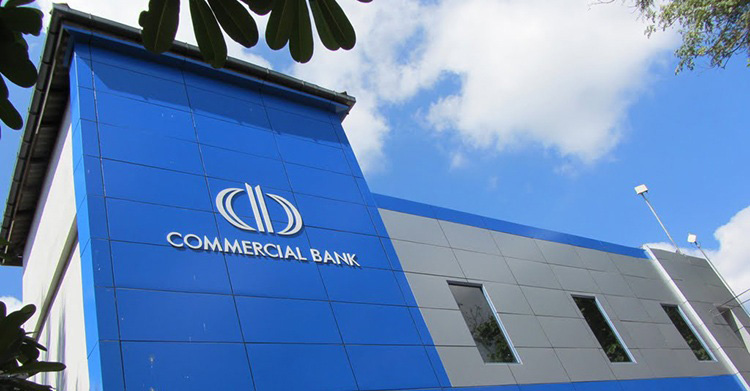
The International Finance Corporation (IFC), a member of the World Bank Group, has announced a substantial $166 million investment package targeted at the country’s private sector. The funds are strategically designed to help the nation transition from macroeconomic stabilisation to sustainable growth, with a sharp focus on empowering small and medium-sized enterprises (SMEs).
The financing will be channeled through three leading private commercial banks: Nations Trust Bank (NTB), Commercial Bank of Ceylon (COMB), and the National Development Bank (NDB). A core objective of the program is to promote inclusive growth by specifically prioritising lending to women-owned businesses and agri-businesses, thereby strengthening economic value chains and supporting job creation.
NTB secures the largest portion, with a $50 million loan, marking the IFC’s first debt investment in Sri Lanka’s financial sector since the 2022 crisis – and an additional $20 million trade finance guarantee. ComBank will utilise a $60 million risk-sharing facility, where the IFC will cover 50% of potential losses on a portfolio of SME loans, enabling the bank to expand credit more confidently. NDB receives a $20 million risk-sharing facility and a $16 million trade guarantee to bolster its SME and cross-border trade support.
Despite the scale of this strategic infusion, analysts at First Capital Research indicate that the immediate impact on the banks’ valuations is expected to be neutral. They have maintained their fair value estimates for NTB, COMB, and NDB, viewing the facilities as supportive for long-term sector growth rather than catalysts for near-term earnings re-ratings. The move underscores the IFC’s commitment to fostering a resilient and inclusive private sector as Sri Lanka continues its path to economic recovery.


Gita Gopinath, who served as the IMF’s First Deputy Managing Director from 2022 to 2025 and is now a professor of economics at Harvard University, said something at a Bloomberg podcast interview on May 29 that every Sri Lankan policymaker and citizen should hear. She said: “I do think there has been a regime shift – a change in the underlying dynamics that kept interest rates low.”
According to her comments, for nearly two decades before the pandemic, the world enjoyed unusually cheap money. The IMF, the Asian Development Bank, and other multilateral lenders all lent at very low rates.
Now, that era is over.
The Island Financial Review asked an independent analyst what he thought about Gopinath’s comments and how they would matter to Sri Lanka right now.
The following are excerpts from his comments:
“Even though Sri Lanka cannot borrow from international capital markets because of its default, we still borrow from the IMF and ADB. Many people assume those loans are always cheap. They are cheaper than private banks and that is true. But they are no longer as cheap as they used to be.”
“The IMF’s interest rate is tied directly to global short-term rates, mainly the US dollar rate. When the US Federal Reserve raises rates, the IMF’s rate rises automatically. There is no escape. The ADB is in a similar position. It raises money by selling bonds in global markets. When those markets demand higher interest, the ADB must pay more. It then passes that cost to borrowers like Sri Lanka. So even our ‘concessional’ loans are now more expensive than they were five years ago. And because the shift is permanent – not temporary – we cannot wait for rates to fall back to the old normal. That normal is gone.”
At the interview, Gopinath gave three reasons for this shift: large government deficits in rich countries, the huge appetite for capital from the artificial intelligence boom, and a change in who buys government debt. None of those factors are going away soon. Her warning to the world was clear: adjust to higher rates, because they are here to stay.
For Sri Lanka, this means three things, the analyst said.
“First, every new IMF or ADB loan will carry a higher interest cost than the last one. Second, the 2% surcharge we currently pay to the IMF – because our borrowing exceeds 300% of our quota – becomes even more painful when the base rate is also high. Third, our path to returning to international capital markets is now steeper. If we try to go back to borrow privately, the rates waiting for us will be far higher. Probably as high as 8-10%.”
“None of this is a reason for panic. But it is a reason for realism. The cheap IMF and ADB loans of the past are gone. Gita Gopinath said so herself. The only sensible response is to borrow less, export more, and rebuild our economy so that one day we no longer depend on any lender – cheap or expensive. That day is still far away. But knowing the truth about interest rates is the first step toward reaching it.”
Notably, referring to a missing number in all the IMF news here in Sri Lanka, he said:
“There is one more thing worth noting. On May 29, Sri Lanka received a double tranche of USD 695 million from the IMF after the successful completion of the fifth and sixth reviews. Every news channel carried the story. The Central Bank issued a statement. The Finance Ministry welcomed the funds. And so did the Ceylon Chamber of Commerce. But not one official source told the Sri Lankan people a simple fact: at what interest rate did we receive this money?
“Here is the answer that nobody gave. The IMF’s current basic interest rate – called the rate of charge – is tied to the SDR interest rate, which stood at 2.729% as of mid-May 2026. On top of that, the IMF adds a fixed margin. In May 2026, the IMF Executive Board confirmed that the margin would remain at 60 basis points for the coming financial year. That brings the base rate to approximately 3.33%.
“But Sri Lanka does not pay only the base rate. Because our borrowing from the IMF exceeds 300% of our quota, we also pay a level-based surcharge of 200 basis points, or 2 percentage points. This surcharge was introduced to discourage countries from borrowing heavily from the Fund. For a country in default, however, there is little alternative.
“So the current borrowing cost can be estimated as follows: 2.73% SDR interest rate, plus 0.60% IMF margin, plus 2.00% surcharge. That comes to approximately 5.33% per annum.
“There is also a separate service charge of 0.50% levied on each disbursement. However, this is a one-time fee rather than an annual interest charge. For the latest USD 695 million tranche, that service charge would amount to roughly USD 3.5 million.
“Before the pandemic, the IMF’s basic rate of charge was often below 2%. Sri Lanka’s total borrowing from the IMF under the Extended Fund Facility now stands at approximately USD 2.4 billion. By the time we finish repaying these loans – with repayment periods of 5 to 10 years in semi-annual installments – the total interest and related charges paid will run into hundreds of millions of dollars.
“None of this is a secret. The IMF publishes its rate formulas openly. Sri Lanka’s projected payments, including principal and interest, are available on the IMF website. For May 2026 alone, Sri Lanka’s scheduled payments to the IMF totaled more than USD 47 million, comprising USD 29.7 million in principal and USD 17.3 million in interest and charges.
“But somehow, when the good news of a disbursement is announced, the interest rate is never mentioned. Perhaps that is because 5.33% does not sound as heroic as USD 695 million. Perhaps it is because nobody wants to remind a suffering public that even IMF financing carries a significant cost. Whatever the reason, the people of Sri Lanka deserve to know the full cost of the money their government is borrowing.
“Gita Gopinath warned us that the era of cheap loans is gone. The latest IMF disbursement shows exactly what that new era looks like,” he said in conclusion.
When the good news is announced, no one has the heart to mention the cost
By Sanath Nanayakkare
Business
Sri Lankan scientist-innovator Milinda Edirisinghe introduces AI-integrated gem testing system to gemological world

In a country celebrated for producing some of the world’s finest gemstones, Sri Lankan gemologist Rewatha Milinda Edirisinghe now says the future of gemstone testing must move beyond traditional observation and into the realm of scientific precision powered by artificial intelligence.
Edirisinghe, the Founder and Managing Director of Gemological Report of Ceylon (GRC), has introduced what he describes as a next-generation AI-integrated spectroscopy system designed to modernize gemstone identification and analysis for global gem laboratories.
The innovation, currently under patent application in Sri Lanka with plans for international patent registration, combines a traditional gemological spectroscope with smart-device connectivity, proprietary algorithms and an AI-driven gemstone database capable of analysing mineral compositions with unprecedented precision.
According to Edirisinghe, the invention was born out of a longstanding frustration shared by many gemologists.
“The spectroscope is one of the most powerful tools in gemology, but it is also one of the most uncomfortable instruments to use,” he said during an interview with The Island Financial Review. “Even experienced gemologists often avoid using it extensively because it strains the eyes and requires difficult interpretation of colour absorption patterns. For colour-blind users or those with eyesight limitations, it becomes even more challenging.”
A conventional spectroscope allows gemologists to study how gemstones absorb light, revealing unique spectral signatures linked to trace elements such as chromium, iron and vanadium. These spectral patterns function much like fingerprints for gemstones, helping experts identify species, treatments and origins.
Edirisinghe’s solution transforms that traditionally manual process into a digitally assisted scientific system.
Using a specially designed clip-on device attached to the spectroscope, spectral data from gemstones can now be transmitted directly to a smartphone or smart device under varying lighting conditions and viewing angles. The collected data is then processed through dedicated software and algorithms before being matched against an AI-supported gemstone database developed in collaboration with foreign partners, including specialists in Thailand.
“The spectroscopy is the fingerprint of a gemstone,” Edirisinghe explained. “What we have done is create a system that captures those fingerprints more accurately than ever before and analyses them scientifically through AI-supported comparison.”
The system, branded as the “Ray’s Spectroscopy System for Smart Devices,” named after his middle name Rewatha, is designed to identify gemstone treatments, detect enhancements and even assist in determining the geographic origin of stones.
He says the innovation marks a significant shift in how gemstone certification could evolve globally.
“In many laboratories, reports are sometimes issued mainly based on surface-level tests such as specific gravity or refractive index measurements. Those methods are important, but they are not enough for comprehensive gemstone identification in today’s complex market,” he noted.
“With this system, gemstone analysis becomes a deeper scientific exercise rather than simply issuing a certificate after limited testing.”
Edirisinghe believes the technology will also democratize access to advanced testing by offering laboratories a more affordable alternative to costly imported systems.
The GRC founder is no stranger to challenging conventions within the gem industry. Earlier this year, his laboratory gained industry attention for introducing rigorous multi-layered certification methodologies aimed at elevating Sri Lanka’s standing in international gemstone authentication markets.
Now, with his latest innovation, Edirisinghe says he hopes to position Sri Lanka not merely as a source of valuable gemstones, but also as a contributor to global gemological science.
He draws parallels between his contribution and that of the late Francis Leo Danvil Ekanayake, who discovered the rare radioactive mineral ekanite in Sri Lanka in 1953.
“After the discovery of ekanite, there have been very few scientific innovations emerging from Sri Lanka’s gemological sector,” he said. “I wanted to contribute something practical and globally relevant to the industry.”
While commercial production awaits patent approval, the system is already being used internally at GRC’s laboratory in Colombo. Meanwhile, the database continues to expand with fresh gemstone data and analytical inputs from international collaborators.
For Edirisinghe, the ambition extends beyond business success.
“If Sri Lanka is known for producing some of the world’s finest gemstones, then we must also contribute world-class scientific innovation to the industry,” he said. “That is how we truly elevate Sri Lanka’s name in global gemology.”

The Commercial Bank of Ceylon has announced a nationwide campaign to accelerate the adoption of LankaPay JCB debit cards, offering customers across Sri Lanka another compelling opportunity to step into a more secure, convenient and rewarding cashless lifestyle.
Building on strong momentum achieved in 2025, when customer uptake and usage signalled growing confidence in LankaPay cards as a dependable payment solution, the Bank said this latest initiative is designed to make every day digital payments more accessible and appealing than ever before.
The campaign centres on a limited-time offer that enables customers to obtain a LankaPay JCB debit card with the first-year issuance fee completely waived. Available from 1st May to 31st December 2026, this offer is open to both new customers and existing debit cardholders, making it easier for a wider segment of Sri Lankans to upgrade to a modern payment experience.
LankaPay JCB debit cards issued by Commercial Bank are accepted at a broad spectrum of supermarkets, retail outlets, restaurants and service providers across the country, enabling seamless transactions for daily needs. Cardholders also benefit from a host of value additions, including exclusive discounts, cashback offers and seasonal promotions, while enjoying the convenience of international usability through JCB’s global network for travel and overseas transactions.

CPC shocks continue

Trapped in a hole of its own making: The crux of Sri Lanka’s agony

First six battery energy storage systems arrive

Ambassador Prasad Kariyawasam elected Chair of the Committee on Migrant Workers

The British govt.’s dog massacre

Construction sector contracts amid rising costs, labour shortages

‘Dates have the highest sugar content to fight Coronavirus’

Sunday Island 27 December – Headlines

#SundayIsland 17th December – Headlines

Sunday Island – 28th March

Sunday Island Headlines – 21 March

Sunday Island – 21st February – Headlines
-
 News2 days ago
IMF urges Lanka not to meddle with exchange rate
-

 News7 days ago
Police probe underway to ascertain links between criminals deported from UAE and local politicians
-

 News6 days ago
Easter Sunday carnage: Court told Maulana’s statement cannot be accepted without cross-examination
-

 News6 days ago
UK passport holder hiding here wants to have deportation order rescinded to leave without blemish
-
 Opinion6 days ago
Undermining the democratic political framework
-

 Features3 days ago
The Division Bell Mystery
-

 Business3 days ago
Sri Lanka’s construction industry losing ground while no one watches
-
 Midweek Review5 days ago
Israeli-US aggression won’t go unanswered -Iranian Ambassador