
News
The British govt.’s dog massacre

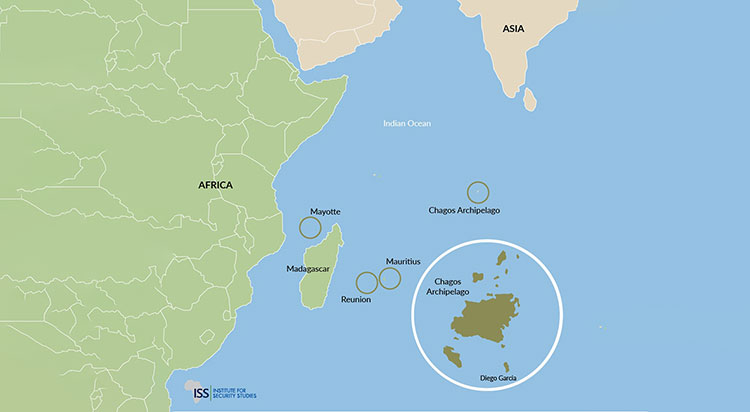
How Her Majesty’s Government used systematic canicide as psychological warfare in their campaign of terror to force the Chagossians from their homeland.
The British people pride themselves on being the greatest dog-lovers on Earth. In the nation with the oldest dog charities, public transport authorities not only permit dogs but often encourage them openly. Many pubs and shops display witty signs that read, “Dogs welcome, people tolerated,” and keep treat jars on their counters. Ironically, the Government of this cynophilic country perpetrated the world’s worst act of mass dog murder in living memory.
In one of the most grotesque acts of state-sponsored animal cruelty in modern history, the British government systematically massacred every dog on the Chagos Archipelago in the early 1970s. They did this, not as a side effect of forced expulsion, but as a deliberate instrument of psychological warfare designed to terrorise the Chagossian population into abandoning their ancestral homeland. This calculated mass canicide represents a crime both against animals and against the human families who watched their beloved pets tortured and killed before their eyes.
The Chagos archipelago formed a natural paradise. The 1,500 islanders lived self-sufficiently on an abundance of natural produce, and no extreme weather threatened them. Thriving villages, a school, a hospital, a church, a railway, and an undisturbed way of life flourished there, amid the coconut trees and the fishing boats.
The dogs of Diego Garcia and the outer Chagos islands did not only roam as strays or nuisance animals. Chagossian families cherished them as beloved members of their households, loyal companions, and integral parts of island life across generations. By rounding up, gassing, burning, and incinerating these animals systematically, British officials and US Navy personnel sent a brutally clear message to the Chagossians: your family will be destroyed, your way of life will be obliterated, and resistance is futile.
Gassing: The Primary Method of Murder Le Monde Diplomatique
revealed in 2015 that the killings began with attempts at shooting the dogs. When that missed the mark, “they tried to poison them with strychnine.” When that in turn failed, according to survivor testimony documented by People’s World in 2009, the British gassed the dogs to death using carbon monoxide or similar gas. Chagossian survivor Vine testified: “Their pet dogs were rounded up and gassed, and their bodies burned, before the very eyes of their traumatised owners.” According to Le Monde Diplomatique, “they gassed the howling animals with exhaust piped in from US military vehicles.”
The authorities chose this method for its efficiency and psychological impact. The gassing was not quick or humane. Witnesses reported that the killing process was deliberately prolonged to maximise the suffering of both the animals and the watching Chagossian families.
This detail matters: it reveals that the canicide did not arise from a spontaneous act of cruelty but from a systematic operation in which perpetrators tested different killing methods for efficiency. When shooting or poisoning proved too slow or ineffective, they moved to the more “efficient” method of gassing. The dogs thus served as literal test subjects in a programme of state-sponsored mass murder.
After gassing the dogs to death, the perpetrators incinerated and burned their bodies. In These Times documented that “they watched their dogs be gassed to death and incinerated before they were ejected from the islands.”
The burning served multiple purposes: disposal of bodies to prevent the Chagossians from burying their pets; destruction of evidence of the mass killing; inflicting additional psychological trauma as families watched the flames consume their beloved animals; and denying the Chagossians closure, as they were denied even the dignity of proper burial for their pets
Watched by the Owners: Psychological Torture
It is crucial to understand that the dogs killed were not only stray or unwanted animals. Human Rights Watch emphasised that the British and Americans killed the Chagossians’ pets. These were beloved family animals that had been kept by families for generations. They had been companions providing emotional support in isolated island communities and family members beloved by children and adults alike. The loss of these dogs represented not just the loss of property, but the destruction of the Chagossian way of life itself.
Most chillingly, the perpetrators performed the canicide in full view of the families. This was no accident or logistical necessity. The authorities intended the public nature of the killings to break the spirit of the Chagossian people by forcing them to witness the torture and murder of their beloved family members. The British government understood that watching one’s pet being gassed and burned would create psychological trauma that would last for generations. They wanted this trauma to make the Chagossians more compliant about their own forced expulsion.
The canicide was total and systematic. Every dog on Diego Garcia and the outer islands was killed, with no exceptions, no survivors. This completeness was essential to the British strategy. If any dogs had survived, the Chagossians might have maintained hope of rebuilding their lives. By eliminating all dogs, the British ensured the psychological trauma would be total and inescapable.
According to In These Times, the Chagossians “were not permitted to bring their dogs into exile”. This ensured that the trauma of the canicide would be complete: the Chagossians could not rebuild their lives with their pets in their new homeland. This trauma has been passed down through generations. Chagossian elders continue to tell their children and grandchildren about watching their pets being gassed and burned. The psychological wounds have never healed.
State-Sponsored Terrorism
Human Rights Watch confirmed that “British officials ordered the killing of the dogs on Diego Garcia, including the Chagossians’ pets.” This was not rogue action by individual contractors or military personnel. The order came from the highest levels of the British government, demonstrating that the canicide was official state policy.
The fact that British officials gave the orders makes this a state crime. The UK government authorised the systematic murder of thousands of innocent animals as a weapon of political coercion.
Le Monde Diplomatique
documented that “British government agents and US Navy personnel” carried out the killings. This reveals that this was not a purely British colonial project, but a collaborative effort between the two imperial powers who wanted the Chagos Archipelago depopulated.
The canicide sent a clear message to the Chagossians: We can destroy your family, the way we killed your beloved pets. your customs, your animals, your island existence has no value to us. Resistance is futile and you had better leave now, or worse will happen. The dog killings were a warning of what would happen to the Chagossians themselves if they resisted.
The authorities used canicide as just one element in a broader campaign that included: cutting off food and medicine supplies, economic strangulation by closing coconut plantations and stopping wages and physically loading Chagossians onto ships. The dog killings were perhaps the most psychologically destructive element because they demonstrated the British government’s willingness to commit cruelty for its own sake.
The systematic killing of thousands of dogs, using deliberately cruel and inhumane methods, for no legitimate purpose other than psychological warfare against their human owners constitutes a crime against animals. The canicide was an integral component of the broader ethnically-cleansing, which Human Rights Watch has characterised as “crimes against humanity”. The dog massacre was intended to facilitate the forced displacement of an entire people by terrorising them into compliance. This makes it not just animal cruelty but a crime against the Chagossian people.
The fact that British officials ordered the canicide and that US Navy personnel carried it out makes this state-sponsored terrorism. The British government used the torture and murder of innocent animals as a weapon to terrorise the Chagossian population into abandoning their homeland. This is not a metaphor. The canicide was terrorism in the literal sense: violence designed to create terror and force political compliance. The victims were innocent dogs and the Chagossian families who loved them.
Why the canicide must be remembered
In March 2024, the British Indian Ocean Territory (BIOT) Supreme Court overturned a longstanding ban on Chagossians visiting the outer islands of the Archipelago. This ruling represents a significant victory for Chagossian rights, though it does not yet grant the unconditional right of return to permanently resettle.
The BIOT Supreme Court ruling acknowledges that the strategy of breaking the Chagossians’ spirit has failed. They have persisted in their fight for justice for over 50 years, and the court has recognised that they have legitimate rights to their ancestral territory.
The court’s ruling implicitly acknowledges the unjust nature of the original expulsion, as well as the canicide. By allowing Chagossians to visit their outer islands, the court recognises that they maintain a legitimate connection to their homeland, despite the British government’s attempts to sever that connection through terror.
The British government has never formally acknowledged the canicide. When the dog killings are mentioned in court proceedings, they are treated as minor details rather than the crime they represent. The systematic killing of thousands of innocent animals to terrorise a human population into exile remains largely unknown to the general public.
The dogs of Chagos were innocent victims of state-sponsored terrorism. They were tortured and killed for no reason other than to serve the strategic interests of the British and American governments. Honouring their memory requires acknowledging what happened to them and the suffering they caused to their human families.
The mass torture and murder of Chagos’ innocent dogs reveal the lengths to which imperial powers will go to achieve their objectives. The canicide was no anomaly, but characteristic of colonial attitudes toward indigenous peoples and their animals.
Yet, although the dogs of Chagos may be dead, the people survive, and their fight for justice continues, a symbol of the resilience of the oppressed.
By Vinod Moonesinghe


A specialists committee has been appointed by the Secretary to the Ministry of Agriculture, Livestock, Lands and Irrigation adhering to the decision of the Cabinet of Ministers dated 29.12.2025 for submitting appropriate recommendations analyzing the provisions of the draft bill formulation in regard to Animal Welfare.
Based on the recommendations of the said Committee, the Legal Draftsman has been instructed at the meeting of the Cabinet of Ministers held on 18.05.2026 to prepare the final bill on the animal welfare.
Wherefore, the Legal Draftsman has formulated the draft bill and the clearance of the Attorney General has been received in the connection.
Accordingly, the Cabinet of Ministers granted approval to the resolution furnished by the Minister of Agriculture, Livestock, Lands and Irrigation to publish the said draft bill in the
Government Gazette Notification and subsequently forward the same to the Parliament for its concurrence.
Under the legal provisions for elections in this country since 2004, it is mandatory for voters who come to mark their votes to verify their identity through a valid identity card, and it is also mandatory for all such voters to be marked with an appropriate mark using indelible ink. The dual purpose of these two functions is to prevent a voter from voting more than once in a single election.
It has been observed that having to follow two different
methods at the same time to achieve the same objective hinders the efficiency of the duties performed at the polling stations and also incurs additional costs to the government.
Therefore, it has been deemed appropriate to remove the legal provisions regarding the use of indelible ink and marking the voter with the appropriate mark from all election acts.
Accordingly, the development activities of the province, as well as national security, will benefit. Therefore, the Cabinet of Ministers has approved the resolution furnished by the
President to take necessary steps to remove the legal provisions
• Section 36 of the presidential Election Act, No 15 of 1981
• Section 38 of the Parliamentary Election Act, No 01 of 1981
• Section 36 of the Provincial Council Election Act, No 02 of 1988
• Section 53 A of the Local Government Elections Ordinance (262 Authority)
• Section 21 of the Referendum Act No 7 of 1981
News
Showers will occur in the Western, Sabaragamuwa and North-western provinces and in Galle, Matara, Kandy and Nuwara-Eliya districts


WEATHER FORECAST FOR 24 JUNE 2026
Issued at 05.30 a.m. on 24 June 2026 by the Department of Meteorology
Several spells of showers will occur in the Western, Sabaragamuwa and North-western provinces and in Galle, Matara, Kandy and Nuwara-Eliya districts. Showers or thundershowers may occur at a few places in the Uva province and in Ampara and Batticaloa districts after 2.00 p.m.
Fairly strong winds about (30-40) kmph can be expectedat times over the Western slopes of the central hills, the Northern, North-central, North-western and Southern provinces and in Trincomalee district.
The general public is kindly requested to take adequate precautions to minimize damage caused by temporary localized strong winds and lightning during thundershowers.

Wyatt-Hodge, Knight and bowlers power England into semi-final

Munoz sends Colombia into World Cup knockouts with 1-0 win over DR Congo

Animal Welfare Draft Bill to be Gazetted
Legal provisions on marking voters using indelible ink during elections removed

Showers will occur in the Western, Sabaragamuwa and North-western provinces and in Galle, Matara, Kandy and Nuwara-Eliya districts

Court vacancy row throws Parliament into turmoil; sittings disrupted

‘Dates have the highest sugar content to fight Coronavirus’

Sunday Island 27 December – Headlines

#SundayIsland 17th December – Headlines

Sunday Island – 28th March

Sunday Island Headlines – 21 March

Sunday Island – 21st February – Headlines
-

 News6 days ago
Creditor receives USD 2.5 mn as Lankan public bears loss from theft of Treasury funds
-

 News5 days ago
Creditor not yet paid
-

 News5 days ago
Consumers bearing 22% tax burden despite 18% VAT claim: Dr. Harsha de Silva
-

 Opinion7 days ago
Beyond diagnosis: A strategic design for 7% growth by 2029 (Part I)
-

 Features4 days ago
Nanda Pethiyagoda Wanasundara as three generations of family saw her
-

 Features3 days ago
Sri Lanka developing independent hydrographic capabilities
-

 Opinion6 days ago
SriLankan Airbus struck by lightning
-

 Latest News3 days ago
Sooryavanshi thumps fastest List A fifty as India A win tri-series