
Latest News
How a star-studded Kashmir cricket league bombed as organisers fled


Srinagar, Indian-administered Kashmir – Aasif Manzoor, a 32-year-old cricketer from Anantnag, a district in the south of Indian-administered Kashmir, was readying himself on Saturday morning to play a match in a star-studded tournament.
Retired global stars, local cricket icons and up-and-coming players were all part of the Indian Heaven Premier League (IHPL), which organisers had billed as a spectacle that they promised would grip the troubled region and draw large crowds.
Instead, Manzoor found himself huddled with his teammates in the corridors of the Radisson, a five-star hotel overlooking the Jhelum River in Srinagar, Indian-administered Kashmir’s biggest city, which was hosting the series.
Their hotel bookings had been arranged by the Yuva Society, a private group based in India’s northern state of Punjab, which had also organised the tournament. “The staff was refusing to let us check out,” Manzoor told Al Jazeera.
The reason? The organisers had vanished the night before, allegedly after running out of money midway through the tournament.
As the hotel bills mounted and ran into millions of rupees, dozens of players like Manzoor found themselves trapped. Scoring runs and taking wickets wasn’t on their minds any more. Getting out of the hotel was.
They eventually were able to leave, but the rest of the tournament was scrapped.
The embarrassing debacle has raised questions about the event’s planning and the role of the region’s administrators. But to many, the episode is also the latest example of the pitfalls of attempts by the Indian government and corporate entities backed by it to portray a sense of “normalcy” in Kashmir, six years after Prime Minister Narendra Modi’s government scrapped the region’s semi autonomous special status.
“It was a shocking experience for us,” Manzoor said.

The fortnight-long cricket tournament kicked off on October 25 in chilly Srinagar as winter set in. The competition had eight teams, including 32 former international cricketers, with the bulk of the rest of the players from Kashmir.
Major global stars included former West Indies champion batsman Chris Gayle, ex-Sri Lankan all-rounder Thisara Perera, New Zealand batsman Jesse Ryder, South African Richard Levi and Omani player Ayab Khan.
“For the first time, we will have international cricket superstars like Chris Gayle playing for a local Kashmiri team,” Nuzhat Gul, who heads the Jammu and Kashmir Sports Council, said at the beginning of the tournament.
“The motive for organising such tournaments was to engage the young positively,” she said, adding that the government had offered infrastructure, publicity and logistical assistance to the organisers.
The tournament was supposed to conclude on Friday [8th November 2025].
But officials who spoke to Al Jazeera on condition of anonymity said the event ran into “sponsorship difficulties”. In other words, sponsors didn’t pay up as they had promised to. That challenge was amplified once it became clear that only a trickle of local Kashmiris was coming to watch the matches at the Bakshi Stadium, a sprawling sports facility in the middle of Srinagar.
Things came to a head when the organisers packed up and left in the middle of the night last Friday, leaving players haggling with hotels over unpaid room rents.
Trapped at the Radisson, Manzoor said he tried calling the organisers. But no one picked up or returned his calls.
“It took a while to understand what was going on.”
Eventually, Manzoor said, a senior member from the English Cricket Board, Melissa Juniper, who was also in Srinagar for the event, rang up the British high commission in New Delhi, whose officials spoke to the hotel staff.
“They worked out something, and the players were allowed to check out, including myself,” he added. Juniper, he said, stayed back at the hotel while British officials figured out how to clear the dues.
The British high commission did not return queries from Al Jazeera on its reported mediation with the hotel staff in Srinagar on behalf of the players. But on Wednesday, Mushtaq Chaya, owner of the Radisson in Srinagar, told reporters that the organisers had defaulted on payments of more than 5 million rupees ($57,531).
Meanwhile, FanCode, a cricket streaming app, has since Saturday listed the remaining matches of the competition as “abandoned”.

According to Manzoor, players had started realising that there was something wrong with the event even before the organisers packed up and left.
“Local players were demanding that the organisers must first sign a contract with them before they can proceed to play. They were assuring us that it would happen. But it did not,” Manzoor said. “Then suddenly, they left without anyone knowing about it. We did not expect it to end this way.”
Kashmiri authorities are now facing mounting questions from locals: How was the event given a go-ahead without background checks on the organisers? And did the tournament go through the rigorous scrutiny any event in Kashmir is usually subject to in a region known for sweeping restrictions and surveillance?
Police in Kashmir have announced an investigation as regional sports authorities — including Gul of the Jammu and Kashmir Sports Council — are now distancing themselves from the organisers.
“If they did this, the law would take its own course,” said Satish Sharma, the minister for youth services and sports in Kashmir. “An inquiry has started, and action will follow. Police have taken up the case.”
Al Jazeera tried to reach the Yuva Society but has not received any response. Meanwhile, the organisation’s website appears to be down since the debacle. Details about the organisers are no longer available on the portal.
All it still has is a single message flashing on the screen: “Get ready, something cool is coming!”

For a while, it did seem like something “cool” could be coming to Kashmir.
Social media visuals for the event show Gayle, who was one of international cricket’s biggest draws for two decades, taking heavy steps on the damp turf in the Srinagar stadium as his hair swung under a black bandana tied around his forehead.
In most shots, the seats around the venue during matches were sparsely occupied. But in one scene, a small crowd of young fans is jumping with jubilation as heavily armed members of the Indian paramilitary forces surround them.
“There was a lot of anticipation for this tournament,” Parvez Rasool, arguably Kashmir’s best-known cricketer, told Al Jazeera. “That local Kashmiri cricketers would share the same dressing room as these megastars was a major thing in itself.”
Rasool was also to play in the tournament. He rose to stardom in 2013 after briefly playing for the Indian cricket team – the first Kashmiri to do so. His inclusion in the national team was lauded by the Indian media and politicians as an example of the “mainstreaming” of Kashmiris at a time when the region was in turmoil after a crackdown on protesters. Since the late 1980s, Kashmir has been in the throes of an armed rebellion with separatists seeking independence from India.
Rasool said his payments have not been settled by organisers so far. “The people who approached me to take part are big names in Indian cricket, so I consented,” he said, without naming the individuals he was referring to.
“I don’t agree with the allegations that the event was organised in bad faith, but it seems that it may not have been properly planned. The sponsors have reportedly failed to turn up, and the audience wasn’t even 5 percent of what was expected,” he added.

Another Kashmiri cricketer who was part of the trials before the main tournament was held, said a lot of his peers were already disappointed with the league because of the absence of any formal contracts or payments.
“They took a fee of $14 from bowlers and batsmen and of $20 from all-rounders who took part in the trials,” the 24-year-old said on condition of anonymity because he feared repercussions for his comments.
“Everything seemed suspicious from the very beginning. Thisara Perera, the Sri Lankan star, played with us. It was embarrassing that even his uniform wasn’t tailored to his size. The size of his sportswear was 46 inches, but they offered him 42,” the Kashmiri player said, chuckling.
While some sports enthusiasts in Kashmir said it was the comparatively high price of the tickets at $4 each that kept spectators away, others blamed the timing of the event, which coincided with the annual apple harvest. As a result, many locals were busy tending to their orchards. Apples provide a livelihood for nearly half the region’s eight million people.
“Some matches lasted from 10am until 5 in the evening,” said a video journalist who filmed the tournament for his Instagram page. He spoke on condition of anonymity. “Obviously, who would turn up in the middle of the harvest?”
But to some analysts, the tournament’s collapse is also emblematic of the attempts by Modi’s government and local authorities to portray a sense of normalcy in Kashmir.
Critics argued that such state-backed events aim to depoliticise Kashmir’s realities even as surveillance tightens, dissent is curbed and political representation remains suspended.
In 2019, Modi’s government annulled Kashmir’s special status and downgraded the region into a federally controlled territory during a crackdown on journalists, human rights campaigners and opposition politicians.
Omar Abdullah, who returned as Kashmir’s chief minister during last year’s polls, has been pleading in vain with New Delhi to reinstate Kashmir’s pre-2019 powers.
Apoorvanand, a Hindi professor at the University of Delhi who writes literary and cultural criticism, told Al Jazeera that the cricket tournament fit a broader pattern.
“It’s been a part of Modi’s political repertoire right from 2014 to organise these celebrations to give an appearance of cheerfulness so that his critics don’t question him,” Apoorvanand, who goes by a single name, said, referring to the year Modi became India’s prime minister.
Similar events held in Kashmir in the past have come under criticism, such as last month when a popular New Delhi-headquartered television news channel organised a concert featuring popular Indian performer Sonu Nigam.
The concert was boycotted by many Kashmiris, citing the performer’s past tweets in which he had criticised the practice of loudspeakers being used for the Islamic call to prayer.
“The principal addressees of these events are Modi’s voters across what is known as the country’s Hindi-speaking belt. The message that his administration wants to telegraph is that everything is hunky-dory in the Kashmir Valley,” Apoorvanand said.
“It is to give them a sense of ownership over the region.”
Kashmiri researchers who have been observing the conflict for decades said that while large events such as the cricket competition are by themselves harmless, any effort to use them to send broader messages about the current state of Kashmir is problematic.
“If these events are meant to suggest Kashmir is ‘normal’, then what better way to demonstrate [that] than withdrawing the military forces, the draconian laws and the suppression of dissent?” said Mohamad Junaid, an associate professor of anthropology at the Massachusetts College of Liberal Arts in the United States.
If the Modi government “wants the world to see ‘normalcy’,” he said, “India could begin by releasing thousands of Kashmiri political prisoners from jails.”
[Aljazeera]

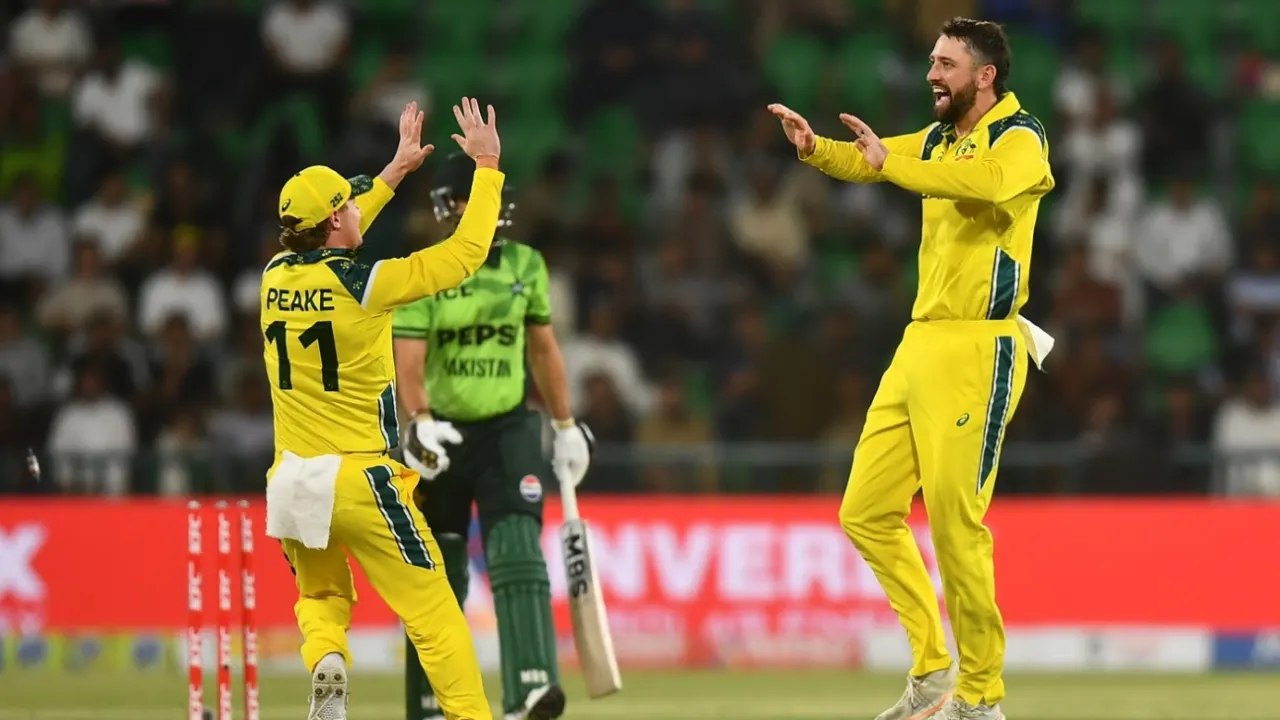
Quite what either side will ultimately take from this ODI series is debatable, but a patched-up Australia side can be proud of how they adapted to earn a decider against Pakistan in Lahore after being outplayed in the opening match. As a number of ESPNcricinfo feedbackers pointed out, it’s been something of a throwback with a 1990s vibe around the scoring rates. In the first match, 200 wasn’t enough for Australia, but in the second 231 certainly was.
Josh Inglis and Cameron Green put in the hard yards during the first half of the innings – it was especially hard work for Green, who battled for rhythm, but there was satisfaction in his gritty fifty which he acknowledged with a somewhat relieved punch of the air – and their innings allowed Matt Renshaw and latterly 19-year-old Oli Peake to play with a little more freedom.
Renshaw’s form has been especially eye-catching, extending a strong introduction to Australia’s white-ball set-up since late last year, while Peake’s maturity was on show when he did not panic at being 6 off 15 balls and managed to dispatch vital late sixes.
With the ball, Nathan Ellis was ideal for the slow, grippy surface and produced a career-best performance. The spinners all played their role, with Matt Short’s three wickets fitting into the bonus category; his delivery to slide past Salman Agha’s outside edge was an excellent piece of bowling.
Ahead of the match, Pakistan coach Mike Hesson defended the home surfaces the team is playing on before being hoisted by their own petard. Arafat Minhas looks a very exciting find – with bat and ball – while Ghazi Ghori has shown plenty of promise. But a lot of questions remain. Shadab Khan continued to labour with the ball, but his 71 kept Pakistan in the game although he may in the longer run have muddied the waters.
Pakistan have only lost one home bilateral ODI series since 2015nbut, after the recent loss in Bangladesh, a defeat in the decider on Thursday would add to the uncertainty around their game as a whole.
Sahibzada Farhan has forged his reputation in T20s – domestically and internationally – but he’s found life tougher in the early stages of his ODI career. He has made three starts in five innings but not been able to convert; in the first game of this series he gave it away when he picked out long-off. In the second match, he top-edged a sweep in the second over, having already lost his opening partner, and it left Pakistan on the back foot.
Matt Renshaw has been the most fluent batter on show in the first two matches in tough conditions. The left-hand batter has continued his impressive white-ball form with smart placement, good running and putting away the bad ball. His only blip has been falling on both occasions when Australia needed someone to close out the innings, although the two dismissals were against good deliveries. There is argument that he may be worth a go higher up the order.
Pakistan have been unchanged so far and Shadab’s runs will likely keep him in the XI given the balance he brings to the lower order. There is a clamour for Sufyan Moqim to play but it’s tricky to see how he fits in unless they drop a batter or only play one quick.
Pakistan (probable) Sahibzada Farhan, Maaz Sadaqat, Babar Azam, Ghazi Ghouri (wk), Arafat Minhas, Salman Agha, Abdul Samad, Shadab Khan, Shaheen Afridi (capt), Haris Rauf, Abrar Ahmed
Australia’s initial thoughts on this series may have been to give most players an outing, but their balance for the second match served them well so Liam Scott will likely have to wait for his debut. Labuschagne has missed out twice in the series – extending a lean time in ODIs – and is under increasing pressure but may cling onto his place for now. There could be consideration given to elevating Renshaw given his fine form.
Australia (probable) Alex Carey, Matt Short, Josh Inglis (capt & wk), Marnus Labuschagne, Cameron Green, Matt Renshaw, Oli Peake, Matt Kuhnemann, Nathan Ellis, Adam Zampa, Tanveer Sangha
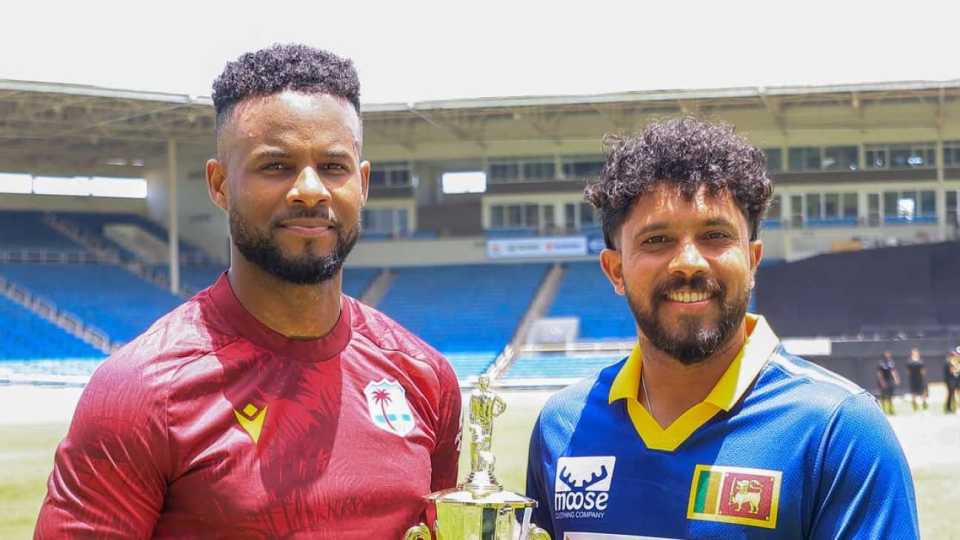
West Indies won the toss and chose to bowl first in the first ODI of Sri Lanka’s tour of the Caribbean. This being a day game, West Indies believed their bowlers could extract some movement from the Sabina Park surface earlier in the day.
West Indies do not have Shimron Hetmyer in their XI, though he is named in the squad. Justin Greaves looks set to open alongside John Campbell. With captain Shai Hope, Sherfane Rutherford and Roston Chase make up the middle order. Jayden Seales, Shamar Joseph and Alzarri Joseph are the frontline seam options.
Sri Lanka, meanwhile, have also appeared to make a change at the top order, bringing Kamindu Mendis to the opening position. Their attack is made up of two frontline spinners, and two frontline quicks in Dushmantha Chameera and Asitha Fernando. Allrounder Milan Rathnayaka plays his second ODI.
This is the first ODI at Sabina Park since 2022.
Sri Lanka XI: Pathum Nissanka, Kamindu Mendis, Kusal Mendis (capt, wk), Pavan Rathnayake, Charith Asalanka, Janith Liyanage, Wanindu Hasaranga, Milan Rathnayake, Maheesh Theekshana, Dushmantha Chameera, Asitha Fernando
West Indies XI: John Campbell, Justin Greaves, Keacy Carty, Shai Hope (capt.)(wk), Sherfane Rutherford, Roston Chase, Matthew Forde, Gudakesh Motie, Alzarri Joseph, Shamar Joseph, Jayden Seales
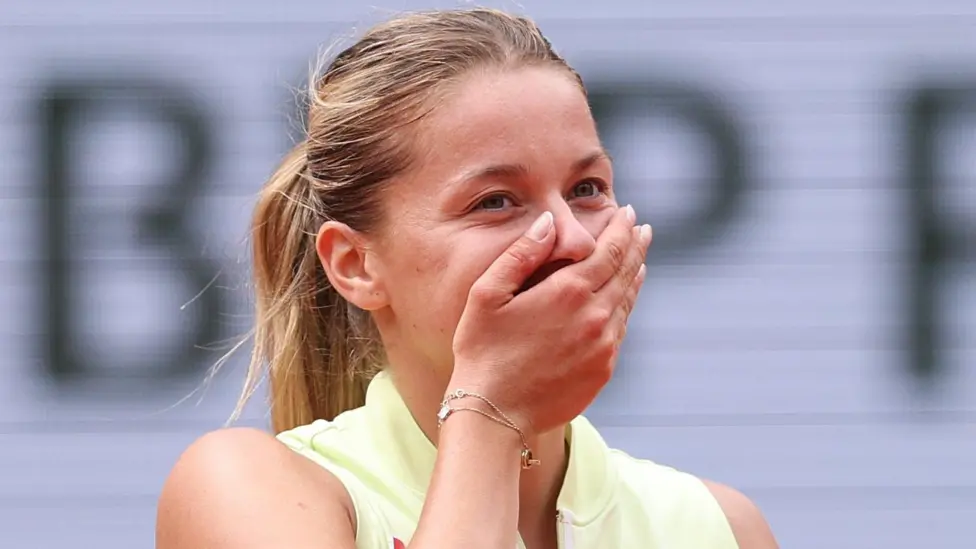
Qualifier Maja Chwalinska continued her dream French Open run as she beat Anna Kalinskaya to reach her first Grand Slam semi-final.
The world number 114 was left open-mouthed with shock after completing a superb 7-6 (7-3) 6-3 win over 22nd seed Kalinskaya on a blustery Paris day.
Poland’s Chwalinska is the second qualifier after Nadia Podoroska in 2020 to reach the singles semi-finals at Roland Garros.
She is only the sixth qualifier in the Open era to reach the women’s singles semi-finals at a Grand Slam.
Only one – Britain’s Emma Raducanu at the 2021 US Open – went on to win the title.
World number one Aryna Sabalenka could await Chwalinska the last four, with the Belarusian taking on Russian Diana Shnaider later on Wednesday.
“I honestly don’t know what is going on,” Chwalinska told the crowd.
“I know I repeat myself, but every match here is kind of crazy for me.”
It is a remarkable run for Chwalinska, who arrived at the tournament with just two victories in WTA Tour-level main-draw matches under her belt.
Her sole Grand Slam match win came at Wimbledon in 2022 – but Chwalinska now finds herself on an eight-match winning streak on the Parisian clay, having dropped just one set on the way.
Everything appears to have clicked in place for a player who once feared she might have left the sport for good.
Chwalinska struggled with depression for two years and took an indefinite break from tennis after losing in the first round of qualifying at Wimbledon in 2021.
She did not know whether she would return at that point, having lost her enjoyment of training and competing.
With the support of the people around her, the openness of fellow players such as Naomi Osaka in speaking about their mental health, and brief attempts to enjoy other sports, Chwalinska found herself gradually gravitating back to the tennis court.
It has all led her to this moment of a first major semi-final – and a potential David-versus-Goliath showdown with title favourite Sabalenka.

In Paris, Chwalinska has played with infectious freedom and joyful creativity, beating two seeded players and Olympic champion Zheng Qinwen along the way.
She kept her composure well against Kalinskaya, first having to reset after letting a 5-1 lead slip in the opener, before reeling off five straight points from 3-2 down in the resulting tie-break to take the lead.
She then held her nerve in the second, recovering from being broken as she tried to serve out victory before clinching her first match point on Kalinskaya’s serve.
“I was definitely nervous. I am stressed, of course, but I try to focus on my job and my games,” Chwalinska said.
“I am not focusing on confidence. I am playing against the best players in the world, so I will not compare myself to them.”
Whatever happens in the semi-finals, Chwalinska is now projected to leap up the rankings and into the world’s top 30.
By reaching the semi-finals, she has also secured prize money amounting to £647,700 – more than doubling her career total earnings of £642,400 in the space of 10 days.
[BBC Sport]

Battling Australia force series decider as questions grow for Pakistan

West Indies bowl vs Sri Lanka, Hetmyer not in the XI

Implementation of water supply projects in small town and rural areas.
Cabinet nod to submit Import and Export (Control) Regulations No. 04 of 2026 to Parliament for its concurrence
Declaration of Elephant Migratory Corridors to minimize HEC in Monaragala and Hambantota districts

Qualifier Maja Chwalinska extends dream French Open run

‘Dates have the highest sugar content to fight Coronavirus’

Sunday Island 27 December – Headlines

#SundayIsland 17th December – Headlines

Sunday Island – 28th March

Sunday Island Headlines – 21 March

Sunday Island – 21st February – Headlines
-
 News5 days ago
IMF urges Lanka not to meddle with exchange rate
-
 Business6 days ago
Sri Lanka’s construction industry losing ground while no one watches
-
 Business3 days ago
IMF’s unstated rate:Sri Lanka’s $695m loan costs about 5.33% per annum
-

 News2 days ago
Lankan duo emerge winners in Latin dance championship held in Blackpool, UK
-
 News5 days ago
State of emergency extended
-
 Features6 days ago
The Division Bell Mystery
-
 News3 days ago
UNP challenges NPP move to amend Vihara – Devalagam Act
-
 Features4 days ago
Are threats to Buddha Sasana external or from within?