
Sports
Horse had bolted by the time we figured Sri Lanka out in 1996 – Azhar


by Rex Clementine
Has there ever been a more memorable debut in cricket than that of Mohammad Azharuddin’s? Debuting against England in 1984 as a 21-year-old youngster Azhar completed three Test hundreds in his first three Test matches. They were not just hundreds but elegance all over. As Matthew Engel, the Editor of Wisden wondered, Azhar is the ‘Michelangelo in the midst of housepainters.’
Three hundreds in the first three Tests has been a feat that has never been matched before or after.
A couple of months after that memorable debut, India toured Sri Lanka. But Azhar failed to convert his early success during his first tour overseas – managing just 109 runs in six innings without a fifty. It was also the series where Sri Lanka recorded their maiden Test win.
“I don’t think we played well in that 1985 Test series. It was my fourth Test match and expectations were high for me, but I failed. It was a good learning experience. The wickets were different at that time. You had some very good fast bowlers – De Mel, Ahangama and the two Ratnayakes. They were very good exponents of swing bowling. For me it was a very new experience as I had not played on that kind of seaming wickets,” remembered Azhar.
Azhar remains immensely popular in Sri Lanka. You can safely say that more than Sachin, Kapil, Gavaskar or Dhoni, Azhar is Sri Lanka’s most loved cricketer. There are reasons for that.
Azhar’s career-best score was 199. He never made a double hundred. That 199 came against us. So how did he miss out on the double hundred? Well, he was given out leg before wicket to Ravi Ratnayake. Incidentally, the umpire was Azhar’s close friend from his hometown of Hyderabad – V.K. Ramaswamy.
There’s another reason to love Azhar. Mere days after the LTTE had bombed the Central Bank in 1996, Sri Lanka’s World Cup games were in jeopardy. Australia and West Indies pulled out. They either wanted the games played in India or points be given to them as Colombo was unsafe to host the matches, so they claimed.
Indian cricket supremo and master tactician Jagmohan Dalmiya was hard at work. He assembled a joint India – Pakistan team to play in Colombo to show their security concerns were a false alarm. Azhar had to lead the team. He did it without any hesitation and the nation of Sri Lanka embraced the Indian captain.
“We wanted to showcase that our Asian solidarity was strong. That sent a strong message across the cricketing world. I guess that made the nation of Sri Lanka to admire me more than my cricket. I had no problem doing it for Sri Lanka had been a place that I loved. The warmth of the people, the hospitality that everyone shows you and I just love being here. I must thank the players, especially the Pakistan captain at that time. Wasim Akram to play under the Indian captain must not have been easy,” Azhar recalled.
“Since that tour, I have realized how popular I am in Sri Lanka. There’s so much love and admiration by the Sri Lankans not only when I come here but when I visit other parts of the world as well.
For some reason, the Indian city of Hyderabad has produced some of that nation’s finest Test captains. There was M.L. Jaisimha in the 1960s followed by Tiger Pataudi in the 1970s. Then came Azhar in the 1990s.
“In Hyderabad what happens is when you are young and when you make an impact even at school level, they give you that responsibility of leading the side early in your career. So, you get opportunities early. Maybe that’s one reason why we have that trait. Personally, I was very shy of leading the side and more than happy to concentrate on my batting. As luck would have it, everything fell in a different way and I guess it was my destiny.”
As captain of India, could he have done things differently when his bowlers got a hiding during the 1996 World Cup. It was rare for Sri Lanka to beat India twice in their own backyard in the space of two weeks.
“They played differently to other teams. New Zealand had something similar in 1992, but they couldn’t go on. What happened in that 1996 World Cup was that by the time we drew up plans to stop Sri Lanka’s attacking style, most teams had been badly exposed,” Azhar explained.
“It was bold of them to adopt such an approach. But I guess when it didn’t work, they had the substance to do damage control and that proved to be the key to their success. Aravinda was unstoppable in that tournament. He put the bowling to the sword no matter how tricky the situation was. Mentally he was very strong and when he fiercely focused on something it was bad news for the opposition. Not to forget Sanath, who did so much damage and Sri Lanka were deserving winners.”
“Of course they were so well lead by Arjuna. It amazes me how even to date Arjuna has the love and affection of all his players. It’s similar to what Clive Lloyd gets from West Indies of the 1980s and what Ian Chappell receives from Australians of 1970s. You can’t be taught to inspire people. You have to be born a leader.’
Azhar was one player who was rarely troubled by Muttiah Muralitharan. His game plan was aggression. Blessed with supple wrists and superb footwork, he always dominated Murali.
“When you are playing bowlers of great repute and so much skill you have to be positive and creative. What Murali has done with 800 Test wickets and 500 ODI wickets is unbelievable. I admire him a lot. I had got out to him too but by and large I tried to attack him all the time. He was an attacking bowler. If you are playing bowlers who are defensive, you have the time at your hand. But against an attacking bowler, if you try to be defensive you are playing into his hands.
These have been troubled times for the national cricket team, but Azhar urges fans to be patient. “It hurts me to see the status of Sri Lankan cricket. But they have a young side. These guys will develop over time. Just be patient and keep backing them. They won the Asia Cup last year and they can only move forward. I hope they become consistent. I have no doubt about the talent in Sri Lanka, it’s the consistency that I would like to see.”
Azhar’s batting was magical, his captaincy was inspirational while he was India’s best fielder by some distance. He was stranded on 99 Test matches, unable to complete the milestone of 100 Tests as the match-fixing controversy broke out in 2000.
However, it didn’t take him much time to find his way back into cricket. He was elected as the President of the Hyderabad Cricket Association and he could go on to lead the powerful BCCI one day. He was also a Member of Parliament. For a man who has a fan base all over India, he didn’t contest from his hometown but went to the far-off Uttar Pradesh. He won the elections hands down from a constituency which the Congress Party hadn’t won in 25 years.
“The cricket elections is coming again on the 15th of this month and I am running. As for politics, I am the working President of Congress in Telangana state. Politics is a field where you have to dedicate a lot of time and I look forward to serving the party and my country again.”












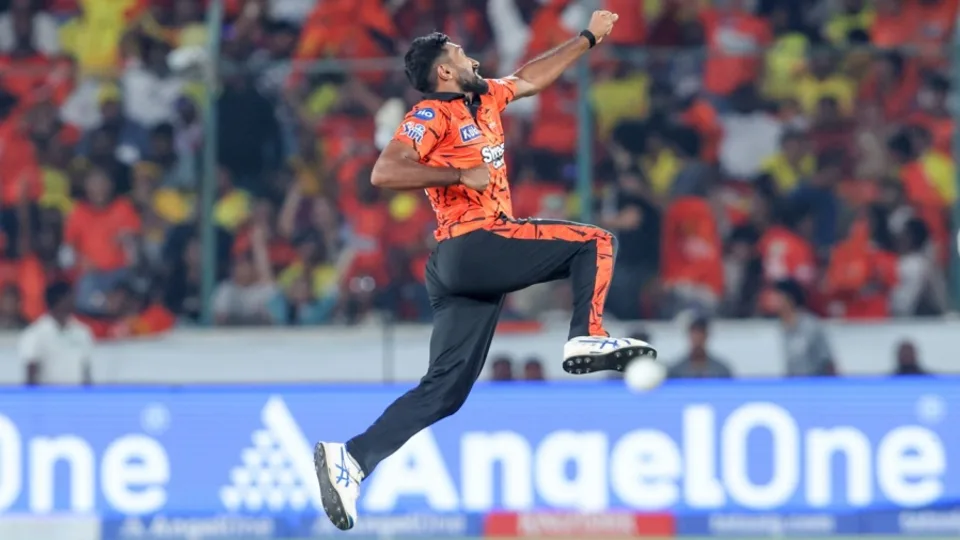
Sunrisers Hyderabad pulled a victory out of nowhere thanks to four unheralded bowlers taking the smallest chance given to them. Three of Chennai Super Kings’ own unheralded bowlers might have been their inspiration. In an IPL season full of runs, the oppressed finally became oppressors.
After the first powerplay, ESPNcricinfo’s forecaster had the first innings total reaching 237. Jaamie Overton, Anshul Kamboj and Gurjapneet Singh prevented such nonsense. CSK were given a target of 194 and needed 84 off 60 balls with seven wickets in hand. They should have pulled off their first 190-plus chase in eight years.
But Eshan Malinga (3-29), Nitish Kumar Reddy (2-31), Shivang Kumar (1-18) and Sakib Hussain (1-32) just wouldn’t let them. On paper, there were weak links. On the field, there was none. Each of those four had an economy rate of 8 or lower and each of them picked up at least one wicket. Shivang dismissed Dewald Brevis for 0. Sakib wrecked Shivam Dube’s stumps and killed off all CSK hope. In the end, their contribution to victory was bigger than Abhishek Sharma’s 15-ball fifty and Heinrich Klassen’s 33-ball fifty.
CSK picked Matt Short over Akeal Hosein primarily so they could target Abhishek and Travis Head with offspin. For two overs it worked. They gambled on a third, and it backfired. Abhishek moved from 26 off 10 to 50 off 15 by moving leg side and making the room he needed to free his arms. Short had succeeded because he wasn’t giving any of that, but he couldn’t cope when the batter changed strategies.
Overton is 7 for 86 in the middle overs this season. He is its third-highest wicket-taker in this phase of the innings, and his success comes from his hit-the-deck style of bowling. CSK have also course-corrected a little bit. They threw him into the death overs against Tim David in Bengaluru and he got pulverised. Over the last three matches though, Overton has been given a role more suited to his strengths and he’s responded beautifully. The ball to dismiss Abhishek, minutes after he’d been dropped for 51, was a brute, rearing up at the unsuspecting batter and snagging his edge through to the keeper. Only Prasidh Krishna (7.2), Jofra Archer (11.4) and Prince Yadav (12.1) have a better bowling average than Overton (14.6) when they all go into the wicket.
For three straight IPLs, Klaasen had maintained a strike rate above 170. This time it’s down in the 140s. He is starting slow. He is being more selective with his shots. The upshot of all this caution is three fifties in six innings. Despite this change in his batting, Klaasen remained just as destructive against wristspin as he has always been, surprising Noor Ahmad with a switch hit in the 13th over. Klaasen made 24 of his 59 runs against Noor at a strike rate of 185. The other SRH batters totalled 9 off 11.
In pre-season, CSK really dove into turning Kamboj into a death bowler. They understood it was a gaping hole in their team dynamics. The worst of it was felt in Bengaluru when soon after he dismissed David with a pin-point yorker from around the wicket, it was revealed that he had overstepped. Kamboj nailed the yorker here too and Klaasen dragged it onto his stumps. This time the no-ball did not show up.
SRH ended facing the last 16 balls of their innings without their best source of boundaries. Gurjapneet from the other end alternated between going for the blockhole and getting the back-of-the-hand slower ball to kick up off the pitch. Together, this unlikely duo recorded a nice little high: where all 18 of the last 18 deliveries had to be bowled in IPL 2026, CSK giving just 17 runs slotted in right behind one of the best bowling teams of the tournament, Gujarat Titans’ effort, against Kolkata Knight Riders, when they gave up just 15 runs in overs 18, 19 and 20.
CSK outscored SRH in the powerplay 76 for 3 to 75 for 2, and the reason for it was a man who started the season being bounced out. Ayush Mhatre now has 68 runs against fast bowling at a strike rate of 226.66. He laid waste to Praful Hinge, teaching him not to bowl short with a down-to-up pull shot for six, and leaving him backed against that corner as he drove on the up over the off side again and again. Mhatre hit five boundaries in that over – the third of the innings. He was batting like he’d never heard of a concept called running between the wickets. Ironically enough, that’s what did him in.
Mhatre injured his left leg responding to a quick two from Ruturaj Gaikwad. The physio had to come out twice in two balls. In the dugout, there was heightened tension. Head coach Stephen Fleming couldn’t sit still, while batting coach Mike Hussey looked pensive. From the days of the dad’s army, this team’s fortunes now swing up or down based on an 18-year-old’s output. On Saturday, it swung inexorably down. CSK made 62 for 1 in 4.1 overs. Mhatre pulled up on 4.2. CSK spent the next 8.4 overs barely knowing where their next boundary was coming from. They made 58 runs and lost four wickets.
CSK know what it feels like to be on the wrong side of a Malinga. They lost a title that way. Seven years later, their efforts to put a simple league game out of sight was being blocked by a man with the same name.
Eshan Malinga bounced Gaikwad out. His ability to access the yorker length – or close to it – produced two more wickets. Short (34 off 30) and Sarfaraz Khan (25 off 19) were left ruing how well they had hit those balls, because all their power really did was make sure the ball carried to deep midwicket. At the presentation, Malinga said he was getting reverse swing as well.
Dube continued to struggle in the finisher’s role as CSK’s chase fizzled out. They were running away with the game in the powerplay. They were favourites even at the halfway mark of the chase. Not being able to pull it off is another example of how their flawed mega-auction strategy is still following them.
Brief scores:
Sunrisers Hyderabad 194 for 9 in 20 overs (Abhishek Sharma 59, Travis Head 23, Heinrich Klaasen 59, Nitish Kumar Reddy 12, Salil Arora 13, Shivang Kumar 12; Mukesh Choudhary 2-21, Anshul Kamboj 3-22, Jamie Overton 3-37, Gurjapneet Singh 1-34) beat Chennai Super Kings 184 for 8 in 20 overs (Rutraj Gaikwad 19, Ayush Mhatre 30, Maththew Short 34, Sarfaraz Khan 25, Shivam Dube 21, Jamie Overton 16, Anshul Kamboj 13*; Praful Hinge 1-60, Eshan Malinga 3-29, Nitish Kumar Reddy 2-31, Sakib Hussain 1-32, Shivang Kumar 1-18) by 10 runs
[Cricinfo]
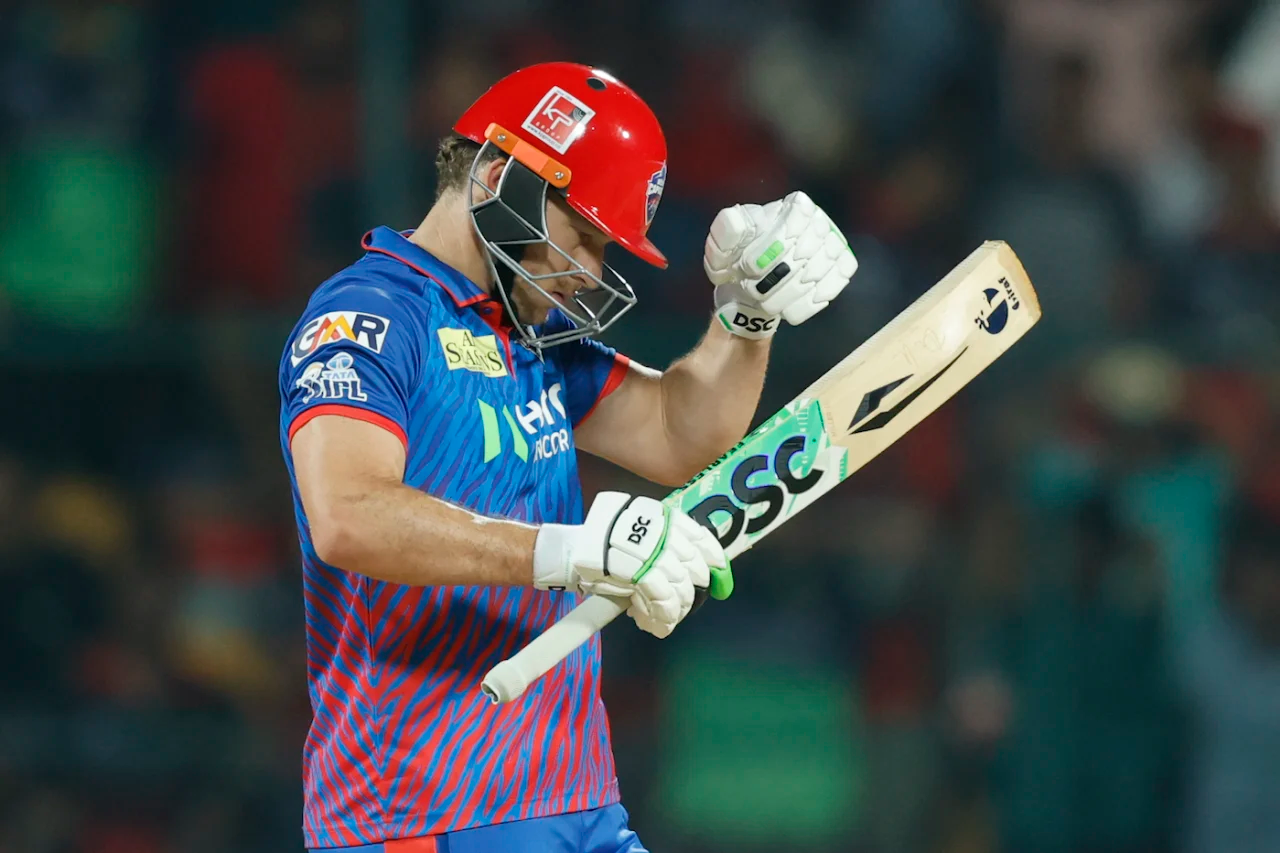
One needed off two balls.
David Miller has been here before in IPL 2026. Against Gujarat Titans he had turned down the tie and ended up costing Delhi Capitals (DC) the game. Ten days later, Miller was in a similar situation once again. Except on Saturday, he won the game for DC with a ball to spare, handing Royal Challengers Bengaluru (RCB) their second defeat of the season and first at home.
It came to DC needing 15 off the final over bowled by Romario Shepherd, who was bowling his first of the game. Miller had missed out on the first ball – a hittable delivery on leg stump that cost RCB just one run – and Tristan Stubbs also managed only a single next ball, leaving DC needing 13 off four balls. Miller completed his redemption arc with 6, 6, 4 off the next three balls to stun the Chinnaswamy into silence.
Virat Kohli and Phil Salt gave RCB a swift start on a slower-than-usual Chinnaswamy pitch after they were asked to bat first. Kohli nicked the second ball he faced from Auqib Nabi, between slip and short third, and Mukesh also found swing in his opening over. But nothing could stop Kohli from shimming out of his crease twice and pumping Mukesh for a pair of fours over cover. However, when he tried to treat Lungi Ngidi in a similar way in the last over of the powerplay, the seamer shifted his line wider of off and had Kohli caught at sweeper cover, the only man on the boundary on the off side, for 19 off 13 balls.
In comparison, Salt had managed just 13 off his first 13 balls, but turned up the tempo when he took Nabi for 4, 6, 4 in the fifth over. When he cracked Kuldeep Yadav over wide long-off for six, he brought up his half-century off 30 balls. Salt hit Kuldeep for another six before the left-arm wristspinner pushed one away from Salt’s swinging arc and had the batter holing out to wide long-off this time for 63 off 38 balls. The slowness in the surface also played a part in Salt’s dismissal.
Kuldeep and his captain Axar Patel combined to slow RCB down even further. Axar, who had delayed his introduction into the attack until the tenth over, possibly because of the presence of Devdutt Padikkal, managed to have the left-hand batter caught at long-on, though he had erred too full.
Tim David rose above the conditions and ran away to 26 off 15 balls. His drilled six off Ngidi in the 12th over had Kohli off his seat in the dressing room and the Chinnaswamy erupting in joy. Axar, though, played killjoy when he drew an outside edge from David that landed into the hands of short third. David had denied Jitesh Sharma, who was struggling at the other end, strike and turned down a single off the previous ball, but Axar shifted his line wide of off and bested David with turn.
Rajat Patidar had already been dismissed by Mukesh Kumar for 8 off four balls and Shepherd couldn’t fire either, Kuldeep trapping the West Indian allrounder lbw for 1. The pressure piled on RCB as they went 25 balls without a boundary until Jitesh found it in the 18th over. It should have been a catch at short third, but the ball evaded Mukesh’s outstretched left hand and snuck away to the deep-third boundary. Mukesh, who had landed face-first into the ground, left the field in discomfort, having completed his quota of four overs.
RCB didn’t score a boundary in their last two overs and only scored two in their last six overs. At the innings break, former RCB captain Faf du Plessis reckoned that the hosts were ten runs short.
The first two overs from Bhuvneshwar Kumar in RCB’s defence was a passage of play straight out of Test-match cricket. With two slips in place, Bhuvneshwar got the new ball to swing both ways and tore through DC’s top order.
He produced the opening breakthrough when he pinged Nissanka’s pad with a big inswinger in his first over. He then went bang bang in his second to dismiss Karun Nair and Sameer Rizvi. DC had brought Nair at No. 3 at his domestic home ground at the expense of a finisher in Ashutosh Sharma, but an outswinger from Bhuvneshwar had Nair carving a catch to deep third for a run-a-ball 5.
Three balls later, Bhuvneshwar had Rizvi caught behind with another outswinger. Jitesh dived full length to his right and pulled off a one-handed screamer, reducing DC to 18 for 3 inside three overs.
KL Rahul and Stubbs brought DC back into the contest with contrasting half-centuries. By the end of the powerplay, DC were 50 for 3, with Rahul contributing 31 off 18 balls. He played some glorious shots, including a flicked six over square leg off an off-stump ball on a Test-match length from Josh Hazlewood.
Rahul scored 22 off ten balls from Hazlewood, extending his T20 tally against him to 135 off 78 balls. Nobody has a better head-to-head record against Hazlewood in T20s.
Rahul also lined up wristspinner Syuash Sharma, but when he tried to attack Krunal Pandya, the left-arm spinner fired in a 103kph dart and had an advancing Rahul holing out for 57 off 34 balls in the 11th over.
Stubbs was on 18 off 17 balls by the time Rahul was dismissed. He picked up the pace in the 13th over, when he hit Rasikh Salam for a pair of fours, including one down the ground off a slower variation. Without taking too many risks, Stubbs added 47 for the fifth wicket with Axar before the latter retired hurt on 26 off 19 balls.
DC required 42 off 25 balls. Hazlewood and Bhuvneshwar returned and ramped up the pressure on DC with their wide yorkers and reverse-swinging stump yorkers.
Stubbs briefly diffused the tension in the 18th over when he latched onto a slower bouncer from Bhuvneshwar and launched it over square leg for six. It was Stubbs’ first six off the 40th ball he faced and first boundary for DC after four overs.
Despite that six, Bhuvneshwar conceded only 12 off the over, and Rasikh followed it up with a tight penultimate over, giving away ten runs.
With 14 to defend off the last over, Patidar called up Shepherd, who got away with his first ball when he missed his length. Stubbs then pinched another single off the next ball. Shepherd then cracked under pressure and kept missing the yorker as Miller crashed him for 6, 6, 4.
The first six came off a full toss, which was swatted into the second tier over midwicket. Shepherd then served up a wide half-volley and Miller biffed him over extra-cover for six more. On the next ball, Miller sealed the win with a flicked four to the midwicket fence off a full toss.
Brief scores:
Delhi Capitals 179 for 4 in 19.5 overs (Tristan Stubbs 60*, KL Rahul 57, Axar Patel 26, David Miller 22*; Bhuvneshwar Kumar 3-26, Krunal Pandya 1-24, ) beat Royal Challengers Bengaluru 175 for 8 in 20 overs (Phil Salt 63, Virat Kohli 19, Devudutt Padikkal 18, Tim David 26, Jitesh Sharma 14, Krunal Pandya 12; Mukesh Kumar 1-32, Lungi Ngindi 2-39, Axar Patel 2-18, Kuldeep Yadav 2-32) by six wickets
[Cricinfo]

Rarely have St. Joseph’s College, Colombo 10, missed out on a semi-final berth in top-tier basketball competitions over the last two decades and they continue their dominance with remarkable consistency. More often than not, they end up in the final, with only the opposition changing; St. Peter’s, Royal, Ananda and Gateway seemingly taking turns to challenge the Joes.
Last week, they secured the Under-20 All-Island ‘A’ Division title, completing back-to-back excellent seasons. The final against Ananda was a one-sided affair, with the Joes cruising to a 70-37 win.
On their way to the title, St. Joseph’s defeated leading basketball-playing schools such as Trinity, S. Thomas’, D.S. Senanayake, Wesley and Prince of Wales.
Leading from the front was captain Methika Jayasinghe, whose outstanding performances throughout the tournament earned him the Most Valuable Player (MVP) award. He was ably supported by vice-captain Mareen Abishake, along with a talented and well-balanced squad comprising Darren Bernard, Adrian Wijayawardena, Chamindu Wijesinghe, Aaron Gerald, Damketh Dammalage, Raphael Suraweera, Nathan Gunarathne, Praveen Kariyawasam, Isindu Edirisinghe and Brandan Xavier.
Darren Bernard was named Best Offensive Player.
The team’s success was guided by the dedicated efforts of coaches Randima Sooriyaarachchi and Shane Daniel. The duo’s excellence extended beyond St. Joseph’s, with Randima also serving as Head Coach of St. Bridget’s Convent, Colombo 07, in their championship-winning campaign at the Under-17 Girls All-Island ‘A’ Division, Tier 1 Basketball Championship, while Shane guided Holy Family Convent, Colombo 04, to victory at the Under-20 Girls All-Island ‘A’ Division, Tier 1 Basketball Championship.
This latest triumph also marks a historic milestone for St. Joseph’s College, Colombo 10, as it completes a perfect season across age groups. The college’s Under-17 and Under-20 teams secured all four major titles in 2025, winning both the National Schools Basketball Championships and the All-Island ‘A’ Division, Tier 1 Basketball Championships in their respective categories, an outstanding four-out-of-four record. Remarkably, this builds on an equally successful 2024 campaign, where St. Joseph’s also went four for four in the same tournaments, achieving back-to-back perfect seasons and reinforcing an unprecedented era of dominance in school basketball.

Bodies of 50 infants dumped at Trinidad graveyard

Indonesian Navy Sailing Ship KRI BIMA SUCI – 945 concludes official goodwill visit to Sri Lanka

Malinga, Reddy sink Chennai Super Kings chase to defend under-par 194 in Hyderabad

Stubbs, Miller win Delhi Capitals a thriller against Royal Challengers Bengaluru

Showers predicted in the Western, Central, Sabaragamuwa, Uva, North-western, North-central and Southern provinces after 1.00 pm.

Heat Index at Caution Level in the Northern, North-central, North-western, Western, Sabaragamuwa, Eastern and Southern provinces and in Monaragala district

‘Dates have the highest sugar content to fight Coronavirus’

Sunday Island 27 December – Headlines

#SundayIsland 17th December – Headlines

Sunday Island – 28th March

Sunday Island Headlines – 21 March

Sunday Island – 21st February – Headlines
-

 Latest News7 days ago
PNS TAIMUR & ASLAT arrive in Colombo
-
 Latest News7 days ago
Prasidh, Buttler set up comfortable win for Gujarat Titans
-

 News4 days ago
PNS TAIMUR & ASLAT set sail from Colombo
-

 Latest News6 days ago
“I extend my heartfelt wishes to all Sri Lankans for a peaceful and joyous Sinhala and Tamil New Year!” – President
-

 Business2 days ago
Harnessing nature’s wisdom: Experts highlight “Resist–Align” path to resilience
-
 Latest News7 days ago
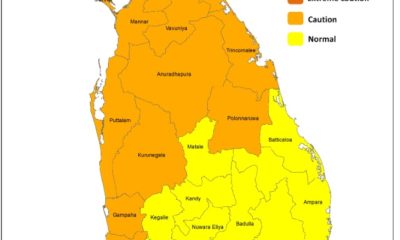
Heat Index at Caution level’ in the Northern, North-central, North-western, Western and Southern provinces and in Trincomalee district.
-

 News2 days ago
Gratiaen Trust announces longlist for the 33rd Annual Gratiaen Prize
-

 News2 days ago
Heroin haul transported on 50-million-rupee contract