
Foreign News
Former UK PM Boris Johnson says his gov’t underestimated COVID-19 threat


Former UK Prime Minister Boris Johnson has acknowledged his government “got some things wrong” in its response to the COVID-19 pandemic, as he gave evidence at a public inquiry into his handling of the global health crisis.
In the first of two days in the witness box on Wednesday, Johnson apologised for “the pain and the loss and the suffering” caused to the families of the victims.
Testifying under oath, Johnson acknowledged that “we underestimated the scale and the pace of the challenge” when reports of a new virus began to emerge from China in early 2020.
The former prime minister has faced a barrage of criticism from former aides for alleged indecisiveness and a lack of scientific understanding during the pandemic.
Johnson – forced from office last year over lockdown breaching parties held in Downing Street during the pandemic – accepted that “mistakes” had “unquestionably” been made but repeatedly insisted he and officials did their “level best”. “I understand the feeling of the victims and their families and I’m deeply sorry for the pain and the loss and the suffering to those victims and their families,” he said.
Johnson, 59, was briefly interrupted as a protester was ordered out from the inquiry room after refusing to sit down during the apology.
Several others were also later removed.
“Inevitably we got some things wrong,” Johnson continued, adding he took personal responsibility for all the decisions made. “At the time I felt … we were doing our best in very difficult circumstances.”
![Protesters holds a placard reading "The dead can't hear your apologies" during a gathering outside the UK Covid-19 Inquiry building in west London, on December 6, 2023 [HENRY NICHOLLS / AFP]](https://www.aljazeera.com/wp-content/uploads/2023/12/dead-cant-hear-1701874429.jpeg?w=770&resize=770%2C492&quality=80)
Ex-Health Secretary Matt Hancock told the inquiry last week that he had tried to raise the alarm inside the government, saying thousands of lives could have been saved by putting the country under lockdown a few weeks earlier than the eventual date of March 23, 2020.
Britain went on to have one of Europe’s longest and strictest lockdowns, as well as one of the continent’s highest COVID-19 death tolls, with the coronavirus recorded as a cause of death for more than 232,000 people.
Grilled by inquiry lawyer Hugo Keith, Johnson acknowledged that he did not attend any of the government’s five crisis meetings on the new virus in February 2020, and only “once or twice” looked at meeting minutes from the government’s scientific advisory group. He said he relied on “distilled” advice from his science and medicine advisers.
Johnson’s understanding of specialist advice was doubted last month by his former chief scientific officer, Patrick Vallance, who said he was frequently “bamboozled” by data.
The ex-leader has also denied claims he said he would rather “let the bodies pile high” than impose another lockdown.
His former top aide Dominic Cummings and communications chief Lee Cain both criticised their ex-boss when they gave evidence at the inquiry.
Cummings, who has faced his own criticism for writing expletive-filled WhatsApp messages, said Johnson circulated a video to his scientific advisers of “a guy blowing a special hairdryer up his nose ‘to kill Covid’.”
Cain said COVID-19 was the “wrong crisis” for his ex-boss’s skillset, adding that he became “exhausted” by his alleged indecision in dealing with the crisis.
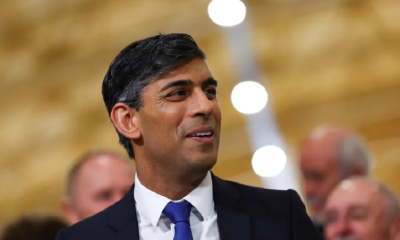
Prime Minister Rishi Sunak, who was Johnson’s finance minister during the pandemic, is due to be questioned at the inquiry in the coming weeks.
Johnson – whose lengthy written submission to the inquiry will be published later on Wednesday – insisted the “overwhelming priority” of his government had been protecting the National Health Service (NHS) and saving lives.
Rebutting evidence that Britain fared worse than its European neighbours, he argued “every country struggled with a new pandemic” while noting the UK had an “extremely elderly population” and is one of the continent’s most densely populated countries.
Johnson, who was treated in intensive care for COVID-19 early on in the pandemic, has reportedly spent weeks with his lawyers, reviewing thousands of pages of evidence ahead of his testimony.
His grilling began with questions about a failure to provide about 5,000 WhatsApp messages on his phone from late January 2020 to June 2020.
“I don’t know the exact reason,” he claimed, adding the app had “somehow” automatically erased its chat history from that period. Asked if he had initiated a so-called factory reset, Johnson said: “I don’t remember any such thing”.
(Aljazeera)








At least 139 people, including 15 children, have died and 84 are missing after a boat capsized off the coast of Djibouti, according to the United Nations migration agency.
In a statement on Sunday, the International Organization for Migration (IOM) quoted survivors as saying that the incident happened near Guhere off Djibouti’s eastern coast in the Gulf of Aden near the Bab al-Mandeb strait from Thursday night to before dawn on Friday.
The boat was heading from Djibouti to Yemen with more than 300 people on board. More than 80 people – all Ethiopians – survived the shipwreck while Djiboutian search and rescue operations continued.
“Our teams are on the ground alongside local authorities to provide emergency assistance,” IOM Chief of Mission in Djibouti Alexandre Coissac said, lamenting the “devastating loss of life”.
That number only includes those buried by authorities in Djibouti. Others have been buried by the migrants themselves but they won’t be added to the official count until authorities can verify the bodies, Alexandre Coissac, IOM Chief of Mission in Djibouti, told the Associated Press.
“This tragedy is a stark reminder of the dangers faced by migrants along this migration corridor as they seek economic opportunities,” Coissac added.
[Aljazeera]
Foreign News
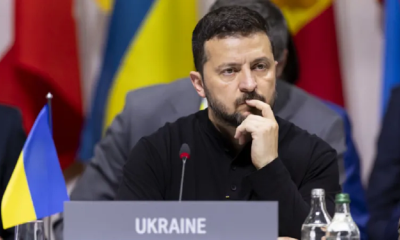
‘Time for Ukraine to get new president,’ says Trump after Zelensky condemns diesel deal

US President Donald Trump has said he thinks “it’s time for Ukraine to get a new president” as he responded to Volodymyr Zelensky’s criticism of the US diesel deal with Russia.
The Ukrainian president warned a new deal to release millions of tonnes of Russian diesel into the US would provide Moscow with money to continue its war against his nation, calling it a gift to Russian President Vladimir Putin.
Trump told reporters outside the White House on Saturday that Zelensky “wants to make problems for the world” by continuing to authorise attacks on Russian refineries.
“He’d better damn well stop,” Trump said, before suggesting Ukraine should “get a new leader who can make a deal”.
Global fuel supplies, including diesel, have been severely limited by the war against Iran launched by the US and Israel, which led to the effective closure of the Strait of Hormuz, through which roughly a fifth of the world’s oil products usually flows.
Russia – a major producer – and Ukraine have recently intensified their strikes on each other’s energy infrastructure and transport facilities, further straining energy markets.
“We said, ‘you can do whatever you want to Russia, don’t hit the refineries’, because that’s a world problem that’s caused,” Trump continued.
“He could have made many deals and for some reason, he never does.”
Putin’s envoy Kirill Dmitriev described Trump’s intervention as “iconic and historic”, saying that Ukraine “needs leadership actually focused on peace”.
The US president confirmed on Friday that an agreement had been reached with Moscow to suspend sanctions on Russian diesel exports until 7 April.
Zelensky reacted by saying it would allow Moscow to raise new funds to source new military equipment to continue the war.
He also accused Moscow of taking the deal “to mean they can keep fighting, to mean they keep dropping bombs on cities” following deadly new strikes on Zaporizhzhia.
The Ukrainian president spoke to several allies on Saturday to discuss the latest developments, calling for “real decisions to protect lives in Ukraine” and to protect European security.
A Downing Street spokesperson said UK Prime Minister Andy Burnham had spoken to Zelensky and offered his “complete solidarity”.
The pair had agreed Russia should acquiesce to “an immediate energy ceasefire” and end its attacks on shipping in the Black Sea, the spokesperson said, as “this would immediately release more energy and food supplies into the global market”.
News of the US-Russia diesel deal was also met with criticism by EU’s foreign affairs chief Kaja Kallas, who echoed Zelensky in saying that suspending sanctions “provides Moscow with more revenues to wage war”, adding: “This is not the time to ease pressure on Russia, and Europe won’t.”
She said European foreign ministers intended to approve the biggest set of sanctions on Russia since the start of its full-scale invasion on Monday.
The deal with Russia is the latest effort from Trump to lower fuel prices in the US ahead of the midterm elections, after months spent grappling with the political consequences of the Iran war.
That conflict, which began in February, has sent the cost of petrol and in particular diesel skyrocketing, which has soured his standing with the American public who have been stung by the higher pump prices and knock-on effects that led to across-the-board inflation.
The average price of diesel is currently $6.28 (£4.74) a gallon, according to the AAA – up from last month’s $5.94 average, and $3.68 last year.
Under the deal, Russia would release an initial 300,000 tonnes of diesel “to the American and global marketplace” followed by an additional 500,000 tonnes in November.
A further million would follow, Trump wrote on Truth Social, and then another 3m tonnes “within a short period of time” – but he noted that this delivery will be “based on the condition of their diesel refineries”.
In the past 10 months, Russia experienced two waves of severe fuel shortages across the country due to Ukrainian drones strikes on its oil refineries.
Diesel production in Russia dropped by an estimated 30%, according to the International Energy Agency.
Trump had already called for new elections in Ukraine last December, saying Ukrainian voters should have the choice to replace Zelensky.
Since the war broke out in 2022 Ukraine has been under martial law, meaning elections are suspended.
[BBC]
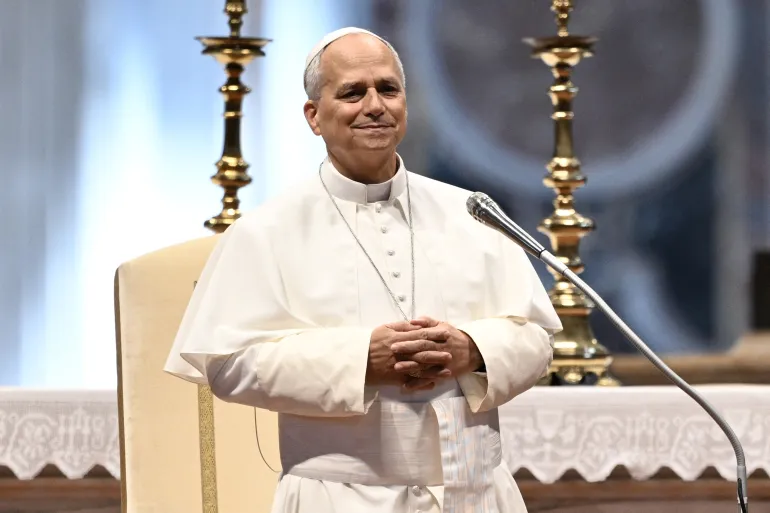
Pope Leo XIV has declared that the death penalty is “inadmissible” while his home country, the United States, announces plans to livestream an execution by firing squad.
Marking World Day Against the Death Penalty on Saturday, the pope reiterated the Catholic Church’s teaching on capital punishment, writing on X that it was “inadmissible because it is an attack on the inviolability and dignity of the person”.
“The common good can be safeguarded and the requirements of justice can be met without recourse to capital punishment,” his post said.
“Effective systems of detention have been developed that protect citizens while at the same time do not completely deprive those who are guilty of the possibility of redemption,” added the leader of the Catholic Church.
The American Pope’s comments come days after US Secretary of Defense Pete Hegseth said on Thursday that the firing squad execution of Nidal Malik Hasan on December 3 will be livestreamed.
Hasan was convicted of killing 13 people and wounding 32 others in a shooting at the Fort Hood military base in 2009.
Pope Leo did not specifically refer to the planned execution, or last month’s botched execution attempt on Christa Pike, who survived two doses of the lethal injection in Tennessee.
But his post came hours after his top deputy, Cardinal Pietro Parolin, the Vatican secretary of state, told Vatican News that the plan to livestream Hasan’s execution was “unacceptable”.
It was Leo’s predecessor, Pope Francis, in 2018 who first amended official Catholic teaching to declare capital punishment “inadmissible” in all circumstances.
[Aljazeera]

Cabinet approves redrafting of State Assets Management Act
Cooperative Employees Commission Act No. 12 of 1972 to be amended
Dilki Wathsala Marambage appointed as Director General of the Department of Technical Education and Training
Declaration of Naakolagane Sanctuary under the Fauna and Flora Protection Ordinance
Cabinet approves transfer and maintenance of selected roads presently under PC’s and Local Authorities to the RDA
Obtaining financial facilities for the Water Supply and Sanitation Improvement Program (Sub-program 2) from the ADB

‘Dates have the highest sugar content to fight Coronavirus’

Sunday Island 27 December – Headlines

#SundayIsland 17th December – Headlines

Sunday Island – 28th March

Sunday Island Headlines – 21 March

Sunday Island – 21st February – Headlines
-

 Features6 days ago
The Sri Lankan who made Scottish history
-

 Sports6 days ago
Nissanka absence opens door for Sri Lanka’s young guns
-

 News5 days ago
NDB fraud Rs 60mn more than reported
-

 News7 days ago
Gnansara Thera to be assigned to prison printing section: Officials
-

 News5 days ago
Removing monk’s robes matter for Sangha to decide: Mahanayake Theras
-
 News7 days ago
OIC of FCID summoned before Maligakanda Magistrate
-

 Features6 days ago
Future of Sri Lanka’s state university system: Should it be shut down and reopened?
-
 News6 days ago
Shiranthi R remanded until 13 Oct.