
Foreign News
Britain’s Conservatives trounced in local elections as Labour makes gains

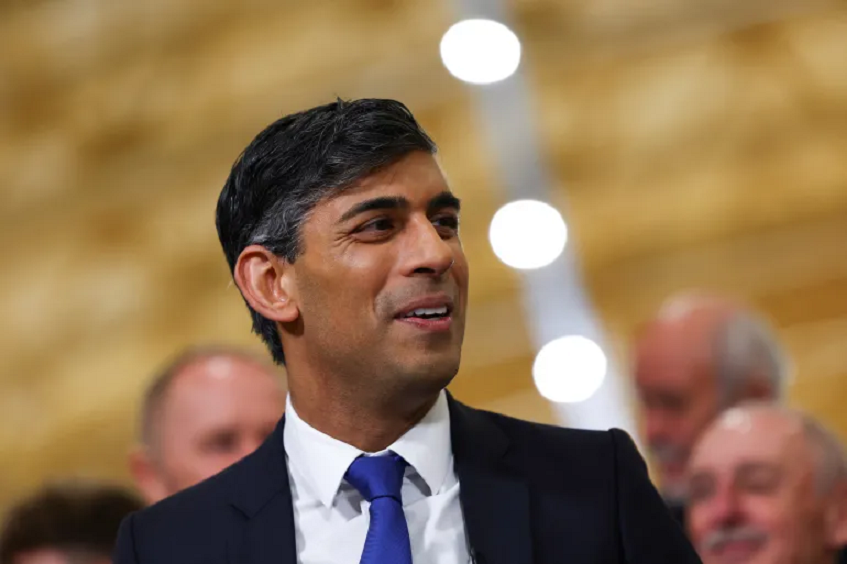
Britain’s ruling Conservative Party has suffered a resounding defeat in local elections, a further sign that it is likely to be removed from power in upcoming general elections.
With nearly all council results in, the Conservatives have lost 473 seats, while the opposition Labour Party has picked up 185, as counting was under way on Saturday for a few more assembly and mayoral polls.
Critically, Labour’s Sadiq Khan won London’s mayoral race, securing a record third term and dealing the Conservatives another damaging defeat.
With the results in from 106 of 107 council elections, the Conservatives lost about half of those it was defending, costing it control of 10 councils.
Its rival Labour Party wrestled control of eight councils, while also winning three newly created mayoral seats, including one in Conservative Prime Minister Rishi Sunak’s own northern English constituency.
Labour also won a by-election for the Blackpool South parliamentary seat, triggered by the resignation of the scandal-plagued Conservative MP Scott Benton.
Labour leader Keir Starmer said the emphatic victories nationwide sent the prime minister a clear message to hold a nationwide vote.
“Voters in Blackpool South have sent a direct message to Rishi Sunak: Make way, let’s have a general election,” said Starmer.
Sunak, whose Tories are down about 20 points in the polls to Labour must order a general election to be held by January 28 next year at the latest.
Labour performed strongly in areas that voted for Britain’s exit from the European Union, such as Hartlepool in the northeast of England, and Thurrock in southeastern England. Labour also seized control of Rushmoor, a leafy and military-heavy council in the south of England where it had never won.
In addition to its council victories, Labour won mayoral seats in the York and North Yorkshire, North East and East Midlands areas.
“Let’s turn the page on decline,” Starmer told supporters on Saturday in the East Midlands.
Conservative mayor Ben Houchen was re-elected in Tees Valley, a rare success, although with a greatly reduced majority.
A few more mayor races will be called over the weekend.
“We are probably looking at certainly one of the worst, if not the worst, Conservative performances in local government elections for the last 40 years,” John Curtice, professor of politics at the University of Strathclyde, told BBC radio.
While Labour had an overall strong showing, its candidates appear to have suffered in some areas with large Muslim populations, such as Blackburn and Oldham in northwest England, due to the party leadership’s stance on Israel’swar on Gaza including an initial refusal to call for a ceasefire.
In areas that have a greater than 10 percent Muslim population, Labour’s vote share dropped by an average of 11 percent, according to the BBC.
The Workers Party of George Galloway, who was re-elected to parliament in March touting a pro-Palestinian message, picked up four seats.
Sunak, while acknowledging the results were “disappointing”, has remained positive about his party’s chances in the general elections. “Come a general election, voters are going to stick with us,” Sunak said on Friday while celebrating the Conservative win in Tees Valley.
Sunak, who has failed to improve the party’s popularity since succeeding Liz Truss in October 2022, previously said he planned to call for a general election in the second half of 2024.
If that contest plays out similarly to the local elections, Labour would be expected to win about 34 percent of the vote, with the Conservatives trailing by nine points, according to the BBC.
Writing in Saturday’s Daily Telegraph newspaper, Sunak admitted the returns showed “voters are frustrated” but added that “we Conservatives have everything to fight for”.
(Aljazeera)









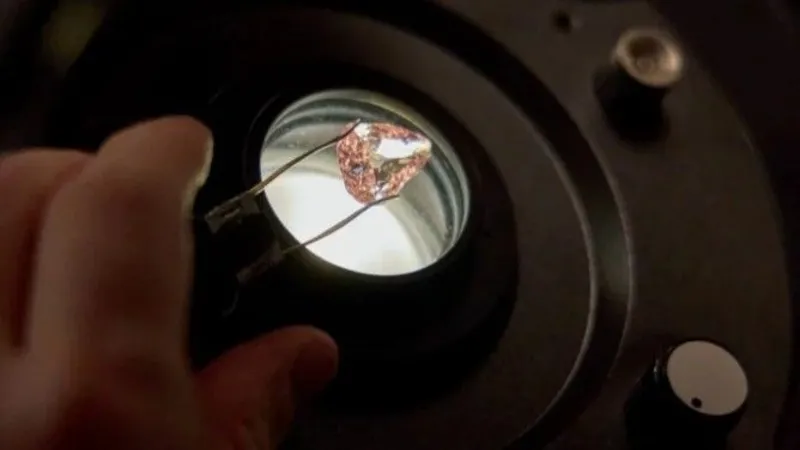
A rare pink diamond is going on display in France for the first time since it was stolen almost 100 years ago to the day – the last time it was shown to the public.
The nine-carat, pear-shaped gemstone known as the “Grand Condé” was pilfered in an overnight raid on the Château de Chantilly in October 1926 and concealed in a hollowed-out apple.
The diamond – one of few royal jewels to survive the French Revolution – was recovered a few weeks later when a hungry maid at the hotel in which the thieves were staying took a bite of the apple.
It will once again be on display in the Condé Museum at the Château de Chantilly until 3 January.
The museum’s director Mathieu Deldicque said that while the apple story may sounds far-fetched, it was widely covered by newspapers at the time.
Deldicque has faced questions about whether the exhibition may be tempting fate, especially given the string of heists on European cultural institutions in the past 12 months, including the daring daylight robbery of jewellery from the Louvre museum in Paris.
While he declined to reveal to CNN how much the diamond was insured for, he noted that extensive academic study into the properties of the diamond had taken place to make it uniquely identifiable.
The results of this analysis, as well as previously unseen archive material about the gem’s history and theft, form part of the exhibition, according to the museum.
Naturally occurring pink diamonds are exceptionally rare and often sell for tens of millions of dollars. The highest price ever fetched for one at auction was $71.2m (£53.6m) in 2017, according to Sotheby’s.
The exact origins of the Grand Condé remain a mystery.
It was first mentioned in 1740 in an inventory of Louis Henri de Bourbon, Prince of Condé, drawn up following his death, the Château de Chantilly said.
It then became part of the collection of Queen Marie-Amélie of Bourbon-Sicily, the wife of French King Louis Philippe I, and then her son, Prince Henri of Orléans, the Duke of Aumale.
He bequeathed it to the Institut de France, which now owns the Château de Chantilly, 50km (31 miles) north of Paris, along with thousands of artworks and manuscripts which became the Musée Condé collection.
(BBC)

A nursery owner and five members of her staff have been jailed after they were found to have poisoned more than 200 children with lead-tainted food.
Li Huifang, who operated the Heshi Peixin Kindergarten in Tianshui, in the Gansu province, was sentenced to life in prison for producing and selling toxic and harmful food, according to Chinese state media.
In July 2025, 247 pupils and staff at the nursery were found to have abnormally high blood lead levels after children began falling ill.
A report into the incident found that chefs at Heshi Peixin had used inedible paint to “enhance the look” of its meals to attract more students – despite the paint being being clearly marked as such.
In addition to the sentence, the Lanzhou Intermediate People’s Court also ordered the confiscation of 500,000 yuan (£56,200; $74,700) of Li’s personal assets, state broadcaster CCTV reported.
Nursery executive principal Zhi Jinglin was sentenced to 15 years in prison and fined 300,000 yuan.
Four other members of staff who worked in the nursery’s kitchen received sentences of between six to eight years, according to state media.
The court found the four had been instructed by Li and Zhi to add toxic and harmful ingredients to food served to children and staff.
Food samples were later found to contain lead 2,000 times in excess of China’s national safety limit.
The investigation into the poisoning began after 235 children from Heshi Peixin nursery had to be treated for lead poisoning after eating steamed red date cakes and sausage corn buns.
Investigators found that the red date cake and the corn sausage rolls had lead levels of 1052mg/kg and 1340mg/kg respectively, both of which far exceed the national food safety standard limit of 0.5mg/kg.
Lead poisoning is “particularly harmful to young children” and can “severely damage the brain and central nervous system”, according to the World Health Organization.
Officials later found that dozens of provincial officials and hospital staff attempted to cover up the incident by tampering with blood tests and accepting bribes from a nursery investor.
China has since published a set of national guidelines for the provision of meals on campuses. Among the measures is the requirement for every new batch of food to be tested, and for flour, rice and cooking oil to be purchased from centralised procurement points only.
(BBC)

Five people have been killed and 16 injured in a Houthi missile attack targeting the presidential palace in the port city of Aden in southern Yemen, which is the seat of the internationally-recognised government, officials say.
Information Minister Moammar al-Eryani told the BBC that the prime minister and other ministers were unhurt when five ballistic missiles hit al-Maashiq Palace.
The Houthis’ military spokesman, Yahya Sarea, said they struck “the Saudi enemy’s military operations headquarters in Aden”.
A coalition led by Saudi Arabia backs the government and is providing air support for an offensive by pro-government forces against the Iran-backed Houthis.
Yemeni health minister Qasim Buhaibeh said the casualties included “those working to guard the site and civilian employees”.
The country’s Prime Minister Shaya Zindani condemned the Houthis’ attack on Aden, calling it “cowardly” and a “continuation of their criminal behaviour”.
He said the government continued to carry out its duties and vowed that it would not weaken the resolve of its forces to continue operations against the Houthis on Yemen’s south-western Red Sea coast and other front lines.
Earlier, the Houthis denied that they had attacked Saudi Arabia on Thursday, after the coalition said its forces had intercepted a cruise missile in the Medina region, home to one of Islam’s holiest shrines.

The Houthis have been launching missiles and drones at airports, oil and gas facilities, and military bases in Saudi Arabia in retaliation for the strikes on the territory that they control in western Yemen, including the capital Sanaa.
On Saturday, a Houthi missile strike killed 13 people at Riyadh’s international airport, which was the deadliest attack in Saudi Arabia in more than a decade.
Saudi Arabia’s deputy foreign minister accused Iran of encouraging the Houthis to escalate their conflict with the kingdom.
“Iran continues to arm, train and support the Houthi militia in violation of UN Security Council resolutions,” Rayed Krimly told reporters, according to AFP news agency.
“We think that the escalation by the Houthis at this latest stage of the conflict is encouraged by Iran,” he added.
There was no immediate response from Iran’s government. However, it has previously denied supplying weapons to the Houthis and said it only supports them politically.
Iran’s foreign minister has also said it is ready to provide “any assistance necessary to facilitate the start of talks” between Saudi Arabia and the Houthis.
Yemen has been devastated by a civil war that began in 2014, when the Houthis ousted the internationally-recognised government from Sanaa. The conflict escalated in 2015, after the Saudi-led coalition of Arab states intervened in an attempt to restore the government’s rule.
A four-year-old informal ceasefire began to unravel in July, when the Houthis announced a “maritime embargo” against Saudi Arabia and began missile and drone attacks on Saudi airports, oil facilities and tankers in the Red Sea.
The Houthis said they were retaliating for what they call a Saudi blockade of their territory, as well as an air strike on Sanaa airport that they blamed on the kingdom.
The conflict escalated in September after the Houthis seized part of Yemen’s south-western Red Sea coast near the Bab al-Mandab Strait, a chokepoint for global shipping. Their advance contributed to a rise in oil prices following six months of war between the US, Israel and Iran.
Last week, pro-government forces said they had regained control of territory overlooking Bab al-Mandab after launching a major counter-offensive with the support of Saudi air strikes.
At least 1,282 people have been killed and 5,890 injured in the fighting in Yemen since 6 August, according to the government’s health ministry.
The UN says another 201,000 people have been displaced and that there has been an alarming surge in suspected cholera cases.
(BBC)

Showers above 100 mm are likely at some places in the Western, Sabaragamuwa, Central, North-western, Northern and Southern provinces and in Anuradhapura district.

Low-quality coal causes power cuts: Ex-LECO Chief

Power cuts continue

GL stresses importance of post-war Shangri-La investment after CIABOC questions him

Coal inquiry gets extension until 16 December

Dilshan, Hirupama named best athletes at All Island Schools Games Athletics Championships

‘Dates have the highest sugar content to fight Coronavirus’

Sunday Island 27 December – Headlines

#SundayIsland 17th December – Headlines

Sunday Island – 28th March

Sunday Island Headlines – 21 March

Sunday Island – 21st February – Headlines
-

 Features3 days ago
Kotahena:A Small Enclave, An Extraordinary Legacy
-

 News4 days ago
Asgiri Mahanayake calls for immediate release of Gnanasara Thera
-

 News3 days ago
Record 1,600 students take Russian Classical Ballet examination in Sri Lanka
-

 News6 days ago
AC President recuses himself from hearing prison attire case pertaining to Gnanasara Thera
-

 News5 days ago
Naval officer testifies Yoshitha received Rs. 5.15 mn in salaries during SLN service
-

 News3 days ago
Karannagoda pushed for £24,536 for Yoshitha’s UK training, Court told
-

 Editorial5 days ago
Saving Anojan: Beyond Executioner’s Blade
-

 News6 days ago
CID informs Fort Magistrate’s Court investigation into money laundering case against Namal completed