
Business
Forging resilience through adaptive social protection when crises collide


The World Meteorological Organization states that disasters related to weather, climate or water hazards occurred on average every day from 1970 to 2019. These disasters resulted in 115 deaths and economic losses worth USD 202 million, daily. Between 2019–2022, that is during the COVID-19 pandemic, global poverty rates rose by 8%, pushing 54 million people into poverty. Studies also show that climate change and disasters disproportionately affect low-income countries.
Nine out of the 10 countries most exposed to the risk of flooding are low-income or middle-income countries such as Bangladesh, Iraq, Myanmar, etc. Poor households often lack the capacity to cope and recover from serious destruction related to such events, increasing their vulnerability. Furthermore, existing social protection schemes are less successful in meeting the needs of those affected during disasters. Such schemes often fail to scale up flexibly to meet surges in demand for support during shocks. As a result, Adaptive or Shock Responsive Social Protection (ASP) systems have been introduced to help vulnerable populations prepare for, cope with, and recover from shocks.
What is Adaptive Social Protection?
ASP responds to the widespread demand of using social protection (SP) as a tool to build the resilience of poor and vulnerable households to covariate shocks such as natural disasters, economic crises, pandemics, and forced displacement. Traditional SP systems fall short as they are primarily designed to address life cycle shocks that an individual could face such as job loss or illnesses. These systems fail to respond to large-scale covariate shocks as they are slower in identifying those affected, targeting beneficiaries, and dispatching support during emergencies.
In contrast, ASP addresses both life cycle and covariate shocks and can ideally recognise affected populations and dispatch benefits quickly, to meet the demand for support during such shocks. ASP is not a standalone system but an approach to strengthen existing SP programmes. To succeed in this, ASP requires the integration of social protection with disaster risk reduction and climate change adaptation policies. Such an integration enables a system to anticipate disasters and act promptly on forecasted or emerging shocks. Further, the systems can scale up swiftly through existing delivery mechanisms and coordinate effectively across governance structures to protect vulnerable populations before, during, and after a crisis.
Important Features of Adaptive Social Protection
A key ASP feature is the scalability. It is crucial that sufficient and immediate support reaches those affected during an emergency. This is achieved through vertical and horizontal expansion. Vertical expansion refers to a temporary increase in the benefit and/or duration of the programme during a crisis. Such an expansion needs to be supported by a horizontal expansion, which is a temporary increase in the beneficiaries enrolled either by expanding geographical coverage or adjusting the eligibility criteria.
For example, in response to the COVID-19 pandemic, Sri Lanka undertook both horizontal and vertical expansions of various social assistance programmes such as Samurdhi and the senior citizens’ assistance scheme. These extended their coverage to include individuals on existing waiting lists, thereby broadening the beneficiary base – a horizontal expansion. Simultaneously, the value of cash transfers under these programmes increased, reflecting a vertical expansion. For instance, Samurdhi recipients received a top-up of LKR 5,000 in addition to their regular benefits.
An integrated social registry is another key factor in ASP. Social registries are information systems used for outreach, intake, registration, and determination of potential eligibility for one or more social programmes. Integrated registries help the government to coordinate targeting across multiple programmes. For instance, poverty-targeting cash assistance, disability support, and labour market programmes, such as job placements, can be managed through a single registry. This allows different government agencies and programmes to share and use the same data about individuals and households. During a shock, governments can easily scale up assistance by targeting pre-identified at-risk households using registries and national identification systems.
Early Warning Systems (EWS) form another vital component of ASP. EWS detects and predicts hazards, assesses risks and shares timely information so that people, communities and organisations can take early action. Integrating such disaster risk reduction measures enhances the preparedness of SP systems. Furthermore, triggers can be established using climate data. Triggers act as predefined conditions, for example early signs of a drought, that, when met, activate an automatic rapid social protection response.
To address issues caused by erratic and insufficient rainfall, Uganda uses satellite-based tools to monitor vegetation and weather conditions. One such tool, provided by the Global Agriculture Monitoring System (GLAM), uses satellite data on rainfall and temperature to track the health of crops over time. When vegetation levels drop below certain thresholds, indicating poor rainfall, the system triggers alerts so that the government can act before a crisis unfolds.
This approach proved effective in June 2017, when early signs of crop failure were detected in Karamoja region. This early warning allowed the government to respond in advance by releasing USD 4.1 million, reaching around 28,600 households. Since the response came early, the government was able to save USD 2.6 million in food aid costs and redirect these funds to boost food security for households.
Adaptive Social Protection in Sri Lanka
Sri Lanka too is susceptible to various recurrent disasters such as flooding and landslides. Studies show that nearly half of the country’s population lacks disaster preparedness, increasing their vulnerability to rising climate risks. Sri Lanka has previously demonstrated some capacity to mobilise resources in response to covariate shocks. As mentioned before, during the COVID-19 pandemic, multiple rounds of cash transfers amounting to LKR 5,000 were given to affected groups. Initial cash transfers reached 66% of households, covering 97% of the poorest decile.
However, inefficiencies were noted, as significant portions of the population remained excluded, such as 31% of the third poorest decile, 31% of middle-income decile, over 30% of children under the age of 10 and 30% of people aged 70 or older. The absence of comprehensive data to rapidly identify vulnerable households resulted in reliance on existing social protection beneficiary lists, waiting lists and the use of local agents to manually identify others in need. This experience underscores the necessity for more effective targeting mechanisms, improved data systems and inclusive delivery approaches in Sri Lanka’s disaster response framework.
Sri Lanka is well-positioned to integrate an ASP system. The country currently possesses disaster risk reduction technologies such as flood and hazard risk maps maintained by the Disaster Management Centre. The recently launched Info-NDRSC disaster data system by National Disaster Relief Services Centre is an online platform which has real-time disaster situation reporting on information such as families affected and properties damaged in different areas of the island. However, the absence of integration of these technologies with the existing social registry hinders coordinated outreach and rapid identification of vulnerable populations during crises.
At present, the country uses the Welfare Benefits Information System (WBIS), a beneficiary list registry that consolidates data from social assistance programmes, such as Aswesuma, monthly senior citizen’s allowance scheme, etc., and allows cash transfers to be directly transferred to beneficiary bank accounts. However, fragmentation across multiple welfare schemes and manual verification processes continue to slow response time in transferring assistance. It is essential to boost the use of social registries and national identification systems to combine the delivery of social protection and disaster management efficiently.
The key to ASP readiness lies not in building entirely new systems, but in integrating disaster risk mapping and digital identity platforms with the existing registry infrastructure. Investing in human resources and service delivery mechanisms also plays a vital role in ensuring an effective shock response during challenging emergency conditions.
by Kavisha Batawala


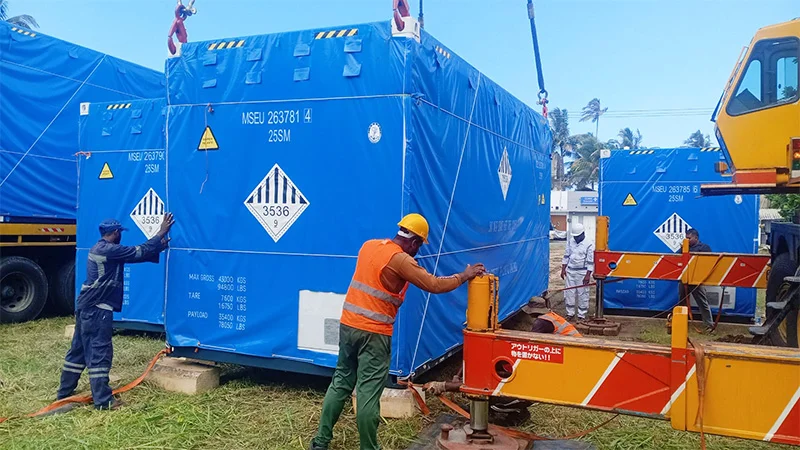
Sri Lanka has taken a major step towards modernising its power infrastructure with the arrival of the country’s first commercial-scale Battery Energy Storage System (BESS), part of a USD 50 million investment expected to transform the integration of renewable energy into the national grid.
The first shipment of battery units arrived at the Port of Colombo recently for the landmark Galle and Matara BESS projects being developed by Galilee BESS (Pvt) Ltd, a subsidiary of KHEN Energy Limited. The projects are expected to play a pivotal role in enhancing grid stability, reducing renewable energy curtailment and strengthening the country’s energy security.
The shipment comprised 25 containers, including 18 battery units weighing 42 metric tonnes each, making it one of the largest and most technically demanding renewable energy cargo movements handled in Sri Lanka to date.
Energy industry officials describe the project as a milestone investment that will help bridge one of the biggest challenges facing renewable energy development—storing electricity generated from intermittent sources such as solar and wind power for use when demand peaks.
Once operational, the BESS facilities will support the National System Operator by absorbing excess renewable energy during periods of high generation and releasing it when required, thereby improving efficiency and reliability across the power network.
The technology is being supplied by global energy storage leader Sungrow Power Supply Co., Ltd., reflecting growing international confidence in Sri Lanka’s renewable energy sector and its long-term clean energy ambitions.
Beyond its energy significance, the project also highlights the increasing scale and sophistication of infrastructure investments entering the country.
Expolanka Freight (Pvt) Ltd was entrusted with the end-to-end logistics operation, overseeing customs clearance, specialised transportation, storage, unloading and final placement of the battery units at the project sites.
Finance and Project Director Fazul Ansar said the operation required extensive engineering studies, route assessments and rigorous safety planning owing to the hazardous classification and extraordinary weight of the cargo.
Head of Project Logistics Mohamed Niyas said months of preparation had gone into route surveys, lifting studies and risk mitigation planning to ensure the successful execution of the project.
Project officials said specialised multi-axle trailers and cranes with lifting capacities ranging from 100 to 150 tonnes were deployed for the operation, while access modifications and last-mile transport solutions were implemented at both project locations.
By Ifham Nizam

The AI and Data Analytics Summit 2026 organised by the Sri Lanka Section of BCS, the Chartered Institute for IT was successfully held on 22nd May 2026 at Waters Edge, Colombo. The high-impact summit themed “Next Generation AI & Data Analytics: Skills & Thoughts for the Intelligent Future” brought together senior policymakers, global technology experts, industry leaders, academics, and innovators to explore how Artificial Intelligence (AI) and Data Analytics are reshaping the nation’s digital and economic future.
The event, endorsed by the Ministry of Digital Economy, was graced by Waruna Sri Dhanapala, Secretary to the Ministry of Digital Economy, who attended as the Guest of Honour, underscoring the government’s strong commitment to advancing AI adoption, digital innovation, and data-driven governance in support of Sri Lanka’s broader public sector transformation agenda. Dr. Sadeep Jayasumana, Chief Scientist at Octave, delivered the keynote address on Generative AI, sharing insights into its transformative potential.
Speaking on the significance of the summit, Prof. Lasith Gunawardena, Chairman the Sri Lanka Section of BCS, the Chartered Institute for IT noted that Artificial Intelligence and Data Analytics have become present-day enablers of innovation, economic growth, and societal progress. He emphasized that the summit was guided by BCS’s purpose of Making IT Good for Society and by the national need to bring together thought leaders, practitioners, policymakers, and industry experts to foster collaboration, knowledge sharing, and the responsible adoption of transformative technologies, thereby strengthening Sri Lanka’s digital readiness and supporting a resilient, inclusive, and globally competitive digital economy.
Ransith Fernando, Chair of the summit mentioned ” This year’s summit brought together 21 speakers who shared valuable insights, ideas, and experiences. We heard inspiring success stories, gained practical knowledge from industry practitioners, and explored strategic perspectives from business leaders. These conversations highlighted both the opportunity and the responsibility before us. While innovation is accelerating globally, Sri Lanka must align policy, talent, and industry readiness to truly operationalize AI at scale and ensure an inclusive and sustainable digital transformation.”
Deshan Liyanage, Co-Chair of the AI and Data Analytics Summit 2026 commented that this year’s summit was a fully sold-out event, reflecting the growing national momentum around Artificial Intelligence and Data Analytics in Sri Lanka. He extended heartfelt gratitude to all participants who joined and contributed to the success of the summit, as well as to the sponsors whose support made the event possible. Special appreciation was conveyed to Sysco LABS as the Strategic Partner, Linear Six as the Bronze Partner, InTalent Asia as the Resource Partner, and Motivista as the Event Partner. He also acknowledged the valuable collaboration of industry associations including SLASSCOM, FITIS, and CSSL, whose partnership helped strengthen and elevate the initiative.
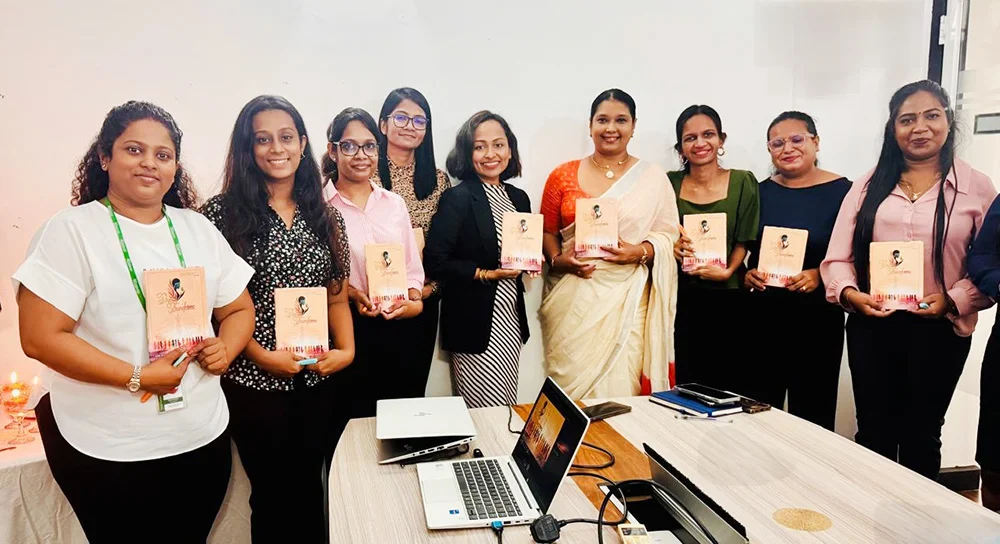
As part of its commitment to advancing women’s empowerment and building a stronger leadership pipeline, Eswaran Brothers Exports (EB), a leading tea manufacturer in Sri Lanka, launched its flagship women’s leadership initiative, She Transforms, a customized six-month leadership development journey. Developed with award-winning leadership expert Senela Jayasuriya and supported by Value for Women, the programme forms a key pillar of the Company’s wider gender agenda focused on leadership capacity building, inclusion and long-term institutional change.
Women make up 44% of Eswaran Brothers’ workforce, yet only 23% held senior roles at the time of an initial gender diagnostic conducted with Value for Women and supported by FMO, the Dutch Development Finance Bank. The assessment found that despite their potential, many women faced unclear career pathways and limited structural support at critical life stages.
In response, Eswaran Brothers introduced strategic mindset and policy interventions designed to remove barriers and create a more enabling environment for women to grow and lead. These efforts included mentorship opportunities, enhanced support for employees returning from maternity leave, coaching for managers, and initiatives aimed at strengthening inclusion and career progression across the organization.

Battling Australia force series decider as questions grow for Pakistan

West Indies bowl vs Sri Lanka, Hetmyer not in the XI

Implementation of water supply projects in small town and rural areas.
Cabinet nod to submit Import and Export (Control) Regulations No. 04 of 2026 to Parliament for its concurrence
Declaration of Elephant Migratory Corridors to minimize HEC in Monaragala and Hambantota districts

Qualifier Maja Chwalinska extends dream French Open run

‘Dates have the highest sugar content to fight Coronavirus’

Sunday Island 27 December – Headlines

#SundayIsland 17th December – Headlines

Sunday Island – 28th March

Sunday Island Headlines – 21 March

Sunday Island – 21st February – Headlines
-

 News5 days ago
IMF urges Lanka not to meddle with exchange rate
-
 Business6 days ago
Sri Lanka’s construction industry losing ground while no one watches
-

 Business3 days ago
IMF’s unstated rate:Sri Lanka’s $695m loan costs about 5.33% per annum
-

 News2 days ago
Lankan duo emerge winners in Latin dance championship held in Blackpool, UK
-
 News5 days ago
State of emergency extended
-

 Features6 days ago
The Division Bell Mystery
-

 News3 days ago
UNP challenges NPP move to amend Vihara – Devalagam Act
-

 Features4 days ago
Are threats to Buddha Sasana external or from within?