
Sports
Entries called for NSSF National Rifle and Pistol Championship 2020

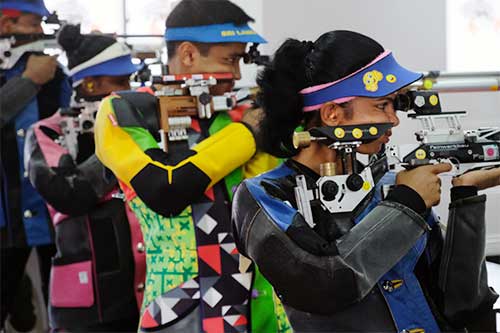
The NSSF has scheduled the National Rifle and Pistol Championship 2020 from November 12 to 21 at the Sri Lanka Navy Small Bore Range at SLNS Gemunu in Welisara.
The National Shooting Sports Federation of Sri Lanka (NSSF) has set the dates to host its first major event for this year despite uncertainty caused by the spike in the COVID-19 cases.
After vigilantly observing the situation for nearly seven months, the NSSF hopes to conduct at least the most important events for the year. The NSSF has scheduled the National Rifle and Pistol Championship 2020 from November 12 to 21 at the Sri Lanka Navy Small Bore Range at SLNS Gemunu in Welisara.
This championship will include a total of 16 events in three different categories – Youth, Junior and Open. The age categories have been determined as 12 to 18 for Youth, 18 to 21 for Junior and 21 and above for Open.
Among the events lined up are Youth and Junior Male and Female in both pistol and rifle, Open events in pistol, rifle, 50m rifle, 3×40 for both male and female. Among the Open Male pistol events are 50m, 25m STD and 25m rapid fire, while a 25m sports pistol event is on cards for Open Female.
Among other events lined up are Mix air pistol and air rifle Open, Mix Junior air pistol and rifle, which will be open also for Youth as events will be conducted under individual and team segments.
The top three shooters will receive medals and certificates with points granted for national selection. Best performers in Youth, Junior and Open categories in rifle and pistol will receive special individual awards while special awards will be presented for the best teams under rifle and pistol categories. The competition will be conducted in accordance to the rules and regulations of the international shooting body, the ISSF.
The final draw for the event will be held on October 30 at 4.30pm at the NSSF office in the Old Sports Ministry building in Torrington. The NSSF secretary Pradeep Edirisinghe confirmed that the draw will be final and all club representatives should reconfirm entries before submitting.
“Clubs and affiliates can send in their entries on or before October 25, before 4.00pm to the NSSF office, at P.O. Box 33, Old Sports Ministry Building, Colombo 7. We will be highly concerned on the entries and clubs have been notified to include the signature of the secretary and the stamp of their respective clubs with entry fees,” Edirisinghe stated.
The results of the NSSF National Rifle and Pistol Championship will be considered for updating the current national pools of Open, Youth and Junior segments. The NSSF had originally planned to conduct eight local competitions throughout 2020, but due to the current pandemic situation which made its outbreak in March earlier this year, competitions were on hold pending clearance from the higher authorities. With shooting being a sport that could be conducted under the current health regulations, the NSSF is optimistic that it could complete the event, with the intention of selecting athletes for future international meets.

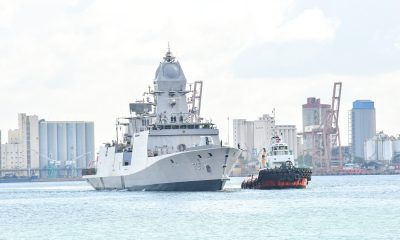



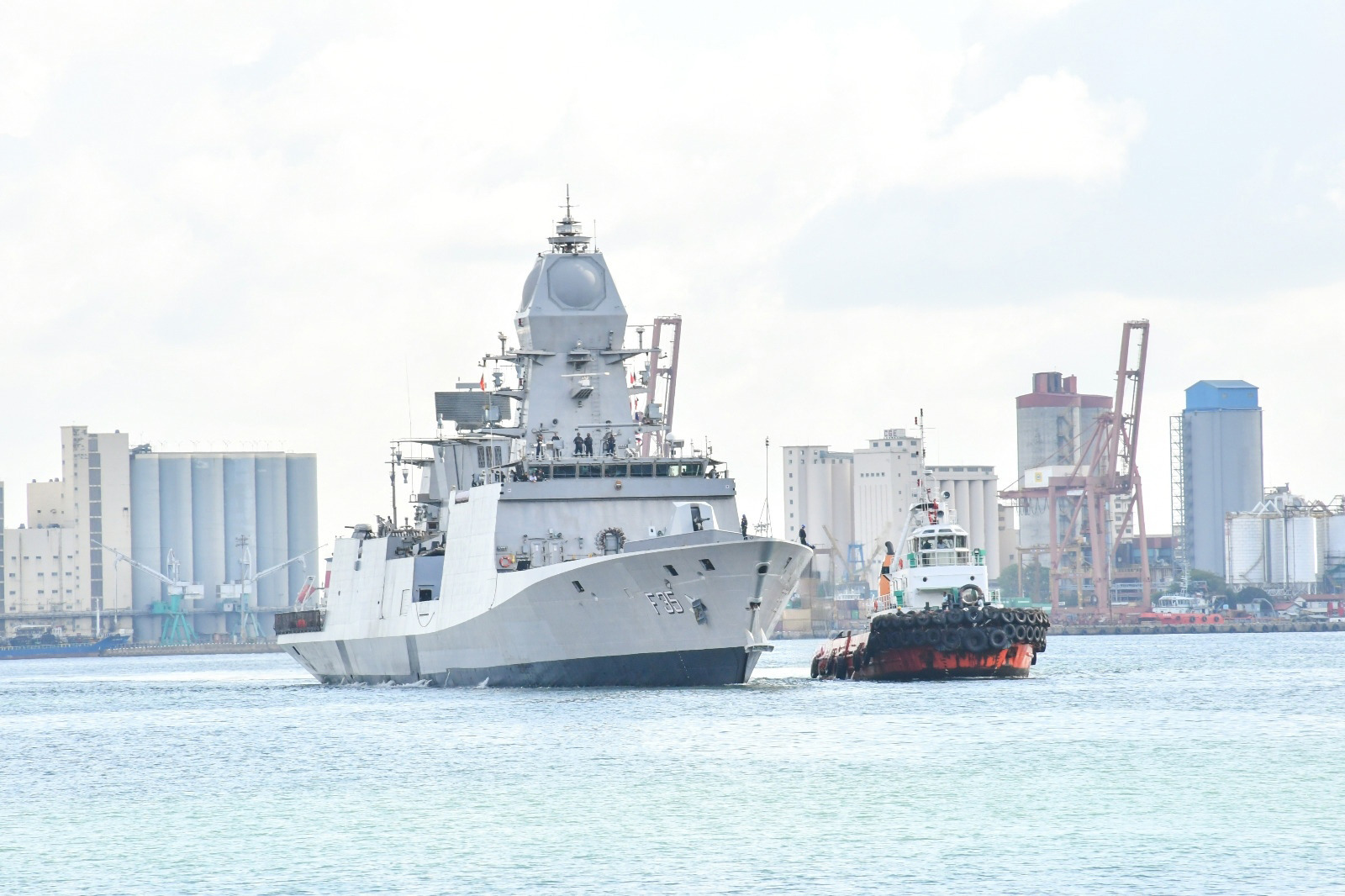
The Indian Naval Ship (INS) Udaygiri arrived at the Port of Colombo on an official visit today, 8 September 2026, where it was received by the Sri Lanka Navy in accordance with time-
honoured naval traditions.
INS Udaygiri is a 149.02m long Frigate, Commanded by Captain Vikas Sood. Meanwhile, the Commanding Officer of the visiting ship is scheduled to call on Commander Western Naval
Area, Rear Admiral Harsha De Silva at the Western Naval Command Headquarters.
Captain Sood served as the Defence Adviser at the Indian High Commission in Sri Lanka from July 2020 to October 2023.
During their stay in the island, the crew of INS Udaygiri will participate in several goodwill events organized by the Sri Lanka Navy to enhance camaraderie between the two forces.
The visiting personnel are also scheduled to visit prominent tourist and cultural locations across the island.
Additionally, Sri Lanka Navy personnel are expected to visit the ship for capability observation and knowledge sharing, and will conduct onboard training during its stay.
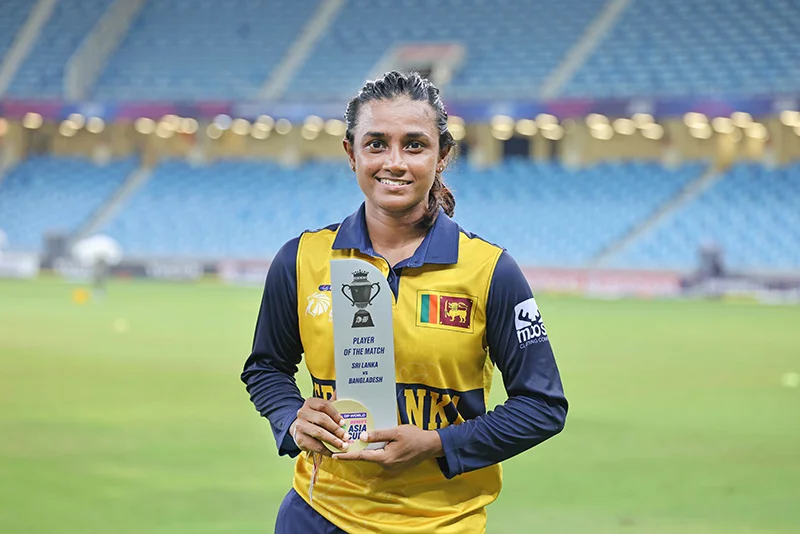
Sri Lanka’s women continue to provide compelling evidence that they could be genuine contenders for the next World Cup, while their male counterparts have, in recent years, largely been making up the numbers at global events.
The defending Asia Cup champions, who stunned formidable India in Dambulla two years ago to lift the title, marched into this year’s semi-finals with an unbeaten record.
Sri Lanka topped their group with three wins from three games and importantly, will avoid India in the semi-finals. Their opponents in Friday’s knockout clash will be either Pakistan or Thailand.
For years, Sri Lanka have leaned heavily on their talismanic captain Chamari Athapaththu, one of the greats of the women’s game. More recently, however, others have begun putting their hands up when the skipper has fallen cheaply. That growing depth has also given Chamari greater freedom to play her natural, attacking game.
Last week, Nilakshika de Silva produced a rescue act against Indonesia. On Sunday, after the captain fell to only her second ball, it was the turn of vice-captain Harshitha Samarawickrama to take charge and steer Sri Lanka home through choppy waters.
Chasing 115 to win their final group game against Bangladesh at Dubai Sports City, Sri Lanka were quickly in trouble as seamer Marufa Akter sent both openers packing cheaply. With wickets continuing to tumble at the other end, Harshitha kept her head while others were losing theirs.
At 44 for five, with half the side back in the pavilion, Sri Lanka were staring down the barrel. Harshitha and Nilakshika then began the repair job, adding 38 for the sixth wicket to drag the innings back from the brink.
Marufa has been an outstanding find for Bangladesh and they rely heavily on her for breakthroughs. With one over remaining in her quota, she was summoned back to break the partnership and did precisely that, removing a well set Nilakshika as she attempted to improvise.
There was, however, no stopping Harshitha.
She found a reliable ally in wicketkeeper Kaushini Nuthyangana and the pair calmly took Sri Lanka across the line with an unbroken 33 run stand for the seventh wicket. Harshitha finished unbeaten on 38 off 47 balls, striking four fours and two sixes.
Sri Lanka got home with four balls to spare, maintaining their perfect record in the competition. Yet beneath the celebrations there will be a nagging concern: the batting has collapsed too often, leaving one or two players with far too much heavy lifting to do. That is something they will need to address before the stakes rise further.
Sri Lanka will play the second semi-final on Friday, with the final scheduled for Sunday.
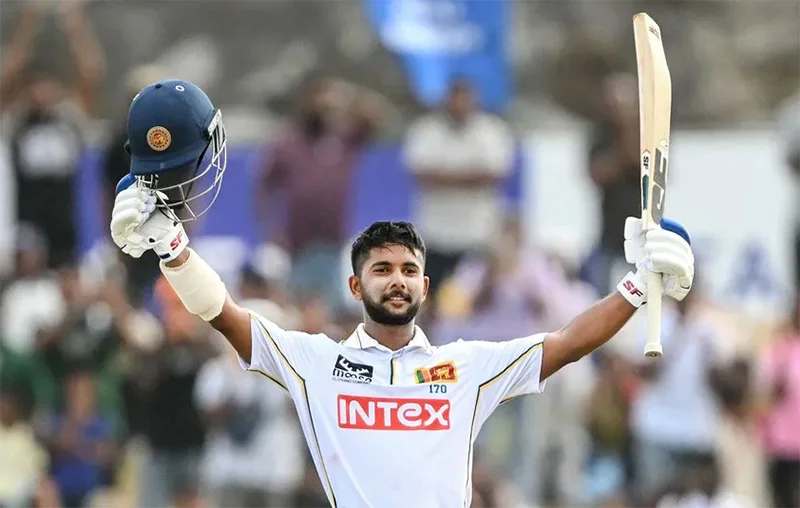
The just-concluded two Test series against strong Indian side has restored Sri Lanka’s pride and confidence, thanks largely to a remarkable display of fighting spirit. At the centre of this remarkable story is Sonal Dinusha, whose extraordinary batting performance turned what appeared to be certain defeat into an epic draw.
Sonal made headlines by scoring three centuries and a big half-century across the two Tests. In doing so, he joined an elite group of Sri Lankan batsmen who have scored three centuries in a two Test series, including Aravinda de Silva, Kumar Sangakkara and Kamindu Mendis.
There is an even more remarkable dimension to Sonal’s achievement. By scoring a century in both innings of a Test match, he joined another distinguished group of Sri Lankan batsmen who have accomplished this rare feat.
Yet, as with every great sporting story, there are several fascinating sub stories within the main story.
One of those sub stories is the emergence of Pasindu Sooryabandara, who became Sri Lanka’s first Test concussion substitute when he replaced Dinesh Chandimal in the first Test in Galle.
The concussion substitute rule is one of the significant innovations introduced by the ICC. It allows a player to replace a teammate who suffers a concussion or other head injury during a match, subject to the relevant medical assessment and the approval of the match referee. The substitute can then participate fully in the match, within the conditions governing concussion replacements.
Pasindu’s own concussion substitute story initially appeared far less glamorous. His first innings ended with the disappointment of a first ball golden duck. But that setback did not end his story.
Instead, the Sri Lankan selectors and team management showed faith in the young batsman by retaining him for the second Test at the Sinhalese Sports Club. That confidence was richly rewarded. Pasindu responded with a composed 80 in the first innings and a superb 92 in the second, providing the crucial foundation for Sri Lanka’s extraordinary resistance.
His batting displayed the qualities expected of a Test top order batsman: solid defence, controlled aggression, patience and above all, temperament. His First Class performances had been repeatedly knocking on the selectors’ door. This time, the door opened and Pasindu walked through it.
But the story does not end with Sonal and Pasindu.
The resilience of the Sri Lankan fast bowlers, led by Asitha Fernando, was another important chapter. Their persistence and discipline kept Sri Lanka in the contest when the match appeared to be slipping away.
The Sri Lankan batsmen then produced the kind of courageous resistance that Test cricket demands. Instead of surrendering to the pressure, they fought session by session, partnership by partnership, and run by run. Their collective determination transformed an apparently inevitable defeat into a memorable draw.
That fighting spirit may ultimately prove to be the most valuable outcome of the series.
Sonal Dinusha may rightly occupy the centre of the stage. His three centuries, his remarkable consistency and his role in rescuing Sri Lanka from the brink of defeat have made him the headline maker. Pasindu Sooryabandara, meanwhile, has shown what can happen when talent meets opportunity and confidence.
But behind these individual performances lies something even more encouraging: Sri Lanka have rediscovered the belief that they can compete, fight and survive against strong opposition even when the circumstances appear overwhelmingly against them.
That renewed belief could be extremely important as Sri Lanka face challenging Test assignments against New Zealand and Pakistan in the ongoing World Test Championship cycle.
For the newly appointed coach, this remarkable comeback must have brought a huge sigh of relief. More importantly, it provides evidence that this Sri Lankan Test side possesses the character and resilience required to compete with any opposition, in any conditions.
The epic draw was therefore more than just a result on the scoreboard. It was a statement of character.
Sonal Dinusha wrote the headline. Pasindu Sooryabandara provided one of the most inspiring subplots. The bowlers refused to surrender. And the entire Sri Lankan team reminded everyone of the fighting spirit that has long been associated with Sri Lankan cricket.
Ayampillai Dharmakulasingham
Retired Sri Lankan diplomat

INS Udaygiri makes port call in Colombo

Showers in the Uva, Central and Eastern provinces and in Polonnaruwa district

22A: Exclusion of 8 petitions questioned, action filed against SC Registrar, others

Thailand shuts door on undesirables from Sri Lanka

Expertise France and the EU launch media project to strengthen environmental journalism in Sri Lanka

CLA questions non-inclusion of senior judges on five-member SC bench hearing 22A petitions

‘Dates have the highest sugar content to fight Coronavirus’

Sunday Island 27 December – Headlines

#SundayIsland 17th December – Headlines

Sunday Island – 28th March

Sunday Island Headlines – 21 March

Sunday Island – 21st February – Headlines
-

 News5 days ago
Denied of promotion to SC despite vacancies, justice Gurusinghe retires
-

 Latest News6 days ago
Grade 5 scholarship exam results released
-

 News5 days ago
22A: SC urged to suspend hearing, appoint full bench
-

 Midweek Review6 days ago
The local and global dynamics of Sri Lanka’s 22nd Amendment
-

 News3 days ago
Namal remanded until Sept. 18 over Airbus deal investigation
-

 Latest News2 days ago
Tharanga creates history with Diamond League crown in Brussels
-

 News5 days ago
Govt. seeks NATO assistance
-

 News6 days ago
40 professional organisations and TU oppose proposed 22A