
News
Energy Minister lashes out at international funding agencies

Criticism of Electricity Act Amendments:
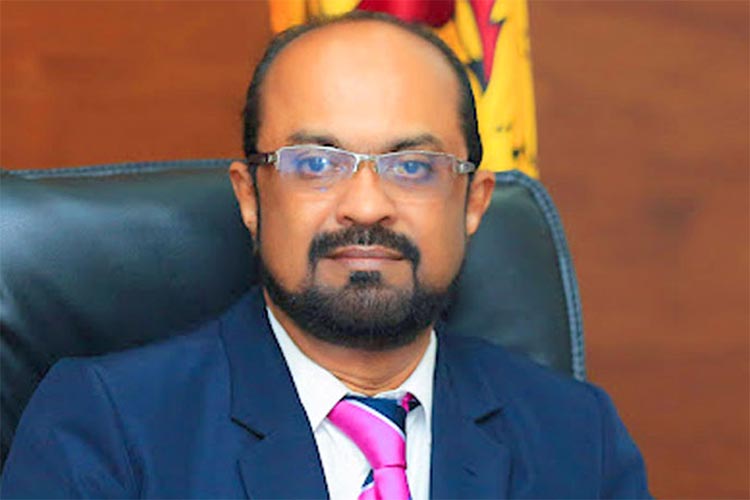
Energy Minister Kumara Jayakody has lashed out at the Japan International Cooperation Agency (JICA), the Asian Development Bank (ADB), and the World Bank over their public criticism of amendments to the Electricity Act, accusing them of bypassing diplomatic channels and politicising the issue.
“This is not how it should be done. They can’t work with us like this,” Minister Jayakody said in a televised interview on Thursday. “They should have handled it more diplomatically instead of going public.”
His remarks follow a joint letter issued by the three development partners raising red flags over provisions in the Electricity Act 2024. The letter voiced concern over clauses mandating permanent state ownership of electricity entities, proposed restructuring of the National Transmission Network Service Provider (NTNSP), and regulatory control over tariffs.
The ADB, the JICA and the World Bank have written to the Energy Minister regarding several key issues concerning the Electricity Act 2024 Amendments published in the Gazette recently.
The World Bank, ADB and JICA have been the major development partners in the power sector of Sri Lanka. The three institutions coordinate closely on key policy issues, investments, and technical assistance.
In a letter addressed to Minister Jayakody recently, the institutions thanked the Ministry of Energy and the Power Sector Reforms Secretariat for their continued engagement over the past several months on this topic.
However, they highlight four issues in the version of the Amendments to the Electricity Act 2024 published in the Gazette and being proposed to Parliament for consideration, which they believe impede the original intent and spirit of the Act regarding sector efficiency, good governance, and financial sustainability, all with the ultimate objective of ensuring a high quality of service to consumers at affordable prices.
“We share these comments in the spirit of supporting the Government of Sri Lanka in the smooth implementation of the final version of the Act and ensuring a strong energy sector for the future,” said the letter, signed by the Country Manager of the World Bank and IFC, ADB Country Director and JICA’s Chief Representative of Sri Lanka Office.
The issues highlighted in the letter are as follows:
Permanent Government Ownership
Section 17 of the principal Act, subsection 2 is amended with entities denoted as (a), (e), (f), (g), and (h)(ii) will remain “permanently” owned by the Government (through Secretary to the Treasury). The rationale for maintaining 100% Government ownership for the NSO, NTNSP, and Pension Liabilities Company is understood. However, legislating permanent 100% Government ownership in the Act, will increase the burden on the state, limit any private investment or opportunities into the Generation Company and Distribution Company, and only hinder the Government’s options for development in a sector with large investment needs.
National Transmission Network Service Provider (NTNSP)
Clause 20, subclause 3: The preliminary transfer plan includes LTL Holdings under the NTNSP. LTL Holdings owns and operates over 1GW of generation assets in Sri Lanka and abroad. Additionally, LTL has multiple other businesses including transmission and distribution projects, transformer manufacturing and other engineering projects. In the same clause, the preliminary transfer plan also includes Sri Lanka Energies under the NTNSP. Sri Lanka Energies has approximately 15 MW of mini-hydro plants, and other businesses including manufacturing meter components.
Having both companies under NTNSP would in turn create a generation company owning approximately 20% of Sri Lanka’s generation assets as well as multiple other businesses, come under the responsibility of the NTNSP. Given the urgent need to upgrade the transmission network and the renewable energy integration needs, bundling businesses outside the core function of NTNSP will likely result in a deterioration in the operations of those businesses and a distraction from the core functions of NTNSP. It will also detract from the principal objective of separating the core functions of the CEB, in this case transmission vs generation, and introducing the necessary transparency and removal of conflicts of interest, which were one of the cornerstones of the reforms.
Distribution Company
Clause 20, subclause 4: The preliminary transfer plan assumes the Distribution Company will assume “the assets, liabilities and functions” of LECO. LECO has been operating as an independent company from CEB distribution divisions and has adopted operational efficiencies and innovations for its customers and employees. This proposal will imply that a distribution company/licensee is going to fully absorb another distribution company/licensee, without considering the commercial, operational and legal ramifications.
The creation of a large NTNSP and Distribution Company, combined with the removal of restrictions on a single entity or Government of Sri Lanka acquiring multiple unbundled entities (clause 15, subclause 3) leaves an opening to reverse the unbundling, and return to a system of operational inefficiencies, conflicts of interests, and poor governance, all at a cost to the consumer.
Role of the regulator in tariff setting
Section 29, subsection 3 is amended with the following language: “by the substitution for the words “in accordance with the national tariff policy”, of the words “in consultation with the Ministry of Finance” rather than “after consultation with Ministry of Finance”. We have noted in previous communications that while this was accepted as a reasonable compromise in theory, we want to reiterate that this could pose challenges when trying to implement the act as this language is unclear and open to interpretation and/or legal challenge since there is ambiguity on who has final authority and accountability on tariff setting.
These changes could undermine the overarching objectives of the Electricity Act and the commitments made by the Government under the Asian Development Bank’s Policy-based Loan and World Bank’s Development Policy Operation. It will also weaken the attractiveness of Sri Lanka for investors, contrary to the Government’s intentions. We urge the Government to consider the points stated in this letter and amend the clauses to ensure they align with the core objectives of the Electricity Act—good governance, competitive procurement, regulatory independence, and financial sustainability.






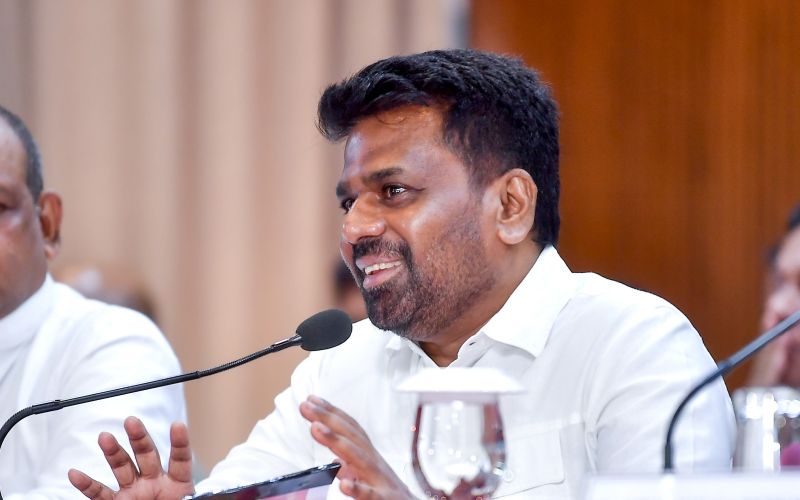
President Anura Kumara Dissanayake stated that a Special Committee, headed by the Deputy Inspector General of Police, will be established to protect lands in the Eastern Province.
The President highlighted that a number of issues have arisen in the region due to land grabs carried out through the misuse of political power, stressing that such practices will no longer be tolerated.
The President made these remarks while participating at the Special District Coordination Committee meeting in Ampara held on Friday (22) afternoon at the Ampara District Secretariat.
Drawing attention to coastal erosion affecting the Eastern coastline, the President instructed officials to develop a comprehensive plan to both protect the coastline and promote tourism in the region.
The President further noted that placing rocks and barriers is not a practical long-term solution to coastal erosion and instructed that urgent scientific studies be conducted to identify a sustainable and permanent solution, including consideration of the Oluvil Harbour and associated fisheries infrastructure.
Highlighting the tourism potential of the Eastern coastal belt, the President also stated that he had received reports of unequal treatment by public officials in the management of hotel operations in coastal areas and firmly instructed that such discrimination must not be allowed.
The President drew special attention to unauthorised land reclamation taking place in the Eastern Province and instructed the security forces to ensure that such activities are not permitted in the future.
Noting that 16 years have passed since the end of the conflict without a structured programme to resettle displaced persons in the region, the President instructed that urgent attention be given to developing and implementing a resettlement plan.
President Dissanayake further drew attention to the recurring flooding caused by the overflow of the Gal Oya, which affects several Divisional Secretariat areas including Ampara, Sammanthurai, Karaitivu, Addalachchenai, Kalmunai, Akkaraipattu, Irakkamam, Damana and Ninthavur. The President directed officials to conduct an urgent study to identify a permanent solution and confirmed that initial funding would be allocated for this purpose.
Discussions were also held regarding the current status of the Thirukkovil paddy storage facility and the continuation of operations at the Addalachchenai waste recycling centre.
Discussions were also held on the conservation of the Nuwaragala archaeological reserve and the development of tourism zones in Arugam Bay and Panama. Attention was further given to implementing a tourism development project in and around the Maduru Oya reserve, based on the indigenous villages in Henanigala South, Dehiattakandiya.
The committee also discussed restarting a drinking water project in the Lahugala area, which was initiated by the National Water Supply and Drainage Board approximately five years ago.
The President also paid special attention to the issues faced by sugarcane farmers in Hingurana. He noted that safeguarding sugarcane farmers within the industry is the responsibility of the relevant companies and stressed the need to engage in discussions on the emerging issues and reach an expedited solution.
Under the Kalmunai Urban Development Project, attention was drawn to the consolidation of all government institutions currently located in different places within the Kalmunai area into a single location. The President instructed officials to prepare and submit the relevant plans, noting that funding could be allocated in the forthcoming budget.
Discussions were also held on taking over and developing land with commercial value that had been allocated by the Sri Lanka Mahaweli Authority more than five years ago but where projects had not been implemented. The President directed that such lands be transferred to Divisional Secretaries or the District Secretary and developed under a structured programme for public benefit.
Discussions were also held on taking over and developing roads in the areas of Dehiattakandiya, Maha Oya and Padiyathalawa under the Road Development Authority and the Provincial Road Development Authority.
Special attention was also drawn to teacher vacancies in schools in the Ampara District and issues related to zonal education offices. The President emphasised that the establishment of administrative structures such as education offices and divisional secretariats is not a political exercise but an administrative function. He further stressed that such structures should be based on objective criteria such as geographical size and population, rather than ethnic considerations.
The President noted that LKR. 22,000 million has been allocated in the 2026 Budget for development projects in the Ampara District. Reviewing progress in ongoing projects in the sectors of roads, irrigation, drinking water supply and housing, he stressed that it is the responsibility of public officials to ensure that these funds are efficiently utilised within the relevant financial year to deliver timely benefits to the public.
The President also separately reviewed compensation and relief measures for the people of the Ampara District affected by Cyclone Ditwah, including compensation for loss of life, crop damage and losses in the livestock sector, as well as programmes for the fishing community, livelihood development initiatives and progress on partial and full housing damage compensation and resettlement programmes.
The President emphasised that the most affected by this disaster are economically vulnerable communities and therefore urged that housing construction and resettlement programmes be expedited without delay.
Co-Chairs of the Ampara District Coordinating Committee, Eastern Province Governor Professor Jayantha Lal Ratnasekera, Deputy Minister of Rural Development, Social Security and Community Empowerment, Wasantha Piyathissa, Members of Parliament, local authority Chairpersons and other public representatives, along with the Chief of Presidential Staff and Commissioner General of Essential Services, Prabath Chandrakeerthi, Defence Secretary Air Vice Marshal Sampath Thuyacontha (Retired), Ampara District Secretary Anupa Mangala Wickramarachchi and other government officials were present at the meeting.
(PMD)
Latest News
Landslide Early Warnings issued to the districts of Colombo, Gampaha, Kalutara, Kegalle, Nuwara Eliya and Ratnapura


The National Building Research Organisation [NBRO] has issued landslide early warnings to the Districts of Colombo, Gampaha, Kalutara, Kegalle, Nuwara Eliya and Ratnapura valid from 09:00 hrs on 23.05.2026 to 09:00 hrs on 24.05.2026
Accordingly,
LEVEL III [RED] landslide early warnings have been issued to the Divisional Secretaries Divisions and surrounding areas of Deraniyagala, Ruwanwella and Dehiowita in the Kegalle district and Ratnapura, Ayagama, Kuruwita and Eheliyagoda in the Ratnapura district.
LEVEL II [AMBER] landslide early warnings have been issued to the Divisional Secretaries Divisions and surrounding areas of Seethawaka and Padukka in the Colombo district, Attanagalla in the Gampaha district, Palindanuwara, Ingiriya, Bulathsinhala and Horana in the Kalutara district, Yatiyanthota in the Kegalle district and Pelmadulla, Kiriella, Kalawana, Nivithigala and Elapatha in the Ratnapura district.
LEVEL I [YELLOW] landslide early warnings have been issued to the Divisional Secretaries Divisions and surrounding areas of Divulapitiya and Mirigama in the Gampaha district, Mathugama and Agalawatta in the Kalutara district, Bulathkohupitiya in the Kegalle district, and Ambagamuwa in the Nuwara Eliya district.
,
.

The US has announced a new policy that means most immigrants seeking a green card will have to leave the country and apply at an embassy or consulate abroad.
The US Citizenship and Immigration Services (USCIS) said on Friday that people seeking a change in status must do so through consular processing outside of the country “except in extraordinary circumstances”.
The move – a part of the Trump administration’s effort to curtail illegal immigration – closes a loophole that had allowed visa holders and visitors to apply for a green card while still in the US.
Critics of the policy say the longstanding system allowed families to stay together during the lengthy application process.
The new method could also make it difficult or impossible for some immigrants who leave the country in hopes of gaining a green card to return.
The USCIS policy memo states that people such as students, temporary workers or people on tourist visas need to go through the Department of State from outside of the US.
“When aliens apply from their home country, it reduces the need to find and remove those who decide to slip into the shadows and remain in the US illegally after being denied residency,” USCIS said, making the system “fairer and more efficient”.
On X, the Department of Homeland Security, which oversees USCIS, said: “The era of abusing our nation’s immigration system is over.”
“We’re returning to the original intent of the law to ensure aliens navigate our nation’s immigration system properly,” USCIS Spokesman Zach Kahler said.
“From now on, an alien who is in the US temporarily and wants a green card must return to their home country to apply, except in extraordinary circumstances,” he continued.
Kahler said the policy allows the immigration system “to function as the law intended instead of incentivising loopholes” and that visits “should not function as the first step in the green gard process”.
It is unclear whether pending green card applications will be affected.
A spokesperson for the USCIS told the BBC that as the policy is rolled out, “people who present applications that provide an economic benefit or otherwise are in the national interest will likely be able to continue on their current path”.
“Others may be asked to apply abroad depending on individualised circumstances,” it said.
Being a green card holder, or lawful permanent resident, allows a person to live and work permanently in the US. Obtaining one is a multi-step process that can take months to several years.
There are currently more than a million legal immigrants waiting for approval on their adjustment of status green card applications, according to the Cato Institute’s director of immigration studies.
Kahler argued that following the law allows the majority of cases to be handled by the US State Department at consular offices abroad and frees up USCIS resources to focus on processing other cases that fall under its purview – such as visas for victims of violent crime and human trafficking, naturalisation applications, and other priorities.
The move is consistent with longstanding immigration law and immigration court decisions, the agency said. Immigration officers are being directed to “consider all relevant factors and information on a case-by-case basis when determining whether an alien warrants this extraordinary form of relief”.
Michael Valverde, who was a senior official at USCIS under both Republican and Democratic administrations until his departure last year, said to the BBC’s US media partner CBS that Friday’s announcement would “disrupt the plans of hundreds of thousands of families and employers annually”.
“This is a largely unprecedented move that will limit lawful immigration to the US greatly,” Valverde said. “People who followed the rules faithfully now face tremendous uncertainty.”
The Trump administration has instated bans or restrictions on citizens from nearly 40 countries.
Another policy from the administration this year has paused all visa issuances to immigrant visa applicants from 75 countries.
Overstaying a US visa can lead to deportation, ineligibility for future visas and re-entry bans lasting up to 10 years, according to the US State Department.
[BBC]

Kohli refuses Head handshake after heated Hyderabad-Bengaluru clash in IPL

Ampara District special Coordination Committee meeting chaired by the President

Landslide Early Warnings issued to the districts of Colombo, Gampaha, Kalutara, Kegalle, Nuwara Eliya and Ratnapura

Most people seeking green cards must now apply from outside US

Tulsi Gabbard to resign as US director of national intelligence

SpaceX launches massive Starship V3 rocket on test flight

‘Dates have the highest sugar content to fight Coronavirus’

Sunday Island 27 December – Headlines

#SundayIsland 17th December – Headlines

Sunday Island – 28th March

Sunday Island Headlines – 21 March

Sunday Island – 21st February – Headlines
-

 Features7 days ago
Sri Lankan Airlines Airbus Scandal and the Death of Kapila Chandrasena and my Brother Rajeewa
-

 News7 days ago
Kapila Chandrasena case: GN phone records under court scrutiny
-

 Features4 days ago
Octopus, Leech, and Snake: How Sri Lanka’s banks feast while the nation starves
-

 News7 days ago
Rupee slide rekindles 2022 crisis fears as inflation risks mount
-

 Business7 days ago
Expansion of PayPal services in Sri Lanka officially announced
-
 News3 days ago
Steps underway to safeguard Sri Lanka’s maritime heritage
-

 News7 days ago
Court orders further arrests in alleged USD 42 Mn NDB fraud case
-
 Opinion3 days ago
Murder of Ehelepola family, Bogambara Wewa and Sightings of Wangediya