
Business
Elder abuse is real: How are we mitigating the risks?

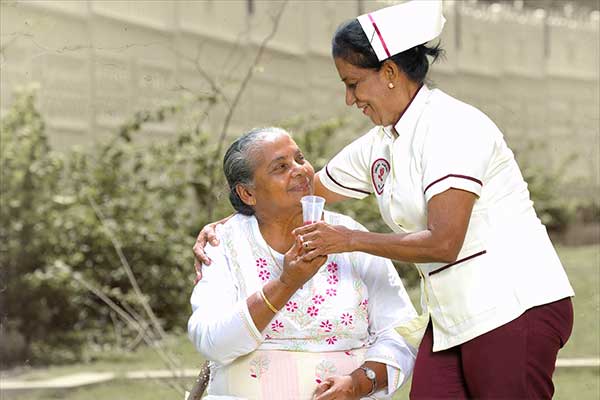
Medical conditions are inevitable once the human body begins to age. They arrive with their complexities which can affect our elders physically and emotionally. However, we can support our loved ones with the arising conditions by ensuring they are taken care of with dignity and love. At English Nursing Care, eldercare is redefined with compassion and reliability towards caregiving where nurses are trained to support clients with comfort and security.
The problem
A study conducted by the World Health Organisation, taking evidence from 52 studies in 28 diverse countries, indicates that 15.7% individuals i.e. one in six individuals, aged 60 years and above, have been subject to some form for physical, psychological, financial or sexual abuse over the past year. This is inclusive of neglect by their own family members.
Sri Lanka at high risk
According to the Institute of Policy Studies (IPS) of Sri Lanka, the global economy expects a rise in aging population – from 814 million people in 2013 to more than 2 billion in 2050 – with Sri Lanka having one of the fastest aging demographics (1 in 4 persons will be over 65 years by 2041). This makes elder abuse a rising risk on senior citizens in Sri Lanka.
Research from the North Colombo Teaching Hospital records 38.5% out-patients at risk of abuse. Survey taken by elders highlight 45% reporting verbal abuse and neglect. Whilst 5.6% report physical abuse. However, a substantial number of elders refrain from reporting such misconduct due to fear, shame or mental illnesses.
Why elder abuse?
In most cases, it is cultural for children in Asia to continue living with their parents. The increasing pace of life simultaneously increases stress which caregivers tend to release on elders. This is vile and unacceptable. Enrolling parents to elder’s homes or employing staff to take care of them is the most sought solution. However, WHO recognises that homes and staff perpetrated 64.2% of the abuse. Insufficient care, depriving them of dignity, incorrect medication are common.
Recent events of the sorrowful and mysterious demise of 78 – year – old, Miss Ceylon 1962 – Jennifer Ingleton, is exemplar of such misconduct. Jennifer, who fell ill with age and was under the care of unknown forces; as her relatives were abroad. According to Jennifer’s half -brother, these forces prevented friends and family to communicate with her and were left unaware regarding her health and well-being. A close friend reported, upon one of her visits to see Jennifer in her ill-state, these individuals would suspiciously evade her from asking too many questions regarding her medical procedures or requesting a doctor to check-up on her progress. Therefore, recognition and reconciliation by choosing the right care practises and institutions for your elders is key.
How is English Nursing Care different?
Old age requires engaging and comprehensive care. English Nursing Care understands the significance of this responsibility. Thus, ‘Care plans’ are created where caregivers are trained to deliver personalised support, by nurses bringing over 30 years of experience from the UK, to take care of your loved one in the comfort of their home. Thorough knowledge on medical history, current medication dosage and emergencies is pivotal. Staff update family on the progress of the client every week or as requested. Nurses at English Nursing Care are trained to inculcate the latest methodologies in their practise with focus on delivering quality care with empathy. A review process is held every month to warrant the service given to your loved ones.
With neglect and abuse arrives the unfortunate consequences of dejection, anxiety and hopelessness. Encompassing a jovial and optimistic care system for elders at this phase is vital to live a healthy life. Care staff play a crucial role in fostering so. English Nursing Care is an advocate of celebrating life and takes pride in the holistic service they offer with guaranteed peace of mind for the elderly client as well as family often living far away.

Business
Indian business leader urges SL entrepreneurs to tap into India’s rapidly expanding consumer market


By Sanath Nanayakkare
Speaking at the Sri Lanka Economic and Investment Summit 2026, T. Krishnakumar, Chief Executive Officer of Reliance Consumer Products Ltd (RCPL), emphasised that local enterprises can unlock substantial economic benefits by strategically aligning with India’s booming consumer base.
Addressing business leaders and policymakers at the Shangri-La Hotel in Colombo, Krishnakumar highlighted that geographical proximity and rich cultural ties provide a natural foundation for deeper commercial collaboration.
He noted that instead of viewing bilateral trade narrowly, regional partnerships should act as conduits to build robust, scalable enterprises capable of plugging into wide-reaching regional value chains.
“For Sri Lankan exporters dealing in traditional staples as well as value-added goods, accessing India’s rising middle class presents a phenomenal growth window,” he said.
Drawing insights from Reliance Consumer Products’ rapid expansion – which scaled efficiently to thousands of employees and multi-billion-dollar metrics – Krishnakumar stressed that modern corporate success relies on disciplined execution, localised consumer understanding, and smart technology integration.
Furthermore, he underscored that while rapid growth is critical, businesses must consistently anchor their models in affordability and consumer trust.
Concluding his address at the summit, the RCPL chief noted that pairing regional trade integration with resilient business practices and predictable regulatory frameworks will be vital as Sri Lanka transitions firmly toward accelerated economic development.
Addressing the Summit during a subsequent fireside chat, President Anura Kumara Dissanayake underscored that a core concern currently being targeted by the government is developing a critical mass of local entrepreneurs equipped to engage with international enterprise counterparts.
Business
SriLankan Airlines wins prestigious SATA 2026 Visitors’ Choice Award for Leading International Airline

SriLankan Airlines has once again been honoured with the prestigious Visitors’ Choice Award for Leading International Airline at the South Asian Travel Awards (SATA) 2026, reaffirming its continued recognition in the regional travel and tourism industry. The airline, which has received this award in previous years, was the only international airline to be recognised in this category at this year’s event. The 10th anniversary edition of the awards ceremony was held earlier this month at Hotel Barcelo Nasandhura in Male, Maldives.
Recognised as one of the key events on the Maldivian tourism and travel industry calendar, SATA celebrated its 10th anniversary on a grand scale, bringing together prominent industry stakeholders, including Government Ministers, distinguished dignitaries, diplomats and senior representatives from leading airlines and their respective head offices.
Commenting on the achievement, Dimuthu Tennakoon, Head of Commercial, SriLankan Airlines, stated, “We are honoured to receive this recognition at the South Asian Travel Awards 2026. Being named the Leading International Airline in the Visitors’ Choice Awards once again is a meaningful acknowledgement of our commitment to serving our passengers and strengthening our presence in the region. This award inspires us to continue enhancing the travel experience we offer and to build stronger connections with the markets and communities we serve.”
Complementing its commitment to service excellence, SriLankan Airlines offers an extensive flight network with convenient connections to destinations across the globe. In South Asia, the airline operates nearly 130 flights each week to 15 destinations across India, Pakistan, the Maldives, Nepal, and Bangladesh. With schedules thoughtfully designed to suit the needs of travellers, SriLankan Airlines provides seamless connectivity for those visiting Colombo for business or leisure, as well as passengers travelling onwards to destinations worldwide.
Business
JXG enters LMD’s Most Respected Entities in Sri Lanka 2026 for the first time, securing a place among the first 50

JXG (Janashakthi Group), Sri Lanka’s leading financial conglomerate, has been ranked 44th in LMD’s Most Respected Entities in Sri Lanka 2026, marking the Group’s first appearance in the prestigious listing. The recognition places JXG among Sri Lanka’s most respected companies and marks an important milestone in the Group’s master-brand journey.
As the holding company, JXG was also recognised across key attributes including Aspirational Workplace, Business Expansion, Business Innovation, Corporate Culture, Corporate Dynamism, Crisis Management, Employee Wellbeing, Honesty and Integrity, and Leadership Profile. The recognition reflects the growing strength of the JXG brand and the collective contribution of its businesses and people in building trust and confidence among its stakeholders.
JXG’s subsidiaries, including Janashakthi Life and First Capital, have also been recognised in the main table of LMD’s Most Respected Entities 2026 rankings, while Janashakthi Finance has been recognised under the Business Expansion attribute, reflecting the strength of the Group’s individual businesses alongside its growing master brand.
Conceptualised and commissioned by LMD and conducted by PepperCube Research Consultants, the Most Respected Entities special edition recognises companies based on an independent survey of Sri Lanka’s business community.
Commenting on the recognition, Gamika de Silva, Group Chief Marketing Officer at JXG, said, “This is a proud moment for all of us at JXG. We set out to build a Group brand that is not just seen but lived by our people and reflected in everything we do. Ultimately, the true testament to any brand lies in its people, and the credit for this recognition goes to everyone across JXG who brings our values to life every day. This recognition is an encouraging milestone for us, while also reminding us to keep raising the bar and earning the respect of our stakeholders through what we do.”
JXG’s approach to building trust is anchored in its core values of Integrity, Collaboration, Respect, Performance Driven and Innovation. These values guide how its businesses operate, how its people engage with one another and how the Group serves its customers and wider stakeholders.
As JXG continues to expand its businesses, the Group remains focused on strengthening its market presence, creating long-term value and contributing to the growth of Sri Lanka’s financial services sector, guided by its purpose, Breaking Barriers, Forging Futures.

Showers in the Western, Southern, Central, Sabaragamuwa, North-Western and Northern provinces and in the Anuradhapura District

SJB: Govt. trying to reappoint Jayakody, who resigned from Cabinet amidst coal scam

India busts Pakistani salt smuggling via Sri Lanka

Monks brave heavy rains to press for Gnanasara Thera’s release

Naval officer testifies Yoshitha received Rs. 5.15 mn in salaries during SLN service

TISL tells govt. to withdraw Protection of State from Terrorism Bill, citing its draconian provisions

‘Dates have the highest sugar content to fight Coronavirus’

Sunday Island 27 December – Headlines

#SundayIsland 17th December – Headlines

Sunday Island – 28th March

Sunday Island Headlines – 21 March

Sunday Island – 21st February – Headlines
-

 News5 days ago
Sri Lanka escalates anti-graft drive with Shiranthi’s jailing
-

 News6 days ago
NPP govt. reminded of its responsibilities as US warship leaves Colombo
-

 Latest News6 days ago
Farhan, Sadaqat help Pakistan ace 183 chase to go 1-0 up
-

 Latest News4 days ago
Farhan and Sadaqat help Pakistan seal series in style
-

 News5 days ago
Iranian ships stranded, Lanka fears US sanctions
-

 Latest News3 days ago
Nissanka’s return headlines Sri Lanka’s Test squad against Pakistan
-

 News6 days ago
Interdicted top House official Kularatne receives special recognition in Mexican Parliament
-

 Features4 days ago
Intake 16: 45 years of duty and honour