
News
CPSL alleges AKD’s budget proposals technocratic continuity in populist garb

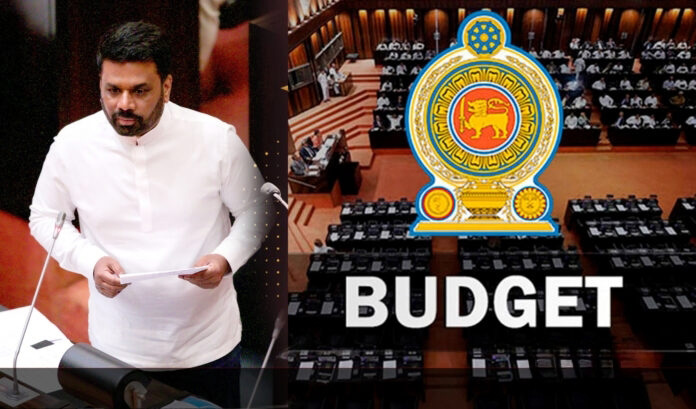
Anura Kumara Dissanayake’s 2026 Budget speech, while breaking symbolically from tradition, reveals a deeper continuity with neoliberal orthodoxy and IMF-aligned fiscal governance, the Communist Party said in a statement issued yesterday (13).
The text of the CPSL statement: “Beneath the rhetoric of “economic democracy” lies a technocratic document that prioritises lender confidence over public empowerment, and party consolidation over structural transformation.
The budget speech omits any serious analysis of the global and local economic context, particularly the imperialist financial architecture that continues to extract value from the Global South through debt, ISBs, and structural adjustment.
The speech is saturated with fiscal jargon and macroeconomic metrics, clearly aimed at multilateral institutions (IMF, WB, ADB) rather than the Sri Lankan public. This alienates the very people the NPP claims to represent.
Despite AKD’s purported Marxist credentials, there is no mention of imperialist exploitation, financialisation, or the deindustrialisation of the Global North that has shifted production (and debt burdens) to the Global South.
The threat of war, driven by imperialist attempts to reassert dominance through military means, is ignored, despite its direct implications for Sri Lanka’s geopolitical and economic stability.
The budget introduces US dollar–denominated local bonds, ostensibly to absorb excess forex liquidity in local banks. This adds to the external debt burden and exposes the country to additional currency risk. Debt repayments already consume nearly two-thirds of recurrent expenditure, yet the government boasts of Rs 1 trillion in “savings”—a misleading claim, as one-third of this is invested in high-interest treasury bills, effectively indebting the state to itself.
Crucially, the debt repayment projections presented in the budget need to be re-examined. For instance, Sri Lanka’s interest and capital repayment obligations in 2028 pertaining to International Sovereign Bonds (ISBs) alone amount to approximately USD 935 million. Even if the foreign debt stock remains unchanged at 2025 levels, this sum will still be required to service interest and partial principal repayment on the so-called “Past Due Interest (PDI) bond.” This reality raises serious questions about the President’s recent assurances that there is “nothing to worry about” regarding future debt payments.
If the government indeed refrains from any new borrowing in 2026—even from development partners such as the ADB or World Bank—such a repayment trajectory would imply a self-imposed austerity of unprecedented magnitude. On the other hand, if the government proceeds with plans to raise roughly USD 300 million domestically in 2026, interest payments alone—at an estimated 7%—would add a further USD 21 million to the 2028 repayment bill. None of this appears to be reflected in the President’s confident assertion that “we will pay.” The statement, while politically soothing, conceals the structural fragility of Sri Lanka’s debt position and the contradiction between the rhetoric of fiscal sovereignty and the arithmetic of debt servicing.
On the other hand, the so-called “savings” are not being used to address urgent public needs—such as shortages of insulin, HIV, TB, Malaria and other drugs and crucial health requirements for hospitals—but are instead earmarked for importing 1,775 double cab vehicles for NPP officials. These tenders were issued even before the budget was passed, and the vehicles will be paid for in scarce foreign exchange.
The one ostensible “plus” in the budget is increased revenue through taxation. However, this is largely driven by import duties and sales tax on vehicles, which deplete foreign reserves.
A key revenue measure is the lowering of the VAT threshold from Rs 60 million to Rs 36 million, dragging small and medium enterprises (SMEs) – such as garages, bakeries, furniture shops – into the 18% VAT net.
SMEs employ over 90% of the workforce. This move will force many to shut down or pass the tax burden onto consumers, exacerbating unemployment and the cost of living for the poor and middle class.
The increase in plantation wages is a welcome step, but it is funded through state subsidies, not by compelling plantation companies to pay fair wages. This increases fiscal pressure without addressing corporate accountability.
The Rs 25 billion poverty eradication allocation is grossly inadequate. Based on World Bank poverty metrics and census data, this translates to just Rs 4,600 per person in extreme poverty.
The budget fails to integrate this with land reform, which remains the most effective tool for rural poverty alleviation. Instead, the Land Use Policy Plan prioritizes land release for private investors, sidelining the 81% of the multidimensionally poor who live in rural areas.
The budget promises 3,000 new projects in 2026, echoing Mahinda Rajapaksa’s post-war construction boom. But unlike 2009–2014, today’s bureaucracy is inert, and there has been no significant project rollout since AKD took office.
The proposed 5% medium-term growth rate is mathematically implausible. Achieving it would require investment to rise from 27% to 37–38% of GDP, with the private sector contributing 89% of that—an unrealistic expectation given current economic condition.
Public investment remains at a paltry 4% of GDP, undermining any serious growth strategy.
The budget’s vision of Sri Lanka as a “hub for data centres” is untethered from reality. Data centres require massive, uninterrupted electricity and water supplies, none of which are addressed in the budget’s infrastructure allocations. Without a parallel investment in energy and digital infrastructure, this proposal remains a hollow slogan.
NPP’s 2026 budget is a document of contradictions: technocratic in tone, populist in optics, and neoliberal in substance. It fails to challenge the global structures that perpetuate Sri Lanka’s dependency, while deepening domestic inequality through regressive taxation and elite-focused expenditure. The absence of a coherent development strategy, land reform, or industrial policy reveals a government more concerned with managing crisis optics than transforming structural realities.

Protesting Development Officers continued their hunger strike near the Presidential Secretariat, Colombo yesterday (01), for the seventh consecutive day.The protesters, who are members of the Lanka School Development Officers’ Association, are demanding that they be absorbed into the teacher service as they have served as teachers in state-run schools for nearly seven years.
Secretary of the Association, Viraj Manaranga, said the protesters were seeking an urgent meeting with the President. He added that a presidential aide had visited the protest site and offered to arrange for a meeting with the President on 03 Feb., but the union insisted on an earlier date. Manaranga warned that failure to grant a meeting could trigger a massive protest in Colombo today (02).
Four officers participating in the hunger strike have been hospitalised due to deteriorating health, while two more joined the fast on Saturday (31).
In a bid to raise awareness of their grievances, on 30 January a delegation of the All Island Development Officers’ Association visited Most Venerable
Warakagoda Sri Gnanarathana Thera, Mahanayake of the Asgiriya Chapter, and subsequently with the Chapter’s Registrar, Ven. Dr. Medagama Dhammananda Thera. The prelates said promises that had been made to them should be fulfilled.
The protest began on 26 January as a satyagraha, after authorities failed to respond to repeated requests to integrate the officers into the teaching service. The escalation into a fast-unto-death underscores the protesters’ frustration over the prolonged delay
by Pradeep Prasanna Samarakoon
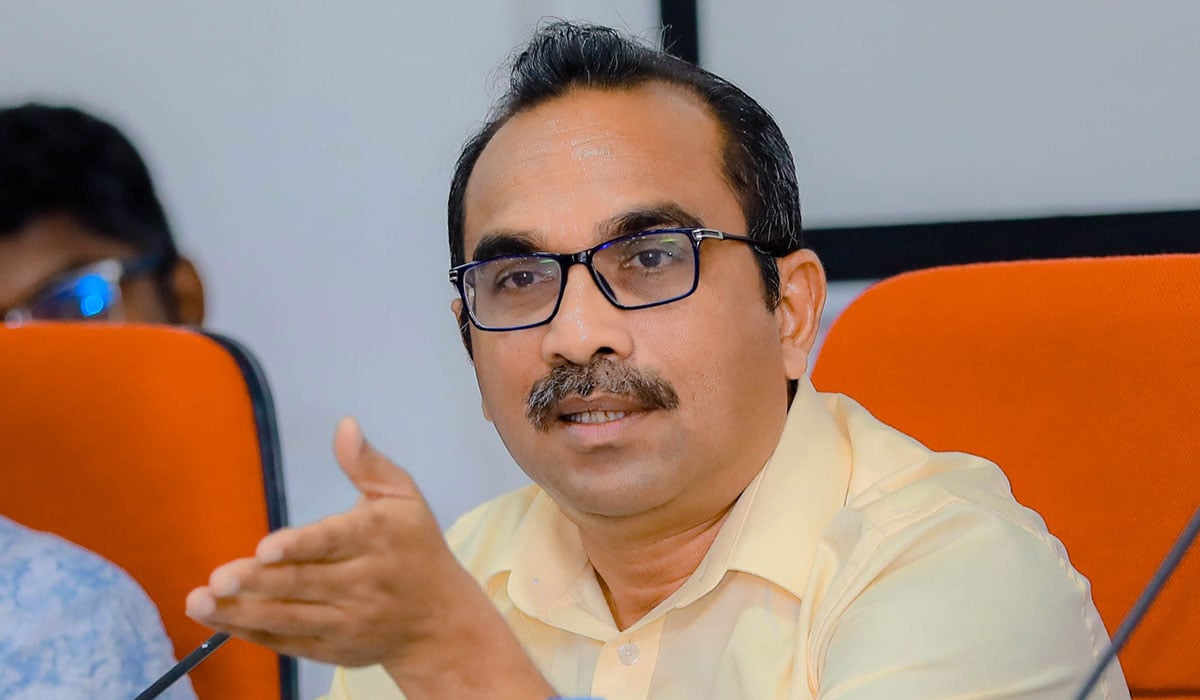
The long-vacant post of Auditor General would be filled on 03 Feb., after months of controversy and delays, Minister of Transport, Highways and Urban Development Bimal Rathnayake said on Friday (31) in Kandy.
The Constitutional Council met at the Parliamentary complex on Friday to discuss the appointment but failed to reach a decision on a suitable candidate. The President had previously proposed four names on four separate occasions, all of which were rejected. The Council is now set to consider the fifth nominee.
The post has remained vacant since April 2025, following the retirement of Chulanta Wickramaratne, who served as the 41st Auditor General. More than 10 months have passed without a permanent appointment.
Sources said a female officer in the Auditor General’s Department has been nominated again, though her previous recommendation was rejected due to some allegations against her.
Meanwhile, senior audit officer Dharmapala Gammanpila, with 31 years of service and the department’s most senior official, has received backing from the Mahanayake Theras of the three Nikayas, the Maha Sangha, and several civil society groups for appointment as the 42nd Auditor General.
Sources noted that the three civil society representatives on the Constitutional Council will play a crucial role in the final decision.
by Chaminda Silva and SK Samaranayake

Two 18-year-old youth were arrested by the Southern Division of the Western Province Crime Division on 31 January for allegedly aiding and abetting two murders carried out in Dehiwala and Kohuwala. ICE (crystal meth) was found in their possession at the time of arrest.
The suspects are residents of Mount Lavinia and Boralesgamuwa, according to the police. They are accused of having helped carry out a murder at a hotel in the Dehiwala Police Division on 9 January, 2026, and an attack on a person travelling in a three-wheeler at Bodhiyawatta, Kohuwala, on 12 December, 2025.
Police said the charges included sending photographs of the victims to a criminal living overseas.
Investigations revealed that the youth had acted under the direction of a criminal known as Sando.
Under the guidance of Janaka Kumara, Director of the Southern Division of the Western Province Crime Division, investigations are being led by Police Inspector Hemanta Kumara, assisted by Sub-Inspectors Prasanna Gunathilaka and Prasanna (40248), and Constables Chaminda (72987), Anil (79598), Kumar (88762), and Senanayake (19363), who are continuing the probe.
by Norman Palihawadane and Chaminda Silva

China executes four more Myanmar mafia members

No decision yet on ICC meeting to discuss Pakistan boycott

Shoulder injury casts doubt over Eshan Malinga’s T20 World Cup

Showers expected in the Northern, North-central, Eastern, Western, Uva, Sabaragamuwa, Southern and Central provinces

Development Officers threaten to intensify their protest

Auditor General to be appointed tomorrow

‘Dates have the highest sugar content to fight Coronavirus’

Sunday Island 27 December – Headlines

#SundayIsland 17th December – Headlines

Sunday Island – 28th March

Sunday Island Headlines – 21 March

Sunday Island – 21st February – Headlines
-
 Business5 days ago
Climate risks, poverty, and recovery financing in focus at CEPA policy panel
-
 Opinion4 days ago
Sri Lanka, the Stars,and statesmen
-

 Business3 days ago
Hayleys Mobility ushering in a new era of premium sustainable mobility
-
 Business3 days ago
Advice Lab unveils new 13,000+ sqft office, marking major expansion in financial services BPO to Australia
-

 Business3 days ago
Arpico NextGen Mattress gains recognition for innovation
-
 Business2 days ago
Altair issues over 100+ title deeds post ownership change
-

 Business2 days ago
Sri Lanka opens first country pavilion at London exhibition
-

 Editorial3 days ago
Govt. provoking TUs