
News
CB salary controversy: Issue is not increase but size of it, says Harsha

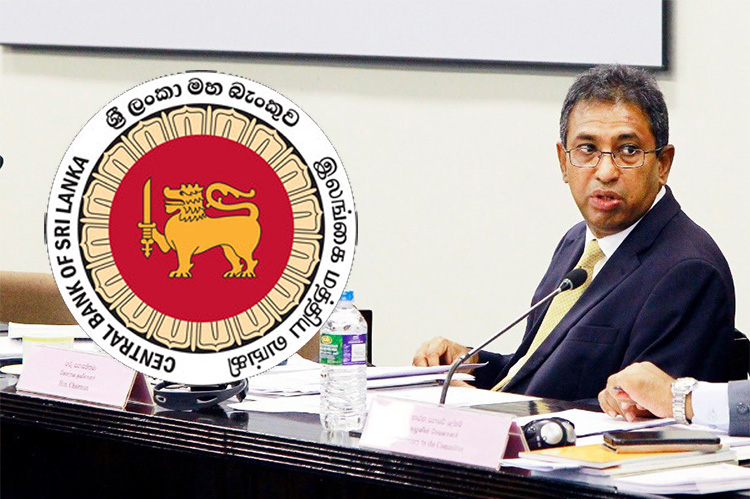
… asks for reappraisal of pay structure
CB never opposed pay hikes for anyone: Governor
By Shamindra Ferdinando
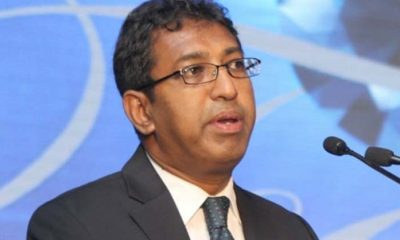
Chairman of the Committee on Public Finance (CoPF) Dr. Harsha de Silva on Tuesday (05) said what was at issue was the sheer size of salary increase granted to Central Bank (CB) employees.
The SJB lawmaker said so when Governor of the Central Bank Dr. Nandalal Weerasinghe sought an explanation from the House Committee whether the MPs found fault with the Central Bank over the salary increase granted to employees with effect from January 1 this year or the amount (percentage) given in terms of a Collective Agreement.
Dr. Weerasinghe appeared before the CoPF after having responded to questions raised at the party leaders’ meetin chaired by Speaker Mahinda Yapa Abeywardena.
Political sources said that the party leaders’ meeting, as well as the CoPF proceedings, commenced simultaneously. Of the seven Governing Board (GB) members, only Dr. Weerasinghe appeared before the party leaders and subsequently joined GB members, namely A.N. Fonseka, Dr. Ravi Ratnayake, Anushka S Wijesinha, Vish Govindasamy, Rajeev Amarasuriya and Manil Jayesinghe.
Responding to CoPF’s Chairman’s declaration that the Parliament felt that salaries of Central Bank employees shouldn’t have been increased by so much, Dr. Weerasinghe emphasised the need to explain their position in this regard.
Dr. Weerasinghe said that the Central Bank had never advised the government not to increase the salaries of state sector employees. Everyone’s income had to go up for the economic crisis to be resolved. “Salaries of both public and private sectors should be increased as soon as possible depending on the availability of funds.”
Dr. Weerasinghe said that the Parliament could say that the salary increase granted with effect from January 1 this year should have been delayed by one year. They could debate whether the increase granted to Central Bank employees was morally right now or a year later, he added.
Dr. Weerasinghe said that the government granted salary increases to an extent it could. The Governor was referring to the salary increase announced by President Ranil Wickremesinghe, in his capacity as the Finance Minister in the 2024 Budget.
Dr. de Silva pointed out that the House Committee had raised the issue over the size of the latest Central Bank salary increase and not the salary increase itself.
A statement issued by Janakantha Silva, Director Administration and Acting Director Communication, disclosed that during the party leaders’ meeting with the Central Bank team it transpired that as a result of the latest increase their monthly salary bill would go up by Rs 232 mn.
Dr. de Silva said that the Central Bank was a regulated monopoly. Therefore there was no competition. The former UNP State Minister emphasized that the Central Bank was regulated by Parliament.
Dr. Weerasinghe reiterated that the Central Bank was not of the view that salaries shouldn’t be increased.
Responding to Dr. Weerasinghe contention that the Central Bank had to look after its employees, Colombo District MP de Silva said all establishments faced that issue and it was not limited to the Central Bank. Economists weren’t the only category affected by the current crisis but doctors, engineers as well as other categories of workers.
Dr. de Silva urged the GB to reconsider the size of the salary increment.
Dr. de Silva yesterday told The Island that the House Committee believed the CB Governing Board would address the concerns raised by Parliament at the level of CoPF and the party leaders as well.
In spite of big boasts of rapid economic recovery and all sorts of claims, the country was in a precarious situation and the unexpected situation caused by the Central Bank salary increase could undermine public faith in the government, Dr. de Silva said.
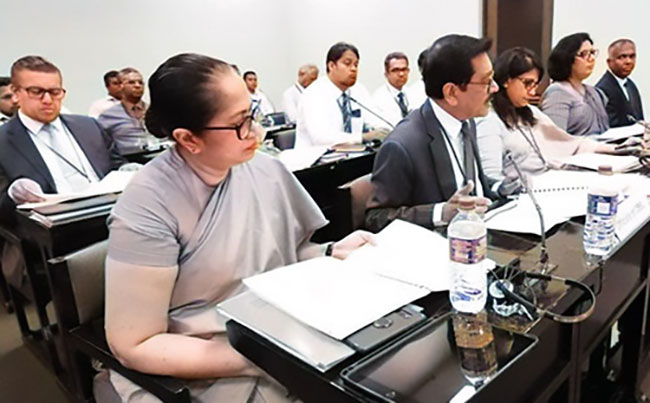
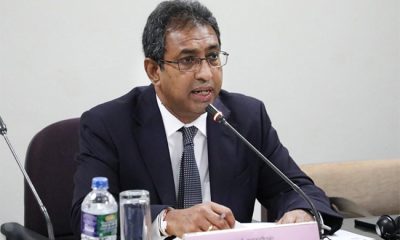
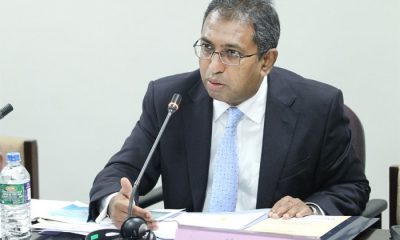
CBSL officials appearing before CoPF (pic courtesy parliament)







More than 1,600 students sat this year’s Russian Classical Ballet Examination, the largest number ever to take part in the examination in Sri Lanka. Exams were held in Colombo from 5, to 18, October and in Galle on 10 October.
Students aged four and above came from across the island, including Colombo, Galle, Gampaha, Negombo, Matara, Kelaniya, Panadura, Wattala, Kiribathgoda, Ratnapura, Kandy, Kurunegala, Bandarawela and Badulla. They are taught by 15 dedicated teachers trained in the Vaganova method, the renowned Russian system of classical ballet training.
They were examined by Dr. Oxana Karnovich of the Moscow State Academy of Choreography, a distinguished academic and curator.
The Russian School of Ballet and Dancing was established in 2001 by Michael Ustinov, Buddhapriya Ramanayake and Mrs Chandi Aluvihare, with Mrs Galina Pleshakova as its founding instructor. Today the School is led by Director Madam Maria Popova, Counsellor of the Embassy of the Russian Federation in Sri Lanka.


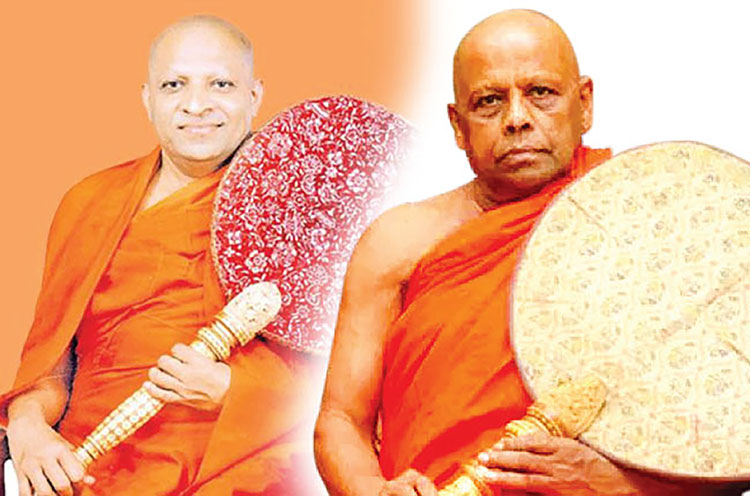
MONETABRIEF– Sri Lanka’s two most senior Buddhist chapters, Malwatte and Asgiriya, demanded special concessions for monks serving prison sentences, following the disrobing of convicted monk Ven. Galagodaatte Gnanasara in line with established procedures.
The chief prelate of the Asgiriya chapter, Most Venerable Warakagoda Sri Gnanarathana, told Prisons Commissioner Senaka Palletenna that Ven. Gnanasara, who is serving a six-year sentence for contempt of court, must be released immediately.
Prison authorities have no power to release or pardon convicts, but Palletenna told the monk in Kandy on Friday that he would convey his request to the relevant government authorities.
“There is no point in talking about this and that… The entire country has been shaken (??????? ) . He must be released,” the Asgiriya chief prelate said.
The Malwatte chief prelate, Most Venerable Thibbatuwawe Sri Siddhartha Sumangala, appeared to accept the court verdict against Ven. Gnanasara, but asked the prisons chief whether a separate section could be established for convicted monks.
Palletenna noted that a special ward for the clergy already existed at Welikada Prison.
At least 63 convicted Buddhist monks are currently incarcerated within Sri Lanka’s criminal justice system.
Meanwhile, a group of 34 Buddhist monks named in a Colombo Fort Magistrate’s Court order to vacate the vicinity of the Presidential Secretariat ended their protest and dispersed after lunch on Friday.The monks are demanding an unconditional pardon for Ven. Gnanasara, who has previously been imprisoned, making him a reconvicted prisoner.
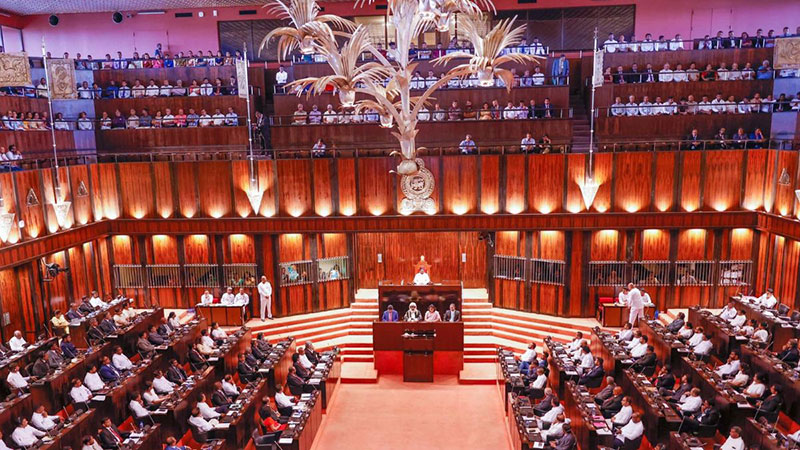
The debate on the no-confidence motion against Speaker Dr. Jagath Wickramaratne, submitted by the Samagi Jana Balawegaya (SJB), has been postponed indefinitely pending the Attorney General’s opinion on certain technical issues in the motion.
Government representatives raised the matter at a meeting of the Committee on Parliamentary Business, pointing out that several provisions of the motion required clarification and that the Attorney General’s advice should be obtained.
As obtaining the opinion would take time, the debate could not be scheduled for the next parliamentary week, parliamentary sources said.
Chief Opposition Whip Gayantha Karunatilaka said a date for the debate would be decided after the Attorney General’s advice was received.
Meanwhile, Parliament is scheduled to meet from October 20 to 23, Secretary General of Parliament Kushani Rohanadeera announced.
The parliamentary business for the week was finalised at a meeting of the Committee on Parliamentary Business held on Friday (16) under the chairmanship of Deputy Speaker Dr. Rizvie Salih.
On each sitting day, the period from 9.30 a.m. to 10 a.m. will be allocated for parliamentary business under Items 1 to 6 of Standing Order 22. Questions for Oral Answers will be taken up from 10 a.m. to 11 a.m., followed by questions under Standing Order 27(2) from 11 a.m. to 11.30 a.m.
On Tuesday, October 20, an Opposition-sponsored Adjournment Motion will be debated from 11.30 a.m. to 5.30 p.m.
On Wednesday, October 21, a resolution under the Public Debt Management Act and a Supplementary Estimate will be taken up for debate and approval from 11.30 a.m. to 5 p.m. The annual reports of five statutory institutions will subsequently be presented for approval without debate, while questions at the Adjournment Time will be taken up from 5 p.m. to 5.30 p.m.
On Thursday, October 22, the Second Reading debates on two Bills to amend the Poisons, Opium and Dangerous Drugs Ordinance (Bills Nos. 79 and 80) will be held from 11.30 a.m. to 5 p.m.
The annual reports of five statutory institutions will then be taken up for approval without debate, followed by an Opposition-sponsored Adjournment Motion from 5 p.m. to 5.30 p.m.
On Friday, October 23, the Second Reading debate on the Elimination of Rabies and Registration of Dogs Bill will be held from 11.30 a.m. to 5 p.m. A Government-sponsored Adjournment Motion will be debated during the final half-hour of the sitting.

Pakistan quicks seal win after Salman Agha ton sets tone

Record 1,600 students take Russian Classical Ballet examination in Sri Lanka

Half a million people join protests in France, but some turn violent

Deadly fire breaks out at Canada military base

Showers or thundershowers will occur in most parts of the island after 1.00 p.m.

Buddhist hierarchy demands prison perks for monk convicts

‘Dates have the highest sugar content to fight Coronavirus’

Sunday Island 27 December – Headlines

#SundayIsland 17th December – Headlines

Sunday Island – 28th March

Sunday Island Headlines – 21 March

Sunday Island – 21st February – Headlines
-

 Latest News6 days ago
Nissanka’s return headlines Sri Lanka’s Test squad against Pakistan
-

 Latest News7 days ago
Farhan and Sadaqat help Pakistan seal series in style
-

 Features7 days ago
Intake 16: 45 years of duty and honour
-
 News7 days ago
Malwathu Chapter issues statement on talks with President over Gnanasara Thera’s robes
-
 News7 days ago
CP alleges NPP has taken the blame for illegal US sanctions on Iranian vessels
-

 News5 days ago
Sri Lanka, India caught in US-Iran ship crisis
-

 Opinion7 days ago
How long can Sri Lanka remain silent on its demographic crisis?
-

 Latest News5 days ago
Kusal Mendis’ unbeaten 87 hands Sri Lanka consolation win