
Business
Cargills Bank in ‘steady performance’ over nine months ended September 30, 2023 – PAT Rs. 432 Million

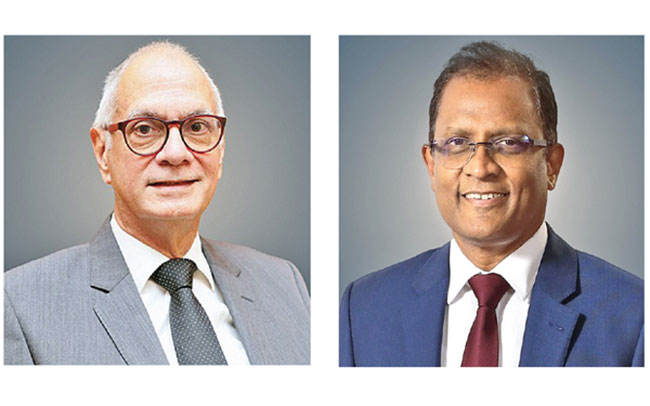
Economic conditions and challenges prevailing last year have moderated somewhat, given the steadfast approach by policy makers and regulatory authorities towards economic recovery. We appreciate their efforts, and our results bear testimony to the progress made. Nevertheless, the road ahead remains challenging. A meaningful government budget, continued success of the IMF program, general price stability and regained momentum in tourism, remittances and exports will be key in shaping the country’s short- to medium- term economic revival, a Cargills Bank press release said.
The release adds: ‘Cargills Bank’s results for the nine months ended 30 September 2023 reflected continuing QoQ improvement in profitability. Profit after tax at Rs. 432 Mn was higher by Rs. 324 Mn than in the corresponding period of 2022. We are pleased the Bank has been able to maintain this momentum of profitability growth, and are confident the results of 2023 will reflect the strong commitment of the Bank’s team, successful execution of its strategy, a continued rigorous focus on market trends and its adaptability to a volatile environment.
‘Net interest income grew 15% or Rs. 353 Mn in the nine months compared with the corresponding period of 2022. The Bank directed its resources towards higher yielding assets, hedging interest rate risk and prudently managing deposits. In addition, close monitoring of the Bank’s lending portfolio and timely solutions offered to financially stressed customers helped maintain a healthy NIM to date.
‘Net fee and commission income of Rs. 590 Mn for the nine months was lower than the Rs. 641 Mn in the previous year. The decrease of 6% related largely to lower trade volumes and reduced net income from card related services. Additionally, capital gains realized on derecognition of financial assets, and higher foreign exchange income boosted other income streams by Rs. 265 Mn, to Rs. 391 Mn in the nine months.
‘Total operating expenses increased 25% from Rs. 1.7 Bn last year to Rs. 2.1 Bn. Personnel expenses increased 15% largely due to adjustments to salary and welfare benefits considering increased costs of living and market conditions. Other operating expenses grew 44% mainly from the impact of the Social Security Contribution Levy which was effective from October 2022, the increased cost of utilities and the cost of repair and maintenance of IT assets, particularly where denominated in foreign currencies.
‘Impairment charges totaling Rs. 607 Mn reflected a reduction of 50% in the first nine months of 2023 evidencing a focused and proactive management of delinquencies and commendable overall team efforts in this direction. The Bank’s Stage 3 Loans (net of Stage 3 Impairment) to Total Loans Ratio stood at 6.64% while Stage 3 Provision Cover was 52.74% at 30th September 2023. Additional impairment overlays considered necessary have been incorporated after a careful scrutiny of the status of borrowers.
‘VAT on Financial Services and income tax expenses increased substantially mainly due to growth in profits and the increased corporate income tax rate effective 1 October 2022.
‘The Bank maintains Capital Adequacy and Liquid Assets Ratios well above the minimum requirements prescribed by the Central Bank. The total Capital Adequacy Ratio was 20.43% while the Statutory Liquid Assets Ratio stood at 37.72%.
‘Total assets of the Bank at 30 September stood at Rs. 64.7 Bn, an increase of 20% or Rs. 11 Bn in the first nine months of the year. Financial Assets measured at fair value through other comprehensive income grew by 92% to reach Rs. 19.6 Bn. Positive gains were reflected in Other Comprehensive Income. The loan book registered moderate growth, from Rs. 36.0 Bn to Rs. 36.8 Bn, given conditions prevailing. In this regard, the Bank exercised care in maintaining the quality of its lending in a high interest rate environment, where interest payments threatened borrowers’ viability. A shift in strategy commenced in the latter part of the period, to rebuild momentum in lending.
‘Deposits to customers grew 20% from Rs. 37.8 Bn at the end of 2022 to Rs. 44.9 Bn at the reporting date amidst continued reductions in market interest rates. The Bank will judiciously balance interest expenditure and income, as substantial reductions in interest rates and the time lag in repricing loans have a direct impact on NIMs.
‘In October 2023, Fitch Ratings affirmed Cargills Bank’s National Long-Term Rating at ‘A(lka)’; Negative Outlook.
‘Ms Ruvini Fernando, who has served as a Director since 1 August 2018, resigned from the Bank’s Board on 27 October 2023 due to personal circumstances. Mr Arjuna Herath has been appointed to the Bank’s Board effective 1 November 2023.
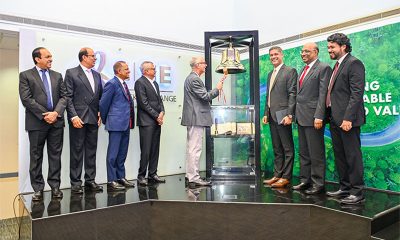
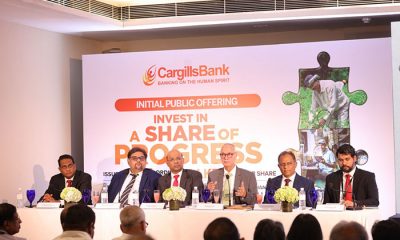
‘The Colombo Stock Exchange (CSE) has approved the listing of the Bank’s shares on the CSE. Steps are being taken to duly offer to the public 62.5 Mn shares of the Bank at Rs. 8.oo per share through an Initial Public Offering.’











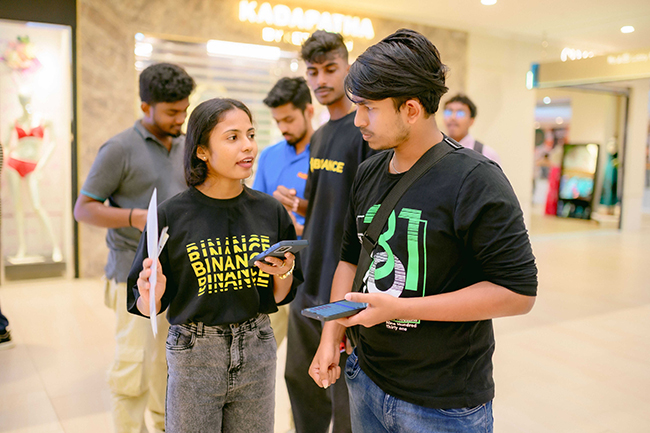
Frames crypto investing as a ‘measured journey rooted in knowledge and security’
In an industry often characterised by velocity, volatility and viral marketing, Binance’s latest community activation in Sri Lanka suggested a deliberate recalibration of its investor messaging.At its #BinanceHODLove event held at One Galle Face Mall, the world’s largest crypto exchange by trading volume chose a Valentine’s-themed slogan that stood out for its restraint: “Real Love Doesn’t Rush, Neither Should Crypto: A Valentine’s Message for Smart Investors.”
Behind the seasonal branding lies a more strategic theme – one that aligns with the crypto industry’s post-cycle shift toward compliance, literacy and risk awareness.
Sri Lanka’s retail investor base has demonstrated periodic interest in digital assets, particularly during phases of currency pressure and global crypto rallies. Yet market participation has also exposed gaps in financial literacy and susceptibility to high-yield promises.
Binance’s messaging at the event leaned heavily into investor caution. Participants were reminded to scrutinise unsolicited offers, avoid guarantees of quick returns, and protect sensitive information such as private keys and passwords. In a market where informal crypto schemes have occasionally surfaced, such emphasis reflects reputational risk management as much as community engagement.
The company also spotlighted Binance Academy, its educational platform, positioning knowledge acquisition as foundational to long-term participation in blockchain ecosystems.
While the event featured raffles and consumer electronics giveaways to drive footfall, the broader objective appeared to be brand consolidation at the grassroots level. Physical activations in high-traffic urban centres suggested a hybrid strategy: digital scale complemented by localised trust-building.
For a global exchange operating in increasingly scrutinised regulatory environments, nurturing responsible retail participation is both a defensive and expansionary move. By framing crypto investing as a “measured journey rooted in knowledge and security,” Binance is aligning itself with the industry’s pivot toward sustainability rather than speculative exuberance.
The subtext of the campaign was clear: growth in emerging markets like Sri Lanka will depend less on price momentum and more on credibility.
Binance’s Valentine’s message, therefore, may be less about romance and more about risk calibration. In that sense, the slogan captured a broader industry truth: endurance, not impulse, will define the next phase of digital asset adoption.
By Sanath Nanayakkare

Morning gains on the Colombo Stock Exchange (CSE) evaporated sharply in afternoon trade yesterday, as a wave of nervous selling swept through the market triggered by speculation that the government is mooting a fresh 10-15 percent tax on unlisted corporates. Although the proposed levy is currently targeted at entities outside the CSE purview, market participants grew wary that the measure could signal a broader shift in fiscal policy, stoking fears of future tax hikes that may eventually engulf listed companies and dent corporate earnings.
Amid those developments, the turnover was capped at a mere Rs 369 million despite fourteen crossings.
The top seven crossings mainly contributed to the turnover were Commercial Bank 1.60 million shares crossed to the tune of Rs 359.7 million and its share price traded at Rs 223, Renuka Foods 2.7 million shares crossed to the tune of Rs 179.6 million and its share price traded at Rs 63.50, LOLC Holdings 300,000 shares crossed to the tune of Rs 171.9 million and its share price traded at Rs 573, Sampath Bank 821,000 shares crossed to the tune of Rs 132 million and its share price traded at Rs 161, Commercial Bank (Non-Voting) 484,000 shares crossed to the tune of Rs 98.9 million and its share price traded at Rs 204, Sierra Cables two million shares crossed to the tune of Rs 69.6 million and its share price traded at Rs 34.80 and Citizens Developments Business Bank (Non-Voting) 200,000 shares crossed to the tune of Rs 62.9 million and its share price traded at Rs 324.
In the retail market top seven companies that have mainly contributed to the turnover were Renuka Agri Rs 1.14 billion (82.4 million shares traded), Softlogic Finance Rs 653.9 million (115 million shares traded), Sampath Bank Rs 270.8 million (1.65 million shares traded), Softlogic Capital Rs 230 million (19.3 million shares traded), JKH Rs 201 million (nine million shares traded) ,LOLC Holdings Rs 171.9 million (297,000 shares traded) and LMF Rs 171 million (1.8 million shares traded). During the day 369 million shares volumes changed hands in 39059 transactions.
It is said that banking and agriculture related companies performed well. In the banking sector Sampath Bank and Commercial Bank performed well. Further manufacturing sector especially JKH also significantly active in the market.
By Hiran H Senewiratne

The Commercial Bank of Ceylon achieved another performance milestone in 2025, becoming the first private sector bank in the country to expand its loan book beyond Rs. 2 Tn., with a growth of Rs. 541 Bn. over 12 months at a monthly average of over Rs. 45 Bn., demonstrating its commitment to national economic resurgence.
Recording the highest annual loan growth in absolute terms in the history of the institution, the Bank said gross loans and advances for the year ending 31st December 2025 grew by 36.37% to Rs. 2.028 Tn., taking total assets to Rs. 3.258 Tn. This reflected an increase of Rs. 468 Bn. or 16.78% and demonstrated more than double the growth recorded in 2024. The Bank’s net assets value per share improved to Rs. 198.30 from Rs. 170.94 at end 2024.
Deposits grew by 16.65% or Rs. 372 Bn. over the 12 months to end the year at Rs. 2.6 Tn., reflecting an average deposit growth of over Rs. 30 Bn. per month despite relatively lower interest rates, the Bank said. The CASA ratio of the Bank, which is considered to be the industry’s best, stood at 39.65% from 38.07% as at 31st December 2024.
Sharhan Muhseen, Chairman of Commercial Bank said: “We remain focused on the fundamentals that sustain shareholder value: earnings resilience, balance sheet strength, disciplined risk management and a strategy that is responsive to evolving customer and market needs. Our 2025 performance affirms the value of that focus.”
Sanath Manatunge, Managing Director/CEO of Commercial Bank said: “In 2025, we proved that scale and discipline can move together, growing lending and accelerating digital activity while strengthening asset quality and balance sheet resilience.”
In a filing with the Colombo Stock Exchange (CSE) the Bank said it recorded gross income of Rs. 354.81 Bn. for the year ending 31st December 2025 reflecting growth of 13.70% over the normalised figure for 2024, after adjusting for the impacts of restructuring of Sri Lanka International Sovereign Bonds (SLISBs) accommodated in that year, in order to avoid potential distortion of growth figures. Net gains / (losses) from derecognition of financial assets in the Income Statement for 2024 (as reported) included a derecognition loss on restructuring of SLISBs amounting to Rs. 45.108 Bn.

In a virtual knockout, a fight of reputation and expectation

Iran launches attacks across Middle East after US and Israel strikes on leadership sites

A committee will be appointed to formulate a national policy on medical education – PM

South Africa vs Zimbabwe, this time for Africa

ICC monitoring Middle East conflict as airspace closure hits travel plans

Sri Lanka make two changes and bowl; Pakistan drop Babar and Ayub

‘Dates have the highest sugar content to fight Coronavirus’

Sunday Island 27 December – Headlines

#SundayIsland 17th December – Headlines

Sunday Island – 28th March

Sunday Island Headlines – 21 March

Sunday Island – 21st February – Headlines
-

 Features7 days ago
Why does the state threaten Its people with yet another anti-terror law?
-
 Features7 days ago
Reconciliation, Mood of the Nation and the NPP Government
-

 Features7 days ago
Victor Melder turns 90: Railwayman and bibliophile extraordinary
-

 Features6 days ago
LOVEABLE BUT LETHAL: When four-legged stars remind us of a silent killer
-

 Features7 days ago
Victor, the Friend of the Foreign Press
-

 Business6 days ago
Bathiya & Santhush make a strategic bet on Colombo
-

 Business6 days ago
Seeing is believing – the silent scale behind SriLankan’s ground operation
-

 Features7 days ago
Barking up the wrong tree