
News
ARTHUR DIAS AND THE JAK TREE


by Goolbai Gunasekara
“Environment” is probably the most popular word in the world at the moment. Buildings are built on a ‘going green’ basis. Companies advertise the fact that their products and indeed even their new surroundings have all ‘gone green.’ New factories would not dream of being constructed without an environmentalist telling them how to set about it.
The subject forms part of school syllabuses. For example, Geography in my time used to be all about mountain ranges, national rivers, varied climates and the diversity of vegetation. No longer. I picked up an OL Geography text the other day and found it was as incomprehensible to me now as Science texts used to be in the past. The Geography syllabus is now so vast it has become a specialized subject and with good cause, for there is no doubt that our planet is heavily under siege thanks to the stupidity of man himself who has brought it to the brink of tragedy. It cannot be stressed strongly enough how urgently necessary it is to halt the destruction of the soil.
All this brings to mind the work of one man who was a well-known personality of my youth (nay even earlier for I was around five when I received my first jak seed from him). He is not even mentioned by most people today who have moved on to new heroes of Sport and Politics, and yet this man’s work, in my opinion, is one of the most valuable contributions made to the population of this country albeit in a quietly caring yet passionately concerned way.
The Dias name is a well-known one in Visakha Vidyalaya, the foremost Buddhist Government Girls’ School in Colombo. Mrs. Jeremias Dias was the philanthropist who donated the prime land on which Visakha stands today. She is revered as the school’s Founder.
Her son, Arthur Dias naturally took a great interest in this fledgling Buddhist Girl’s School that my American Mother headed for 12 years at a time when it was still a private school and the Government had not taken over most schools and forced them willy nilly into the Free Education System.
His brother, Mr. Charles Dias, took over the managership of the school after the great National leader, Sir Baron Jayatilleke was appointed Sri Lanka’s High Commissioner to India and could no longer act as Manager. This gave his brother, Arthur, the forum he needed to popularize his dream of having a Jak tree in every garden of Sri Lanka.
At every Visakha Prize Day Arthur Dias would be on stage alongside his brother (and my mother) with a box of specially packeted jak seeds on the Prize table. His own mother, Mrs. Jeremias Dias’s portrait, presided over all these doings on the Visakha stage and one assumes that she instilled these ideas of future staple foods for Sri Lankan populations into her sons along with her ideas of running the highly successful Dias estates in which Jak trees abounded along with plantation crops.
Every Visakha Prize winner was handed a Jak tree seedling and sometime during the evening Arthur would give a talk to the audience about the nutritional value of the Jak fruit which would serve as a standby were famine ever to hit our fruitful land. I have just planted two jak trees myself outside our garden on a vacant swamp land in the hope it will feed someone, sometime in the future. Mr. Dias would be proud of me.
The Dias Walauwe was in Panadura, and not content to popularize his vision in Visakha alone, he had his helpers standing at the bus stands in the city handing out these precious seeds to passengers.
And if all this sounds excessively obsessive, Arthus Dias went further. He petitioned the British Government of the time to pass a law that no Jak tree could be cut down without the permission of the authorities. Governments then (even British ones) were not ready to pass such requests without first ignoring them, later grudgingly reading them and finally agreeing to the excellence of the scheme.
To this day this law is still in operation and is rarely disregarded.
If Arthur Dias had this kind of influence in one school I wonder if schools of today could not popularize some aspect of the environment that would benefit the food chain of Sri Lankan. In the future we face droughts, floods and even famines.
That sturdy Jak tree has saved many a village family from hunger. What could it not have done for the Bihar famine of British times in India! Imagine a Jak tree in every home feeding the starving population of Bihar that Churchill was deliberately starving.
I have no idea if new Jak trees continue to be planted in our island. I think it an inspired idea if schools were to hand out these seeds at prize givings and other functions. Not only will the work of a far-seeing man be perpetuated but the country will surely benefit tremendously by this highly tasty addition to its food supply. Of course, more than half the recipients of these seeds will toss them in the nearest wastepaper basket but there will be that small percentage of citizens who will actually follow through and plant them.
The outlook of future world food supplies is bleak. We are told that pollution of the seas will be so great that fish will be contaminated thus putting a stop to one source of food. Animals will also be likewise polluted by the air and all sorts of poisonous gases, so meat is out.
Ergo, vegetarianism is on the cards. Let us begin getting used to it and just to make life easier for us, Sri Lankans, let us begin planting Jak trees. Arthur Dias’s dream may save us.
(Excerpted from Principal Factor first published in Lanka Market Digest)



Former first lady Shiranthi Rajapaksa, wife of former President Mahinda Rajapaksa was produced before the Hulftsdorp court, after being arrested by officers of the Commission to Investigate Allegations of Bribery or Corruption (CIABOC) and produce
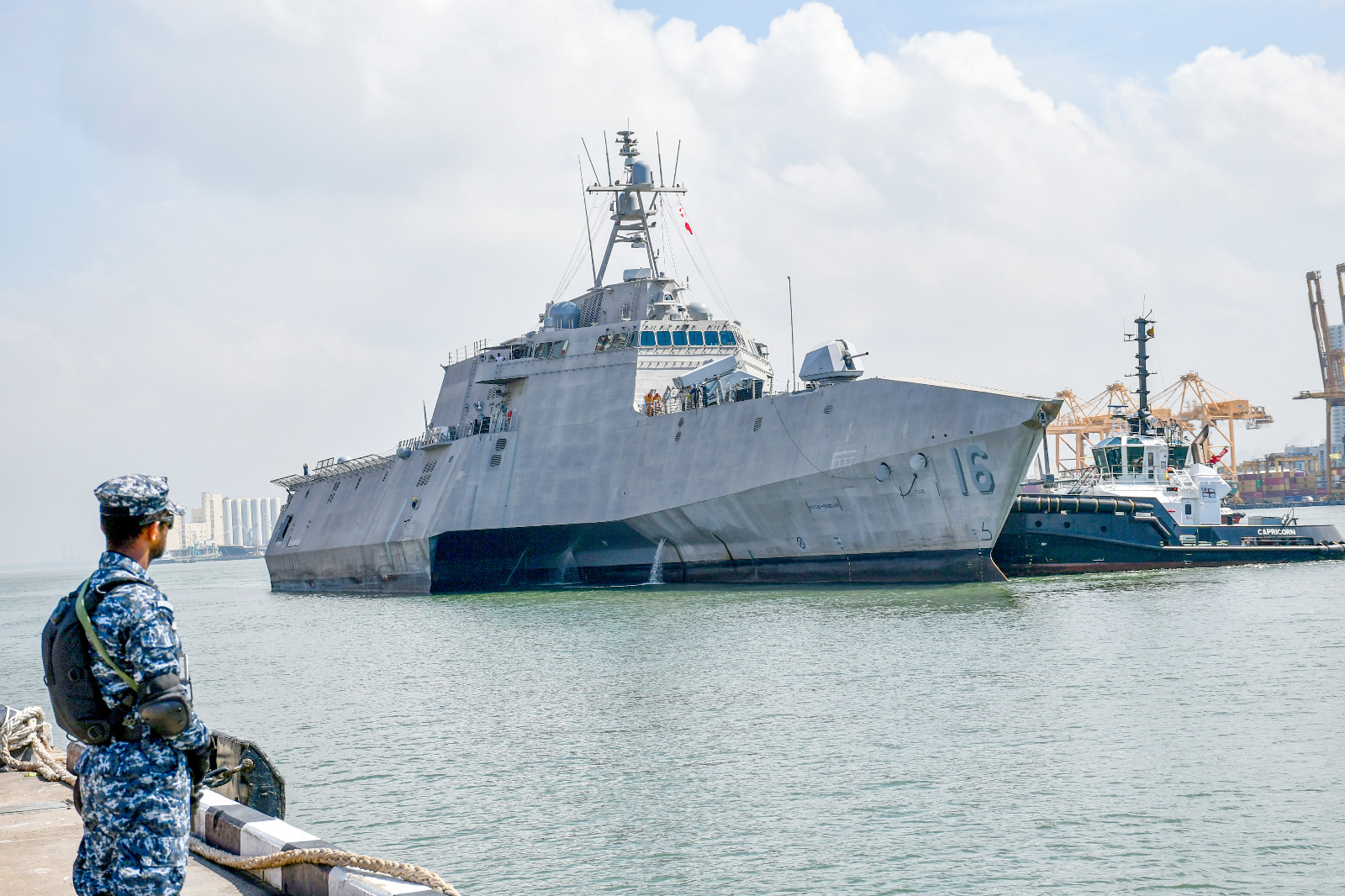
The U.S. Navy ship USS Tulsa (LCS 16) arrived at the Port of Colombo this morning, 7 October 2026 for replenishment purposes.
The visiting ship was welcomed by the Sri Lanka Navy in accordance with naval traditions.
The 127.7-metre-long platform is a Littoral Combat Ship commanded by Commander BM Wanier. Commissioned on 16 February 2019, USS Tulsa has since been in service with the US Navy.
The ship previously made a port call in Sri Lanka on 27 August 2025.
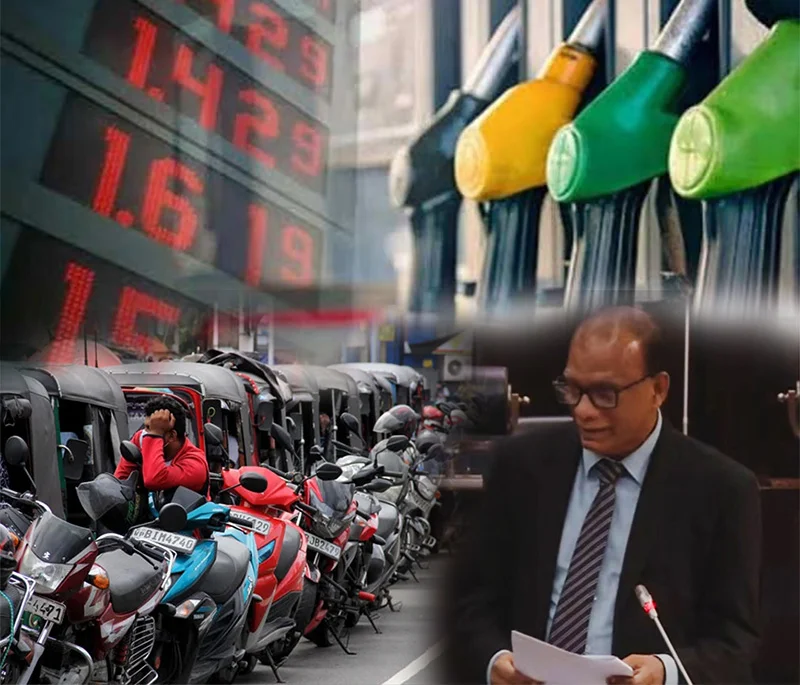
Govt. tells fuel distributors to maintain stocks to ensure uninterrupted supplies
by Saman Indrajith and Norman Palihawadane
The government had instructed private fuel distributors to maintain minimum stocks and ensure uninterrupted supplies to the market, Energy Minister Anura Karunathilaka told Parliament yesterday (06).
Karunathilaka said the Ministry of Energy Secretary had notified the relevant companies of the requirement, following a reduction in supplies by some private distributors, amid higher international fuel prices.
The Minister said private companies had informed the government that they were facing losses because international prices had risen while fuel was being sold, locally, at prevailing prices. As a result, some companies had reduced the volumes released to the market.
The reduced supplies had increased the burden on the Ceylon Petroleum Corporation (CPC), whose share of the diesel market had risen from about 54% to 82%, the Minister said.
“The CPC currently holds an 82% share of the market,” he said, adding that it had increased its supplies, compared with February, to compensate for the reduction by private distributors.
Karunathilaka said the government could not, under the existing agreements with private companies, specify the quantities they should supply to individual filling stations. However, it could require them to maintain minimum stocks in the country.
The Minister said the Energy Ministry had already instructed companies that had failed to maintain the required stocks to take steps to prevent supply disruptions.
The Minister attributed the queues reported at some filling stations to reduced supplies from private distributors, as well as normal variations in fuel distribution. He also said demand for CPC fuel had increased because private companies generally did not provide fuel to dealers on credit, while the CPC offered a three-day credit facility.
“We expect that, as the Ceylon Petroleum Corporation takes on this additional burden, the problem will ease to some extent by Wednesday or Thursday,” Karunathilaka said.
He said instructions had also been issued to increase supplies to CPC filling stations. A special discussion on the issue is scheduled for today (07), with officials of the Energy Ministry and CPC expected to participate,
along with President Anura Kumara Dissanayake.
Meanwhile, Petroleum Dealers’ Association officials have called for an early solution to the supply issue. Association Chairman D.V. Shantha Silva said queues had been reported at many filling stations, mainly those operated by private distributors.
He said the situation was not due to an overall shortage of fuel, but was linked to reduced orders by Lanka IOC, Sinopec and R.M. Parks amid concerns over losses incurred on fuel sales.
The Ceylon Petroleum Private Tanker Owners Association has urged motorists to refrain from panic buying, saying there was no nationwide disruption to fuel supplies.
The government earlier increased fuel prices and introduced a per-litre diesel subsidy following concerns raised by distributors over rising international prices.

Former first lady Shiranthi Rajapaksa arrested by CIABOC

U.S. Navy ship USS Tulsa arrives in Colombo for replenishment visit

Smriti Mandhana appointed India captain across formats

Ronaldo apologizes for Portugal walkout; says Jesus broke promise

Showers in the Western, Sabaragamuwa, Central, Uva, North-western and Southern provinces and in Anuradhapura and Mannar districts

Fuel crunch looms

‘Dates have the highest sugar content to fight Coronavirus’

Sunday Island 27 December – Headlines

#SundayIsland 17th December – Headlines

Sunday Island – 28th March

Sunday Island Headlines – 21 March

Sunday Island – 21st February – Headlines
-

 News7 days ago
US-assisted ‘Ice’ detection: NPC to examine IGP’s move to transfer drug-busting team
-

 Editorial6 days ago
Colombo Port drug bust: The plot thickens
-

 Editorial7 days ago
Drug busting, transfers and trust deficit
-

 Features4 days ago
The first woman in the foreign service or Ceylon Overseas Service it was then called
-
 News7 days ago
Sri Lankan facing death penalty in Saudi Arabia: Mano G appeals to Crown Prince
-

 Editorial5 days ago
Fuelling discontent and protest
-

 News3 days ago
Geneva takes up Sallay’s case and govt. ignores opportunity to answer accusations
-

 Latest News5 days ago
Tharindu Rathnayake, bowlers secure Asian Games Bronze for Sri Lanka