
Sports
Are schoolboy ruggerites overworked in a sport where stakes are high?

by A Special Sports Correspondent
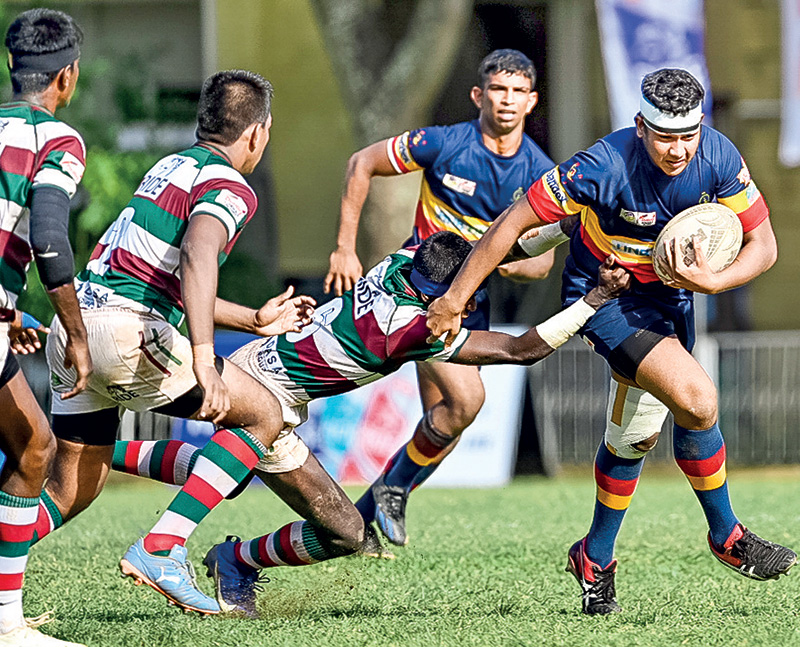
It’s amazing what school rugby has built for itself. Rugby at school level easily tops the list as the most popular discipline in which school children are involved. It could be safe to say that in a cricket crazy nation like Sri Lanka, even school cricket is no match for rugby where stakes are concerned. Just see the number of corporate logos on a school rugby jersey and you’ll understand that rugby at this level (junior under 19) can at times become something too big to handle even for the school authorities.
We saw this happen at the quarterfinals of the President’s trophy knockout tournament when teams like Royal and Trinity pulled out because they have to honour a traditional commitment; the Bradby Shield two-leg annual encounter between the two schools. You might not see this kind of bold decision being taken to pull out of an inter-school tournament in any other sport. Royal and Trinity have built histories in rugby which afford them to break away from the ‘bunch’ and still be counted in the sport played with the oval shaped ball. And still, despite that pullout, the main knockout tournament didn’t lose any of its glory. The best two teams this season – St. Peter’s and Isipatana -are keeping the knockout tournament going despite the upcoming final leg of the Bradby. Rugby in Sri Lanka is such that you can have different rugby cultures within the main culture. This is why when foreigners visiting this island are puzzled why the enthusiasm shown at school rugby doesn’t pour into to national rugby at senior level.
The other factor which showcases the rich rugby heritage of this country is the traditional fixtures between schools which are taking place alongside the main tournaments. When S.Thomas’ and Trinity met in their division 1 segment 1 group ‘A’ league tournament match this season it was also billed as a traditional fixture between the two schools. When Trinity won the game they also took home the Canon R. De Saram Shield for their efforts. The same happened when Royal scrummed down with Isipatana in the super round of the league tournament. Isipatana walked away with the Maj. Milroy Fernando trophy. But the beauty of rugby traditions in Sri Lanka will be seen soon before the season ends this year. That moment will come when the high-ridding Isipatana team has to grant a fixture to minnows Thurstan some time this season because there is a traditional rugby fixture between these two schools which is played for the Abdul Jabbar Shield. If a team doesn’t qualify for division 1 segment 1 and is demoted to segment 2, still traditional fixtures are there to offer schools struggling at rugby a lifeline.
These traditional fixtures might force the school authorities – the Sri Lanka Schools Rugby Football Association – to make compromises with the schools which have deep roots in the sport. This season, Royal and Trinity honored their commitments in the league tournament when they played their super round fixture and decided not to associate it with the two games of the Bradby. (The dates for the two leg Bradby Shield were announced well before the super round games began; hence there was no room for rescheduling the traditional rugby encounter). What was good is that both schools came for this tournament fixture in full strength. Imagine what would have happened to the quality of the league tournament if these two schools rested their key players for the Bradby and fielded second string teams? In the event these two schools played safe and protected their players for the traditional rugby fixture, the school rugby authorities would have had to plead with Royal and Trinity not to kill their tournament.
The other little concerning point in school rugby is the effect of all the overwhelming glory present in school rugby that can be a little too much for a school going child to handle. Basking in the glory of sponsors, rugby related events and all media attention they get can at times make these junior players think like sports professionals and be far removed from the ideology of living the lives of schoolboys who wear white uniforms. Suddenly we have a situation where a schoolboy, serious about his rugby, not being in a position to even have a piece of birthday cake offered to him because that type of junk food is not part of his sports diet anymore.
Also there was a time when some schools couldn’t condition the mind of schoolchildren to accept defeat at matches. This was because the stakes are too high in school rugby and the pressure is severe on the coaches to always be on the winning side. A school rugby coach knows that if his team loses a couple of matches during a season, he would be forced to look for alternative employment; come next season.
School rugby authorities and parents must understand that these are schoolboys who are involved in the sport, though they are ‘trained’ to play like professionals. These players must be taught how to balance their lives and understand the value of completing their education. There is a Sinhalese saying which goes ‘things that must be done and experienced at a specific age shouldn’t be postponed’. Some of the top clubs have already earmarked the cream of these rugby players who are turning out for their respective schools. If these players are not educated they can place their signatures on contracts with rugby playing clubs and end up getting a raw deal. Hence education at school is so important.
S. Thomas’, Isipatana, St. Peter’s and Wesley have found semi-final slots in the schools’ knockout tournament. This rugby columnist has often highlighted the fact that the environment present at some of the inter-school rugby matches is not very healthy due to uncontrollable jealousy and animosity. But we did come to hear of a warming moment in school rugby when some members of the Isipatana College team paid a courtesy call on the injured Peterite rugby player Yumeth Shihara who is in hospital and nursing an injured leg. Such tender moments in a robust game like rugby does help to remind rugby players that the human touch matters over both victory and defeat. If you lose the human touch you lose it all!


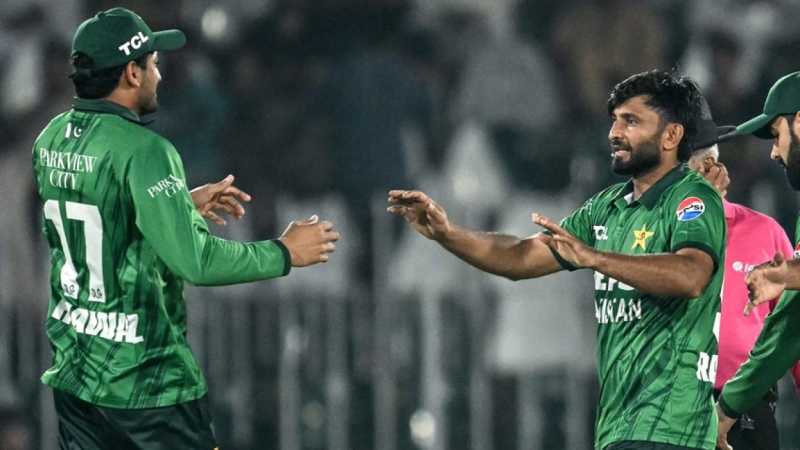
During the f8rst T20I against Sri Lanka on Friday, Pakistan demonstrated that 2026 is not quite like 2019. Back then, they had stumbled in pursuit of three Sri Lankan totals in succession – two of them lower than the 182 they gunned down with relative ease two days back, while the third was exactly 182. With that series perhaps fresher in Sri Lanka’s mind than it needed to be, Kusal Mendis’ side opted, against conventional wisdom, to bat first after winning the toss in Rawalpindi this time, hoping to recreate the magic formula from seven years earlier.
There were a few things we learned from the first game, though. The Rawalpindi surface isn’t quite as partial to fingerspin as T20 pitches in the subcontinent have been, which induced the hosts into playing three frontline seamers. Pakistan, who were playing with at least five potential opening batters, appear to have rejigged their batting order by pushing the timeless Fakhar Zaman up top and sending Saim Ayub at No. 5.
Sri Lanka, meanwhile, may have learned that while 32-year old Lahiru Udara hasn’t played much international cricket, his talent in this format is unmistakable, as is his temperament under pressure. Udara was the lone fighting hand for his side across much of the innings, though that shines more of a light on Sri Lanka’s batting order as a whole. With Dunith Wellalage, whose power-hitting abilities are limited, batting at No. 7, the visitors might want to beef up their batting order.
But there’s only so much that can be read into a lone T20I at the start of a long tour for Sri Lanka. Pakistan have an opportunity to wrap the series up by winning the second game, also in Rawalpindi, on Sunday, and will be favourites to do so after a dominant performance in the first. The worry for Sri Lanka is that their own indifferent showing comes on the back of three crushing defeats in England. On Sunday, they will try to show this is more of a temporary rut than a fair representation of their current T20I state.
Before playing on Friday, Naseem Shah’s last T20I came seven months ago. Even that game was against Sri Lanka, and as Pakistan bowed out of the T20 World Cup, he conceded 36 runs in four overs – exactly what he did in Rawalpindi. But two days back, Naseem had two more wickets to his name in a patchwork of a spell that shed a little more light on where his T20 game currently is. It is representative of a curious year for him as he works his way back after falling foul of the PCB at the PSL, before an injury sidelined him for months.
Naseem has worked his way back with respectable showings at a domestic 50-over tournament and the CPL. There might be hope of a foundation for a good run beginning to take shape, but it remains far too early to say.
Maheesh Theekshana too, conceded 36 runs in his four overs in the first T20I against Pakistan, but Sri Lanka may want more from the man who has become their lead spinner in Wanindu Hasaranga’s injury-enforced absence. More than any specifics about Theekshana’s spell, it was his bowling style that caught the eye – a poorly concealed imitation of Sikandar Raza’s rather than the more conventionally oriented action that he is recognisable in.
It appeared to have deprived Theekshana of the ability to slow the ball down as required, with Sahibzada Farhan often picking off the quicker pace with relative ease. Whether this remodelled action sticks will be a point of intrigue in this series.
Pakistan captain Farhan said he was thoroughly pleased by the performance in the first T20I. So an unchanged Pakistan side for the second T20I would not be a massive surprise.
Pakistan: Sahibzada Farhan (capt), Fakhar Zaman, Maaz Sadaqat, Hasan Nawaz, Saim Ayub, Khawaja Nafay (wk), Shadab Khan, Mohammad Imran, Razaullah, Naseem Shah, Abrar Ahmed
Wellalage at No. 7 might be a position too high. So Sri Lanka could look to add batting depth to their side by including Sineth Jayawardena instead of Nuwan Thushara, who went for 32 runs in three overs on Friday.
Sri Lanka: Lahiru Udara, Kusal Mendis (capt, wk), Sineth Jayawardena, Kamindu Mendis, Kamil Mishara, Sahan Arachchige, Dasun Shanaka, Dunith Wellalage, Dushmantha Chameera, Maheesh Theekshana, Eshan Malinga


by Reemus Fernando
A combined bowling effort and top order batting anchord by Ranmith Senarath powered Nalanda to a vital six wickets win over St. Joseph’s in the Under-19 Division I Tier A Limited Overs Tournament match at Campbell Place on Friday.
Ranmith struck an unbeaten 51 to steer the team to victory in the 30th over as Nalanda completed their group matches unbeaten.
Earlier they beat Thurstan (155) by seven wickets, St. Servatius’ Matara (187) by four wickets and Gurukula (113) by nine wickets.
Ranmith’s composed knock which came in 69 balls included six boundaries and a six.
Nadul Jayalath provided an aggressive start with 27 off 23 balls, including five boundaries, while Nemindu Akmeemana contributed 25 off 41 deliveries. Lithum Wijekumara added 14, and Rusandu Silva remained unbeaten on eight.
St. Joseph’s, batting first, struggled to build momentum and were restricted to 135 for nine in 47.2 overs. Pamoda Dalpadado top-scored with 36 off 59 balls, while Kavith Fernando made 24 and Vishwa Peiris contributed 17 off 63 deliveries.
Nalanda’s bowlers maintained control throughout the innings, with Santhul Wijeyarathne leading the attack with two wickets for 19 runs from nine overs. Osanda Pamuditha, Nadul Jayalath, Rusandu Silva, Methuka Perera, Sadew Indeepa and Lithum Wijekumara claimed a wicket apiece.
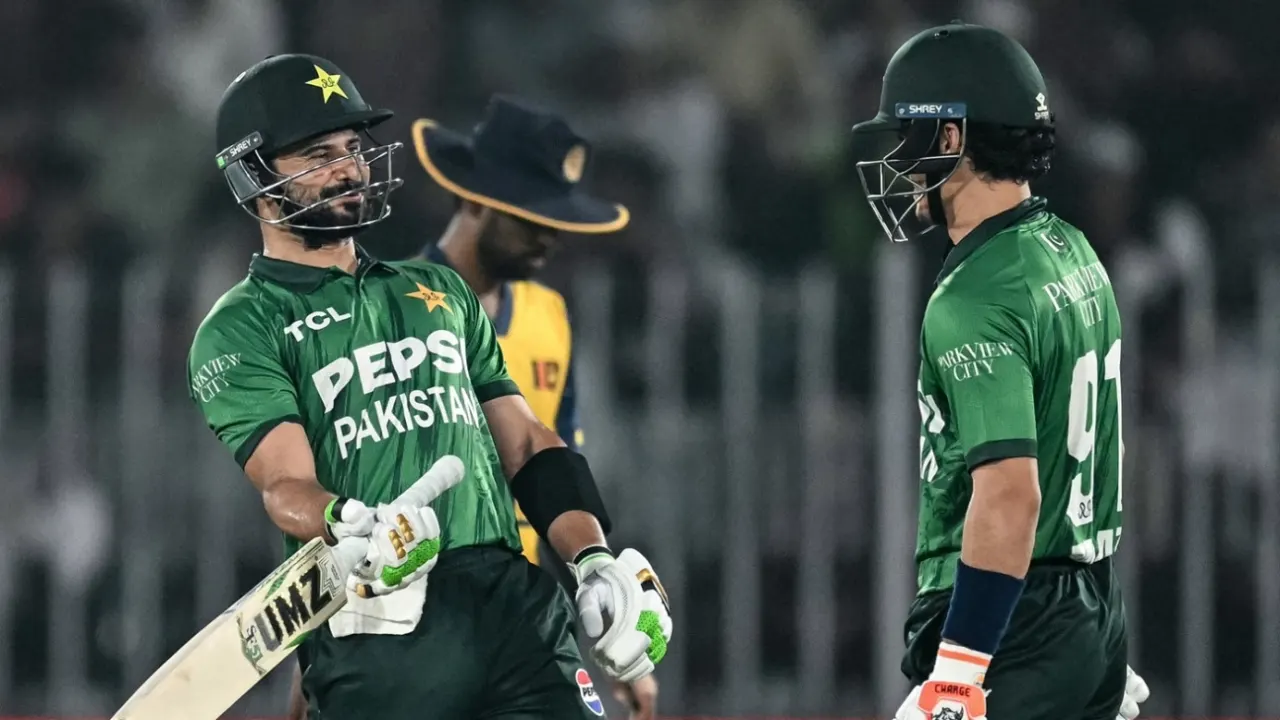
Sahibzada Farhan celebrated his ascension to the captaincy in grand style, smashing a 53-ball 89 that blazed his side to a comprehensive win in the first T20I against Sri Lanka . After Sri Lanka won the toss in Rawalpindi and somewhat curiously opted to set a target, the 182 they put up was made to look inadequate by a bellicose Pakistan’s showing up top that put up 70 in the powerplay and scarcely slowed down after. Maaz Sadaqat, who needed just 28 balls to bring up his half-century, put up a 92-run stand with Farhan after Fakhar Zaman’s cameo up top, flaying a lacklustre bowling attack.
Pakistan’s efforts with the ball were altogether more impressive, if sullied by bursts of untidiness that saw a whopping 29 extras conceded. But they reined Sri Lanka in from time to time, stifling their momentum and keeping the score within chasing range. Mohammad Imran’s 2-21 on debut was the pick of the bowling efforts, and while Lahiru Udara kept Sri Lanka afloat almost single-handedly with 91 off 55, the support he needed from the other end never quite came.
When Sri Lanka batted after winning the toss, it took Kamil Mishara nine deliveries to get off the mark. By the end of the fourth over, Sri Lanka were scoring at a run-a-ball, and had lost two wickets. Pakistan, by contrast, took just 2.2 overs to match that score; by the end of the sixth, they had powered through at dazzling speed thanks to Farhan and Zaman’s onslaught.
Sri Lanka took far too long to begin taking advantage of the powerplay. They struggled to find their timing, the powerplay littered with multiple plays and misses, and extravagant, low-percentage shots that bore no fruit. While they did launch a bit of a recovery in the final two overs, the slow start would end up proving costly as Sri Lanka left runs on the table.
To say Mohammad Imran wasn’t the most exciting debutant from Pakistan this game would be stating the obvious. That title belonged to Razaullah – the fast-bowling, six-hitting, sharp-jawed Edgbaston slayer Razaullah – who appears to have parlayed his stunning Test debut into white-ball call-ups. Imran, who also made his Test debut in that game and ended up being a footnote, instead found his feet in T20I cricket in Rawalpindi today.
Opening the bowling alongside Naseem Shah, he was the more effective bowler, utilizing sideways movement that more than made up for a lack of pace. He conceded just the one run in his opening over and 19 in three powerplay overs. As Sri Lanka found their feet at the halfway stage of the innings, Farhan turned back to him and Imran did not disappoint his captain. He struck with his first delivery upon return and allowed just two in the over, halting Sri Lanka’s momentum once more and capping a stellar debut.
Sri Lanka will want to move quickly on from this game, but to wipe it completely from the record would be a disservice to their opener. Confronted with a decent bowling attack on an off-day for his fellow batters, Udara almost batted through the Sri Lankan innings, playing just about every role a batter can in T20 innings.
He was the flashy starter, before shepherding his side through the early stages of the powerplay. He became an anchor for a bit before churning through the gears in the latter half of the powerplay. At times, he did so with strokes so classical they could be set to music, especially pleasing when he made some room and cleared extra cover off both pace and spin.
While support from Kamindu Mendis and Dasun Shanaka existed, it was fleeting. Soon enough, those wickets would fall, leaving Udara with the delicate dance of keeping the run rate up without letting the innings implode. That was especially true – and shown to be crucial at the death – because Sri Lanka were arguably playing a batter too light. When he finally holed out in the penultimate over, Sri Lanka ended up losing three wickets in five balls, the innings petering out on a surface where batting inadequacy was always going to be punished.
Scores:
Pakistan 187 for 6 in 18.5 overs (Sahibzada Farhan 89, Fakhar Zaman 21, Maaz Sadaqat 50, Khawaja Nafay 12*; Nuwan Thushara 1-32, Dushmantha Chameera 1-40, Eshan Malinga 2-33, Maheesh Theekshanan 2-36) beat Sri Lanka 182 for 8 in 20 overs (Lahiru Udara 91, Kamindu Mendis 23, Dasun Shanaka 18; Naseem Shah 3-36, Mphammad Imran 2-21, Rasaullah 1-29, Shadab Khan 1-33, Saim Ayub 1-17) by 4 wickets
[Cricinfo]

Hurricane Isaias downgraded after making landfall in Florida

‘Cockroach’ group leaders among hundreds detained in Delhi protest

Sri Lanka hope to get out of T20I rut and keep series alive

Sri Lanka ITEC Alumni Association formally launched

Measures underway to protect Diyagama Forest as a Reserve — Deputy Minister of Environment

Showers or thundershowers will occur in most parts of the island after 1.00 p.m.

‘Dates have the highest sugar content to fight Coronavirus’

Sunday Island 27 December – Headlines

#SundayIsland 17th December – Headlines

Sunday Island – 28th March

Sunday Island Headlines – 21 March

Sunday Island – 21st February – Headlines
-

 News6 days ago
Geneva takes up Sallay’s case and govt. ignores opportunity to answer accusations
-

 Features7 days ago
The first woman in the foreign service or Ceylon Overseas Service it was then called
-

 News7 days ago
Nearly 20 Iranian tankers stranded off Lanka amid US sanctions
-

 Features5 days ago
Preventing grievances from becoming communal
-

 Sports3 days ago
Nissanka absence opens door for Sri Lanka’s young guns
-

 News4 days ago
Gnansara Thera to be assigned to prison printing section: Officials
-

 Features6 days ago
Sri Lanka Cricket Bill: Governance reform is not yet a cricket strategy
-

 News7 days ago
Lanka enters new phase of prosecutions as hurdles clear