
News
Aragalaya failed for want of proper leadership, Rajapaksas regained power through Wickremesinghe – JVP

…won’t join coalitions ever again, calls for relentless struggle
By Shamindra Ferdinando
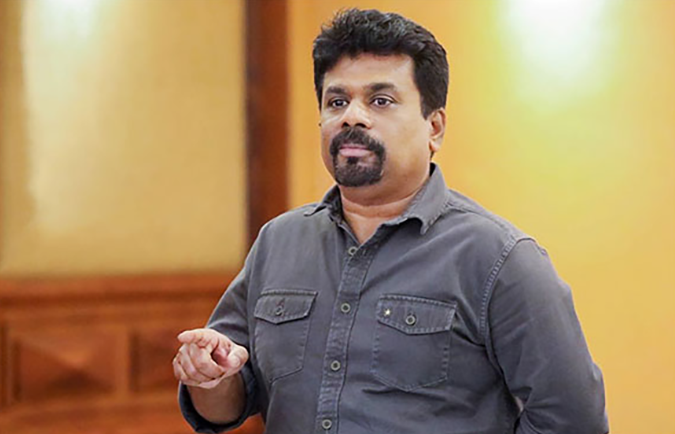
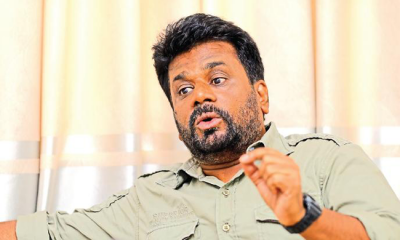
JVP leader Anura Kumara Dissanayake has said that ‘Aragalaya’ failed for want of proper leadership and planning though it compelled Gotabaya Rajapaksa to give up executive powers.
Appearing on ‘Salakuna’ on Hiru, Monday (17) night, MP Dissanayake pointed out that though the Rajapaksas’ power collapsed, as a result of the protest campaign, they were able to quickly regain, and consolidate political power, by installing UNP leader Ranil Wickremesinghe to complete the remainder of Gotabaya Rajapaksa’s term.
Responding to interviewers Chamuditha Samarawickrema, Madushan de Silva and Kalindu Vithanage, MP Dissanayake alleged that the incumbent Wickremesinghe-Rajapaksa administration was as corrupt as successive Rajapaksa administrations.
Speaking on behalf of the Jathika Jana Balavegaya (JJB), a coalition that includes the JVP, lawmaker Dissanayake faulted those who spearheaded ‘Aragalaya’ for bringing the project to an early end.
Having forced Gotabaya Rajapaksa to flee, the protest should have been diverted towards the Parliament.
Protesters’ ultimate objective should have been to force the then government to dissolve Parliament and call for a fresh election, the JVPer said, pointing out that they pressed for the appointment of Speaker Mahinda Yapa Abeywardena as the President temporarily to pave the way for early parliamentary polls.
The JVP leader acknowledged as a result of shortcomings on the part of those who directed ‘Aragalaya,’ the Rajapaksas succeeded in regaining political power. Alleging that President Wickremesinghe, too, had been responsible for the overall deterioration of the national economy, over the past several decades, MP Dissanayake stressed that the public shouldn’t expect him to save the country.
Commenting on Field Marshal Sarath Fonseka’s recent assertion that the ongoing struggle may lead to an armed rebellion, the JVP leader emphasized that his party wouldn’t go on that path again. The JVP launched insurgencies in April 1971 and 1987. Mrs. Sirimavo Bandaranaike’s government crushed the 1971 insurgency within days while the second lasted over four years.
Asked to explain their strategy, MP Dissanayake said that they believed that the government should be relentlessly pressed until it called a general election. “We’ll secure power through elections,” MP Dissanayake said, warning the electorate not to be deceived by the Rajapaksas and Wickremesinghe again.
MP Dissanayake alleged that Samagi Jana Balavegaya (SJB) leader Sajith Premadasa, who is also the Leader of the Opposition, was also part of the utterly corrupt political party system that ruined the country. The SJB leader, as well as the vast majority of those around him, couldn’t absolve themselves of waste, corruption, mismanagement and irregularities though they now pretended to be paragons of virtue.
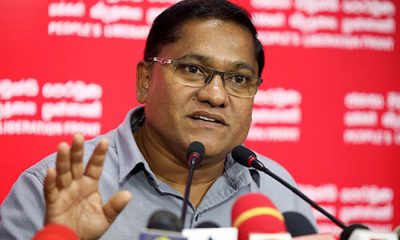
When the interviewers pointed out that the JJB parliamentary group comprised just three members (Anura Kumara Dissanayake, Vijitha Herath and Dr. Harini Amarasuriya), lawmaker Dissanayake said that it would be a grave mistake, on the part of the electorate to believe the SJB genuinely represented their interests.
Declaring that they were the real Opposition, MP Dissanayake said that the SJB backed the policies of the Wickremesinghe-Rajapaksa government. There couldn’t be a better example than the SJB skipping the vote on the Social Security Contribution Levy to highlight Premadasa’s despicable strategy. Nearly 50 SJB members, including Sajith Premadasa, skipped the vote, though Ajith Mannapperuma, Ashok Abeysinghe and Chief Opposition Whip Lakshman Kiriella were exceptions. Only 10 MPs voted against the Bill whereas 123 skipped the vote. The Parliament ratified the Social Security Contribution Levy in the second week of September, this year, with a majority of 81 votes. The Bill received 91 votes.
MP Dissanayake said that the formation of the SJB should be examined against the backdrop of the split in the UNP, caused by the belief the party couldn’t win under Ranil Wickremesinghe.
The JVP leader said that a major difference between those now exercising power, as well as the SJB and the JVP, was the composition of the Cabinet of Ministers. The JVP believed the Cabinet of Ministers should be restricted to 25 and an equal number of Deputy Ministers whereas the rest were hell bent on expanding the Cabinet of Ministers and accommodating as many State Ministers as possible, at taxpayers’ expense.
Acknowledging the role played by the Tamil National Alliance (TNA), MP Dissanayake, in an obvious reference to the rebel SLPP groups, alleged that they distanced themselves from the government after failing to achieve their objectives, and agendas.
The JVP leader dismissed the interviewers’ assertion that whatever the allegations directed at the incumbent President, he was the most qualified to handle the economy, as baseless. Lawmaker Dissanayake challenged interviewers on the basis that of the USD 15.5 bn loans obtained by way of ISB (International Sovereign Bonds), during the 2007-2020 period, the yahapalana administration had taken USD 12 bn between 2015 and 2019, in addition to USD 1.1 bn received for handing over the Hambantota Port, to China, on a 99-year-lease. President Wickremesinghe owed an explanation in that regard.
Referring to the Colombo High Court, in June this year, sentencing Chief Government Whip Prasanna Ranatunga to two years rigorous imprisonment, suspended for five years, after he was found guilty of one of the charges in a case filed over threatening a businessman, MP Dissanayake said that Sri Lanka’s reputation had been ruined by some of those represented in Parliament. The JVPer said that the recent declaration at the Geneva-based United Nations Human Rights Council (UNHRC) that economic crimes had been perpetrated in Sri Lanka was a warning that the international community wouldn’t recognize Sri Lanka as long as the country didn’t honour its own laws.
Responding to a spate of questions on the JVP’s readiness to form a government of its own, MP Dissanayake insisted that the party wouldn’t, under any circumstances, join other political parties. Referring to the JVP joining the CBK government, in 2004, and backing Sarath Fonseka and Maithripala Sirisena at the 2010 and 2015 presidential elections, MP Dissanayake said that they wouldn’t repeat that strategy.
Commenting on several high profile corruption cases, including reduction of Rs 50 per kilo duty on imported white sugar, to 25 cents, in Oct 2020, Treasury bond scams perpetrated in 2015 and 2016, lawmaker Dissanayake said that those responsible would never be punished. The JVPer claimed that the corrupt would be safe as long as the people failed to elect a JVP-led government.
MP Dissanayake flayed ministers who lived luxurious lives at taxpayers’ expense at a time the vast majority of people struggled to make ends meet. Responding to accusations directed at the JVP by Johnston Fernando, MP Dissanayake alleged that the MP brought a woman suicide cadre to Colombo with a view to assassinating the then President Mahinda Rajapaksa. The attack was to be mounted when the President visited a certain house at Gregory’s Road, MP Dissanayake alleged, claiming that the file pertaining to that particular case disappeared from the Attorney General’s Office. An aide to MP Fernando, while denying the JVP leader’s accusation, said that making unsubstantiated allegations was part of their strategy.
Lawmaker Dissanayake said that those who exercised political power never allowed the police and the Attorney General to proceed with high profile cases. Referring to the Malwana case in which Basil Rajapaksa had been investigated for building a bungalow and the ongoing inquiry into fraudulent activities of Thilini Priyamali, the JVP leader said that politicians didn’t allow the law to take its course. Declaring the Money Laundering Act as a very powerful law, MP Dissanayake claimed that it was not properly implemented in respect of those near and dear to the powers that be.







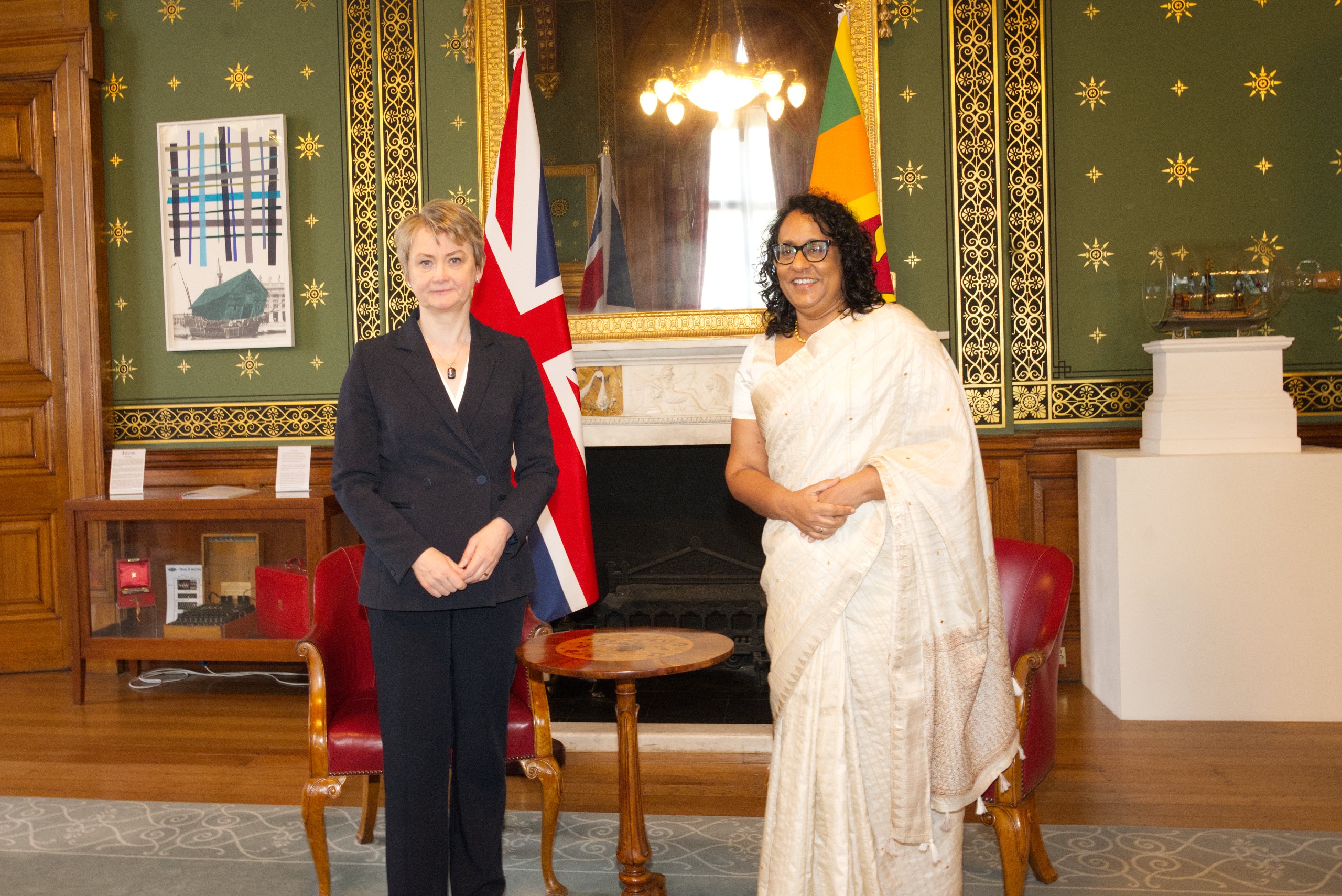
Prime Minister Dr Harini Amarasuriya currently undertaking an official visit to London, United Kingdom, to participate in the 43rd Commonwealth of Learning (COL) Board of Governors Meeting 2026 held a bilateral meeting with the Yvette Cooper MP, Foreign Secretary of the United Kingdom ON Wednesday [20]. The Prime Minister was accompanied by Sri Lanka’s High Commissioner to the United Kingdom, Nimal Senadheera, along with officials from the Sri Lankan High Commission.
During the meeting, the Prime Minister conveyed Sri Lanka’s appreciation to the United Kingdom for the support extended in the aftermath of Cyclone Ditwa, including ongoing rebuilding and recovery assistance. The Prime Minister also commended the United Kingdom’s support in facilitating increased bilateral trade and exports for Sri Lanka.
The Prime Minister briefed the UK delegation on Sri Lanka’s recent economic developments and policy priorities, the Government’s commitment to advancing human rights and reconciliation, as well as Sri Lanka’s positive growth trajectory.
The two sides also exchanged views on current global geopolitical developments, challenges in the energy sector, and the importance of enhancing regional connectivity and long-term energy security.
Both sides also emphasised the importance of strengthening structured academic mobility frameworks while ensuring fairness, clarity, and integrity within migration systems.
They also reaffirmed their commitment to further strengthening bilateral cooperation between the two countries in areas of mutual interest.
[Prime Minister’s Media Division]
Airbus bribe case:
Colombo Additional Magistrate Lahiru Silva yesterday (20) granted bail to Mohamed Riswan and Mohamed Irshan, who allegedly received money to stand as sureties for the late former SriLankan Airlines CEO, Kapila Chandrasena. They were identified as residents of Sanchi Arachchi Watta, situated next to the Hulftsdorp court complex.
Chandrasena was found dead at his brother-in-law, Aravinda De Silva’s residence, at No. 38, Pedris Road, Kollupitiya, on 8 May.
The Magistrate also granted bail to B. A. Tissa and Perumal Ganesh, who arranged for Riswan and Irshan to stand as sureties for Chandrasena, who is under investigation for allegedly receiving a USD 2 million bribe through his wife to facilitate an Airbus deal. They, too, residents of Sanchi Arachchi Watta, were granted bail on two personal bail of Rs. 500,000 each.
Airbus had to pay USD 4 billion in penalties after admitting it had paid huge bribes to secure contracts in 20 countries. Sri Lanka is among them.
The Magistrate directed that the Grama Niladhari should certify their residence and the relevant certificates submitted to court and to establish the financial status of those who stood as sureties for the four persons.
The court was told that Mohamed Riswan and Mohamed Irshan obtained 17 Grama Niladhari certificates from January till May 2026. On the basis of a statement recorded from Keselwatta Grama Niladhari S. Nilantha Silva police informed court that the first suspect had obtained 10 certificates and the second person seven.
Fourth suspect Ganesh had first met those who stood as sureties, on 05 May, in the court premises and struck the deal. Crime OIC of Keselwatta Police, Sub Inspector K.W.D. Anuruddha, told court that Mohamed Riswan, Mohamed Irshan and B. A. Tissa hadn’t even known who Chandrasena was and were not related to him in anyway, according to investigations. Police requested that the four persons be further remanded.
The Magistrate granted them bail and set the next hearing for 25 June.
Legal sources said that such illegal practices were rampant, and in this particular case the Court Registrar should have been able to see that the sureties were very much unlikely to be relatives of Chandrasena.
By Shamindra Ferdinando
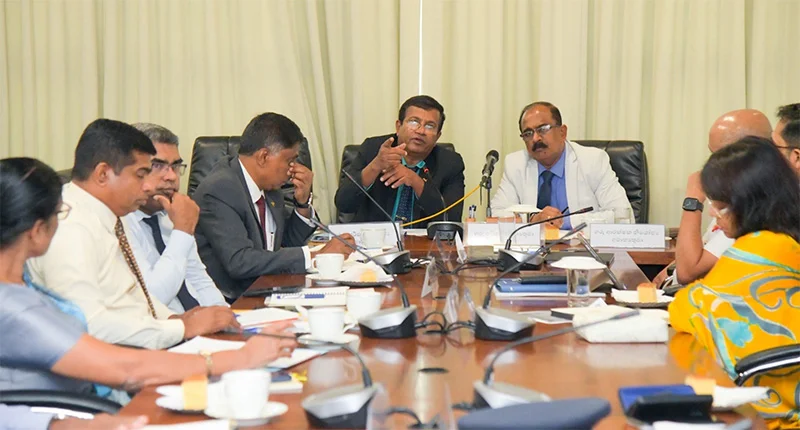
The government has initiated a major conservation drive to protect its fragile northern marine ecosystems, with top government officials pledging stronger action against environmental degradation, destructive fishing practices, and Illegal, Unreported and Unregulated (IUU) fishing in the country’s northern seas and adjacent islands.
A high-level discussion chaired jointly by Deputy Minister of Environment Anton Jayakody and Deputy Minister of Defence Aruna Jayasekara was held on Tuesday (19) at the Ministry of Environment to formulate an integrated strategy aimed at safeguarding Sri Lanka’s maritime heritage and accelerating marine conservation initiatives.
Senior naval officers, top environment officials, conservation experts, and representatives from several state agencies attended the meeting, which focused heavily on the declaration of new Marine Protected Areas (MPAs) in the Northern Province.
Among those present were Secretary to the Ministry of Environment K.R. Uduwawala, Chairman of the Marine Environment Protection Authority Samantha Gunasekara, Director General of the Coast Conservation and Coastal Resource Management Department Prof. Turny Pradeep Kumara, Conservator General of Forests Palamakumbura, officials of the Department of Wildlife Conservation, and senior ecologists from International Union for Conservation of Nature.
Officials stressed that the protection of Sri Lanka’s northern marine zone was essential not only for biodiversity conservation but also for sustaining the livelihoods of fishing communities and strengthening the country’s maritime standing internationally.
A major concern raised during the meeting was the increasing ecological destruction caused by IUU fishing activities. Ministers warned that such unlawful practices posed a severe threat to marine biodiversity and the economic stability of local fishermen.
The discussion also focused on intensifying surveillance operations and strengthening law enforcement mechanisms to combat destructive fishing methods, including dynamite fishing, unauthorized spearfishing, and the use of banned fishing gear that continue to devastate coral reef ecosystems and endangered marine species.
Attention was also drawn to governance and infrastructure shortcomings within fishing harbours, with officials identifying the lack of proper management systems and formal regulatory mechanisms as major vulnerabilities contributing to environmental degradation.
As part of the proposed conservation strategy, several islands and surrounding marine zones in the Northern Province have now been identified for official declaration as Marine Protected Areas.
Authorities clarified that the establishment of MPAs would not undermine the livelihoods of local communities but instead promote sustainable fishing practices while opening new opportunities for eco-tourism development.
Officials said these protected marine zones could eventually be developed into internationally recognised eco-tourism destinations, generating fresh economic opportunities for the Northern Province while enhancing Sri Lanka’s environmental credentials globally.
The meeting further highlighted that the declaration of new MPAs would reinforce Sri Lanka’s commitment to international biodiversity conservation obligations and demonstrate the country’s role as a responsible custodian of the Indian Ocean’s marine resources.
A proposal was also made to establish a multi-sectoral working group comprising representatives from the Ministries of Tourism, Fisheries, Defence, Environment, and Justice to implement a coordinated mechanism for the protection of coastal and marine resources under the leadership of the Ministry of Environment.
Officials described the initiative as another significant milestone in Sri Lanka’s broader journey towards building a sustainable biosphere and ensuring long-term environmental security for future generations.
By Ifham Nizam

Prime Minister Dr Harini Amarasuriya meets Foreign Secretary of the United Kingdom

Alice Capsey 74 not out blazes trail in seven-wicket England win

Kolkata Knight Riders keep their IPL campaign alive with low-scoring win

Showers will occur at times in the Western, Sabaragamuwa Northern and North-western provinces and in Anuradhapura, Galle, Matara, Kandy and Nuwara-Eliya districts

Suspects involved in sureties controversy granted bail

Steps underway to safeguard Sri Lanka’s maritime heritage

‘Dates have the highest sugar content to fight Coronavirus’

Sunday Island 27 December – Headlines

#SundayIsland 17th December – Headlines

Sunday Island – 28th March

Sunday Island Headlines – 21 March

Sunday Island – 21st February – Headlines
-

 Features4 days ago
Sri Lankan Airlines Airbus Scandal and the Death of Kapila Chandrasena and my Brother Rajeewa
-
 News5 days ago
Lanka’s eligibility to draw next IMF tranche of USD 700 mn hinges on ‘restoration of cost-recovery pricing for electricity and fuel’
-
 News4 days ago
Kapila Chandrasena case: GN phone records under court scrutiny
-

 News4 days ago
Rupee slide rekindles 2022 crisis fears as inflation risks mount
-
 Features1 day ago
Octopus, Leech, and Snake: How Sri Lanka’s banks feast while the nation starves
-
 Business4 days ago
Expansion of PayPal services in Sri Lanka officially announced
-
 Features6 days ago
Mysterious Death of United Nations Secretary General Hammarskjöld
-
 News4 days ago
Court orders further arrests in alleged USD 42 Mn NDB fraud case