
Business
An overview of new Securities and Exchange Commission Act

By Viraj Dayaratne PC
Chairman Securities and Exchange Commission of Sri Lanka
The new Securities and Exchange Commission Act No. 19 of 2021 (‘the Act’) has been certified by the Speaker on 21st September 2021 and has thus become law. It repeals and replaces the Securities and Exchange Commission Act No. 36 of 1987.
The Act which has been in the pipeline for a considerable period of time contains well thought out provisions which have factored in latest developments in securities markets around the world and adheres to principles and standards propounded by the International Organization of Securities Commissions (IOSCO). It enables robust regulation whilst facilitating market development and will cater to both the present as well as future needs of Sri Lanka’s securities market.
The process of drafting the Act
The process of drafting a new law began in the year 2007, consequent to a gap analysis and extensive research carried out on the laws of other jurisdictions. The initiative received technical assistance from the World Bank as well as experts in Sri Lanka. The first draft had been completed in 2013 and approved by the Commission at the time. Since that had not been proceeded with, improvements had been made to that draft by the subsequent Commission and having received Cabinet approval, the Bill had been tabled in Parliament in 2018 but was not taken up for debate. Further changes had been made to that Bill by the previous Commission during the 2018/2019 period. In finalizing the Act, whilst retaining the core provisions found in the previous versions, the present Commission has taken steps to eliminate ambiguities and grey areas in order ensure that there will be no difficulties in its application and implementation. It must be acknowledged that there have been numerous consultations with all stakeholders as well as the public in this long drafting process and their contributions have been of immense assistance in the formulation of this law.
The structure of the Act
The SEC Act comprises of seven Parts which are further divided into a number of Chapters. A significant feature is that at the beginning of each Part, the ‘object and purpose’ of that particular Part is described in broad terms. This gives an indication of what is sought to be achieved through the provisions contained in such Part.
Part I deals with preliminary matters such as the application and objects and purpose of the Act, establishment of the Commission and its powers, duties and functions as well as matters pertaining to the Director General and staff of the Commission. Part II titled ‘Markets and Market Institutions’ provides for the establishment of Exchanges, Clearing Houses and a Central Depository. Part III titled ‘Issue of Securities’ deals with Public Offer of Securities, Market Intermediaries and the Protection of Clients’ Assets. Part IV deals with ‘Trade in Unlisted Securities’. Part V titled ‘Market Misconduct’ deals with Prohibited Conduct and Insider Trading. Part VI contains provisions in relation to the finances of the Commission and Part VII provides for general matters such as the implementation of the Act and punishments and enforcement mechanisms.
The salient features of the Act
The Act contains many salutary provisions that will ensure efficiency, predictability and consistency in the regulation of the country’s securities market. Further, it enables the use of state of the art infrastructure and provides for the different fund raising requirements of issuers whilst the ability to introduce a variety of products offers investors a wider choice depending on their risk return characteristics.
Markets and Market Institutions
Part II which is specifically dedicated to Markets and Market Institutions is an important part of the new law since the provisions contained therein are expected to ensure that these vital institutions perform their functions properly which in turn will help the effective and efficient functioning of the securities market as well as help mitigate systemic risks.
These provisions stipulate in great detail the rights and duties of an Exchange, a Clearing House and a Central Depository, the requirements that have to be fulfilled if a license is to be obtained, when a license may be cancelled and the right of recourse if a license is cancelled, the effect of the Rules of these market institutions, appointment of directors, duties of an auditor etc.
An important feature is that a licensed Exchange can list its securities on its own Exchange. There is recognition of a Clearing House acting as a Central Counter Party (CCP) and a CCP has been defined. Further, detailed provisions dealing with default rules and proceedings have been included in order to cater to situations where a clearing member is unable to meet its obligations regarding unsettled market contracts. The default proceedings have been designed to bring about finality to trades.
Market Intermediaries
It is also pertinent to note that the Act has redefined ‘Market Intermediaries’ and has added a few more categories of persons. They are‘corporate finance advisor’, ‘market maker’, ‘derivatives broker’ and ‘derivatives dealer’. The introduction of market makers is important since that will ensure continued and efficient exchange of securities between buyers and sellers.
As in the case with market institutions, their duties, requirements that have to be fulfilled if a license is to be obtained and renewed, grounds on which a license may be refused, suspended or cancelled, trading in securities by market intermediaries, duty of an auditor etc. have been spelt out in great detail.
Market intermediaries play a pivotal role in the functioning of the market. Since they operate at the forefront of the market and thus are directly in contact with investors, it is imperative to ensure their credibility. Towards achieving this and to ensure that they conduct their functions more efficiently, certain requirements have been identified under the head of ‘Protection of clients’ assets’. They require that market intermediaries disclose certain interests they have in securities, establish and maintain certain internal procedures and processes and conform to business conduct that the Commission may spell out by way of rules. These are meant to minimize their own risk and exposure and to monitor compliance and are neither new obligations nor measures that will result in additional effort or expenditure to them. Such requirements exist even at present in the form of rules and standards introduced by the Commission from time to time. In contrast to the previous Act, the Act has incorporated these specific requirements in relation to market intermediaries in the body itself.
In addition to market intermediaries, the Commission can, by way of rules, require the registration of those who ‘deal with clients for and on behalf of a market intermediary’. The Act has also recognized ‘Supplementary Service Providers’ such as actuaries, custodians, trustees and valuers on whom the Commission may exercise supervision in the future thereby fortifying public confidence.
Issue of securities and maintenance of good corporate governance practices
Part III deals with ‘Issue of Securities’ and the purpose of this Part amongst others, is to ensure timely disclosure of financial information by listed public companies and compliance with best corporate governance practices.
In order to ensure accountability of funds solicited from the public, the Commission will be entitled if it considers that such a step is necessary, to make Rules that will require unlisted companies to obtain its approval prior to certain types of public offers. Such requirement may be introduced taking in to consideration ‘the volume of securities, class of securities, the number and type of investors, the nature of the issuer or the nature of the securities market’.
Based on disclosures made to the public, if any wrongdoing is detected, the Commission or the market institutions will be entitled to call for information from listed companies. The Commission has been empowered to take any enforcement action that is considered appropriate if ‘after due inquiry or investigation’ it is found that the listed company has contravened or failed to comply with any provision of the Act, regulations, rules or directives. Here again it must be stressed that this is part of oversight that is presently carried out by the Colombo Stock Exchange and the Commission through its corporate affairs division to ensure compliance with the Listing Rules and is nothing new. What has been done is to have these provisions specifically included in the Act in order to ensure adherence to best corporate governance practices.
It will be necessary for a person to obtain the approval of the Commission prior to accepting appointment as a director, chief executive officer or chief regulatory officer of a market institution and the grounds upon which such approval will not be granted have been spelt out. Further, directors or the chief executive officer of a listed company are required to comply with the fit and proper criteria specified by the Commission by way of rules made by it or the rules of an Exchange which have been approved by the Commission. Another new feature is that Auditors of listed companies, market institutions and market intermediaries have been obligated to report certain irregularities that he becomes aware of ‘during the ordinary course of the performance of his duties’. As to what they are and to whom it has to be reported have been specifically stated.
It must be appreciated that these requirements have been introduced in order to ensure proper corporate governance in the said institutions and to mitigate systemic risk considering the pivotal role they play in the securities market. At a time when most of these practices have been embraced by the business community as part of the corporate governance framework that is being presently finalized, they cannot be construed as impediments to the smooth conduct of their businesses.
Main Market Offences
Part V of the Act which encompasses the main market offences could be considered as a progressive step taken towards the regulation of the securities market of the country. This Part has been divided into two Chapters containing ‘Prohibited Conduct’ and ‘Insider Trading’.
Prohibited Conduct
Five different offences have been identified under Prohibited Conduct. They are ‘false trading and market rigging’, ‘stock market manipulations’, ‘making false or misleading statements’, ‘fraudulently inducing persons to deal in securities’ and ‘use of manipulative and deceptive devices’
The most significant introduction to this category of offences which is commonly known as market manipulation are the two offences found respectively in Sections 130 and 131 respectively. Whilst Section 130 precludes a person from making a statement or disseminating information that is false or misleading in a material particular which is likely to have an effect of raising or lowering the market price or volume of securities, Section 131 precludes a person from inducing or attempting to induce another person to trade by making or publishing any statement or by making a forecast that is misleading, false or deceptive.
As to what conduct is prohibited has been spelt out with utmost clarity. It therefore is not difficult to understand as to what ingredients have to be present to establish the commission of an offence under this Part.
Insider trading
All aspects pertaining to insider trading have been described with precision. As to when a person is considered to be an ‘insider’ has been clearly defined and what exactly such person is prohibited from doing has been spelt out with certainty. In addition, as to what would amount to information, when such information is generally available, what would be information which has a material effect on price or value of securities, when will a person be considered to have procured another, when information is deemed to be in possession as well as specific exceptions and defenses available in respect of a charge of insider trading have been outlined in great detail.
These elaborate provisions have been included with the intention of taking away any uncertainty or ambiguity and to clearly demonstrate as to what conduct is permitted and what is prohibited so that those involved in the activities of the market are fully and well aware of the framework within which they ought to operate. Further, the fact that the commission of any such offence would give rise to the imposition of stringent penalties is intended to act as a deterrent and not as a means to stifle or discourage the activities of market participants.
Unlike the previous Act where charges were to be filed in the Magistrate’s Court, henceforth these offences are to be tried in the High Court and any person convicted of such offence would be subject to a penalty which could be either a fine of not less than ten million rupees or to imprisonment for a term not exceeding ten years or to both such fine and imprisonment.

Business
Cost-effective clearance of goods across borders to determine worth of Customs Paperless Declaration

By Ifham Nizam
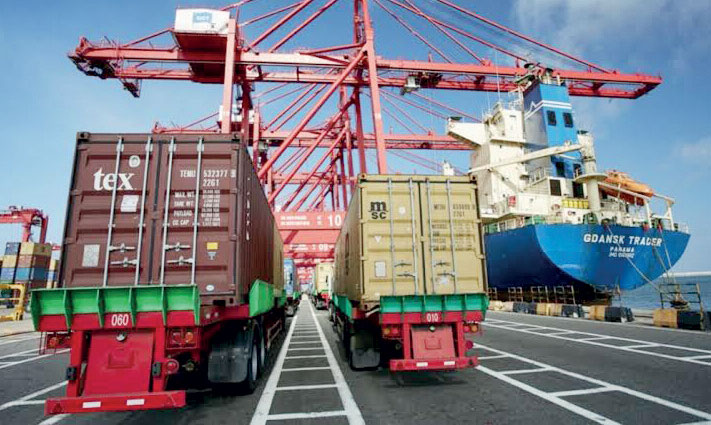
The introduction of the Customs Paperless Declaration from October 1 could mark an important step in Sri Lanka’s efforts to modernise trade, but its real value will depend on whether it reduces the time and cost of moving goods through the country’s borders, Customs House Agents & Traders Association President Mohamed Niyas said.
Niyas warned that digitising Customs declarations alone would not necessarily translate into faster cargo clearance or lower costs for businesses.
‘Expecting a dramatic improvement in clearance speed under the present conditions is like expecting Ferrari performance from a Morris Minor configuration, he said.
For importers and exporters, the issue extends well beyond paperwork. Every additional hour or day that cargo remains in the clearance chain can have wider consequences for businesses, including increased port and storage-related costs, additional working-capital requirements, uncertainty over delivery schedules and disruptions to production and distribution.
Niyas said the competitiveness of Sri Lanka’s trading sector ultimately depended on how efficiently goods could move through the country’s border-clearance system.
‘The real bottleneck is not merely the absence of paper. It is the entire clearance ecosystem—the limitations of the existing ASYCUDA World system, excessive regulatory interventions by Other
Government Agencies, multiple approvals, physical examinations, manual interventions, fragmented processes and institutional constraints, he said.
He cautioned that unless these bottlenecks were addressed, there was a risk that the paperless initiative would merely digitise existing bureaucracy.
‘If these underlying constraints remain unchanged, there is a real risk that the new paperless system could become another “copy-and-paste road show”—where an old, complex clearance process is simply transferred onto a digital screen without fundamentally changing the process itself, Niyas said.
For businesses dependent on imported raw materials, machinery, components and other inputs, clearance efficiency can directly affect the wider supply chain.
Delays at the border can create uncertainty for manufacturers, distributors and retailers, while exporters can face difficulties meeting delivery schedules when imported inputs or export consignments are held up.
Niyas therefore argued that the success of the October 1 initiative should be judged by its impact on trade flows rather than by the number of declarations processed electronically.
‘Paperless does not automatically mean faster, he said. ‘Digitising a slow process does not make the process fast. It only makes the slow process digital.’
He said Sri Lanka needed to move towards what he described as “process-less Customs”—a system in which unnecessary procedures are eliminated rather than simply converted into electronic procedures.
Among the reforms he called for are simplification of Customs declarations and approval workflows, improvements to the functionality of ASYCUDA World, greater use of risk-based inspections and better integration of Other Government Agency approvals.
Niyas also called for the elimination of repetitive document submissions and physical endorsements, greater use of pre-arrival processing, sufficient capacity for digital document uploads and clearly defined service-level timelines for Customs and OGAs.

By Sanath Nanayakkare
As global attention has fixed on the high-level diplomatic choreography at the United Nations General Assembly in New York, a subtler, yet profound geopolitical signal was sent from Colombo, yesterday.
In a major address marking the founding anniversary of the People’s Republic of China, newly appointed Chinese Ambassador Wei Huaxiang chose to anchor bilateral relations not just in modern trade or infrastructure, but in a shared respect for Sri Lanka’s legacy of non-aligned independence.
By explicitly invoking Sri Lanka’s foundational role in the 1976 Non-Aligned Summit, Beijing was doing something unexpected in an era defined by fierce great-power rivalry: it was officially validating a small island nation’s right to maintain an independent foreign policy stance.
The Strategic Value of Independence
For decades, nations caught in the crosshairs of major-power competition have faced intense pressure to pick sides. Yet, Ambassador Wei’s embrace of Colombo’s non-aligned tradition signaled a different diplomatic playbook. Instead of demanding alignment, Beijing was framing its partnership as a reliable counterbalance to regional pressures. By honouring Sri Lanka’s diplomatic autonomy, China was effectively reassuring smaller economies that sovereign independence and robust economic cooperation can coexist.
Beyond Ports and Industrial Zones
This diplomatic framing reframed the narrative surrounding major collaborative ventures like the Colombo Port City and Hambantota Port. While foreign analysts often view these projects exclusively through the lens of strategic rivalry, Beijing’s diplomatic messaging tied them back to a historical ethos of solidarity—evoking memories of the 1952 Rubber-Rice Pact.
By marrying economic projects with a stated respect for non-alignment, China is positioning itself as a steadfast stakeholder that respects Sri Lanka’s internal agency during difficult economic and political seasons.
As both nations look toward major milestones in 2027—including the 70th anniversary of diplomatic ties—this nuanced diplomatic move revealed how historic traditions are being leveraged to navigate modern multipolar realities.
For global observers, the takeaway was clear: in the shifting architecture of Asian geopolitics, respecting a nation’s historical neutrality may just be the most effective way to secure a lasting partnership, a diplomatic masterclass that Ambassador Wei Huaxiang executed in style.

Sri Lanka Insurance Life (SLIC Life), the nation’s largest and strongest Life Insurer, is pleased to announce the appointment of Dr. Sameera Dharmasena as its new Chief Executive Officer, effective 22nd September 2026.
Dr. Dharmasena is a distinguished insurance professional with over 21 years of experience in the Sri Lankan insurance industry, having held senior leadership positions across several leading insurance companies affiliated with some of Sri Lanka’s largest business conglomerates. His extensive career spans both local and multinational insurance environments, bringing together broad industry expertise, strategic leadership and a strong commitment to the advancement of the insurance profession.

Lalit Rajbanshi, Kushal Bhurtel set up Nepal’s opening win

‘Vision’ Programme Marks Two Years

Costa Rica minister fired for unapproved meeting with Trump in US

At least 41 die as boat capsizes in DRC’s Lake Tanganyika

Showers will occur at times in the Western, Sabaragamuwa, Southern, Central and North-western provinces

Sajith vows to scrap 22A under future govt.

‘Dates have the highest sugar content to fight Coronavirus’

Sunday Island 27 December – Headlines

#SundayIsland 17th December – Headlines

Sunday Island – 28th March

Sunday Island Headlines – 21 March

Sunday Island – 21st February – Headlines
-

 News7 days ago
Shanakiyan urges urgent action over reported death sentence for Lankan in Saudi Arabia
-

 News6 days ago
Namal Rajapaksa Buddhist gambit fails, bail denied
-

 Features6 days ago
Why the spelling Sri Lankan names in English vary
-

 Features6 days ago
Three bands, a new identity: Sri Lankan wolf snake recognised as distinct species
-

 Business6 days ago
SLIIT holds largest-ever convocation
-

 News6 days ago
Vehicle prices drop by up to Rs. 1 mn, says importers’ body
-

 News6 days ago
Govt monitors reported Saudi death sentence – Foreign Ministry
-

 Business6 days ago
All-new Bolero MaXX Pik-Up unveiled in Lanka