
Sports
A piece of Sri Lanka’s rugby history which can produce goosebumps


by A Special Sports Correspondent
At a time when Sri Lanka is getting ready to face challenges at the upcoming Asian Rugby Tournament’s Division 1 Segment our minds run back to the times when these islanders were competing against the best teams in Asia.
Just for the record Sri Lanka is now forced to work its way up from the Division 1 segment and qualify for a slot among the best four teams who are playing in a segment known as the ‘Asia Rugby Championship’. Currently the teams in that group- which can be billed as the best four teams of Asia- comprises South Korea, Hong Kong China, Malaysia and United Arab Emirates (UAE). On a sarcastic note, I’m sure Sri Lanka remembers playing in this division and not being disgraced; even though they went down fighting on some occasions. There were also many victories in this division for Sri Lanka which produced sweet memories for the rugby loving islanders.
The years which this writer wants to recall are 2005 and 2006 and Sri Lanka’s best players were put through their paces by New Zealand born Coach George Simpkins; who was contracted as the national coach till the World Cup Qualifiers ended. He was given a contract by Sri Lanka Rugby which was at that time headed by former national player Priyantha Ekanayake. Luckily for Sri Lanka rugby there was no rift between the Kandy ‘elite’ and the Colombo ‘camp’. Hence national rugby didn’t suffer. Whatever challenges that cropped up as national assignments were fed with the best resources.
This was a time when Sri Lanka had players like skipper Sajith Mallikarachchi, Viraj Prashantha, Kishore Jehan, Pavithra Fernando, Dilanka Wijesekare, Dushanth Lewke, Amjad Buksh, Fazil Marija, Pradeep Liyanage, Sanjeewa Jayasinghe, Chamara Vithanage, Thushara Silva, J.Ranaweera, Dilan Ekanayake, Rajith Jayasundara, Anuradha Dharmatilake, Asanga Rodrigo, Anuranga Walpola, M.Sherifdeen, Dhanushka Perera, Zulki Hamid, Rajiv Ganapathy and D. Pushpakumra to name a few. More players were inserted to the squad as Sri Lanka gained momentum and experience in facing this world cup qualifying challenge. The first assignment for Sri Lanka was against Thailand and it was an ‘away’ match; played in the hot and humid village called Suphan Buri; which is 150 km away from Bangkok. Just a few kilo metres away from Suphan Buri is ‘Kanchana Buri’ where some parts of the film ‘Bridge on the River Kwai’ was filmed.
This was also the time when most of the players in the squad were at their peak; having played about a decade of rugby at senior level. The players were training mostly at CR&FC and this writer remembers hooker Viraj Prashantha making a kind of statement while casually bumping into me in the form of “If we cannot beat Thailand after all these training sessions, then we might never be capable of achieving such a feat in this lifetime”. In other words, the players were oozing with confidence and their body language said it all.
The man who made the change was Simpkin. The players were taught to think, eat and train like professionals; even though there not one among them who was even a semi professional at that time baring the pint-sized Silva who was employed in the Army. Silva was also a serious football player and much faith was placed on him to man the last line of defence as full back.
The match was scheduled at 3 pm and the heat was killing. Sri Lanka struggled hard to cross the Thailand goal line and when no one could Marija sliced through the defence using individual brilliance. The scores were deadlocked 38 all at one time in the second half and the host team was threatening to spoil Sri Lanka’s hopes, but the islanders won the contest 48-38 in the end.
Sri Lanka’s next challenge was in Colombo and the team they had to face was Singapore, which at that time was an outfit that was ‘respected’ and feared. The match was scheduled at 2 pm and the aggressive style that the Lankans played their rugby in and the scorching heat that prevailed were too much for Singapore. Sri Lanka won 43-17.
Simpkin by this time had convinced the players to cut down on the quantity of rice they consumed. Healthy eating, extended hours in the gym plus the focus on the goal (which was looking at participation at the international stage) lifted the thinking of the players a few notches up. Everyone knew that playing in an actual world cup was out of the question, but doing well at the ‘qualifiers’ and seeing what distance the side would go produced enough fuel to keep the players motivated.
The next challenge was against Kazakhstan which was a two-leg match with the first game scheduled in the freezing mountain city of ‘Almaty’. The Sri Lankans were given a hard time starting from preparations and the place given to the visitors to warm up was a defunct basketball court. The conditions were too cold for Sri Lanka and the result was a 25-19 defeat; Sri Lanka was beaten, but still was in with a chance when they hosted the rematch because the deference in points was just six. Simpkin worked the players in the gym and field and he drilled the thought into the players’ minds that this assignment could be successful if they thought rugby was an ‘endurance game’. Many running drills were added to the training schedule. So, Sri Lanka was going to play running rugby and avoid unwanted contact with the opposition; research done on the Kazakhstan players showed that the majority of them were mine workers and hard as rocks. This is the advantage of having a foreigner as coach who knows the opposition as much as his own chargers. Within the first quarter of the game, played at Longden Place, when the Kazakhstan players could not take the beating, they got from the smaller made Sri Lankans, they got into a fisticuff with the host players and the game was stopped for a few minutes. The Sri Lankans chose to be beaten and bruised in the brawl and chose to be focus on the game. The rest was history and Sri Lanka ran out worthy winners with a score of 24-12 in the second game.
The next assignment, however tough, had to be faced and done with. Hong Kong was a tower of strength in the Asian circuit and always proved a hurdle that Sri Lanka never could clear. To make matters worse the match was arranged to be played on a turf comprising artificial grass. After a physical game the Sri Lankans went down fighting 45-14; bowing out of the running in the world cup qualifiers. In the remaining games Japan beat Hong Kong. South Korea got the better of Hong Kong in their encounter. Japan was the only team in the 2007 world cup representing ‘Oceania/Asia after their success in the ‘qualifiers’. Back at home, New Zealand rugby legend- who was here to coach a club side- was quoted in a local newspaper saying ‘Sri Lanka got excited for no reason. Everyone knew that only Japan was going to make it to the world cup from Asia’. But for the entire rugby fraternity at home thought that what its national team achieved was remarkable!
So, this is a small piece of the proud history Sri Lanka boasts in rugby. This is a side which locked horns with the best of Asia. Sri Lanka needs to work its way up from Division 1 and slot itself in its rightful group which is the ‘Asia Rugby Championship’.



All Island Schools Games Athletics Championships
by Reemus Fernando
The Under 18 boys’ shot put meet record will be under severe threat today, when the most talked-about thrower of the last All Island Schools Games Athletics Championships takes to the field on the opening day at Diyagama.
Mayon Rajasinghe, now competing for his third school in four years, has shown steady progress this season and appears to be peaking at the right time to attempt another record-breaking performance on the junior circuit.
Having recently set a new meet record of 17.31m at the Western Province Schools Games, Mayon will now try to surpass the All Island Schools Games Under 18 record of 17.15m.
The first two age-category records in the Games’ shot put event already bear his name. He set the current Under 14 record of 15.13m while representing Prince of Wales College, Moratuwa. Last year, while attending St. Joseph’s College, Darley Road, he shattered the Under 16 meet record with a throw of 18.57m using the 4kg shot. It is the furthest any Sri Lankan has thrown in the Under 16 category at any meet, from the Junior National Championships to the Sir John Tarbat Senior Championships to the Schools Games.
Yet the outstanding performance did not receive the recognition it deserved. His father, who also trains him, was adamant that the then 16-year-old deserved the meet’s Best Athlete title. The organisers disagreed, citing the differing weights of implements across age categories as their reason for setting the performance aside. No clear criteria had been announced before the meet, which made such disappointment all but inevitable. Senior Rajasinghe’s outburst after the presentation ceremony, and the social media backlash that followed, have had an effect: the Ministry of Education has now published criteria for selecting the meet’s best athlete. However, it remains doubtful whether the criteria in the competition manual can offer athletes in different age categories and disciplines an equal opportunity to have their performances assessed fairly.
This year Mayon represents Holy Cross College, Kalutara. He has picked up where he left off last year, breaking record after record, and is poised to make an impact once again.
The championship begins with a card of eight finals. Around 5,000 athletes in the Under 14, 16, 18 and 20 age categories, representing all nine provinces, will take part in the five-day event after qualifying through house, divisional, zonal and provincial competitions.

The much-anticipated 57th Annual Saints’ Quadrangular Tournament which brings together four of Sri Lanka’s leading Catholic schools, St. Anthony’s College, Kandy, St. Benedict’s College, Colombo 13, St.Joseph’s College, Colombo 10, and St. Peter’s College, Colombo 04, for a weekend of spirited competition, camaraderie and nostalgia is scheduled to take place this weekend (weather permitting).
This year’s tournament is being hosted by the St. Peter’s College Old Boys’ Union (SPCOBU) during its Centenary year, marking 100 years since the Union was founded in 1927. The Centenary celebrates a century of service to the College and the Peterite community, under the theme “Honouring the Past, Strengthening the Present, Inspiring the Peterite of Tomorrow.”
The origins of the ‘Saints Quadrangular Tournament’ trace back to 1963, during the Diamond Jubilee celebrations of St. Benedict’s College. An open invitation was extended to schools across the country for a cricket tournament, and coincidentally, only the above three premier Catholic institutions joined
What began as a two-day cricket encounter has evolved into a multi-sport carnival that continues to embody the true spirit of sportsmanship and fraternity.
In 2002, the organizers introduced a 25-over Cricket Tournament for players aged 40 and above, allowing past cricketers to once again represent their beloved alma mater. Two years later, in 2004, Basketball was added to the lineup, enriching the event further given the strong basketball heritage of the four schools.
Continuing its evolution, 7-a-side Rugby was introduced in 2014, transforming the Saints’ Quadrangular into a vibrant sports carnival that now features three major sports across four tournaments namely Cricket, over 40 Cricket, Basketball, and Rugby.

by Rex Clementine
Sri Lanka have suffered a major setback ahead of the ODI tri-series in Pakistan, with prolific opening batsman Pathum Nissanka ruled out of the tournament, which gets underway on Sunday. England are the third team in the competition, with Sri Lanka taking on hosts Pakistan in the curtain raiser.
Nissanka, who missed the T20I series with a hamstring injury, had been expected to recover in time for the ODI leg of the tour. However, his rehabilitation has taken longer than anticipated. The selectors initially remained hopeful that he could feature towards the business end of the tournament, but yesterday confirmed that the opening batsman would play no part in the competition.
The focus now shifts to getting him fit for the two match Test series against Pakistan next month.
Nissanka’s NCC team mate Lahiru Udara has been drafted in as his replacement for the ODI series.
A source close to the team said Nissanka would now target the warm up fixture ahead of the Test series to prove his fitness and stake his claim for a return to the longer format.
Since making his international debut in 2021, Nissanka has established himself as Sri Lanka’s most prolific batsman across formats, playing a starring role in several memorable victories.
A mountain of runs in domestic cricket paved the way for his international breakthrough and he announced his arrival in style with a century on Test debut in the Caribbean. He subsequently etched his name into the record books by becoming the first Sri Lankan to score a double hundred in One Day Internationals.
If there were lingering doubts about his pedigree in Test cricket, Nissanka put them to bed at The Oval in 2024. Against a formidable England pace attack in testing conditions, he produced a masterclass in batting, helping Sri Lanka pull off a famous victory on English soil.
Earlier this year, he delivered another telling blow, this time against Australia in the T20 World Cup. His magnificent century sent one of the pre tournament favourites packing and underlined his ability to rise to the occasion on the biggest stage.
His remarkable consistency and versatility across all three formats earned him the prestigious Player of the Year honour at the Annual Cricket Awards, where he was the cynosure of all eyes.
However, injuries have increasingly become a stumbling block in what has otherwise been a flourishing career.
Nissanka was forced to return home midway through the tour of the West Indies to undergo wrist surgery in the United Kingdom. He was expected to recover in time for the two match home Test series against India, but that target proved beyond his reach.
Although he returned to action for the white ball series in England, he struggled to make an impact. Now, another injury setback has put him out of the ODI tri-series in Pakistan, leaving Sri Lanka without their premier opening batsman at a time when the team can ill afford to lose its most dependable run scorer.

SJB: Govt. trying to reappoint Jayakody, who resigned from Cabinet amidst coal scam

India busts Pakistani salt smuggling via Sri Lanka

Monks brave heavy rains to press for Gnanasara Thera’s release

Naval officer testifies Yoshitha received Rs. 5.15 mn in salaries during SLN service

TISL tells govt. to withdraw Protection of State from Terrorism Bill, citing its draconian provisions

Joint operation nets more than 100 kilos of heroin

‘Dates have the highest sugar content to fight Coronavirus’

Sunday Island 27 December – Headlines

#SundayIsland 17th December – Headlines

Sunday Island – 28th March

Sunday Island Headlines – 21 March

Sunday Island – 21st February – Headlines
-

 News5 days ago
Sri Lanka escalates anti-graft drive with Shiranthi’s jailing
-
 News6 days ago
NPP govt. reminded of its responsibilities as US warship leaves Colombo
-
 Latest News6 days ago
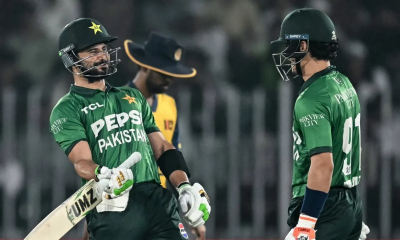
Farhan, Sadaqat help Pakistan ace 183 chase to go 1-0 up
-

 Latest News4 days ago
Farhan and Sadaqat help Pakistan seal series in style
-
 News5 days ago
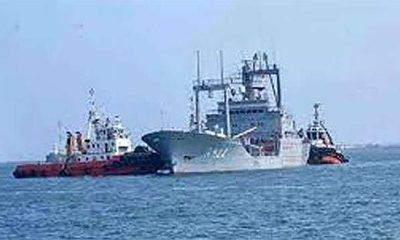
Iranian ships stranded, Lanka fears US sanctions
-
 News6 days ago
Interdicted top House official Kularatne receives special recognition in Mexican Parliament
-
 Features4 days ago
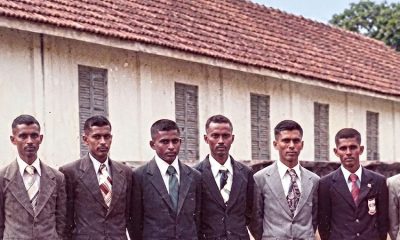
Intake 16: 45 years of duty and honour
-

 Latest News3 days ago
Nissanka’s return headlines Sri Lanka’s Test squad against Pakistan