
Editorial
A clinch-like truce


Wednesday 25th June, 2025
The world must have heaved a huge sigh of relief on hearing that Israel and Iran had agreed to a ceasefire. An uneasy truce between two belligerent nations, after nearly two weeks of intense fighting, resembles the clinch of two exhausted boxers—noses blooded, teeth broken and jaws shifted. Explosions were ringing out in Iran at the time of writing, despite the ceasefire, with US President Donald Trump asking Israel to stop attacks. One can only hope that such incidents are only blips in a very tense situation. However, the Middle East is still simmering ominously, and it is the duty of the US and other world leaders to ensure that there will be no more provocations and flare-ups.
Israeli Prime Minister Benjamin Netanyahu obviously did not want the conflict to end even after the US attacks on Iranian nuclear sites over the weekend. He set the goal higher for Israel thereafter, vowing that attacks would not end until a regime change in Iran. But Trump was not interested in making a military intervention to engineer a regime change. He only hoped for one, and therefore Netanyahu was left with no alternative but to agree to a truce. It was also in Iran’s interest for Tehran to agree to stop fighting.
Israel should not have carried out unprovoked attacks on Iran, forcing the latter to retaliate. Overconfident of its air defence systems and fire power, Israel may have thought it would be able to make short work of Iran. But its plan went awry, and Iranian missiles rained down on Tel Aviv and other Israeli cities—something Netanyahu and his generals obviously did not bargain for. The conflict is not without lessons for Iran, which had to fight without direct help from any of its allies.
President Trump has handled the ongoing conflict in a peculiar manner. He did not seek to prevent it. A few days into it, with barrages of missiles crisscrossing the skies above the two warring states, President Trump, in answer to a question from a journalist, said something to the effect that it was futile to make an intervention at that stage. The Israeli leaders and their Iranian counterparts were not ready to consider a truce at that juncture. Trump knew that, and then ordered bunker buster attacks on Iran before calling for a ceasefire. Iran retaliated by firing missiles at US bases in Iraq and Qatar, but it is viewed as an act of proportionality and not escalation.
The US however made some miscalculations. It apparently underestimated Iran’s ability to cause disruptions to the world oil market. Oil prices began to rise, and it was feared that they would reach a record high, giving a shock to the world economy, which is in bad shape. The Iranian Parliament authorised the closure of the Strait of Hormuz, sending shock waves across the world. The US eventually had to swallow its pride and solicit China’s help to prevent Iran from closing that vital sea route and disrupting the global oil supply. It warned that such action would be tantamount to economic suicide for Iran, but that was not the real reason why it was trying to keep the Strait of Hormuz open. If such a course of action had been fraught with the danger of crippling only the Iranian economy, the US would not have issued any warning. Sun Tzu says in The Art of War, “Never interrupt your enemy when he is making a mistake.” The US realised the huge economic cost of the perpetuation of the Middle East conflict. China would have intervened to prevent Iran from closing the vital shipping route, with or without a request from the US, for the bulk of its oil imports from the Middle East moves via the Strait of Hormuz.
The uneasy Israel-Iran ceasefire has caused a slight drop in oil prices, and it will hopefully help keep the Strait of Hormuz open. It is the fervent hope of everyone that the ceasefire will hold firm, and the lessons learnt from what has come to be dubbed “the 12-Day War” in the Middle East will give a major boost to peace efforts in the Middle East.

Wednesday 3rd June, 2026
Opposition Leader Sajith Premadasa is reported to have lamented that in Sri Lanka, politicians who are adept at lying succeed at the expense of those who work really hard. He never misses an opportunity to project himself as a hardworking politician, and therefore his political rivals may claim that his lament smacks of self-promotion. Nevertheless, his argument is not untenable. During the last several decades, we have heard zillions of lies uttered by numerous political leaders, who have overtaken Machiavelli, Goebbels and even Matilda, who told “such dreadful lies” as made “one grasp and stretch ones’ eyes”. Opposition parties are lucky that people lose interest in their campaign lies after elections.
Lying is the name of the game in Sri Lankan politics. False promises made by politicians out of power should also be considered lies, for they are intended to deceive the public. What are usually described as the incumbent government’s lies are the false promises contained in the NPP manifesto or made by JVP/NPP politicians before the 2024 elections.
It has now become clear that the JVP/NPP leaders lied to the public when they said they were opposed to the manner in which debt was restructured and, if voted into office, they would renegotiate the bailout agreement signed between the IMF and the previous government. But after forming a government they opted to keep the agreement intact, and wisely so. The SJB has been saying something similar about the IMF programme, and it would have been exposed for lying if it had been able to form a government.
Some Opposition parties that have banded together to challenge the government claim that they would have handled the current energy crisis differently and granted relief to the people by reducing taxes on fuel. Accusing its political rivals of lying to garner favour with the public, the government insists that there is no way the fuel prices can be slashed. It finds itself in an IMF straitjacket, and has to fulfill the bailout conditions or lose IMF assistance. It is required to increase state revenue and ensure that energy prices are cost reflective, the JVP/NPP says. So, the only way the Opposition can disprove the government’s claim that it has to increase fuel prices to recover costs is to obtain a detailed cost breakdown and prove that the fuel prices are way above costs. The Opposition politicians shedding copious tears for the public ought to present facts and figures to support their claim that the government is jacking up fuel prices to meet the cost of extra diesel stocks purchased to operate the oil-fired power plants to make up for the Norochcholai generation loss caused by fraudulently procured low-grade coal. Mere rhetoric won’t do. Parliament is the best forum where the Opposition should pressure the government to reveal how fuel prices are determined.
Meanwhile, an SJB spokesman has said something that is construed in some quarters as an unwitting admission that the Opposition’s claim that the JVP-NPP government is not on the right course to strengthen the economy is false. Likening the JVP-NPP government, which is making a frantic effort navigate a host of vexed issues to straighten up the economy, to the proverbial bullocks pulling loaded carts up the steep slope of Haputale, SJB MP Mujibur Rahman has said the SJB is waiting until that task is completed to capture power. It is advisable to get the JVP-led administration to tackle the current economic issues because the JVP/NPP, after losing its hold on power, will never allow a future government to do so, he has said. He may have sought to make his party out to be smarter than the JVP/NPP, but what was intended as a back-handed compliment became an unintended compliment for the government besides exposing the Opposition’s hypocrisy. What one gathers from his statement is that the SJB is waiting to enjoy the fruits of the JVP-NPP government’s labour while criticising the ongoing economic recovery programme. In other words, the SJB knows that the government is doing what is necessary to strengthen the economy. If it is as patriotic as it claims to be, it should subjugate its political agenda to the national interest and help strengthen the economy.
Tuesday 2nd June, 2026
A pickup truck ploughed into a crowd near a Vesak dansala at the Meegoda junction on Sunday night, killing six people. More than 12 others were seriously injured. The driver of the vehicle was arrested while fleeing the scene of the accident, and the police said he was under the influence of alcohol. Produced before the Homagama Magistrate, he was remanded until 16 June.
Sunday’s tragedy at Meegoda has triggered an outpouring of public anger at the hit-and-run driver. There have been calls for stringent legal action against him. Some social media activists have gone to the extent of demanding that he be hanged straightway. Their consternation is understandable. If he had been sober, cautious and considerate, he would have been able to prevent the tragedy. It is hoped that all motorists will take lessons from Sunday’s accident and exercise caution when navigating crowded areas, especially during festivals.
Nothing can be cited in extenuation of the offence of driving under the influence of alcohol and killing people. However, there is a broader issue that must not go unaddressed if tragic accidents are to be prevented.
Most dansel are held by the roadside with no special arrangements to ensure the safety of those who visit them, much less facilitate the flow of vehicular traffic. They are characterised by utter chaos. Vehicles are parked haphazardly near them blocking roads, and people flock there from all directions with no heed for passing vehicles. Traffic laws apparently fall silent near dansel.
Dansel are not alone in causing havoc on roads. In this country, no public event is apparently considered complete unless they obstruct roads, worsen traffic congestion and cause maximum possible inconvenience to road users. Political rallies are mostly held at busy intersections, much to the inconvenience and resentment of motorists, who suffer in silence for want of a better alternative. The same is true of religious ceremonies and open-air musical shows. They make busy roads impassable, with the police prioritising everything else over ensuring the movement of vehicular traffic.
Most roads become veritable velodromes, come the Sinhala and Tamil New Year. Bicycle races are held on them, and contestants and their supporters become a law unto themselves. Police, who readily grant permission for such events, do precious little to rein in unruly ‘cheer squads’ on motorcycles, speeding, waving flags menacingly and threatening or even setting upon motorists who fail to get out of their path. They act just like the OMGs (Outlaw Motorcycle Gangs) with impunity. This practice must end. Races must not be held on busy roads.
The Kalutara North police deserve praise for having arrested more than 50 motorcyclists for riding in a reckless manner during the last couple of days. Such riders are a public nuisance, and must be severely dealt with, according to the law. The good work of the Kalutara North police is however the exception that proves the rule. Motorcycles with unauthorised modifications, such as illegal deafening exhausts are ubiquitous on the road, especially during festive seasons. Complaints abound that nocturnal motorcycle drag races frequently disturb Colombo’s suburbs, but the police do not seem to care.
Dansel cannot be held without prior registration and a health evaluation by the Public Health Inspectors to ensure food safety. They are reportedly monitored to check whether they adhere to health guidelines. These measures are welcome, and the health authorities should be thanked for their intervention to guarantee food hygiene. Similarly, it must be made mandatory for the police to ensure that every dansala is located at a safe distance from traffic lanes of busy roads and cordoned off to prevent accidents. Safety must take precedence over free food.


Monday 1st June, 2026
The latest round of fuel price hikes in Sri Lanka came on Saturday night as global oil trading closed, with the price of crude posting its biggest one-month decline (20%) in six years and with international media reporting that the oil price drop had delivered some relief to consumers at the pump in many countries, such as Pakistan, Malaysia, Spain and Portugal. At this rate, Sri Lanka’s fuel prices may continue to soar even if US President Donald Trump behaves and the US and Iran agree to end the West Asia conflict early, paving the way for the reopening of the Hormuz chokepoint for international navigation.
However, it should be noted that global oil market volatility is not yet over. ExxonMobil’s Senior Vice President Neil Chapman has reportedly warned that energy prices may “explode upwards in the coming weeks, with crude oil prices rising to USD160 or more per barrel as dwindling reserve inventories finally bottom out”. This is an unnerving proposition. One dreads to think what the Ceylon Petroleum Corporation (CPC) and the government will do in such an eventuality.
President Anura Kumara Dissanayake recently claimed that fuel was sold below cost in this country; a litre of diesel cost the CPC as much as Rs. 720 but was priced at only Rs. 392. He also said the subsidies on diesel and petrol amounted to Rs. 100 and Rs. 20 per litre, respectively. It was obvious that the President was priming the public for another round of fuel price hikes, which were announced on Saturday night while the people were out viewing Vesak decorations. The CPC has reminded them of how painful the samsaric journey is.
The government insists that fuel prices must be cost reflective in keeping with IMF bailout conditions, but it has chosen to remain silent on whether it uses the same pricing formula as the previous governments for fuel price revisions. Government politicians and the CPC make contradictory claims on this issue. The public has a right to ascertain whether the fuel prices are cost reflective, as claimed by the Finance Ministry, or way above actual costs. Governments in this country have earned notoriety for price gouging, just like black marketeers. So, the CPC or the Finance Ministry ought to make public how the fuel price revisions are determined. This is something the Opposition ought to pressure the government to do.
It is being argued in some quarters that the government increases fuel prices to recover staggering losses arising from the use of diesel to keep the oil-fired power plants working to compensate for the Norochcholai generation loss caused by the fraudulent procurement of low-grade coal. This argument is tenable, given the colossal amounts of diesel being burnt to generate electricity. Opposition trade unionists have claimed that more than 800,000 litres of diesel are used daily to make up for the generation drop at Norochcholai.
Another ship has arrived, carrying substandard coal, and more diesel will have to be burnt to compensate for power generation losses it is bound to cause, the Opposition has warned. Following a revelation made by HSBC Group’s CEO, Georges Elhedery, in a fireside chat with Bloomberg TV that Sri Lanka had imported oil at USD 286 per barrel, the CPC admitted that it had bought three shipments of diesel between the last week of March and the second week of April at prices of between USD 288 and USD 281 per barrel. Was the CPC so desperate because it had to procure extra shipments of diesel to keep the oil-fired power plants running to prevent power cuts?
The JVP/NPP has had to increase fuel prices, which they promised to slash while out of power. It said it was capable of causing the country’s forex woes to disappear in no time, as its rise to power would trigger a huge inflow of dollars. The current Opposition is making similar claims. We have no shortage of ‘promising’ politicians.

Thailand cracks down on foreign companies using fig leaf of local ownership

US strikes Iran’s Qeshm, says Tehran attacks Kuwait, Bahrain

Heavy showers likely at some places in the Western and Sabaragamuwa provinces and in Galle, Matara, Kandy and Nuwara-Eliya districts.

Trump berated Netanyahu? Analysts question US-Israel feud rumours

India should be kept out of PC polls, matters related to 13 A – Mano

US boost for SLAF

‘Dates have the highest sugar content to fight Coronavirus’

Sunday Island 27 December – Headlines

#SundayIsland 17th December – Headlines

Sunday Island – 28th March

Sunday Island Headlines – 21 March

Sunday Island – 21st February – Headlines
-
 News4 days ago
IMF urges Lanka not to meddle with exchange rate
-
 Business5 days ago
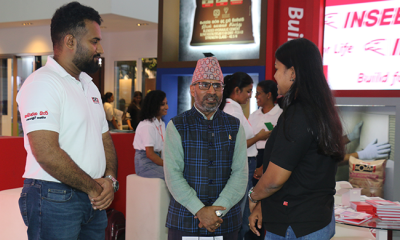
Sri Lanka’s construction industry losing ground while no one watches
-

 Business2 days ago
IMF’s unstated rate:Sri Lanka’s $695m loan costs about 5.33% per annum
-
 News4 days ago
State of emergency extended
-
 Features5 days ago
The Division Bell Mystery
-
 News2 days ago
UNP challenges NPP move to amend Vihara – Devalagam Act
-
 Features3 days ago
Are threats to Buddha Sasana external or from within?
-

 News6 days ago
RTI query of Ditwah funds: Presidential Secretariat mum on key questions