
Life style
Dosa : wholesome fast food obsession

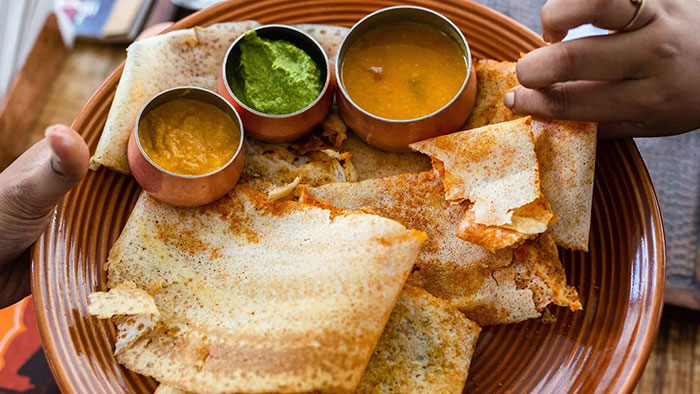
While South Indians have eaten this go-to breakfast food for thosands of years, it has evolved into a fast food item to be eaten at just about any time, day and night.
It was time for Sunday breakfast, and I sprinkled a few water droplets onto a hot griddle to check if they would sizzle. Perfect. Quickly, I poured a ladleful of pale batter onto the pan’s centre, gently spiralling it outwards. Then, raising the heat, I added a generous spoonful of ghee (clarified butter) around the newly formed disc, which soon began to rise slightly and curl at the edges. Now it was time to flip it and cook the other side.
The traditional dosai dates back at least two millennia
Although the glistening, golden-brown circle might have looked like a French crepe or a Russian blini, it was neither. It was a dosai, a thin South Indian pancake made from a fermented batter of soaked rice and black gram, a 2,000-year-old dish beloved by millions of Indians that can now be found in almost every part of the planet, from Parry’s Corner in Chennai to Paris’ La Chapelle neighbourhood (also known as “Tamil Town” or “Little Jaffna”).
With no time for admiration, I carefully slid a spatula under the hot pancake and plated it alongside a small heap of idli podi, a spicy lentil-based powder. After making a slight crater in the heap, I filled it with gingelly (sesame) oil and mixed them together. Finally, I tore a piece off the crispy dosai, dabbed it in the mixture and popped it into my mouth, enjoying a pleasant burst of tart and spicy flavours followed by an earthy aftertaste of sesame.
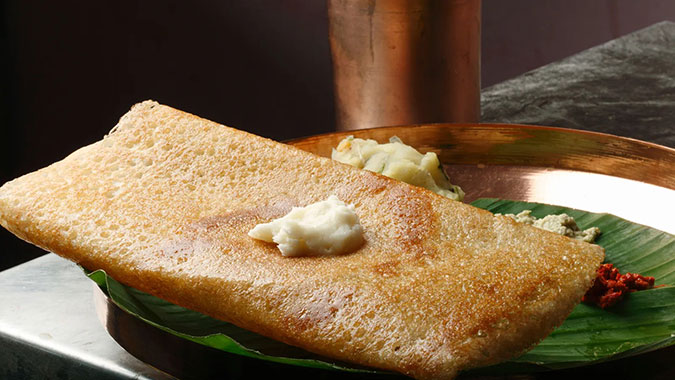
This is how millions of South Indians eat this wholesome and satisfying vegetarian dish every morning, sometimes opting for a side of chutney and sambhar (a tangy lentil-based broth) over the idli podi. However, over time, the dosai – also known as thosai, dose or attlu, depending on the Indian region, and as the anglicised “dosa” around the world – has evolved to include different ingredients and fillings such as spicy potatoes as in the globally ubiquitous masala dosa.
The traditional dosai dates back at least two millennia, being documented in ancient literature and passed down through the generations, with the South Indian states of Tamil Nadu and Karnataka both claiming it as their own. In his book The Story of Our Food, food historian K T Achaya says that King Someshwara III (who ruled parts of the present-day Karnataka state) mentions dosai as “dosaka” in the 12th-Century Sanskrit literary work Manasollasa. However, ancestors of the dosai such as mell adai (a pancake made of lentils and rice) and appam (a rice pancake soaked in coconut milk) were being consumed in the Tamil region much earlier.
“Appam and mell adai do find a mention in Madhuraikanchi, a Sangam age literary work from the 3rd or 4th Century,” said Jayakumar S, a researcher of South Indian history and founder of . “But, the actual term “dosai” seems to have been added much later into the lexicon.” He further explained that Senthan Divakaram, an ancient Tamil lexicon (some ascribe it to the 10th Century) attributes dosai to one of the varieties of appam that’s often eaten with the coconut milk on the side.
Despite any debate over who owns the dosai, chefs from the Udupi region in Karnataka were credited with the crispy version we know now somewhere in the 19th Century. Until then, the dosai was more of a soft, fluffy and lacy crepe. And to this day, institutions like (opened in 1924) and (opened in 1943) in Karnataka’s capital Bengaluru have been dishing out delectable dosai for decades. By the early 20th Century, however, many Udupi chefs had migrated to larger Indian towns and cities, popularising the dosai – especially the masala dosa – across India as an affordable breakfast item given its humble and widely available ingredients.
In 2003, the Chennai-based chain took things to the next level by opening South Indian restaurants in various countries, starting in Dubai. And the dosai has continued to grow in popularity around the world, mainly due to the large Indian diaspora who regularly devour the dish and its many variations – including US Senator and current vice presidential candidate Kamala Harris, whose video of took Twitter by storm last November.
The dosai has also recently become trendy in health and wellness circles in India, as it’s considered due to the probiotic qualities that come from its fermentation process. The soaked triad of rice, black gram and a few fenugreek seeds (which impart a distinctive nutty flavour and bitter undertones) is ground with some water and then transferred to a vessel to ferment naturally for seven to eight hours. A few spoonfuls of salt are added after grinding to accelerate the fermentation process.
“The final fermented batter, owing to the action of lactic acid bacteria and yeasts, has increased levels of essential amino acids. This aids in the reduction of anti-nutrients (such as phytic acid) and enzyme inhibitors, thus making it an extremely nutritious food to consume,” explained microbiologist Dr Navaneetha T.
The dosai, termed “dosaka” in ancient Ayurveda texts, is also used by Ayurveda experts in bespoke treatment menus.
“Dosa and idli
[a savoury rice cake made with the same batter as dosai] are part of the diet to treat muscle wasting, constipation and debility,” said Dr Sreelakshmi, a senior wellness consultant in Delhi.
We can dish out almost 70 varieties of dosas at any given time
For most Indians though, dosai is a go-to breakfast food that has evolved into a fast food item to be eaten at just about any time, day and night. Owing to its popularity, affordability of its ingredients and the ease with which the batter ferments in a tropical region like India, dosa outlets can be now found in every corner of the country and beyond.
“Over the years, the batter’s flexibility to be dished out in many variations has aided and lent itself to dosa’s evolution as comfort food,” said chef Thirugnanasambantham K, principal of Welcomgroup Graduate School of Hotel Administration in Manipal. And while the dosai is usually eaten plain (sans fillings), food trends, ingredient availability and convenience factors have resulted in many alternative dosai varieties, both filled and non-filled.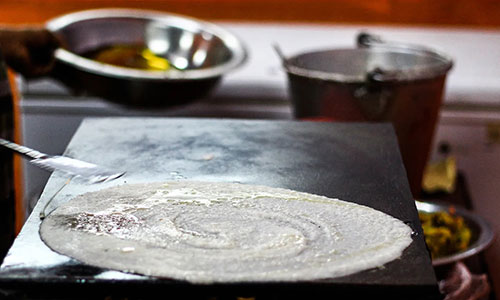
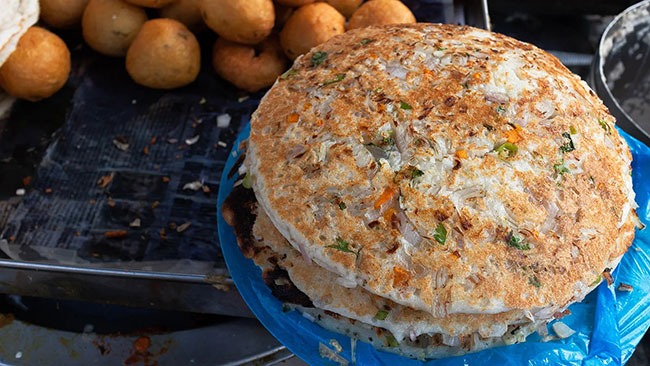
For example, in households across Tamil Nadu, when the fermented batter turns overtly sour from too much fermentation, it gets transformed into uthappam (a thicker dosai with chopped or sliced vegetables); while coconut milk is used instead of black gram in the delicious appam. And new varieties are being created all the time. From Szechuan dosa, hailing from India’s Chinese culinary influence, to the North Indian-inspired paneer butter masala dosa, there is no dearth of dosas churned out by food ventures across India. Even McDonald’s capitalised on this culinary obsession by introducing its in December 2019.
Brothers Ritesh Bhattad, 31, and Ygesh Bhattad, 33, are second-generation businessmen who have flourished by swirling the humble dosai batter. “We can dish out almost 70 varieties of dosas at any given time,” said Ritesh. “However, our signature RBS dosa [filled with grated paneer and onions mixed with peanut chutney and spices] easily sells close to 5,000 pieces every month.” The duo’s successful family-run fast food and catering enterprise, in Hyderabad, has been a hit with college students and office workers, allowing them to open outlets at three more locations across the city.
According to , the masala dosa has been the most-ordered vegetarian dish across India during the pandemic. A whopping 331,423 masala dosas have been delivered by India’s food delivery company, , since lockdown began in the last week of March. This version of dosai has become synonymous with South Indian cooking around the world, although it wasn’t part of India’s culinary history until the Dutch and Portuguese introduced potatoes to India in the 17th Century.
However, in South India, the dosai remains more sacred than a mere breakfast or fast food item, and forms part of the edible offerings to god categorised as “temple cuisine”, which follows closely guarded recipes and sometimes old temple inscriptions.
Azahagar Kovil temple in Madurai, for example, makes a thick and fluffy dosai spiced with cumin seeds and crushed black pepper that is deep-fried in ghee as a divine offering, which is then eaten by devotees. In the town of Kanchipuram in Tamil Nadu, a dosai recipe is depicted on the walls of Varadaraja Perumal Temple. “We have an interesting 16th-Century inscription on the walls… mentioning the preparation of dosai (both savoury and sweet) during Ekadasi processions [religious events conducted on the 11th day after the full moon, and on the 11th day after the new moon],” said Jayakumar S. “This confirms that dosai has been part of the Indian temple cuisine for a long time.”
Whether made at a temple, on the streets or at home, the dosai in its many variations is a divinely tasting food that is deeply embedded into Indian culture.In my family, the dosai isn’t just another food; it’s more like an emotion that cannot be replicated – only experienced in the moment. These words of wisdom came from my grandma, who, a few years back, let me in on an age-old secret shared in turn by her grandma: that no two people can swirl a dosai the same way, no matter how much one tries.
– BBC

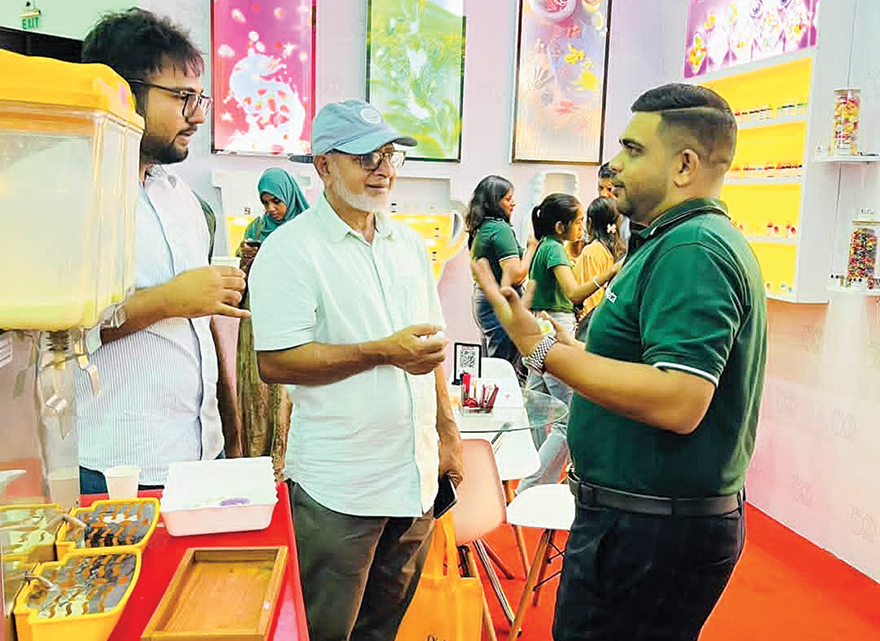
Salman Faiz has turned his family legacy into a modern sensory empire. Educated in London, he returned to Sri Lanka with a global perspective and a refined vision, transforming the family legacy into a modern sensory powerhouse blending flavours,colours and fragrances to craft immersive sensory experiences from elegant fine fragrances to natural essential oils and offering brand offerings in Sri Lanka. Growing up in a world perfumed with possibility, Aromatic Laboratories (Pvt) Limited founded by his father he has immersed himself from an early age in the delicate alchemy of fragrances, flavours and essential oils.
 Salman Faiz did not step into Aromatic Laboratories Pvt Limited, he stepped into a world already alive with fragrance, precision and quiet ambition. Long before he became the Chairman of this large enterprise, founded by his father M. A. Faiz and uncle M.R. Mansoor his inheritance was being shaped in laboratories perfumed with possibility and in conversations that stretched from Colombo to outside the shores of Sri Lanka, where his father forged early international ties, with the world of fine fragrance.
Growing up amidst raw materials sourced from the world’s most respected fragrance houses, Salman Faiz absorbed the discipline of formulation and the poetry of aroma almost by instinct. When Salman stepped into the role of Chairman, he expanded the company’s scope from a trusted supplier into a fully integrated sensory solution provider. The scope of operations included manufacturing of flavours, fragrances, food colours and ingredients, essential oils and bespoke formulations including cosmetic ingredients. They are also leading supplier of premium fragrances for the cosmetic,personal care and wellness sectors Soon the business boomed, and the company strengthened its international sourcing, introduced contemporary product lines and extended its footprint beyond Sri Lanka’s borders.
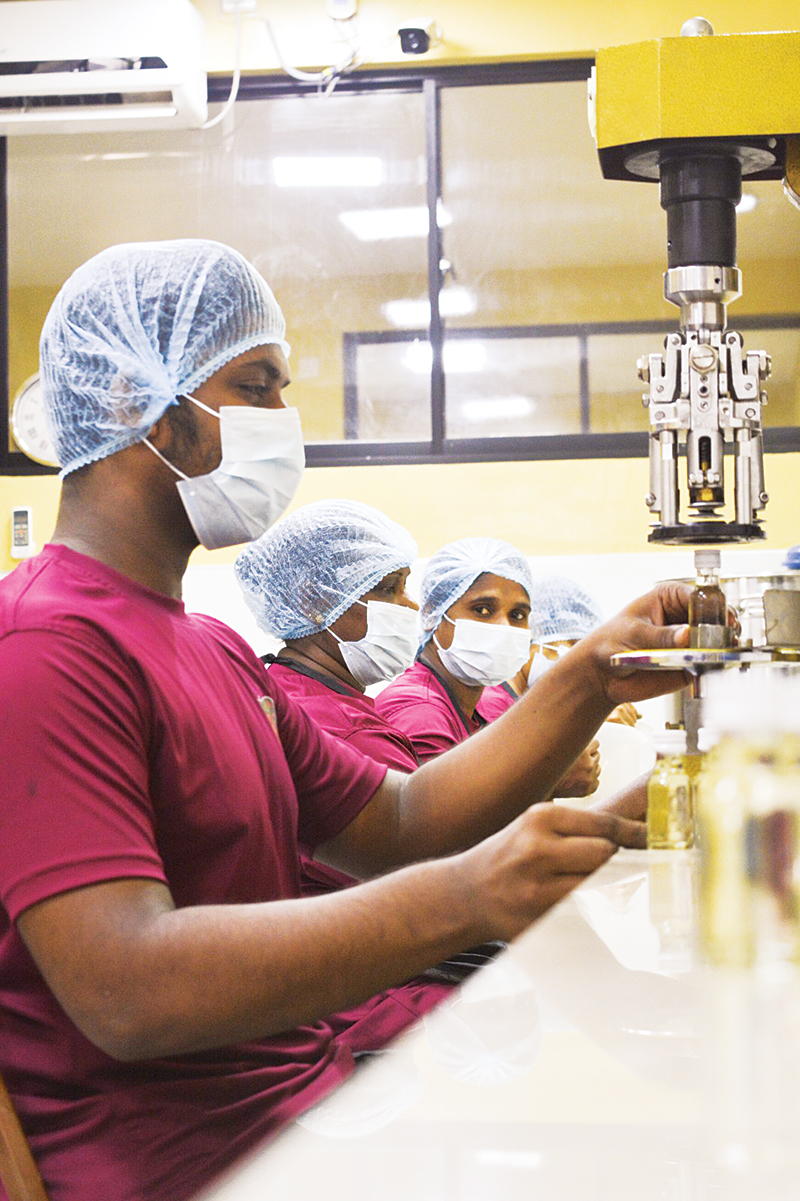
Where raw materials transform into refined fragrance

Salman Faiz -carrying forward a legacy
Today, Aromatic Laboratories stands as a rare example of a second generation. Sri Lankan enterprise that has retained its soul while embracing scale and sophistication. Under Salman Faiz’s leadership, the company continues to honour his father’s founding philosophy that every scent and flavour carries a memory, or story,and a human touch. He imbibed his father’s policy that success was measured not by profit alone but the care taken in creation, the relationships matured with suppliers and the trust earned by clients.
“We are one of the leading companies manufacturing fragrances, dealing with imports,exports in Sri Lanka. We customise fragrances to suit specific applications. We also source our raw materials from leading French company Roberte’t in Grasse
Following his father, for Salman even in moments of challenge, he insisted on grace over haste, quality over conveniences and long term vision over immediate reward under Salman Faiz’s stewardship the business has evolved from a trusted family enterprise into a modern sensory powerhouse.
Now the company exports globally to France, Germany, the UK, the UAE, the Maldives and collaborates with several international perfumes and introduces contemporary products that reflect both sophistication and tradition.
We are one of the leading companies. We are one of the leading companies manufacturing fine and industrial fragrance in Sri Lanka. We customise fragrances to suit specific applications said Faiz
‘We also source our raw materials from renowned companies, in Germany, France, Dubai,Germany and many others.Our connection with Robertet, a leading French parfume House in Grasse, France runs deep, my father has been working closely with the iconic French company for years, laying the foundation for the partnership, We continue even today says Faiz”
Today this business stands as a rare example of second generation Sri Lankan entrepreneurship that retains its souls while embracing scale and modernity. Every aroma, every colour and every flavour is imbued with the care, discipline, and vision passed down from father to son – a living legacy perfected under Salmon Faiz’s guidance.
By Zanita Careem
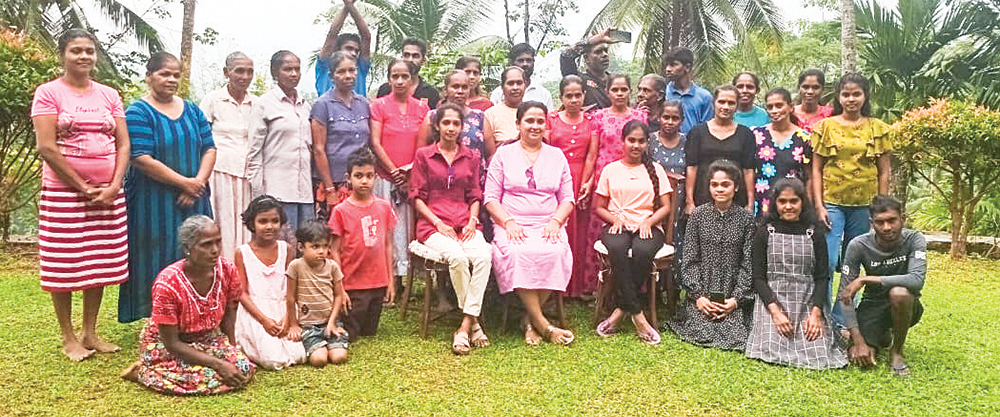
Harini and Chanaka cultivating change
When Harini and Chanaka Mallikarachchi returned to Sri Lanka after more than ten years in the United States, it wasn’t nostalgia alone that they brought home . It was purpose.Beneath the polished resumes and strong computer science backgrounds lay something far more personal- longing to reconnect with the land, and to give back to the country that shaped their memories. From that quiet but powerful decision was born Agri Vision not just an agricultural venture but a community driven movement grounded in sustainability ,empowerment and heritage. They transform agriculture through a software product developed by Avya Technologies (Pvt Limited) Combining global expertise with a deep love for their homeland, they created a pioneering platform that empowers local farmers and introduce innovative, sustainable solutions to the country’s agri sector.
After living for many years building lives and careers in theUnited States, Harini and Chanaka felt a powerful pull back to their roots. With impressive careers in the computer and IT sector, gaining global experience and expertise yet, despite their success abroad, their hearts remained tied to Sri Lanka – connection that inspired their return where they now channel their technological know-how to advance local agriculture.
For Harini and Chanaka, the visionaries behind Agri Vision are redefining sustainable agriculture in Sri Lanka. With a passion for innovation and community impact, they have built Agri Vision into a hub for advanced agri solutions, blending global expertise with local insight.
In Sri Lanka’s evolving agricultural landscape, where sustainability and authenticity are no longer optional but essential. Harini and Chanaka are shaping a vision that is both rooted and forward looking. In the heart of Lanka’s countryside, Uruwela estate Harini and Chanaka alongside the ever inspiring sister Malathi, the trio drives Agri Vision an initiative that fuses cutting edge technology with age old agricultural wisdom. At the core of their agri philosophy lies two carefully nurtured brands artisan tea and pure cinnamon, each reflecting a commitment to quality, heritage and people.
Armed with global exposure and professional backgrounds in the technology sector,they chose to channel thier experiences into agriculture, believing that true progress begins at home.
-
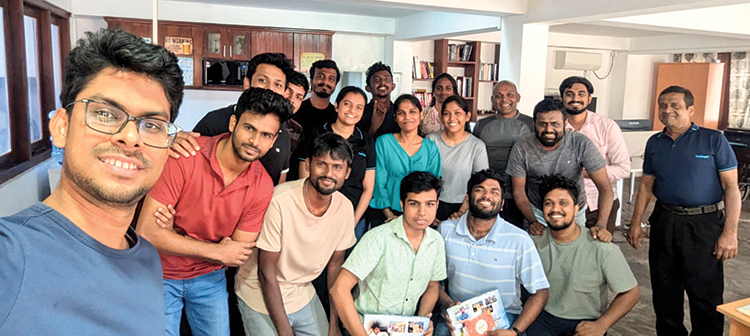
- Avya Technologies (Pvt) ltd software company that developed Agri Vision
-
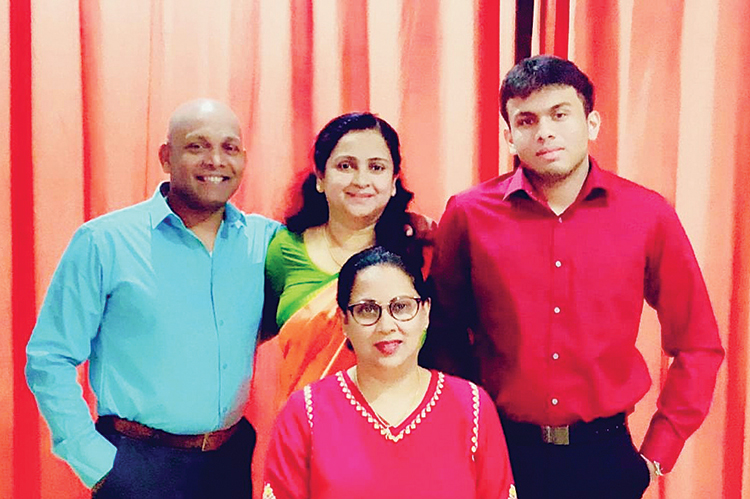
- Chanaka,Harini and Shakya Mallikarachchi and Malathi Malathi dias (middle)
But the story of Agri Vision is as much about relationships as it is about technology. Harini with her sharp analytical mind, ensures the operations runs seamlessly Chanaka, the strategist looks outward, connecting Agri Vision to globally best practices and Malathi is their wind behind the wings, ensures every project maintains a personal community focussed ethos. They cultivate hope, opportunity and a blueprint for a future where agriculture serves both the land and the people who depend on it .
For the trio, agriculture is not merely about cultivation, it is about connection. It is about understanding the rhythm of the land, respecting generations of farming knowledge, and that growth is shared by the communities that sustain it. This belief forms the backbone of Agro’s vision, one that places communities not only on the periphery, but at the very heart of every endeavour.
Artisan tea is a celebration of craft and origin sourced from selected growing regions and produced with meticulous attention to detail, the tea embodier purity, traceability and refinement, each leaf is carefully handled to preserve character and flavour, reflecting Sri Lanka’s enduring legacy as a world class tea origin while appealing to a new generation of conscious consumers complementing this is pure Cinnamon, a tribute to authentic Ceylon, Cinnamon. In a market saturated with substitutes, Agri vision’s commitment to genuine sourcing and ethical processing stands firm.
By working closely with cinnamon growers and adhering to traditional harvesting methods, the brands safeguards both quality and cultural heritage.
What truly distinguishes Harini and Chanake’s Agri Vision is their community approach. By building long term partnerships with smallholders. Farmers, the company ensures fair practises, skill development and sustainable livelihoods, These relationships foster trust and resilience, creating an ecosystem where farmers are valued stakeholders in the journey, not just suppliers.
Agri vision integrates sustainable practices and global quality standards without compromising authenticity. This harmony allows Artisan Tea and Pure Cinnamon to resonate beyond borders, carrying with them stories of land, people and purpose.
As the brands continue to grow Harini and Chanaka remain anchored in their founding belief that success of agriculture is by the strength of the communities nurtured along the way. In every leaf of tea and every quill of cinnamon lies a simple yet powerful vision – Agriculture with communities at heart.
By Zanita Careem
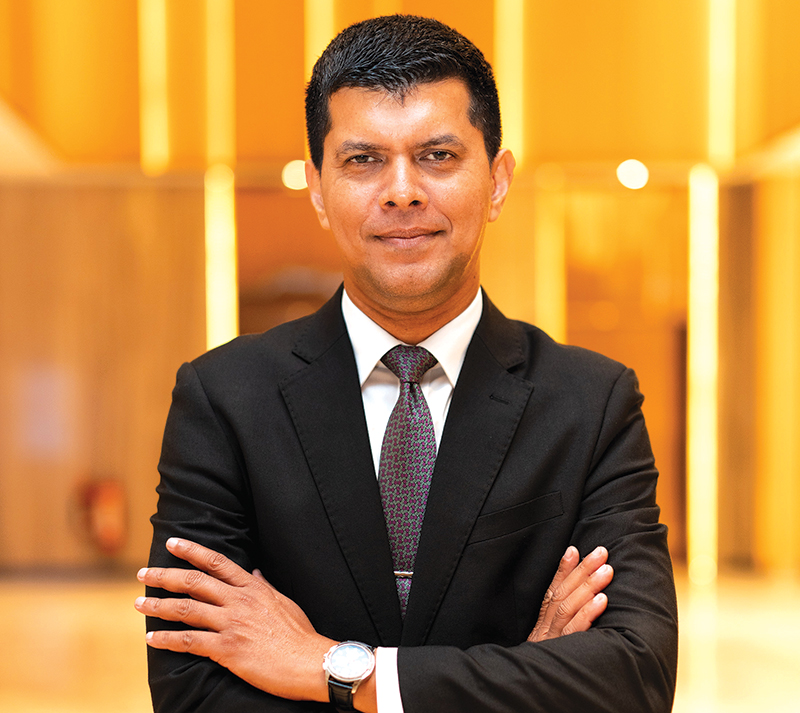
Courtyard by Marriott Colombo has welcomed Suranga Peelikumbura as its new General Manager, ushering in a chapter defined by vision, warmth, and global sophistication.
Suranga’s story is one of both breadth and depth. Over two decades, he has carried the Marriott spirit across continents, from the shimmering luxury of The Ritz-Carlton in Doha to the refined hospitality of Ireland, and most recently to the helm of Resplendent Ceylon as Vice President of Operations. His journey reflects not only international mastery but also a devotion to Sri Lanka’s own hospitality narrative.
What distinguishes Suranga is not simply his credentials but the philosophy that guides him. “Relationships come first, whether with our associates, guests, partners, or vendors. Business may follow, but it is the strength of these connections that defines us.” It is this belief, rooted in both global perspective and local heart, that now shapes his leadership at Courtyard Colombo.
At a recent gathering of corporate leaders, travel partners, and media friends, Suranga paid tribute to outgoing General Manager Elton Hurtis, hon oring his vision and the opportunities he created for associates to flourish across the Marriott world. With deep respect for that legacy, Suranga now steps forward to elevate guest experiences, strengthen community ties, and continue the tradition of excellence that defines Courtyard Colombo.
From his beginnings at The Lanka Oberoi and Cinnamon Grand Colombo to his leadership roles at Weligama Bay Marriott and Resplendent Ceylon, Suranga’s career is a testament to both resilience and refinement. His return to Marriott is not merely a professional milestone, it is a homecoming.

Ramadan 2026: Fasting hours around the world

Omarzai’s all-round brilliance hands Afghanistan their first win of the World Cup

We will not allow anyone to drag the country backward by inciting racism. — PM

Amelia Kerr appointed new New Zealand women’s cricket captain

US boards second tanker in Indian Ocean after tracking it from Caribbean

Motorbike raids on villages kill dozens in Nigeria

‘Dates have the highest sugar content to fight Coronavirus’

Sunday Island 27 December – Headlines

#SundayIsland 17th December – Headlines

Sunday Island – 28th March

Sunday Island Headlines – 21 March

Sunday Island – 21st February – Headlines
-
 Life style2 days ago
Marriot new GM Suranga
-

 Midweek Review6 days ago
A question of national pride
-

 Features2 days ago
Monks’ march, in America and Sri Lanka
-

 Business6 days ago
Autodoc 360 relocates to reinforce commitment to premium auto care
-

 Opinion5 days ago
Will computers ever be intelligent?
-

 Features2 days ago
The Rise of Takaichi
-

 Features2 days ago
Wetlands of Sri Lanka:
-
 Midweek Review6 days ago
Theatre and Anthropocentrism in the age of Climate Emergency