
Latest News
We will not allow anyone to drag the country backward by inciting racism. — PM

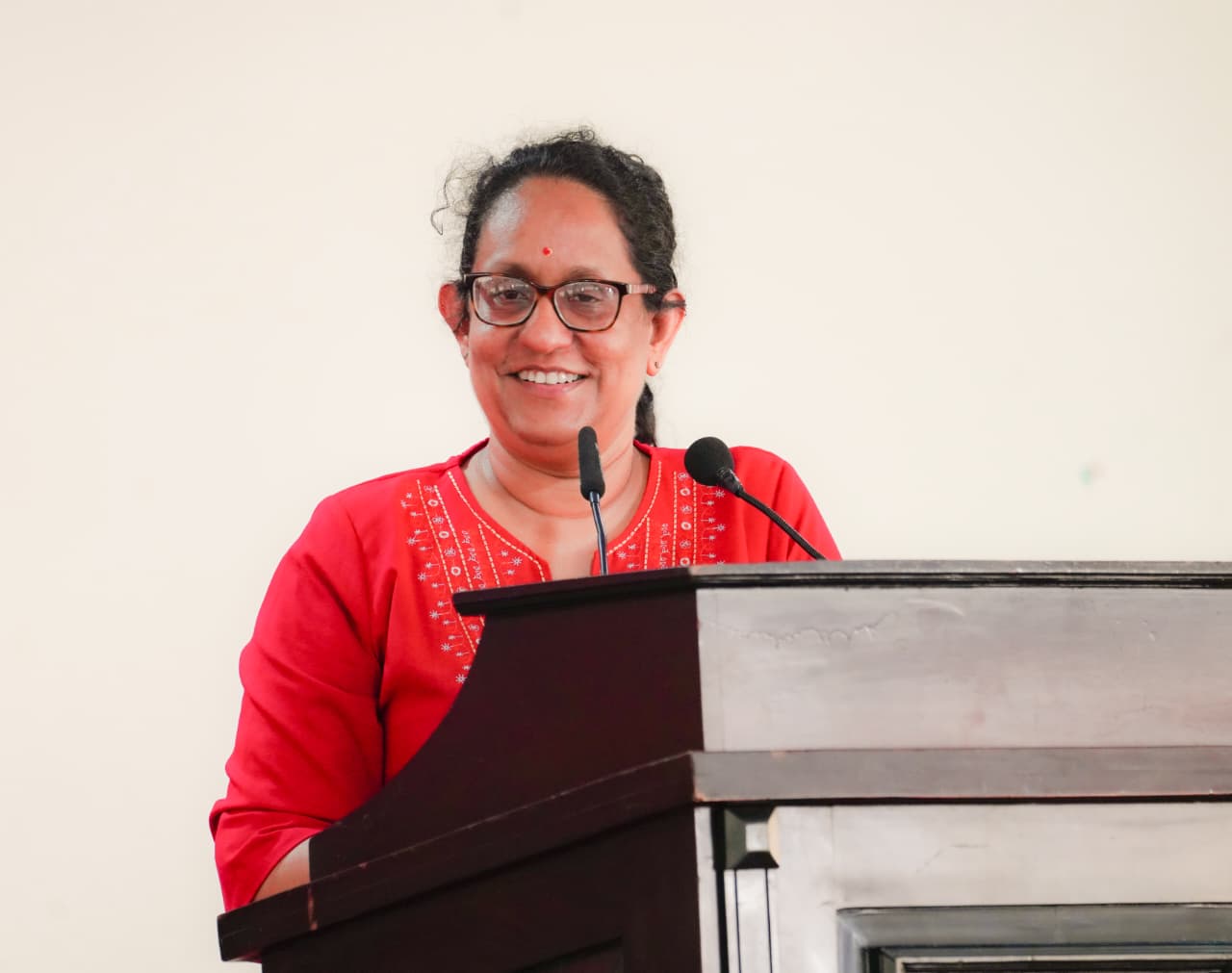
Prime Minister Dr. Harini Amarasuriya stated that no one will be allowed to drag the country’s future backward by inciting racism, and emphasized that women must step forward to carry forward the change that has been initiated.
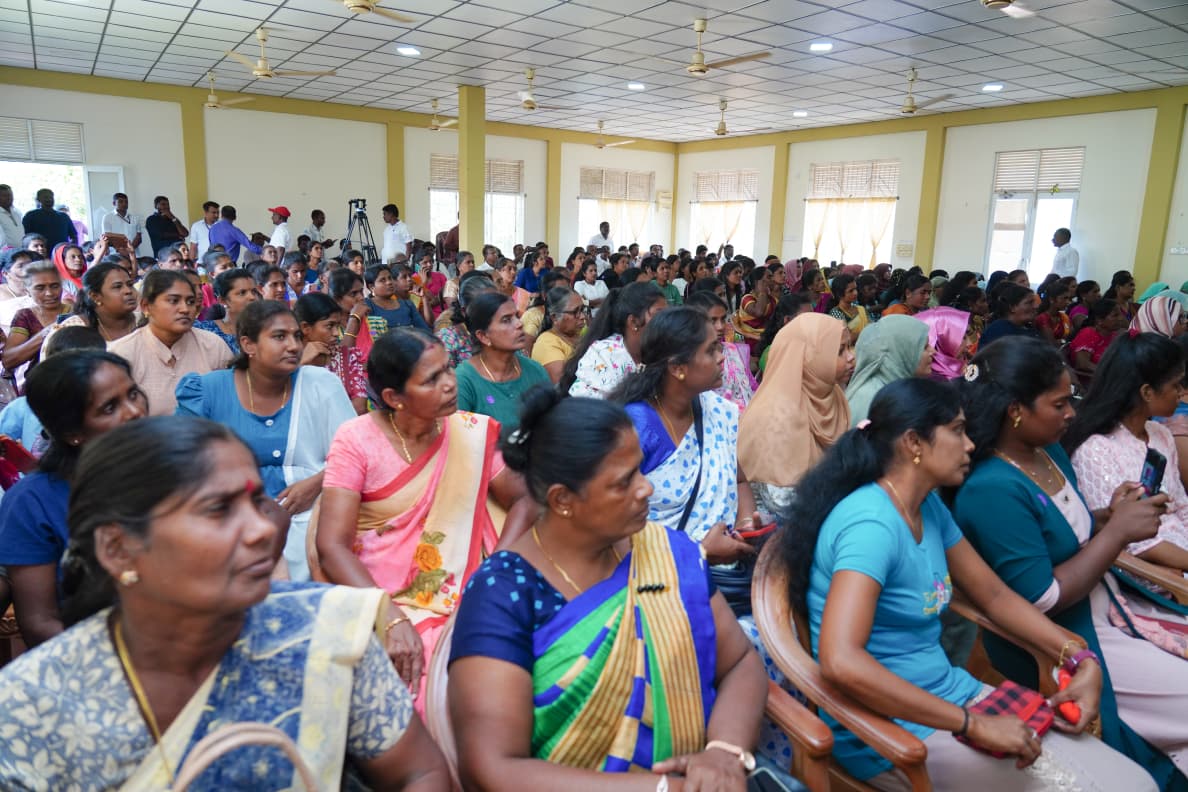
The Prime Minister made these remarks while addressing the Mannar District Women’s Meeting held on Sunday [15 th of February] in the Adampan area of the Mannar District.
Speaking further, the Prime Minister stated:
“You know that our government has brought about a change in women’s representation. According to statistics, about 52% of the population are women. That means women constitute a powerful segment of our country’s population. However, when we consider various sectors and the challenges faced in daily life, the question remains whether this power is reflected in practice.
One of the main problems our country faced was war and violence, which caused us to view one another with distrust. As a result, we truly became a divided nation. Consequently, women were the ones who suffered the most. We know that many women in this country have endured immense suffering after losing their mothers, fathers, sons, daughters, brothers, and sisters. We are aware that many such women live in this region as well. Although the war ended a long time ago, peace has still not taken root in people’s hearts. Even today, there are women who do not know what happened to their family members. There are many women who struggle alone to protect and sustain their families.
Our government is committed to go against racism. We believe that everyone in this country should be able to live safely with equal rights. However, racist groups are still attempting to create divisions among people. They are not interested in stopping corruption, protecting democracy, ensuring the equal application of the law, or strengthening the economy. Their only objective is to gain power, not for the benefit of the people, but for themselves.
We know how much they have destroyed this country’s resources. In 2022, the country faced a massive economic collapse. But by 2025, our government was able to strengthen the economy by putting an end to theft, corruption, and waste. That is why, when Cyclone Ditwah struck, we were able to assist the people without borrowing loans.
Recently, for the first time in 21 years, we were able to distribute profits of the Milco institution among dairy farmers. Within about a year, by increasing revenue streams and minimizing waste in institutions, we were able to share profits.
We are rebuilding institutions which have fallen apart putting an end to fraud and corruption, stopping the waste, and ensuring that the benefits reach the people. Yet, some are attempting to take the country backward by stirring up racism.
Women are among those most affected by racism. Should we allow ourselves to be divided again and let discord rise? No. That is why women’s leadership is essential. To carry forward the change we have begun, women must step forward. There is still much work to be done. We will not allow our forward journey to be reversed.
One of the major challenges we face today is the drug menace. We fear for our children becoming victims of drugs, and as a result, family disputes have increased. People are afraid to go out or leave homes due to drug addicts. The President has made a special commitment to eradicate harmful drugs from the country. Those who were in power previously provided protection to these groups, preventing the police from enforcing the law properly. Today, we have instructed the police to enforce the law correctly. The police can now perform their duties properly, and the judiciary is delivering independent decisions. If a crime is committed, punishment must follow. The law is equal for everyone. We are aware that there are still areas where the law is not properly enforced.
There are still women and children who suffer from violence and abuse. The law must be more effective in ensuring the safety of women and children. We are increasing judicial capacity and taking steps to address such cases more swiftly.
Mothers make great sacrifices with faith in their children’s education. That is why we are working to provide quality education to all children. After five years, we are recruiting graduate teachers this year, and they will definitely be assigned to schools with vacancies. Proper appointments of principals had not been made earlier; we began filling these vacancies last year. Alongside this, we are developing school infrastructure. There is no distinction between big schools and small schools. Every school belongs to our children.
We are developing one school in each division and have informed District Development Committees to nominate those schools. We are also working to establish smart classrooms in every secondary school. In addition, from this year, education for Grade One has commenced under a new curriculum.
We came to power to rebuild this country, and we must do so. Women contribute significantly to the economy, yet they receive the lowest wages. Women have achieved high progress in all sectors. Therefore, when women engage in self-employment from home or participate in the workforce, facilities must be created to ensure the safety and care of their children”
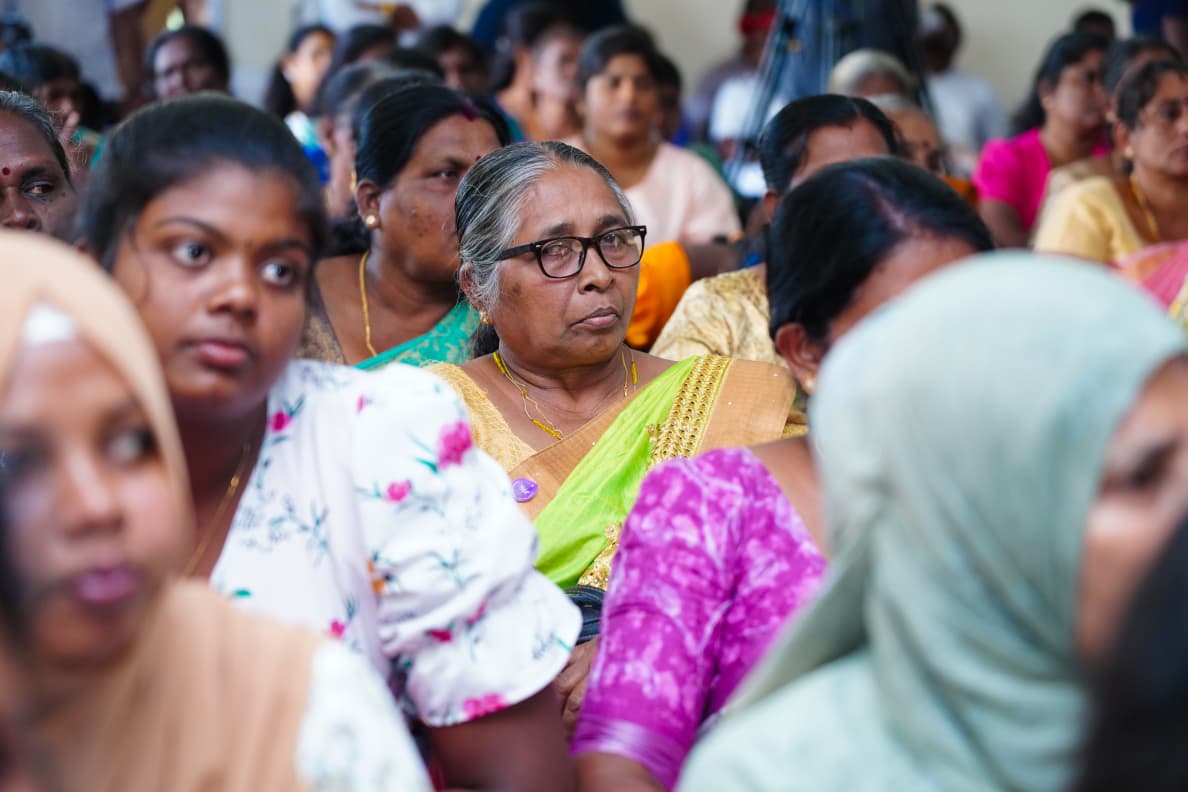
The occasion was attended by the Member of Parliament Jegatheeswaran, along with municipal and divisional council representatives and a large number of women.
[Prime Minister’s Media Division]

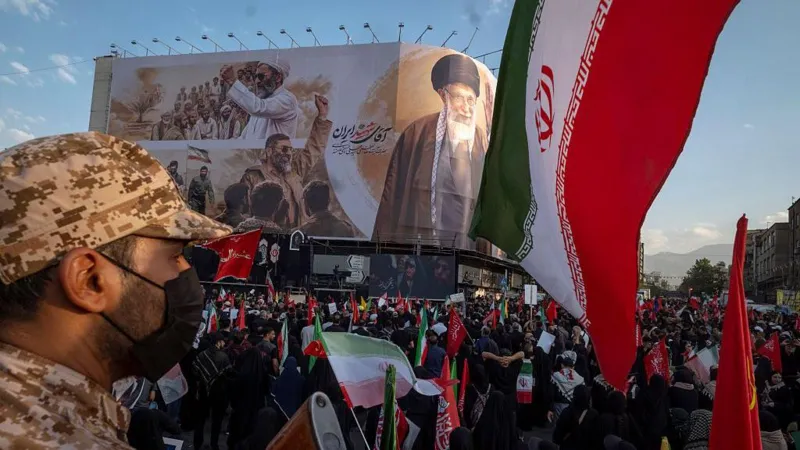
The United States said it had launched fresh strikes against Iran on Wednesday evening as President Donald Trump warned Tehran it “better behave”.
The US military said “Iranian military capabilities used to threaten vessels” moving through the Strait of Hormuz had been targeted, and that it had separately fired on a ship attempting to violate its renewed blockade of Iran’s ports.
It came after Iran claimed it had struck US military targets in the region, including in Bahrain and Kuwait, as a fifth day of renewed hostilities strained their preliminary deal to end the war.
Iran’s top negotiator, Mohammad Bagher Ghalibaf, meanwhile told state media Tehran had “no reason” to abide by the deal if it did benefit from it.
Trump had threatened late on Tuesday to attack bridges and power plants should Iran not return to talks next week.
Asked by reporters late on Wednesday whether he would give a deadline before doing so, he responded: “I don’t like giving deadlines, but they pretty much know, they know the story… they better behave.”
He later told delegates at a defence summit that Iran was “not happy right now”.
“They want to settle so badly. They don’t like what we’re doing,” he said. “We’ll find out whether we want to settle with them or if we just finish it off.”
Ghalibaf however said Iran’s national security depended on Tehran maintaining “Iranian arrangements” in the strait.
He added that negotiation – along with war – was part of Iran’s strategy of resistance as it engaged an “existential” conflict with the US.
The escalation in Trump’s rhetoric came after he said a 20% toll he had threatened to impose in the Strait of Hormuz would be replaced by “massive” trade and investment deals with Gulf states.
A previous threat by Trump to bomb Iran’s civilian infrastructure, which was made in April, drew condemnation at the time from UN human rights chief Volker Türk, who said: “Under international law, deliberately attacking civilians and civilian infrastructure is a war crime.”
The latest US strikes marked the second wave its military said it had carried out during daylight hours on Wednesday. It said it had “further degraded Iran’s ability to attack commercial shipping in the Strait of Hormuz” earlier in the day.
A 90-minute wave was used to target Iran’s coastal defences and cruise missile storage and launch sites on Greater Tunb Island, US Central Command (Centcom) added.
Centcom also said it had redirected two commercial vessels since reimposing its blockade on Iranian ports on Tuesday evening, which stops vessels from transiting to and from Iranian ports and coastal areas.
The blockade had previously been lifted as part of a deal that was struck by the two countries last month – known as a memorandum of understanding – that aimed to end the months-long conflict.
However, a dispute over the strait has become a key point of contention.
In response to the renewal of the US blockade, Iran’s Revolutionary Guard Corps (IRGC) warned the US that it should “expect the closure of other oil and gas export routes that serve the interests of the United States and its allies”. It did not elaborate on which routes could be affected.
Ongoing US-Iran hostilities have underscored the strategic importance of the Strait to the global economy, with a sharp rise in oil prices triggered by tanker traffic virtually stalling through the key shipping lane.
[BBC]
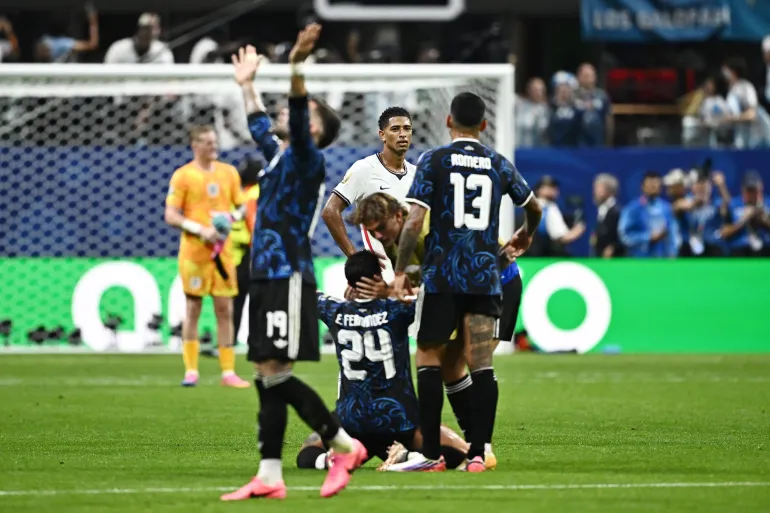
Lautaro Martinez scored a 92nd-minute winner as Lionel Messi inspired World Cup holders Argentina to a stunning comeback to beat England 2-1 and set up a final with European football champions Spain.
England had been on course to reach their first FIFA World Cup final since 1966 after Anthony Gordon fired them into the lead 10 minutes into the second half of the semifinal in front of 68,239 fans in Atlanta on Wednesday.
The great rivalry between these nations has produced several memorable contests on the World Cup stage through the years, and this will be remembered as the stuff of legends in Argentina as the South Americans denied England with two late sucker punches.
Messi set up Enzo Fernandez to fire in an 85th-minute equaliser, and then, with extra time looming, crossed for substitute Lautaro Martinez to head in the winner in the second minute of stoppage time.
It was maybe not quite up there with Diego Maradona’s legendary display in putting England to the sword in 1986, but the goals this time brought Argentina back from the dead and kept alive their hopes of winning back-to-back World Cups.
No team has retained the trophy since Brazil in 1962, and now, Messi will become just the second player after Brazilian great Cafu to appear in three World Cup finals. Italy are the only other side to defend a World Cup crown.
The 2026 final will take place at New York New Jersey Stadium in New Jersey on Sunday, as the first 48-team World Cup boils down to a confrontation between the reigning champions of Europe and South America.
Messi had waited until the age of 39 to get the chance to play against England, and he will now face Spain for the first time in a competitive game.
His career appeared to be complete when he dragged Argentina to glory in 2022 in Qatar, but he is clearly not done yet.

England, though, will have huge regrets as they head to Miami to play France in Saturday’s third-place playoff, a game neither team will want to contest.
The prospect of a first World Cup final appearance since their sole triumph 60 years ago was a momentous one, and they were so close, but will live to regret sitting back after Gordon’s opener.
Given the deep-rooted rivalry between these nations, this was always likely to be a game with an edge, and there was a palpable sense of tension at Atlanta Stadium.
Argentina’s players were clearly fired up, partly by a determination to hold onto their World Cup crown but also by a sense of what this fixture means.
That translated into a niggly contest, pockmarked by fouls in the first half, including Elliot Anderson being booked for scything down Messi.
There were no real chances to speak of in the first half, but England struck in the 55th minute.
Kane was involved in the buildup as the ball eventually came to Morgan Rogers on the right, and he whipped in a low cross towards the back post where Gordon stole in front of Nahuel Molina to score.
But this was the stadium where Argentina produced a stunning comeback from 2-0 down to beat Egypt in the last 16, and they were not done.
They threw everything at their opponents, as Jordan Pickford made a great save from a Nico Gonzalez header, and Alexis Mac Allister was then denied by the post in the 76th minute.
Fernandez was denied from range by Pickford, but moments later, he equalised, controlling a Messi pass on the edge of the area and letting fly past the goalkeeper.
Argentina smelled blood, and Mac Allister again hit the post before England failed to clear, and Martinez headed in the winner from an exquisite Messi cross to spark chaotic scenes of celebration and leave England completely deflated.
[Aljazeera]
The key men for Thomas Tuchel’s side during this campaign have been Jude Bellingham and captain Harry Kane, yet they failed to deliver on this occasion, and England’s players slumped to the turf at full-time.

Years of political history and football rivalry will collide in Atlanta when England face Argentina in a World Cup semifinal for the ages.
From the controversial “Hand of God” goal by Diego Maradona in 1986 to David Beckham being red-carded for kicking Diego Simeone in 1998, sporting contests between England and Argentina are often theatrical, tense and tricky.
Then, there is also the lingering sovereignty dispute over the Falkland Islands.
Divided by geography and conflict, England and Argentina are vastly different in many ways, yet at this World Cup, they have at least one thing in common – both have made a habit of surviving on the edge.
For England, the plan is simple: Find a way to stop the magical force of Lionel Messi and reach their first final in six decades.
And for Argentina? To grind again and chase history in back-to-back finals.
Here’s everything you need to know about this semifinal:
How did England and Argentina reach the semifinals?
England topped Group L with seven points, beating Croatia and Panama and drawing with Ghana. They needed a second-half comeback to beat the Democratic Republic of the Congo in the round of 32 and knocked out co-hosts Mexico3-2 in a scintillating last-16 contest at the iconic Azteca Stadium.
In the quarterfinals, they came from a goal down to beat Norway 2-1 in extra time.
Argentina had a strong showing in the first round, topping Group J by beating Algeria, Austria and Jordan. In the round of 32, they were pushed to their limits before squeezing past Cape Verde 3-2 in extra time, and came from two goals down to beat Egypt 3-2 in a controversial last-16 contest which drew allegations of officiating bias.
Against Switzerland in the quarterfinals, they again played a full 120 minutes before securing a 3-1 win.

At last, Messi meets England
From winning the World Cup to Copa America, lifting the Champions League trophy to the Ballon d’Or, and kissing the Golden Ball, Messi has achieved almost everything possible in football.
But in his 21 years playing for Argentina, there is one thing he has not done: face England.
The 39-year-old forward will play against the Three Lions for the first time, 21 years on from the red card he received in the early days of his career, which denied him the chance in a 2005 friendly.
“I have played against everyone except England, and it is special because they are a major nation, a powerhouse, and it is always nice to play against a side like that, especially in a World Cup semifinal,” Messi said.
With eight goals in six matches, Messi is enjoying a World Cup campaign like no other as he bids for his first Golden Boot. As the captain, he is also leading Argentina’s charge to become the first team to retain the World Cup since Brazil in 1962.
Should they beat England, Argentina would be in their third final in four World Cups, and Messi could follow in the footsteps of Brazil’s great, Cafu, who played in three in a row from 1994 to 2002 – even Maradona only ever played in two.
“Getting to another semifinal is not a normal, mundane thing, so this is something we should really enjoy because we don’t know if it will happen again,” Messi said.
Pickford backs England to keep cool in tense clash
Generations in England have not seen their team lift a major trophy. Their only success came when hosting the 1966 World Cup.
This current squad – headlined by the dynamic duo of Harry Kane and Jude Bellingham – is, however, within touching distance of making history, by not only winning a second trophy, but a first on foreign soil.
Before the game, though, Thomas Tuchel’s side knows the pressure is firmly on them, but goalkeeper Jordan Pickford believes the team can cope.
“You’ve seen throughout the tournament our desire to win tackles. We’ve not got into any scuffles or anything,” he said on Monday.
“We’ve been very well respected within the game. Decisions go our way [or] they don’t go our way, we just reset, we go again, and we let the football do the talking.”
England, fourth in the FIFA rankings, two spots below Argentina, are set to feature in a fourth semifinal in the last five major tournaments.

England vs Argentina predictions
As of Tuesday, Opta’s supercomputer gives England a 39.1 percent probability of winning in regulation time, while Argentina’s chances of winning are 31.6 percent.
The model estimates a 29.3 percent probability of the game going to extra time.
Who is the referee for England vs Argentina?
- Referee: Ismail Elfath (US)
- Assistant referee 1: Corey Parker (US)
- Assistant referee 2: Kyle Atkins (US)
- Fourth official: Maurizio Mariani (Italy)
- Reserve assistant referee: Daniele Bindoni (Italy)
Where is England vs Argentina being played?
England will play Argentina in the second semifinal at Atlanta Stadium, commonly known as Mercedes-Benz Stadium, in Atlanta, Georgia, United States. It is the last of the seven World Cup matches held at this venue, which has a capacity of 68,239 for the tournament.
The stadium, boasting a retractable roof and a 360-degree halo video display, undoubtedly has the most space-age architecture of the 16 host cities.

What is the weather forecast for Atlanta?
AccuWeather forecasts rain on Wednesday afternoon. “Some sun with a thundery shower,” it says.
England vs Argentina: Head-to-head
Overall, they have met 14 times in competitive and friendly matches.
England lead the head-to-head record with six wins, while Argentina have three. Five games ended in a draw.
England vs Argentina: Past results
- England 3-2 Argentina (International friendly, 2005)
- England 1-0 Argentina (World Cup 2002, group stage)
- England 0-0 Argentina (International friendly, 2000)
- Argentina 2-2 England (4-3 on penalties, World Cup 1998, round of 16)
- England 2-2 Argentina (Challenge Cup, 1991)
The winner of the semifinal between Argentina and England will face Spain in Sunday’s final at New York New Jersey Stadium.

England vs Argentina: Team news
England midfielder Declan Rice, who has been struggling with illness, is a doubt, while veteran player Jordan Henderson is out with a wrist injury.
No injuries reported in the Argentina camp.
England’s predicted lineup
(4-1-3-2): Pickford; Konsa, Stones, Guehi, O’Reilly; Rice, Anderson; Madueke, Bellingham, Gordon; Kane
Argentina’s predicted lineup
(4-1-3-2): Martinez; Molina, Romero, Lisandro, Tagliafico; Paredes; De Paul, Fernandez, Mac Allister; Messi, Alvarez
[Aljazeera]

Current El Niño Status in Sri Lanka

A few showers may occur in the Western, Sabaragamuwa and North-western provinces and in Kandy, Nuwara-Eliya, Galle and Matara districts.

Argentina face fine for Falklands banner in semi-final win

US launches fresh strikes on Iran as Trump warns Tehran it ‘better behave’

Govt. move to extend retirement ages of top judges: Opp. complains to UN

Dengue surge pushes hospitals to the brink as cases near 70,000

‘Dates have the highest sugar content to fight Coronavirus’

Sunday Island 27 December – Headlines

#SundayIsland 17th December – Headlines

Sunday Island – 28th March

Sunday Island Headlines – 21 March

Sunday Island – 21st February – Headlines
-
 News6 days ago
Herath warns prospective migrant workers not to get fleeced by racketeers
-

 Features4 days ago
Prison riots and politics: NPP’s biggest challenge and Sri Lanka’s biggest opportunity
-

 Editorial5 days ago
What’s the world coming to?
-
 Foreign News6 days ago
Tensions erupt in Indian state after 11-year-old raped and murdered
-
 Features6 days ago
Devanesan Annan – in Memoriam
-
Editorial6 days ago
Punishment in hellholes
-

 Features1 day ago
Dirty Money
-
 News7 days ago
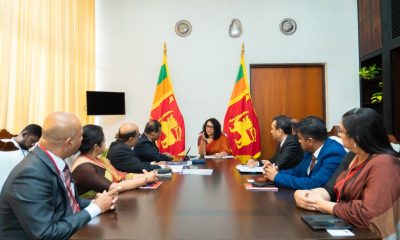
Representatives of the Organization of Professional Associations (OPA) of Sri Lanka meet the Prime Minister