
Features
The ethnic front in Sri Lanka’s contemporary history

R.J. de Silva, Attorney-at-law
(Continued from last week)
The political history of Sri Lanka changed for the worse after 2000 due to intense rivalry between the UNP and SLFP-led coalitions. The two major parties failed to co-habit under President Chandrika Bandaranaike Cumaratunga in 2001, due to politicians of the UNF and UPFA failing to prioritizee the interests of the country over their own. With it failed a grand opportunity to build on the Ceasefire Agreement signed with the LTTE between 2001 and 2003 by the UNF government, assisted by the international community.
With it Sri Lanka lost tremendous goodwill that would have enabled developing the country including the war torn areas. Reconciliation and ethnic peace had a positive vibration, when the SLFP led UPFA government and the opposition UNP braced to face the December 2004 Tsunami disaster that killed about 45,000 people and destroyed their homes. Thereafter, the MOU signed by the LTTE and the UPFA Government in 2004 to start the Post Tsunami Operational Structure (PT-OMS) for reconstruction of the North and East, was scuttled by the Sinhala nationalists within the UPFA government.
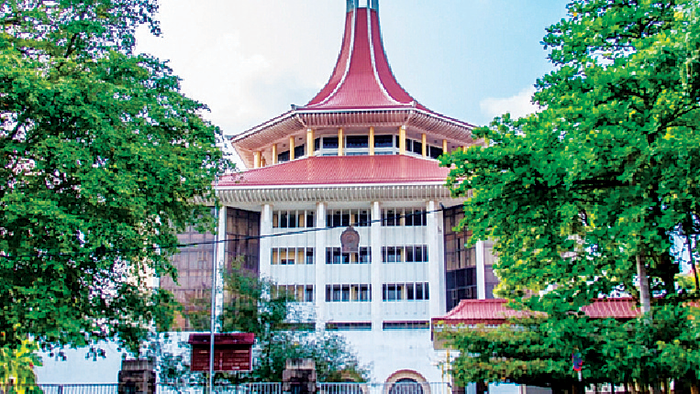
The Supreme Court ruled against P-TOMS decreeing it as against the constitution. As a result, the possible resolution to the country’s ethnic relations did not receive a political solution. Activities of power hungry, short sighted politicians resulted in the poor and the marginalized people of both communities suffering death and destruction by a prolonging war.
In political and ideological terms, the new UPFA regime elected in 2005 under the Mahinda Rajapaksa Presidency, represented a nationalist coalition that was hostile to the internationally backed political engagement between the government and the LTTE. The clever use of religious and ethnic propaganda to win over the Sinhala majority by using men dressed in yellow robes by Mahinda Rajapaksa between 2005 and 2014 and thereafter by the Gotabaya Rajapaksa regime after 2019 using men in robes and in uniform, resulted in a lack of direction, a breakdown of administration and rampant corruption.
In fact, the war victory in 2009 precipitated unmitigated greed for power, family bandyism, blatant acts of corruption and authoritarianism. Communal reconciliation was abandoned. A combination of all these factors weakened the already fragile democratic fabric.
The powerful Mahinda Rajapaksa government was defeated in the presidential and parliamentary elections of 2015 by a coalition led by the UNP running a senior SLFP defector for president. Rajapaksa and the SLFP were defeated by a common opposition. There was much goodwill and support of the minority parties in politics in achieving this objective. The mandate to punish the corrupt, killers, abductors for ransom in the north and east and the promise to bring back democratic institutions abolished by the 18th amendment, was partly fulfilled.
But an inexplicable lack of political will to successfully prosecute the guilty became a major setback for the Yahapalana government when the presidential election of 2019 came round in November. This together with the planned Easter Sunday attack of April 2019 enabled Rajapaksa Inc. of Mahinda and Gotabaya to return to power decimating the UNP to a single National List seat in parliament.
Corruption
Corruption in Sri Lanka is crime without identifiable criminals. It occurs from top to bottom at various levels. It is a vast subject that needs a separate discussion. But it will not be out of place to mention the Mafia in the power generating sector, tax concessions given to cronies, 16 controversial transactions revealed by COPE in 2007 and half-hearted efforts of the Bribery Commission to prosecute the revelations to date together with the withdrawal of cases by the AG such as that of misappropriation of Rs 200 m of Treasury funds by RADA- to mention a few only.
Corruption is one the main reasons for the worst ever economic and political crisis that has hit the people after 1948. The country is in turmoil and the people are forced to spend their day looking for gas, fuel, kerosene, milk, drugs while being clobbered daily by galloping food prices and power cuts.
The future of democracy in Sri Lanka
Democracy is built on four pillars – the Executive, Legislature, Judiciary and Free Media. If one of these pillars collapse, we will face the consequences democratic countries like Nicaragua and Brazil were confronted with.
The UN’s ‘International Day of Democracy’ (September 15 ) gives us an opportunity to review the state of democracy in Sri Lanka. The values of freedom, respect for human rights, holding periodic free and fair elections by universal suffrage – are essential elements of a democracy. In turn, democracy provides the natural environment for the protection and effective realization of human rights.
In Sri Lanka, civil rights activists and the opposition fear a trend towards dictatorship and military rule under the retired Lt. Col. and later President Gotabaya Rajapaksa.
These concerns surfaced particularly after the 20th Amendment which gave unlimited power to the president by engineering a two thirds parliamentary majority by questionable means. Arrogance of power made the president appoint retired military commanders to high administrative positions, bring a dual citizen to parliament and replace the aiya with the malli as finance minister – neither having any credentials to hold the post. This ensured 70% control of the national budget within the Rajapaksa family.
The IMF Chief lamented that mismanagement created the worst ever economic crisis since independence. It brought all people down to their knees in despair, including those racists who loved Sinhala Buddhist Rajapaksa regimes. One is reminded of John F Kennedy’s famous saying : “A Nation which is afraid to let its people judge the truth and falsehood in an open market economy, is afraid of its people”.
A glorious future envisaged by our enterprising youth who created a strong movement towards the much awaited System Change and a new political culture, has already given birth to racial unity and made inroads into the hearts and minds of all Lankans from GotaGoGama in Colombo, Kandy and Galle. .
These Pro- Democracy advocates have begun the second phase of democracy after the first phase ended in disaster despite 74 years of independence. Sri Lanka’s ‘flawed deocracy’ should not be weighed down by the legendary curse of Kuveni, the Easter Sunday murders of the innocent or the misfortunes of Muslims who were forced to cremate and not bury their dead in accordance with their religion due to racist ideology, the rule of incompetent politicians or the assault on the dignity of Tamils .
Our recent past should remind us all, how in 1933, Germany transited from a democracy to a dictatorship and how it caused mayhem throughout the world. Hitler’s autocratic dictatorship caused the unforgivable holocaust of about six million m Jews before the second world war ended in 1945.
Sri Lanka’s Parliament should recall, how Hitler got the “Enabling Act” passed in parliament on March 23, 1933 by physically intimidating MPs in Nazi controlled camps and persecuting remaining MPs in order to obtain a two thirds majority. Only the Social Democrats voted against Hitler who succeeded in achieving his rand design and began to pass laws without the approval of Parliament or the President and violating the Wiemar Constitution.
A mad man’s dream of cleansing Germany saw Nazis targeting Germans with physical and mental disabilities, Soviet prisoners of war, Poles, homosexuals and Jehovah’s witnesses. Unfortunately, contributions to this ethnic cleansing were made by professioals like doctors, lawyers, teachers and civil servants who believed in Hitler’s policies.
The role of the legal profession and judges was critical. After new laws were passed between February and July 1933 and after all state officials were asked to take an oath of loyalty (we saw this being done after Gotabaya Rajapakse came to power), lawyers helped the Nazis to oust Jewish lawyers from courts and law firms while permitting a mere 35 lawyers to apply to practice.
Although Hitler promised to restore judicial authority, he instituted re-education programs cleverly designed to indoctrinate Jurists in ideological goals of the Nazi Party. In the guise of protecting the State, Nazis hold on power was developed by passing several laws to consolidate the power of a dictator accompanied by military expansion and racial justification. A Judiciary steeped in the values of respect for judicial independence, equality and fair trial, shamelessly rendered verdicts to justify principles of Nazism and wishes of the Fuhrer.
The overwhelming majority of judges failed to challenge Hitler’s laws that restricted political freedoms, security of property, freedom of speech and association and instead interpreted laws in broad language that facilitated Nazi’s ability to carry out their diabolical agenda.
After the end of World War 2, pressures faced by individual Judges with intense personal and ethical dilemmas, became a fascinating study all over the world. But the damage done to grieving families could not be compensated or corrected.
Conclusion
Sri Lankan leaders in the latter years, implemented no political structural reforms to meet four decades of rebellion or corrupt practices at all levels of government. After 73 years of independence, Sri Lanka is careering down the slope into an abyss where its citizens are facing increasing militarization at the expense of the legitimate administration of Sri Lanka. Today, the country has had to declare that it is unable to pay its debts until the IMF assists in restructuring its massive debts.
US President Franklin D Roosewelt said , “Democracy cannot succeed unless those who express their choice are prepared to choose wisely.” This is the “democratic paradox” of Sri Lanka.
It is gratifying to note that a struggle has erupted spontaneously all over Sri Lanka led by Youth, for Constitutional reform to restore the citizen’s faith in quality, integrity and efficacy in representative democracy. Liberal Democracy will dominate the world in the years to come. Sri Lanka will need to design an ethno religious system of governance where majoritarianism will coexist in a peaceful and diverse setting.
The famous definition for democracy was enunciated by US President Abraham Lincoln as “A GOVERNMENT OF THE PEOPLE, FOR THE PEOPLE AND BY THE PEOPLE”. He gave the leadership to the civil war (1861 to 1865 ) to liberate the colored American people from slavery from white racists extremists. Fortunately for America and the world, US President and business tycoon Donald Trump ( 2016 to 2020 ) failed in his attempt to revive white populist extremism.
Sri Lanka’s ageing and unprofessional leaders, who quote Abraham Lincoln ad nauseam, do not think innovatively, are rigid and unresponsive to reason and lack innovative ideas. Instead they play cheap politics to win the votes of gullible voters on the guise of enacting development projects.
The youth have shaken the mindset of rural villages who effectively avoided challenging Rajapakse regimes, given their mutual commitment to Sinhala Buddhist supremacy. Their discipline, innovative presentation of well-articulated demands that the Rajapakse family which has hitherto controlled 70% of the National budget and Chairmanships of many State Institutions, must leave politics, have won Sri Lanka much admiration worldwide for the country’s resilience towards Democracy. Time has come for future leaders of Sri Lanka to give up the elitist tradition of Constitution making and jump out of the box to build into the 3rd Republican Constitution ‘The right to recall’ corrupt officials in Government, Parliament, the police and the legal services.


 Despite some sections of the Trump administration persisting with the view that the possibility could not be entirely ruled out of there being a diplomatic solution to the current US-Iran hostilities in West Asia, the skeptic could not be blamed for thinking otherwise. The intensity, scale and frequency of the tit-for-tat strikes by the antagonists over the past few days against selected military targets and civilian infrastructure in particular in West Asia make the adoption of this stance excusable.
The continuing hostilities render the mentioning of the MOU signed between the warring parties in mid-June a laughable matter. While it could very well be that the foes are wishing privately for a cessation of hostilities before long, what seems to be uppermost on their minds right now is to negotiate with each other from a position of strength. This strategy compels them to incapacitate each other militarily to the extent possible, lest they have to concede too much to each other during negotiations. Hence the stepped-up hostilities.
However, even on the question of there being a negotiated political settlement in the West Asian theatre in the longer term, the skeptic could come to be seen as scoring over the optimist. Developments on the ground account for this.
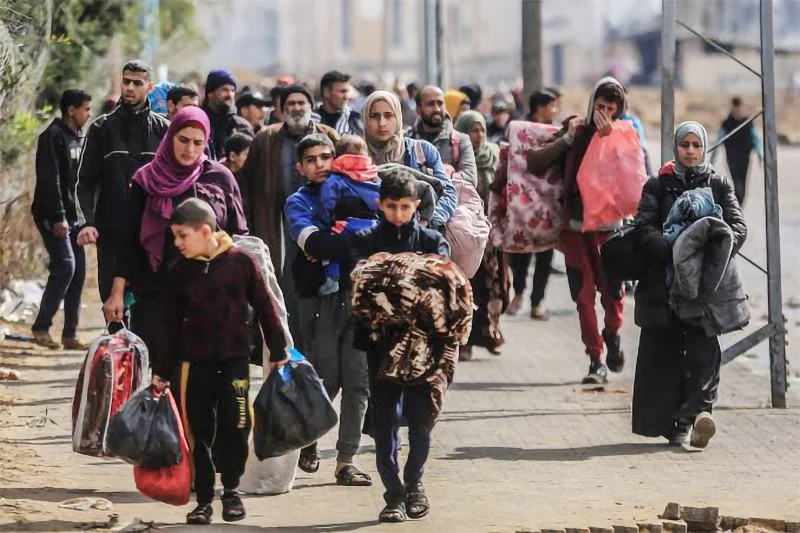
At the time of writing Israel’s Netanyahu government is going ahead in fairly care-free fashion with the establishment of more Jewish settlements in the Gaza and the West Bank, and it’s all happening under the apparently complacent gaze of the US. In fact, some quarters estimate that Israel is in control of some 65% of the Gaza Strip. Ethnic cleansing, that is, is being drastically stepped-up.
Accordingly, in terms of the power relations of West Asia, the world is almost back to the status quo of the late forties of the last century when the state of Israel was established and the Palestinians were reduced to a microscopic minority in the land they came to inhabit. Therefore, even the impartial observer would be compelled to ask: ‘Will a negotiated peace be ever possible in the Middle East?’
The humanist in the observer would prefer to answer this question in the affirmative and it is indeed the ideal stance to adopt considering the staggering human and material costs of the conflict. But the way ahead to peace could be expected to be highly hazardous and arduous. Among other odds, it would also prove an uphill endeavour to win minds and hearts.
The US’ Trump administration would need to be counted out in this pursuit. This is on account of the fact that it has been far too wayward in its management of West Asian affairs in particular over the past couple of years. Given its unpredictable character it is a matter for conjecture whether it could be counted on to live up to its commitments.
Moreover, Israel could be expected to ‘go it alone’ in the Middle East regardless of whether US help is coming or otherwise. It has indicated as much in recent times and Israel could be doubted on this score only at the doubter’s peril. Because time and again Israel has demonstrated that it could steadfastly defend its interests even single-handedly in the Middle East. History bears this out.
However, a durable alliance with the US would stand Israel in good stead. On the matter of military and intelligence assistance, for example, the US’s help proved invaluable for Israel in the past and going forward this is bound to be so as well. Moreover, it is unlikely that the Trump administration would give up on Israel, considering that a strong Israel is crucial for the furtherance of the US’ strategic and economic interests in West Asia.
But whether the above factors would have a considerable bearing on the question of working out a durable solution to the West Asian tangle is an entirely different matter. Israel, as in the case of the Palestinian enclaves, is acutely security conscious and would need to satisfy itself fully that it could live in a security environment that would guarantee its complete safety, going forward.
The Middle East is badly in need of another peace effort on the lines of the Oslo Accords of the mid-nineties that brought the key actors together and helped hammer out a solution that addressed some of their notable concerns. To be sure, that process did not prove to be the ideal answer to the tangle, but it yielded some respite to the region and drove home that one-time sworn foes could indeed negotiate with a degree of success. The West Bank authority, although falling short of fulfilling some key Palestinian aspirations, is testimony that a degree of success is possible if the intent is right.
Given the current realities of West Asia, peace-making is bound to be an uphill challenge. The violence faced in recent times by the Palestinian community, in particular, has been nothing less than mind-numbing. Merciless has been the violence visited on them by the Israeli side. In such circumstances, durable peace in the region could smack of an idealist’s dream.
Nevertheless, there needs to be urgently, a meeting of minds over the divides. The US would need to be counted out as an honest broker in bringing the sides together but the rest of the West would do well to step up to the challenge.
In this exercise the onus would be on the world’s democracies to take the initiative and doggedly stay the course. An acceptable combination would be the EU and the UN. Given their credentials, the main sides in West Asia ought to find them the least controversial.
Even if the relevant institutional and political arrangements could be shored up to take a reconciliation process forward, winning hearts and minds for the peace drive would prove a grueling challenge. Over the past few years in particular tens of thousands of hearts and minds on both sides of the divide have been bruised badly in the runaway murderous violence that has come to define the Middle East.
These badly scarred personalities would need to experience healing without much delay. It is therefore a multi-faceted challenge that is at hand. Since wide-ranging expertise would be needed in the healing process, people’s participation in peace-making, ranging over the divides, would need to be made a durable reality. It will be a time for enthroning humanity and ensuring the rejection of all forms of violence and coercion.
 For many Sri Lankans, Thailand is the go-to holiday — beaches, temples, food, and that famous warm hospitality.
In fact, I’ve been to Amazing Thailand 24 times myself, and was honoured with the Friends of Thailand International Media Award by the Tourism Authority of Thailand for promoting Thai tourism.
The good news I have for you today is that you don’t even need a passport to get a taste of Amazing Thailand.
The Royal Thai Embassy, in Colombo, is bringing a vibrant slice of Thailand, to the city of Colombo, with Thai Festival 2026 — a cultural experience like never before.
Whether you are an avid enthusiast of Thai culture, a total novice, or simply just interested in exploring foreign cultures, Thai Festival 2026 is going to be the perfect opportunity for you to get more than just a glimpse into one of the most celebrated cultural heritages in South East Asia. And ENTRANCE IS FREE.
The festival will be held on the 1st and 2nd of August, 2026, at Siam Nivasa, 43, C.W.W. Kannangara Mawatha, Colombo 7, and the East Parking Area, of the Colombo Municipal Council, from 11:00am to 5:00pm.
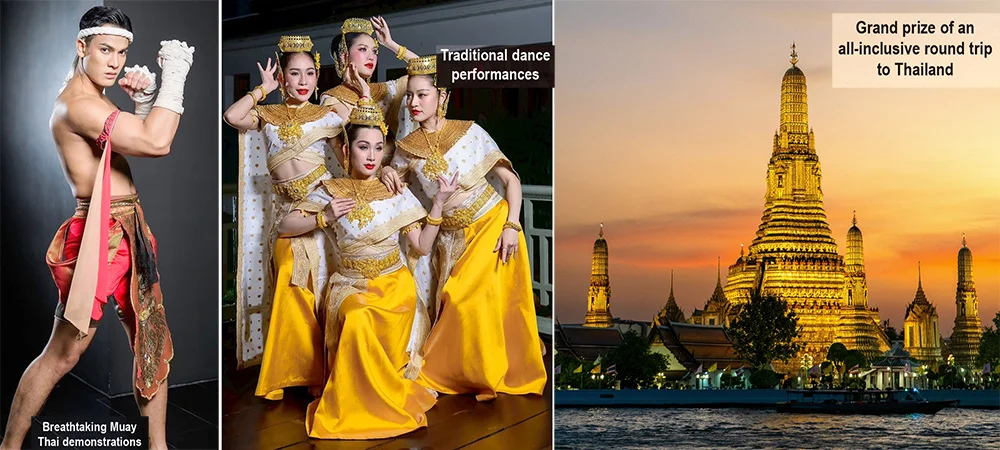
Both days will be full of live entertainment, and dispersed throughout with Thai cultural displays, including exhilarating traditional dance performances and breathtaking Muay Thai demonstrations.
Exploring art and craft specific to Thailand, tasting irresistible authentic Thai cuisine, and playing arcade games, are just a few more fun-filled events available for visitors at the festival premises.
An array of Thai products will also be available for purchase.
While at the festival, you will find Sri Lankan Alumni from Thai universities sharing their experiences with you and willing to answer any questions you might have, related to studying abroad in Thailand.
You can also register for the Muay Thai workshop that will be happening on the 7th and 8th of August, 2026, in Colombo.

Irresistible authentic Thai cuisine
Visitors can also stand a chance to win traditional Thai souvenirs, get exclusive photo opportunities, and, the big one — to enter the raffle draw, at the end of each day, for the grand prize of an all-inclusive round trip to Thailand.
Be sure to avail yourself of this exceptional opportunity and add a cultural spin to your weekend.
To keep up with the latest updates on Thai Festival 2026, head over to the Thai Festival official social media pages.
The Royal Thai Embassy in Colombo official webpage:
https://colombo.thaiembassy.org
Official social media:
Facebook: @RTEColombo
Instagram: @thaiembassysrilanka
Thai Festival official social media:
Facebook: Thai Festival in Colombo
Instagram: @thaifestival_colombo
TikTok: @thaifestival.incolombo

 Hair fall, in this heat, can be so frustrating, and noticing a thin patch is even more worrying. The good news is … yes, with a little care and kitchen ingredients, you can nourish your scalp and support healthy regrowth.
Try these four easy home remedies … even our grandmothers trusted:
* Coconut Oil and Curry Leaves Tonic:
Warm 04 tablespoons of coconut oil, with a handful of curry leaves, till the leaves turn black. Cool, strain, and massage into scalp 02-03 times a week. Leave for 01 hour, or overnight.
Why:
Coconut oil deeply nourishes, while curry leaves help strengthen roots and add shine.
* Onion Juice for Spot Treatment:
With cotton, dab the juice of 01 small onion, directly on the thin/bald patches. Leave for 20-30 minutes, and then wash with a mild shampoo. Use twice a week.
Why:
Rich in sulfur, onion juice helps boost blood circulation to the scalp.
* Aloe Vera and Castor Oil Mask:
Mix 02 tablespoons of fresh aloe vera gel and 01 tablespoon castor oil and apply to the scalp, focusing on thinning areas. Leave for 45 minutes, and then rinse with cool water.
Why:
Aloe vera soothes the scalp, while castor oil coats hair to make it look thicker.
* Fenugreek and Curd Strengthening Pack:
You will need 02 tablespoons fenugreek seeds, soaked overnight, and 02 tablespoons plain curd.
Grind to a paste, apply to scalp for 30 minutes, and then wash.
Why:
Fenugreek strengthens strands and reduces breakage.
Extra Tips for Healthy Hair:
Avoid tight hairstyles that pull on the scalp.
Eat iron and protein rich foods: greens, dhal, eggs, fish.
Use lukewarm water, not hot.
Be gentle when brushing and drying.
Manage stress — it plays a big role in hair fall.
Important: If bald patches are growing, or there is itching/redness, please consult a dermatologist.
Home remedies support hair health, but a doctor can find the exact cause.
Remember, healthy hair starts with a healthy, happy you.

More than 4,200 Israelis storm Al-Aqsa Mosque in Jerusalem

Feroza, Amin, Sandhu shine as Pakistan go 1-0 up against Sri Lanka

Colombo District Waste Management subcommittee convenes at Parliament

Government to coordinate Kotte Rajamaha Viharaya Sri Dalada Maha Perahera

Taskin Ahmed withdraws from LPL to prepare for Australia tour

US and Saudi Arabia announce nuclear cooperation deal

‘Dates have the highest sugar content to fight Coronavirus’

Sunday Island 27 December – Headlines

#SundayIsland 17th December – Headlines

Sunday Island – 28th March

Sunday Island Headlines – 21 March

Sunday Island – 21st February – Headlines
-
 Features5 days ago
Two memorable excerpts from a former SLAF commander’s memoir
-
 Business5 days ago
‘Giving up was never an option’: The fisherman who fought back after losing millions in SL
-
 Latest News5 days ago
Davis cup Asia/Oceania Group IV 2026 to be held in Colombo from 20th to 25th July
-
 Features5 days ago
Erdoğan’s New Republic
-
 Life style5 days ago
Taste of the Swiss Alps comes to Colombo
-
 News6 days ago
Evidence recorded in money laundering case against Yoshitha Rajapaksa
-
 Midweek Review2 days ago
Three high-profile alleged suicides shaping key investigations
-
 News6 days ago
Dengue outbreak gallops ahead: Infections surpasses 73,455, leaving 50 dead