
Sports
SLR sees tradition challenged during troubled times


by A Special Sports Correspondent
Rugby in Sri Lanka is at a standstill and there are many reasons for this. The main reason for this is Asian Rugby (AR) suspending the membership of Sri Lanka Rugby (SLR); the controlling body for rugby in Sri Lanka. The other reason is the chaotic situation in the country which has been brought about largely by the economic crisis.
This puts paid to Sri Lanka taking part in any regional tournaments. That could mean Sri Lanka’s chances of contesting the rugby sevens event of the upcoming Commonwealth Games is also in jeopardy. But there could be a way out of this murky situation for SLR if it conducts the AGM and has a free and fair election. AR is monitoring the rugby activities in Sri Lanka and even sent one of its representatives here to study the situation. AR proposed having the SLR AGM.
Our investigations into the events that have taken place in Sri Lanka’s rugby scene reveal that AR has found out that a democratic atmosphere doesn’t exist within the fraternity that the SLR controls. A representative from AR was here in April to conduct a probe on the rugby set-up here. The probe, according to news reports published in the web and leading national newspapers, revealed that all stakeholders of the game are not equally represented in SLR’s decision-making environment. Also, it has been revealed that the decision taken to suspend the SLR’s membership has been taken with the interest of maintaining Asian Rugby’s principles which are equality, transparency, and accountability.
It is also learned that the AR representative had made it known that the rugby set-up here in Sri Lanka was in need of an Annual General Meeting (AGM). This AGM would be called upon by the National Olympic Committee as desired by AR. A letter indicating the above has been sent to the minister of sports. According to the SLR its AGM is scheduled for August 27.
One of the major issues in local rugby is that Western Province Rugby Football Union (WPRFU)-the union with the highest number of rugby clubs-has been denied voting rights at past AGMs due to the nonpayment of membership fees to the SLR. The clubs within the WPRFU have come together as a force and made a request through the competent authority- appointed by the former sports minister to control rugby-to grant voting rights to individual clubs at the AGM. This is because the WPRFU is facing obstacles in contesting this AGM. This practice of clubs voting at the SLR AGM was done away with many years ago. An SLR official asked why these clubs representatives now want to return to an old system of having voting rights for clubs when most of these individuals, when serving the SLR as officials, were quite happy with provincial unions having voting rights some years ago?
Rugby in Sri Lanka was once a happy family. This writer remembers the manner in which tradition was preserved at past AGMs. There was one year when the bidding present of the SLR (Sri Lanka Rugby Football Union then) Michael Jayasekara was challenged at a vote by another candidate for the post of president. Jayasekara withdrew his nomination at the last hour to ensure maintaining the tradition of the bidding present of the SLR not be contested at a vote.
Rugby AGMs in the past have been ‘healthy’ and camaraderie has prevailed even during a voting for other posts. These get-togethers have been like parties and representatives of clubs and provinces have caught up on old times after the voting concluded and new committees were formed. At present provincial unions are fighting for their ‘pound of flesh’ and dirty politics exists.
Just a few weeks ago the WPRFU organised an open club rugby sevens tournament and received much response from clubs. Several schools were also invited to take part in the tournament. WPRFU officials were quoted in newspapers saying that the purpose of organizing the rugby sevens tournament was to give an opportunity to club players to play rugby sevens because they were denied chances of playing rugby due to the obstacles caused by the COVID pandemic during the past couple of years. But the chaotic political and economic situation in the country didn’t support the commencement of this tournament, which was scheduled for May 14. As many as 18 teams had confirmed participation. For the record, last year, the WPRFU conducted the ‘Warriors Cup’ sevens tournament with much success.
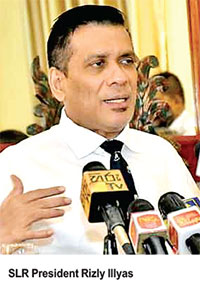
In the same manner, the inter-club league rugby tournament is to be discontinued. This is due to the chaotic situation in the country. According to SLR President Rizly Illyas the council is in the process of naming table leaders Kandy SC as the winner; by taking into consideration points accumulated.
When contacted SLR President Rizly Illyas said that he together with his committee, overseeing the rugby operations in the island, has always given blessings to each provincial union to conduct its own tournaments.
The SLR headed by Illyas recorded a victory recently when they managed to bring an interim order suspending the enactment of the Gazette issued by the Ex-sports minister suspending the registration of the SLR with the Ministry of Sports. The interim order was issued by the Court of Appeal and is effective till June 30, according to news reports.
Illyas said that he hopes that there would be a free and fair election.



Qualifier Maja Chwalinska is one win away from a fairytale French Open triumph after setting up a final showdown with Russian teenager Mirra Andreeva.
The Polish world number 114, who had only ever won one match at a Grand Slam before this tournament, continued her astonishing run at Roland Garros by beating 25th seed Diana Shnaider 7-6 (7-4) 6-4.
Three weeks and nine matches after her French Open campaign began, Chwalinska dropped to the ground after firing in the 32nd and final winner of another scintillating display.
With that, she became the first qualifier in history to reach the women’s singles final at Roland Garros, and the crowd chanted her name as she spoke in her post-match interview.
On Saturday, she will attempt to become only the second qualifier in the Open era to win a Grand Slam after Britain’s Emma Raducannu at the 2021 US Open.
It would be a fitting conclusion to a French Open filled with spectacular shocks from the outset.
But, on the evidence of her dominant victory over Ukraine’s Marta Kostyuk, the in-form Andreeva will provide the sternest test of her credentials to date.
A beaten semi-finalist in 2024, the 19-year-old was hugely impressive in a 6-1 6-3 victory that made her the third-youngest woman to reach the Roland Garros showpiece this century, after Coco Gauff and Kim Clijsters.
Should she prevail in her first major final, eighth seed Andreeva would become the third-youngest first-time Grand Slam champion this century, after Maria Sharapova and Raducanu.
(BBC)
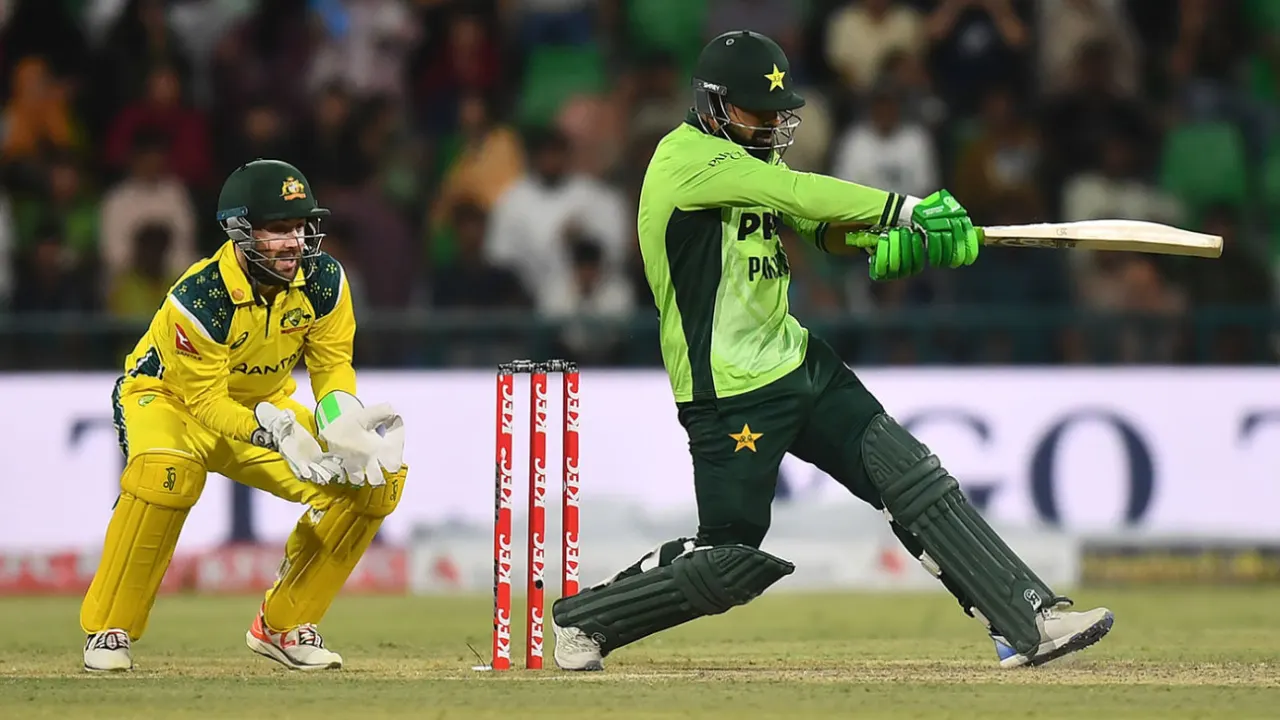
Pakistan edged home in a low-scoring tussle to secure their third straight ODI series win against Australia. They batted with grit and patience to scale the target of 158 with four wickets and 49 balls remaining on a square-turner in Lahore.
Pakistan – in a surprising move – produced spin-heavy surfaces for this series, which was supposed to test their player pool ahead of the next year’s ODI World Cup in southern Africa and the pitch for the last match offered extra bite to the spinners as the ball turned and bounced sharply, making run-scoring a difficult proposition, especially during the chase.
Maaz Sadaqat seemed aware of how tough batting would get as the innings progressed and he provided Pakistan a rapid start with a 26-ball 27, hitting five fours. He must have taken notes watching Josh Inglis bat in the first innings, as the Australia captain picked up boundaries in the first powerplay to make the most of the run-scoring opportunities with the balls – one from each end – hard and new.
However, Sadaqat was trapped in front by Matt Short as he looked to paddle-sweep his off-break. The left hander did not curb his attacking instincts despite the wicket of Sahibzada Farhan in the third over as he fell prey to Nathan Ellis’ vicious off-cutter.
The chase was anchored by Babar Azam who made a gutsy 40. He hit only three boundaries – two off Matt Kuhnemann and the other off Ellis – in his 84-ball vigil at the crease. Ellis, who had removed him in the previous two matches, tested his defences with his variations, but Babar had done his homework and seemed to be picking his cutters and slower-ones from the hand rather than the pitch.
The highlight of his stay was his battle with Kuhnemann, who beat his outside edge on myriad occasions. The left-arm finger spinner dragged him forward with his tossed up deliveries on a length and spun the ball away from him sharply. Babar, on each occasion, covered his off stump intelligently, bringing his bat and front foot in unison. But he was undone when Kuhnemann dragged his length back a fraction and produced a magnificent delivery which ripped past the outside edge as Babar went on the back foot.
Kuhnemann had previously removed Ghazi Ghori and Salman Ali Agha to keep Australia in the contest and he finished with 3 for 38. When Matt Renshaw also struck for his first ODI wicket, having Arafat Minhas held at slip by Cameron Green after a bobble, Pakistan were wobbling on 112 for 6
They were dragged over the line by Shadab Khan, who Pakistan feel is their next batting allrounder, as he made an unbeaten 29 off 42 in an unbeaten partnership of 49 with Abdul Samad.
Australia had been skittled for 157 in 42 overs, losing 7 for 38 from 119 for 3, as Shaheen Shah Afridi took three wickets alongside two apiece for Abrar Ahmed and Shadab after Inglis decided to bat having comfortably defended 232 in the previous match.
The decider began 15 minutes late because of a brief downpour. The only innings of note in the first half of the match was posted by Inglis who made 65 off 71 balls having been moved up to open, with the next best score was 19.
After Short had picked out mid-on second ball of the match (following Alex Carey’s first-ball dismissal two days ago) Inglis batted with fluency. He took on Afridi and welcomed Minhas with a crunching drive for four then a monstrous inside-out six over cover. In an innings in which he scored heavily on the off side, Inglis unfurled reverse sweeps against the spin. He made only 13 out of 65 runs on the leg side.
Marnus Labuschagne’s struggles in ODIs and on this tour continued as a mix up in the 12th over curtailed his stay. He was supporting Inglis by milking the spinners and seemed to have settled when Inglis did not return his call for a second. He had to scramble back from the middle of the wicket only to fall short of a Minhas’ direct hit from the non-striker’s end.
Carey provided a supporting hand to Inglis in a 52-run partnership before a scorching delivery from Haris Rauf nipped into him and struck the top of middle stump. It sparked a collapse and soon Afridi had Inglis and Cameron Green caught across three balls at the start of his second spell.
Salman then took a sharp catch at slip as Abrar lured Renshaw – Australia’s best batter on the tour – into a drive. Abrar also bowled Cooper Connolly in his next over as Australia slipped from 119 for 3 to 131 for 7. Connolly, who replaced Tanveer Sangha, was playing as a batter only as he continues to recover from a back injury which prevented him bowling during the IPL.
Shadab’s wicketless patch finally ended after five ODIs (and more than 300 deliveries) when Ghori took a spectacular catch as the ball looped off Oli Peake’s foot after taking an inside edge. It was after the second ODI that Mike Hesson, the Pakistan head coach, had relegated Shadab to the fifth bowler in this line-up, but the legspinner bowled with good rhythm, bringing the stumps into play more often by tossing the ball on length regularly.
He had Adam Zampa bowled off a ball that stayed low in the 42nd over before the run out of Ellis brought an end to the innings.
Whether producing rank-turners for these three games was the best preparation for the 2027 World Cup which will be played in South Africa, Zimbabwe, and Namibia is debatable. That Pakistan have something to celebrate after their poor ODI and Test tour of Bangladesh and a hapless outing in the T20 World Cup will motivate this side.
Scores:
Pakistan 161 for 6 in 41.5 overs (Babar Azam 40, Shadab Khan 29*; Matthew Kuhnemann 3-38) beat Australia 157 in 42 overs (Josh Inglis 65; Shaheen Shah Afridi 3-30, Abear Ahmed 2-19, Shadab Khan 2-28 ) by four wickets
[Cricinfo]

Qualifier Chwalinska sets up final against Andreeva

Zelensky proposes face-to-face talks in open letter to Putin

President Commissions Offshore Patrol Vessel ‘Samudra Vijaya’ into Sri Lanka Navy

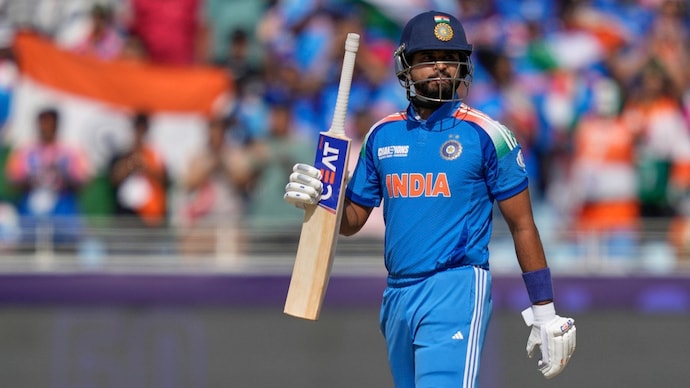
Shreyas Iyer to replace Suryakumar Yadav as India’s T20I captain

Pakistan hold their nerve to take series in low-scoring scrap

Robinson routs New Zealand top-order as England hit back on 16-wicket day

‘Dates have the highest sugar content to fight Coronavirus’

Sunday Island 27 December – Headlines

#SundayIsland 17th December – Headlines

Sunday Island – 28th March

Sunday Island Headlines – 21 March

Sunday Island – 21st February – Headlines
-

 News4 days ago
Lankan duo emerge winners in Latin dance championship held in Blackpool, UK
-

 News7 days ago
IMF urges Lanka not to meddle with exchange rate
-

 Business5 days ago
IMF’s unstated rate:Sri Lanka’s $695m loan costs about 5.33% per annum
-
 News7 days ago
State of emergency extended
-
 Latest News2 days ago
Kusal Mendis, Pathum Nissanka, bowlers put Sri Lanka 1-0 up
-

 Business5 days ago
Sri Lankan scientist-innovator Milinda Edirisinghe introduces AI-integrated gem testing system to gemological world
-

 Features6 days ago
Are threats to Buddha Sasana external or from within?
-

 News2 days ago
New US tariffs proposed on 60 countries, including Sri Lanka