
News
Pulling back from the precipice: A Pathfinder perspective

The way out of Sri Lanka’s most challenging external financing crisis is to negotiate an arrangement with the IMF and agree on a preemptive debt restructuring, Pathfinder Foundation has said in a media statement.
An IMF programme could include strengthening the government’s revenue base (widening the tax base and improving tax administration); improving the primary balance in the budget (revenue – (expenditure-interest payments)); proactive, data-driven and non-interventionist monetary policy; a flexible and realistic exchange rate policy to assist in building up external reserves; commercialisation of SOE operations, including full cost-recovery in the pricing of electricity and fuel, restructuring of the CEB and the CPC, the implementation of the Statements of Intent and addressing the losses being incurred by SriLankan Airlines, the Foundation said.
Pathfinder Foundation said that the Gross Official Reserves have declined to USD 1.6 bn as at end-November. Repayments over the subsequent 12 months amount to about USD 7 billion.
“The authorities have responded with import and capital controls as well as a fixed exchange rate based on moral suasion by the CBSL and rationing of foreign exchange by the commercial banks. This has resulted in a scarring of the economy which will inevitably have an adverse impact on growth, employment and incomes. Inflation is rising and is on the verge of reaching double digits and shortages constantly emerge of essential goods and services,” the Foundation said.
 The Pathfinder statement in full: “The Road Map, presented by the CBSL, identified a number of potential sources of debt- and non-debt-creating inflows to fill the external financing gap. The securitisation of remittance flows has been added to the menu of options recently. However, to date there has been an alarming depletion of external reserves and an inexorable increase in the external financing gap.
“If the authorities have clear visibility of sufficient inflows to arrest the steady deterioration in the country’s external position, one can be hopeful of a turnaround to avoid the possibility of a debt default which would greatly amplify problems, such as rising inflation; pressure on exchange and interest rates; losses in the real value of incomes; decline in business confidence; and disruption to the supplies of basic goods and services. If the anticipated inflows are not forthcoming in sufficient quantities to fill the external financing gap, there will be no option but to turn to the IMF to avoid further scarring of the economy and creating greater shortages of essential goods and services.
“It is extremely unlikely that it would be possible to obtain IMF assistance without a debt rescheduling as the Fund does not support countries where the debt is considered unsustainable. Equally, it is not practical to reach agreement on debt restructuring without an IMF programme. So, the twin pillars of the way forward would need to be negotiating an arrangement with the IMF and agreement on a preemptive debt restructuring.
“Attempting to undertake stabilisation of the economy without the cushion of financing that can be mobilised through an IMF programme would be like performing on the high-trapeze without a safety-net. There needs to be a less painful blend of adjustment and financing. However, it must be highlighted that pain cannot be avoided. An IMF programme would impose significant burdens on the people. The main thrust of this article is that this pain would be less than the severe dislocation that is already being caused by squeezing the economy to make up for the dollar illiquidity. The conditionality attached to IMF programmes are intended to stabilise the economy (contain inflation and balance of payment pressure) and improve its creditworthiness.
“An IMF programme could include, inter alia, the following: strengthening the government’s revenue base (widening the tax base and improving tax administration); improving the primary balance in the budget (revenue – (expenditure-interest payments)); proactive, data-driven and non-interventionist monetary policy; a flexible and realistic exchange rate policy to assist in building up external reserves; commercialisation of SOE operations, including full cost-recovery in the pricing of electricity and fuel, restructuring of CEB and CPC, the implementation of the Statements of Intent and addressing the losses being incurred by SriLankan Airlines.
“An IMF Extended Fund Facility can provide balance of payment financing of up to USD 1 bn per year for three years. The amount made available would be calibrated according to the strength of the reforms undertaken. An IMF programme would also unlock direct budgetary support from the World Bank, Asian Development Bank and possibly a few bilateral donors (over and above their usual project loans). Both balance of payments and budgetary support are most urgently required for the twin deficit Sri Lankan economy. Based on indications in 2020, up to USD 2 bn in all can be mobilised through these sources, depending on the strength of the reforms undertaken. Engagement with the IMF will also transmit positive signals to both investors and creditors, both at home and abroad. It can also pave the way for an eventual upgrading of the sovereign rating, which would improve the prospect of attracting foreign investment and credits.
“The second pillar, preemptive restructuring, must also be pursued concurrently with negotiations with the IMF. Not only can this facilitate the obtaining of a Fund programme but it can also create some leeway to stabilise the economy and place it on a path of sustained growth. Debt restructuring can be achieved through: extending maturities; modifying coupon (interest) rates; and hair-cuts on the principal (write-downs). One or more of these modalities can be used to reach an agreement with creditors that places Sri Lanka’s debt servicing on a sustainable path. Ideally, about a 3-year window should be created where debt servicing is suspended. This can release a very substantial amount of scarce foreign exchange to finance imports. The impact on growth, employment and incomes would be materially positive. In considering debt restructuring, it is important to realise that the most significant usual downside is a loss of access to international capital markets. In Sri Lanka’s case, this has already happened with the downgrading of the sovereign rating. So, the most important disadvantage is no longer a factor. Another concern relates to the impact on domestic holders of USD denominated sovereign debt, mainly banks. A mitigating factor is that a significant share of these holdings have been bought at a discount from the secondary markets. In other countries, Central Banks have exercised regulatory forbearance to assist financial institutions which have required such support to repair their balance sheets.
“It must, however, be recognised that it could take 4-6 months to negotiate an IMF programme and a preemptive debt restructuring agreement. The present trends in external reserves on the one hand and net drains on foreign currency on the other indicate that bridging finance is required to meet obligations over the next 6 months to avoid a debt default. The package of assistance offered by India is an encouraging start and needs to be finalised as soon as possible. It has to be supplemented by financing from other friendly countries, like Japan. There is scope for India and Japan to work together to support Sri Lanka at this critical juncture. Their willingness to step forward is likely to be greater, if it is known that Sri Lanka has taken a decision to approach the IMF. While our development partners will be wary of having to make an open-ended commitment, they are likely to find bridging finance more palatable.
Time has almost run out. Urgent, focused and pragmatic attention to these pressing issues is of paramount importance. An IMF programme can be at the heart of a medium-term strategy to overcome the current challenges and give Sri Lankans greater hope about the future prospects of the economy.”


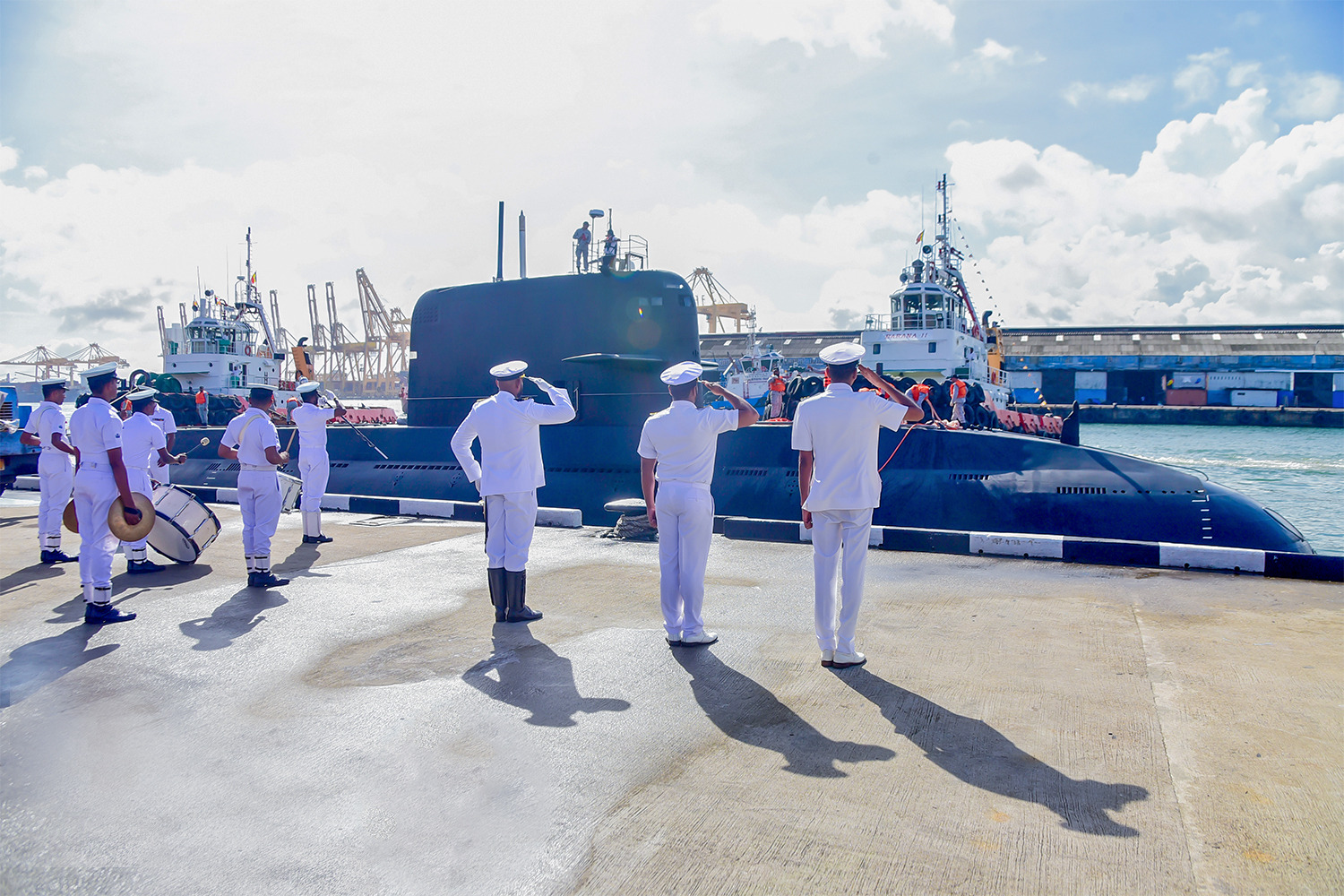
Wrapping up their goodwill and replenishment visit, the Pakistan Navy ships ‘PNS Taimur’ and ‘PNS Aslat’, along with the submarine ‘PNS/M Hangor’, departed the island on 04 Jun 26. The naval units, which arrived in Sri Lanka on 01 June, were accorded a traditional naval send-off by the Sri Lanka Navy at the Port of Colombo, upon their departure.
During their stay, the Commanding Officers of Pakistan Navy ships and submarine called on the Commander Western Naval Area and the Flag Officer Commanding Naval Fleet at the Western Naval Command Headquarters, where discussions were held on several matters of mutual interest.
Meanwhile, Sri Lanka Navy personnel had the opportunity to visit the visiting Pakistan Navy ships and submarine. Furthermore, the crews of the visiting vessels explored the rich heritage of Sri Lanka, taking time to tour several culturally significant landmarks across the island.
News
China, Lanka intensify cooperation to fight cross-border crimes spreading across Asia and beyond

China and Sri Lanka have intensified joint law enforcement efforts to combat cross-border online gambling and telecom fraud, crimes that authorities warn are increasingly spreading across Asia and beyond.
The Chinese Embassy in Colombo said both countries are working closely to dismantle scam centres and fraud networks that have relocated to Sri Lanka from other parts of Southeast Asia. The Embassy noted that such operations often intertwine with human trafficking and other serious crimes, posing grave risks to public security and social stability.
China’s position on cross-border gambling remains firm: Chinese capital is prohibited from investing in overseas casinos, citizens are barred from operating them, and foreign casinos are forbidden from soliciting Chinese nationals. The Embassy stressed that gambling “almost invariably leads to financial ruin,” with tens of thousands of Chinese citizens suffering losses and harm. Recent amendments to China’s Criminal Law have criminalised cross-border gambling activities.
The Embassy pointed out that Sri Lankan authorities have carried out multiple raids in recent months, dismantling gambling and fraud dens and arresting suspects from several countries. Several Chinese nationals, involved in fraud-related crimes, have been handed over to Chinese authorities, producing what officials described as a strong deterrent effect.
The Chinese Embassy praised the efforts of Sri Lanka’s ministries of Foreign Affairs, Finance, and Public Security, particularly immigration and police officials, for their cooperation.
It warned that without firm and immediate measures, the spread of illegal gambling and fraud could damage Sri Lanka’s international image, undermine social stability, and harm the safety and security of its people.
China has already conducted similar law enforcement cooperation with countries including Spain, the UAE, Myanmar, and Cambodia, leading to arrests and repatriations of overseas fraud suspects. It has also proposed the creation of an international alliance against telecom and online fraud to coordinate global efforts, it said.
Going forward, China pledged to actively implement the Global Security Initiative and Global Civilization Initiative, while continuing to deepen law enforcement and security cooperation with Sri Lanka.
The Embassy said these efforts aim to safeguard lives and property, protect financial security, and build a “clean, safe, and beautiful Sri Lanka,” while contributing to a new global framework for combating transnational crime.

An assistant manager and a security officer, attached to a state bank branch in Horana, have been arrested in connection with the robbery of more than Rs. 30 million that was being transported to replenish automated teller machines (ATMs), Police said.
The two suspects were taken into custody on Friday after statements were recorded from them regarding the incident, which occurred on Wednesday afternoon at the Horana branch of the People’s Bank.
According to Police, a bank employee was carrying two bags containing cash through the rear entrance of the bank at around 2.45 p.m. when an individual, who had arrived on foot, allegedly snatched the bags and fled the scene.
The stolen money, amounting to approximately Rs. 30.5 million, had been prepared for distribution to ATM machines and transportation to other bank branches. Earlier reports had estimated the loss at around Rs. 35 million.
Investigators subsequently arrested a suspect believed to have been directly involved in the robbery and recovered Rs. 17 million of the stolen cash.
Police have not disclosed the exact circumstances that led to the arrest of the assistant manager and security officer but said investigations uncovered information linking them to the incident.
The Western Province North Crime Division is conducting further investigations to determine whether additional suspects were involved and to recover the remaining stolen money.
The daring daylight robbery has raised concerns over security procedures employed during transportation of large sums of cash to/from banking institutions.Further investigations are continuing.
by Norman Palihawadane

England make inroads after New Zealand set 254 to win

Rusty West Indies face upbeat Sri Lanka with series on the line

Pakistan naval trio leaves Colombo after goodwill visit

PEOTV secures media rights for FIFA World Cup

Anthropic urges AI labs to pause, warns humans risk losing control

Iran footballers issued US visas for World Cup, says White House

‘Dates have the highest sugar content to fight Coronavirus’

Sunday Island 27 December – Headlines

#SundayIsland 17th December – Headlines

Sunday Island – 28th March

Sunday Island Headlines – 21 March

Sunday Island – 21st February – Headlines
-

 News4 days ago
Lankan duo emerge winners in Latin dance championship held in Blackpool, UK
-

 Business5 days ago
IMF’s unstated rate:Sri Lanka’s $695m loan costs about 5.33% per annum
-
 Latest News2 days ago
Kusal Mendis, Pathum Nissanka, bowlers put Sri Lanka 1-0 up
-
 News2 days ago
New US tariffs proposed on 60 countries, including Sri Lanka
-

 Business5 days ago
Sri Lankan scientist-innovator Milinda Edirisinghe introduces AI-integrated gem testing system to gemological world
-

 Features6 days ago
Are threats to Buddha Sasana external or from within?
-

 News5 days ago
UNP challenges NPP move to amend Vihara – Devalagam Act
-

 News4 days ago
Sri Lankan teen killed in Chennai clash; three arrested