
Editorial
Statistical ruse backfires


Monday 16th August, 2021
Sri Lanka’s Covid-19 case-fatality rate (about 5%) has exceeded the global average (1.4%), according to media reports. This rate may look accurate, given the officially confirmed cases, but there is reason to believe that it is misleading; many cases have gone undetected, and if testing is stepped up, the morbidity rate will increase exponentially, bringing the case-fatality rate down. The fatality figures, however, remain undisputed, and, therefore, could be considered reliable.
The Health Ministry stands accused of trying to hide the severity of the pandemic from the public, for political reasons, by not increasing the number of PCR tests conducted a day so as to keep the number of daily cases low, but its action has made the world consider Sri Lanka an extremely dangerous place.
The process of collecting Covid-19 data and tabulating them is not that complex, though somewhat difficult, due to the geographical distribution of the pandemic and the inefficiency of the state service. Doctors and other health workers have pointed out that the number of tests conducted daily is woefully inadequate for them to get a clear picture of the spread of the pandemic; they have called for aggressive testing, which is a prerequisite for controlling Covid-19. But these calls have gone unheeded.
President of the College of Medical Laboratory Science (CMLS) Ravi Kumudesh has told this newspaper that the number of PCR tests conducted daily is insufficient, and it can be increased to 50,000 a day easily. Pointing out that the state sector labs have about 36 Rapid PCR machines capable of giving test results in less than two hours, and detecting viruses other than SARS-CoV-2, he has said the members of his association are awaiting the government’s nod to go into overdrive. The Health Ministry ought to explain why the full potential of the state sector laboratories has not been tapped to fight the pandemic effectively. Is it that some health bigwigs are colluding with their private sector cronies notorious for various rackets? They also made the government-run Covid-19 testing facility at the Bandaranaike International Airport idle so that the samples collected from foreigners and others could be sent to some private labs.
Thousands of Covid-19 patients receiving homecare are encouraged to purchase pulse oximeters to check their blood oxygen levels themselves, and the question is why the Rapid Antigen Test kits are not made available freely for the people to test themselves at home. Self-testing should have preceded homecare for pandemic patients. This will help increase the number of daily tests so that more cases could be detected, isolated and treated to curb the rapid transmission of the Delta variant. Countries such as the UK, the US, Singapore and India are promoting self-testing by making available Rapid Antigen Test kits, which cost about INR 200 a piece in India. The government can import them and sell them through the Osusala outlets to prevent the private health mudalalis from fleecing the pandemic-hit public. It should be able to do so if its leaders are not in league with the unscrupulous businessmen who thrive on the misery of the sick.
If the exiting PRC and Rapid PCR machines in the state sector are fully utilised with the people being provided with Rapid Antigen Test kits, about 100,000 persons could be tested daily, the CMLS informs us. Will the government care to do so promptly and save lives?
The task of bringing down Covid-19 deaths as well as the case-fatality rate also requires the acceleration of the vaccination drive, imposing strict movement restrictions and ensuring that the people abide by the health regulations. The government is expected to bring in new laws to enforce the existing health regulations more virtuously, we are told. The need for such stringent action cannot be overemphasised because not many people follow Covid-19 protocol voluntarily.
Ideally, the country should be closed. This is what the World Health Organization, and Sri Lankan medical experts have recommended. The government is under pressure to impose lockdowns and a quarantine curfew at least for two weeks, and vaccinate as many people as possible during that period. But one should not lose sight of the huge socio-economic costs of lockdowns.
Developed nations can afford lockdowns and therefore impose them at the first sign of trouble. If this country is closed again, there will be more job losses besides economic hardships. Many private sector institutions are already on the brink of going belly up. Having chosen to control the pandemic while keeping the country open, the government finds itself in an unenviable position. There should be funds, especially foreign exchange, for pandemic control, and what the situation would be like if the economy collapsed at this juncture is not difficult to imagine. In a worst-case scenario, the public sector employees will also face pay cuts; they may not even get paid, at all; hospitals will be without drugs and there will be shortages of all essential commodities. Such a situation will be inevitable unless everyone realises the gravity of the health crisis and fully co-operates to stop the spread of the destructive virus.
Head of the Public Health Inspectors’ Association Upul Rohana, who is au fait with the ground situation, has called upon the public to restrict their movements for their own sake. There is no reason why the people cannot do so to save their own lives as well as those of their dear ones, without waiting till the government imposes lockdowns.



Saturday 28th February, 2026
The JVP-NPP government is practising the very antithesis of what it promised workers during its election campaigns. Pledging to look after workers’ interests, the JVP/NPP leaders said there would be no need for labour struggles under an NPP government. But they are now emulating their predecessors who mismanaged labour issues and suppressed trade unions.
The government has locked horns with the GMOA (Government Medical Officers’ Association). They are engaged in a contest of attrition, which is not likely to end any time soon, given the intransigence of both sides. The government is determined to wear down the GMOA, and vice versa. The warring doctors have withdrawn from health camps and outreach programmes and threatened to intensify their trade union action. One wonders whether the medical professionals in the NPP parliamentary group have sought to settle old scores with the GMOA, which they are not well disposed towards; instead of making a serious attempt to resolve the ongoing trade union dispute amicably, they keep on provoking the protesting doctors.
The GMOA has put forth several demands, including the establishment of a special service category called the “Sri Lanka Medical Service,” for all doctors, updating the Disturbance, Availability and Transport (DAT) allowance, resolving transportation issues in line with Circular 22/99, converting the additional duty allowance into a fixed allowance, resolving issues related to research allowances, addressing concerns of doctors engaged in postgraduate studies, updating the approved cadre of doctors in the health sector and initiating time-bound discussions with the Ministry of Finance on the doctors’ demands.
What is up the government’s sleeve is not difficult to guess. The JVP/NPP is all out to tame the trade union sector, which is strong enough to act as a countervailing force against it. The GMOA is one of the most powerful trade unions, and the government’s battle plan seems to be suppressing it in a bid to intimidate all others into submission. The JVP/NPP leaders have apparently learnt from how the LSSP, as a constituent of the SLFP-led United Front government, broke the bank employees’ strike in 1972. The J. R. Jayewardene government crushed a general strike in a brutal manner in July 1980 by sacking tens of thousands of strikers, and thereby effectively neutralised the trade union sector. All governments with steamroller majorities succumb to the arrogance of power, which drives them to ride roughshod over trade unions and professional associations that refuse to obey their dictates.
Opinion may be divided on the GMOA’s demands, and in fact it may not be possible to meet some of them for pecuniary reasons, but it defies comprehension why the government refuses to listen to the protesting doctors, and adopt a compromise formula. Political muscle flexing will only make an already bad situation far worse in the health sector. The government should not dupe itself into believing that tactics such as astroturfing and social media attacks will help tame trade unions.
Labour disputes tend to snowball and cause hardships to the public. Hence the need for swift action to resolve them. It behoves the government, which came to power, promising to look after the interests of workers, to invite the GMOA to the negotiating table and try to prevent the escalation of the ongoing dispute.
Friday 27th February, 2026
Three teenage girls from a children’s home in Kalutara have been arrested for breaking into a canteen and making off with a stock of confectionery worth Rs. 40,000. Upon being informed of the theft, the police lost no time in recovering the sweets and making arrests. Those who conducted the ‘raid’ posed for photographs with the recovered items and released them to the media. Such is their selective efficiency.
One may recall that some years ago, the police arrested a small schoolgirl in Kalutara for stealing a few coconuts. In the same district, a little girl was taken into custody for stealing a five-rupee coin. If only the long arm of the law dealt with the politically backed perpetrators of serious crimes in a similar manner.
The three girls arrested for stealing sweets may have thought that in a country where people get away with grand thefts, their offence would go unnoticed. The incumbent government tells us that its political rivals stole colossal amounts of state funds while in power, but no legal action has been taken against most of them. Worse, the corrupt politicians in the Opposition have embarked on a crusade against corruption.
Worryingly, the incumbent government, which has undertaken to eliminate bribery and corruption and restore the rule of law, is led by a party with a history of terrorism, extortion, armed robberies and wanton destruction of state assets. A Cabinet minister has had the audacity to boast that he and his ‘comrades’ destroyed transformers, etc., in the late 1980s. He has sought to romanticise such acts of terrorism which are nonbailable transgressions under the Offences Against Public Property Act. Strangely, no action has been taken against him or his colleagues on the basis of his confession. If such crimes had been investigated properly during previous governments, some of the ruling party politicians who indulge in moral grandstanding would have been behind bars.
It has now been revealed that the procurement of eight shipments of substandard coal has caused a staggering loss of Rs. 8 billion to the state coffers. The coal supplier is said to be a company blacklisted for selling substandard rice to Sathosa. The corrupt coal tender has not been cancelled.
The present-day rulers, who came to power vowing to eliminate bribery and corruption, are now in overdrive, trying to justify losses caused by low-grade coal imports and shield the racketeers. Substandard medicines imported after the 2024 regime change have not only caused massive losses to the state but also snuffed out several lives in government hospitals. Much has been spoken in Parliament about corrupt procurement deals in Sathosa under the current dispensation. Curiously, no arrests have been made.
What was made out to be a new beginning in late 2024 has turned out to be another false dawn. The champions of good governance have been exposed for corruption and abuse of power.
The current rulers claim to be on a mission to restore the rule of law in keeping with one of their main campaign promises. That no doubt is a noble goal that must be achieved. However, mere rhetoric won’t do. They have to back up their words with deeds.
The least the government can do to convince the public that it is serious about fulfilling its pledge to restore the rule of law is to ensure that the police deal with the corrupt elements in both the Opposition and the government in the same way as they did in the case of the three girls who stole sweets in Kalutara.

Thursday 26th February, 2026
The CID yesterday arrested former Military Intelligence Chief Major General (Retd.) Suresh Sallay in connection with the ongoing investigations into the Easter Sunday terror attacks (2019). Police Spokesman ASP F. U. Wootler told a hurriedly summoned media briefing that the arrest of Sallay was based on credible evidence. If so, the burden is on the police to prove their very serious charges against the war-time military intelligence officer who played a pivotal role in eliminating LTTE terror. Otherwise, they will have to face the consequences of their actions when their current political masters lose power. It amounts to a grave violation of fundamental rights to arrest people without sufficient grounds and hold them on remand for extended periods.
Everything possible must be done to trace the masterminds behind the Easter Sunday carnage and bring them to justice. However, efforts to ensure that justice is served must be devoid of partisan politics. The unprecedented politicisation of the CID under the current dispensation has severely undermined the integrity of the investigations into the Easter Sunday terror attacks. The CID is now under two former senior police officers, namely ex-SDIG Ravi Seneviratne and ex-SSP Shani Abeysekera. While in active service, they reduced the CID to a mere appendage of the UNP-led Yahapalana government and were accused of launching politically motivated probes and arresting the political opponents of that failed regime. They themselves have been accused of failing to act on warnings to prevent the 2019 terror attacks. Both Seneviratne and Abeysekera joined the Retired Police Collective of the JVP/NPP, which, after forming a government in 2024, brought them out of retirement and appointed them as Secretary to the Public Security Ministry and CID Director, respectively. They have to advance the incumbent government’s agenda as a quid pro quo for their elevation to the current positions.
Whenever the JVP-NPP government faces trouble on the political front, the police come to its aid, making high-profile arrests. So, the Opposition’s argument that the CID has arrested Sallay to distract public attention from the mega coal scam, which has sent the government reeling, is not without merit. Most of all, with the seventh anniversary of the Easter Sunday carnage only about two months away, the government needs to show that it is on course to fulfil its pledge to bring the terror masterminds to justice.
Curiously, one main aspect of the Easter Sunday carnage continues to be ignored; it is the alleged foreign involvement therein. Dr. Wijeyadasa Rajapakshe, who was the Justice Minister in the Yahapalana government, taking part in a Sirasa TV programme in the run-up to the 2024 presidential election hinted at the possibility of some world powers having had a hand in the Easter Sunday bombings. He said that he had opposed the handing over of the strategically important Hambantota Port to China in 2017, warning the Yahapalana Cabinet that another world power would seek to take control of the Trincomalee harbour, the oil tank farm near it, and the Colombo Port, and that if Sri Lanka did not grant those demands, it would be plunged into a bloodbath and forced into submission. He said the Yahapalana administration had ignored his warning and gone ahead with the Hambantota Port deal, and three months later his prediction had come true; the US asked for the Trincomalee harbour with land around it, and India demanded that the Trinco oil tanks and the East Terminal of the Colombo Port be handed over to it. Prime Minister Ranil Wickremesinghe had sought to grant those demands and presented a bill to Parliament to amend the Land Ordinance, Dr. Rajapakshe said, adding that he had moved the Supreme Court successfully, aborting the Yahapalana government’s bid to hand over the Trincomalee harbour and land. That administration’s attempt to grant India’s demand had come a cropper due to protests, and a few months later, the Easter Sunday attacks had happened, Dr. Rajapakshe said, drawing parallels between the destabilisation of Sri Lanka and that of Bangladesh.
If one reads between the lines, it may not be difficult to figure out what Dr. Rajapakshe chose to leave unsaid. He is not alone in claiming that there was a foreign hand in the 2019 terrorist bombings. Speaking at St. Sebastian’s Church, Katuwapitiya, on 21 July 2019, Archbishop of Colombo Malcolm Cardinal Ranjith flayed President Maithripala Sirisena and Prime Minister Ranil Wickremesinghe for having failed to resist the foreign conspiracy to destabilise the country.
Among the key witnesses who expressly testified before the Presidential Commission of Inquiry (PCoI) on the Easter Sunday terror attacks that there had been ‘an external hand or conspiracy behind the attacks’, were Cardinal Ranjith, Ravi Seneviratne, Shani Abeysekera and SDIG Nilantha Jayawardena, who said an Indian named Abu Hind ‘may have triggered the attacks’. Abu Hind was a character created by a section of a provincial Indian intelligence apparatus, and the intelligence the Director SIS received on 4th, 20th and 21st April, 2019 about the terror attacks was from this operation and the intelligence operative pretending to be one Abu Hind, according to an international terrorism expert who testified before the PCoI. In an interview with BBC in 2019, Dr. Nalinda Jayatissa declared that according to ‘investigative evidence’ he was privy to, India had been behind the Easter Sunday terror attacks. Curiously, the alleged foreign involvement in the Easter Sunday terror attacks has been ignored.
A thorough probe must be conducted into the alleged foreign involvement in the 2019 terror attacks, which may have been the beginning of a sinister campaign to make Sri Lanka’s economy scream in 2022, as we have argued in a previous comment.

In a virtual knockout, a fight of reputation and expectation

Iran launches attacks across Middle East after US and Israel strikes on leadership sites

A committee will be appointed to formulate a national policy on medical education – PM

South Africa vs Zimbabwe, this time for Africa

ICC monitoring Middle East conflict as airspace closure hits travel plans

Sri Lanka make two changes and bowl; Pakistan drop Babar and Ayub

‘Dates have the highest sugar content to fight Coronavirus’

Sunday Island 27 December – Headlines

#SundayIsland 17th December – Headlines

Sunday Island – 28th March

Sunday Island Headlines – 21 March

Sunday Island – 21st February – Headlines
-
 Features7 days ago
Why does the state threaten Its people with yet another anti-terror law?
-
 Features7 days ago
Reconciliation, Mood of the Nation and the NPP Government
-

 Features7 days ago
Victor Melder turns 90: Railwayman and bibliophile extraordinary
-

 Features6 days ago
LOVEABLE BUT LETHAL: When four-legged stars remind us of a silent killer
-
 Features7 days ago
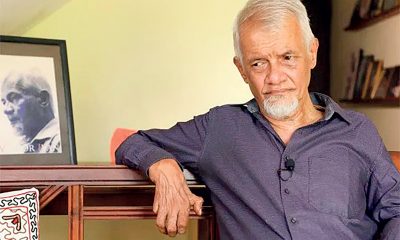
Victor, the Friend of the Foreign Press
-

 Business6 days ago
Bathiya & Santhush make a strategic bet on Colombo
-

 Business6 days ago
Seeing is believing – the silent scale behind SriLankan’s ground operation
-
 Features7 days ago
Barking up the wrong tree