
News
96 university teachers demand release of Hejaaz Hizbullah…


A group of 96 university teachers has called for the release of Hejaaz Hizbullah and Ahnaf Jazeem,. They have, in a statement titled, ‘A call to action against the detention of Hejaaz Hizbullah and Ahnaf Jazeem, anti-Muslim violence, and attacks on democracy’, asked for a ‘halt to undemocratic actions by government actors, a repeal of the PTA and other laws that are contrary to the principles of democracy, and ask that the public demand accountability”.
The full text of the statement: “Decades of majoritarian politics, and the more recent descent towards authoritarianism and militarisation, have eroded the foundations of our democracy. They have numbed us to the violence in our daily lives and desensitised us to how sections of our citizenry are targeted. Over a year has passed since Hejaaz Hizbullah and Ahnaf Jazeem were arrested, and they remain imprisoned to date.
“On April 14, 2020, human rights and constitutional lawyer Hizbullah was arrested by the Criminal Investigation Department (CID) and detained under Section 9 of the Prevention of Terrorism Act (PTA) for over 10 months. At the time of arrest, his alleged crimes were “aiding and abetting” one of the Easter Sunday bombers. It later transpired that he represented the family in two land cases. He is now being charged with speech related offences under Section 2(1)(h) of the Prevention of Terrorism Act (PTA) and Section 3(1) of the International Covenant on Civil and Political Rights (ICCPR) Act. These are based on statements made by minors to the CID, which the children maintain they were coerced and threatened to make.
“On May 16, 2020, the Police Counter Terrorism Investigation Division (CTID) arrested Jazeem, a poet and teacher from Mannar, on allegations that his book Navarasam contained “extremist ideas” and that he taught “extremism” to students. A review of the poems by an “expert panel” of psychiatrists, some with university affiliations, makes vague claims about the potential of the book to incite violence, hatred, and suicidal thoughts. Their report fails to provide the basis or justification for these judgments and even says that there were two discrepant sets of translations (Sinhala and English from the original Tamil)at their disposal, which fact should have called the entire operation into question. Contrary to the allegations of the CTID, recent translations reveal that the poems were deeply critical of violence.
“Hizbullah’s arrest and continued detention is an attack on the rights of lawyers and the rule of law. Jazeem’s arrest and continued detention without charge represents, in addition, an attack on the freedom of expression and pluralism, and a broader war on ideas. As can be seen from the progress of the two cases, the rights of Hizbullah and Jazeem have been clearly violated, and questionable tactics have been and continue to be used to manufacture the cases against them. In custody, their basic needs for health and safety have been neglected.
“The incarceration of Hizbullah and Jazeem occurs in the backdrop of highly organised anti-Muslim mobilisations designed to stigmatise and isolate Muslim communities. Violence and intimidation continue, bolstered by the government’s complicity in these acts in the name of “national security”. In March 2021, the Minister of Public Security announced plans to shut down 1,000 madrasa schools and ban the burqa. A month later, the Cabinet approved the ban on all forms of face veils in public spaces, and, in May, the Deputy Director of Customs announced that any Islamic religious texts brought to the country must be cleared by the Ministry of Defence. These actions further criminalise one for being Muslim and are an assault on our democratic freedoms.
“Anti-Muslim sentiments guide the state COVID-19 response as well. Last year, at the height of the pandemic, the Ministry of Health adopted a mandatory cremation policy for the COVID dead, despite WHO guidelines to the contrary. The policy was backed by “experts”, including those from universities, citing unsubstantiated public health concerns, with crass disregard for the strongly followed religious tradition among Muslims of burying their dead. Today, burials are permitted, but restricted to a Muslim-populated area – Ottamavadi, Batticaloa –signalling that only Muslims must contend with the albeit unlikely threat from their dead. The burial issue was only one of the more flagrant of attempts to weaponise the pandemic against Muslims. The state machinery, through statements and actions of doctors, PHIs, politicians, military personnel, and state-controlled media pushed a narrative of Muslims as super-spreaders.
“These trends are not new. They are a continuation of heightened violence against Muslims that spans a decade. Starting in 2012,organised attacks on mosques and demonstrations against Muslims, including an anti-Halal campaign, culminated in horrific acts of violence, including the Aluthgama and Digana riots. In parallel, highly politicised campaigns have targeted Muslim individuals; for instance, Dr.Shafi Shihabdeen was arrested on false allegations of forced sterilisation, and activist Ramzy Razeek was detained for condemning the anti-Muslim witch-hunt post Easter Sunday bombings. Unlike the zeal with which these cases are pursued, state institutions responsible for ensuring public safety have failed to prevent anti-Muslim violence, and no one has been held accountable so far.
“The targeting of Muslims occurs in a context of increasing authoritarianism and militarisation which have served to weaken democratic institutions. We have witnessed the remanding of former Director, CID, Shani Abeysekera, who had investigated high-ranking officials and politicians, author Shaktika Sathkumara, for purportedly anti-Buddhist writings, and many others. The PTA is wielded as a tool of politicisation and arbitrary power, alongside the Emergency Regulations and the ICCPR Act. They are deployed in majoritarian campaigns against minorities, to attack those opposed to the regime in power, and crush dissent, casting doubt on state institutions and the judicial system.
“Academics are mandated to exercise and safeguard free speech and expected to confront and question the excesses of those in power. As members of public higher educational institutions, we must support and amplify the voices of the marginalised. Having learned from the devastation caused by uneven justice, majoritarian politics, and racist rhetoric, and knowing the insecurity and fear that some of our citizens live with on a daily basis, we must resist these attacks. We believe that allowing these actions to continue with impunity implicates us all.
“We, the undersigned, as members of the academic community, demand the immediate release of both Hizbullah and Jazeem, and call attention to the fact that their arrests have taken place in a context of unrelenting anti-Muslim mobilisations that are tearing our social fabric apart. We are deeply worried about the continuing deterioration of the criminal justice system and the institutional decay it more broadly signals, as these developments are also symptomatic of a gradual hollowing out of the democratic bases of society. We, therefore, call for a halt to undemocratic actions by government actors, a repeal of the PTA and other laws that are contrary to the principles of democracy, and ask that the public demand accountability. Finally, we call on the greater academic community to broaden this struggle to ensure that we fulfil our mandate and exercise our academic freedom in the pursuit of democracy and justice for all.”


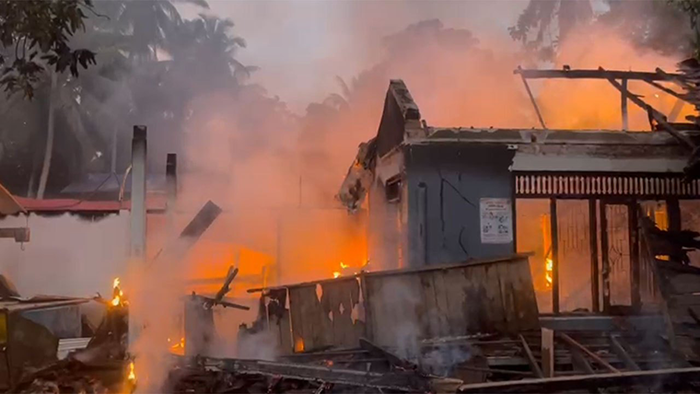
Death toll rises to 12: Director remanded
Some residents were allegedly chained
Police have come under public pressure to investigate allegations of inhumane treatmenf the residents at an elders’ home in Batagoda, which was also reportedly used as a care centre for persons with special needs, following a devastating fire that has so far claimed 12 lives.
Eyewitnesses who were among the first responders told the media that several residents had been chained inside rooms at the Senehase Kedella Elders’ Home when the fire broke out on Wednesday. They claimed that rescue efforts were hindered as iron chains could not be removed, and that some residents died while being restrained.
Authorities have not yet verified these claims, and Police said investigations are continuing.
Police spokesman ASP F.U. Wootler, contacted for comment, said there were rumours to that effect, but the Police were not in a position to verify the claims until a report from the Government Analyst was received. He said eight survivors with burn injuries were being treated in hospital.
Meanwhile, the Director of the facility had been arrested and was due to be produced before the Horana Magistrate’s Court, Police said adding that he was remanded till June 11.
The death toll from the fire has risen to 12 as of Thursday morning following the recovery of additional charred remains during ongoing forensic examinations at the site. Six others sustained serious injuries and are being treated at the Horana Base Hospital.
Police said 72 residents were inside the facility at the time of the blaze. Of them, 10 died inside the building, seven were injured and hospitalised, while 51 were rescued and relocated.
Survivors were initially housed at Batagoda Junior School before being transferred with Army assistance to another branch of the same care network in Galpatha.
A magisterial inquiry was conducted on Thursday morning. Horana Magistrate Lakmini Vidanagamage visited the scene. The burnt remains were examined and removed under judicial supervision.
Separately, allegations have emerged that residents were required to pay an admission fee of Rs. 75,000, along with a monthly charge of Rs. 35,000 to the centre. Police have not commented on these claims.
The director was taken to the scene as part of ongoing investigations, while forensic experts continue examinations to determine the cause of the fire, which remains undetermined.Anguruwatota Police are conducting investigations.
By Norman Palihawadane and Nishan S Priyantha

Sri Lanka CERT has issued a public warning over the circulation of artificial intelligence (AI)-generated videos falsely depicting President Anura Kumara Dissanayake, Prime Minister Harini Amarasuriya and several other prominent personalities to promote fraudulent investment schemes online.
According to complaints received by the national cyber security agency, the videos have been created using deepfake technology and are being used as part of attempts to defraud members of the public through financial scams.
The images of famous sports personalities and other public figures have also been misused in the deceptive content.
The agency has warned that similar AI-generated material has been used to spread false information relating to investment opportunities, employment offers, as well as matters concerning the country’s economy and tax policies.
According to Sri Lanka CERT, the videos are being widely shared across online platforms and frequently contain links urging viewers to make investments in return for purported profits.The agency has cautioned that these links may redirect users to fraudulent websites designed to steal personal information, financial data and money from unsuspecting victims.
Sri Lanka CERT has urged the public to exercise extreme caution when encountering such content online and advised against clicking on suspicious links or sharing personal information through unverified websites.
“The public should remain vigilant and avoid becoming victims of false information and online fraud schemes,” the agency said.
Sri Lanka CERT has also encouraged internet users to verify information through official sources before acting on any investment, employment or financial offers circulated via social media or other online platforms.
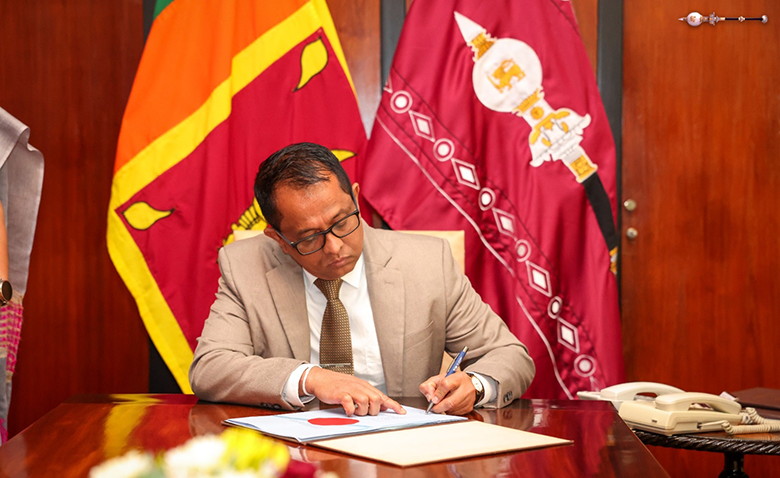
Speaker Dr Jagath Wickramaratne on Wednesday endorsed the certificate on the Inland Revenue (Amendment) Bill, bringing the legislation into force as the Inland Revenue (Amendment) Act, No. 11 of 2026, Parliament sources said.
The Bill, which amends the Inland Revenue Act, No. 24 of 2017, was passed by Parliament on May 19.
The new law introduces a series of reforms aimed at modernising tax administration procedures, improving compliance and enforcement mechanisms, enhancing the accuracy of tax calculations and deductions, and strengthening transparency within the tax system.
The amendments also support broader economic policy objectives and include measures designed to reinforce anti-money laundering safeguards.Among the key provisions of the Act is the mandatory use of Taxpayer Identification Number (TIN) certificates for specified high-value financial transactions.
The legislation also introduces revisions to the calculation of taxable income, clarifies tax exemptions applicable to certain projects and business entities, and expands the scope for information disclosure to relevant authorities.
The amendments are expected to improve the efficiency of tax administration while facilitating greater accountability and regulatory oversight.With the Speaker’s endorsement of the certificate, the Inland Revenue (Amendment) Bill has now become law as the Inland Revenue (Amendment) Act, No. 11 of 2026.

Pakistan hold their nerve to take series in low-scoring scrap

Robinson routs New Zealand top-order as England hit back on 16-wicket day

Rumesh Tharanga shatters Rome Diamond League record

Showers about 100 mm are likely at some places in the Western and Sabaragamuwa provinces and in Galle, Matara, Kandy and Nuwara-Eliya districts

Elders’ home devastated by fire was a ‘house of horror’: Witnesses

CERT : AI-generated videos depicting Prez, PM lure public into financial scams

‘Dates have the highest sugar content to fight Coronavirus’

Sunday Island 27 December – Headlines

#SundayIsland 17th December – Headlines

Sunday Island – 28th March

Sunday Island Headlines – 21 March

Sunday Island – 21st February – Headlines
-
 News6 days ago
IMF urges Lanka not to meddle with exchange rate
-

 News3 days ago
Lankan duo emerge winners in Latin dance championship held in Blackpool, UK
-

 Business4 days ago
IMF’s unstated rate:Sri Lanka’s $695m loan costs about 5.33% per annum
-
 News6 days ago
State of emergency extended
-

 Features5 days ago
Are threats to Buddha Sasana external or from within?
-

 News4 days ago
UNP challenges NPP move to amend Vihara – Devalagam Act
-

 Business4 days ago
Sri Lankan scientist-innovator Milinda Edirisinghe introduces AI-integrated gem testing system to gemological world
-

 News3 days ago
Sri Lankan teen killed in Chennai clash; three arrested