
Features
Political polarization, assassination of Lalith Athulathmudali and a new job for me

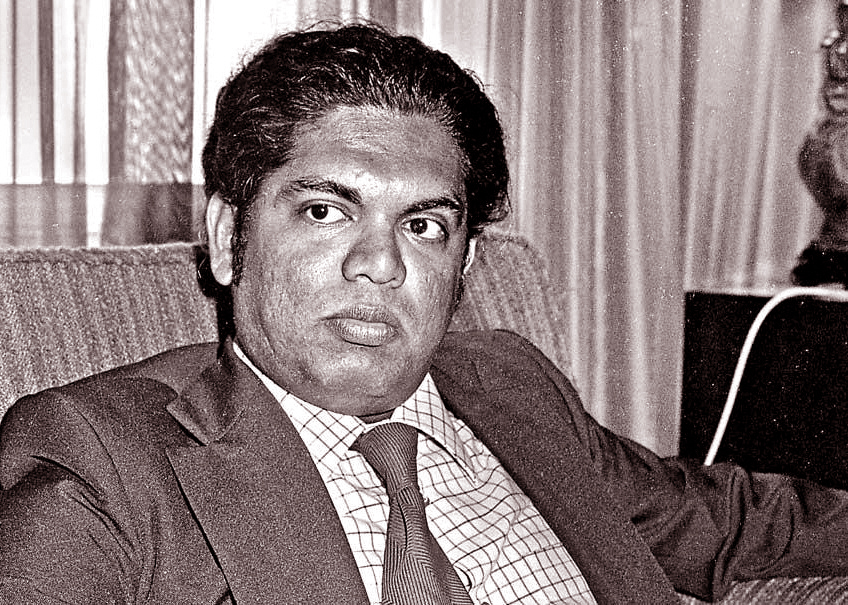
Events moved quickly now. There was a progressive polarization of the political climate. The two Senior Ministers, Mr. Gamini Dissanayake and Mr. Lalith Athulathmudali who had left the government and formed their own political party, The Democratic United National Front (DUNF) were posing a considerable challenge to the ruling UNP. The original intention of this group was to get the President impeached, and to assume control of the party. But President Premadasa outwitted them. Now, this breakaway party was beginning to pose a significant challenge. Needless to say all this was accompanied with great bitterness. This was certainly something that the President was not prepared to forgive or forget. The Provincial Council elections were now due and candidates from various parties were in the field vying for votes.
Mr. Athulathmudali along with his former Ministerial colleague and others were also keenly contesting this election. On the late evening of April 23, 1993, when Mr. Athulathmudali was addressing a political rally at Kirulapone, a gunman shot him. He was rushed to hospital where in spite of all efforts by doctors, he succumbed to his injuries. There was an outpouring of grief and anger in the country. Mr. Athulathmudali was a respected and popular figure. He was widely identified as a future leader of the country. The bitterness of the political battle that preceded his assassination was such that a great many people suspected the President of having been behind it.
The fact that there were others who were thorns in the government’s side, who mysteriously disappeared, or like in the case of Richard de Zoysa turned up dead in the sea, strengthened this perception. People openly began accusing the President. The state of public feeling was high and running against the President. The voices of a few, more reflective people who thought that the President couldn’t possibly have had a hand in this, because he would have known well enough that such an act would boomerang on him, were drowned out. Mass feeling at the time was not conducive to any sober analysis. There was an unprecedented crowd at his funeral, and angry people threw stones at some government buildings on the way to the cemetery. The Ministry of Public Administration was one such institution where several windows were broken.
Assassination of President Premadasa
The information was that the President was greatly distressed at what had happened, and the imputations and accusations made against him. People working close to him reported that he was hurt, angry and at times almost hysterical. This came out in what was to be his own final political address eerily enough at the same Kirulapone venue at which Mr. Athulathmudali was killed. Recordings of his speech at this rally indicate that he was very emotional and greatly disturbed. He was clearly not the disciplined and controlled person he normally was.
Towards the end of his address, in a voice which virtually amounted to a screech he said something like “you can assassinate me if you want to, but don’t assassinate my character.” Just a few days later, on the May 1, he and those around him were blown up by a suicide bomber, when, reportedly against the advice of his security personnel, he was out on the road near the Armour Street Junction of his beloved Colombo Central electorate directing and encouraging, the UNP May day processionists who were on their way to the Galle Face Green for the May day rally which he himself was going to address.
The nation was stunned. This was a President who looked so strong and indestructible.
The people responded with mixed feelings, after the initial shock. Some lit crackers in celebration, the first time this has happened on the death of a national leader. This showed how polarized our society had become. On the other hand, the President’s very strength, indomitable nature and his uncompromising refusal to take no for an answer created a climate of fear. It was not a comfortable experience working with him. Even if you got on well with him, you still felt a little off balance. Very few people would have felt completely comfortable with him – he was not a predictable person.
I myself felt this sense of ambiguity when working with him, although he was always courteous and never interfered. I did not have this kind of feeling when at different times, and for different periods, and directly or indirectly I had to work with leaders like Mrs. Bandaranaike, Mr. Dudley Senanayake, Mr. J.R. Jayewardene, Mr. D.B. Wijetunge and Mrs. Chandrika Bandaranaike Kumaratunga. President Premadasa was very result oriented and had many strong qualities. Making people feel at ease in his presence was not one of them.
Visit to the United States and Germany
Prime Minister D.B. Wijetunge was sworn in as President. Given the trauma, the transition fortunately for the country was remarkably smooth, a transition in which senior minister and later Prime Minister Ranil Wickremasinghe played a major and critical role. On May 19 I had to go to New York, on my way to Connecticut for my son’s convocation at Eastern Connecticut State University where he was due to receive a B.Sc. degree in Management Science, with the subsidiary subject being Economics. He had done very well, passing out Summa Cum Laude and also being admitted to the Honor Society in Economics, based on his performance.
Out of the hundreds who graduated that day only about seven had passed out Summa Cum Laude. He had done his 13 years of schooling here, and then on Minister Lalith Athulathmudali’s strong recommendation joined the Institute of Technological Studies, (ITS) at Narahenpita, an American Campus. This was the only institution in Sri Lanka at the time which could have offered the teaching for a degree which combined management, economics and a strong programme in computer science which our son was looking for.
The fact that we needed to support him financially in the United States only for a little over a year, almost two and half years of the course being conducted here in Sri Lanka, was an added attraction. In New York, I stayed with Dr. Stanley Kalpage, our Permanent Representative at the United Nations and his wife Chitra, who were generous and genial hosts. After the visit to Connecticut, I flew on to Frankfurt, Germany to begin an official visit.
The German authorities, and their International Aid Agency GTZ had made excellent arrangements, and drawn up a varied and interesting programme, which not only took me to universities, schools and Ministries, but also many other places of interest in Frankfurt, Bonn, Heidelberg, Cologne, Hamburg and Berlin. I had an erudite companion attached to me all the time who drove me around and accompanied me during the whole tour. I was spared the bother therefore of attending to anything at all connected with my travels, lodging and the numerous other matters, which surface on a visit such as this.
I was able therefore to totally relax and concentrate on substance. This companion, Mr. Neumann, who had a Master’s degree and was very well read, and spoke excellent English was later to head the GTZ office located in the Ministry. In the meantime, we spent many pleasant hours discussing a whole range of subjects. As a parting gift he presented me with a most interesting book, “The Tao of Physics.” Whilst in Bonn I met our Ambassador Karu Jayasuriya and his wife Vasantha. They were friends. Both of them as well as Lalith Hettiaratchi of the Sri Lanka Administrative Service, who worked with me when I was Secretary in the Ministry of Agriculture, Food and Co-operatives, and who was now Deputy Ambassador, as well as his wife made me feel completely at home. Their warmth and hospitality were memorable.
Leaving The Education Ministry – summons by President Wijetunge
I arrived back in Sri Lanka on June 6 to a Ministry and a public service buzzing with rumours that I was to be sent as Secretary to the Ministry of Public Administration, Provincial Councils and Home Affairs. It was common knowledge at the time that all was not well in that important Ministry. Some serious incompatibilities seem to have developed between the Minister, Mr. Festus Perera and his Secretary, Mr. Junaid. Reports circulating in the public service had it that the Minister was in a state of near constant irritability, that he often used to shout at officers and humiliate them in public, in the presence of trade unions and other delegations, and that he seemed to trust nobody.
His “Mini Cabinet” meetings were reputed to be “mini” in the sense of the Sinhala term “Mini” which meant death! The rumours were that many of the existing officers were trapped in the Ministry with no way of getting out, and that there was nobody who had the remotest wish of wanting to get in!
Such was the state of affairs when President Wijetunge summoned me to see him on June 8. I knew this was not to inquire after my health. The rumours about my impending appointment now took on some validity.
I went to see the President somewhat unhappily. Mr. Wijetunge greeted me cordially and affably as he was wont to do. In my own case, I had also worked with him, once when he was Minister of Information and Broadcasting and once, when for a brief period, he was Minister of Food. After the exchange of pleasantries and inquiries about my visit to Germany, he came to the point. “Dharmasiri, I have a big problem in the Ministry of Public Administration. I want you to please go there and assume duties immediately as Secretary.”
I asked him “Why me?” and went on to say that I still had uncompleted work in the Ministry of Education and Higher Education. He said, “No, please go. Festus cannot get on with Junaid, and there is a major crisis there. It is a very important Ministry. I don’t want a breakdown there.” “Who is coming to Education?” I asked. “I have decided to send Weragoda across from Fisheries” the president replied. I had by now cleared enough messes in a long career. I had no particular desire to go and clear another mess. “Why don’t you send Weragoda direct to Public Administration?” I asked, “instead of sending me into another mess just after clearing up a mess in Education.”
The President then virtually pleaded with me. He said “No, nobody else can handle Festus except you. Believe me I have called for and looked at the list of Secretaries. You are the only person Festus will respect,” and when I kept on looking at him, he said “Dharmasiri, please go. I can’t change the Minister.” That did it. I didn’t want to embarrass the President by persisting in reluctance. “I need a few days to wind up matters here,” I told him. “I will go and assume duties on June 16.” This was in a week’s time. The President was relieved. He thanked me warmly and I left.
An outpouring of emotion
I did not bargain for the impact the news of my going had on the Ministry. During the next few days hundreds of officers came to see me. Those who could not get to me telephoned me at home. They were very upset. Some were in tears. I was surprised, deeply touched and sometimes overwhelmed by the depth of the reaction. There was much work to be done before I left, including briefings, meetings and attending to many issues which officers wanted to finalize with me before my departure. I had to write a number of letters including to the Chairman UGC and the Vice Chancellors and various other colleagues in the system informing them of my going. This had to be done as a matter of courtesy. I was deeply touched by the replies I received from most of them.
My final day in the Ministry was June 15. The monthly Development Committee Meeting with the Provincial Secretaries of Education, the Provincial Directors and others was fixed for the morning of this day. My officers solicitously inquired from me that since this was my last day and since the meeting was going to take about three quarter of the day, whether it could be postponed, for the new Secretary to fix a date. I thanked them for their concern, but since this date had been fixed a month previously, I said I would proceed with it, since a last minute cancellation would inconvenience many officers. Besides, it was too important a meeting to postpone.
Secretaries could come and go. When the meeting ended at about 2.30 p.m. and when I announced to the Provincial Secretaries and Provincial Directors of Education and others that I had only a few hours left in the Ministry, there was total silence and shocked disbelief. I was deeply touched by the words of some of the Provincial Secretaries and others who spoke with great feeling. Some said that they had somewhat mixed feelings since I was going as Secretary to the Ministry of Public Administration and therefore, as the head of the public service. They said that it could not be said that my presence was not needed there too.
I had to gently intervene and curtail the speeches, because the hour was late and they had not had their lunch. There was also a farewell organized by the Ministry, the Departments and other agencies a little later that afternoon. I just did not have time for lunch that day because there was a stream of officers who wanted to speak with me. This went on until I was reminded that everyone had gathered on the ground floor awaiting my arrival. There was as large a crowd gathered as on the day that Mr. Lalith Athulathmudali bade farewell.
Many spoke. Many of the speeches were quite emotional. When I looked around there were many officers, both men and women with tears pouring down as they stood. The crowd was so large that except for a few of us, providing seats was not possible. As the speeches went on well past 4.30 p.m. no one moved. Normally there is a rush to catch a bus or a train All this affected me too, and when it came to my turn to speak, I spoke with great difficulty. It is not easy to speak when you see so many tearful faces around you. It was a very emotional moment for all of us.
Never in my life, before or after had I experienced such spontaneous mass emotion, and this from officers of a Ministry, which many of my friends out of a feeling of kindness for me, thought I should not have gone to, at the time I was originally appointed as Secretary. The staff had also contributed and bought a huge brass lamp and some other items as gifts. It was with a heavy heart that I left the Ministry for what I thought was the last time, that evening. I was not to know that fate had other designs in store for me.
(Excerpted from In Pursuit of Governance, the autobiography of MDD Pieris)

Features
‘There are no private universities in Sri Lanka’ – some considerations for higher education reform
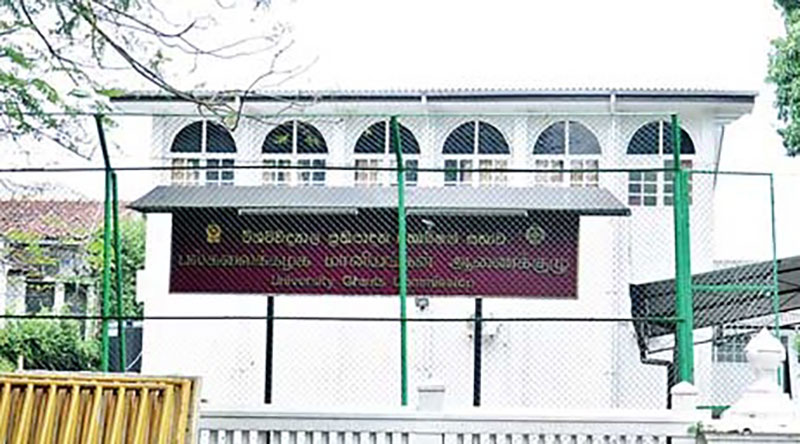
 Academics involved in education policy like to say that there is no such thing as a private university in Sri Lanka. The only ‘universities’ in the country are state universities; anything else offering degrees is a private higher education institution (HEI). This position is technically accurate. Yet, in the discourse and imagination of the public, private universities are very real – people teach in them, students register in them, families pay fees, and such degree holders enter job markets in Sri Lanka and outside.
For decades, activists concerned for public higher education have ignored or resisted looking at private HEIs, as if such scrutiny would taint them. Others have worked in both types of institutions, carrying practices from each to the other. The apex body governing state universities, the UGC, has, meanwhile, ignored the concept of conflict of interest and appointed individuals in private higher education in committees and leadership positions. It is unsurprising then that some of the ideologies informing private higher education appear in reform agendas in the state sector.
This is a good time then to consider the varying types of private HEIs around us, and to take a look at some of the issues within them in the hope that higher education reform agendas will include private, as well as state higher education.
What is a ‘private university’?
First, some clarifications. In the public imaginary, a ‘private university’ is typically an institution that provides a foreign or local degree for which the student makes a payment. But this broad classification encompasses a host of diverse institutions and types of degrees which I detail below.
The Non-State Higher Education Division (NSHE) of the Ministry of Education has recognised 295 degrees by 32 institutions. Most of these are private companies and include a handful of established, well-known private HEIs that are ‘university like’. The degrees are local degrees conferred by the institutions accredited by the NSHE Division. While private HEIs conferring local degrees must be accredited by the NSHE Division, there appears to be no legal consequence for not doing so. In addition, there are several permutations of the private degree that miss the net of this Division and the Standing Committee on Accreditation and Quality Assurance (SCAQA) that assists this Division.
For one, degrees conferred by foreign universities offered, via these same private HEIs, are not vetted by the NSHE Division. Secondly, there is a growing plethora of private HEIs which have either no physical presence locally or only a dubious presence. The University Grants Commission has notified the public, through their website, that foreign universities listed in the Commonwealth Universities Yearbook and the World Higher Education Database are recognised, but refrained from giving any other details – which degrees? Offered by what modes? These details are not known. Some of the foreign universities in the lists may be legitimate entities in their own land but the degrees conferred locally, in their name, may not adhere to curriculum or teaching specifications of the NSHE Division or the UGC.
Another troubling phenomenon is the ‘top up degree’, which appears to work on the same principle as that of a pre-paid mobile connection: if I have a Diploma or an HND of a sort, I am eligible to complete a course of study which provides me with a degree, usually from a foreign university. The idea that someone who does not initially qualify for a degree programme should be able to work their way towards one is a progressive notion. This is the concept that open and distance learning (ODL) was based on initially, but which is now sadly exploited. ODL models are expected to provide opportunity for learning for those who may be excluded from traditional learning institutions. In Sri Lanka, however, we have seen ODL become a marketplace offering easy to obtain, for-fee qualifications by institutions with little commitment to superior teaching and learning.
Finally, a perusal of the many types of private HEIs and their varied degrees bring to mind another question – how should the private degrees, provided by state institutions (that are not educational institutions), be regulated? Who should do so?
All of these create a host of problems for the public – for hopeful students and parents and trusting employers. For the higher education sector, recruitment of academic staff, too, has become difficult due to this plethora of ambiguous higher education qualifications, as I discussed in a previous Kuppi article (‘Recruiting academics to state universities’).
Some issues in private HEIs – a bellwether for change in state universities
In this second part of this article, I will discuss some aspects of work in private HEIs – albeit the more established institutions – given that such issues may appear in reform agendas in future.
Across state universities, all permanent staff of a specific category are paid according to the same criteria. The picture is not so clear when it comes to private HEIs since they are different entities legally, typically companies. Private HEIs have salary scales and financial incentives that are different to each other. The more established private HEIs reportedly have attractive renumeration packages, possibly a reason for academics of state universities migrating eagerly to such institutions during sabbatical years and on retirement. This may not of course be the case with other less established, or improperly registered HEIs of which we know little. Academic staff of these more accepted private HEIs seem to value the high financial remuneration they receive (in comparison to state universities) as something that makes their work rewarding.
Attractive remuneration is important to sustain the good life and is at times seen as the institution’s way of encouraging good work. Yet, this has implications for the future of the institution: to continue to deliver on promised financial packages, institutions must continue to have large profit margins. One strategy has been to enroll multiple cohorts of students per year, even up to three or four intakes per year. This can result in exploitative work conditions, since staff must cater to all these cohorts in that same year. If there is inadequate staff, employees are further burdened. On the other hand, if there is a sudden drop in enrolments (degrees can go out of fashion) unexpected layoffs occur. Similar to other sectors that employ short-term contract staff – including state universities – in private HEIs, too, individual teachers, who are on short term contracts that need regular renewal, can feel pressured to work under difficult or exploitative conditions.
At the same time, even in the more established private HEIs, work norms differ from those of state universities in that they include promotional work that keeps the institution’s name in the eye of the public. The Marketing (or similarly named) unit comes up in conversations as one of the most important departments. It appears to weigh in on decision-making related to the number of staff, the amount of re-sits per exams, and other pedagogically important matters. This is a worrying example of how financial rationales interfere with pedagogically or academically sound processes, resulting in problematic results in the classroom. On the plus side, junior colleagues, who had experience in both state and private HEIs, also felt that they faced less harassment in private HEIs – primarily due to the private HEIs ability to take swift action in reported cases of harassment. This is a real indictment on state institutions and their reluctance to address chronic issues of harassment in our universities.
Yet, while we hear much about problems in state universities, we hardly hear of problems that staff in private HEIs face. One rationale for a lack of public expressions by staff is that expressions of discontent might lead to trouble given the importance of reputation for private HEIs. The worry about reputational damage is a growing concern in state universities, too, as evidenced by social media policies and internal conversations on reputational damage, consequent to negative publicity. Institutional worries of reputational damage are harmful in the long run since these impact not only freedom of expression by student and staff, but also research that is possible in and about the education sector.
Some thoughts at the end…
A close look at the private higher education sector is important given its strong presence in the country. Impending reform needs to regulate this diverse array of higher education offerings in the private sector, as well as the state institutions that offer privately-funded options of higher education (a topic for a separate Kuppi on its own). It is time we carefully considered how to build a whole system of higher education out of this broken mess.
Kaushalya Perera is a senior lecturer at the University of Colombo.
Kuppi is a politics and pedagogy happening on the margins of the lecture hall that parodies, subverts, and simultaneously reaffirms social hierarchies.

Singer Nish Peiris is set to take the next big step in her music journey.
The talented vocalist, who has been seen and heard in the scene here for a short while, and was also featured with the now-defunct band, Inner Vision, has announced that she will be fully committing to her solo career, after completing her degree this year.
“I’m finishing my degree this year, and after that I’ll be fully committing to my solo music career,” Nish told The Island.
“I’ve already got a few tours lined up for next year, so I’m really excited for what’s ahead.”
Fans, no doubt, will remember Nish for her smooth voice and stage presence, and the good news is that she is now ready to chart her own path and bring new music to audiences at home and abroad.
With tours already planned for 2027, the year 2026 promises to be an exciting year for the young artiste as she steps into the spotlight on her own.
We wish Nish every success in this new chapter!
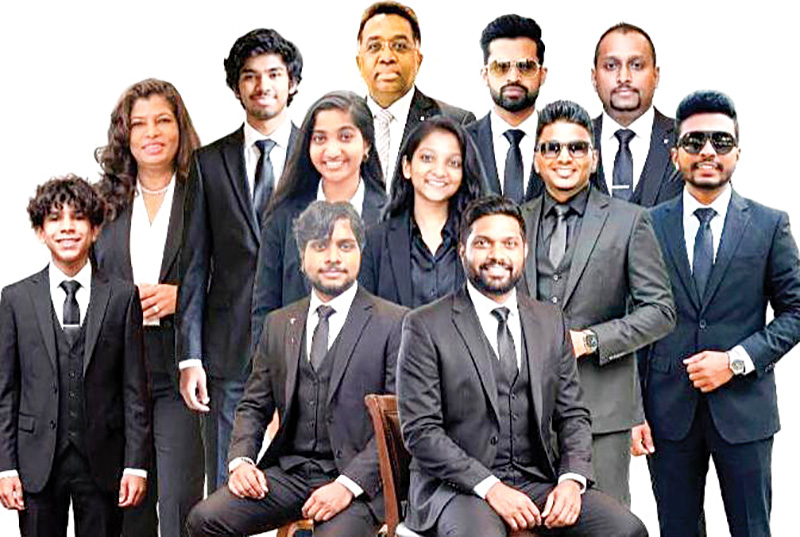
 While Sri Lankan music lovers, in Dubai, are eagerly looking forward to being a part of the action on Saturday, 25th July, with Rajiv Sebastian in the limelight, Sri Lankans, in Toronto, Canada, are equally excited and are anxiously awaiting the arrival of Sri Lanka’s famous singer/entertainer Sohan Weerasinghe.
Having done the needful with The X-Periments, the legendary performer has now embarked on an exciting new chapter – a solo career – and Toronto, Canada, will see him do the needful, on Friday, 31st July, 2026, from 8.00 pm to 12.00 am, at the Angus Glen Golf Club.

Sohan Weerasinghe: In Canada, and ready to do the needful on 31st July
Reports indicate that it’s a ‘sold out’ event – naturally with Sohan in the spotlight.

Gamini Hemalal: Creating all the excitement for Sri Lankans in Toronto
Having built his reputation through years of unforgettable performances, and hits that became part of our musical fabric, Sohan is ready to bring his own vision, sound, and stories directly to the audience, in Toronto, Canada, backed by the phenomenal Toronto Ceymphony Live Band.
Says Gamini Hemalal, who has been instrumental in reviving the Sri Lankan entertainment scene, in that part of the world:
“The countdown begins for the most exclusive musical event of the summer! Join us for a premium night of incredible music, elite hospitality, and a lavish buffet as the legendary Sohan Weerasinghe takes the stage live in Toronto!
“This is a high-end event, designed for those who appreciate exceptional entertainment and great food.”
Gamini, who is also a member of the Toronto Ceymphony Live Band, mentioned that it’s going to be an intimate musical evening with the celebrated Sohan Weerasinghe.
From packed auditoriums to intimate shows, Sohan continues to prove why he remains one of Sri Lanka’s most beloved entertainers.
For decades, Sohan Weerasinghe has been a household name in Sri Lankan entertainment.
Known for his captivating smooth voice and charismatic stage presence, Canada will experience it all on Friday, 31st July.
Next on the list of events, Gamini Hemal is working on, is Halloween night and he says “what we plan to do will be very interesting and unique … with a surprise guest star, as well!”

Trump slaps 50% tariffs on Canada and Carney vows to ‘intensify’ trade talks

Showers will occur in the Western, Sabaragamuwa and North-western provinces and in Kandy, Nuwara-Eliya, Galle and Matara districts

Move to extend judges’ retirement ages could damage Sri Lanka’s global image, warns Prof. Peiris

Dengue surge infects 76,000, claims about 53 lives

SC dismisses challenge to gender change procedures

BASL urges Justice Minister not to amend Constitution to increase retirement ages of superior court judges

‘Dates have the highest sugar content to fight Coronavirus’

Sunday Island 27 December – Headlines

#SundayIsland 17th December – Headlines

Sunday Island – 28th March

Sunday Island Headlines – 21 March

Sunday Island – 21st February – Headlines
-
 Business2 days ago
‘Giving up was never an option’: The fisherman who fought back after losing millions in SL
-
 Features2 days ago
Two memorable excerpts from a former SLAF commander’s memoir
-
 Latest News3 days ago
Davis cup Asia/Oceania Group IV 2026 to be held in Colombo from 20th to 25th July
-
 Features2 days ago
Erdoğan’s New Republic
-
 Life style2 days ago
Taste of the Swiss Alps comes to Colombo
-
 Features6 days ago
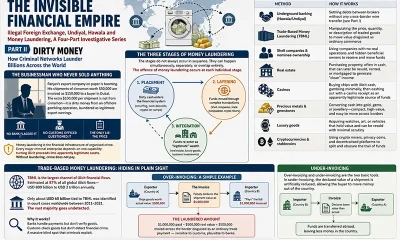
Dirty Money
-
 News3 days ago
Dengue outbreak gallops ahead: Infections surpasses 73,455, leaving 50 dead
-
 News3 days ago
Evidence recorded in money laundering case against Yoshitha Rajapaksa