
Features
Citizenship, Devolution, Land and Language: The Vicarious Legacies of SJV Chelvanayakam

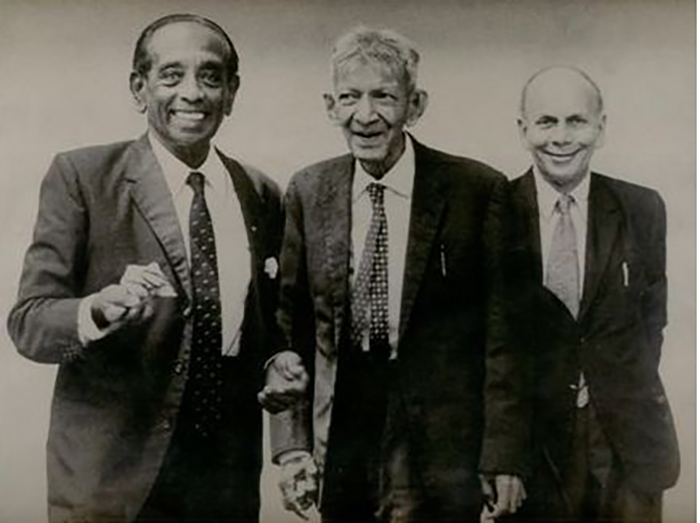
SJV Chelvanayakam, the founder leader of the Ilankai Thamil Arasu Kadchi, aka Ceylon Tamil Federal Party, passed away 49 years ago on 26 April 1977. There were events in Sri Lanka and other parts of the world where Tamils live, to commemorate his memory and his contributions to Tamil society and politics. His legacy is most remembered for his espousal of the cause of federalism and his commitment to pursuing it solely through non-violent politics. Chelvanayakam’s political life spanned a full 30 years from his first election as MP for Kankesanthurai in 1947 until his death in 1977.
Under the rubric of federalism, Chelvanayakam formulated what he called the four basic demands of the Tamil speaking people, a political appellation he coined to encompass – the Sri Lankan Tamils, Sri Lankan Muslims and the hill country Tamils (Malaiyaka Tamils). The four demands included the restoration of the citizenship rights of the hill country Tamils; cessation of state sponsored land colonisation in the North and East; parity of status for the Sinhala and Tamil languages; and a system of regional autonomy to devolve power to the northern and eastern provinces.
High-minded Politics
Although the four basic demands that Chelvanayakam articulated were not directly delivered upon during his lifetime, they became part of the country’s political discourse and dynamic to such an extent that they had to be dealt with, one way or another, even after his death. So, we can call these posthumous developments as Chelvanayakam’s vicarious legacies. There is more to his legacy. He belonged to a category of Sri Lankans, Sinhalese, Tamils and Muslims, who took to politics, public life, public service, and even private business with a measure of high-mindedness that was almost temperamental and not at all contrived. Chelvanayakam personified high-minded politics. But he was not the only one. There were quite a few others in the 20th century. There have not been many since.
Born on 31 March 1898, Chelvanayakam was 49 years old when he entered parliament. He was not an upstart school dropout dashing into politics or coming straight out of the university, or even a hereditary claimant, but a self-made man, an accomplished lawyer, a King’s Counsel, later Queen’s Counsel, and was widely regarded as one of the finest civil lawyers of his generation. He was a serious man who took to politics seriously. Howard Wriggins, in his classic 1960 book, “Ceylon: Dilemmas of a New Nation”, called Chelvanayakam “the earnest Christian lawyer.”
Chelvanayakam’s professional standing, calm demeanour, his personal qualities of sincerity and honesty, and his friendships with men of the calibre of Sir Edward Jayatilleke KC (Chief Justice, 1950-52), H.V. Perera QC, P. Navaratnarajah, QC, and K.C. Thangarajah, were integral to his politics. The four of them were also mutual friends of Prime Minister SWRD Bandaranaike and they played a part in the celebrated consociational achievement in 1957, called the B-C Pact.
Chelvanayakam effortlessly combined elite consociationalism with grass roots politics and mass movements. He led the Federal Party both as a democratic organization and an open movement. Chelvanayakam and the Federal Party used parliament as their forum to present their case, the courts to fight for their rights, and took to organizing non-violent protests, political pilgrimages and satyagraha campaigns. He was imprisoned in Batticaloa, detained in Panagoda, and was placed under house arrest several times. His Alfred House Gardens neighbours in Colombo used to wonder why the government and the police were after him, of all people, and why wouldn’t they do something about his four boisterous, but studious, sons!
He was a rare politician who filed his own election petition when he was defeated in the 1952 election, his first as the leader of the Federal Party, and was rewarded with punitive damages by an exacting judge. He had to borrow money from Sir Edward Jayatilleke to pay damages. The common practice for losing candidates was to file vexatious petitions in the name of one of their supporters with no asset to pay legal costs. Chelvanayakam was too much of a principled man for that. As a matter of a different principle, the two old Left parties never challenged election losses in court, but Dr. Colvin R de Silva singled out Chelvanayakam’s uniqueness for praise in parliament, in the course of a debate on amendments to the country’s election laws in 1968.
Disenfranchisement & Disintegration
Although he became an MP in 1947, Chelvanayakam had been associated with GG Ponnambalam and the Tamil Congress Party for a number of years. GG was the flamboyant frontliner, SJV the quiet mainstay behind. Tamil politics at that time was all about representation. In fact, all politics in Sri Lanka has been all about representation all the time. It started when British colonial rulers began nominating local (Sinhala, Tamil, Muslim) representatives to quasi legislative bodies, and it became a contentious political matter after the introduction of universal franchise in 1931.
Communal representation was conveniently made to look ugly by those who themselves were politically communal. Indeed, under colonial rule, if not later too, Sri Lankans were a schizophrenic society where most Sinhalese, Tamils and Muslims were socially friendly, but politically communal. The underlying premise to the fight over representation was that British colonialists were not leaving in a hurry and they were there to stay and rule for a long time. Hence the jostling for positions under a foreign master. It was in this context that Ponnambalam made his celebrated 50-50 pitch for balanced representation between the Sinhalese, on the one hand, and all the others – Tamils, Muslims, Indian Tamils – combined on the other. It was a perfectly rational proposition, but it was also perfectly poor politics.
But independence came far sooner than expected. The Soulbury Constitution was set up not for a continuing colonial state, but as the constitution for an independent new Ceylon. So, the argument for balanced representation became irrelevant in the new circumstances. The new Soulbury Constitution was enacted in 1945, general elections were held in 1947, a new parliament was elected, and Ceylon became independent in 1948. SJV Chelvanayakam was among the seven Tamil Congress MPs elected to the first parliament led by GG Ponnambalam.
The Tamil Congress campaigned in the 1947 election against accepting the Soulbury Constitution and for a vaguely formulated mandate “to cooperate with any progressive Sinhalese party which would grant the Tamil their due rights.” But what these rights are was not specified. In a Feb. 5, 1946 speech in Jaffna, Ponnambalam specifically proposed “responsive cooperation between the communities” – not parties – and advocated “a social welfare policy” to benefit not only the poor masses of Tamils but also the large masses of the Sinhalese.
So, when Ponnambalam and four of the seven Tamil Congress MPs decided to join the government of DS Senanayake with Ponnambalam accepting the portfolio of the Minister of Industries, Industrial Research and Fisheries, they were opposed by Chelvanayakam and two other Tamil Congress MPs. The immediate context for this split was the Citizenship question that arose soon after independence when DS Senanayake’s UNP government introduced the Ceylon Citizenship Bill in parliament. The purpose and effect of the bill was to deprive the estate Tamils of Indian origin (then numbering about 780,000) of their citizenship. Previously the government had got parliament to enact the Elections Act to stipulate that only citizens can vote in national elections. In one stroke, the whole working population of the plantations was disenfranchised.
GG Ponnambalam and all seven Tamil Congress MPs voted against the two bills. Joining them in opposition were the six MPs from the Ceylon Indian Congress representing the Malaiyaka Tamils and 18 Sinhalese MPs from the Left Parties. The Citizenship Bill was passed in Parliament on 20 August 1948. Ponnambalam called it a dark day for Ceylon and accused Senanayake of racism. But less than a month later, on September 3, 1948, he joined the Senanayake cabinet as a prominent minister and the government’s principal defender in parliamentary debates. Dr. NM Perera once called Ponnambalam “the devil’s advocate from Jaffna.”
Chelvanayakam remained in the opposition with two of his Congress colleagues. A little over an year later, on December 18, 1949, Chelvanayakam founded the Ilankai Tamil Arasu Kadchi, Federal Party in English. Not long after, joining Chelvanayakam in the opposition was SWRD Bandaranaike, who broke away from the UNP government over succession differences and went on to form another new political party, the Sri Lanka Freedom Party. As was his wont as a Marxist to see trends and patterns in politics, Hector Abhayavardhana saw the breakaways of Chelvanayakam and Bandaranaike, as well as the emergence of Thondaman as the leader of the disenfranchised hill country Tamils, as symptoms of a disintegrating society as it was transitioning from colonial rule to independence.
Abhayavardhana saw the Citizenship Act as the political trigger of this disintegration in the course of which “what was set up for the purpose of a future nation ended in caricature as a Sinhalese state.” Chelvanayakam may have agreed with this assessment even though he was located at the right end of the ideological continuum. “Ideologically, SJV is to the right of JR,” was part of political gossip in the old days. He saw “seeds of communism” in Philip Gunawardena’s Paddy Lands Act. For all their differences, Chelvanayakam and Ponnambalam were united in one respect – as unrepentant opponents of Marxism.
The Four Demands
Chelvanayakam had his work cut out as the leader of a new political party and pitting himself against a formidable political foe like Ponnambalam with all the ministerial resources at his disposal. Chelvanayakam may not have quite seen it that way. Rather, he saw his role as a matter of moral duty to fill the vacuum created by what he believed to be Ponnambalam’s betrayal, and to provide new leadership to a people who were at the crossroads of uncertainty after the unexpectedly early arrival of independence.
He set about his work by expanding his political constituency to include not only the island’s indigenous Tamils, but also the Muslims and the Tamil plantation workers from South India – as the island’s Tamil speaking people. It was he who vigorously introduced the disenfranchised Indian Tamils as hill country Tamils. In the aftermath of the Citizenship Act and disenfranchisement, restoring their citizenship rights became an obvious first demand for the new Party.
Having learnt the lesson from Ponnambalam’s failed 50-50 demand, Chelvanayakam territorialized the representation question by identifying the northern and eastern provinces as “traditional Tamil homelands,” and adding a measure regional autonomy to make up for the shortfall in representation at the national level in Colombo. To territorialization and autonomy, he added the cessation of state sponsored land colonization especially in the eastern province. Chelvanayakam and the Federal Party painstakingly explained that they were by no means opposed to Sinhalese voluntarily living in Tamil areas, either as a matter of choice, pursuing business or as government and private sector employees, but the nuancing was quite easily lost in the political shouting match.
The fourth demand, after citizenship, regional autonomy, and land, was about language. Language was not an issue when Chelvanayakam started the Federal Party. But he pessimistically predicted that sooner or later the then prevailing consensus, based on a State Council resolution, over equality between the two languages would be broken. He was proved right, sooner than later, and language became the explosive question in the 1956 election. As it turned out, the UNP government was thrown out, SWRD Bandaranaike led a coalition of parties to victory and government in the south, while SJV Chelvanayakam won a majority of the seats in the North and East, including two Muslims from Kalmunai and Pottuvil.
After the passage of the Sinhala Only Act on June 5, 1956, the Federal Party launched a political pilgrimage and mobilized a convention that was held in Trincomalee in the month of August. The four basic demands were concretized at the convention, viz., citizenship restoration for the hill country Tamils, parity of status for the Sinhala and Tamil languages, the cessation of state sponsored land colonization, and a system of regional autonomy in the Northern and Eastern Provinces.
The four demands became the basis for the Bandaranaike-Chelvanayakam agreement – the B-C Pact of 1957, and again the agreement between SJV Chelvanayakam and Dudley Senanayake in 1965. The former was abrogated by Prime Minister Bandaranaike under political duress but was not abandoned by him. The latter has been implemented in fits and starts.
The two agreements which should have been constitutionally enshrined, were severely ignored in the making of the 1972 Constitution and the 1978 Constitution – with the latter learning nothing and forgetting everything that its predecessor had inadvertently precipitated. The political precipitation was the rise of Tamil separatism and its companion, Tamil political violence. Ironically, Tamil separatism and violence created the incentive to resolve what Chelvanayakam had formulated and non-violently pursued as the four basic demands of the Tamils.
After his death in 1977, the citizenship question has finally been resolved. The 13th Amendment to the 1978 Constitution that was enacted in 1987 resolved the language question both in law and to an appreciable measure in practice. The same amendment also brought about the system of provincial councils, substantially fulfilling the regional autonomy demand of SJV Chelvanayakam. The land question, however, has taken a different turn with state sponsored land colonisation in the east giving way to government security forces sequestering private residential properties of Tamil families in the north, especially in the Jaffna Peninsula.
Further, the future of the Provincial Council system has become uncertain with the extended postponement of provincial elections by four Presidents and their governments, including the current incumbents. The provinces are now being administered by the President through handpicked governors without the elected provincial councils as mandated by the constitution. Imagine a Sri Lanka where there is only an Executive President and no parliament – not even a nameboard one. “What horror!”, you would say. But that is the microcosmic reality today in the country’s nine provinces.
by Rajan Philips

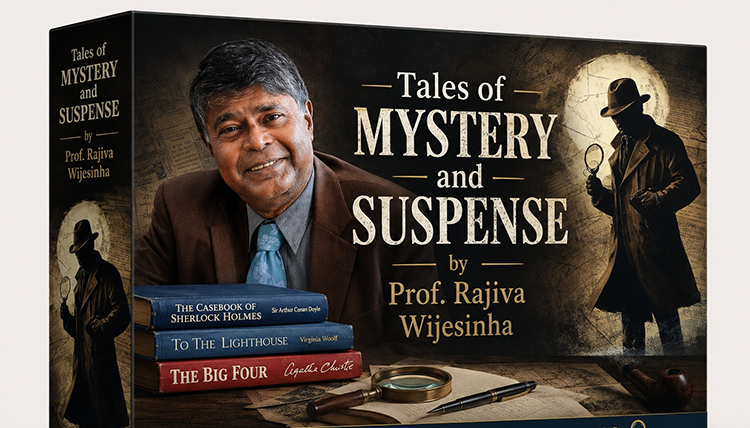
Tales of Mystery and Suspense 3
The murder, in a private dining room in the house, is of a financier with whom the government was negotiating a loan. When this seemed difficult the Minister of Home Affairs agreed to lead discussions, since he had known Mr Oissel the financier when they were young. Hence the private dinner, but when the Minister stepped out for a vote, Oissel was shot just as the Division Bell rang.
The Brahms and Simon detective novels, the first of which I wrote about last week, were amongst several books by the pair that Robert Scoble gave me when I was in Australia towards the end of last year. Amongst them was another thriller of a very different sort, though that too was written and set between the wars.
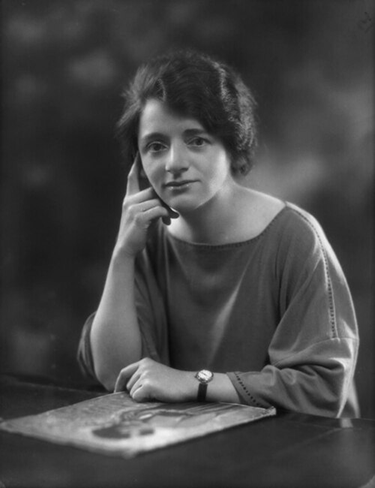
Called The Division Bell Mystery, it was set in the House of Commons, the first such book I believe, and was by Ellen Wilkinson, a Labour MP who became Minister of Education in Attlee’s government after the war, having served previously as Parliamentary Private Secretary to several ministers. Her hero Robert West is also a PPS, but a conservative, and his Minister, of Home Affairs, is an old style aristocrat, not much loved by the less orthodox Prime Minister, who nevertheless needs his support on many occasions.
The murder, in a private dining room in the house, is of a financier with whom the government was negotiating a loan. When this seemed difficult the Minister of Home Affairs agreed to lead discussions, since he had known Mr Oissel the financier when they were young. Hence the private dinner, but when the Minister stepped out for a vote, Oissel was shot just as the Division Bell rang.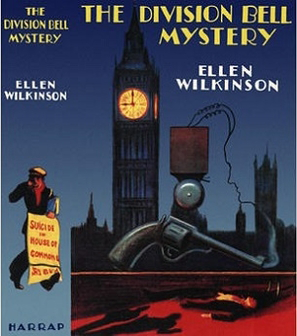
West was just outside the door when the shot was heard, and when he opened it saw only the dead body with a revolver beside it. The assumption that this was suicide was however challenged by Oissel’s grand-daughter Annette, who was his heir, on the grounds that he would never have killed himself. But her view was given greater credence by the Inspector put in charge of the case who said there were no burn marks on the body which would have been the case had Oissel fired the pistol himself.
Matters are complicated by the fact that Oissel’s flat had been burgled while he was at dinner, and Jenks the policeman allocated to him, who had served the Home Secretary and seemed more acceptable to Oissel than someone from the Security Service, had been killed. Matters get even more complicated when Annette says her grand-father’s notebook in which he wrote his secrets in cipher was missing.
That was found in Jenks’ pocket, and then a photographer came to West to say he had been asked by Jenks to photograph this. More worryingly for West, he finds in the Home Secretary’s drawer a few pages from the notebook with what appears to be an interpretation of the cipher.
Ellen
Overwhelmed by all this he confides in a recently created peer who knows all about the business world, who insists that they leave the house party at which they had met over dinner and discuss the matter with the Prime Minister who promptly summons the Home Secretary.
But the Home Secretary had gone to Scotland to launch a ship over the weekend, so the meeting could take place only on the morning of the Monday, when difficult questions were expected on the adjournment motion. He admits at the meeting that he had got Jenks to take the notebook, and also that he knew the code since it had been created by him and Oissel when they were young.
He thought he should resign, and even contemplated suicide, but the Prime Minister told him that that would be even worse for the government, and that he should go home to bed. The Prime Minister said that he himself would handle the question, which he did with aplomb, insisting that confidentiality was needed until the inquest. What had happened would be made clear then, he declared, leaving West and Inspector Blackit and Lord Dalbeattie what seemed the impossible task of solving the murder.
Dalbeattie had suggested that West ask a female Labour MP who was very fond of him to get what information she could from the staff. That there was some involvement there had become clear when West, going back late one night to collect a briefcase he had left in a dining room, found someone lurking in the dark in the corridor outside the private rooms. Room J, where the murder had happened, was meant to be guarded throughout by a policeman, but he had left the room having felt dizzy, and it seemed that his coffee had been drugged. West’s sudden appearance however had prevented anyone else getting into the room.
Dalbeattie decides to recreate the scene of the murder and has a dinner party in Room J on the Tuesday night, inviting West and Annette and the society hostess at whose house he had met, and also Patrick Kinnaird, an MP who was engaged to Annette, as well as the Permanent Secretary to the Home Ministry.
After coffee Inspector Blackit comes in with Grace, the Labour MP who had got the confidence of the staff, and a journalist who had also been helpful, and just as they say they think they are on the track the division bell rings. Grace jumps up and tells the Inspector that that provides the solution and they get a ladder, and sure enough find the revolver in the space where the bell is. Directed at the place where Oissel had sat, it had been primed to go off with the ringing of the bell. The waiter who had helped to set things up made clear who the murderer had been.
The reason for the murder and the confused motives of all those involved made for a fascinatingly intricate mix. But also impressive in the book were the descriptions of the isolation possible in the crowded premises of the house, the forceful characterization of the members – Grace based on the writer, the society hostess based on Nancy Astor, the first female MP – and the laid back nature of senior politicians which West realized had to change in the brave new world of high finance.

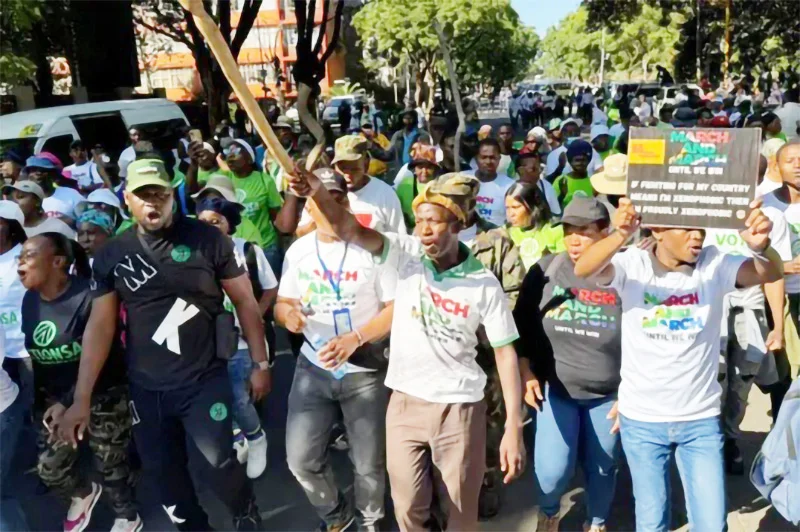
 The current outbreak of anti-immigrant protests in Durban, South Africa is bound to have taken many a subscriber to value-based politics or political idealism quite by surprise. After all, this is evidence that despite the historic accomplishments of nation-builders of the stature of the late President Nelson Mandela it cannot be taken for granted that identity politics, including racism in its worst forms, is no more in South Africa.
At the time of this writing details are scarce on the substantive root causes of the protests but it could very well be that economic grievances, particularly on the part of the majority community in South Africa, are contributing considerably to the disaffection. Shrinking employment and material prospects are likely to figure majorly among the factors igniting the unrest.
Fortunately, the local authorities in Durban are losing no time in calling for peaceful co-existence among the relevant communities and are pointing to the vital importance of stepping-up national integration processes. Apparently, immigrants in sizable numbers from neighbouring countries are present in Durban. However, international TV footage of the protests quoted some local authorities as saying that the majority of the immigrants in some centres that housed them were not illegal migrants and had the documents that entitle them to be in Durban.
In the Durban protests the world has fresh proof of the socially divisive consequences of the gathering globe-wide economic disaffection, touched off particularly by the continuing crisis in West Asia. Going ahead, the world would need to brace for increasing identity-based unrest of the kind it is just witnessing in South Africa.
Considering that the material lot of ordinary people everywhere could only aggravate progressively, with the US and Iran showing no signs of negotiating an end to their confrontation any time soon, it will be left to the more democratic and progressive sections of the world community to initiate positive measures collectively to bring a measure of relief to the discontented.
The swiftness with which such relief will be provided would depend crucially on the importance those sections taking up these undertakings attach to value-based politics as opposed to Realpolitik of power politics.
Going by these yardsticks, Italy could be considered to be moving in the right direction. Recently Italy came to the fore in initiating the collective named, ‘Rome Coalition for Food Security and Access to Fertilizer’, which has as one of its aims the swift provision of fertilizer to economically weak African countries.
In a recent statement Italian Minister of Foreign Affairs and International Cooperation, Antonio Tajani, said that a principal aim of the project was to ensure that the farmers of Africa gained easy access to fertilizer, considering that food security is a growing concern among some of Africa’s economically vulnerable countries.
The statement went on to mention that some 30 countries hailing from the Mediterranean region, the Middle East, the Balkans as well as the FAO had been invited to join the coalition. The venture is far-seeing in that food security is main among the reasons for social discontent which in turn could degenerate into endemic political turmoil and bloodshed. Separatist violence and geographical fragmentation of countries wouldn’t be too far behind these developments, as Africa itself has often proved.
It is hoped that more G7 countries would take the cue from Italy and do what they could to ease the hardships of economically distressed countries, particularly of the global South. In these efforts they would need to break rank with the US, which is today brutally indifferent to the consequences of its policy of making ‘America First’, come what may.
Going by current developments, the Trump administration seems to be blithely oblivious to the wider, deleterious effects of its policy course in West Asia. Besides rendering Iran militarily and otherwise impotent nothing else seems to matter to Washington, as regards West Asia. This is policy short-sightedness of an extreme kind. After all, right now West Asia could be said to be sitting on the proverbial powder keg.
On the other hand, Iran is not giving the world the impression that it is doing anything constructive to get out of the policy straitjacket that it wove for itself decades ago. Rather than enter into a policy of ‘live and let live’ in relation to Israel in particular and initiate a process of reconciliation with the latter, it has chosen to operate within policy parameters that continue to damn Israel. This has put Israel always on the ‘defensive’ so to speak and prevented the opening up of space for meaningful dialogue.
That said, Israel is obliged to explore the possibilities of entering into a negotiatory process with the Arab-Islamic world that could lead to a de-escalation of tensions and bloodshed. It cannot continue to look at its neighbours through lenses that distort them as archetypal enemies who should be ‘wiped off completely from the face of the earth.’
In other words, the need is urgent for Realpolitik to give way to value-based politicks. Italy is beginning to prove that the latter approach could be pursued with some success. May be the EU and the UK could throw their weight behind these initiatives as well and establish that international politics could be refashioned on the basis of humane, civilized norms. The UN would need to be fully supportive of these moves and prove an organizational nucleus of the operations that follow.
In fact the time is ripe for people of conscience to collectively stand up on the side of peace and say ‘No’ to war and violence. Organizations such as the ICRC, the WHO and Medicines Sans Frontiers have already taken up this call. Referring to the widespread destruction of health facilities and their dehumanizing results these organizations have said, among other things, that ‘This is not a failure of the law. It is a failure of political will.’
True, ‘failure of political will’ among those powers that matter accounts for the runaway, uncontrollable nature of war and destruction in contemporary times, but more fundamentally it is a failure of the human conscience. It could very well be that the phenomenal levels to which violence and war have been unleashed today have had the effect of deadening consciences. This is a matter for urgent study and wide discussion.

 I would describe Indunil Kaushalya Dissanayaka as innovative and creative, and she operates under the name of Cuteefly.
Indunil always comes up with something novel to celebrate special occasions, and she does it with candles … and that’s her profession.
She was in the spotlight when she created a happening scene, with candles, for Christmas, Sinhala and Tamil New Year, and Valentine’s Day.
As lanterns light up Sri Lanka for Vesak, the Colombo-based candle maker is quietly turning wax and wick into little pieces of the festival.

Candles reflecting Vesak themes
Her candles reflect Vesak themes – light, peace, remembrance, giving, etc., to enable you to fill your Vesak celebration with devotion and beauty.
Among her Vesak creations is a lotus-shaped soy candle, scented with sandalwood, lavender, etc., meant to burn during this Vesak Poya Day.

Indunil Kaushalya Dissanayaka: Customers
praise her for her creativity
These handcrafted Vesak candles are perfect for offering at the temple, she says.
What makes her creations so novel is that they come in different shapes, scents, themes, and all are handmade.
What’s more, her customers have heaped praise on her for her creativity.
According to Indunil, her creations are perfect as a thoughtful gift … to bring beauty, unity, and light into every moment.
Says Indunil: “Our beautifully handcrafted Unity candles are designed with premium detail and love, making them perfect for celebrations, gifts, and meaningful occasions.”
Cuteefly, says Indunil, is available online.
Readers could contact Indunil on 0778506066 for more details.
He Facebook Page is: Cuteefly.

Handmade with love

Let us dispel the roots of greed, hatred, and delusion, and transform our lives into a nobel period that brings peace and serenity – PM

Prime Minister and United Nations Resident Coordinator discuss post-Ditwah recovery and humanitarian cooperation

Further embrace the values of Buddhism founded upon non-violence, compassion and boundless loving-kindness towards all living beings – President

Showers will occur at times in the Western, Sabaragamuwa and North-western provinces and in Galle, Matara, Kandy and Nuwara-Eliya districts

IMF urges Lanka not to meddle with exchange rate

Court orders arrest of Basil in Rs. 7.8m poll funds case

‘Dates have the highest sugar content to fight Coronavirus’

Sunday Island 27 December – Headlines

#SundayIsland 17th December – Headlines

Sunday Island – 28th March

Sunday Island Headlines – 21 March

Sunday Island – 21st February – Headlines
-

 News6 days ago
All-New GRAVITE launches at LKR 6.99 Mn
-
 Features6 days ago
The NPP’s pivot to the past
-
 News5 days ago
Police probe underway to ascertain links between criminals deported from UAE and local politicians
-
 News4 days ago
Easter Sunday carnage: Court told Maulana’s statement cannot be accepted without cross-examination
-
 Features6 days ago
End of Peacekeeping
-
 Opinion4 days ago
Undermining the democratic political framework
-

 News4 days ago
UK passport holder hiding here wants to have deportation order rescinded to leave without blemish
-
 News7 days ago
Ampara District special Coordination Committee meeting chaired by the President