
News
SC delegation, headed by CJ Surasena, observes Indian Supreme Court in action

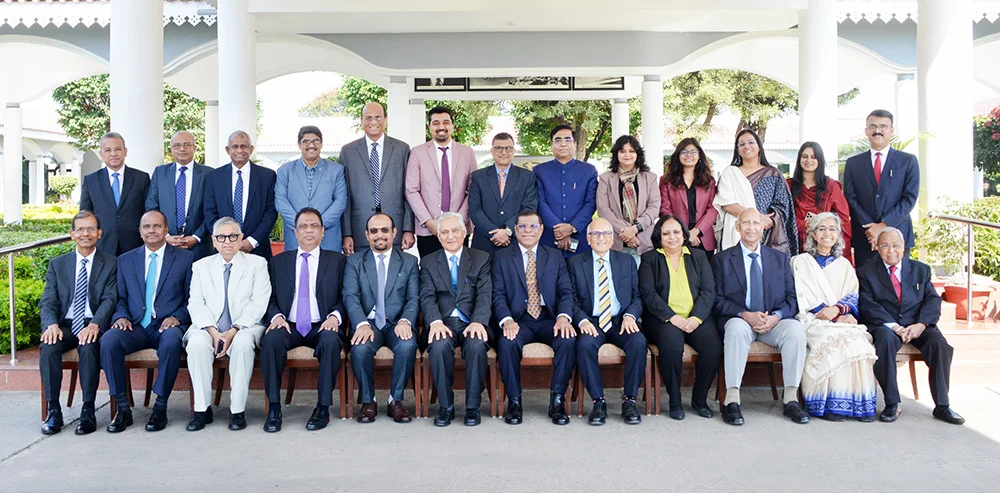
A 10-member delegation from Sri Lanka’s Supreme Court, headed by Chief Justice P. Padman Surasena, departed to New Delhi on the 11th of December, 2025, for an official visit to the Supreme Court of India as part of the ongoing official visit by the delegation to India.
The group was accorded a ceremonial welcome in the Court’s main hall, led by the Chief Justice of India (CJI) Surya Kant. CJI Kant told the assembled Judges that “the Indian judiciary was honoured to host” their Sri Lankan counterparts, expressing hope that the visit would be “meaningful and very constructive” and underscoring the “close emotional bonds” between the two countries.
The focal point of the programme was a special sitting of the Supreme Court. Chief Justice Surasena joined CJI Kant and Justice Joymalya Bagchi on the bench, presiding over the Court as a guest Justice. He was accompanied by nine other Supreme Court justices from Sri Lanka, who took seats in the well of CJI Kant’s courtroom to observe the day’s proceedings.
Supreme Court Bar Association President Vikas Singh formally greeted the delegation and praised Justice Surasena’s reformist efforts. Singh recalled the Sri Lankan Chief Justice’s own maxim, “If you want something you have never had, then you have got to do something you have never done”, highlighting the bold changes Surasena had introduced to modernise Sri Lanka’s Court system. Singh noted that these initiatives, particularly court digitization, were aimed at eradicating “the persisting problems of law delays” and streamlining case backlogs.
The Sri Lankan Judges spent the morning observing live Supreme Court proceedings in CJI Kant’s courtroom. This first-hand exposure to Indian court operations formed a key part of the programme’s judicial engagement. During the hour-long session, the visiting justices witnessed a range of cases on the Supreme Court’s roster, with Justice Surasena and the delegation following arguments from the front. The experience was designed to be immersive and following the hearing the Sri Lankan Judges were briefed on India’s own initiatives towards a digitalised court system, e-filing and case management systems.
The official programme then shifted to capacity-building and information exchange. In the early afternoon, Indian Supreme Court officials gave the Sri Lankan delegation detailed briefings on India’s technological initiatives. Court registrars demonstrated the e-filing system and other e-initiatives implemented by the Supreme Court of India. Additional presentations outlined the Court’s new case management systems and administrative reforms. These sessions highlighted how digital tools and better case-listing procedures have been used in India to increase efficiency. The Sri Lankan judges asked questions about India’s experience with electronic court records and the integration of technology in daily judicial work, reflecting their own interest in similar reforms back home.
The visit underscored the growing collaboration between the Indian and Sri Lankan judiciaries. Throughout the proceedings, both sides emphasised their shared legal traditions and mutual respect. As Chief Justice Surasena noted during the sitting, India is Sri Lanka’s “closest neighbour,” and historic links, even dating back to ancient epics, form the backdrop for today’s judicial dialogue. CJI Kant remarked that having the chief justices of two vibrant democracies together on the bench was a “significant moment” for the rule of law.
The Sri Lankan delegation continued its programme in Delhi on 12 December with a visit to the Delhi High Court and its International Arbitration and Mediation Centres. The exchange visit is expected to deepen judicial cooperation and provide practical insights for both courts. Officials on both sides say the engagement aimed at sharing best practices in court administration, reinforce legal ties and support ongoing reforms aimed at reducing case backlogs and delays.





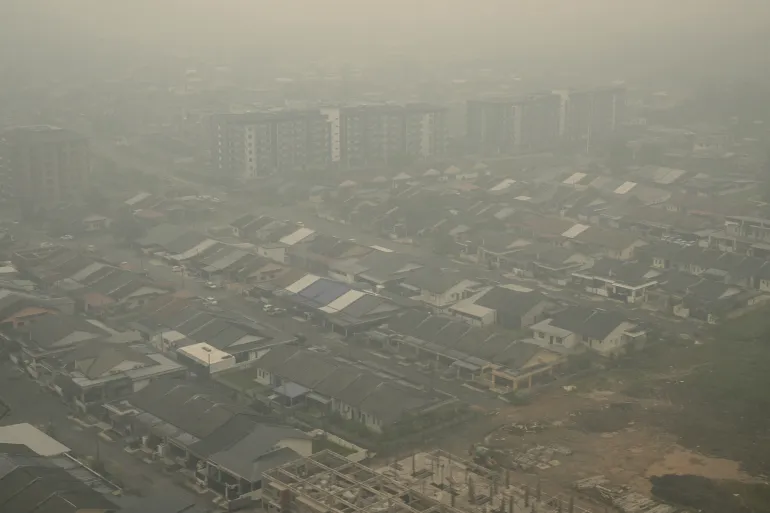
Malaysia has declared a state of emergency in a district in Sarawak state after haze caused by wildfires in neighbouring Indonesia increased air pollution to “hazardous” levels.
King Sultan Ibrahim “has consented to the declaration of emergency throughout Serian Division, Sarawak, following haze conditions that have reached air pollution levels hazardous to public health and safety”, Prime Minister Anwar Ibrahim’s office said in a statement on Thursday.
The declaration followed a formal request from the Sarawak Disaster Management Committee after the region’s Air Pollutant Index reached levels warranting consideration of a local emergency.
Under the order, 647 schools in Serian will close from Monday until at least the end of next week, alongside government and private offices, plantations, construction sites and quarries, with only essential services continuing to operate.
The state’s disaster management authorities said a three-day cloud-seeding operation launched on Thursday would be extended to at least Monday, citing forecasts of “more conducive cloud formations” during that period.
Sarawak State Disaster Management Committee chairman Douglas Uggah Embas, speaking at a news conference in Kuching, stressed that the emergency applied only to Serian, not the entire state, but urged residents there to take the situation seriously.
“Please minimise outdoor activities and avoid strenuous activities outdoors,” he said.
Sarawak, in the northern part of Borneo island, has been heavily affected by haze for weeks, as have the neighbouring states of Sabah and Peninsular Malaysia.
(Aljazeera)
Latest News
Sun directly overhead Moratuwa, Kesbewa, Handapangoda, Idalgashinna, Yudhaganawa, Kotiyagala and Panama about 12.08 noon today (05)


The sun is going to be directly over the latitudes of Sri Lanka from 28th of August to 07th of September due to its apparent southward relative motion.
The nearest places of Sri Lanka over which the sun is
overhead today (05) are Moratuwa, Kesbewa, Handapangoda, Idalgashinna, Yudhaganawa, Kotiyagala and Panama about 12.08 noon

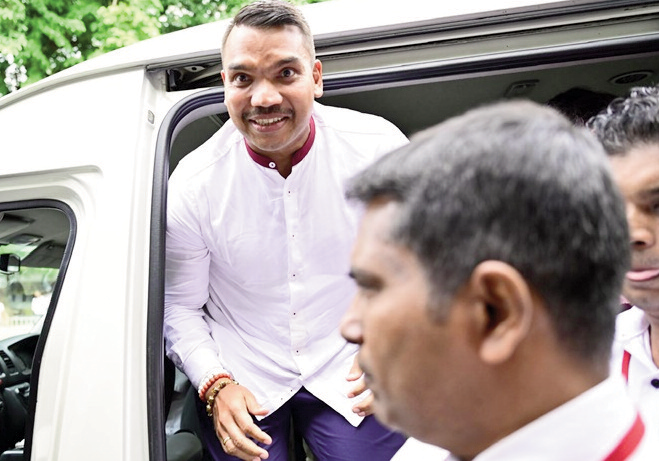
Sri Lanka Podujana Peramuna (SLPP) National Organiser and Parliamentarian Namal Rajapaksa was yesterday remanded until September 18 by the Colombo Chief Magistrate’s Court following his arrest by the Commission to Investigate Allegations of Bribery or Corruption (CIABOC) in connection with an investigation into the controversial SriLankan Airlines Airbus aircraft transaction.
Rajapaksa appeared before the CIABOC at around 9.15 am yesterday to record a statement after being summoned over the transaction. He was taken into custody following several hours of questioning and subsequently produced before the Colombo Chief Magistrate.
The investigation centres on allegations surrounding the acquisition of six Airbus A330 and eight A350 aircraft by SriLankan Airlines in 2013, in connection with an alleged USD 2 million bribe.
Former SriLankan Airlines Chief Executive Officer Kapila Chandrasena and his wife, Priyanka Niyomali Wijenayake, had previously been named in connection with the alleged bribery.
Chandrasena was arrested on March 12 as part of an investigation launched by the CIABOC under the Anti-Corruption Act and was subsequently released on bail. He was later found dead on May 8 while on bail, with police suspecting that his death was a suicide.
Open warrants have been issued for the arrest of Wijenayake, who is named as the second suspect, and Shamindra Rajapaksa, named as the third suspect, in the case pending before the Fort Magistrate’s Court in connection with the Airbus transaction.
The investigation has also received assistance from Airbus, with a delegation from the company’s parent group in France visiting Sri Lanka during the first week of August. The delegation provided statements and other assistance to the CIABOC as part of the ongoing inquiry.
Rajapaksa’s arrest and remand yesterday mark a further development in the widening investigation into the controversial aircraft deal.

Malaysia declares emergency in Sarawak as haze from Indonesia worsens

UAE keep semi-final hopes alive after convincing win over Indonesia

Sun directly overhead Moratuwa, Kesbewa, Handapangoda, Idalgashinna, Yudhaganawa, Kotiyagala and Panama about 12.08 noon today (05)

Showers above 75 mm are likely at some places in the Uva, Central and Eastern provinces and in Polonnaruwa and Mullaittivu districts after 2.00 p.m

Namal remanded until Sept. 18 over Airbus deal investigation

Dengue cases surpass 96,000 this year

‘Dates have the highest sugar content to fight Coronavirus’

Sunday Island 27 December – Headlines

#SundayIsland 17th December – Headlines

Sunday Island – 28th March

Sunday Island Headlines – 21 March

Sunday Island – 21st February – Headlines
-

 Features7 days ago
“Wrap Me Up in My Blazer”— A Gentlemanly Bradby Reminiscence
-

 Features6 days ago
When Sri Lankan stories find their own voice
-
 Features7 days ago
JVP/NPP government as seen from outside by Lionel Bopage now domiciled in Australia
-
 News6 days ago
BASL takes exception to Justice Ganepola being denied a place in SC
-
 Features7 days ago
Prof. Savitri Goonesekere: What has she done?
-

 News3 days ago
Denied of promotion to SC despite vacancies, justice Gurusinghe retires
-

 Latest News3 days ago
Grade 5 scholarship exam results released
-

 News3 days ago
22A: SC urged to suspend hearing, appoint full bench