
Latest News
WWC 2025: India make history as Rodrigues and Harmanpreet end Australia’s reign

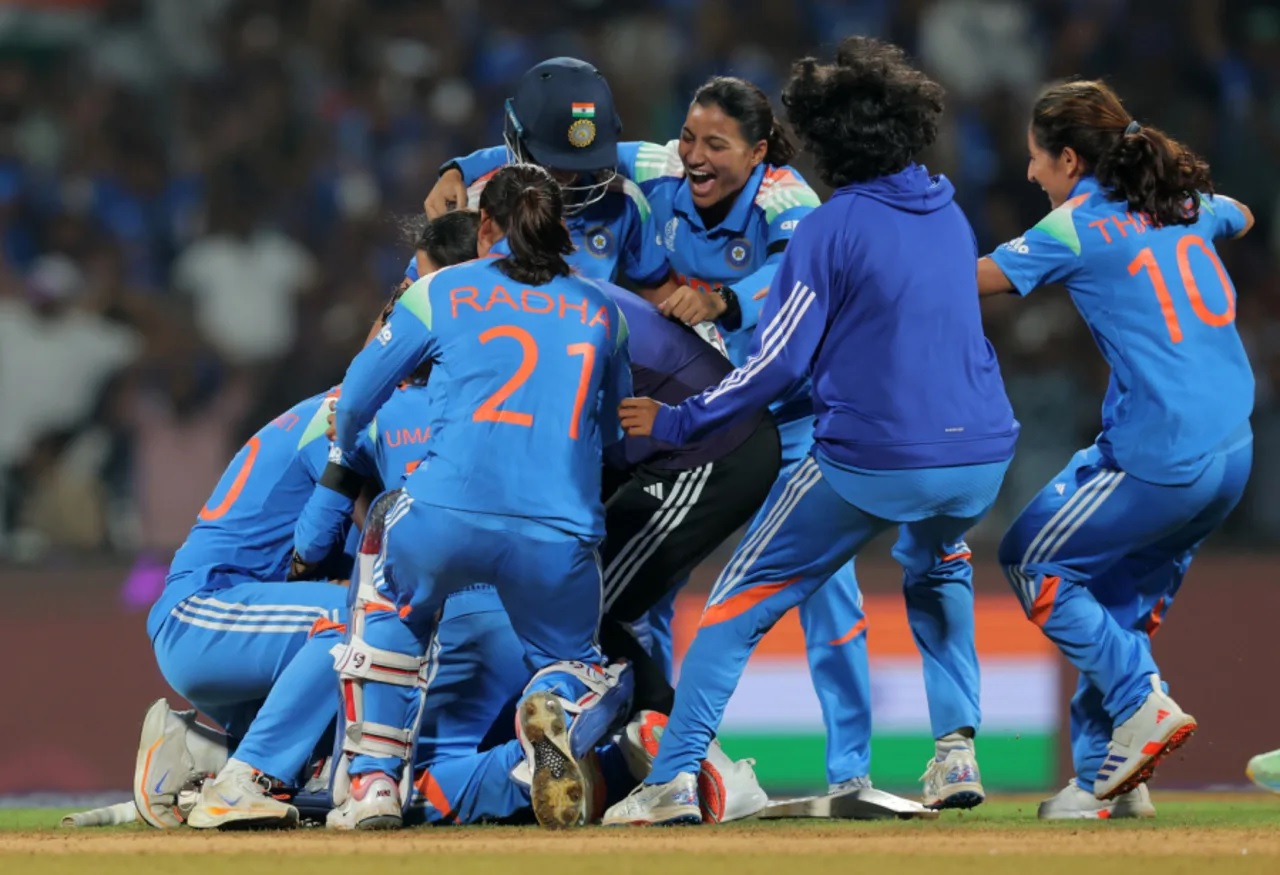
It was a movie India had seen many times. A tricky run chase Jemimah Rodrigues and Harmanpreet Kaur with a rescue act. That raising the prospect of an upset win in a knockout game against Australia. Only, this time at the Women’s World Cup 2025, the ending was different.
Rodrigues ran towards Amajot Kaur. She lifted her up, and then bent down and lay next to the pitch. She was soon swarmed by her team-mates who came charging in, perhaps faster than the speed of light, as India made only their third World Cup final, their first since 2017.
Importantly, India dealt Australia their first defeat in 16 ODI World Cup matches. Faced with a record run chase in women’s ODIs, India rode on an unbeaten century from Rodrigues and an 89 from Harmanpreet to romp home with nine balls to spare. This will be the first ODI World Cup final to not feature either Australia or England, as India will face South Africa on Sunday. The 34,651 at the DY Patil Stadium on Thursday sure got their money’s worth.
The end might have been vastly different had Alyssa Healey managed to hold on to a skier from Rodrigues when she was on 82. India needed 131 from 106 balls at that point.
About three hours earlier, though Phoebe Litchfield, had put on an exhibition that left the crowd, bathed in blue, in awe and silence in equal measure for most of the afternoon. Her maiden World Cup century aided with half-centuries from Elysse Perry and Ashleigh Gardner helped Australia get to 338. India pulled things back by taking 8 for 118 towards the end, which proved to be vital.
With a record chase in front, Smriti Mandhana walked out with a new (old) opening partner in Shafali Verma. The latter began in typical style, hitting Megan Schutt for a four off the second ball she faced. But the near-housefull crowd was silenced after Kim Garth trapped her lbw, with India also losing a review. It wasn’t until the seventh over that Mandhana hit her first boundary, a lofted straight six off Garth. Rodrigues, in at No. 3 after Harleen Deol was dropped, wasted little time in getting going. However, when India lost a second wicket in Mandhana inside the tenth over, you could hear a pin drop at the DY Patil Stadium. Given not out for a caught-behind down leg side, Australia used the DRS with Snicko returning the faintest of murmurs.
India were 60 for 2 after the powerplay, as opposed to Australia’s 72 for 1. That is when Rodrigues and Harmanpreet set about with the rebuild. After Mandhana’s fall, Rodrigues’ flow allowed Harmanpreet to get her eye in. And that was not at the ask of the scoring rate. India constantly scored at around six runs per over, never letting the ask get out of hand.
Rodrigues got to a 57-ball half-century, and Harmanpreet got to hers in 65 balls. While the other captains have had vital contributions in this campaign, Harmanpreet’s best was her 70 against England, her wicket helping the opposition open an end up. But in the semi-final against Australia, she was not going to let another ripe chance go begging. She only hit her first six after her fifty – a loft inside out over extra cover off Tahlia McGrath. She followed that with another humongous hit off Gardner over midwicket in the next over. India needed only 150 in the last 20 overs, a regulation chase in this era.
But Harmanpreet’s wicket threatened to add a twist to the tale. Deepti Sharma was run out for 24 off 17. Richa Ghosh came in, hit two fours and two sixes to reduce the margin before she fell. But India were not going to let Harmanpreet and Rodrigues’ 167-run partnership off just 156 balls go waste. The platform was set and this time, India wouldn’t miss out. Not with a determined Rodrigues, who scored her maiden World Cup hundred off 114 balls. She did not celebrate then because the task at hand was still not complete. In the end, nobody could stop her from celebrating.
Earlier in the afternoon, Kranti Gaud had a scratchy Healy, returning after she missed two games with a minor calf strain, chopping on in the sixth over before a heavy downpour. A 15-minute delay completely changed the momentum, as Australia hit nine fours in the next 29 balls, one of them via an overthrow.
If India expected spin to bring some respite, they were mistaken. Litchfield was batting as fluently as she has done all World Cup. She was ruled out caught when on 62 but an umpire’s review came to her aid. She reverse swept Shree Charani straight to short third but replays showed that it bounced just after she hit it. There was no looking back thereon as Litchfield got to her hundred off just 77 balls.
Against spin, India had protection in the deep for her sweeps – point and square leg being back. And that played into the hands of Litchfield, who was happy to dance down and hit Charani and Radha Yadav in the arc between long-off and deep cover. She was dismissed when she missed a scoop off Amanjot Kaur.
Perry rotated the strike well but also did not miss out on a positive match-up if an opportunity arose – she tonked Deepti over long-on in just her second over. She was set with her first fifty of the World Cup, but Australia struggled to find the next gear. Beth Mooney, Annabel Sutherland and McGrath also fell rather cheaply. Australia lost 4 for 45 in the latter half of the middle overs, and it felt India were firmly in control. Charani and Radha were getting enough grip to even trouble Gardner. But her 41-ball fifty helped Australia cross the 300-run mark.
What looked like a tall chase was aced with absolute mastery. The contest had the makings of an epic, and it lived up to it.
Brief scores:
India Women 341 for 5 in 48.3 overs (Jemimah Rodrigues 127*, Harmanpreet Kaur 89; Kim Garth 2-46, Annabel Sutherland 2-65) beat Australia Women 338 in 49.5 overs (Phoebe Litchfield 119, Elysse Perry 77, Ashleigh Gardner 63; Shree Charani 2-49, Deepti Sharma 2-73) by five wickets
[Cricinfo]

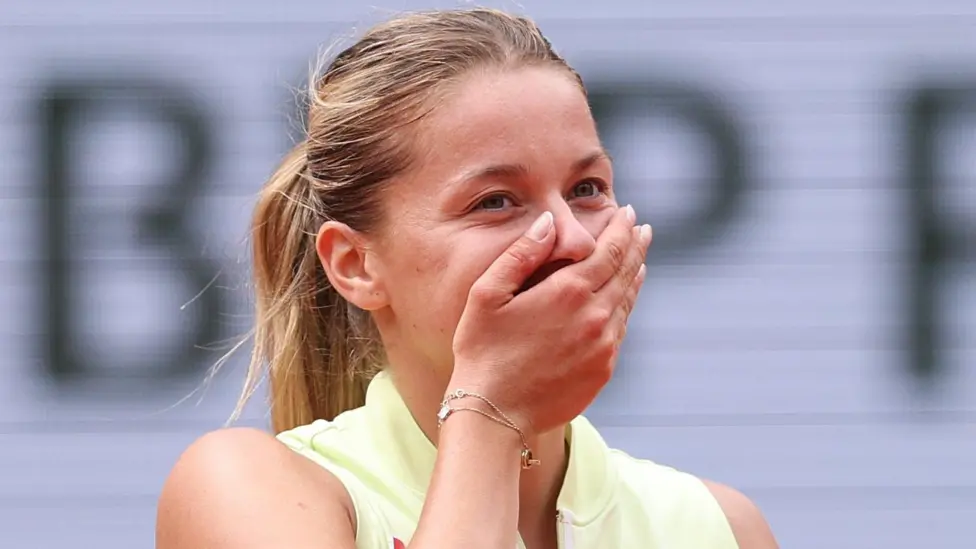
Qualifier Maja Chwalinska continued her dream French Open run as she beat Anna Kalinskaya to reach her first Grand Slam semi-final.
The world number 114 was left open-mouthed with shock after completing a superb 7-6 (7-3) 6-3 win over 22nd seed Kalinskaya on a blustery Paris day.
Poland’s Chwalinska is the second qualifier after Nadia Podoroska in 2020 to reach the singles semi-finals at Roland Garros.
She is only the sixth qualifier in the Open era to reach the women’s singles semi-finals at a Grand Slam.
Only one – Britain’s Emma Raducanu at the 2021 US Open – went on to win the title.
World number one Aryna Sabalenka could await Chwalinska the last four, with the Belarusian taking on Russian Diana Shnaider later on Wednesday.
“I honestly don’t know what is going on,” Chwalinska told the crowd.
“I know I repeat myself, but every match here is kind of crazy for me.”
It is a remarkable run for Chwalinska, who arrived at the tournament with just two victories in WTA Tour-level main-draw matches under her belt.
Her sole Grand Slam match win came at Wimbledon in 2022 – but Chwalinska now finds herself on an eight-match winning streak on the Parisian clay, having dropped just one set on the way.
Everything appears to have clicked in place for a player who once feared she might have left the sport for good.
Chwalinska struggled with depression for two years and took an indefinite break from tennis after losing in the first round of qualifying at Wimbledon in 2021.
She did not know whether she would return at that point, having lost her enjoyment of training and competing.
With the support of the people around her, the openness of fellow players such as Naomi Osaka in speaking about their mental health, and brief attempts to enjoy other sports, Chwalinska found herself gradually gravitating back to the tennis court.
It has all led her to this moment of a first major semi-final – and a potential David-versus-Goliath showdown with title favourite Sabalenka.

In Paris, Chwalinska has played with infectious freedom and joyful creativity, beating two seeded players and Olympic champion Zheng Qinwen along the way.
She kept her composure well against Kalinskaya, first having to reset after letting a 5-1 lead slip in the opener, before reeling off five straight points from 3-2 down in the resulting tie-break to take the lead.
She then held her nerve in the second, recovering from being broken as she tried to serve out victory before clinching her first match point on Kalinskaya’s serve.
“I was definitely nervous. I am stressed, of course, but I try to focus on my job and my games,” Chwalinska said.
“I am not focusing on confidence. I am playing against the best players in the world, so I will not compare myself to them.”
Whatever happens in the semi-finals, Chwalinska is now projected to leap up the rankings and into the world’s top 30.
By reaching the semi-finals, she has also secured prize money amounting to £647,700 – more than doubling her career total earnings of £642,400 in the space of 10 days.
[BBC Sport]
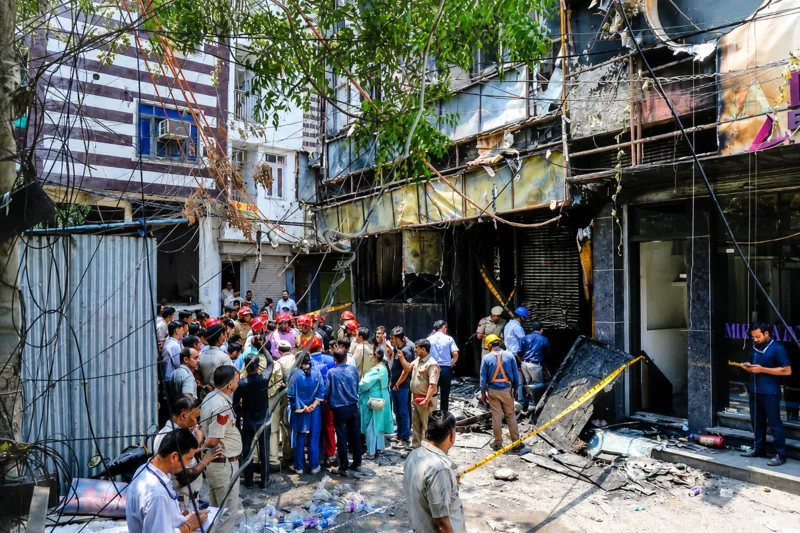
At least 21 people have been killed and many others injured after a fire tore through a multi-storey building in south Delhi, police in India’s capital say.
Many of the victims were foreigners – including people from South Asian and African countries – who had travelled to India for medical treatment or to accompany relatives undergoing care, local media reported.
The building in the Malviya Nagar area allegedly operated as a bed-and-breakfast catering to patients and relatives of those receiving treatment at a nearby private hospital.
More than 40 people were rescued and taken to hospital. It remains unclear how many were inside the building when fire broke out. Its cause is not yet known.
The blaze is one of the deadliest in recent years in the Indian capital.
“The fire was brought under control quite early on – it was contained very quickly. We have now cleared the building and opened it up for the police,” fire officer AK Malik said.
Delhi minister Ashish Sood said authorities were investigating whether the building had the necessary permissions to operate as a bed-and-breakfast facility, adding that those found responsible for any violations would face criminal action.
Prime Minister Narendra Modi expressed his condolences and announced compensation of 200,000 rupees ($2,088; £1,552) for the families of those killed and 50,000 rupees for those injured.
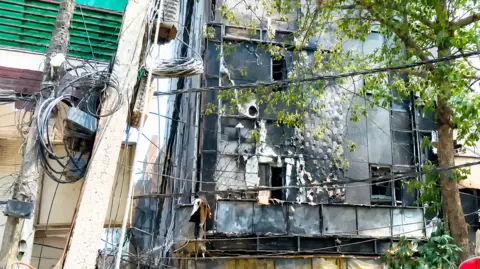
Videos on social media showed flames shooting from the building as people gathered nearby. Footage broadcast by Indian news channels showed its exterior badly charred as emergency workers searched the site.
Witnesses said the fire spread rapidly, trapping people on upper floors. Bystanders helped some escape before emergency crews arrived.
“The fire broke out at about 08:50… we rushed to the spot to see that the entire building was on fire. There is a mattress shop at the corner from where we took out mattresses and laid them on the road,” Wasim Raj told ANI news agency.
“People started to jump out of the building from the second and third floors. The fire-fighting team had reached the spot immediately and started rescue work.”
Sher Khan, who lives nearby, described scenes of panic as people trapped on the upper floors cried out for help.
“As the fire intensified, it seemed as if there was no way to jump from here. People spread mattresses, and some from the third floor jumped out with a little kid… She was saying that she fractured her leg,” he said.
Israr Khan, another local resident, told reporters that “all of us have been here since morning. We rescued a child who jumped from the higher floor”.
Several people in the building were from Bangladesh and other South Asian countries and had travelled to Delhi for medical treatment, local lawmaker Satish Upadhyay said.
Fires are common in India, where building safety laws are often poorly enforced.
From factories and coaching centres to hospitals and entertainment venues, many of Delhi’s deadliest blazes have exposed a persistent gap between safety rules on paper and their implementation on the ground.
Investigations have repeatedly pointed to lax inspections, faulty electrical systems and buildings operating beyond their approved use.
[BBC]
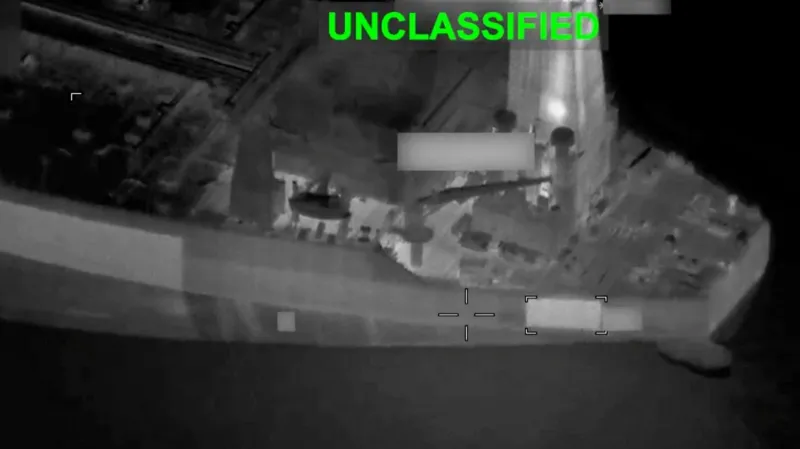
The US military has said it launched “self-defence” strikes on Iran overnight, and shot down ballistic missiles and drones fired at ships and Gulf countries.
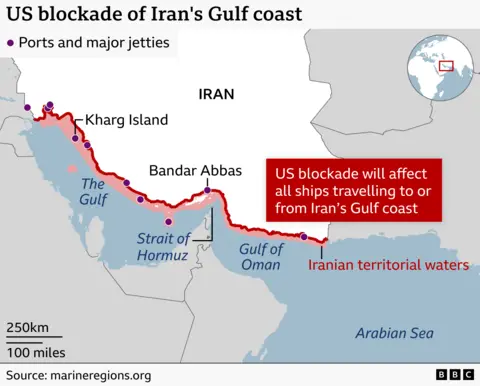
The strikes on Qeshm Island, in the Strait of Hormuz, were “in response to attempted attacks by Iran across the Middle East”, US Central Command (Centcom) said.
Centcom said Iran had fired two missiles at Kuwait and three at Bahrain, all of which broke apart or were intercepted. Iran said it had attacked US bases and helicopters in a “regional country” using missiles and drones in retaliation.
One person was killed in Kuwait and more than 60 injured when drones hit buildings including its international airport, officials said.
Kuwait’s defence ministry spokesman, Brig Gen Saud Abdulaziz Al-Otaibi, called the attack “criminal Iranian aggression”, while the Kuwaiti foreign ministry later said infrastructure including diplomatic missions had been damaged.
Centcom said the strike on Qeshm Island had targeted an Iranian military ground control station. It said the US also shot down three attack drones that had been launched by Iran toward “civilian mariners that were rightfully transiting regional waters”.
Centcom had earlier said it had struck and “disabled” an unladen oil tanker that was sailing towards Iran, as part of the US naval blockade on the Strait of Hormuz, which began on 13 April.
A US aircraft fired a Hellfire missile into the engine room of the Botswana-flagged M/T vessel, after its crew “ignored repeated warnings”, it said.
Iran’s Islamic Revolution Guard Corps (IRGC) said “disrupting the security of the Strait of Hormuz will carry a heavy price for the aggressive US military”.
A foreign ministry statement said the leaders of Kuwait and Bahrain had “direct and unmistakable responsibility” for “last night’s acts of aggression”, according to the AFP news agency, as it condemned the US for the strikes.
Iran has repeatedly attacked targets in Bahrain and Kuwait, where US military bases are located.
The attacks happened as ceasefire negotiations between the US and Iran stalled, with a deal to end the war failing to advance over the weekend.
US President Donald Trump this week told his critics to “sit back and relax “, saying that Iran “really wants to make a deal, and it will be a good one for the USA”.
US media earlier reported that Trump had requested edits to the terms of a potential peace deal, after meeting with senior aides to discuss extending the framework of a ceasefire.
The changes related to the Strait of Hormuz and the removal of highly enriched uranium from Iran, the BBC’s US news partner CBS News reported – as well as a framework to reopen negotiations on Iran’s nuclear programme.
On Monday, Iran’s foreign ministry spokesman Esmail Baghaei denied this had been on the table, adding that Washington was “constantly changing its views and putting forward new or contradictory demands”.
In an interview aired on Wednesday, Trump said Iran had “already agreed” to not have a nuclear weapon.
Trump said Iran’s supreme leader, Ayatollah Mojtaba Khamenei, was “involved” in the talks.
“We seem to be getting along quite well,” Trump told the Pod Force One podcast.
Asked if he would like to meet him, he said: “I’d like to meet him. We probably will meet at some point, depending on how it all works out.”
US Secretary of State Marco Rubio told Congress on Tuesday that negotiators had not offered Iran sanctions relief in exchange for reopening the strait.
“Right now, everything that’s been discussed with them is that … any sanctions relief is condition-based, which means it has to be in return for the reason why those sanctions were put in place in the first place, which is their nuclear programme,” he said.
“The war is over,” he said in another tense exchange with a senator, as lawmakers on the committee questioned the US strategy for ending the conflict.
[BBC]

Qualifier Maja Chwalinska extends dream French Open run

Foreign nationals among at least 21 killed in Delhi fire

US and Iran launch new strikes, as Kuwait says airport hit by Iranian drones

Ukraine’s Kostyuk blasts Russia stars in French Open outburst over war

Iran armed forces vow to fight ‘to the death’ on Khomeini death anniversary

Urgent meeting called for amid BBL chaos; ACA says merger has caused ‘anxiety’

‘Dates have the highest sugar content to fight Coronavirus’

Sunday Island 27 December – Headlines

#SundayIsland 17th December – Headlines

Sunday Island – 28th March

Sunday Island Headlines – 21 March

Sunday Island – 21st February – Headlines
-
 News5 days ago
IMF urges Lanka not to meddle with exchange rate
-
 Business6 days ago
Sri Lanka’s construction industry losing ground while no one watches
-

 Business3 days ago
IMF’s unstated rate:Sri Lanka’s $695m loan costs about 5.33% per annum
-
 News5 days ago
State of emergency extended
-

 News2 days ago
Lankan duo emerge winners in Latin dance championship held in Blackpool, UK
-

 Features6 days ago
The Division Bell Mystery
-

 News3 days ago
UNP challenges NPP move to amend Vihara – Devalagam Act
-

 Features4 days ago
Are threats to Buddha Sasana external or from within?