
Latest News
Government committed to addressing the challenge posed by dangerous drugs – President

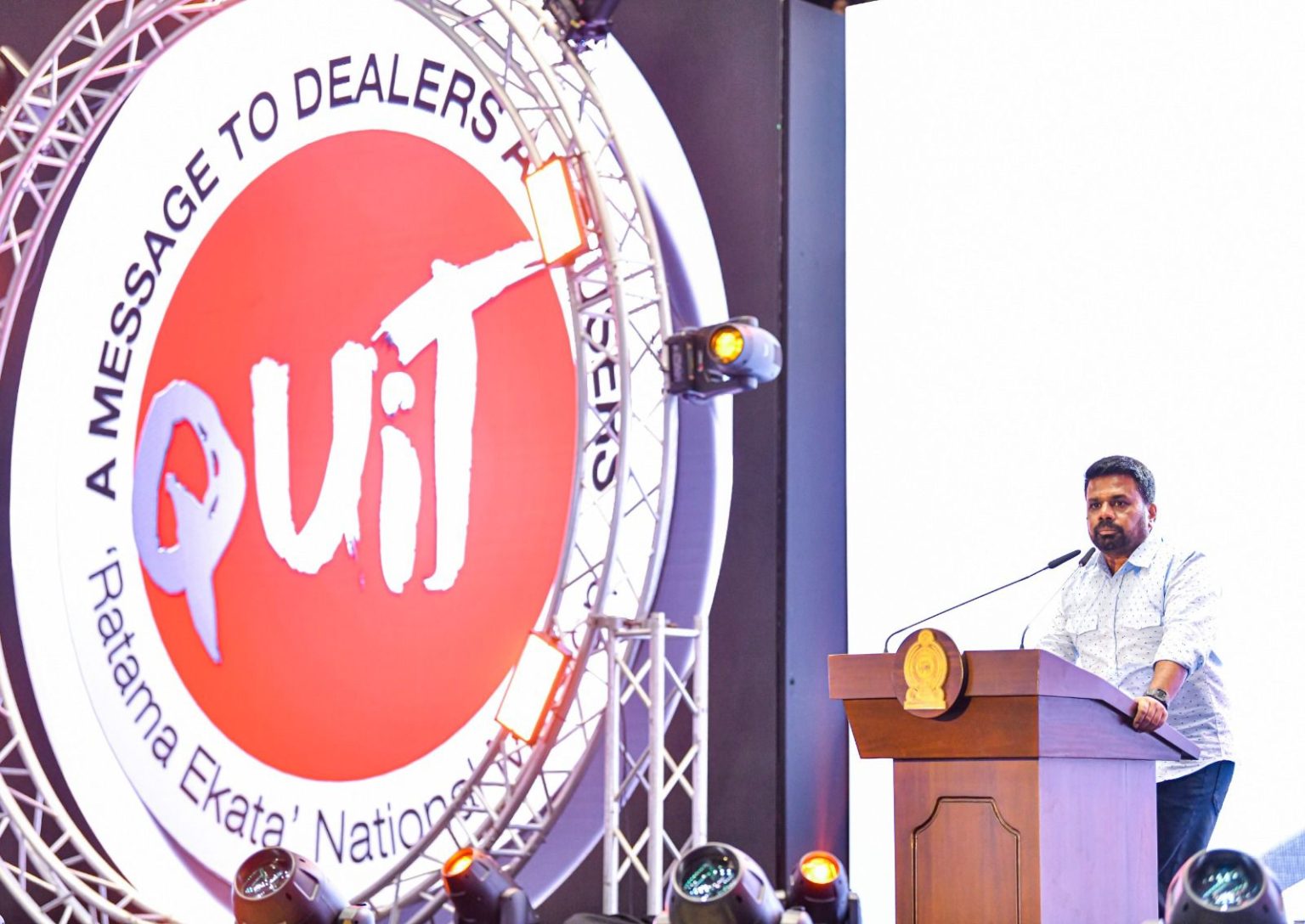
President Anura Kumara Dissanayake while attending the launch of the national operation ‘A Nation United: Eradicating the Menace of Narcotic Drugs’ held on Thursday (30) morning at the Sugathadasa Indoor Stadium in Colombo. highlighted the mobilization of the broadest possible public movement against harmful drugs, with a strong commitment to completely eliminate this threat from the nation and liberate both future generations and society from its influence, the President also urged drug dealers and users to disengage from it without delay.
The President stressed that his government is not prepared to allow the narcotics trade, which has become a national scourge destroying the country’s economy and society while claiming the lives of schoolchildren and the youth, to continue any further. He added that ‘A Nation United’ national operation has now been activated as a multi-sector programme incorporating enforcement, rehabilitation, prevention, public awareness, religion, sports and culture.
Pointing out that the drug trade is not something that emerged naturally, but has long been fostered with the support of politicians and certain state officials, the President said that the present government has now ended the environment in which criminals could build influence under political protection. Therefore, the President stated that he is instructing state officials, who assist these networks to sever all ties and withdraw from them. President Dissanayake emphasised that no one involved in this trafficking will be allowed to remain hidden any longer.
The President also invited religious leaders to take the lead in overcoming this crisis by making use of the cultural bond between villages and places of worship. The President urged media institutions to report on matters relating to drug trafficking responsibly and sensibly, maintaining restraint and social decorum, in order to support the success of this initiative.
Furthermore, the President stated that a larger allocation would be set aside in the upcoming budget for the rehabilitation of those addicted to drugs and that a National Operations Centre would be established with the involvement of all relevant parties.
The spread of dangerous drugs in the country has reached the level of a national catastrophe and it has been observed that numerous crimes are linked to drug trafficking. The government has recognised that the menace must be uprooted through an efficient decision-making mechanism and a nationwide programme with broad public participation. Accordingly, ‘A Nation United’ national operation has been launched to accomplish this national objective.
Under this programme, it is expected to raise social awareness of the threat through a broad campaign, dismantle the networks linked to drug trafficking, strengthen rehabilitation opportunities and offer opportunities for individuals seeking to overcome drug dependence.
Expressing his views President Dissanayake further stated;
We are gathered here today with the purpose of defeating the deceptive menace that has engulfed our country. We know how deep-rooted and destructive this scourge is. Our children, our wider society and we as a nation have become victims of this dangerous threat. This is not a challenge that emerged overnight. It has gradually developed over decades and has now ruined the entire social fabric. At this junction, we clearly have two paths before us. One is to let things continue as they are and merely watch the destruction unfold. The other is to rise up against it. I, along with our government, have chosen to take a stand and fight back.
This menace is destroying our children. Sixty-four per cent of those imprisoned in our country have been arrested for drug-related offences. It is destroying the entire future of our youth. The age group most affected, the young generation between 18 and 24, is being dragged into ruin, with their hopes and futures shattered. Consequently, we cannot afford to remain passive observers. Each of those young individuals has parents, a mother and father who held high hopes for their child from the day of their birth. Yet now, they are forced to witness, powerless, as their children are ravaged right before them. They endure pain. They face stigma. The fabric of family disintegrates. When a husband falls victim to addiction, it represents the most profound tragedy that a family can encounter.
As a result, the entire family structure is under threat of disintegration. Meanwhile, this destructive whirlwind is sweeping through villages across the country. A criminal underworld is expanding within communities and society as a whole is being undermined. A large share of road accidents today in our country is linked to drug abuse. The majority of child and women abuse cases occur because the perpetrators are addicted to drugs.
The economy of the country has also been severely destabilized. The Special Task Force has had to be deployed to protect the Katunayake–Colombo Expressway, because electrical cables are being cut and stolen. Batteries from the elephant fences are being removed. Iron frames from bridges and culverts are being vandalised and carried away. This tragedy has created instability across the whole of society. Therefore, for social stability and peace and for the protection and wellbeing of every child, every woman and every citizen, this menace must be defeated. We are determined that the action we are taking will lead us to victory and finally overcome this scourge.
Vast sums of money circulate within this illegal trade. Drugs are being sold for huge profits. The amounts seized alone demonstrate the enormous scale of the supply network. Immense wealth has been accumulated through this trade, which has become a massive black-market enterprise. Rivalries are emerging as these groups fight for control of the market. Recent shootings have been identified as clashes between such competing factions.
How did such a large number of firearms, ammunition, and shooting incidents arise? It is understood that every stable society possesses a state mechanism designed to maintain security and order. However, financial influence has permeated this state mechanism. We cannot confront this issue while we persist in overlooking these truths.
Only the State should have the authority to hold licensed firearms. How then did these arms reach criminals? Seventy-three T-56 assault rifles from a certain military camp were transferred into the hands of these groups. They have also been supplied with ammunition. Payments have been made into bank accounts for these transactions. A police officer even sold his service weapon and fled. In this way, financial power has infiltrated and swallowed up the institutions of the State.
The Police and the Armed Forces are working tirelessly to combat this. However, many have fallen prey to the immense financial power behind these criminals. Consequently, a “black state” has formed within the legitimate state institutions built to ensure national and public security. The Department of Motor Traffic has issued number plates for vehicles that do not exist. The Department of Immigration and Emigration, a crucial institution that issues legal travel documents to protect national security, has seen certain officials provide two or three passports to underworld leaders. Corrupt links within Customs have also been exposed.
Thus, beneath the official State structure, a second network has been established to serve criminal interests. This country cannot have two states. There can only be one State, the legitimate State built by the democratic power of the people. The black state must be dismantled and brought to an end.
This issue has now infiltrated political parties. Some individuals have become Councillors and Chairpersons, while others are preparing separate documents to contest elections. At one point, this network grew under the protection of certain politicians. The fundamental seeds for establishing political influence, Councillors, government, even attemps to controlling governance, have already been planted and we have identified them. This is not something that emerged naturally; it has evolved over a long period with the blessing and involvement of certain politicians and public officials.
At present, the public lives in fear of breaking away from this network. Those who attempt to leave are often shot and killed. Society has been pushed into an extremely dangerous situation. This is not something that arose naturally behind it lies clear political backing, as well as the support of certain state officials. We all know that some individuals could not have earned their wealth through legitimate employment, it is visible to everyone. Now, we have reached a decisive moment where this menace must be brought to an end. Many people are saying that if this government does not act, no one else will. This has now become the desperate plea of mothers across the country and with that hope and determination, we must and we can accomplish this task.
Our Police Department is fully committed to addressing this issue. We are preparing the police force accordingly. We have also instructed other officials to immediately withdraw from these networks. Safeguard your employment, dignity and the value of your position step away from these activities without delay. Otherwise, we will take action to remove you. This scenario has even extended to roles that ought to uphold the rule of law. I would like to remind all parties concerned that none of you are concealed any longer; we are aware of everything. Please keep this in mind. The truth is now evident before us, and thus, I urge you once more to withdraw without delay.
At the same time, we urge those who have become addicted to drugs to immediately stop using them. We are ready to support your recovery. If addressed individually, none of our children should have to bear responsibility for this situation. Many who have fallen into addiction believe that, in the absence of economic stability, music, sports or any other form of enjoyment, intoxication is their only source of relief. This is not their fault. The truth is, today we lack a strong sports culture something that existed in our country decades ago.
In the past, children in our villages played together. Today, although sports still exist, the general public is no longer culturally connected to them. Therefore, blaming the youth serves no purpose. Instead, we must create a new sports culture and provide opportunities for recreation, music, literature and community engagement. We intend to launch a comprehensive programme to achieve this.
At the same time, it is our responsibility to rehabilitate those who have become addicted. Rehabilitation centres have already been established for this purpose. We urge parents to bring their children forward and entrust them to us we will help them recover from addiction and return them to you as responsible citizens. A significant allocation has been made in the upcoming budget to strengthen these efforts and improve facilities. Therefore, no one struggling with addiction should fear seeking help.
In a similar manner, individuals engaged in trafficking must relinquish their activities. We are establishing a National Operations Centre that will bring together the Police, the Armed Forces and all relevant agencies. This centre will integrate the Customs Department, the Department of Immigration and Emigration, the Department of Motor Traffic, the Police, the Armed Forces and the Intelligence Units into a single coordinated network. With this system in place, no one will be able to remain hidden any longer. We already know who they are and where they operate. Continuous discussions and raids are being carried out in this regard. If we allow our country, our children and our society to fall victim to a small group of criminals, then we must question who we are as society. Let it be remembered this country does not belong to them.
We have also discussed initiating this mission in collaboration with the Maha Sangha and other religious leaders. The connection between the village and religious institutions must be utilized as a key weapon in combating this menace. We urge all religious leaders to play an active role in conveying this message to society. Let us unite in this effort to liberate our society from this destructive influence.
Furthermore, I expect that the media will maintain the necessary restraint and professionalism while reporting on this issue. Beyond that, you hold the power to convey important messages to society regarding this menace. For this reason, we are deeply grateful for the support and cooperation of the media in advancing this mission.
Currently, various community-based organizations and non-governmental organizations are already participating in this rehabilitation process. They are contributing significantly according to their respective capacities. By providing the necessary support, we aim to coordinate all these community and non-governmental organizations to implement this programme effectively. We therefore extend an invitation to them to actively participate in this initiative.
Accordingly, the most important responsibility in freeing the country from this menace lies with the political authority. The authority that stems from a politician’s connections and his close ties with specific individuals results in a perceived dominance. This imposed authority, wielded by organized criminal groups, undermines investigations. When such investigations take place, they resort to shooting and killing people in broad daylight.
Within our political system, no undue or imposed authority is created. Instead of attracting power, we neutralize it; this is the key turning point. Our police force is highly capable. Any attempt at agitation or unrest is thoroughly monitored and within a short period, the police department has successfully brought criminals to justice. They are well-equipped to handle these challenges. Behind every unresolved crime in our country, there has been political protection but this is not due to any lack of skill or competence on the part of the police.
Consequently, if the Police and relevant institutions are granted the necessary authority, this issue can be overcome. The failure to do so was due to the political leadership. I make this statement without favoring any particular political party. This is the reason for the rise of drugs and organized crime. As a result, their initial strength, which was political power, has now been diminished.
Today, the Sri Lanka Police have taken on significant risk to implement this operation. In doing so, police officers have become direct targets of criminals. From the voices raised against them, we can clearly understand who is truly behind this menace. Therefore, we must grant them full autonomy and authority so that together, we can bring this to a decisive conclusion.
The public must actively engage in this effort. These criminal networks are no secret, the sellers, the wholesale traders are known, yet in fear. What is needed is a strong, united public voice against them. Criminals must be isolated in their villages. To achieve this, we are mobilizing a widespread public voice, from the top levels down to local communities. Public Safety Committees have already been established to support this and it is essential that the voices of the people join this movement.
We are implementing this initiative through a multifaceted approach. Arrests, rehabilitation, prevention, public awareness, sports and cultural activities all these areas must work together in unison. No matter how determined an individual may be tackling this menace alone is impossible. For this reason, it is essential that we all unite and act collectively.
In summary, we urge both the sellers and those who are addicted to promptly disengage. In response, we are now establishing a strong public campaign. This collective effort will undoubtedly dismantle this menace. Together, we will protect our future generations and society from this destructive force. Let us unite and act decisively”.
The event was attended by the Maha Sangha led by the Most Venerable Anunayake Theros of Malwathu and Asgiri Chapters, alongside Catholic, Hindu and Islamic clergy, Prime Minister Dr. Harini Amarasuriya, Ministers and MPs, Governors, foreign Ambassadors and High Commissioners, senior government officials, including the Secretary to the President, Ministry Secretaries and District Secretaries, Heads of Security Forces as well as scholars, artists, athletes and school students.





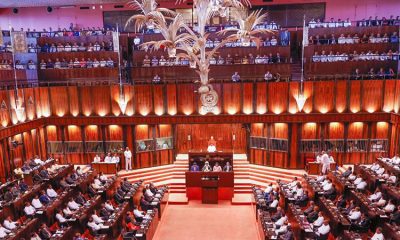
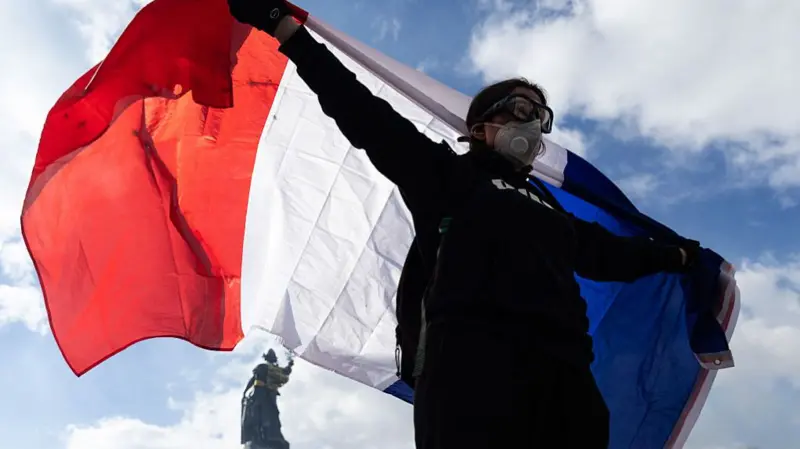
An estimated 550,000 people took part in demonstrations across France today to protest against teaching conditions in schools, rising fuel prices and the cost of living.
Marches were largely peaceful and took place in several major French cities, including Paris, where 110,000 people attended.
“We just want to study, we just want a future” one student taking part in the protest in the capital told BBC News, while another said they were ” just trying to make things change”.
But French Interior Minister Laurent Nunez said some groups “at the margins of these protests” caused the situation to “degenerate”.
According to the French Prime Minister Sébastien Lecornu, 1200 people were arrested. Officials also reported looting in cities such as Marseille, where masked 8ntruders also entered the city hall. In Lyon, the tourist office was set on fire and shops were damaged.
French President Emmanuel Macron said any vandals and looters would be “prosecuted and punished”, while Jean-Luc Mélenchon, the leader of left-wing party La France Insoumise, said demonstrations had been calmly mobilised.
Meanwhile, firefighters are continuing to battle a blaze at Limoges City Hall after a reported break-in and arson inside the 19th-century building during protests there.
(BBC)
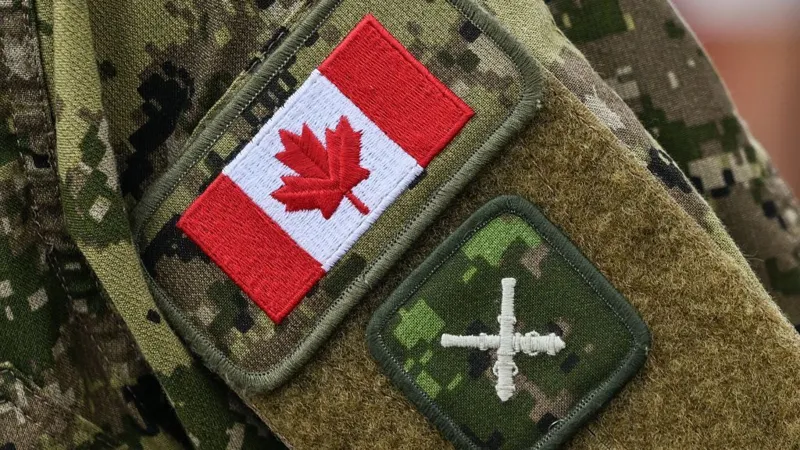
A large fire near a Canadian military base in Alberta has killed and injured some people, the defence minister said, without confirming the number of casualties.
The Canadian Armed Forces were working with local authorities to manage the fire and were looking into what caused it, David McGuinty said, describing the situation as “very, very active and delicate”.
Canada’s Prime Minister Mark Carney said on X that a “serious incident creating a major fire” had occurred, adding his “thoughts are with all the brave women and men affected”.
Canadian Forces Base Wainwright, where the fire broke out, is one of the country’s busiest military training bases.
The blaze “spread rapidly due to high winds” and had torn through the fences of the base, the Municipal District of Wainwright said.
McGuinty told reporters he “cannot recall an incident like this in recent memory”.
It is unclear when the fire broke out, but the district first posted about the incident at about 17:30 local time.
Local authorities have urged residents to avoid the area and give all emergency vehicles right of way.
(BBC)

The Asian Youth Games gold medallist who has run sub four minutes previously returned a time of 3:55.97 seconds to become the first athlete in his age category at these championships to run the distance under four minutes.
Achintha who has a personal best of 3:53.05 from last year was representing Prince College Ratnapura today.
In another impressive 1,500 m feat Tharushi Abhisheka of Lyceum International School, Wattala established a new meet record in the Under-20 Girls’ 1,500m as she returned a time of 4:34.59 seconds to win.
By the end of the second day of the meet seven new meet records had been established.
D. V. C. de Soysa (of Galewela Central College) Under-16 Boys’ Discus Throw – 55.83m.
D. G. Lahiru Achintha (of Ratnapura Kumara Vidyalaya) Under-18 Boys’ 1,500m – 3:55.97 secs.
W. P. Nethula Induwara (Rahula College, Matara) Under-14 Boys’ 100m – 11.70 seconds
K. V. R. Gayesha (Ira Handa Kotuwa Wewa Maha Vidyalaya, Polonnaruwa) Under-16 Girls’ High Jump – 1.70m
H. M. D. S. Herath (Maris Stella College, Thimbirigaskatuwa) Under-20 Boys’ Long Jump – 7.65m
P. M. Amaya Semindi (Vijitha Central College, Dikwella) Under-14 Girls’ High Jump – 1.58m

Record 1,600 students take Russian Classical Ballet examination in Sri Lanka

Half a million people join protests in France, but some turn violent

Deadly fire breaks out at Canada military base

Showers or thundershowers will occur in most parts of the island after 1.00 p.m.

Buddhist hierarchy demands prison perks for monk convicts

Debate on NCM against Speaker postponed indefinitely

‘Dates have the highest sugar content to fight Coronavirus’

Sunday Island 27 December – Headlines

#SundayIsland 17th December – Headlines

Sunday Island – 28th March

Sunday Island Headlines – 21 March

Sunday Island – 21st February – Headlines
-

 Latest News5 days ago
Nissanka’s return headlines Sri Lanka’s Test squad against Pakistan
-

 Latest News7 days ago
Farhan and Sadaqat help Pakistan seal series in style
-

 Features6 days ago
Intake 16: 45 years of duty and honour
-
 News6 days ago
Malwathu Chapter issues statement on talks with President over Gnanasara Thera’s robes
-
 News6 days ago
CP alleges NPP has taken the blame for illegal US sanctions on Iranian vessels
-

 Opinion6 days ago
How long can Sri Lanka remain silent on its demographic crisis?
-

 News4 days ago
Sri Lanka, India caught in US-Iran ship crisis
-

 Latest News5 days ago
Kusal Mendis’ unbeaten 87 hands Sri Lanka consolation win