
Latest News
Harmer’s six-for helps South Africa ease to series-levelling win


Ultimately, Pakistan’s overnight hope was built on a bed of straw. South Africa did not even need to huff or puff particularly hard to blow the house down. It took them five balls to dismiss an ostensibly back-to-form Babar Azam, nine runs to take four wickets that put the conclusion beyond doubt, and one session to dispatch the paltry 68 they had been set for victory. Along the way, simon Hamer took six wickets to take his tally to exactly 1000 first class wickets, becoming the fourth South African to do so.
It took South Africa to a thumping eight-wicket series-levelling win, their first in their defence of the World Test Championship title. For Pakistan, it is their first home defeat after winning the toss since they resorted to spin-friendly tracks at home, their recent third innings malaise coming back to haunt them in its full splendour. Babar’s little tickle into the onside off the day’s second ball got him to a first home Test half-century since 2022, but what should have been the bedrock of his innings was instead its culmination point. Three balls later, he stepped back into his crease off a similar, gentle off spinner, but this one kept slightly low, and rapped him just below the knee roll to begin Pakistan’s slide.
A superb Harmer kept the pressure on, but there was assistance aplenty from a Pakistan side that immediately began to go to pieces. Harmer gave Rizwan generous flight, who stretched out well beyond his crease try and get to the pitch to defend. Instead, he got an inside edge onto the pad, which looped up to Tony de Zorzi at short leg, and Harmer went to 999.
The four-figure dismissal was all about Harmer, though, and a microcosm of what has made him so successful for so long. He went around the wicket to Noman Ali, flighting it well and landing on a sixpence into some of the footmarks the left-arm bowlers have created. It spat up and away from Noman, kissing the outside edge on its way into Kyle Verreynne’s hands. Harmer threw his head up into the sky and let out a roar to rouse any part of Pindi that might still have been asleep.
But Pakistan kept hoisting themselves by their own petard. Shaheen Shah Afridi and Salman Agha worked themselves up into calling for a run, taking on Ryan Rickelton who dived forward to effect a direct hit that sent Shaheen on his way, and Pakistan had gone from 105 for 5 to 105 for 8 – yet another middle and lower order collapse in a series they have been sprinkled like confetti.
At the other end stood Agha, not so much like a rock of resistance as a young oak waiting to be felled. Maharaj duly did the honours in his first over, the arm ball cutting Agha in half as he chopped back on. Sajid Khan tried to take him on the following over, only to find himself well adrift of his crease for Verreynne to do the honours.
Pakistan turned immediately to spin, but there was no intimidating South Africa with a target this shallow. They were off and away with an Aiden Markram mow across the line for four, and Rickelton began to get his kicks in shortly after. Pakistan kept recycling through some combination of their three finger spinners, and South Africa kept putting them away for four, speeding towards the target as lunch approached.
Noman got Pakistan the dubious consolation prize of a late couple of wickets when South Africa’s target was in single digits. Markram was trapped in front as he went for another one of his productive sweeps that had fetched him six of his eight fours in the innings, and found Tristan Stubbs’ outside edge for a duck three balls later. But Rickelton made the ignominy official with a whack over long-off for six in the following over.
After the previous Test, Pakistan captain Shan Masood had talked about how Pakistan would look to play if they lost the toss to try and stay competitive. South Africa showed they had been listening carefully, and across these four days, executed that plan to perfection.
Brief scores:
South Africa 404 (Tristan Stubbs 76, Tony de Zorzi 55, Senuran Muthusamy 89*, Kagiso Rabada 71, Noman Ali 2-92, Asif Afridi 6-79) and 73 for 2 (Aiden Markram 42, Ryan Rickelton 25*; Noman Ali 2-42) beat Pakistan 333 (Abdullah Shafique 57, Shan Masood 87, Saud Shakeel 66; Keshav Maharaj 7-102, Simon Harmer 2-75) and 138 (Babar Azam 50, Simon Harmer 6-50, Keshav Maharaj 2-34) by eight wickets
[Cricinfo]


Even as the smog grew thicker in the Delhi afternoon, Azmatullah Omarzai delivered an all-round performance of immense clarity to give Afghanistan their first win of this T20 World Cup. UAE had them on the mat, huffing and puffing, with 52 needed off the last five overs. The required rate, routinely achieved in the age of modern T20s, looked bigger on a pitch that had stayed slow and grippy throughout.
Omarzai eased the nerves of a close contest – Afghanistan had tied three of their previous six T20Is in India, after all – to seal the match with 6, 4, 4 off his final three balls. He finished on a 21-ball 40*, with a strike rate of 190.47 on a day when Darwish Rasooli’s 143 was their next best. Consequently, Afghanistan’s careful approach had dragged them into the final over of their chase. Two balls into it, Omarzai’s four over covers finished it off.
Despite scoring an under-par 160, UAE sensed a close contest brewing when Junaid Siddiaque had Rahmanullah Gurbaz mistiming a lofted drive to backward point on the second ball of the innings. Ibrahim Zadran’s consolidation was back to its best after a quiet start to this World Cup. He brought up a 37-ball fifty to keep them in the contest.
Brief scores:
Afghanistan 162 for 5 in 19.5 overs (Ibrahim Zadran 53, Gulbadin Naib 13, Sediqullah Atal 16, Darwish Rasooli 33, Azmatullah Omarzai 40*; Junaid Siddique 2-23, Muhammad Jawadullah 1-39, Muhamad Arfan 2-30) beat UAE 160 for 9 inn20 overs (Muhammad Waseem 10, Sohaib Khan 68, Alishan Sharafu 40, Syed Haider 13, Haider Ali 13; Azmatullah Omarzai 4-15, Mujeeb Ur Rahman 2-31, Raashid Khan 1-24) by 5 runs
[Cricinfo]
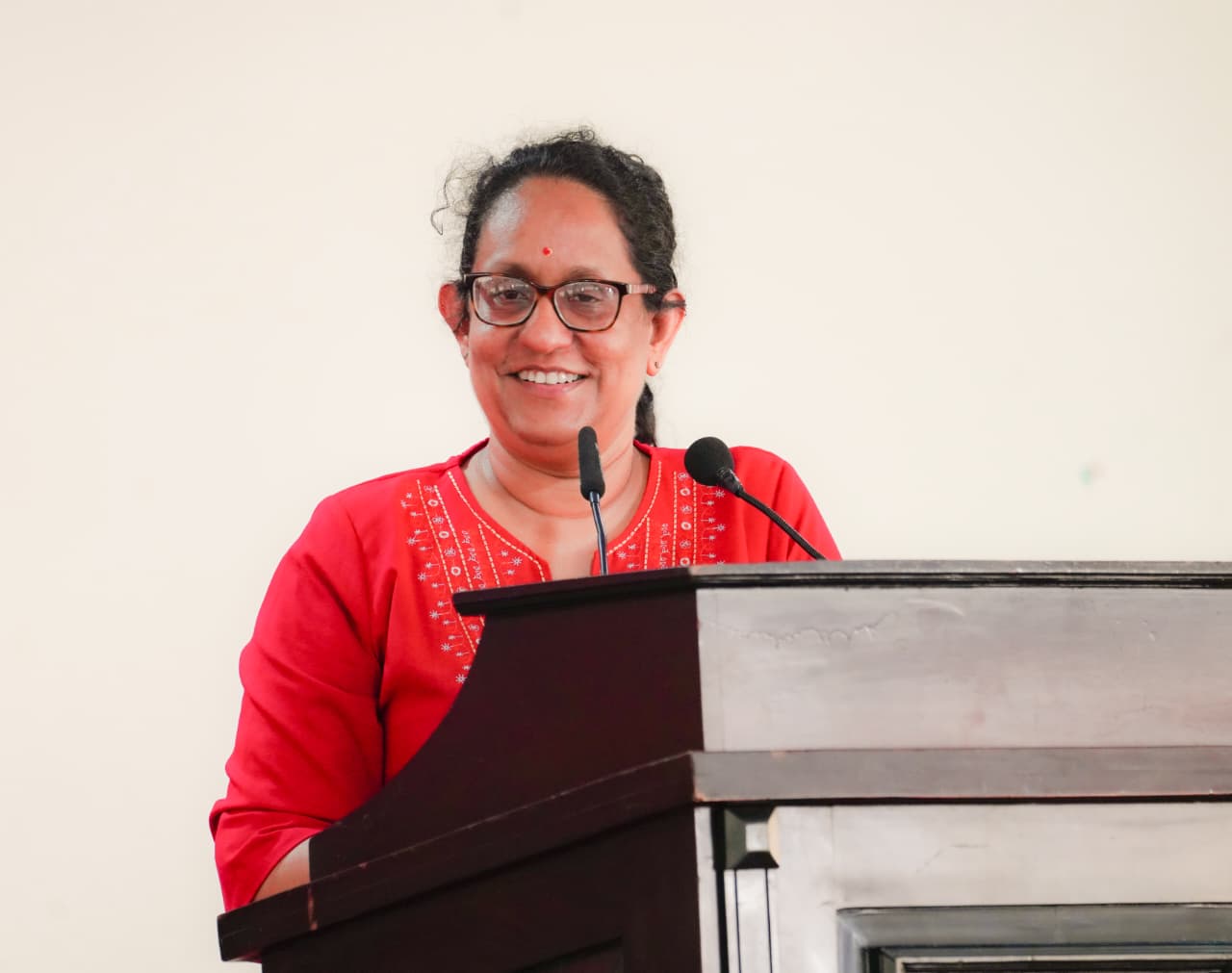
Prime Minister Dr. Harini Amarasuriya stated that no one will be allowed to drag the country’s future backward by inciting racism, and emphasized that women must step forward to carry forward the change that has been initiated.
The Prime Minister made these remarks while addressing the Mannar District Women’s Meeting held on Sunday [15 th of February] in the Adampan area of the Mannar District.
Speaking further, the Prime Minister stated:
“You know that our government has brought about a change in women’s representation. According to statistics, about 52% of the population are women. That means women constitute a powerful segment of our country’s population. However, when we consider various sectors and the challenges faced in daily life, the question remains whether this power is reflected in practice.
One of the main problems our country faced was war and violence, which caused us to view one another with distrust. As a result, we truly became a divided nation. Consequently, women were the ones who suffered the most. We know that many women in this country have endured immense suffering after losing their mothers, fathers, sons, daughters, brothers, and sisters. We are aware that many such women live in this region as well. Although the war ended a long time ago, peace has still not taken root in people’s hearts. Even today, there are women who do not know what happened to their family members. There are many women who struggle alone to protect and sustain their families.
Our government is committed to go against racism. We believe that everyone in this country should be able to live safely with equal rights. However, racist groups are still attempting to create divisions among people. They are not interested in stopping corruption, protecting democracy, ensuring the equal application of the law, or strengthening the economy. Their only objective is to gain power, not for the benefit of the people, but for themselves.
We know how much they have destroyed this country’s resources. In 2022, the country faced a massive economic collapse. But by 2025, our government was able to strengthen the economy by putting an end to theft, corruption, and waste. That is why, when Cyclone Ditwah struck, we were able to assist the people without borrowing loans.
Recently, for the first time in 21 years, we were able to distribute profits of the Milco institution among dairy farmers. Within about a year, by increasing revenue streams and minimizing waste in institutions, we were able to share profits.
We are rebuilding institutions which have fallen apart putting an end to fraud and corruption, stopping the waste, and ensuring that the benefits reach the people. Yet, some are attempting to take the country backward by stirring up racism.
Women are among those most affected by racism. Should we allow ourselves to be divided again and let discord rise? No. That is why women’s leadership is essential. To carry forward the change we have begun, women must step forward. There is still much work to be done. We will not allow our forward journey to be reversed.
One of the major challenges we face today is the drug menace. We fear for our children becoming victims of drugs, and as a result, family disputes have increased. People are afraid to go out or leave homes due to drug addicts. The President has made a special commitment to eradicate harmful drugs from the country. Those who were in power previously provided protection to these groups, preventing the police from enforcing the law properly. Today, we have instructed the police to enforce the law correctly. The police can now perform their duties properly, and the judiciary is delivering independent decisions. If a crime is committed, punishment must follow. The law is equal for everyone. We are aware that there are still areas where the law is not properly enforced.
There are still women and children who suffer from violence and abuse. The law must be more effective in ensuring the safety of women and children. We are increasing judicial capacity and taking steps to address such cases more swiftly.
Mothers make great sacrifices with faith in their children’s education. That is why we are working to provide quality education to all children. After five years, we are recruiting graduate teachers this year, and they will definitely be assigned to schools with vacancies. Proper appointments of principals had not been made earlier; we began filling these vacancies last year. Alongside this, we are developing school infrastructure. There is no distinction between big schools and small schools. Every school belongs to our children.
We are developing one school in each division and have informed District Development Committees to nominate those schools. We are also working to establish smart classrooms in every secondary school. In addition, from this year, education for Grade One has commenced under a new curriculum.
We came to power to rebuild this country, and we must do so. Women contribute significantly to the economy, yet they receive the lowest wages. Women have achieved high progress in all sectors. Therefore, when women engage in self-employment from home or participate in the workforce, facilities must be created to ensure the safety and care of their children”
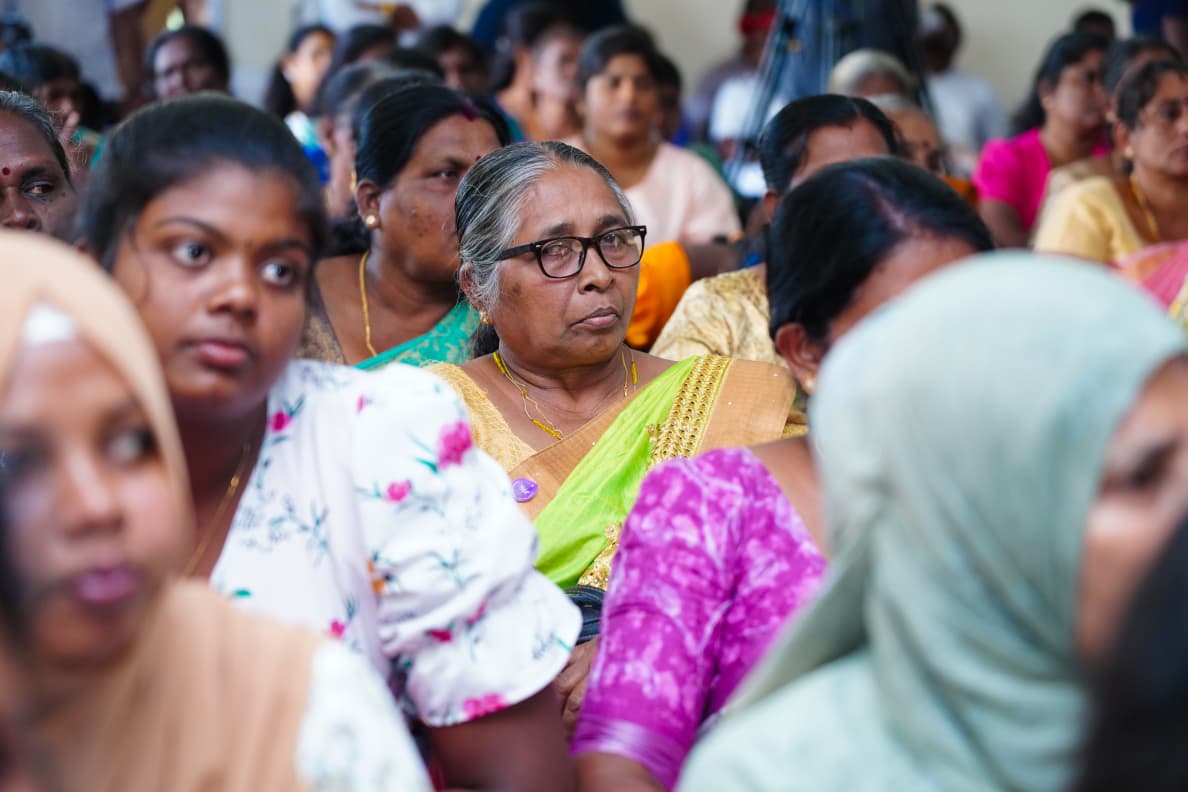
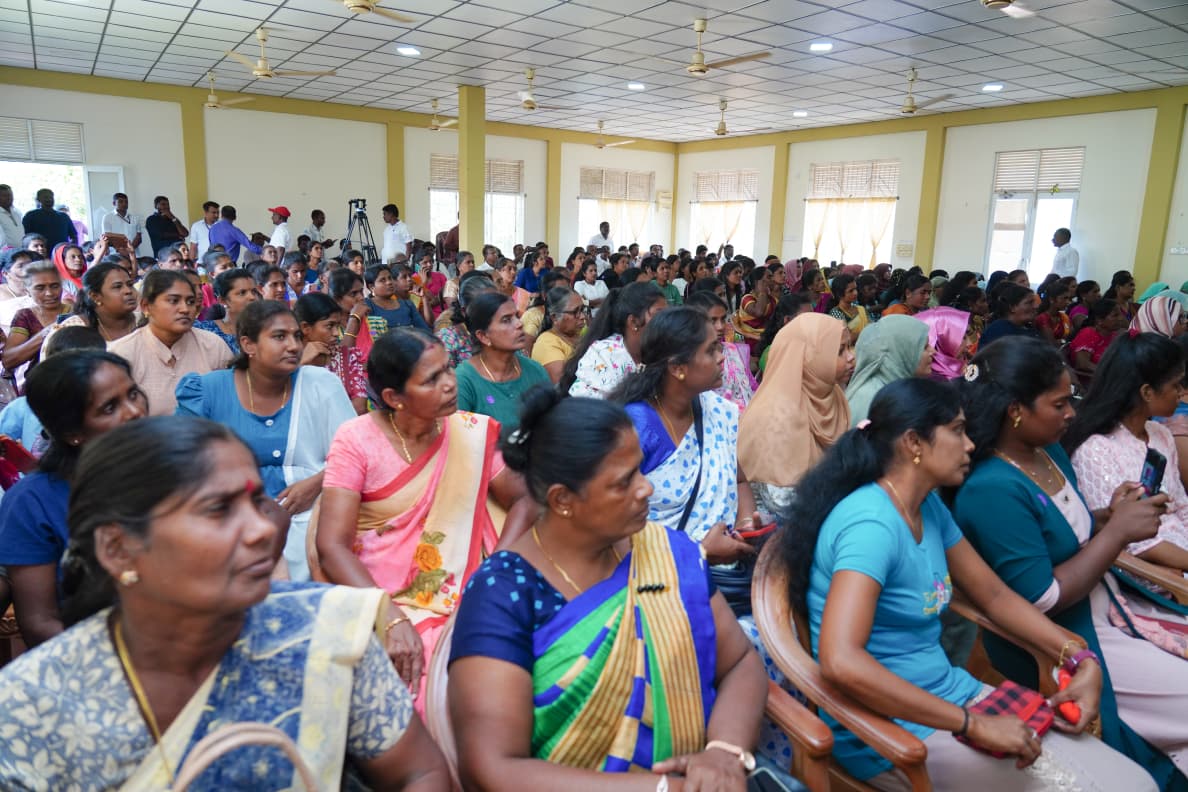
The occasion was attended by the Member of Parliament Jegatheeswaran, along with municipal and divisional council representatives and a large number of women.
[Prime Minister’s Media Division]

Allrounder Amelia Kerr has been appointed New Zealand captain for all formats, taking over from Sophie Devine who retired from ODIs following the 2025 World Cup and gave up the T20I captaincy.
Kerr’s first assignment is a home ODI and T20I series against Zimbabwe later this month.
“The captaincy doesn’t change who I am, I am still the same person and will give everything I can to lead this group and hopefully bring our country success,” Kerr said in a statement from New Zealand Cricket. “One of my favourite quotes is: ‘He aha te mea nui o te ao? He Tāngata, He Tāngata, He Tāngata. We are people first. As a group we look out for each other, we celebrate each other’s success and we represent our people.
“Encouraging others and building belief around us so we can all be the best we can be both as people and as cricketers.”
Kerr, 25, has played 84 ODIs and 88 T20Is since making her debut in 2016. She has 2304 ODI runs at an average of 41.14, and 106 wickets at an average of 30.61. In T20Is she’s scored 1453 runs at a strike rate of 109.74 and 95 wickets with an economy rate of 6.09. Kerr captained Wellington Blaze to back-to-back Super Smash titles in 2023-24 and 2024-25.
Ben Sawyer, the New Zealand coach, hailed Kerr’s leadership ability. “Melie has been an integral member of the squad for many years and deeply understands what it means to be a White Fern and represent New Zealand,” Sawyer said. “She’s an outstanding leader not only through her performances on the field, but also in the respect she has from the playing group off it.
“She has a sound understanding of the game and has strong leadership experience from the games she has captained the White Ferns [in] and her time leading the Wellington Blaze over the past three years.
“We believe leading the White Ferns can take Melie’s game to the next level and know she’s ready to step up and lead this team forward. Melie leading this team at this stage of her career ensures we have continuity and stability through the next cycle to 2029.”
The New Zealand squads for the series against Zimbabwe will be named on February 20. The three-match T20I series begins on February 25 in Hamilton.
[Cricinfo]

Ramadan 2026: Fasting hours around the world

Omarzai’s all-round brilliance hands Afghanistan their first win of the World Cup

We will not allow anyone to drag the country backward by inciting racism. — PM

Amelia Kerr appointed new New Zealand women’s cricket captain

US boards second tanker in Indian Ocean after tracking it from Caribbean

Motorbike raids on villages kill dozens in Nigeria

‘Dates have the highest sugar content to fight Coronavirus’

Sunday Island 27 December – Headlines

#SundayIsland 17th December – Headlines

Sunday Island – 28th March

Sunday Island Headlines – 21 March

Sunday Island – 21st February – Headlines
-

 Life style2 days ago
Marriot new GM Suranga
-

 Midweek Review6 days ago
A question of national pride
-

 Features2 days ago
Monks’ march, in America and Sri Lanka
-

 Business6 days ago
Autodoc 360 relocates to reinforce commitment to premium auto care
-
 Opinion5 days ago
Will computers ever be intelligent?
-

 Features2 days ago
The Rise of Takaichi
-

 Features2 days ago
Wetlands of Sri Lanka:
-

 Midweek Review6 days ago
Theatre and Anthropocentrism in the age of Climate Emergency