
Latest News
Harmer’s six-for helps South Africa ease to series-levelling win


Ultimately, Pakistan’s overnight hope was built on a bed of straw. South Africa did not even need to huff or puff particularly hard to blow the house down. It took them five balls to dismiss an ostensibly back-to-form Babar Azam, nine runs to take four wickets that put the conclusion beyond doubt, and one session to dispatch the paltry 68 they had been set for victory. Along the way, simon Hamer took six wickets to take his tally to exactly 1000 first class wickets, becoming the fourth South African to do so.
It took South Africa to a thumping eight-wicket series-levelling win, their first in their defence of the World Test Championship title. For Pakistan, it is their first home defeat after winning the toss since they resorted to spin-friendly tracks at home, their recent third innings malaise coming back to haunt them in its full splendour. Babar’s little tickle into the onside off the day’s second ball got him to a first home Test half-century since 2022, but what should have been the bedrock of his innings was instead its culmination point. Three balls later, he stepped back into his crease off a similar, gentle off spinner, but this one kept slightly low, and rapped him just below the knee roll to begin Pakistan’s slide.
A superb Harmer kept the pressure on, but there was assistance aplenty from a Pakistan side that immediately began to go to pieces. Harmer gave Rizwan generous flight, who stretched out well beyond his crease try and get to the pitch to defend. Instead, he got an inside edge onto the pad, which looped up to Tony de Zorzi at short leg, and Harmer went to 999.
The four-figure dismissal was all about Harmer, though, and a microcosm of what has made him so successful for so long. He went around the wicket to Noman Ali, flighting it well and landing on a sixpence into some of the footmarks the left-arm bowlers have created. It spat up and away from Noman, kissing the outside edge on its way into Kyle Verreynne’s hands. Harmer threw his head up into the sky and let out a roar to rouse any part of Pindi that might still have been asleep.
But Pakistan kept hoisting themselves by their own petard. Shaheen Shah Afridi and Salman Agha worked themselves up into calling for a run, taking on Ryan Rickelton who dived forward to effect a direct hit that sent Shaheen on his way, and Pakistan had gone from 105 for 5 to 105 for 8 – yet another middle and lower order collapse in a series they have been sprinkled like confetti.
At the other end stood Agha, not so much like a rock of resistance as a young oak waiting to be felled. Maharaj duly did the honours in his first over, the arm ball cutting Agha in half as he chopped back on. Sajid Khan tried to take him on the following over, only to find himself well adrift of his crease for Verreynne to do the honours.
Pakistan turned immediately to spin, but there was no intimidating South Africa with a target this shallow. They were off and away with an Aiden Markram mow across the line for four, and Rickelton began to get his kicks in shortly after. Pakistan kept recycling through some combination of their three finger spinners, and South Africa kept putting them away for four, speeding towards the target as lunch approached.
Noman got Pakistan the dubious consolation prize of a late couple of wickets when South Africa’s target was in single digits. Markram was trapped in front as he went for another one of his productive sweeps that had fetched him six of his eight fours in the innings, and found Tristan Stubbs’ outside edge for a duck three balls later. But Rickelton made the ignominy official with a whack over long-off for six in the following over.
After the previous Test, Pakistan captain Shan Masood had talked about how Pakistan would look to play if they lost the toss to try and stay competitive. South Africa showed they had been listening carefully, and across these four days, executed that plan to perfection.
Brief scores:
South Africa 404 (Tristan Stubbs 76, Tony de Zorzi 55, Senuran Muthusamy 89*, Kagiso Rabada 71, Noman Ali 2-92, Asif Afridi 6-79) and 73 for 2 (Aiden Markram 42, Ryan Rickelton 25*; Noman Ali 2-42) beat Pakistan 333 (Abdullah Shafique 57, Shan Masood 87, Saud Shakeel 66; Keshav Maharaj 7-102, Simon Harmer 2-75) and 138 (Babar Azam 50, Simon Harmer 6-50, Keshav Maharaj 2-34) by eight wickets
[Cricinfo]

Latest News
Physical development must be matched by the enrichment of people’s inner lives through aesthetics and culture – PM
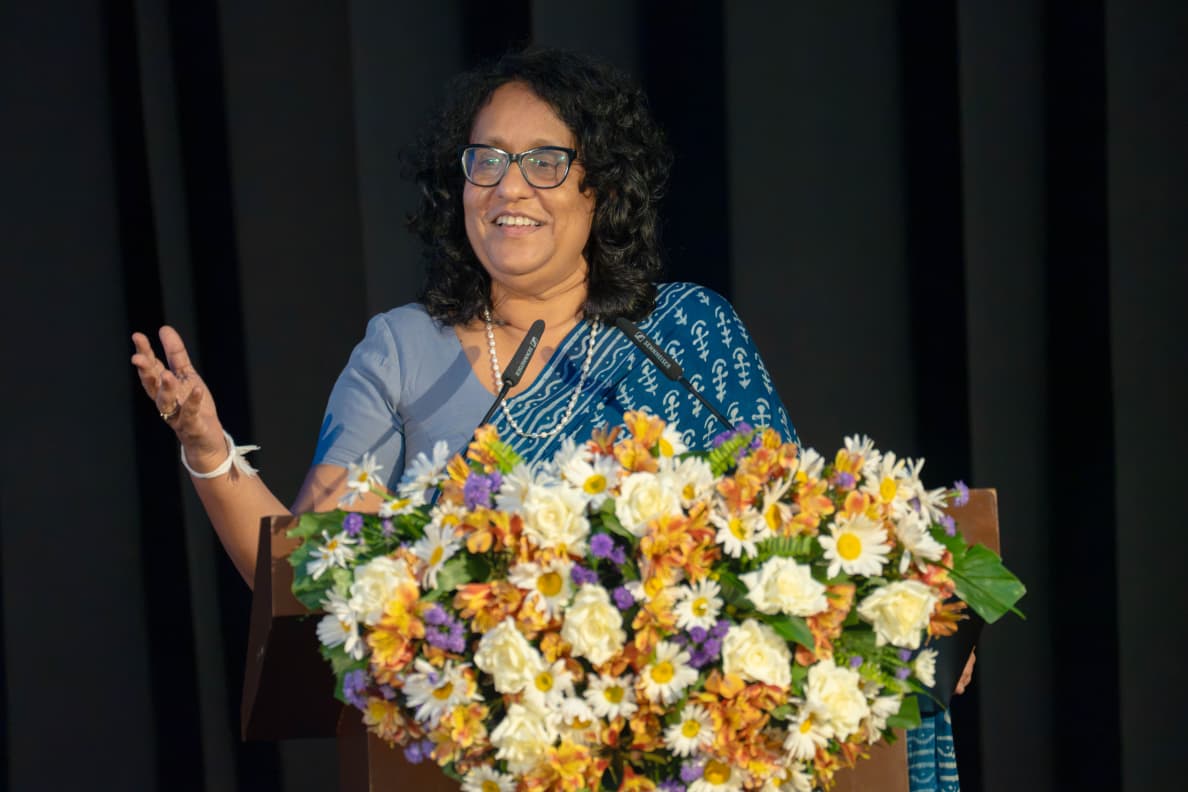
Prime Minister Dr. Harini Amarasuriya stated that while a country develops its roads, buildings and economy, the inner lives of its people must also be enriched through aesthetics, culture and creativity. Development cannot be measured solely by improvements in physical resources, and the empathy and the appreciation of the arts is a key aspiration of the new era of renaissance.
The Prime Minister made these remarks while inaugurating the ’Aluth Wessa’ Cultural Festival and Exhibition, organised jointly by the Kandy District Secretariat, the Department of Cultural Affairs and the Kandyan Cultural Center on 15 October at the Kandy District Secretariat.
During the event, the Prime Minister also presented awards to artists from the Kandy District in recognition of their outstanding contributions to the arts.
Addressing the gathering, the Prime Minister further stated: “Kandy is a place where we can best experience the value of our country’s historical, artistic and cultural heritage. The Temple of the Sacred Tooth Relic, the wood carvings of Embekka, the murals of Degaldoruwa, the Kandyan dance tradition, and the contributions of renowned artists such as Pani Bharath, Dr. Ananda Coomaraswamy and Minnette de Silva have helped shape a distinctive cultural identity unique to Kandy.
During the recent disaster, when the people of Kandy faced immense difficulties, people from districts such as Galle, Matara and Kalutara voluntarily came forward to extend tremendous support. Their empathy and commitment deserve our sincere appreciation. Following the disaster, several initiatives are already progressing rapidly to help Kandy recover and rebuild. These include restoring the Upcountry railway line, repairing damaged houses and rehabilitating historic temples that were destroyed through the Central Cultural Fund. Through our education reforms, we aspire to nurture a generation that goes beyond professional knowledge and skills, developing artistic sensitivity alongside human values and compassion.”
The event was attended by the Most Venerable Naramapanawe Ananda Thero, Anunayake of the Asgiri Chapter of the Siyamopali Maha Nikaya and Chancellor of the University of Kelaniya, along with members of the Maha Sangha and other religious leaders. Also present were Central Province Governor Dr. Suranga Fernando, Members of Parliament Jagath Manuwarana, Thanura Dissanayake, Thushari Jayasinghe and E. M. Basnayake; the Mayor and local councillors, Kandy District Secretary Indika Udawatta, Divisional Secretaries, public officials, artists, parents, and children.
(Prime Minister’s Media Division)
Latest News
Heavy showers above 100 mm are likely at some places in the Western, Sabaragamuwa, Southern, Central, and North-western provinces and in Anuradhapura district.

WEATHER FORECAST FOR 14 OCTOBER 2026
Issued at 05.30 a.m. on 14 October 2026 by the Department of Meteorology
Due to a low-level atmospheric disturbance persisting in the Bay of Bengal near Sri Lanka, cloudy skies and increased rainfall are expected to continue over the island.
Misty conditions can be expected at some places in the Sabaragamuwa, Central and Uva provinces during the early hours of the morning.
Showers or thundershowers will occur at times in the Northern, Eastern, Southern and Western provinces. Showers or thundershowers will occur in other parts of the island after 1.00 p.m.
Heavy showers above 100 mm are likely at some places in the Western, Sabaragamuwa, Southern, Central, and North-western provinces and in Anuradhapura district while fairly heavy showers above 75 mm are likely at some places in other areas of the island.
The general public is kindly requested to take adequate precautions to minimize damage caused by temporary localized strong winds and lightning during thundershowers.
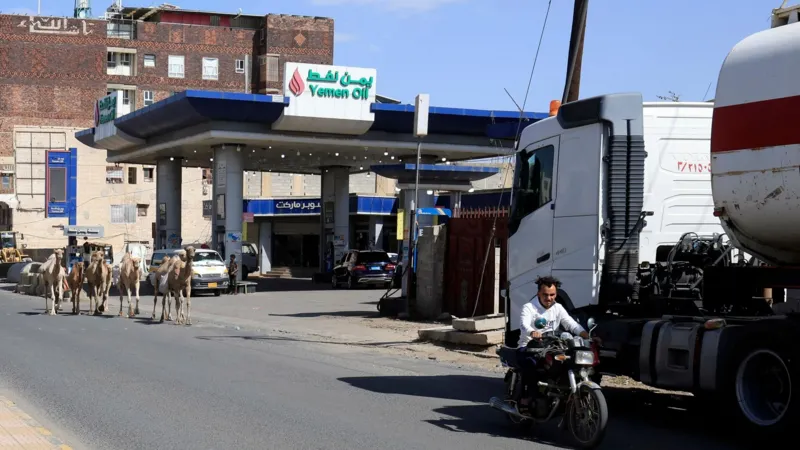
Missiles and drones have been intercepted over Riyadh after the Saudi-led coalition fighting in Yemen struck a fuel depot near the Houthi-controlled capital, Sanaa, its spokesperson says.
Maj Gen Turki al-Maliki said several projectiles targeting the Saudi capital and other cities were intercepted after the coalition carried out a strike on the Yemen Petroleum Company’s al-Sabaha facility on Tuesday night.
The Houthis warned they would target the airport and Aramco refinery in Saudi Arabia’s capital, Riyadh, and Aramco’s headquarters in the eastern city of Dammam.
Al-Maliki later said missiles targeting cities including Dammam had been intercepted, while shrapnel had fallen in a residential area in Dhahran.
It came as the Saudi cabinet, chaired by Crown Prince Mohammed bin Salman, said the Iran-backed group would “bear the consequences” of its recent deadly attacks on the kingdom.
Thirteen people were killed when a missile hit King Khalid International Airport in Riyadh on Saturday, while another person was killed in a similar attack there the following day.
On Tuesday, the coalition said its forces had destroyed three drones north of Riyadh.
The Houthis have said they are targeting airports, oil and gas facilities, and military bases in Saudi Arabia with missiles and drones in response to deadly Saudi strikes on territory that they control in western Yemen, including Sanaa.
The Saudi-led coalition has been providing air support for Yemeni pro-government forces mounting an offensive on Yemen’s Red Sea coast and several other front lines.

A correspondent for AFP news agency reported that queues formed at petrol stations in Sanaa on Tuesday afternoon following the coalition’s warning of an impending operation against the al-Sabaha oil facility, with many residents worried about shortages.
The Yemen Petroleum Company, which is run by the Houthis, issued a statement that sought to reassure them, saying the facility “does not contain any stock of petroleum products”.
The company also said it had “taken all necessary precautionary measures to address any emergency, ensuring the stability of the supply situation and the continued meeting of citizens’ needs in a normal manner”.
After al-Maliki confirmed the strike, first reported by Houthi media, explosions were heard over Riyadh and other Saudi cities, with al-Maliki reporting four missiles and two drones had been intercepted near the capital.
Yemen has been devastated by a civil war that began in 2014, when the Houthis ousted the internationally-recognised government from Sanaa. The conflict escalated in 2015, after the Saudi-led coalition of Arab states intervened in an attempt to restore the government’s rule.
A four-year-old informal ceasefire began to unravel in July, when the Houthis announced a “maritime embargo” against Saudi Arabia and began missile and drone attacks on Saudi airports, oil facilities and tankers in the Red Sea.
The Houthis said they were retaliating for what they call a Saudi blockade of their territory, as well as an air strike on Sanaa airport that they blamed on the kingdom.
The conflict escalated in September after the Houthis seized part of Yemen’s south-western Red Sea coast near the Bab al-Mandab Strait, a chokepoint for global shipping. Their advance contributed to a rise in oil prices following six months of war between the US, Israel and Iran.
US President Donald Trump said on Truth Social on Tuesday the Houthis were “behaving very badly… and purposefully trying to drive up Oil Prices”.
Speaking to reporters, he did not answer a question on whether he’d made a decision to help the Saudis retaliate against them, but said he “might” ask Turkish President Tayyip Erdogan to intervene.
Last week, pro-government forces said they had regained control of territory overlooking Bab al-Mandab after launching a major counter-offensive with the support of Saudi air strikes.
Hundreds of people have reportedly been killed in Yemen since August. The UN’s human rights office says they include at least 54 civilians, half of them children.
More than 216,000 people have also been displaced across the country, and suspected cholera cases have tripled in three weeks, rising from 217 to 647, according to the UN.
[BBC]

Physical development must be matched by the enrichment of people’s inner lives through aesthetics and culture – PM

Review of the operations of the 1818 Hotline introduced to report drug-related information

Showers in the Western, Southern, Central, Sabaragamuwa, North-Western and Northern provinces and in the Anuradhapura District

SJB: Govt. trying to reappoint Jayakody, who resigned from Cabinet amidst coal scam

India busts Pakistani salt smuggling via Sri Lanka

Monks brave heavy rains to press for Gnanasara Thera’s release

‘Dates have the highest sugar content to fight Coronavirus’

Sunday Island 27 December – Headlines

#SundayIsland 17th December – Headlines

Sunday Island – 28th March

Sunday Island Headlines – 21 March

Sunday Island – 21st February – Headlines
-

 News5 days ago
Sri Lanka escalates anti-graft drive with Shiranthi’s jailing
-

 News6 days ago
NPP govt. reminded of its responsibilities as US warship leaves Colombo
-
 Latest News7 days ago
Farhan, Sadaqat help Pakistan ace 183 chase to go 1-0 up
-

 Latest News4 days ago
Farhan and Sadaqat help Pakistan seal series in style
-

 News5 days ago
Iranian ships stranded, Lanka fears US sanctions
-

 Latest News3 days ago
Nissanka’s return headlines Sri Lanka’s Test squad against Pakistan
-

 News6 days ago
Interdicted top House official Kularatne receives special recognition in Mexican Parliament
-
 Features4 days ago
Intake 16: 45 years of duty and honour