
News
Cardinal calls an end to corruption, lawlessness

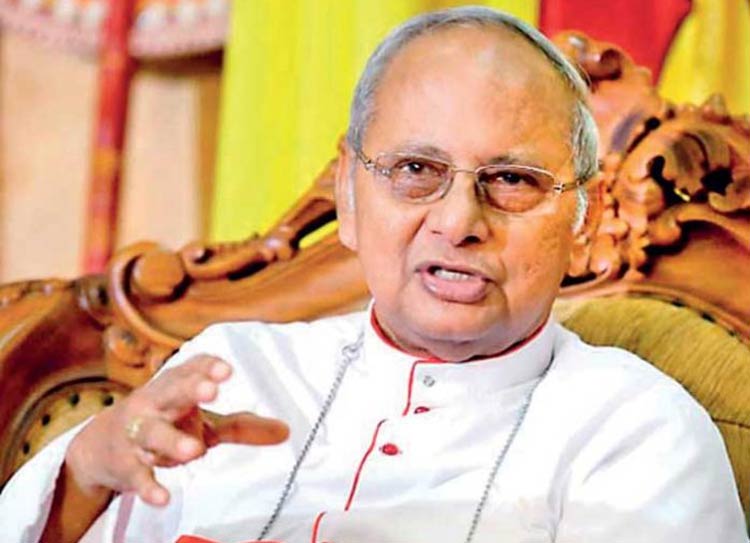
(UCAN): Cardinal Malcolm Ranjith has called for a Sri Lanka free from corruption and lawlessness, emphasizing the urgent need for systemic change.
“Corruption and lawlessness have spread throughout the country due to the wrong economic practices of previous governments,” Ranjith said, and hoped the new government “would bring about a positive transformation.”
“Nowadays, many people living in our country are wondering how even to celebrate Christmas and find their daily meals,” he added.
Speaking to the media on 19 December, the Cardinal urged Catholics to remember the less fortunate this Christmas, encouraging families to open their homes and embrace the poor during the holiday season.
“I request all our Catholic families to invite a poor family in your neighborhood to your home this Christmas and share a meal,” Cardinal Ranjith said.
He suggested they could provide lunch to a family or books and clothing for the children of the poor.
The Catholic Bishops’ Conference issued a special Christmas message that said the problem of poverty can only be alleviated by creating a fair economic structure.
“Creating this environment in our country requires the sincere commitment of every individual,” the Bishops said in their 18 December statement.
Meanwhile, the Coconut Development Authority announced that Cardinal Ranjith will subsidize the government’s purchase of coconuts from Church-owned plantations in response to the national shortage and high coconut prices.
Suranimala Gunawardena, a rights activist campaigning against political corruption, said former politicians had misused millions of rupees from the President’s Fund.
Nalinda Jayatissa, the Chief government Whip and Minister of Health and Mass Media, revealed this in Parliament on 17 December.
He said 36 former parliamentarians had received millions of rupees from the President’s Fund, from 2005 to 2024.
“This is the fund for people with critical illnesses, such as those needing heart surgery or cancer treatment. It is very difficult to raise 100,000 rupees [$347] for a patient, but former politicians have taken millions from this President’s Fund,” Gunawardena told UCA News.
He said those in power and with resources were receiving favourable treatment and often evading the consequences of their actions.
“The less fortunate face harsher punishment for similar offenses, and this disparity undermines justice, perpetuating a sense of unfairness,” Gunawardena said.
He said the law must be applied equally to all, regardless of wealth or status.
Rights activists emphasized the need for a fair economic structure to ensure equality, as true progress requires equitable resource distribution.


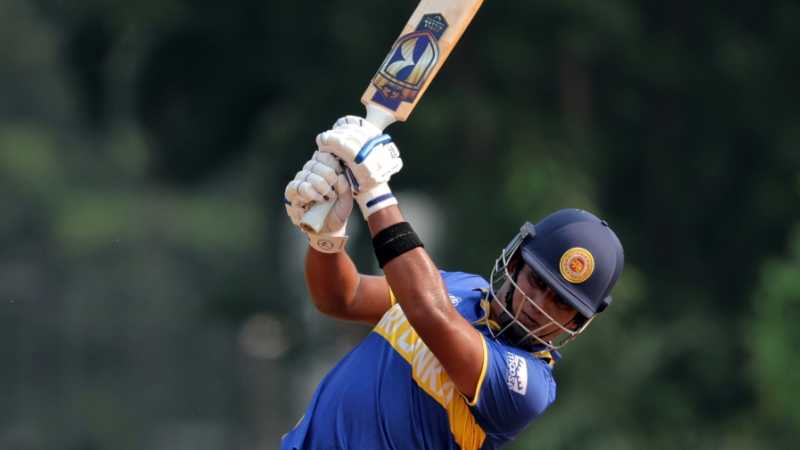
Captain Chamari Athapaththu’s 94 helped Sri Lanka chase down 169 with ease against Pakistan. Athapaththu and Vishmi Gunaratne together started strongly, putting up a 159-run stand as Sri Lanka won with eight balls to spare.
With the ball, right-arm seamer Chethana Vimukthi, who was called up as the injured Shashini Gimhani’s replacement. for the T20 World Cup, made an impact for Sri Lanka, finishing with figures of 4 for 31. Vimukthi broke the 60-run stand between openers Muneeba Ali and Gull Feroza, following which Pakistan lost wickets regularly. Captain Fatima Sana top-scored for Pakistan from No. 7 with 37 to push the total past 150. In reply, Sri Lanka made easy work of the chase, with Athapaththu itting five sixes and nine fours in her 56-ball stay.
Scores:
Sri Lanka Women 169 for 1 in 18.4 overs (Chamari Athapaththu 94, Vishmi Gunaratne 63*; Fatima Sana 1-20 ) beat Pakistan Women 168 for 8 in 20 overs (Muneesha Ali 36, Gull Feroza 26. Ayesha Zafar 10, Saira Jabeen 12, Fatima Sana 37, Aliya Riyaaz 22; Sugandika Kumari 1-33, Chethana Vimukthi 4-31, Malki Madara 1-19, Nimasha Meepage 1-16) by nine wickets
(Cricinfo)
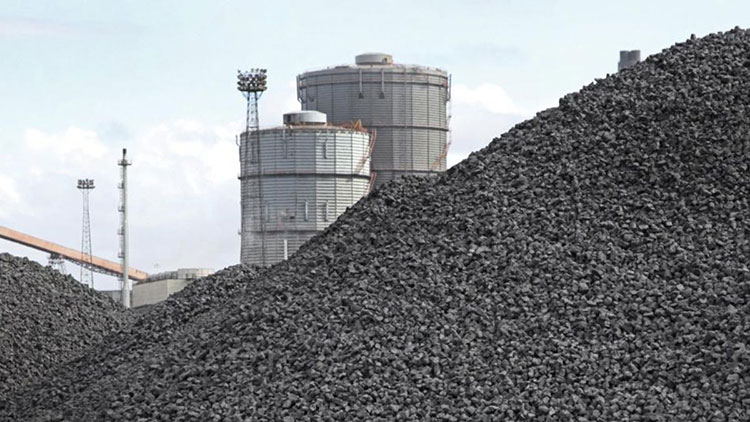
Open hearing of evidence into alleged irregularities in coal procurement is scheduled to begin in the first week of July, while the Presidential Commission of Inquiry continues recording statements from relevant officials, investigators said.
So far, the Commission has recorded statements from around 40 government officials, including members of procurement committees and other personnel attached to institutions involved in coal-related transactions.
Officials said that, depending on evidence gathered during the ongoing inquiry, statements may also be obtained from former ministers if required.
The Commission has also received 28 complaints in connection with alleged irregularities in coal imports and related procurement processes.
President Anura Kumara Dissanayake on April 17 appointed a three-member Presidential Commission of Inquiry under the Special Presidential Commissions of Inquiry Act No. 07 of 1978 to probe alleged malpractice in coal imports and electricity generation since the inception of coal-based power generation up to April 16, 2026.
The Commission is chaired by Supreme Court Justice Gihan Kulatunga, with Court of Appeal Judge Aditya Patabendige and High Court Judge Sanjeewa Somaratne serving as members. Former State Ministry Secretary P.V. Bandulasena acts as Secretary to the Commission.
The inquiry covers alleged procurement irregularities, possible financial losses to the State, import of substandard coal, quality inspection failures, contractual breaches and operational issues in power generation, including whether corrective measures were taken where necessary.
It will also identify responsible political authorities, officials of Sri Lanka Coal Company (Private) Limited and suppliers, while recommending legal or administrative action and measures to prevent future lapses.
Meanwhile, the Committee on Public Enterprises (COPE) is also preparing to table its report on coal procurement in Parliament, with officials from relevant institutions having been summoned during its proceedings. COPE Chairman MP Dr. Nishantha Samaraweera said audit findings had also been considered, and any matters requiring further investigation would be referred to law enforcement and anti-corruption authorities.
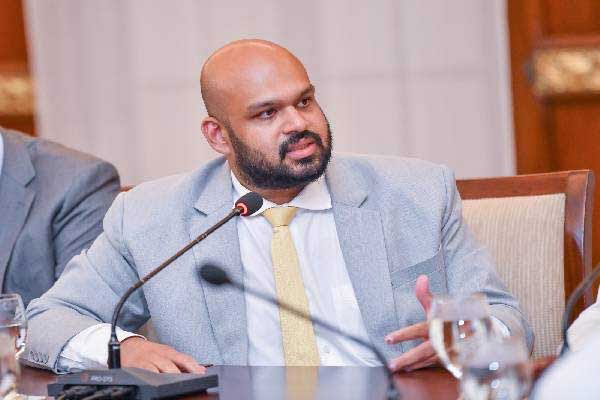
Trincomalee District TNA MP Shanakiyan Rasamanickam has submitted a motion to Parliament calling for the immediate repeal of the Prevention of Terrorism Act (PTA), arguing that the controversial law has enabled arbitrary detention, torture and the targeting of minority communities for more than four decades.
In his motion, now published in the Addendum to the Order Book of Parliament, the MP urged the Government to repeal the Prevention of Terrorism Act, No. 48 of 1979, in its entirety and refrain from introducing any replacement legislation containing similar provisions.
Rasamanickam contended that the PTA had been used for over 40 years to facilitate prolonged arbitrary detention and to obtain false confessions through torture. He further alleged that the law had disproportionately affected minority communities and civil society groups.
The motion states that there is no justification for maintaining a permanent counter-terrorism law that grants sweeping powers to the authorities.
The TNA legislator argued that existing legal provisions were sufficient to address security threats, noting that terrorism-related offences could already be prosecuted under the Penal Code.
He also pointed out that the Government retained the power to declare a state of emergency when circumstances warranted extraordinary measures, rendering a permanent anti-terrorism framework unnecessary.
Accordingly, the motion calls on Parliament to resolve that the Government take immediate steps to abolish the PTA without replacing it with legislation containing comparable powers.
The Prevention of Terrorism Act, enacted in 1979, has long been the subject of criticism from human rights organisations, civil society groups and international bodies, which have raised concerns over provisions relating to detention without trial and safeguards against abuse.

Huge crowds throng Madrid streets for Pope’s open-air mass

Women’s T20 World Cup 2026 warm-up: Kapp, Wolvaardt take SA past Ireland

Women’s T20 World Cup 2026 warm-up: Chamari Athapaththu’s 94 helps Sri Lanka beat Pakistan

Rahul, Gill hit centuries as India dominate Afghanistan on opening day

Persistent rain in Kingston washes out second ODI between West Indies and Sri Lanka

Heavy showers about 100 mm are likely at some places in the Western and Sabaragamuwa provinces and in Galle, Matara, Kandy and Nuwara-Eliya districts

‘Dates have the highest sugar content to fight Coronavirus’

Sunday Island 27 December – Headlines

#SundayIsland 17th December – Headlines

Sunday Island – 28th March

Sunday Island Headlines – 21 March

Sunday Island – 21st February – Headlines
-

 News6 days ago
Lankan duo emerge winners in Latin dance championship held in Blackpool, UK
-

 Business7 days ago
IMF’s unstated rate:Sri Lanka’s $695m loan costs about 5.33% per annum
-

 Latest News4 days ago
Kusal Mendis, Pathum Nissanka, bowlers put Sri Lanka 1-0 up
-
 News4 days ago
New US tariffs proposed on 60 countries, including Sri Lanka
-

 Business7 days ago
Sri Lankan scientist-innovator Milinda Edirisinghe introduces AI-integrated gem testing system to gemological world
-
 Features3 days ago
Power crept into the Sangha and is now tearing it apart
-
 News7 days ago
UNP challenges NPP move to amend Vihara – Devalagam Act
-

 News6 days ago
Sri Lankan teen killed in Chennai clash; three arrested