
Features
Get to grips, Gota!

by Dr. Upul Wijayawardhana
Oh! What a contrast it has been! As 2020 dawned we were dreaming of a new era. For the first time, we elected a president who was not a career politician and his initial actions gave hope like never before. It became pretty obvious that Gota was not there for the glamour of office but to get the country out of the mess created by Yahapalanaya. After all, he was elected not because he attacked his opponents but because he placed his track record before the electorate. Although the drafters of the ill-fated 19A predicted that he would be a puppet President, Gota showed how to use the limited powers to the maximum benefit of the country. He met the challenge of the totally unexpected devastating pandemic with finesse, earning plaudits all round. Notwithstanding Covid-19, we had one of the most peaceful elections in living memory in Sri Lanka, and the voters endorsed the President’s actions by giving his party a two-thirds majority, which enabled the passage of the 20th amendment.
As the year the world wants to forget came to a close, an air of despondency descended; even the strongest of supporters of the President are asking what went wrong. Was this all due to the second wave of Covid-19? True, it could have been handled better, but compared to the rest of the world Sri Lanka is not that badly off. Therefore, we need to look elsewhere.
To what extent is the President responsible for the current chaotic state of affairs?
In my opinion, most of the fault lies not with the President but the politicians around him! During the first part of his presidency Gota’s performance was superb, maybe, because they were not powerful. Then came the general election and the country has been on a slippery slope. Contrary to predictions that he would be a dictator, Gota has turned out to be a liberal President; perhaps, too liberal to allow the politicians to do whatever they like. He mistakenly believed that they would follow his example.
I am asking the President to get to grips as he is the only person who can prevent this slide down the slippery slope. The biggest problem the this government faces is that it has scored too many own goals! Adding to this is the poor communication strategy. People’s hopes have been dashed many a time, and to avoid a repetition Gota needs to do an immediate course correction.
Whilst the President has displayed exceptional diplomacy, many others in the government display a total lack of it. The first test for the President was the ‘abduction’ of the Swiss Embassy employee. The way Gota handled it embarrassed the Swiss Embassy, which had already smuggled a policeman who hounded yahapalana opponents.
Then there was the MCC. When Gota was silent about it even some of his supporters opined that he might sign the compact on the sly. Rather than shouting about it and antagonising the most powerful nation on earth, he moved diplomatically and did what was best for the country: not selling our sovereignty for a few millions of dollars!
What about his ministers? Except a few, ministers seem to be behaving in the traditional manner of Sri Lankan politicians. They express differing opinions which makes the government lose credibility. Let me cite a few examples.
Instead of admitting difficulties they face, some Ministers give bogus excuses which make them the laughing stock. It is a well-known fact that no government has been able to tame the rice-mafia, so far, for whatever reason. The Minister of Trade published a gazette notification fixing the prices of some rice varieties, but no one could buy rice at those prices. He gave the wonderful excuse that rice would be available at those prices after the next harvesting season! One does not have to be a genius or a tuition master to know that the price of rice always comes down with the harvest!
When the Mahara prison riot happened, some ministers concocted conspiracy theories. One spread the canard that diazepam had made prisoners behave erratically. Some others claimed deaths were not due to shooting but clashes among the inmates. When the Judicial Medical Officers presented their findings to courts, they must have been hiding their faces.
Coming back to Covid-19, the Army Commander, who heads the Covid-19 task-force said that a report had revealed how the second wave had started; it was widely rumoured that a tourist hotel in Seeduwa had triggered it and Brandix factory had contributed to it. Although it is agreed that what is important is controlling the pandemic and not making all facts public, one feels that the government is hiding the truth to prevent embarrassment to its ardent supporters.
The behaviour of the Minister of Health is disgraceful, to say the least. On top of the fiascos of the ‘removal’ of the Director General of Health Services and the appointment of the Director of MRI, she decided to pollute rivers with a concoction prepared by a faith healer and was joined by other ministers. She decided to taste a concoction prepared by a kapuwa, apparently on the basis of instructions from goddess Kali. After tasting, she requested all the Professors in Medicine in the country to check whether it was effective! Another minister promoted the concoction, equating the kapuwa to the great Sir Isaac Newton. Some have got Covid-19 in spite of drinking the peniya!
Rather alarmingly, there is a group of intellectuals who promote this type of cure. The leader of the pack is an ambassador who is convinced that useful information emanates from beings above humans. He who called Western Science a palpable lie (pattapal boru) now says he respects Western science but is against its domination. In a recent post he has stated that although he wanted to be a scientist in his youth, he was never one. This makes me wonder why the Kelaniya University had a non-scientist as the Dean of its Science Faculty!
The disposal of bodies of the victims of Covid-19 has been internationalised by the overseas Tiger rump ever willing to discredit Sri Lanka. As a Buddhist, I was embarrassed at the way some Bhikkhus behaved in a protest at Galle Face completely misinterpreting the concept of one country-one law. They seem to have a total lack of compassion, one of the noble characteristics of the Buddha, and were attempting to dictate to the President. I urge Gota to take a decision without further delay on the basis of expert opinion, without being swayed by the views of men in robes.
The appointment of Lalith Weeratunga to oversee procurement and distribution of Covid-19 vaccines is an interesting development and may be a pointer that Gota is taking corrective action. Lalith, a top administrator of the highest integrity, was a victim of “Temple Trees justice”. In spite of the guilty verdict, though later reversed, Gota chose him as his senior advisor, which was a bold move. Entrusting him with this vital task is certainly a move in the right direction and I do hope we would have an equitable vaccination programme soon so that economic recovery may commence.
Covid-19 is far from controlled. Therefore, any elections are out of question at this juncture because of safety concerns and the worsening financial situation. We have managed without Provincial Councils and even the TNA voted with yahapalanaya to postpone elections. As India failed to discharge its obligation why should we be bound by 13A? Neville Ladduwahetty, in an excellent article “Province unsuitable as the unit of governance” (The Island, 1 January), has pointed out the absurdity of holding elections before deciding on the unit of devolution in the new constitution. In spite of all these considerations, some government politicians are clamouring for PC polls! Perhaps, giving jobs to their kith and kin and henchmen is more important to them than containing the raging pandemic.
I am in total agreement with Laduwahetty’s well argued case that the unit of devolution should be the district for proper empowerment. I would urge the drafters of the new constitution to ensure that members of parliament are truly representative by being elected from an electorate, as in the past, not on the district basis. The present system of district-based election with preferential votes has resulted in many disputes.
Gota has started visiting remote areas to solve poor people’s problems and still commands great affection from the public. It is all the more reason why he should not let us all down. He should get tough and get rid of the useless politicians. We badly need a disciplined government. That is the only hope for Sri Lanka!








The JVP General Secretary Tilvin Silva’s recent remarks at a news conference in Jaffna where he ruled out the possibility of holding provincial council elections this year has been widely reported and widely criticized. About the same time there was another media event in Jaffna that went largely unnoticed and unreported outside Jaffna. What was said at the second media event may carry far more political implications than Tilvin Silva’s election timing talk. A veteran Tamil political participant made the startling yet not implausible statement that the prospect of having political devolution under the JVP-NPP government is becoming “a daydream”. The statement was made by Dr. K. Vigneswaran, who served as Provincial Secretary to the only North-East Provincial Council Government that was elected under the auspices of the Thirteenth Amendment.
Dr. Vigneswaran is a Professional Civil Engineer who studied at Royal College, graduated with First Class Honours in Engineering in 1964, and went on to complete a pioneering PhD at the university of Waterloo, Canada, applying the finite element method (FEM) in the field of Geotechnical Engineering. His engineering career has always been at the Irrigation Department where he rose to a Deputy Director. That was when the department was in its golden years, and Vigneswaran was known for his technical mentorship, meticulous administrative skills, and for knowing the fine print of everything. While at the Irrigation Department, Vigneswaran married Ramya de Silva, a fellow irrigation Engineer. After 1983, Vigneswaran became a fulltime political activist and a powerful resource in Tamil politics, but with unwavering commitment to nonviolence, democracy and federalism. The family moved first to India and then Canada, and Vigneswaran has been shuttling between Canada and Sri Lanka.
Devolution: Tortuous Trajectory
Since 1987, the Indo-Sri Lanka Agreement, and the 13th Amendment, Vigneswaran has been a permanent fixture in all the politics and institutional dynamic of implementing 13A and establishing provincial councils. He served as Secretary to the only elected Provincial Government for the Northern and Eastern Provinces. After 1994 and the election of Chandrika Kumaratunga as President, Vigneswaran became a key participant in all the civil society efforts and government initiatives to restore the PCs and implement 13A, both during the Kumaratunga presidency and the succeeding administrations of Mahinda Rajapaksa and the Sirisena-Wickremesinghe duo.
Devolution efforts stalled after the election of Gotabaya Rajapaksa, who in so many words declared that he had no time for 13A or PCs in his presidential agenda, whatever it was. Only that his whole agenda turned out to be a wholesale disaster for the country. Already by then, all the nine Provincial Councils had fallen into abeyance with the cancellation of the 1988 PC elections by the Sirisena-Wickremesinghe duo, with the TNA standing by. The abeyance continues under the JVP-NPP government with no apparent end in sight after Tilvin de Silva’s statement in Jaffna.
I say all this to provide the proper context for Vigneswaran’s statement in Jaffna that the prospects for power devolution under the JVP-NPP government are becoming a political daydream. He said something else as well: that of all the government leaders he has encountered over the years, the only leader who has been genuinely sincere about power devolution is former President Chandrika Kumaratunga, and no one else. I am constrained to add that the insincere category would include Ranil Wickremesinghe, who for all his handsome promises, never matched any of them with experiential sincerity. The present JVP-NPP government still has time to show that they are not an insincere lot.
It is not my purpose to agree with or question Dr. Vigneswaran’s assertions, but to use them as cue and context to comment on the widening mismatch between the JVP-NPP government’s promises and its practices on the matter of power devolution and the restoration of the PC system. With a stalling economy, rising prices and external shocks, it is obvious that the government has all the economic matters to worry about, but that does not mean that it can ignore all the other government responsibilities. No government is put in power to solve a single problem or address a single issue. It is in the nature of governments to deal with multiple problems with varying priorities. Otherwise you could have a single cabinet minister to deal with one problem at a time. That is never going to be the case.
The economy is of course the top of mind priority for the government even as it is a top of mind concern for the people. Even on the economic front, the government is holding steady but is showing little progress. And there are other government initiatives where political accountability will call for answers: to wit, the catchall Clean Sri Lanka programme, ambitious educational reforms, contentious energy sector reforms and, yes, power devolution as well as the overpromised constitutional reforms. Not to mention the sprawling unforced errors over substandard coal imports, foreign exchange fraud, and the chronic neglect of developing the renewable energy sector. Correcting these fields of errors may require a separate ministry for each.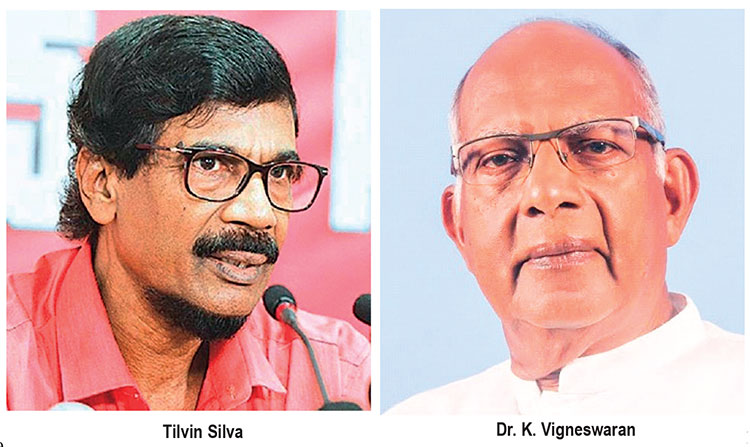
Devolution: Daydream or Deliverable
On the PC system and constitutional reform, there has been scant progress in spite of handsome promises. On both, the government is inadvertently deepening the holes that it had dug itself into through indifference, inaction or procrastination, or all of them and more. In the matter of devolution and provincial councils, the government can simply defuse the situation by directing the Election Commission to conduct elections at the earliest opportunity that is logistically possible. Making his statement in Jaffna, Mr. Tilvin Silva alluded to funding shortfall and legal complications as reasons for the necessity to postpone PC elections until next year. Neither reason holds water.
The funding question would seem to have been put to rest by the statement of Health Minister and Cabinet Spokesman Nalinda Jayatissa, presumably reflecting cabinet consensus, that there are no funding issues and if needed additional funds could be arranged through supplementary allocations. It is also disingenuous to cite legal complications as a reason. The so called legal complications arose because of the collective stupidity of the Sirisena-Wickremesinghe parliament that included the then miniscule NPP and the politically-lost TNA. The JVP-NPP has now ballooned from a handful MPs to a two-thirds majority and it can expedite any legislation that it wants to enable the PC elections to be held without delays.
Alternatively, the elections can be held under the old arrangement of proportional representation with assurance by political parties to honour their commitment to fielding more female candidates. Already at a gathering of all political parties, including the NPP (but not the JVP), and civil society groups, convened by People’s Action For Free & Fair Elections (PAFFREL), the political parties jointly committed to a 25% quota for women and youth under the old electoral system. The ongoing parliamentary committee exercise studying the legal matter, headed by the overstretched Foreign Minister Vijitha Herath, is also an unnecessary red herring. The Election Commission is ready to go under whatever law or electoral system that is before it. So, there is no reason to hide behind legal complications to further delay the PC elections.
Somewhat amusingly, Public and Parliamentary Affairs Minister Ananda Wijepala has trotted out the argument that the NPP government has already conducted two nationwide elections during the one and a half years it has been in office, and that unlike the Ranil Wickremesinghe government the JVP-NPP is not in the business “to delay elections for our personal benefit” – whatever that means. Unfortunately, the good minister is missing the point. The question is not how many elections can the JVP-NPP hold in how many years, but how many years do people in the provinces have to wait before they vote in another provincial election? How many more years? That really is the question.
We know the current situation in the provinces. There are provincial governments but no elected provincial councils. The government administration in every province is being run by the President of the Republic through his handpicked governors and unelected government officials. This is a travesty of democracy and the euthanizing of the PC system. Already under 13A, the office of the provincial governors has been constitutionally and legally compared to the office of the Governors of old Ceylon who represented the monarch in what was then a crown colony. The irony is that a JVP-NPP President may have inadvertently positioned himself as the monarch of all he provincially surveys, courtesy of the Thirteenth Amendment!
The JVP was in the forefront of the litigation that caused the demerger of the Northern and Eastern Provinces. If Dr. Vigneswaran’s assertion were to prove correct, a potential dissolution of the provincial system under the JVP-NPP government would be the consummation of the JVP’s original opposition to the introduction of the provincial council system itself. The whole system may not be eradicated, but it could be devoured of its democratic essence while preserving the administrative shell as the medium for the country’s president to overreach into the provinces. That would be worse than a daydream, a real nightmare.
by Rajan Philips ✍️
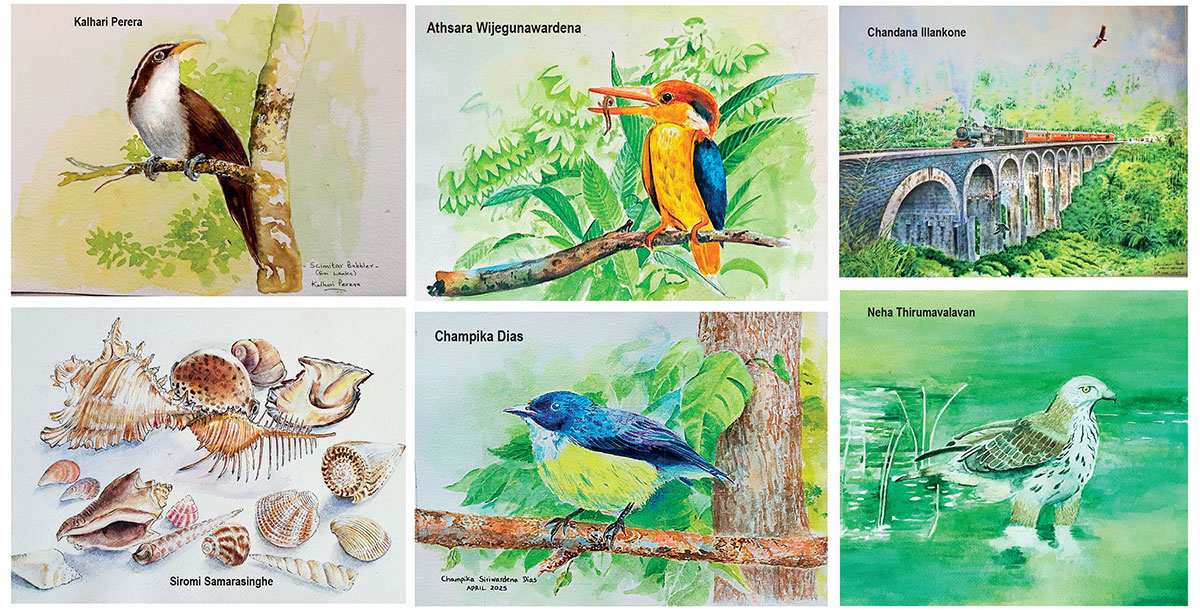
A new art exhibition, titled Spectrum ,will be held at the Lionel Wendt Art Centre on the 20th and 21st of June 2026, bringing together a collection of works by ten emerging artists.
Athsara Wijegunawardena
Neha Thirumavalavan
Dillai Joseph
Wasantha Siriwardena
Champika Dias
Nipun Dias
Dr. Prasanna Siriwardena
Kalhari Perera
Siromi Samarasinghe
Chandana Illankone
All ten artists have trained under the guidance of renowned Sri Lankan artist Royden Gibbs, and this exhibition marks an important point in their individual journeys.
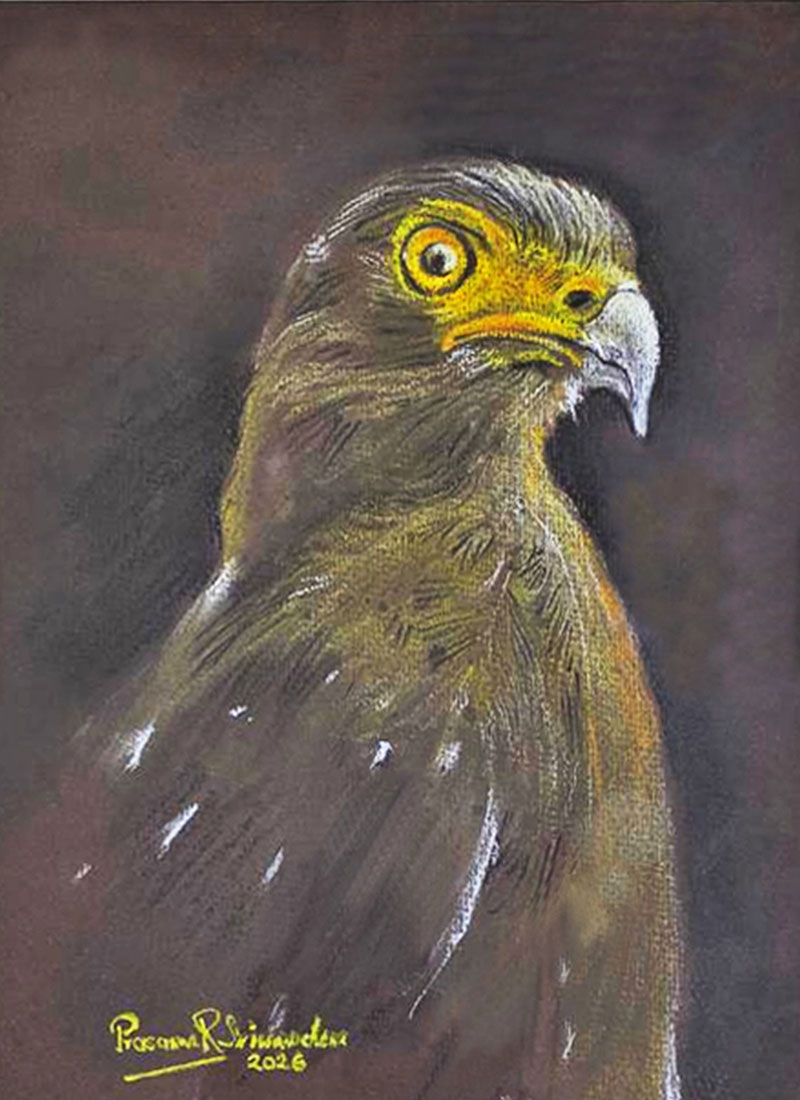
Dr. Prasanna Siriwardena
Spectrum brings together a mix of styles, subjects and approaches, giving visitors a chance to experience a wide range of work in one place. The exhibition will include pieces in watercolors, soft pastels, oils and charcoal, reflecting both the discipline and personal direction of each artist. The work ranges from scenery and portraits to still life and studies of the human form, offering different ways of seeing and interpreting familiar subjects.
-
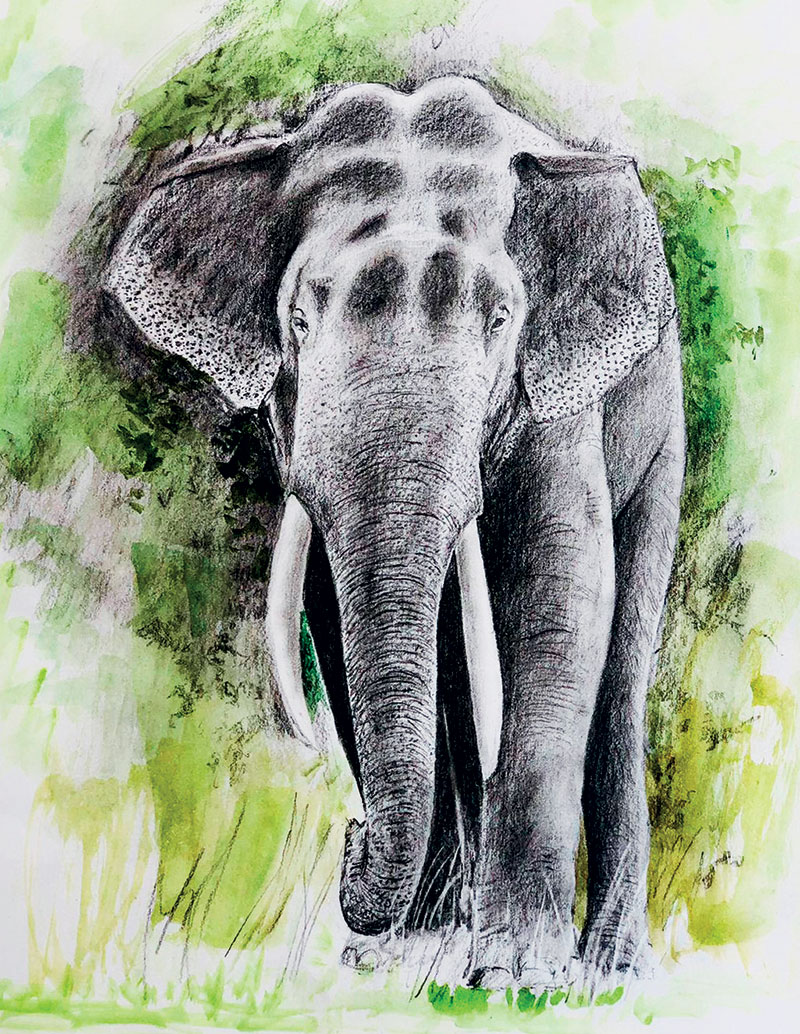
- Nipun Dias
-

- Wasantha Siriwardena
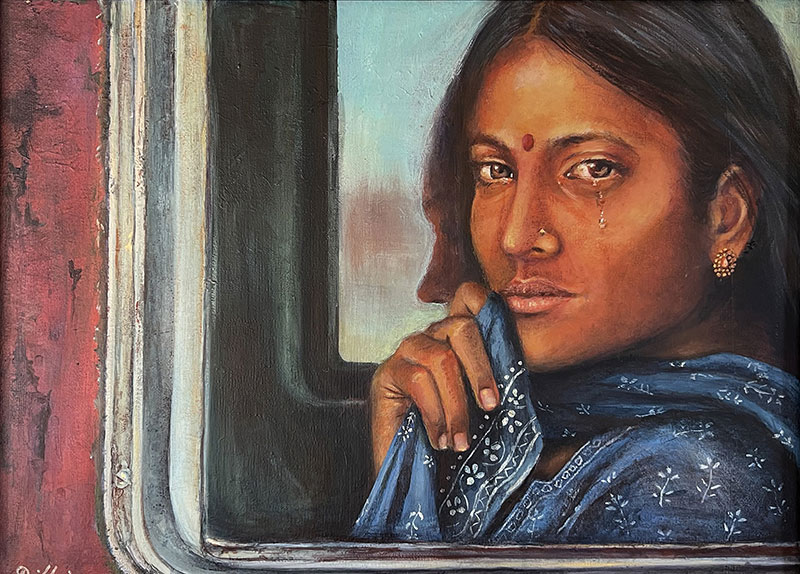
Dillai Joseph
Although they share the same mentor, each artist presents a distinct point of view. The result is a show that feels varied yet connected, with each piece carrying its own character and intent. It is this balance that gives Spectrum its identity.
The exhibition aims to support and highlight emerging talent within Sri Lanka’s art scene, while also creating a space where artists and audiences can connect. Visitors will find work that shifts between quiet observation and more expressive pieces, making it an engaging experience for both seasoned collectors and those simply interested in art.
Spectrum is expected to draw art lovers, collectors, students and members of the wider creative community. It also offers an opportunity to discover and support new artists at an early stage in their careers.
Open to the public over two days, Spectrum invites visitors to experience a range of work in a venue that has long been part of Colombo’s cultural landscape.

“Craving begets sorrow, craving begets fear. For him who is free from craving there is no sorrow; how can there be fear for him,” Dhammapada verse 216 states. The mental factor craving, Tanha in Pali, is central to Buddhist Teaching, as its ultimate goal is the cessation or extinction of it—tanhakkhaya. Even though Tanha is translated as craving here, it can sometimes mislead modern readers into thinking tanha only refers to extreme or physical addictions. Just as with any Pali term, it has broad meanings. Venerable Walpola Rahula describes it as “thirst” or unceasing wanting, one of the deep-rooted proclivities or latent tendencies (anusaya) of life (Rahula 1959), without which life as we know would not exist.
Even though the Buddha recognized this natural phenomenon two and a half millennia ago, it was only in the late 20th century that science took note of it and gave it a captivating term—the Hedonic Treadmill. The advantage of this empirical investigation to us Buddhists is that it provides a way to gain penetrative, experiential comprehension (anubodha) of this concept using the vernacular of this technology-savvy age—an alternative to struggling with the language of a bygone era.
These investigations have revealed that there are no hard-to-comprehend metaphysical or mysterious elements involved with this phenomenon; it is a biochemical process fundamental to sustaining life. What is more, an effort to grasp this concept would be well within the goals of Vipassana meditation described in the Sutta Pitaka, incorporating the four elements of investigation: body (kayanupassana), sensations (vedananupassana), mind (chittanupassana), and natural laws (dhammanupassana).
Vipassana and modern science
Vipassana meditation is an in-depth exploration of how humans perceive the world, gain knowledge, and interact with themselves and the environment. Knowing this with wisdom allows one to lead a harmonious way of life (samadhi), a condition conducive to curbing the “thirst” and achieving the Buddhist ideal. The goal of modern science is also to investigate life, but humanity has often used that knowledge to increase material wealth and comfort, providing only lip service to spirituality on the fringe.
An attitude that tends to ignore the consequences of wanting more and more – thirst, potentially endangering the planet. However, that does not prevent us from using scientific information as and aid or a tool to grasp Buddhist concepts. The scientific method bears parallels to the Buddhist approach: it is based on causality (paticcasamuppada), empirical verification (ehipassiko), systematic observation (meditation), and rejecting dogma and beliefs. The primary difference is simply the vocabulary used.
The process of perception: five aggregates
Our five external sense organs receive data (vedana) containing information on the environment: Eyes: receive light, Ears: receive sound, Skin: senses physical contact and temperature, Nose & Tongue: sense chemical properties of substances. The data received by the sense organs is transmitted to the brain, where it is registered as neural networks (sanna). Neural networks, which are interconnected groups of nerve cells (neurons) can be viewed as mind-readable QR codes.
The activity of the brain, or mind (mano), processes this data and converts them into actionable information (sankhara). Modern neuroscience and psychology have made great advances in understanding these processes at the molecular level. This process allows the individual to become aware of their environment, build an autobiographical memory or the notion of a self (atta), and take actions to protect and perpetuate life.
The Pali term vinnana refers to the collection of information committed to memory. Translating vinnana as “consciousness” can be confusing, as the latter often refers to all brain activities. All physical phenomena that sense organs encounter and the mental constructs (sankhara) are referred to as Rupa. This activity of mind forms the basis of all knowledge, representing the entire world as perceived by the individual. This process is what the Teaching refers to as the Five Aggregates (pancakkhanda). The critical takeaway is that the world we perceive is merely a mental construct. While an objective world exists, our sense organs have limitations in seeing it—a fact easily realized through the hundreds of illusions used for entertainment.
Evolution and emotion
The evolutionary purpose of this data processing mechanism is to enable living beings to respond to environmental factors for survival. The psychological and physiological state that arises prior to acting is called emotion. Primarily, emotions can be of three kinds: desire (loba) – seeing a new phone causes an urge to buy it, even though the current one works fine; aversion (dosha) – encountering a vicious dog triggers a “fight or flight” response; delusion (moha) or illusion – an unanswered message to a loved one triggers worry or speculation. Thus, tanha or thirst represents how we connect to the world in its entirety; it can be desire, aversion, and delusion, not merely simple greed. Consequently, these are natural phenomena beyond our immediate control, which are intended to sustain life. In other words, emotions are the forerunner to volitions or intentions, which the Teaching defines as kamma.
The biochemistry of craving
Emotions result from the interaction between the nervous system and biochemicals known as neurotransmitters and neuromodulators (e.g., dopamine, serotonin, epinephrine, GABA, glutamate, acetylcholine, and endorphins). Just as the Buddha’s simile of two bundles of bamboo supporting each other describes, these two processes are interdependent and co-arising. Every thought or emotional state corresponds to patterns of neural firing. When neurons fire, they release these chemicals into synapses, influencing how one feels and acts. This release perturbs the body’s normal balance, or homeostasis. Once an action is complete, these chemicals are reabsorbed, and the body returns to its baseline.
Return to baseline is essential for survival. For example, if we stay satisfied with just one meal forever, we could not sustain life. Nature has developed another mechanism to prevent us from being satisfied – we also habituate. In the case of dopamine, the brain adapts by reducing the response to the same stimulus. To get the same level of satisfaction with repeated experiences, the amounts of neurotransmitters needed keeps increasing. This leads to the cycle of craving and dissatisfaction—the Hedonic Treadmill. You “run” toward happiness on the treadmill, but it does not take you anywhere, leaving you in the same emotionally unsatisfactory state, wanting more and more.
Breaking the cycle
This explains why achievements and possessions do not bring permanent happiness, and lead to a cycle of struggle, addiction, crime, and other ills of society. For Buddhists, it also explains why we cling to meaningless rituals. The Dhamma captured this complex phenomenon in the Four Noble Truths: pleasant experiences are impermanent (anicca), leading to grasping (tanha) and unsatisfactoriness (dukkha). The remedy is the Eightfold Path that involves wisdom (panna), conduct (sila), and harmony (samadhi).
Neuroplasticity and the point of liberation
While we cannot stop the sense organs from receiving stimulation (vedana) and sending them to brain, the mind can be developed to prevent vedana from leading to tanha. This is the “point of liberation,” the seventh link in the paticcasamuppada formula. We may not have free will, but we have ‘Free Won’t’ or the ability to say no to the natural tendency to act upon stimuli. We can rewire our neural connections to do so. This ability can be cultivated by practice and repetition, and neuroscience refers to it as neuroplasticity—the brain’s ability to change with experience.
The natural tendency of the brain is to strengthen frequently used neural networks while weakening and eliminating lesser used networks and building new ones as needed. This is known as neural plasticity or rewiring the brain. As described in the Eight-fold Path, the way to weaken and eliminate dopamine-driven neural networks includes three aspects. First, the process leading to thirst must be understood. One must engage in sila – activities and thoughts that cultivate Metta: loving-kindness and goodwill, Karuna: compassion, Mudita: appreciative joy, and Upekkha: equanimity, emotional stability, calmness, and evenness of mind in the face of gain and loss, praise and blame, fame and disrepute, pleasure, and pain. That must be done with wisdom, ritualistic behavior does not strengthen the correct neural networks. These activities promote a “cocktail” of oxytocin, serotonin, and GABA, subduing the role of dopamine and helping us step off the Hedonic Treadmill. This leads to a tranquil state of mind and a harmonious existence – samadhi. Again, it is an interdependent, co-arising process that improves upon repetition. Using mind altering substances hijacks this process, thus the need for adhering to the Fifth Precept.
The goal of Vipassana is to understand this process and train the mind to say “no” to tanha. It is not just about sitting on a mat; it requires developing a lifestyle that maintains homeostasis or harmony, samadhi, at every moment. Pali term bhavana means the development of wisdom and insight. In modern vernacular – rewiring brain. This model must be assessed for its efficacy by the individual and realize the benefits by themselves –ehipassiko; knowledge without practice does not work. According to what the Buddha taught, that is the path to cessation or extinction of craving – tanhakkhaya, the supreme goal.
by Geewananda Gunawardana, Ph.D. ✍️

Women’s T20 World Cup 2026 warm-up: Kapp, Wolvaardt take SA past Ireland

Women’s T20 World Cup 2026 warm-up: Chamari Athapaththu’s 94 helps Sri Lanka beat Pakistan

Rahul, Gill hit centuries as India dominate Afghanistan on opening day

Persistent rain in Kingston washes out second ODI between West Indies and Sri Lanka

Heavy showers about 100 mm are likely at some places in the Western and Sabaragamuwa provinces and in Galle, Matara, Kandy and Nuwara-Eliya districts

Open hearing on coal procurement inquiry set for July first week

‘Dates have the highest sugar content to fight Coronavirus’

Sunday Island 27 December – Headlines

#SundayIsland 17th December – Headlines

Sunday Island – 28th March

Sunday Island Headlines – 21 March

Sunday Island – 21st February – Headlines
-

 News5 days ago
Lankan duo emerge winners in Latin dance championship held in Blackpool, UK
-
 Business6 days ago
IMF’s unstated rate:Sri Lanka’s $695m loan costs about 5.33% per annum
-

 Latest News3 days ago
Kusal Mendis, Pathum Nissanka, bowlers put Sri Lanka 1-0 up
-
 News3 days ago
New US tariffs proposed on 60 countries, including Sri Lanka
-

 Business6 days ago
Sri Lankan scientist-innovator Milinda Edirisinghe introduces AI-integrated gem testing system to gemological world
-
 Features2 days ago
Power crept into the Sangha and is now tearing it apart
-
 News6 days ago
UNP challenges NPP move to amend Vihara – Devalagam Act
-

 News5 days ago
Sri Lankan teen killed in Chennai clash; three arrested