
Latest News
India’s Modi claims victory as he heads for reduced majority

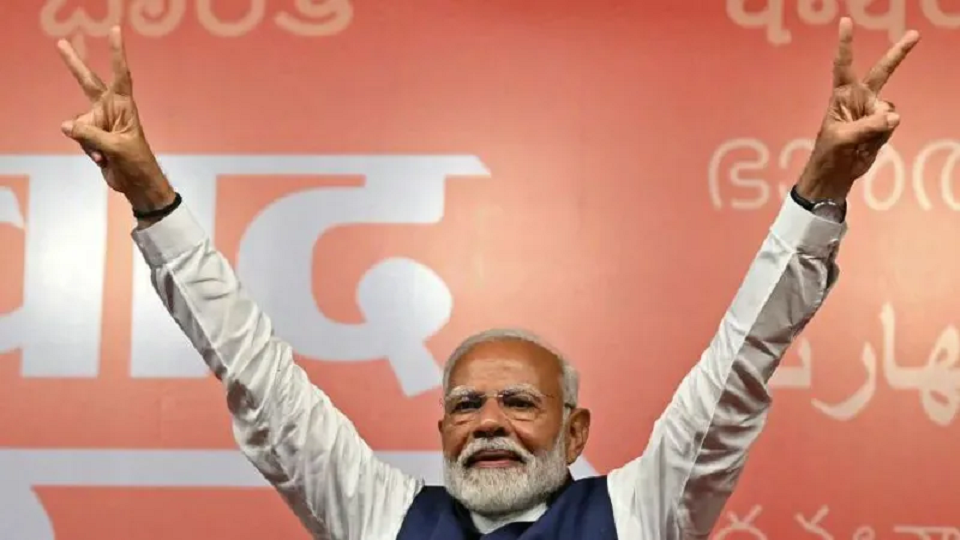
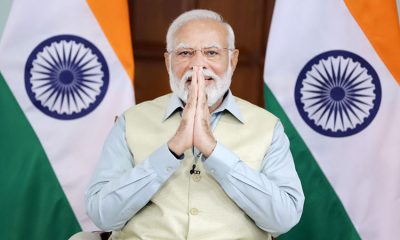
Indian Prime Minister Narendra Modi has claimed a historic third win in a row in the country’s parliamentary elections, but his ruling alliance appears to have failed to win a large majority as predicted. He thanked voters and said he would continue the “good work” of the last decade.
Modi’s BJP-led alliance is leading in more than 290 of 543 seats up for grabs, well short of their target of 400. The Congress and other allied opposition parties have surprised observers, and are now expected to win more than 230.
The results give the lie to a slew of exit polls at the weekend that showed the BJP-led NDA alliance on course for a super majority of two-thirds of parliament, which would have allowed it to make changes to the constitution.
In his first remarks since the election, though, the prime minister was keen to stress his historic third victory.
“I bow to the people for this affection and assure them that we will continue the good work done in the last decade to keep fulfilling the aspirations of people,” he said on X.
Speaking to supporters later, he described his victory as “the biggest in the world” and said he was “very very happy today”.
But Rahul Gandhi – leader of the opposition Congress party – told reporters that Mr Modi and the BJP had been “punished” by voters at the ballot box.
Analysts attribute the BJP’s setback to rising prices, joblessness, a controversial army recruitment reform and Mr Modi’s aggressive and divisive campaign, which may have alienated voters in parts of the country.
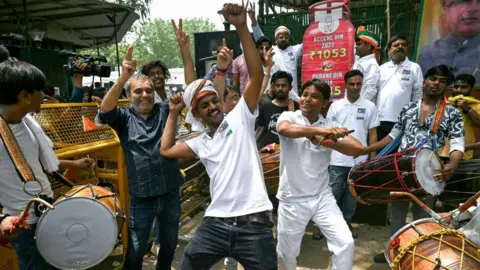
Mr Modi had set a target of 370 seats for the BJP and 400 seats for his alliance. This was up from the 303 seats won by the BJP alone in the last general election in 2019.
However, the BJP is no longer expected to get the 272 seats on its own that are needed for a majority in the lower house of parliament.
This is a setback for the party and means – for the first time – Mr Modi would have to rely on smaller parties in the NDA to push through its agenda.
There has been speculation that Mr Gandhi might also try to form a government, but two key NDA parties have already pledged their support for the incumbent prime minister.
Some of the major developments of the election include:
- Mr Modi himself retained his seat of Varanasi, but with a greatly reduced majority
- Mr Gandhi won a seat in Kerala in the south and is expected to win a second seat he is contesting in the bellwether northern state of Uttar Pradesh
- The BJP has seen unexpected losses in Uttar Pradesh, with prominent minister Smriti Irani losing her seat
- Another defeat in the state was at Ayodhya, where a few months ago Mr Modi inaugurated a controversial Hindu temple
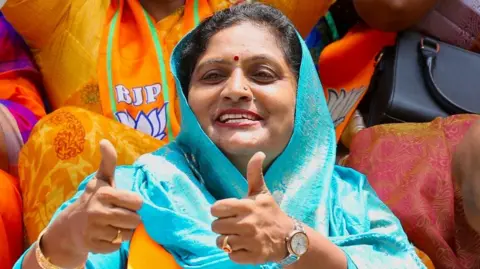
The election was seen by many as a referendum on Mr Modi’s decade in office, during which he has transformed many aspects of life in India, so this would be a major upset. The mood in BJP offices around the country has been described by BBC reporters as “sombre”.
In contrast, at Congress headquarters, party workers have been celebrating. The Indian markets, meanwhile, have been showing jitters – falling more than 2% – testifying to the fact that it’s not been a runaway result so far for the governing alliance.
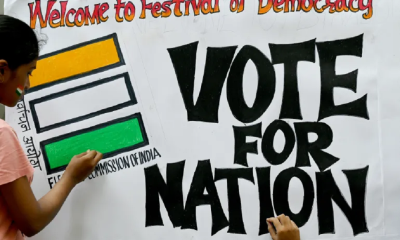
An average 66% of voters took part in the election, official figures showed. It was the biggest such exercise the world has ever seen, with nearly a billion registered voters – about one in eight of the global population.
Voting was staggered over seven rounds between 19 April and 1 June for security and logistical reasons. Much of the election took place in extreme and deadly heat as temperatures in parts of India soared to nearly 50C.
The BJP and its rivals fought a fierce – at times vitriolic – campaign, with the prime minister denying that he was being divisive when he was accused by rivals of demonising Muslims.
Mr Modi toured the country, pointing to his achievements in areas such as delivering welfare schemes and raising India’s global profile.
Opposition parties highlighted cost of living issues, high unemployment – especially for young people – and fears that constitutional changes could disempower the disadvantaged. They also promised to stop India’s “slide into autocracy”.
A number of opposition leaders and government critics have been jailed in recent years, including Delhi’s chief minister Arvind Kejriwal who was taken into custody on corruption charges in April but later briefly released to allow him to campaign.
[BBC]









Without Mark Chapman and Rachin Ravindra, the hosts have a top-three spot for Devon Conway. They have as many as six seamers in the squad to pick from, with Glenn Phillips and Michael Bracewell offering part-time spin in a fairly stacked bowling attack.
[Cricbuzz]
Latest News
Bangladesh and Nepal to host Women’s Under-19 T20 World Cup from January 21 to February 6

Four venues in Bangladesh and Nepal will host the 2027 Under-19 Women’s T20 World Cup, which is set to run from January 21 to February 6. Chattogram, Sylhet, Kirtipur and Mulpani are the four venues, with Chattogram set to host the two semi-finals on February 4 as well as the final on February 6.
The 16-team event will feature four groups of four teams each, with the group stage set to be followed by a two-group Super Six stage, and then the semi-finals and final.
This is the third edition of the tournament, with India having won the first two back-to-back in 2023 and 2025. The defending champions have been drawn in group A alongside Ireland, West Indies and Nepal. Group B has 2025 runners-up South Africa as well as New Zealand, Pakistan and Samoa.
Australia, Bangladesh, Nigeria and UAE make up Group C, while England, Sri Lanka, USA and Scotland have been drawn in Group D.
The tournament will kick off with four matches on January 21, with Sylhet hosting Bangladesh vs UAE and Australia vs Nigeria, and Mulpani hosting Sri Lanka vs Scotland and England vs USA. The other two venues and other eight teams will be involved on January 22: New Zealand vs Samoa and South Africa vs Pakistan in Chattogram, and Nepal vs Ireland and India vs West Indies in Kirtipur.
All 41 games of the tournament will be played during the day. Morning matches will begin at 9.30am local time, and afternoon games at 1.30pm local time.
“The ICC U19 World Cup is the stage that showcases the future of our sport and serves as the ultimate platform for young players to make the leap towards elite careers representing their countries,” ICC CEO Sanjog Gupta said. “These future stars representing 16 teams will garner the world’s attention and become relatable role models for many young girls playing the sport, serving inspiration for their continued cricket journeys.
“The choice of our hosts – Bangladesh and Nepal – is also reflective of the ICC’s belief and investment in the future of the cricket ecosystem. With deep passion for cricket and nearly 40% of the two countries’ populations below the age of 20, they serve as the ideal hosts for one of the world’s biggest youth sporting events.”
(Cricinfo)

President Anura Kumara Dissanayake today (20) paid his last respects to the remains of Most Venerable Kappetiyagoda Siri Wimala Thera, Anunayake of the Sri Lanka Ramanna Maha Nikaya and Chief Incumbent of the Rajopawanaramaya Temple in Gatambe, Kandy, who passed away.
The President visited the Rajopawanaramaya Temple in Gatambe, Kandy, where the remains of the Thera are lying, and paid his last respects. He subsequently expressed his deepest condolences to the Maha Sangha and the temple’s Dayaka Sabha, who are mourning the passing of the Thera.
Central Province Governor and Consultant Physician Dr Harsha Suranga Fernando, Kandy District Secretary Indika Udawatta and several others were present.
President’s Media Division (PMD)

Crystal Palace urged to retire bald eagle mascot

Little time to unpack as India open in Christchurch

Senior England players to miss Sri Lanka T20Is for WPL 2027

Bangladesh and Nepal to host Women’s Under-19 T20 World Cup from January 21 to February 6

Showers above 100 mm are likely at some places in the Western, Sabaragamuwa, Central, North-western, Northern and Southern provinces and in Anuradhapura district.

Low-quality coal causes power cuts: Ex-LECO Chief

‘Dates have the highest sugar content to fight Coronavirus’

Sunday Island 27 December – Headlines

#SundayIsland 17th December – Headlines

Sunday Island – 28th March

Sunday Island Headlines – 21 March

Sunday Island – 21st February – Headlines
-

 Features4 days ago
Kotahena:A Small Enclave, An Extraordinary Legacy
-

 News5 days ago
Asgiri Mahanayake calls for immediate release of Gnanasara Thera
-

 News3 days ago
Record 1,600 students take Russian Classical Ballet examination in Sri Lanka
-
 News7 days ago
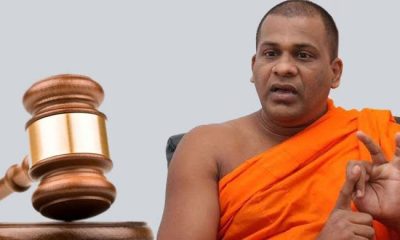
AC President recuses himself from hearing prison attire case pertaining to Gnanasara Thera
-
 News6 days ago
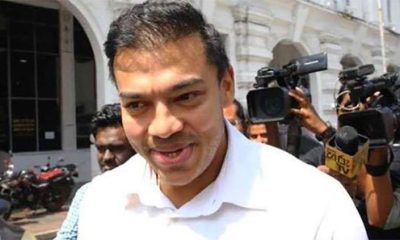
Naval officer testifies Yoshitha received Rs. 5.15 mn in salaries during SLN service
-
 News4 days ago
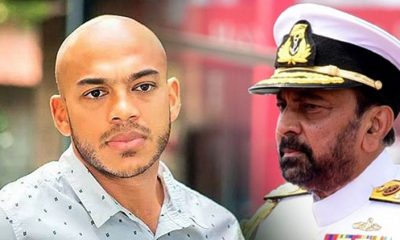
Karannagoda pushed for £24,536 for Yoshitha’s UK training, Court told
-

 Editorial6 days ago
Saving Anojan: Beyond Executioner’s Blade
-
 News7 days ago
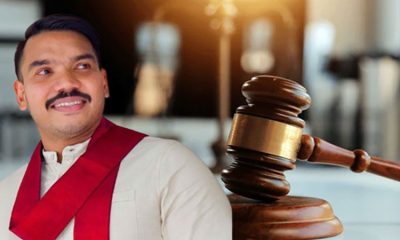
CID informs Fort Magistrate’s Court investigation into money laundering case against Namal completed