
Latest News
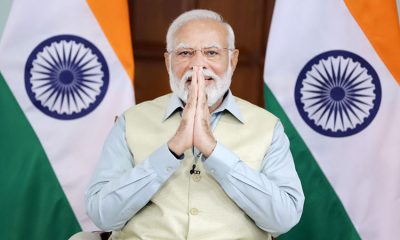
India’s Modi claims victory as he heads for reduced majority

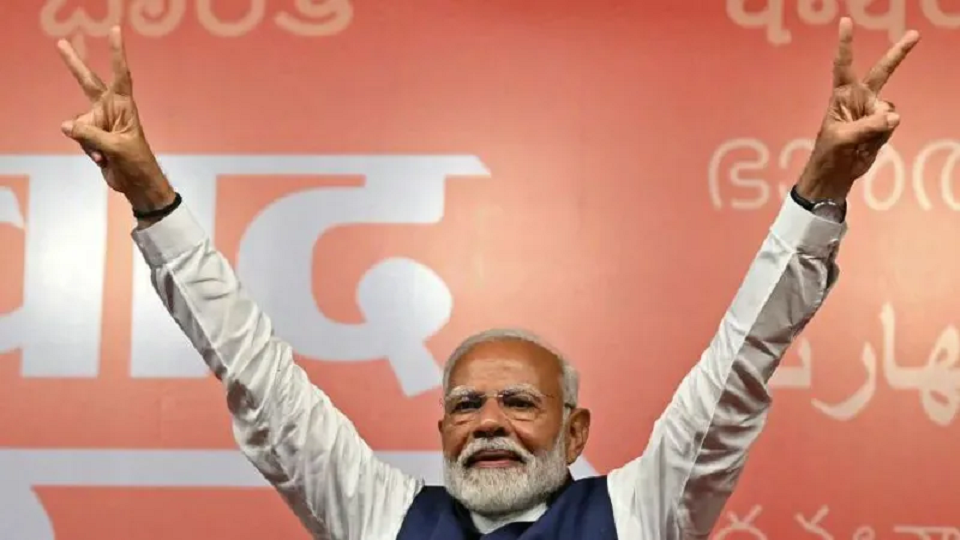
Indian Prime Minister Narendra Modi has claimed a historic third win in a row in the country’s parliamentary elections, but his ruling alliance appears to have failed to win a large majority as predicted. He thanked voters and said he would continue the “good work” of the last decade.
Modi’s BJP-led alliance is leading in more than 290 of 543 seats up for grabs, well short of their target of 400. The Congress and other allied opposition parties have surprised observers, and are now expected to win more than 230.
The results give the lie to a slew of exit polls at the weekend that showed the BJP-led NDA alliance on course for a super majority of two-thirds of parliament, which would have allowed it to make changes to the constitution.
In his first remarks since the election, though, the prime minister was keen to stress his historic third victory.
“I bow to the people for this affection and assure them that we will continue the good work done in the last decade to keep fulfilling the aspirations of people,” he said on X.
Speaking to supporters later, he described his victory as “the biggest in the world” and said he was “very very happy today”.
But Rahul Gandhi – leader of the opposition Congress party – told reporters that Mr Modi and the BJP had been “punished” by voters at the ballot box.
Analysts attribute the BJP’s setback to rising prices, joblessness, a controversial army recruitment reform and Mr Modi’s aggressive and divisive campaign, which may have alienated voters in parts of the country.
Mr Modi had set a target of 370 seats for the BJP and 400 seats for his alliance. This was up from the 303 seats won by the BJP alone in the last general election in 2019.
However, the BJP is no longer expected to get the 272 seats on its own that are needed for a majority in the lower house of parliament.
This is a setback for the party and means – for the first time – Mr Modi would have to rely on smaller parties in the NDA to push through its agenda.
There has been speculation that Mr Gandhi might also try to form a government, but two key NDA parties have already pledged their support for the incumbent prime minister.
Some of the major developments of the election include:
- Mr Modi himself retained his seat of Varanasi, but with a greatly reduced majority
- Mr Gandhi won a seat in Kerala in the south and is expected to win a second seat he is contesting in the bellwether northern state of Uttar Pradesh
- The BJP has seen unexpected losses in Uttar Pradesh, with prominent minister Smriti Irani losing her seat
- Another defeat in the state was at Ayodhya, where a few months ago Mr Modi inaugurated a controversial Hindu temple
The election was seen by many as a referendum on Mr Modi’s decade in office, during which he has transformed many aspects of life in India, so this would be a major upset. The mood in BJP offices around the country has been described by BBC reporters as “sombre”.
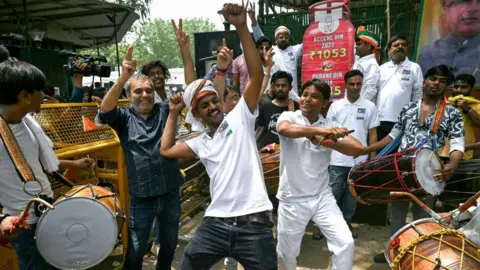
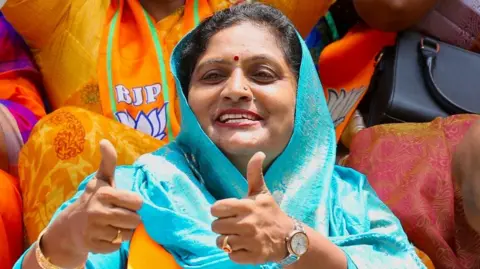
In contrast, at Congress headquarters, party workers have been celebrating. The Indian markets, meanwhile, have been showing jitters – falling more than 2% – testifying to the fact that it’s not been a runaway result so far for the governing alliance.
An average 66% of voters took part in the election, official figures showed. It was the biggest such exercise the world has ever seen, with nearly a billion registered voters – about one in eight of the global population.
Voting was staggered over seven rounds between 19 April and 1 June for security and logistical reasons. Much of the election took place in extreme and deadly heat as temperatures in parts of India soared to nearly 50C.
The BJP and its rivals fought a fierce – at times vitriolic – campaign, with the prime minister denying that he was being divisive when he was accused by rivals of demonising Muslims.
Mr Modi toured the country, pointing to his achievements in areas such as delivering welfare schemes and raising India’s global profile.
Opposition parties highlighted cost of living issues, high unemployment – especially for young people – and fears that constitutional changes could disempower the disadvantaged. They also promised to stop India’s “slide into autocracy”.
A number of opposition leaders and government critics have been jailed in recent years, including Delhi’s chief minister Arvind Kejriwal who was taken into custody on corruption charges in April but later briefly released to allow him to campaign.
[BBC]








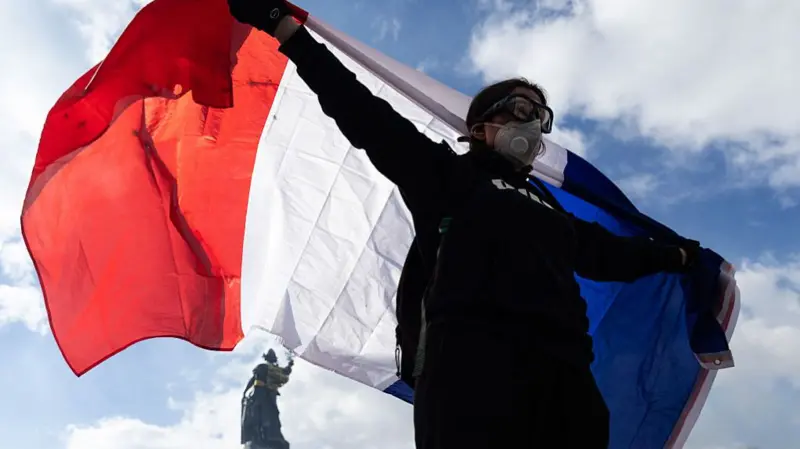
An estimated 550,000 people took part in demonstrations across France today to protest against teaching conditions in schools, rising fuel prices and the cost of living.
Marches were largely peaceful and took place in several major French cities, including Paris, where 110,000 people attended.
“We just want to study, we just want a future” one student taking part in the protest in the capital told BBC News, while another said they were ” just trying to make things change”.
But French Interior Minister Laurent Nunez said some groups “at the margins of these protests” caused the situation to “degenerate”.
According to the French Prime Minister Sébastien Lecornu, 1200 people were arrested. Officials also reported looting in cities such as Marseille, where masked 8ntruders also entered the city hall. In Lyon, the tourist office was set on fire and shops were damaged.
French President Emmanuel Macron said any vandals and looters would be “prosecuted and punished”, while Jean-Luc Mélenchon, the leader of left-wing party La France Insoumise, said demonstrations had been calmly mobilised.
Meanwhile, firefighters are continuing to battle a blaze at Limoges City Hall after a reported break-in and arson inside the 19th-century building during protests there.
(BBC)
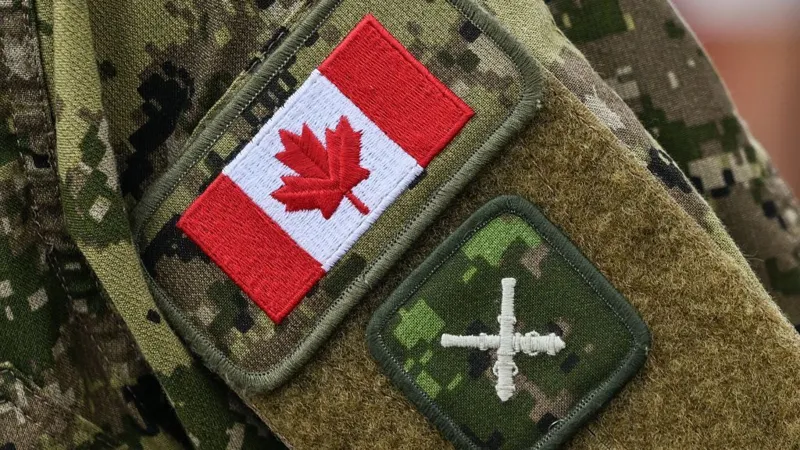
A large fire near a Canadian military base in Alberta has killed and injured some people, the defence minister said, without confirming the number of casualties.
The Canadian Armed Forces were working with local authorities to manage the fire and were looking into what caused it, David McGuinty said, describing the situation as “very, very active and delicate”.
Canada’s Prime Minister Mark Carney said on X that a “serious incident creating a major fire” had occurred, adding his “thoughts are with all the brave women and men affected”.
Canadian Forces Base Wainwright, where the fire broke out, is one of the country’s busiest military training bases.
The blaze “spread rapidly due to high winds” and had torn through the fences of the base, the Municipal District of Wainwright said.
McGuinty told reporters he “cannot recall an incident like this in recent memory”.
It is unclear when the fire broke out, but the district first posted about the incident at about 17:30 local time.
Local authorities have urged residents to avoid the area and give all emergency vehicles right of way.
(BBC)

The Asian Youth Games gold medallist who has run sub four minutes previously returned a time of 3:55.97 seconds to become the first athlete in his age category at these championships to run the distance under four minutes.
Achintha who has a personal best of 3:53.05 from last year was representing Prince College Ratnapura today.
In another impressive 1,500 m feat Tharushi Abhisheka of Lyceum International School, Wattala established a new meet record in the Under-20 Girls’ 1,500m as she returned a time of 4:34.59 seconds to win.
By the end of the second day of the meet seven new meet records had been established.
D. V. C. de Soysa (of Galewela Central College) Under-16 Boys’ Discus Throw – 55.83m.
D. G. Lahiru Achintha (of Ratnapura Kumara Vidyalaya) Under-18 Boys’ 1,500m – 3:55.97 secs.
W. P. Nethula Induwara (Rahula College, Matara) Under-14 Boys’ 100m – 11.70 seconds
K. V. R. Gayesha (Ira Handa Kotuwa Wewa Maha Vidyalaya, Polonnaruwa) Under-16 Girls’ High Jump – 1.70m
H. M. D. S. Herath (Maris Stella College, Thimbirigaskatuwa) Under-20 Boys’ Long Jump – 7.65m
P. M. Amaya Semindi (Vijitha Central College, Dikwella) Under-14 Girls’ High Jump – 1.58m

Record 1,600 students take Russian Classical Ballet examination in Sri Lanka

Half a million people join protests in France, but some turn violent

Deadly fire breaks out at Canada military base

Showers or thundershowers will occur in most parts of the island after 1.00 p.m.

Buddhist hierarchy demands prison perks for monk convicts

Debate on NCM against Speaker postponed indefinitely

‘Dates have the highest sugar content to fight Coronavirus’

Sunday Island 27 December – Headlines

#SundayIsland 17th December – Headlines

Sunday Island – 28th March

Sunday Island Headlines – 21 March

Sunday Island – 21st February – Headlines
-

 Latest News5 days ago
Nissanka’s return headlines Sri Lanka’s Test squad against Pakistan
-

 Latest News6 days ago
Farhan and Sadaqat help Pakistan seal series in style
-
 Features6 days ago
Intake 16: 45 years of duty and honour
-
 News6 days ago
Malwathu Chapter issues statement on talks with President over Gnanasara Thera’s robes
-
 News6 days ago
CP alleges NPP has taken the blame for illegal US sanctions on Iranian vessels
-

 News4 days ago
Sri Lanka, India caught in US-Iran ship crisis
-

 Opinion6 days ago
How long can Sri Lanka remain silent on its demographic crisis?
-

 Latest News4 days ago
Kusal Mendis’ unbeaten 87 hands Sri Lanka consolation win