
Foreign News
Canadian police make arrests in prominent Sikh activist’s killing


Police in Canada have made arrests in the fatal 2023 shooting of prominent Sikh-Canadian activist Hardeep singh Nijar, months after authorities accused Indian government agents of being involved in the killing.
The Royal Canadian Mounted Police (RCMP) in Canada’s westernmost province of British Columbia said on Friday afternoon that three people were arrested as part of an ongoing investigation into Nijjar’s killing.
The three individuals — all Indian nationals — were arrested in Edmonton, Alberta, and charged with first-degree murder and conspiracy to commit murder, RCMP Superintendent Mandeep Mooker told reporters. “This investigation does not end here. We are aware that others may have played a role in this homicide, and we remain dedicated to finding and arresting each one of these individuals,” Mooker said.
He added that police are “investigating if there are any ties to the government of India”.
“However, as I said, it’s an ongoing investigation and I don’t have any information to provide on that matter at this time.”
Nijjar was fatally shot on June 18, 2023, outside a Sikh temple in Surrey, British Columbia, spurring widespread condemnation.
A few months later, Canadian Prime Minister Justin Trudeau said the country’s security agencies were investigating “credible allegations of a potential link” between Indian government agents and Nijjar’s killing.
“Any involvement of a foreign government in the killing of a Canadian citizen on Canadian soil is an unacceptable violation of our sovereignty,” Trudeau said in an address to Canada’s parliament in September of last year. “In the strongest possible terms, I continue to urge the government of India to cooperate with Canada to get to the bottom of this matter.”
His comments spurred a fierce response from India, which rejected the allegations as “absurd” and politically motivated. New Delhi also accused Canada of not doing enough to stem anti-India activism and “Sikh extremism”.
But Indian Prime Minister Narendra Modi’s government has long faced allegations of targeting political opponents, journalists and religious minorities, including Muslims and Sikhs, in what rights groups have said is a continuing effort to stifle dissent.
At the time of Nijjar’s killing, tensions had been growing between Canada and India over a Sikh campaign for a sovereign state in India’s Punjab region. Known as the Khalistan movement, the campaign has supporters in Canada.
Nijjar served as president of the Guru Nanak Sikh Gurdwara, the temple where he was killed. He was among those advocating for Khalistan.
Asked to comment on Friday’s reports that arrests were made in the case, Canada’s Public Safety Minister Dominic LeBlanc referred reporters’ questions to the RCMP.
“You’ll understand that the developments with respect to the murder of a Canadian citizen, Mr Nijjar, are part of an ongoing police operation. This operation started today. It is still an active police operation,” LeBlanc said in Ottawa.
The RCMP identified the three men arrested on Friday as Kamalpreet Singh, Karanpreet Singh and Karan Brar.
Mooker, the police superintendent, said all three were non-permanent residents of Canada and had been in the country for between three to five years.
CBC News reported earlier in the day that, according to unnamed sources, “members of the hit squad are alleged to have played different roles as shooters, drivers and spotters” on the day Nijjar was killed.
“Sources said investigators identified the alleged hit squad members in Canada some months ago and have been keeping them under tight surveillance,” the Canadian broadcaster said.
The High Commission of India in Ottawa did not immediately respond to Al Jazeera’s request for comment on Friday afternoon.
Nijjar’s killing continues to raise questions around allegations of Indian foreign interference, particularly within Sikh diaspora communities in Canada, the United States and other countries.
In September, Moninder Singh at the BC Gurdwaras Council told Al Jazeera that he was among five Sikh leaders — including Nijjar — who were warned by the RCMP’s national security division in 2022 about threats against their lives.
On Friday, Danish Singh, president of the World Sikh Organization of Canada advocacy group, welcomed the arrests in Nijjar’s case but said they also raise new questions.
“While the arrest of the hit squad is important, what’s even more important is identifying and bringing to justice those who directed these operations,” Singh said in a statement, accusing the Indian government of being involved.
Reports of an alleged plot to kill another prominent Sikh separatist leader in the US have also emerged following Nijjar’s death. In late November, the US Department of Justice announced charges against a 52-year-old Indian national, Nikhil Gupta.
Gupta was accused of being part of a foiled attempt to assassinate US citizen Gurupatwant Singh Pannun, in coordination with an Indian government employee and others.
The Washington Post reported earlier this week that US intelligence agencies determined that the operation to target Pannun was approved by the then-head of India’s foreign intelligence agency, known as RAW.
The Indian government rejected those allegations as “unwarranted” and “unsubstantiated”, according to media reports.
On Monday, White House spokesperson Karine Jean-Pierre described the Washington Post report as “a serious matter”.
“The government of India has been very clear with us that they are taking this seriously and will investigate — and we expect that accountability from the government,” Jean-Pierre told reporters during a news briefing.
She added that Washington would continue to raise concerns with New Delhi.
(Aljazeera)










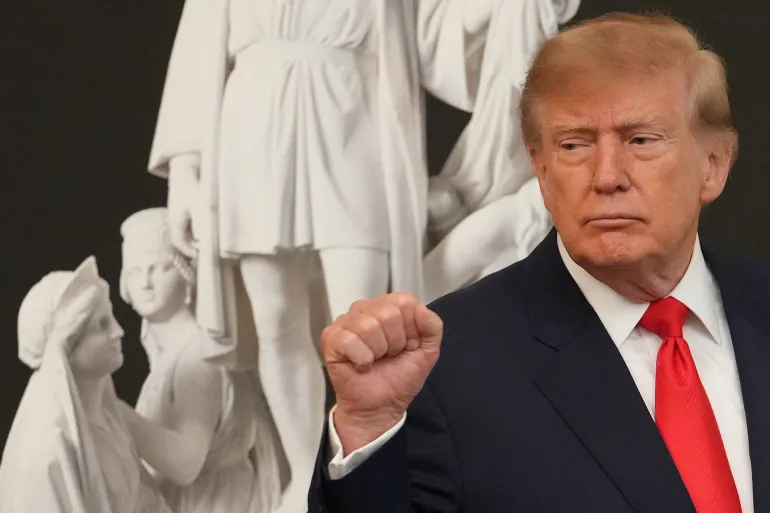
United States President Donald Trump said that Russia has agreed to supply 300,000 tonnes of diesel fuel to global markets amid discussions with Russian President Vladimir Putin.
“I have just concluded a highly successful discussion with President Vladimir Putin, of Russia, wherein it was agreed that Russia will immediately supply over 300,000 Tons of Diesel Fuel to the American and Global Marketplace, another 500,000 Tons during the month of November, and 1,000,000 Tons immediately thereafter,” Trump said in a post on his Truth Social platform.
The president added that Russia would deliver an additional 3 million tonnes of fuel “within a short period of time”. He said that the country would supply 500,000 tonnes in November.
An envoy for Russian President Vladimir Putin, Kirill Dmitriev, praised cooperation between Russia and the United States on diesel and energy in a post on X shortly after.
“Russia-US cooperation on diesel and energy will benefit the world,” Dmitriev wrote on X.
Petrol price pressures
The deal comes despite Ukrainian air strikes, which have taken more than half of the country’s oil refining capacity offline, according to claims made by Ukraine’s Ministry of Defence on Sunday.
The latest announcement comes a week after the G7 countries agreed to release 100 million barrels amid pressure from the White House.
Diesel prices have been elevated in recent months but have started to decline. The average price for a gallon is $6.27 ($1.66 per litre), according to the American Automobile Association (AAA), which tracks daily petrol prices. That’s down $0.10 from this time last week, but up $5.94 from this time one month ago.
[Aljazeera]
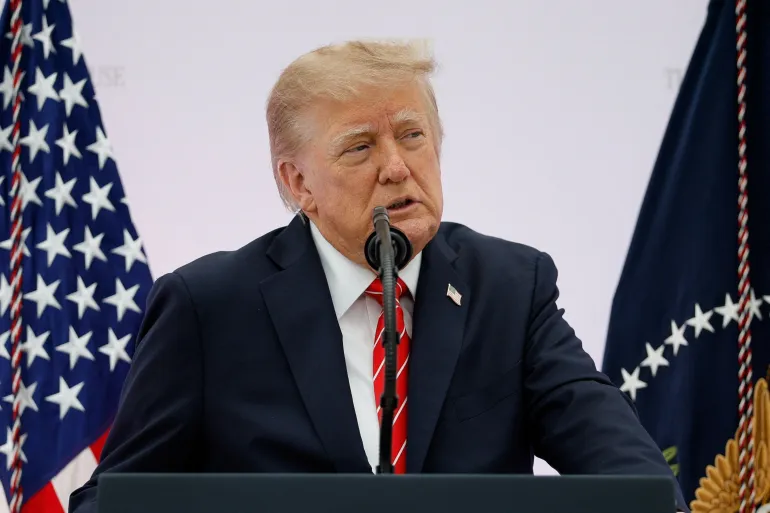
United States President Donald Trump has said the US will not attack Iran before the November 3 midterm elections.
The US president said late on Thursday: “we are having productive discussions with the Islamic Republic of Iran,” in a post on Truth Social. “We will not be attacking Iran at any time prior to the midterm elections to be held in the United States on November 3rd.”
Oil prices fell early on Friday as Middle East supply concerns eased somewhat after tensions in the energy-rich Gulf region had mounted in recent weeks.
The possibility of renewed fighting had appeared to drive up oil prices in trading on Thursday. Some analysts believe Trump’s comments were an attempt to try and bring prices back down.
Iran’s Foreign Minister Abbas Araghchi said Tehran is reviewing the US response to its seven day plan to reopen the Strait of Hormuz, and that Iran will respond within the “next few days”.
He added that negotiations are continuing through mediators, Iran’s Tasnim news agency reported.
Iranian media reported “massive explosions” in the southern Strait of Hormuz on Friday, with Fars citing unnamed military sources as saying tankers using “unauthorised” routes may have struck sea mines.
On Tuesday, US Vice President JD Vance said Iran must make a “meaningful” reduction in its uranium enrichment capacity as part of an agreement to end the war. Experts say this demand may signal a softening of Washington’s earlier insistence that Tehran abandon enrichment altogether.
On Monday, Iranian President Masoud Pezeshkian said negotiations with Washington were “futile”, accusing the US of using negotiations to attack Iran.
Russian President Vladimir Putin told Pezeshkian that Russia will “do everything” to help end the US-led war on Iran, Russian news agencies reported on Thursday.
[Aljazeera]
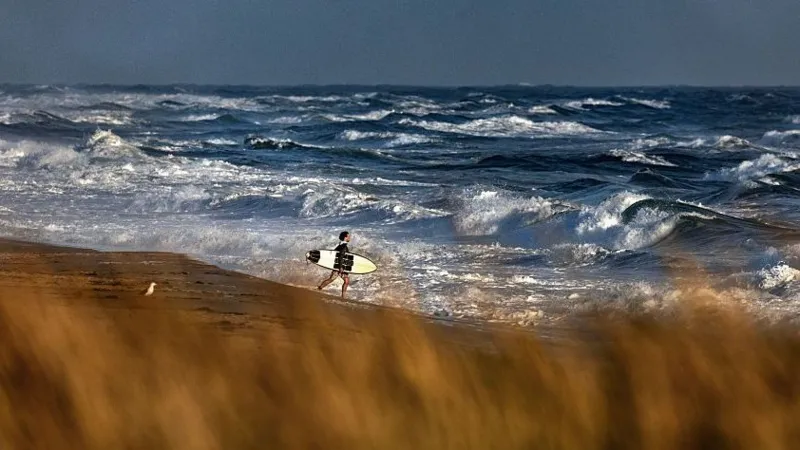
US authorities have found debris from a medical transport aircraft that went missing with six people on board.
The Federal Aviation Administration told the BBC it had lost contact with the Gulfstream G-100 plane just after 01:00 local time (05:00 GMT) on Saturday, while it was travelling from Bermuda to Boston, Massachusetts.
The search for survivors continues off the coast of Nantucket, a Massachusetts island, the US Coast Guard said.
Authorities have notified the next of kin of those on the flight, four Canadian nationals and two Bermudian nationals.
“Search crews located a debris field confirmed to be from the aircraft off the coast of Nantucket,” the US Coast Guard said in an update on Saturday night. It added that ships, helicopters and planes were involved in searches that would through continue the night.
The plane departed from Bermuda’s L.F. Wade International Airport at 23:40 local time, according to flight data from FlightAware, and was due to land at Boston’s Logan International at 01:30 EDT (05:30 GMT).
According to the tail number released by the Coast Guard, the plane belonged to Latitude Air Ambulances, a company that provides international medical flights for patients returning home.
Among those on board were two pilots and two medical staff, both Canadian, Clarence Togeretz, director of flight operations at Latitude, told CBC News.
The crew flew to Bermuda to collect a patient and their relative, who are not Canadian, Togeretz said.
FlightAware’s tracker shows the aircraft significantly dropped in altitude before its communications went dark, plummeting from around 7,300m (24,000ft) to 3,300m (11,000ft).
Radio transmissions shows trouble with communications between the air traffic controller and the pilot, the Boston Globe reported based on transmissions provided by LiveATC.net.
“You’re coming in blind? Is that what you said?,” the air traffic controller asked. “Are you declaring an emergency, or no?”
The pilot’s response was inaudible.
“You’re coming in a little weak so I didn’t hear what your response was, if you were declaring an emergency or not,” the air traffic controller said, according to the Globe.
The air traffic controller later confirmed the pilot had declared an emergency.
An area fire dispatcher asked emergency crews just after 01:00 EDT to prepare to meet a plane with an “electrical issue”.
The dispatcher later said “the aircraft has lost radio and radar”.
The Coast Guard said it would provide an update on Sunday morning local time.
[BBC]

Sri Lanka ITEC Alumni Association formally launched

Measures underway to protect Diyagama Forest as a Reserve — Deputy Minister of Environment

Showers or thundershowers will occur in most parts of the island after 1.00 p.m.

NPP govt. reminded of its responsibilities as US warship leaves Colombo

CERT: Beware of foreign Uni. scams on social media

Shiranthi receives treatment at National Eye Hospital

‘Dates have the highest sugar content to fight Coronavirus’

Sunday Island 27 December – Headlines

#SundayIsland 17th December – Headlines

Sunday Island – 28th March

Sunday Island Headlines – 21 March

Sunday Island – 21st February – Headlines
-

 Features6 days ago
The first woman in the foreign service or Ceylon Overseas Service it was then called
-

 News5 days ago
Geneva takes up Sallay’s case and govt. ignores opportunity to answer accusations
-
 Foreign News7 days ago
Ten injured after car crashes into rugby supporters in Australia
-

 News6 days ago
Nearly 20 Iranian tankers stranded off Lanka amid US sanctions
-

 Features4 days ago
Preventing grievances from becoming communal
-

 Sports2 days ago
Nissanka absence opens door for Sri Lanka’s young guns
-

 Features5 days ago
Sri Lanka Cricket Bill: Governance reform is not yet a cricket strategy
-

 News3 days ago
Gnansara Thera to be assigned to prison printing section: Officials