
Business
The $2bn dirty-money case that rocked Singapore

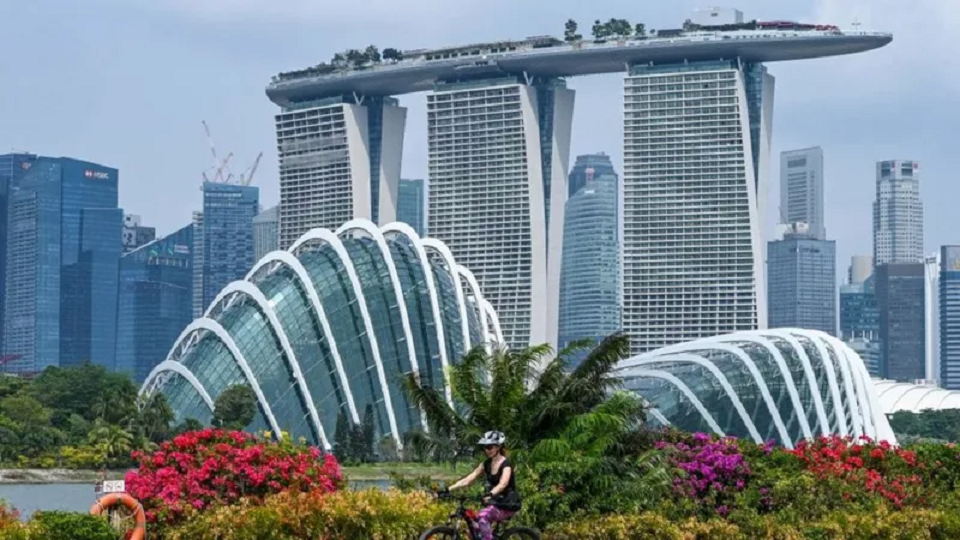
A Singaporean court has begun handing out sentences in a sensational case, which saw 10 Chinese nationals charged for laundering $2.2bn (£1.8bn) earned from criminal activities abroad.
The scandal embroiled multiple banks, property agents, precious metal traders and a top golf club. It led to extensive raids in some of the most affluent neighbourhoods, where police seized billions in cash and assets. The lurid details have gripped Singaporeans – among the seized assets were 152 properties, 62 vehicles, shelves of luxury bags and watches, hundreds of pieces of jewellery and thousands of bottles of alcohol.
Earlier this month, Su Wenqiang and Su Haijin, became the first to be jailed in the case. Su Haijin, police said, jumped off the second-floor balcony of a house trying to flee arrest. Both men will serve a little over a year in prison, after which they will be deported and barred from returning to Singapore. Eight others are still awaiting the court’s decision.
Even as it draws to a close, the case – the biggest of its kind in Singapore – has raised inevitable questions. The money that paid for their plush lives in the country, prosecutors said, came from illegal sources overseas, such as scams and online gambling.
How did these men, some of whom had multiple passports from Cambodia, Vanuatu, Cyprus and Dominica, live and bank in Singapore for years without drawing scrutiny? It has sparked a review of policies, with banks tightening rules, especially around clients who hold multiple passports.
Most important, the case has spotlighted the country’s struggle with welcoming the super wealthy, without also becoming a destination for ill-gotten gains.

Luxury cars were among assets police seized in their raids (BBC)
Singapore, which is often referred to as the Switzerland of Asia, started wooing banks and wealth managers in the 1990s. Economic reforms in China and India had begun to pay off, and then in the 2000s, a newly-stable Indonesia saw wealth grow as well. Soon, Singapore became a haven for foreign businesses, with investor-friendly laws, tax exemptions and other incentives.
Today, the ultra-rich can fly into Singapore’s private jet terminal, live it up in luxurious quayside neighbourhoods, and speculate on the world’s first diamond trading exchange. Just outside the airport is a maximum security vault called Le-Freeport that provides tax-free storage for fine art, jewels, wine and other valuables. The $100m-facility is often dubbed Asia’s Fort Knox.
Singapore’s asset managers drew S$435bn from abroad in 2022, almost double the figure in 2017, according to the country’s market regulator. More than half of Asia’s family offices – firms which manage private wealth – are now in Singapore according to a report by consulting giant KPMG and family office consultancy Agreus.
They include those of Google co-founder Sergey Brin, British billionaire James Dyson and Chinese-Singaporean Shu Ping, boss of the world’s biggest chain of hotpot restaurants, Haidilao.
Authorities say some of the accused in the money laundering case may be linked to family offices that were given tax incentives.
“There is an inherent contradiction for a place like Singapore, which prides itself on clean and good governance but also wants to accommodate the management of massive wealth by offering advantages such as low taxes and banking secrecy,” says Chong Ja-Ian, a non-resident scholar at Carnegie China.
“The risk of also becoming a banker for individuals who earned their money through nefarious or illicit means grows.”
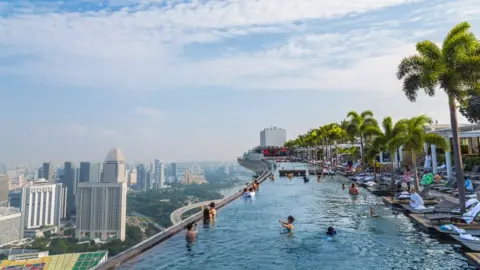
Singapore’s attraction for the ultra-rich comes with risks, analysts say (BBC)
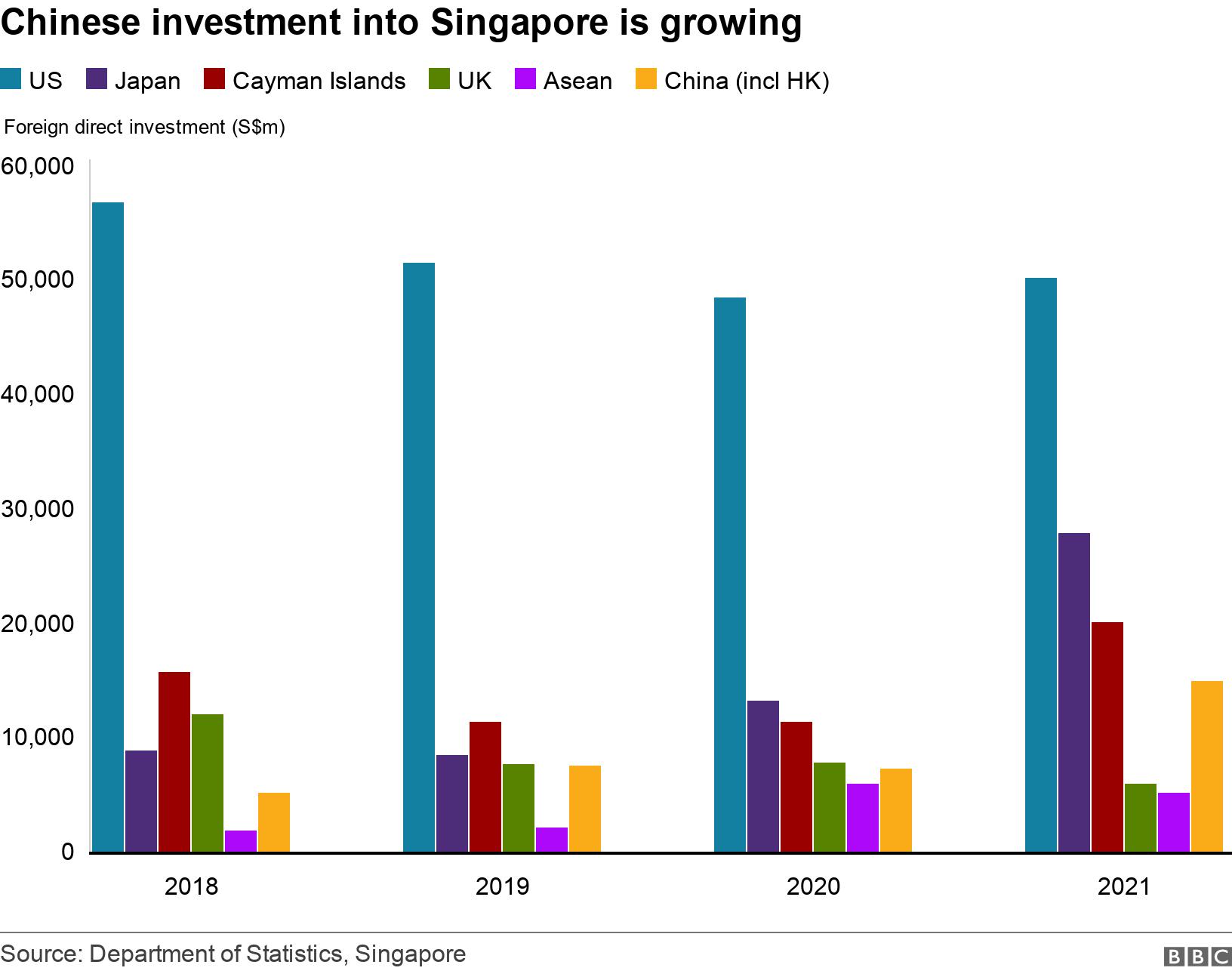
For rich Chinese, Singapore is a top choice because of its reputed governance and stability, as well as its cultural links to China. And more Chinese money has been entering Singapore in recent years.
One of the 10 suspects in this case was wanted in China since 2017 for his alleged role in illegal gambling online. Prosecutors claimed that he settled in Singapore because he “wanted a safe place to hide from the Chinese authorities”.
This isn’t the first time Singapore-based banks have been implicated in a financial crime. They were found to have played a role in cross-border laundering in the 1MDB scandal, where billions were misappropriated from Malaysia’s state investment fund. Dan Tan, who was once described by Interpol as “the leader of the world’s most notorious match-fixing syndicate” also had strong business links to Singapore. He was arrested here in 2013.
The country has strict rules targeting white collar crimes and is an active member of the Financial Action Task Force, a global body which targets money laundering and financing for terror networks. Over the years, banks have invested heavily to strengthen compliance, to screen prospective customers and to urge regulators to report suspicious transactions. But none of this is foolproof.
For one, it is difficult for regulators to spot suspicious cases in a sea of high-value transactions. “It’s not just one needle in a haystack, but one needle in several haystacks,” Singapore’s second minister for home affairs, Josephine Teo, told parliament in October last year.
Singapore’s buoyant property market is a popular means to “clean” dirty money, some experts pointed out. And there are the casinos, nightclubs and luxury stores.
“Massive amounts of money pass through Singapore’s banking system every day. Criminals can exploit this feature and disguise their money laundering activities among legitimate ones,” accounting professor Kelvin Law from Singapore’s Nanyang Technological University told the BBC.
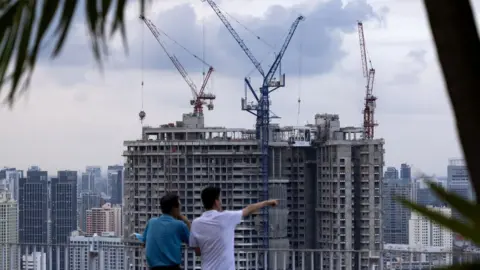
Singapore’s property market is one of the routes for dirty money, experts say (BBC)
Singapore also does not limit the amount of cash that can be carried in and out of the country, only requiring a declaration if the sum exceeds S$20,000. And that is an advantage, says Christopher Leahy, the founder of Singapore-based investigative research and risk advisory firm Blackpeak.
“If you want to move lots of money, you hide it in plain sight and Singapore is a great place for that. There is no point putting it in the Cayman Islands or the British Virgin Islands, where there is nothing to spend money on,” he said.
When asked for a response to analysts’ comments that Singapore’s advantages as a financial capital are also a draw for dirty money, authorities pointed the BBC to the law and home affairs minister interview in a local newspaper last year.
“We can’t close the window, because if we did that, then legitimate funds will also not be able to come. And legitimate business also can’t be done, or becomes very difficult to do. So we have to be sensible,” K Shanmugam said.
“When you are successful, you are a major financial centre, a lot of money comes in, some ‘flies’ will also come in,” he added, referring to an oft-repeated quote of the late Chinese leader, Deng Xiaoping.
Singapore has to decide how far it will go in accepting “money with varying shades of grey”, says Dr Chong of Carnegie China.
While increased regulation will help, he says transparency poses a bigger challenge: “Transparency goes against the very model of discretion that allows many wealth management hubs to thrive.”
Some analysts say this may well be the price Singapore is willing to pay to retain its position as a financial hub.
“The vast majority of the funds are legitimate, after all,” Mr Leahy says. “But there is an inevitable cost to being a major financial centre.”
(BBC)









By Sanath Nanayakkare
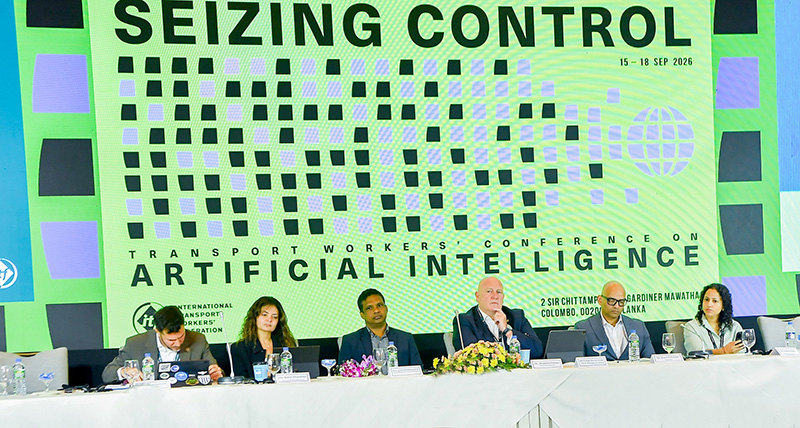
Artificial intelligence and automation present serious challenges for workers – such as job consequences seen in docks and rail systems – and emphasises that workers cannot simply stop technological progress. By gathering young trade unionists in Sri Lanka, the ITF aims to establish key principles for engaging with technology, ensuring workers have a strong voice at the bargaining table, and encouraging constructive social dialogue with corporations and governments.
These compelling words from ITF General Secretary Stephen Cotton underscored the urgent reality facing modern labor as rapid technological advancements sweep across global industries.
Confronting this shifting landscape head-on, the International Transport Workers’ Federation (ITF), in partnership with the National Union of Seafarers of Sri Lanka (NUSS), convened a ground-breaking conference on artificial intelligence in Colombo from September 15–17.
As the ITF’s first-ever AI-focused global conference and the first of its kind hosted in Sri Lanka, the landmark event marked a critical milestone in balancing technological innovation with worker-centered safeguards.
Representing over 16.6 million transport workers worldwide, the ITF designed the gathering to tackle the multifaceted impacts of AI on safety, operations, workforce development, and governance. Rather than resisting progress, the conference focused on proactive engagement, establishing guiding principles to protect workers’ rights and privacy both at sea and on land.
Key discussions centred on sharing best practices for upskilling and reskilling transport personnel, ensuring that human oversight remains central to AI-driven logistics, routing, and maintenance.
Reflecting on the historic nature of the event, Boa Athu, CEO of National Union of Seafarers Asia Pacific, noted that the conference represented a monumental moment as AI emerges as a permanent fixture of contemporary life.
Highlighting NUSS’s pride in hosting the event in Colombo, Athu emphasised that AI offers transformative potential when guided by strong social dialogue, equitable access to training, and robust governance safeguards.
Ultimately, the Colombo conference demonstrated that the future of transport must be shaped by those who keep the world moving. By uniting international labour leaders, affiliates, port operators, and regulators, the event laid a vital foundation for inclusive policy frameworks that champion fair labour standards, securing a powerful voice for workers in an automated tomorrow.
By Sanath Nanayakkare
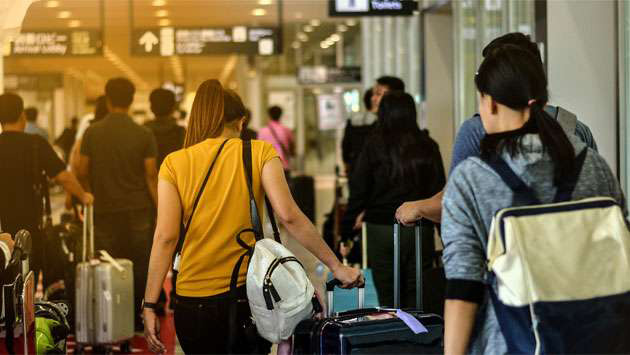
As Sri Lanka experiences a surge in visitors from its largest tourist market, India, a modern administrative hurdle has emerged at Bandaranaike International Airport (BIA).
While nations like India and Pakistan have successfully transitioned to fully digital driving licences and cashless ecosystems, Sri Lanka’s Department of Motor Traffic counter still requires a physical card to issue temporary local permits, The Island Financial Review learns.
This mismatch creates significant friction for independent travelers who rely entirely on smartphones and cloud-stored credentials. Tourists turned away at the airport – and sometimes redirected to the Werahera office in vain – find themselves unable to legally rent and drive vehicles. Consequently, this policy gap harms local car rental operators, causes tourist frustration, and deprives the government of valuable permit revenue.
The situation highlights a distinct irony: Sri Lankan motorists easily travel abroad using International Driving Permits that are readily accepted in India and Pakistan, yet local infrastructure cannot reciprocate due to outdated verification systems.
Recognizing the problem, Department of Motor Traffic officials have noted that upgrades and new equipment are currently in the works to integrate foreign digital platforms.
For a nation aggressively pursuing a national digitalisation drive, rapidly modernising these transport protocols is essential to keeping pace with global travelers and unlocking the full potential of its tourism economy.
Business
International Afro-Latin Dance Festival in Colombo to grow into a larger regional tourism draw


ALIF-SL, Sri Lanka’s first-ever international Afro-Latin dance festival, returns for its 4th edition from 25 to 27 September 2026 at the Galle Face Hotel, Colombo. The festival will bring together over 30 international and national artists and 175–200 participants from more than 20 countries, reaffirming its place as the region’s leading platform for Salsa, Bachata and Kizomba.
This year’s edition is headlined by Tropical Gem, the world’s No. 1 salsa team, travelling from Italy to perform and teach alongside a stellar international line-up. Attendees can also look forward to the ALIF Cup Sri Lanka Open, a keenly contested competition judged by an international panel, giving local dancers a rare opportunity to compete and connect with world-class talent.
“Every year, ALIF connects Sri Lanka to the world. With this year’s artist line-up and the ALIF Cup competition, we’re not just hosting a festival, we’re putting Sri Lanka on the map as a top destination for dance,” said JD Ruban, Founder and Director of ALIF-SL
Beyond the dance floor, ALIF-SL continues to support Sri Lanka’s tourism sector, drawing dancers, judges and enthusiasts from across the globe to Colombo and positioning the capital as an emerging regional hub for social dance. Organizers plan to grow the festival into a larger regional tourism draw, introduce new competition categories, and bring in even bigger headline acts in future editions.

Trophy row unlikely to repeat in Japan

Powerful explosions at Syrian army site near Aleppo injure at least four

Government committed to ensuring the rights of children with disabilities and providing equal opportunities – PM

Ellis and Inglis break Zimbabwe hearts to secure one-wicket thriller

Kenya’s Ngetich breaks women-only half-marathon world record by a second

Showers about 100 mm are likely at times in the Western, Sabaragamuwa and North-western provinces and in Galle, Matara, Kandy and Nuwara-Eliya Districts

‘Dates have the highest sugar content to fight Coronavirus’

Sunday Island 27 December – Headlines

#SundayIsland 17th December – Headlines

Sunday Island – 28th March

Sunday Island Headlines – 21 March

Sunday Island – 21st February – Headlines
-

 News5 days ago
US embassy won’t comment on IGP’s probe into joint drug raid
-

 News4 days ago
Bid for Basil’s extradition nears final stage: Police
-

 Features7 days ago
The emptying university: why are academics leaving?
-

 Business5 days ago
All-new Bolero MaXX unveiled in Sri Lanka
-

 News3 days ago
Shanakiyan urges urgent action over reported death sentence for Lankan in Saudi Arabia
-
 Opinion7 days ago
Who committed genocide and created mass graves in Sri Lanka?
-
 Opinion5 days ago
A journalist who wrote across the divide
-

 News2 days ago
Namal Rajapaksa Buddhist gambit fails, bail denied